
 Creative Commons License
 Creative Commons License
 Creative Commons License
 Creative Commons License
 Creative Commons License
 Creative Commons License
 Creative Commons License
 Creative Commons License
 Creative Commons License
 Creative Commons License
 Creative Commons License
 Creative Commons License
 Creative Commons License
 Creative Commons License
 Creative Commons License
 Creative Commons License
 Creative Commons License


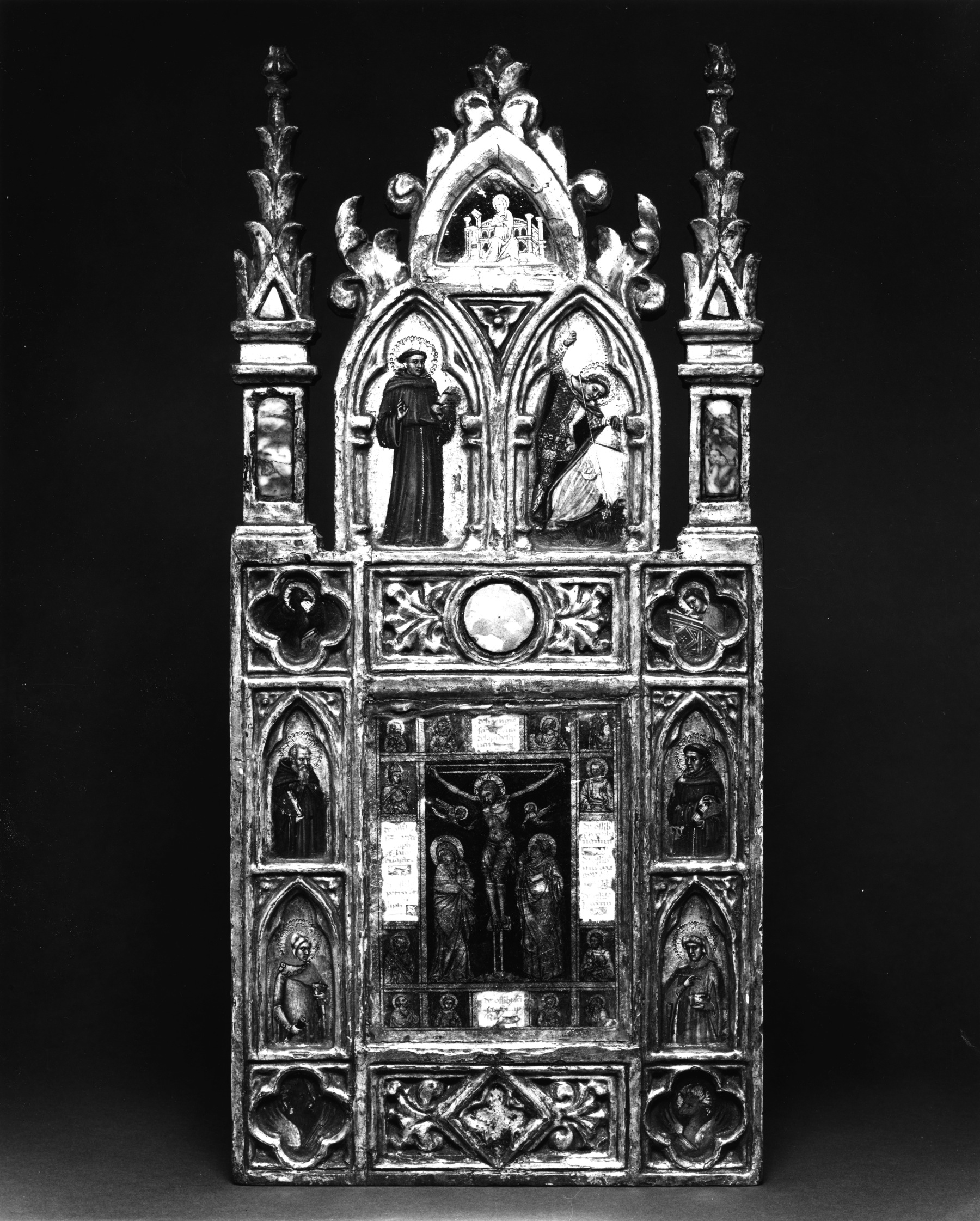
Reliquary Panel with Crucifixion and Saints
(Medieval Europe )
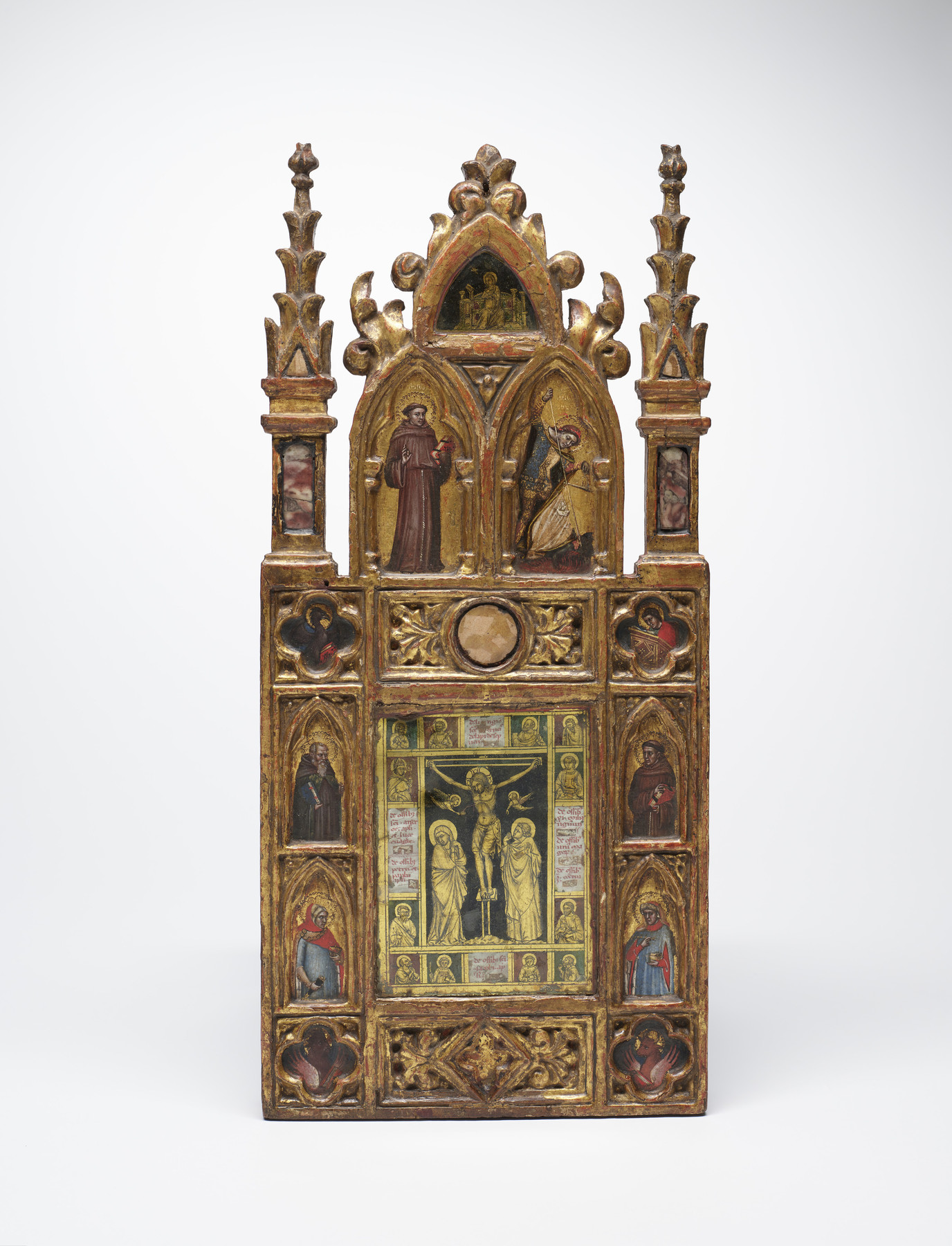
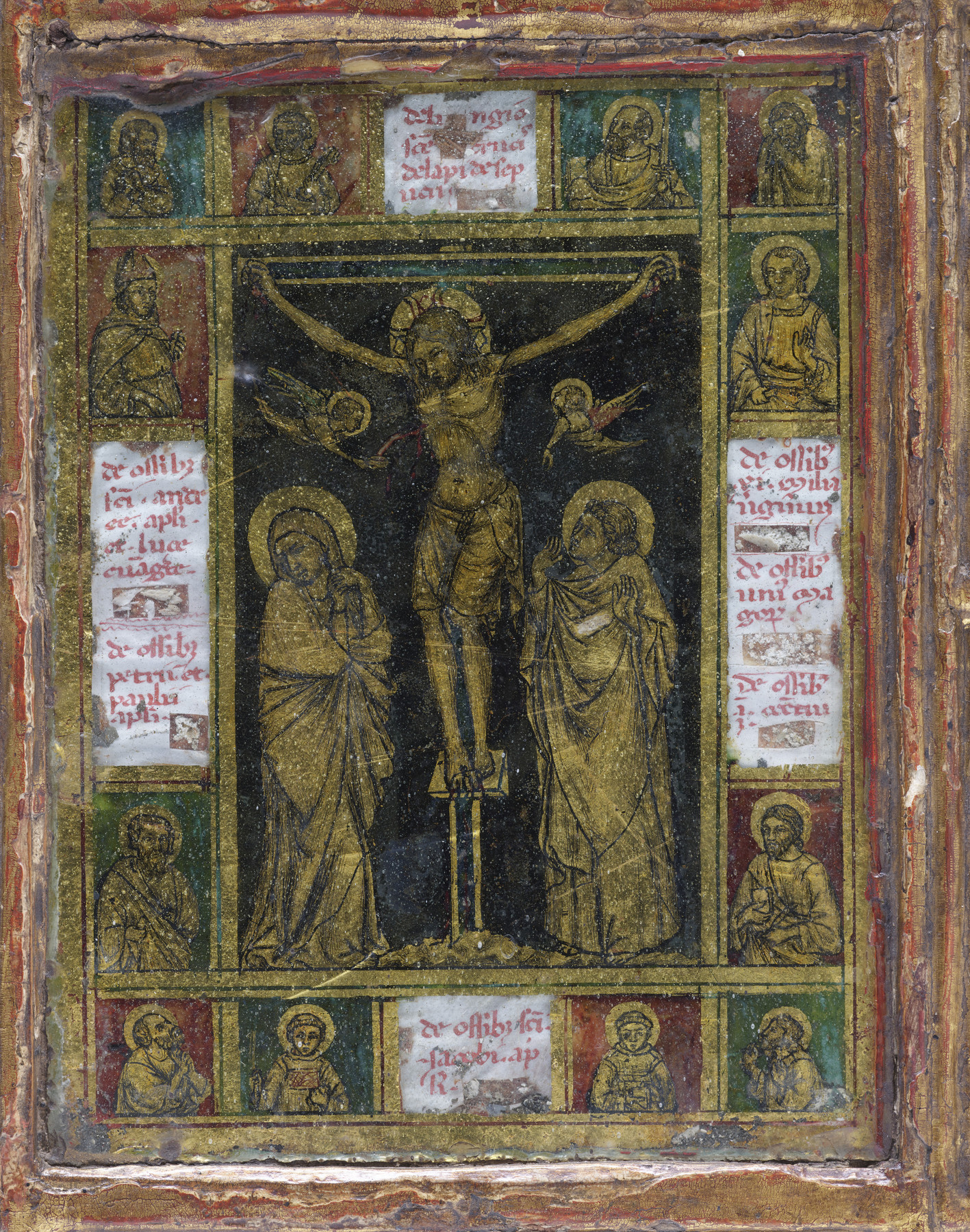
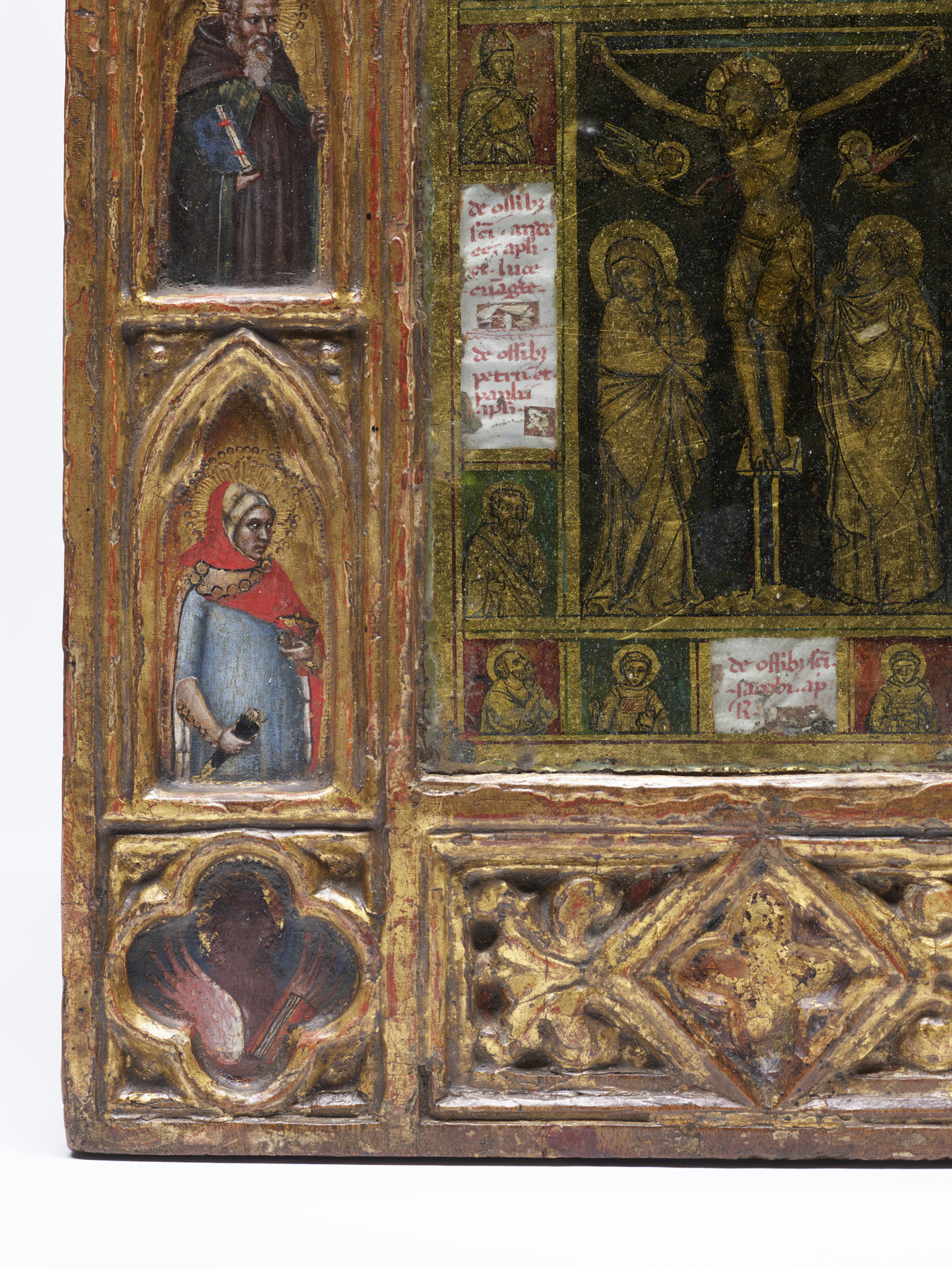
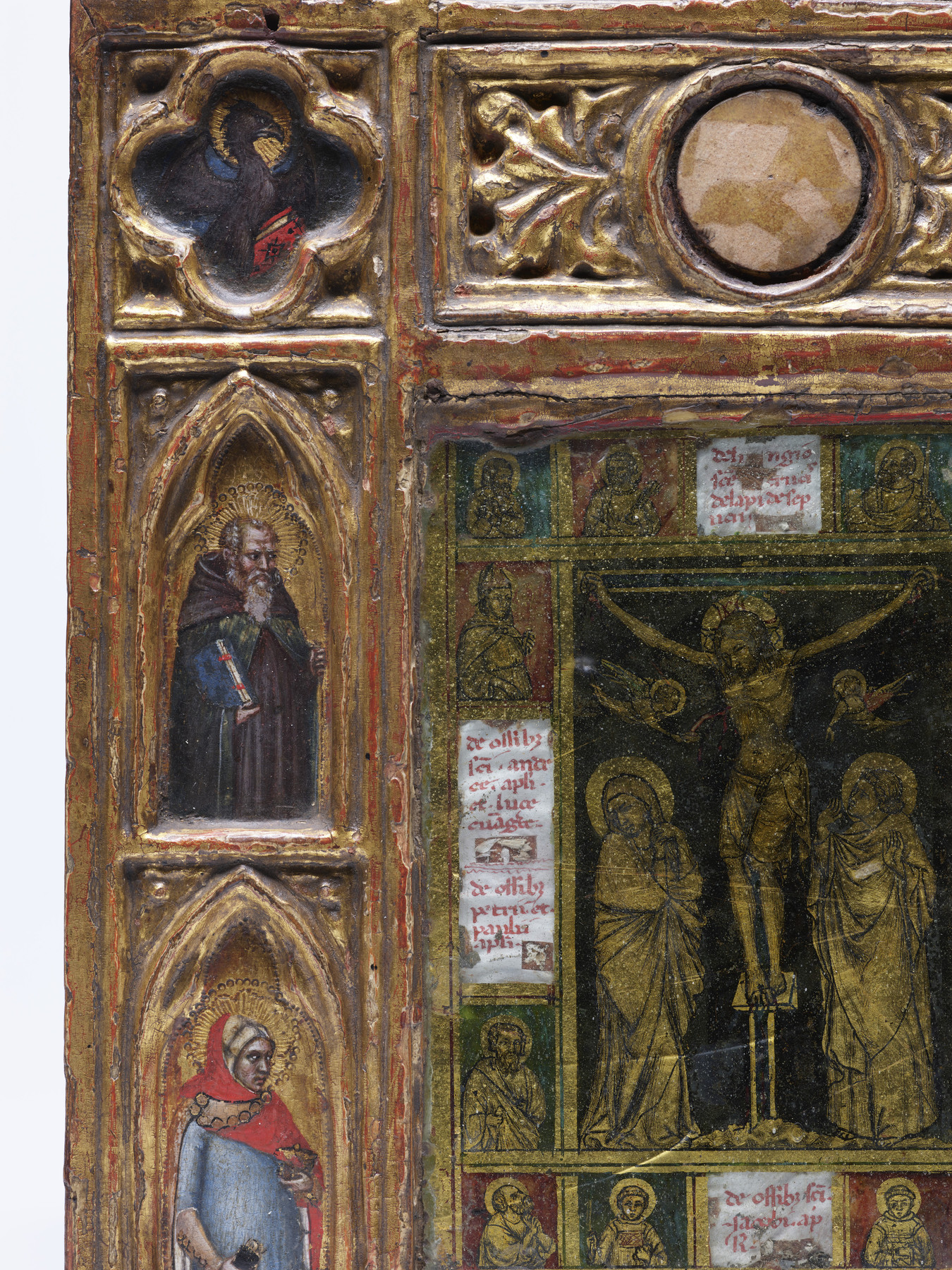
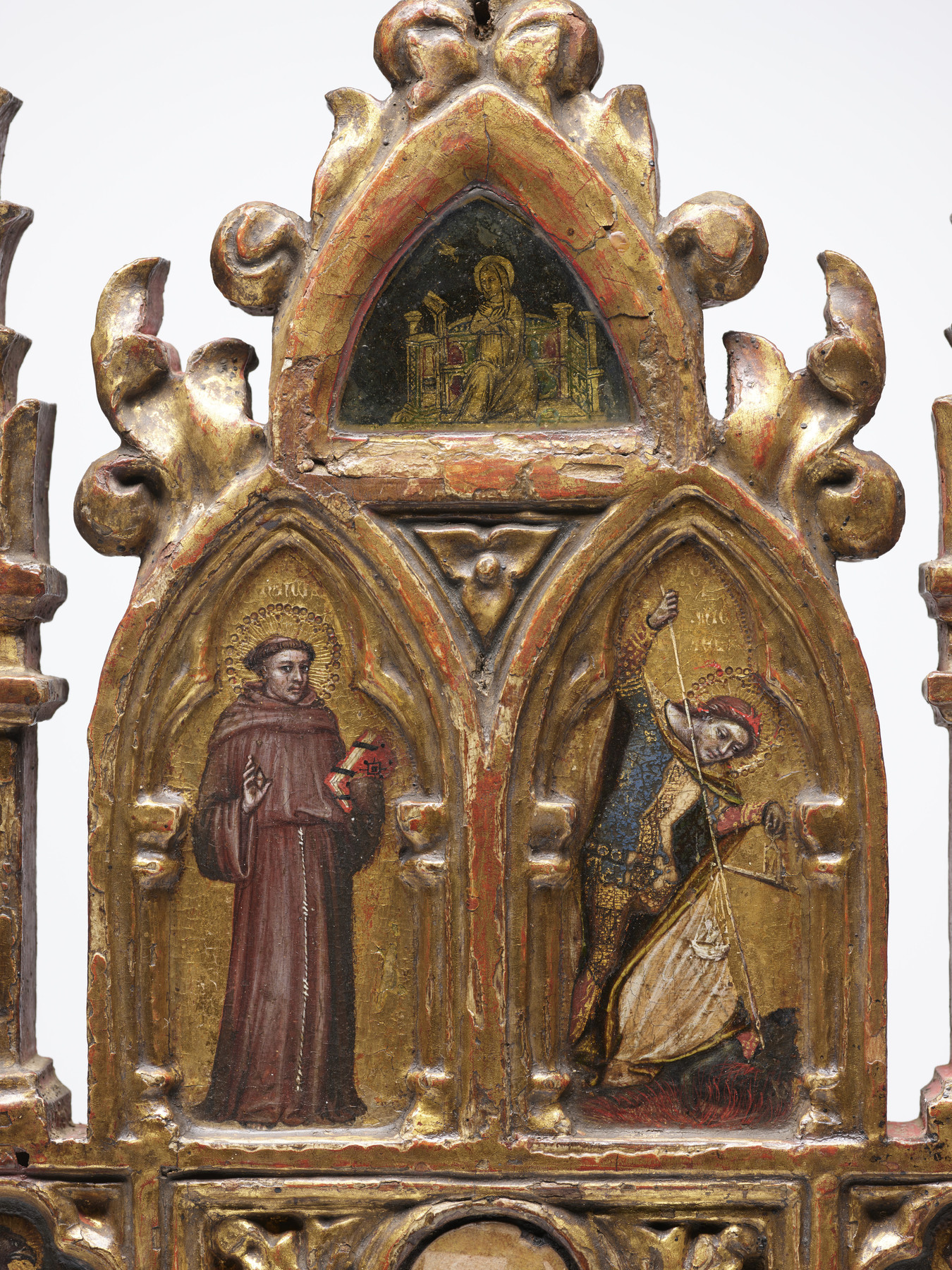
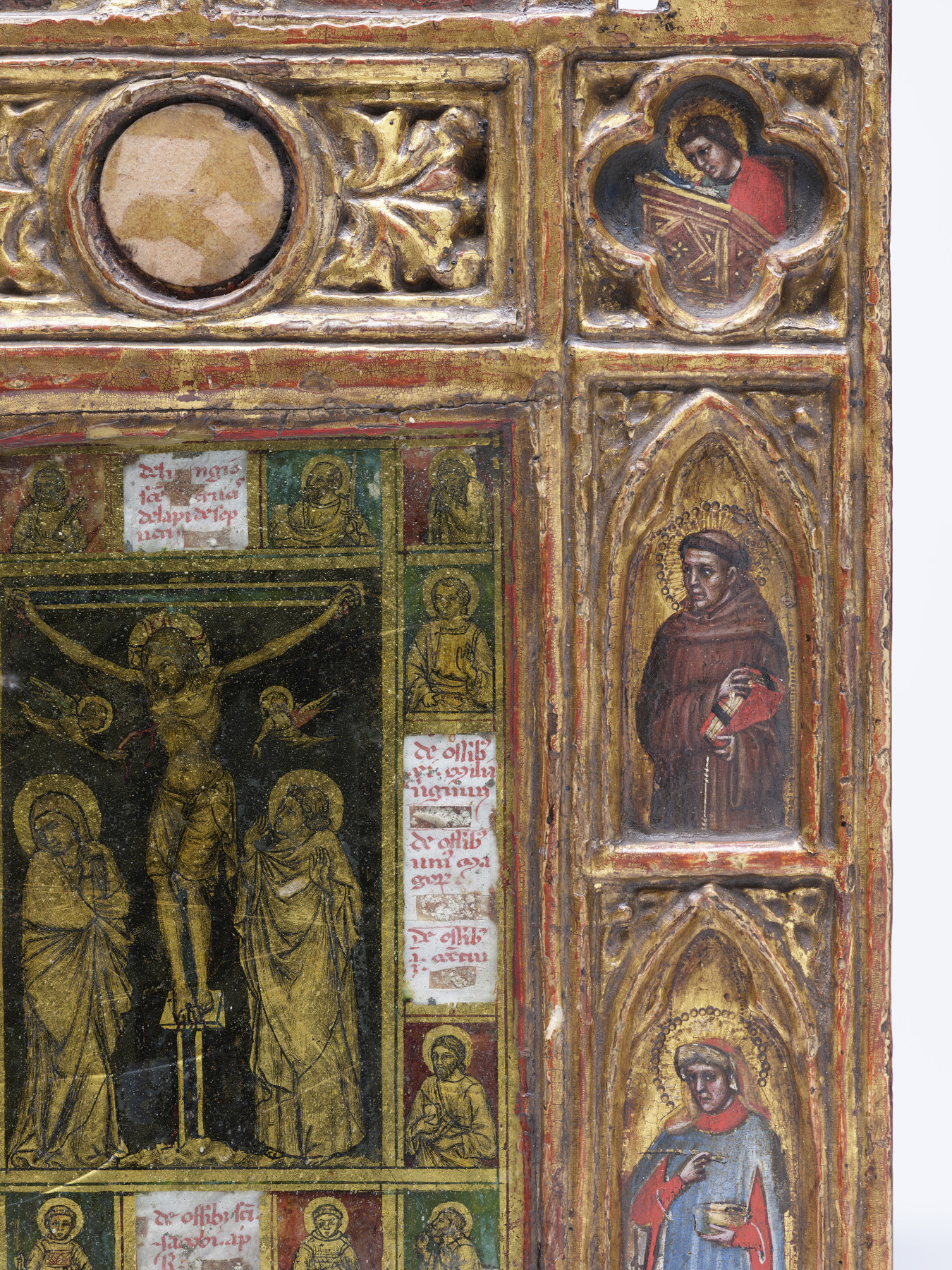
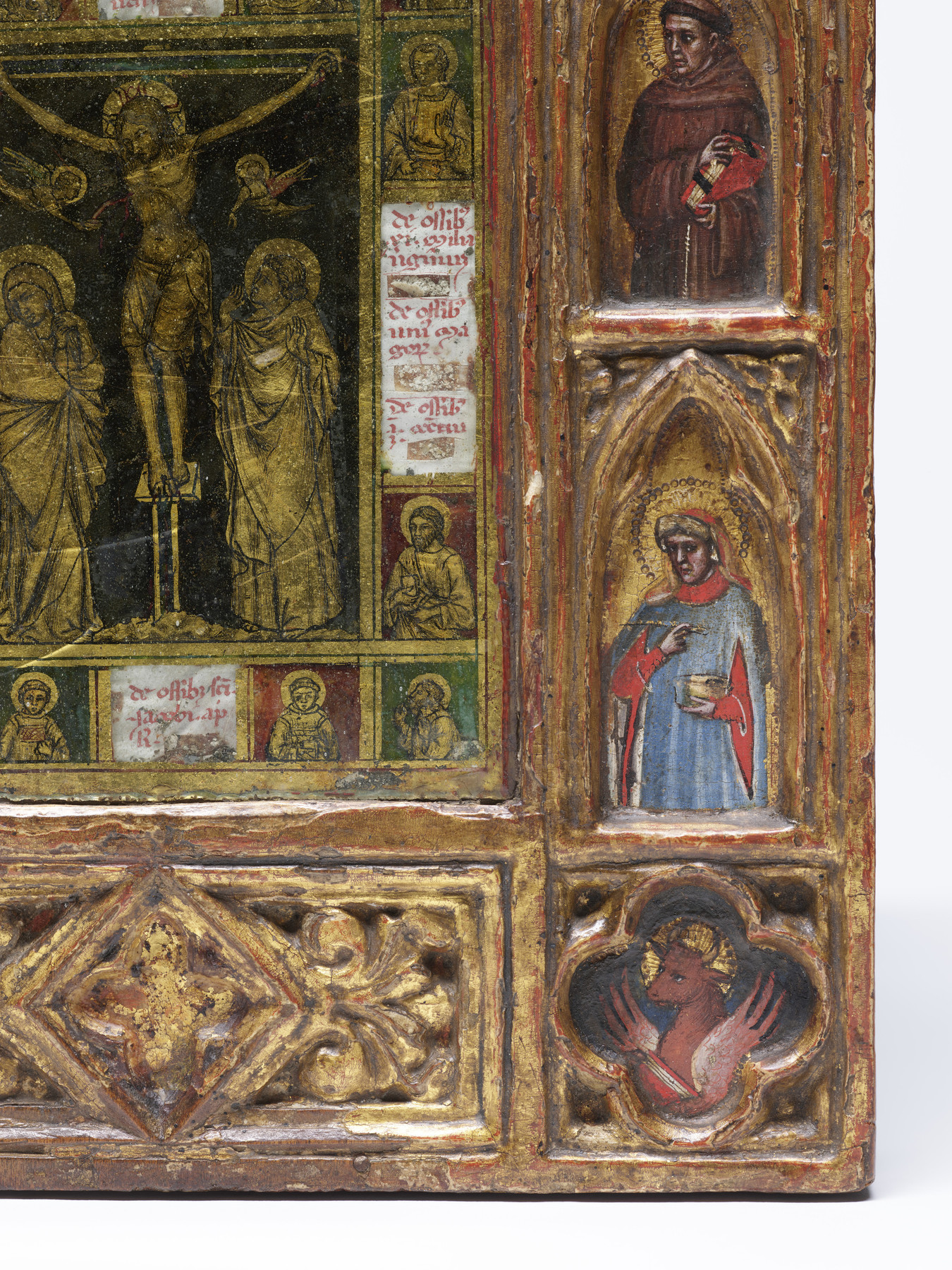
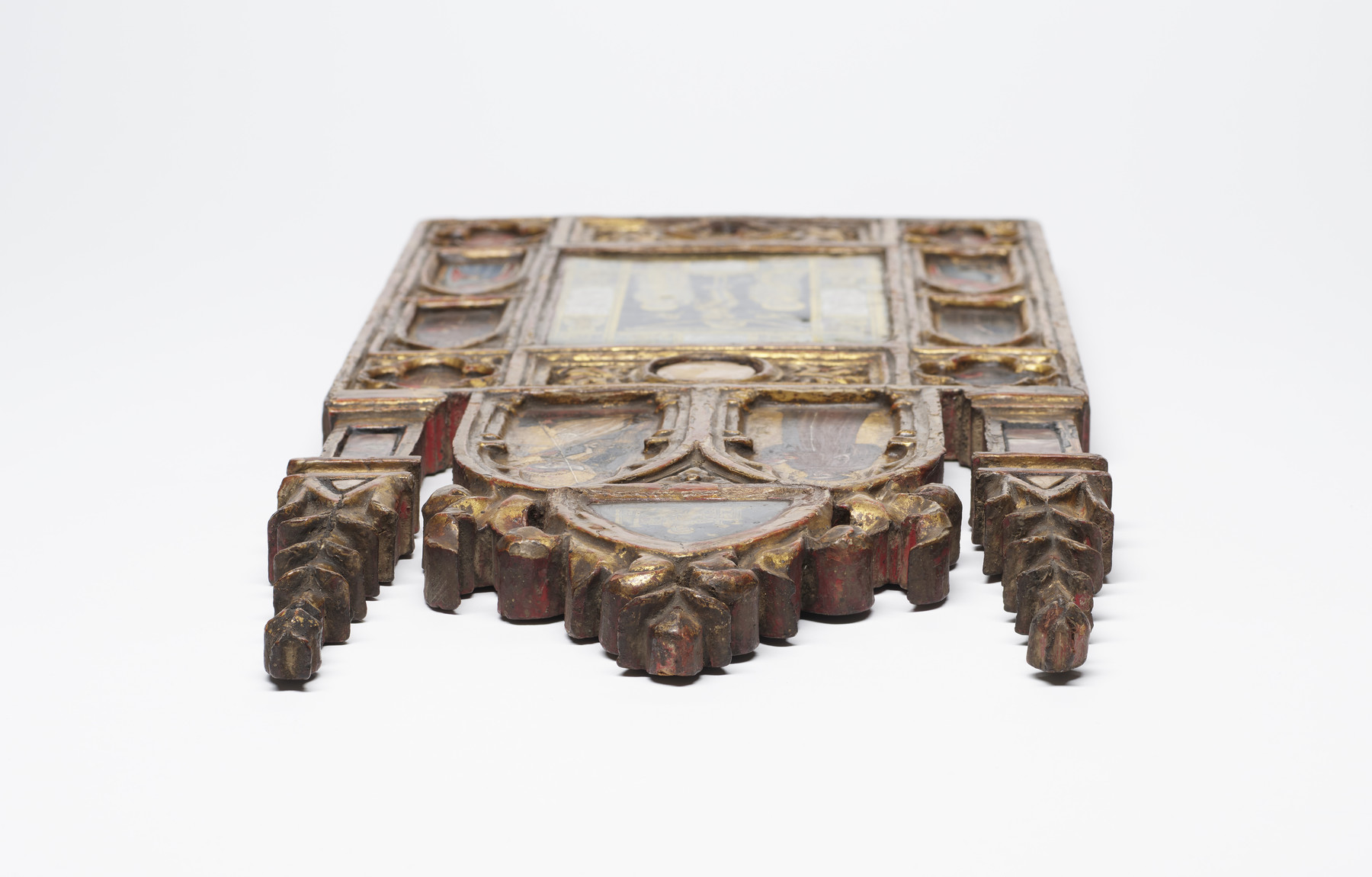
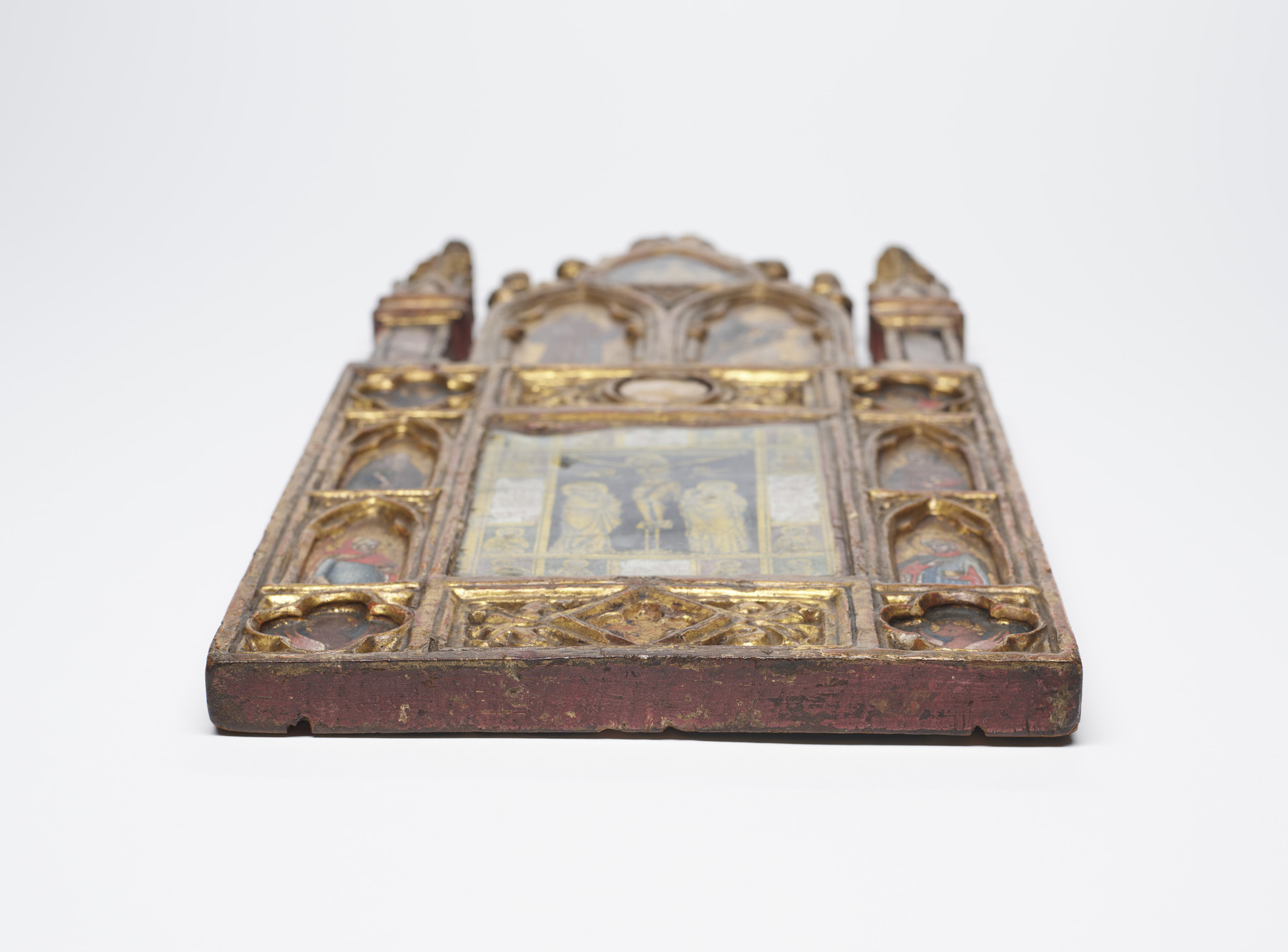
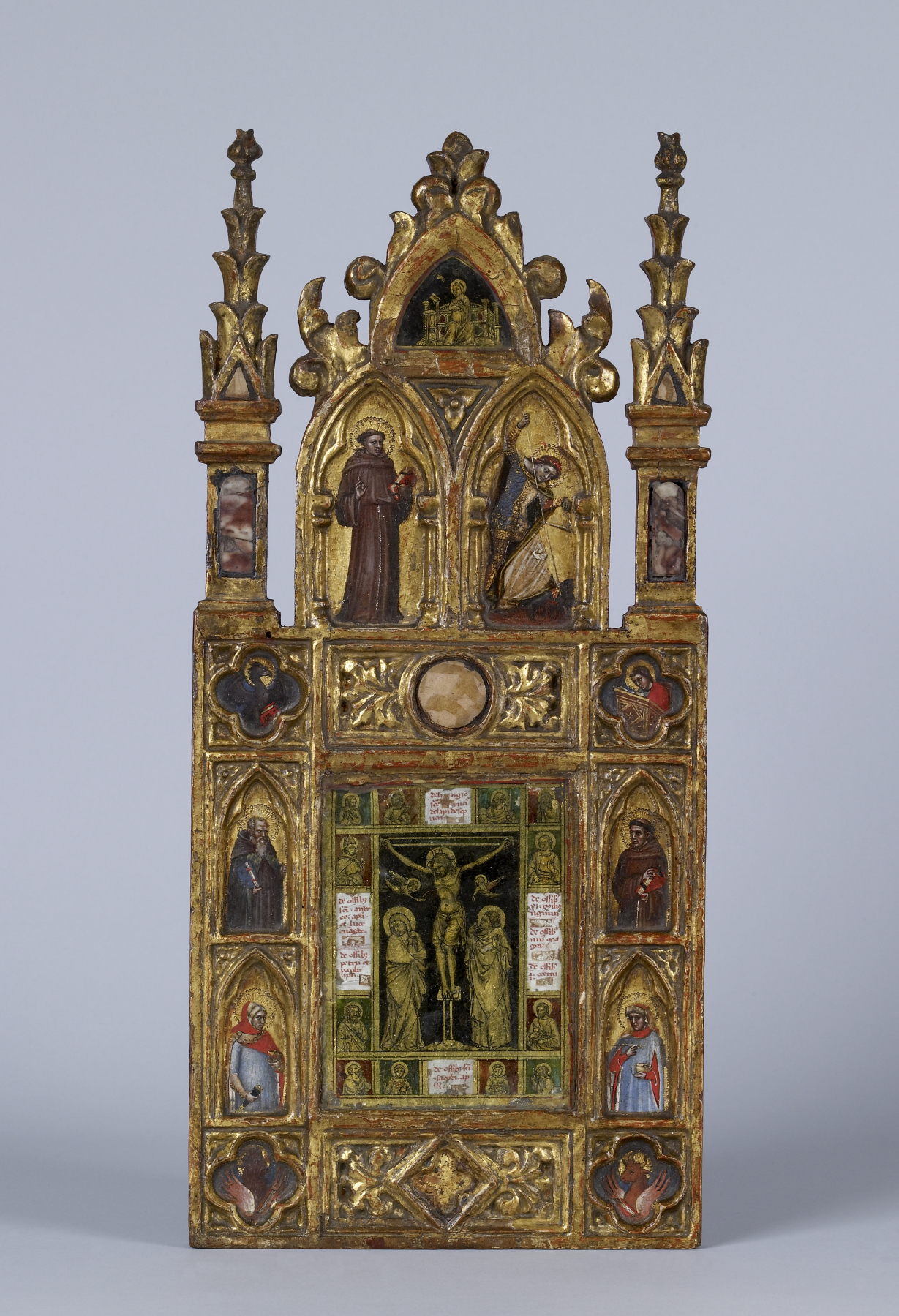
This work is one of only two known fourteenth-century paintings to combine painted panels with plaques of reverse gilded and painted glass. The Crucifixion at the center and the Virgin at the top were made by an unidentified artist in the first half of the fourteenth century. This object is also a reliquary, a container of holy relics of the saints and biblical figures. The labels in red around the Crucifixion identify the items enshrined within. These relics include the wood of the True Cross and a stone from the Holy Sepulcher (top), the bones of the 11,000 Virgins and one of the Magi (right), the bones of St. James the Apostle (bottom), the Apostle Andrew, the Evangelist Luke, and St. Peter and St. Paul (left).
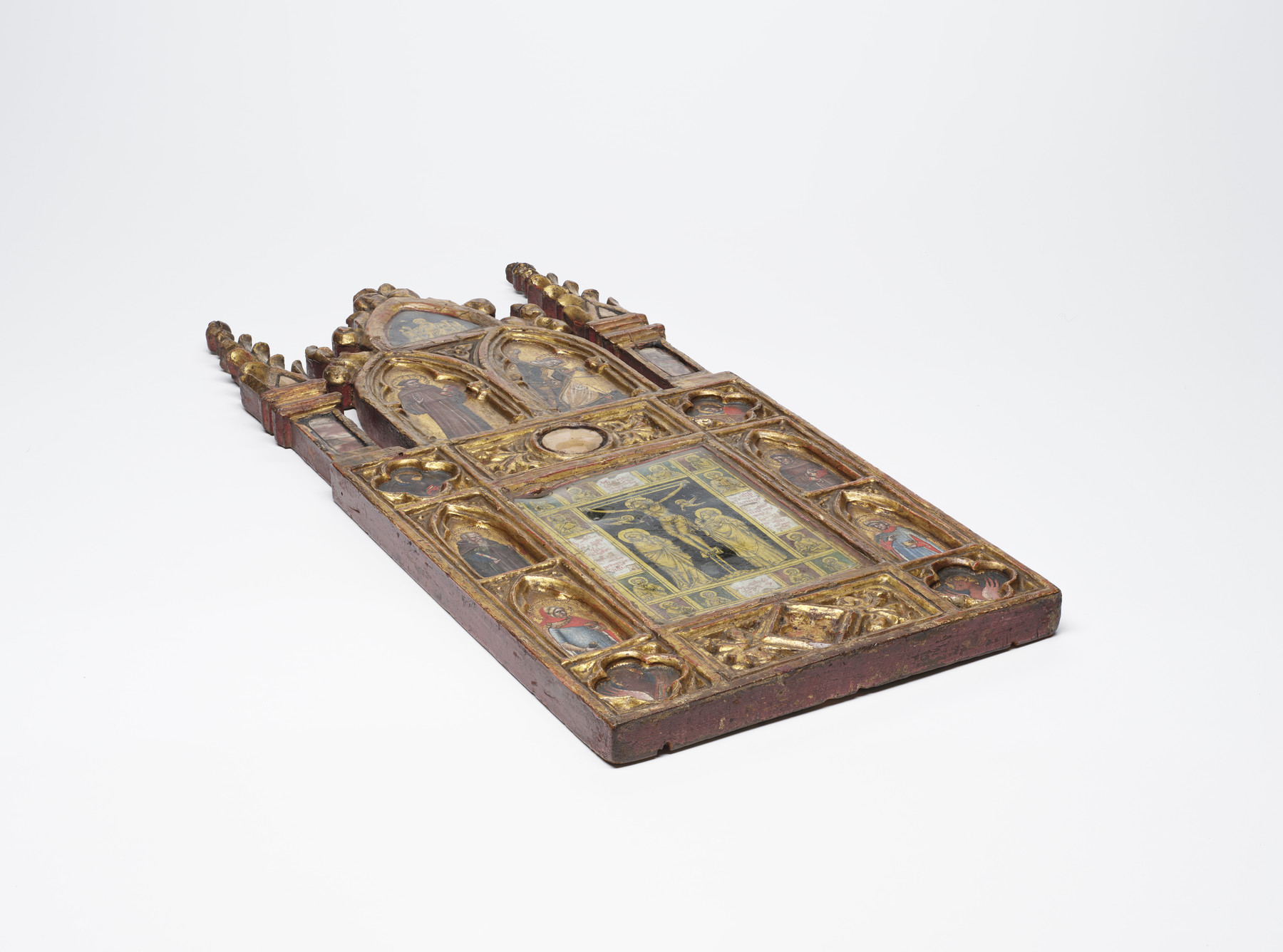
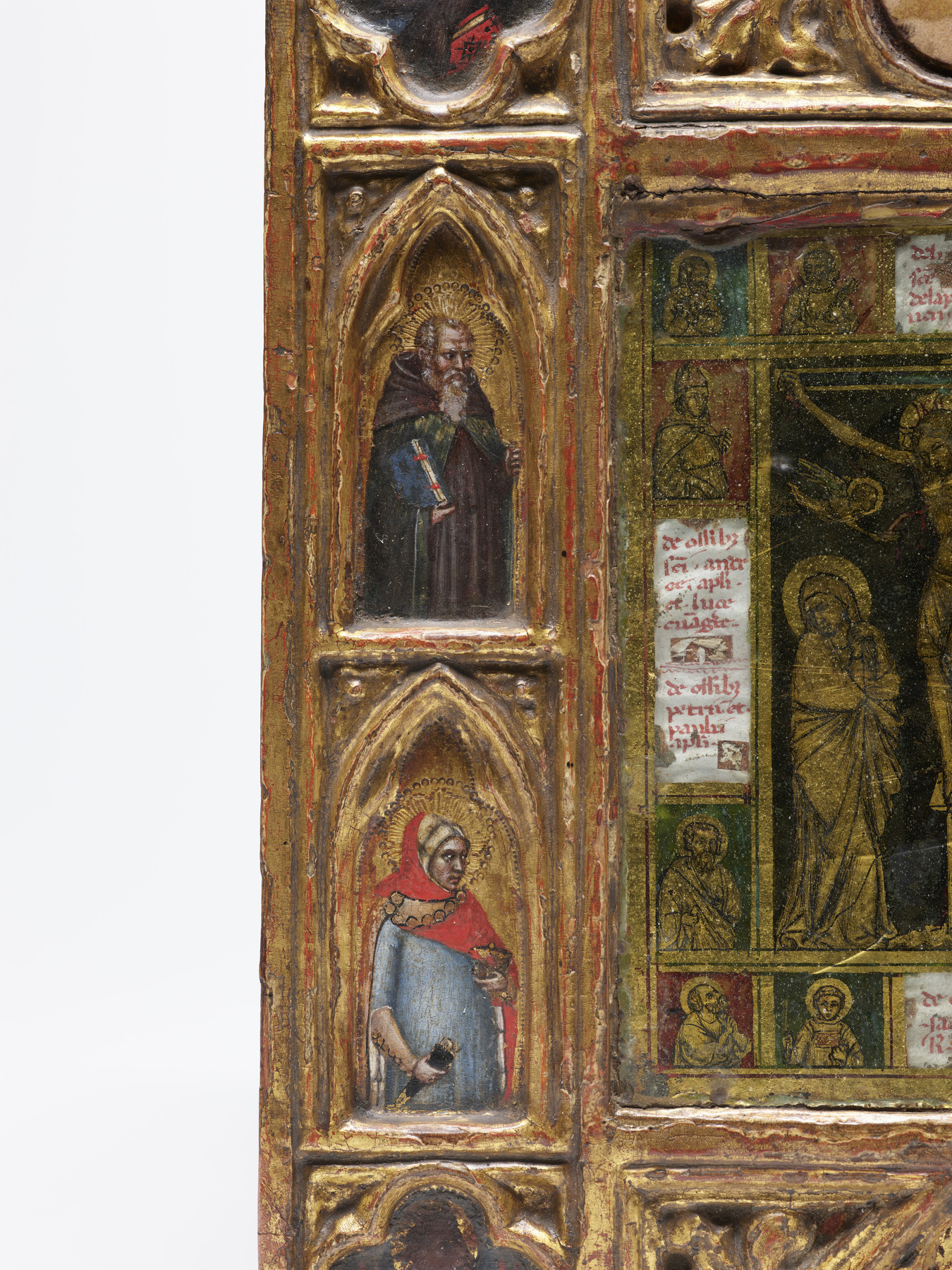
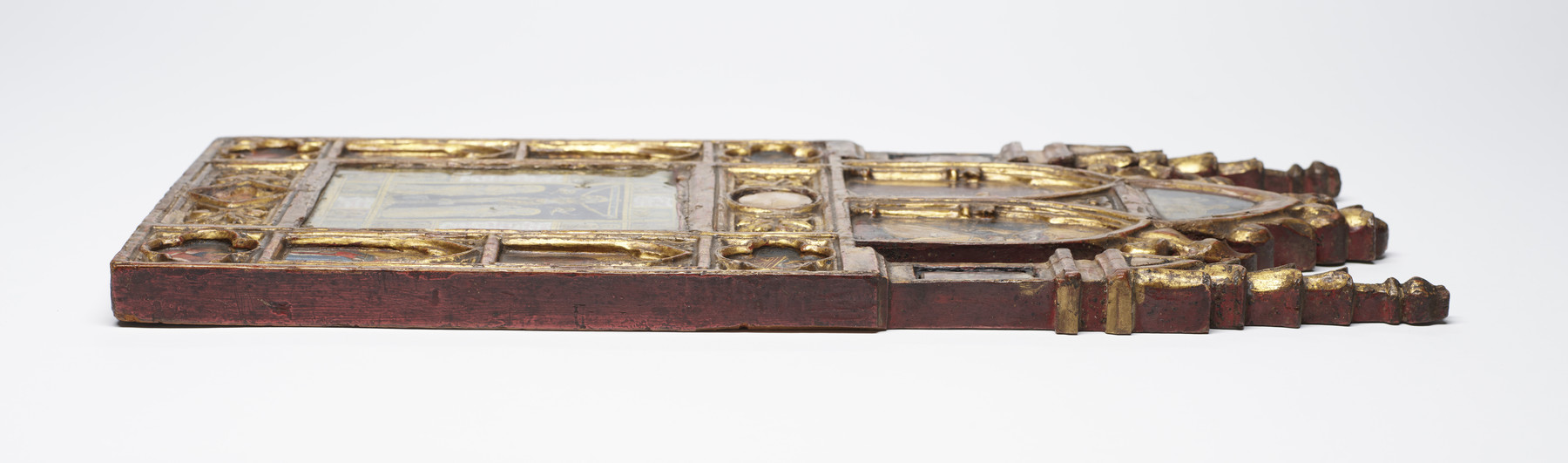
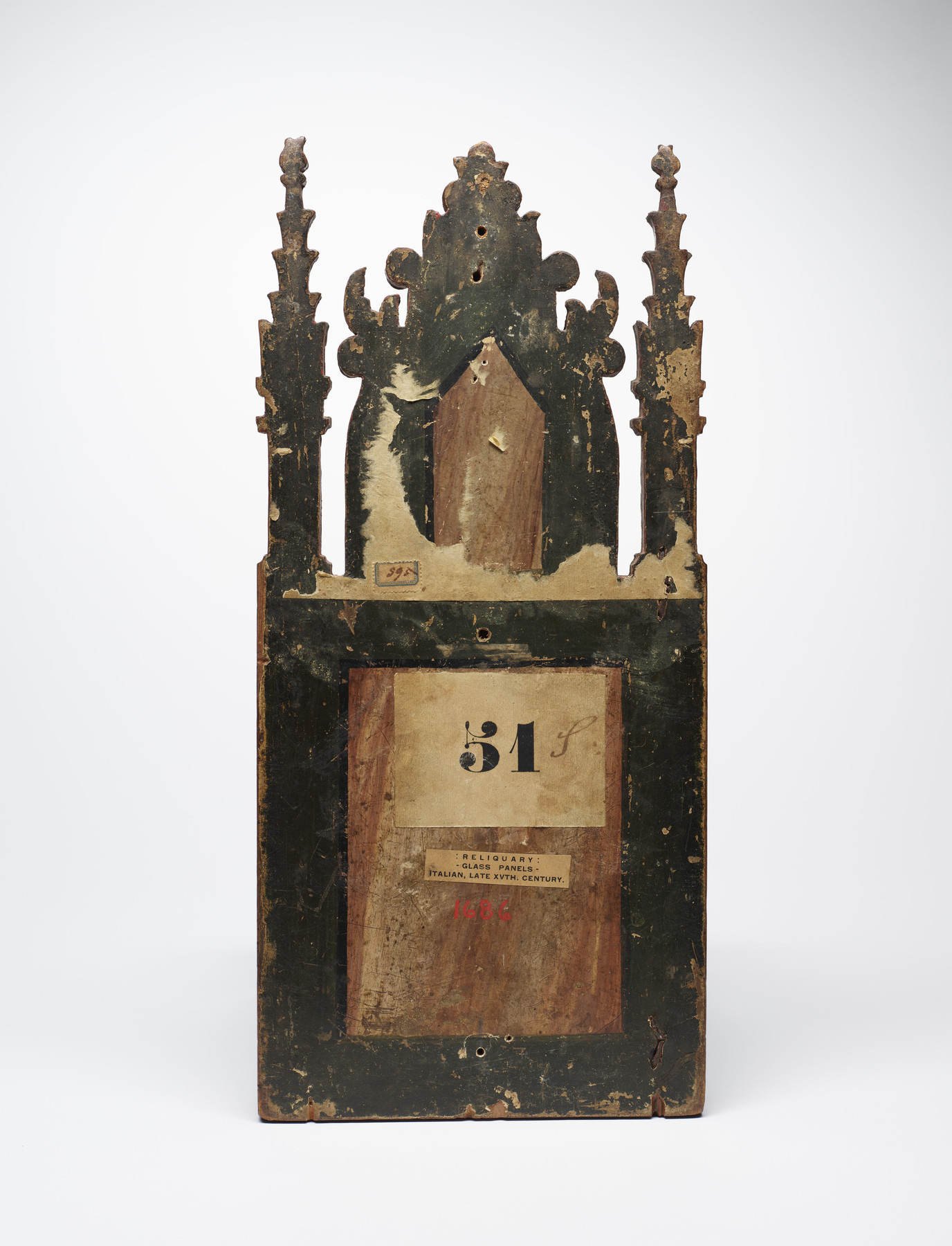
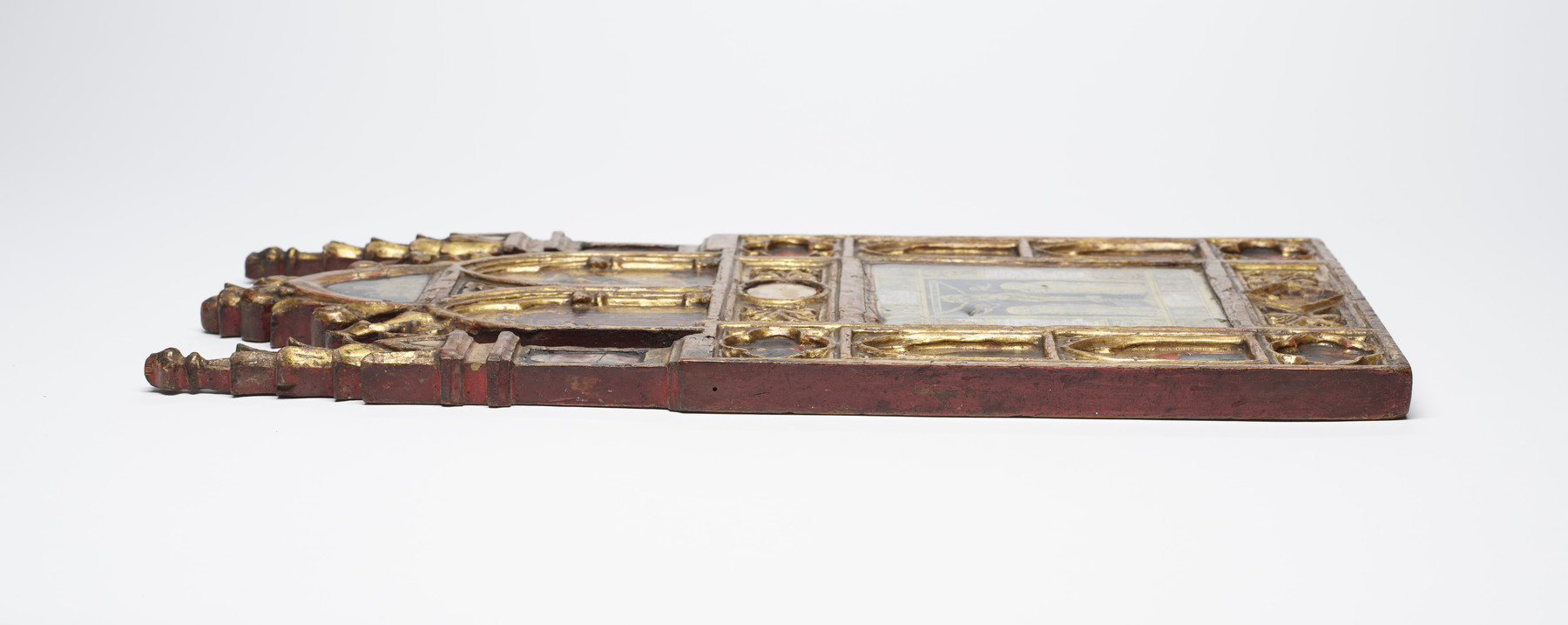
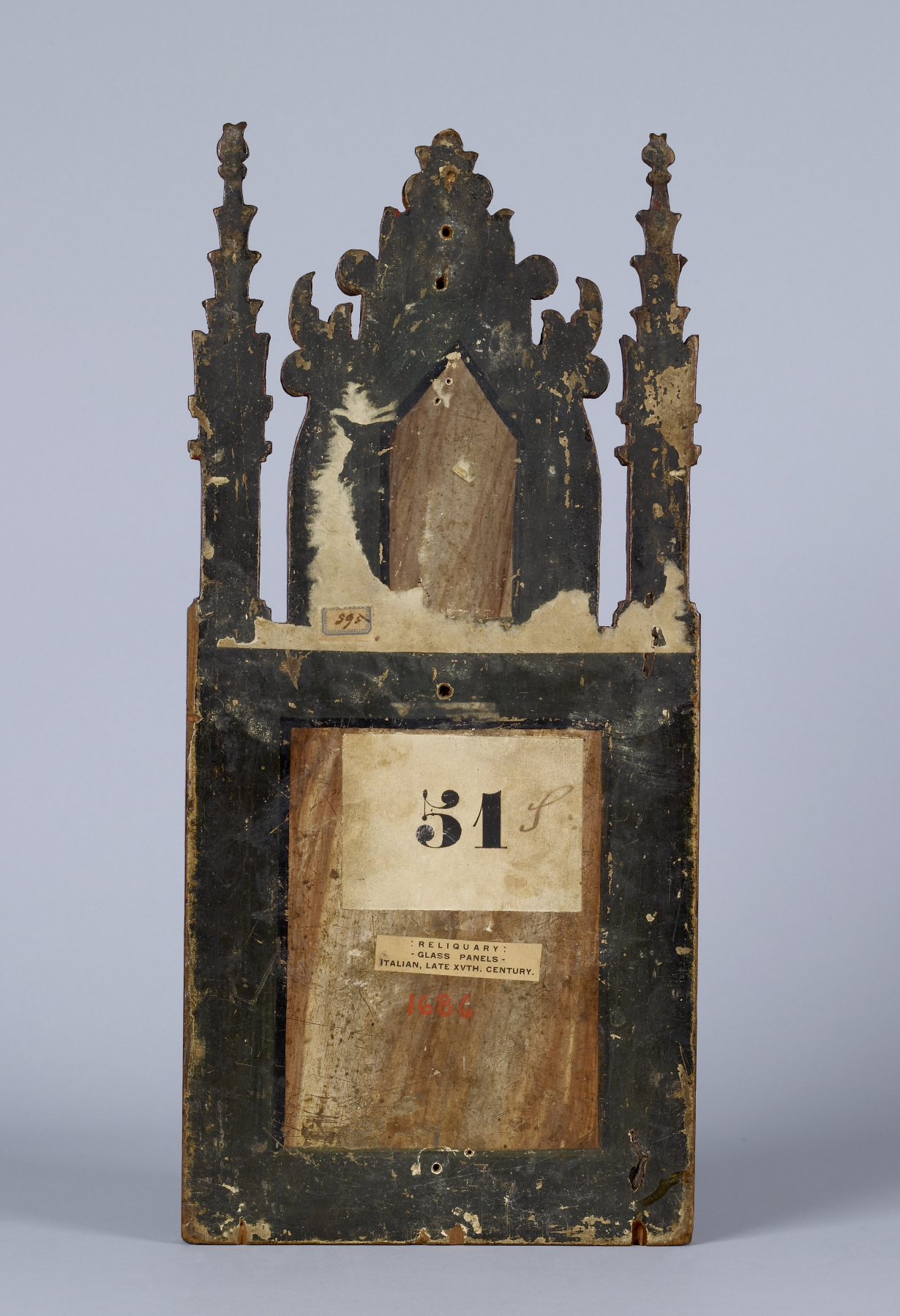
The glass panels perhaps represent a single wing of a reliquary diptych, or two-paneled devotional object, which was dismantled; perhaps the Crucifixion would have been paired with an image of the Nativity and the Virgin would have been paired with the Angel Gabriel, announcing to her that she will bear the child of God, as in 46.2. The panels of the Crucifixion and the Virgin were inserted into the present wood microarchitectural frame in the mid-fourteenth century. The images of numerous saints around them are tempera panel paintings on wood by Tommaso da Modena, a painter trained in the Veneto who worked across Northern Italy in the mid-fourteenth century. With its glass, marble, and lusterware (glazed pottery) insets within a Gothic ornamental frame, this object evokes ecclesiastical architecture in miniature.
After the practice had been abandoned in Italy for almost a millennium, Franciscan communities in fourteenth-century Umbria developed techniques of reverse gilded glass to create devotional images, possibly inspired by the Roman tradition of “sandwich” glass, wherein portraits of individuals or saints were etched in gold leaf fused between two pieces of glass. This technique, later referred to as amalierung or vetro dipinto, is described in Cennino Cennini’s Il libro dell’arte (ca. 1400); unlike the Roman tradition, it does not involve the fusing of two distinct layers. First, a layer of gold leaf was adhered to the back of the glass. Then, the artist scratched off the negative space of the compositions of the Crucifixion and the Virgin with a stylus. Finally, the artist would paint the background, offsetting the gold composition with red, blue, and green. The red (lac dye), blue (azurite), and green (copper resinate) colors of the background have darkened over time. Against these dark backgrounds, the glittering golden figures appear all the more luminous under the glass layer.
Provenance
Provenance (from the French provenir, 'to come from/forth') is the chronology of the ownership, custody, or location of a historical object. Learn more about provenance at the Walters.
Borghese Collection, Rome, [date and mode of acquisition unknown]; Sale, Padiglione dell’Orologio a Villa Borghese, Rome, 17 March 1893, lot 385, pl. 13. Marquess Filippo Marignoli, Rome and Spoleto, prior to 1898 [mode of acquisition unknown]; Don Marcello Massarenti Collection, Rome, 1899 [mode of acquisition unknown] [1900 catalog supplement: no. 51, as Taddeo Gaddi]; Henry Walters, Baltimore, 1902, by purchase; Walters Art Museum, 1931, by bequest.
Exhibitions
| 2010-2011 | Treasures of Heaven. The Cleveland Museum of Art, Cleveland; The Walters Art Museum, Baltimore; The British Museum, London. |
| 1984-1985 | Reliquaries and Ritual: Medieval Objects of Devotion. The Walters Art Gallery, Baltimore. |
| 1982 | 3000 Years of Glass: Treasures from The Walters Art Gallery. The Walters Art Gallery, Baltimore. |
| 1962 | The International Style: The Arts in Europe Around 1400. The Walters Art Gallery, Baltimore. |
Conservation
| Date | Description | Narrative |
|---|---|---|
| Examination | technical study | |
| 1/1/1986 | Treatment | cleaned; loss compensation |
| 3/23/1995 | Treatment | cleaned |
| 2/28/2008 | Examination | condition |
Geographies
Italy, Umbria
(Place of Origin)
Italy (Place of Origin)
Measurements
H: 17 15/16 x W: 8 1/4 x D: 7/8 in. (45.56 x 20.96 x 2.22 cm)
Credit Line
Acquired by Henry Walters with the Massarenti Collection, 1902
Location in Museum
Accession Number
In libraries, galleries, museums, and archives, an accession number is a unique identifier assigned to each object in the collection.
In libraries, galleries, museums, and archives, an accession number is a unique identifier assigned to each object in the collection.
37.1686