
 Creative Commons License
 Creative Commons License
 Creative Commons License
 Creative Commons License
 Creative Commons License
 Creative Commons License
 Creative Commons License
 Creative Commons License


Ceramic Lamp
(Islamic World )
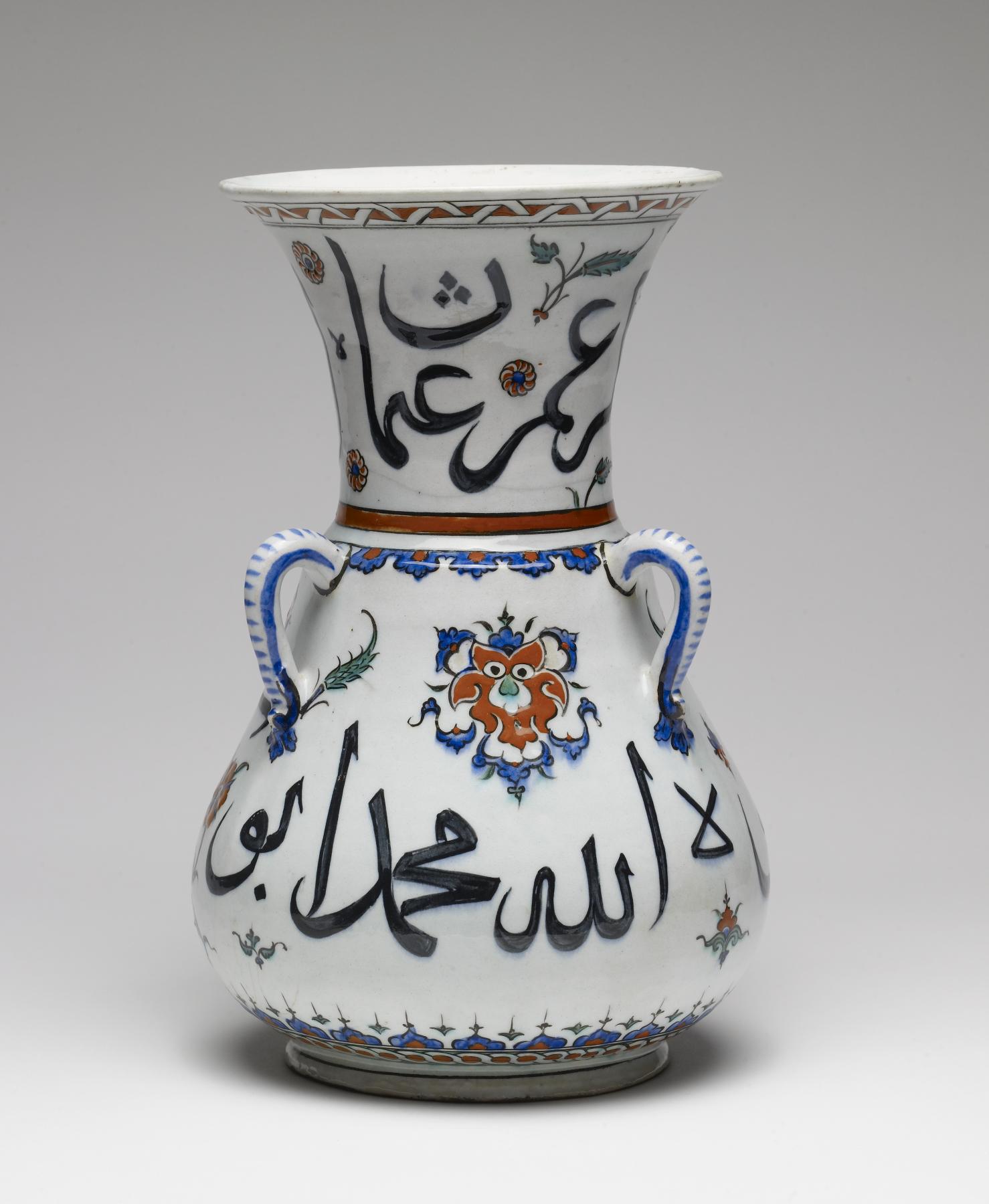
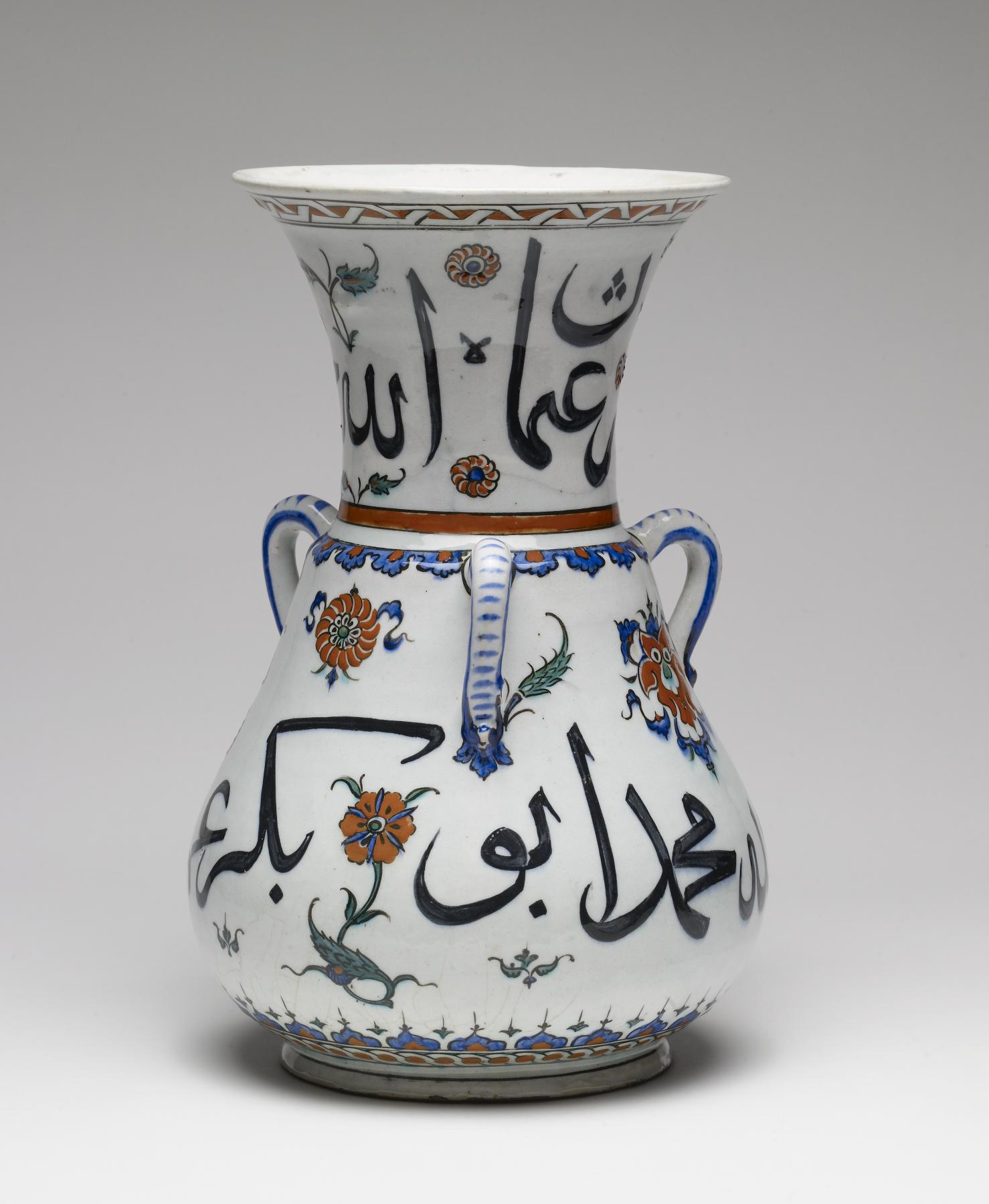
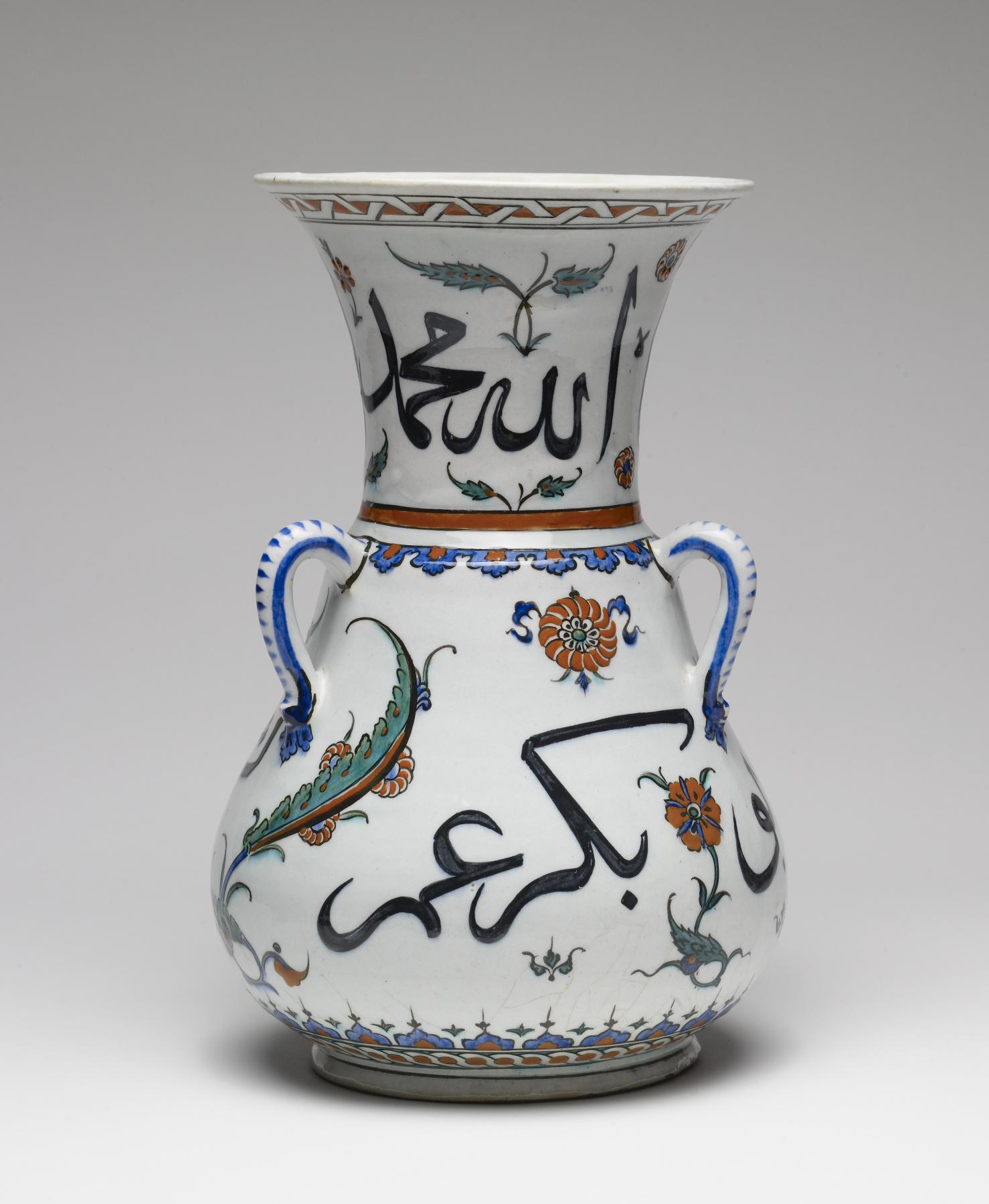
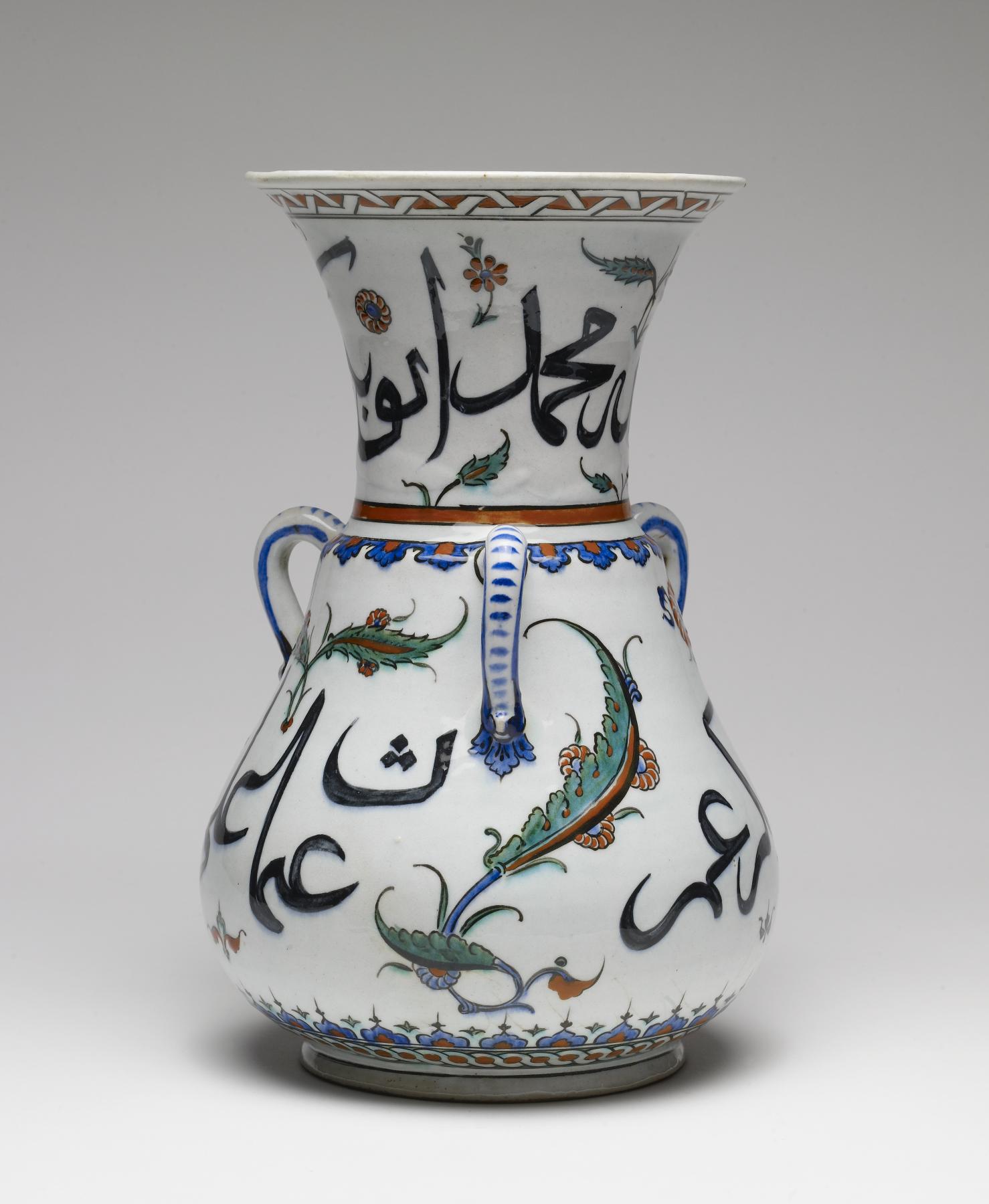
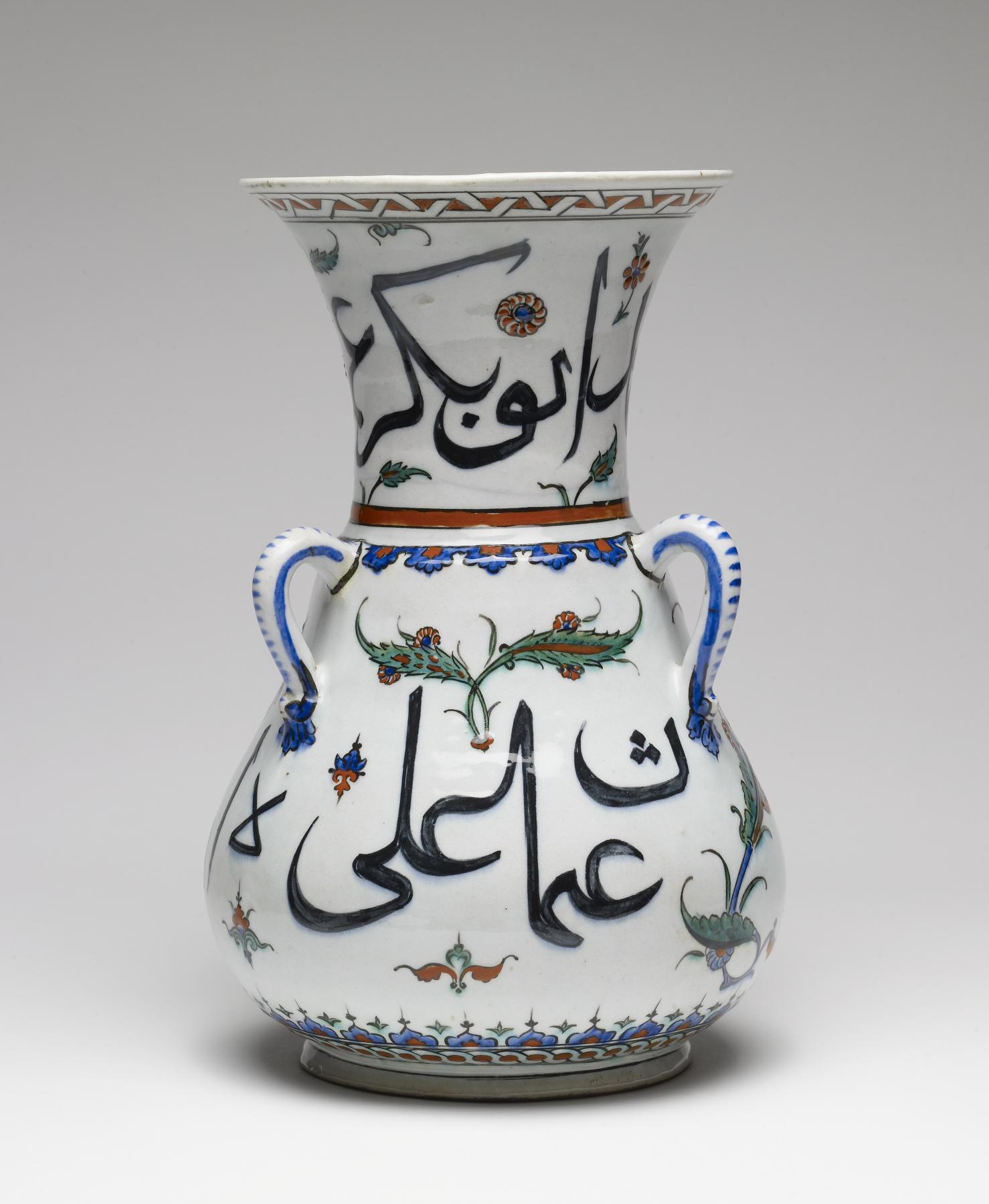
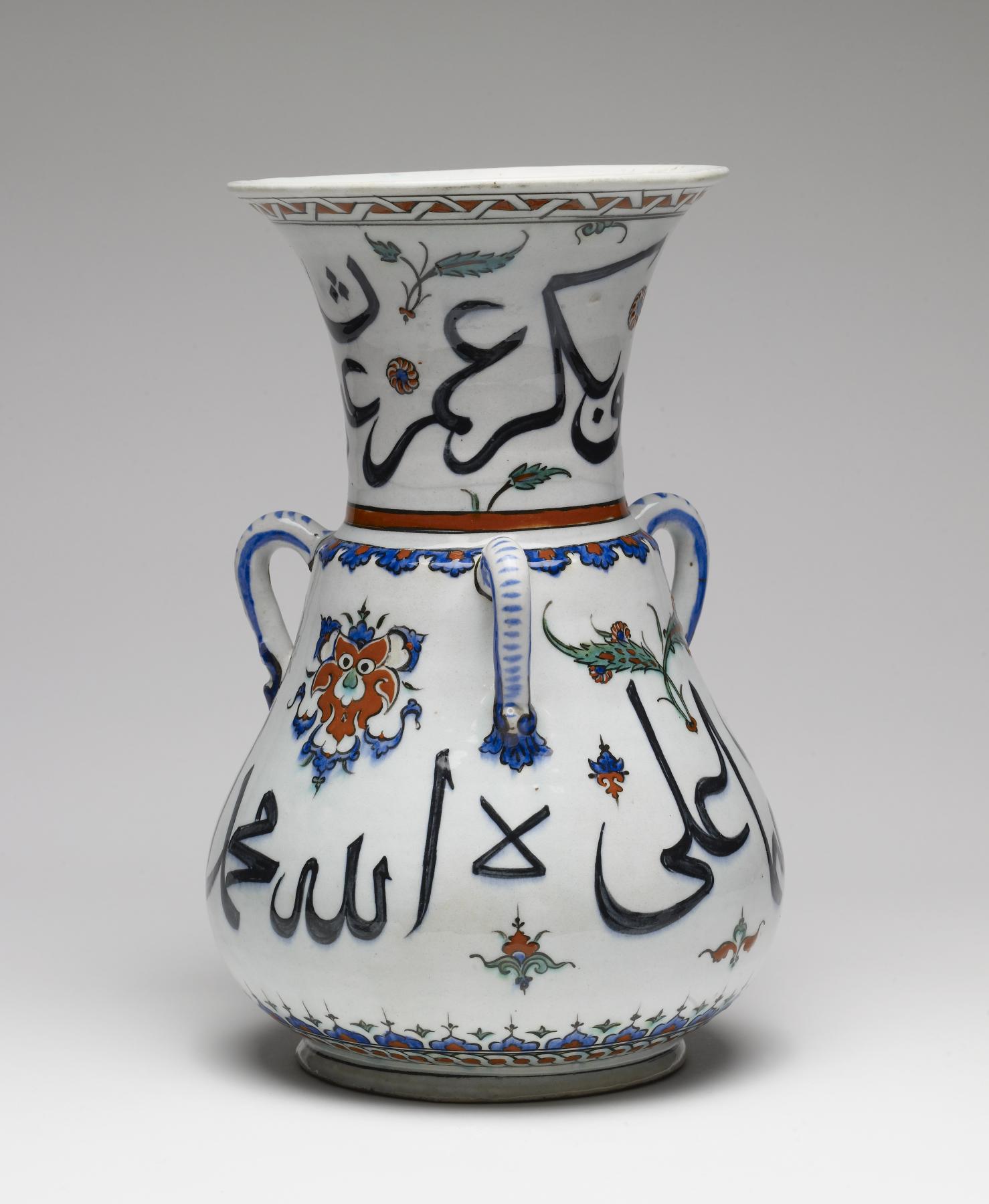
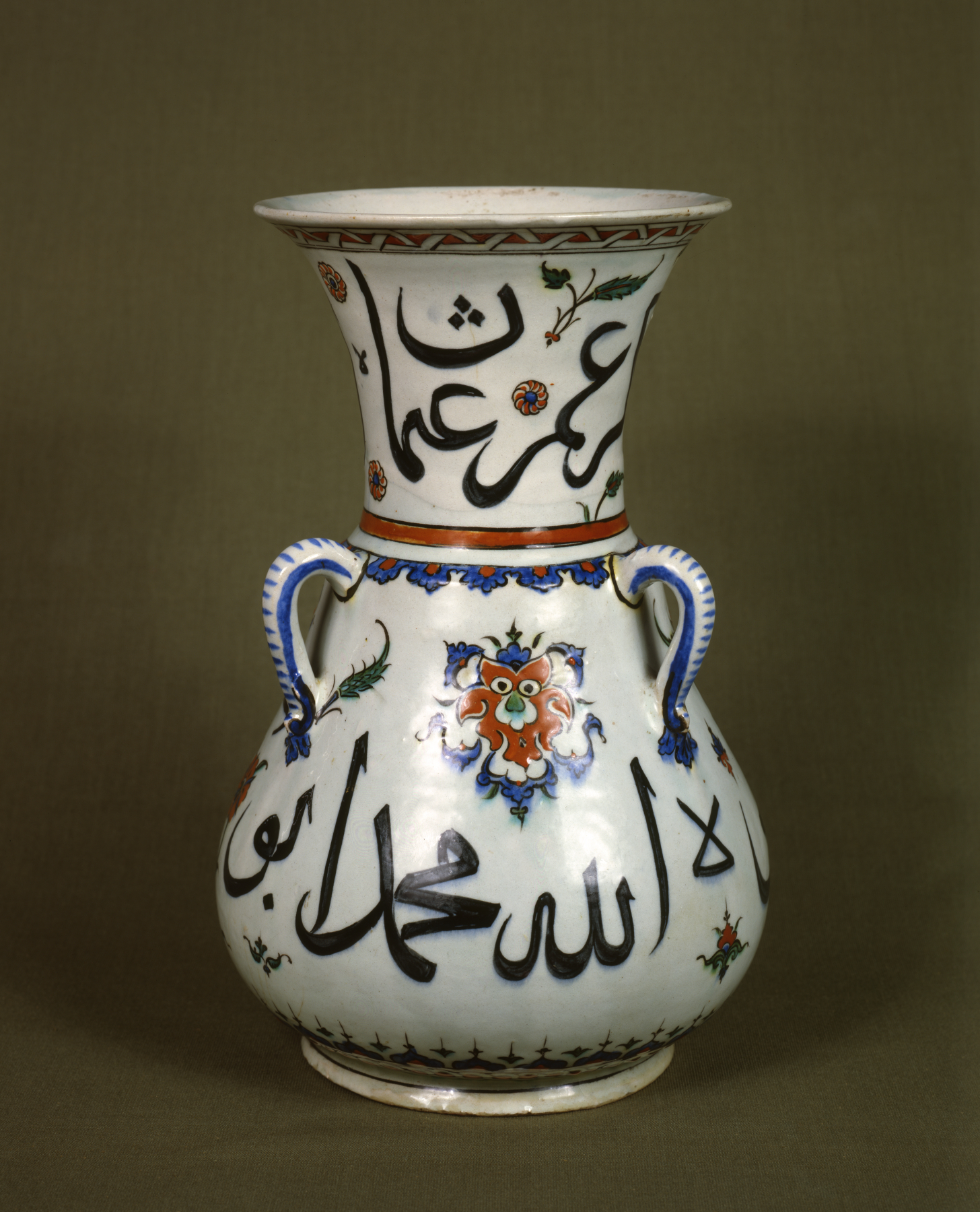
This ceramic lamp is adorned with the names of God (Allah) and the Prophet (Muhammad) and the first four leaders (caliphs) of the early Islamic community: Abu Bakr, ‘Umar, ‘Uthman, and ‘Ali. The inscribed names, written in a large Arabic script called thuluth, confirm that the lamp was intended to symbolically represent divine light in addition to literally illuminating the space.
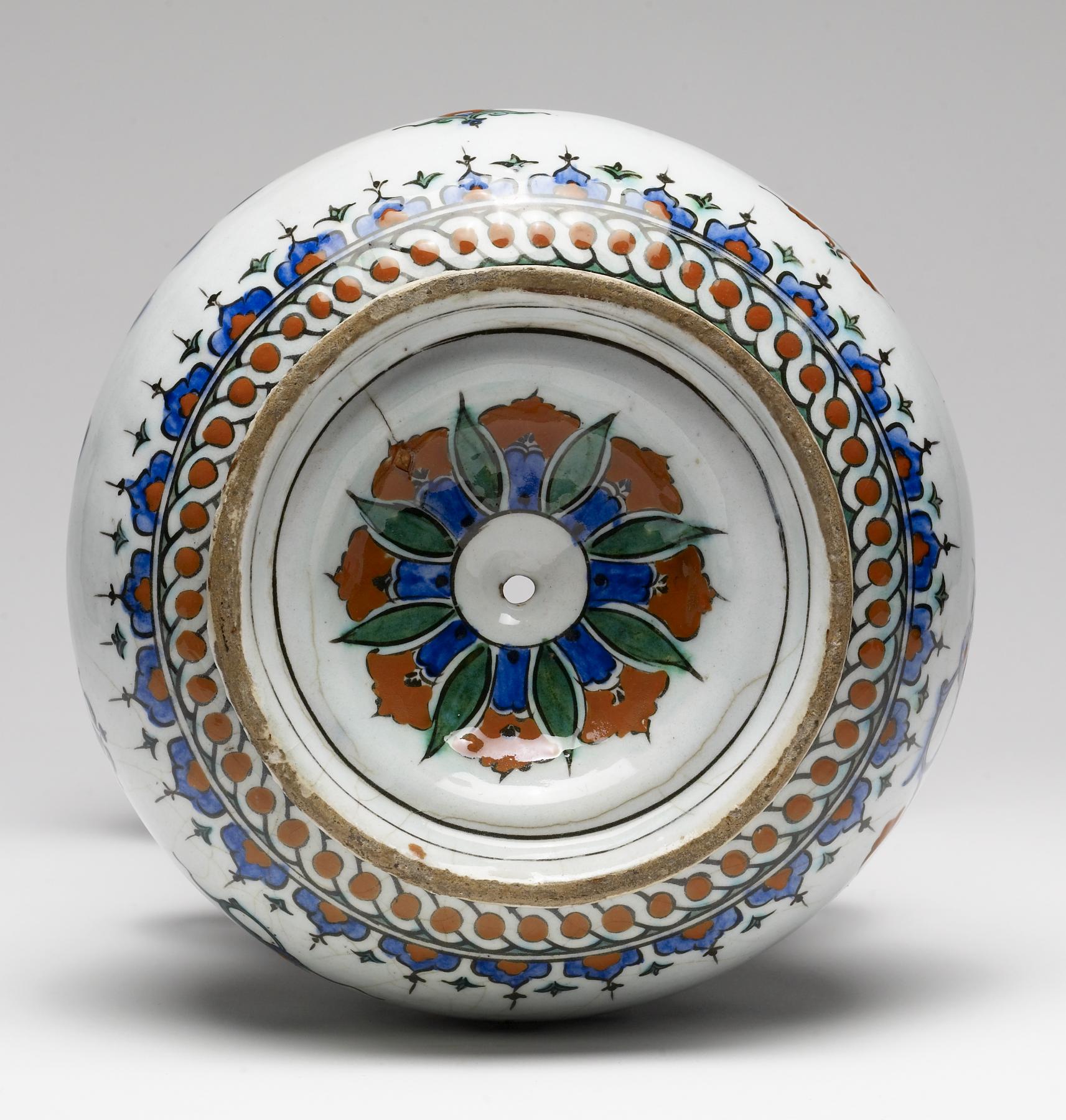
Islamic religious buildings traditionally were lit with glass lamps, generally called mosque lamps, that hung from chains. In 16th-century Turkey, it was common to make mosque lamps from glazed ceramic and to pair them with round or oval ornaments. Such ceramic pieces were of little use as lighting fixtures. This example and others like it, therefore, would have served as decoration when hung in a mosque, but would not be functional lamps.They may have functioned, however, as acoustic devices, hung in groups to soften the echo of voices in the prayer hall. Mosque lamps were also symbols of divine light, and, therefore, of God's presence in the place of prayer, while the ornamental spheres symbolized the orb of heaven.
Inscription
Provenance
Provenance (from the French provenir, 'to come from/forth') is the chronology of the ownership, custody, or location of a historical object. Learn more about provenance at the Walters.
Dikran Kelekian, New York and Paris, [date of acquisition unknown], by purchase; Henry Walters, Baltimore, before 1909, by purchase; Walters Art Museum, 1931, by bequest.
Exhibitions
| 2012 | Paradise Imagined: Images of the Garden in the Islamic and Christian World. The Walters Art Museum, Baltimore. |
| 1991 | The Here and the Hereafter: Images of Paradise in Islamic Art. Asia Society, New York; Bowdoin College Museum of Art, Brunswick; Hood Museum of Art, Hanover; University Art Gallery, University of California Berkeley, Berkeley; Springfield Museums, Springfield. |
| 1979 | Calligraphy in the Arts of the Muslim World. Asia House Gallery, New York; Cincinnati Art Museum, Cincinnati; Seattle Art Museum, Seattle; Saint Louis Art Museum, St. Louis. |
Geographies
Turkey, Iznik (Place of Origin)
Measurements
H: 12 13/16 x Diam: 8 7/16 in. (32.5 x 21.5 cm); Top Diam: 7 1/16 in. (18 cm) (diam.)
Credit Line
Acquired by Henry Walters, before 1909
Accession Number
In libraries, galleries, museums, and archives, an accession number is a unique identifier assigned to each object in the collection.
In libraries, galleries, museums, and archives, an accession number is a unique identifier assigned to each object in the collection.
48.1301