
 Creative Commons License
 Creative Commons License
 Creative Commons License


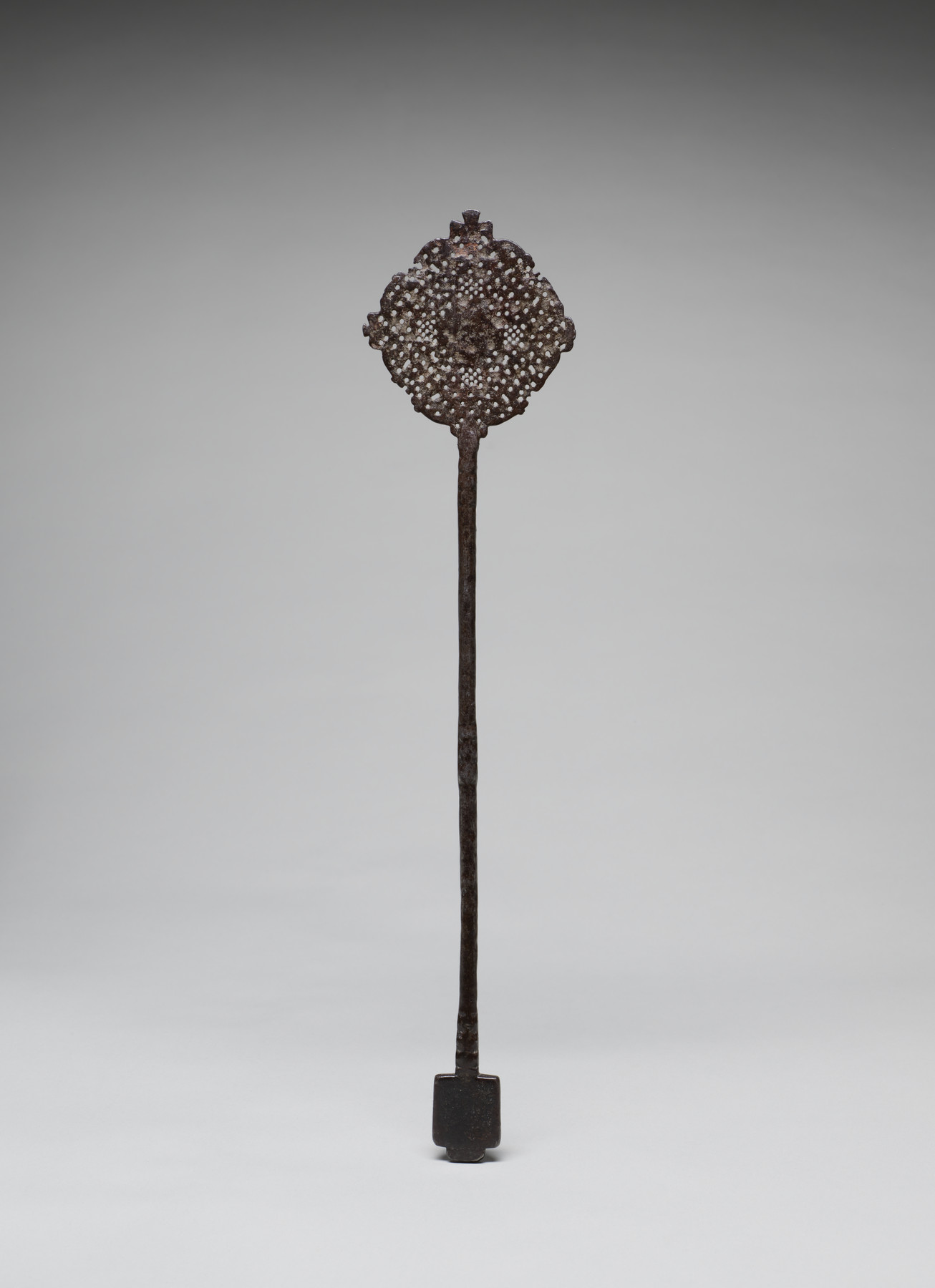
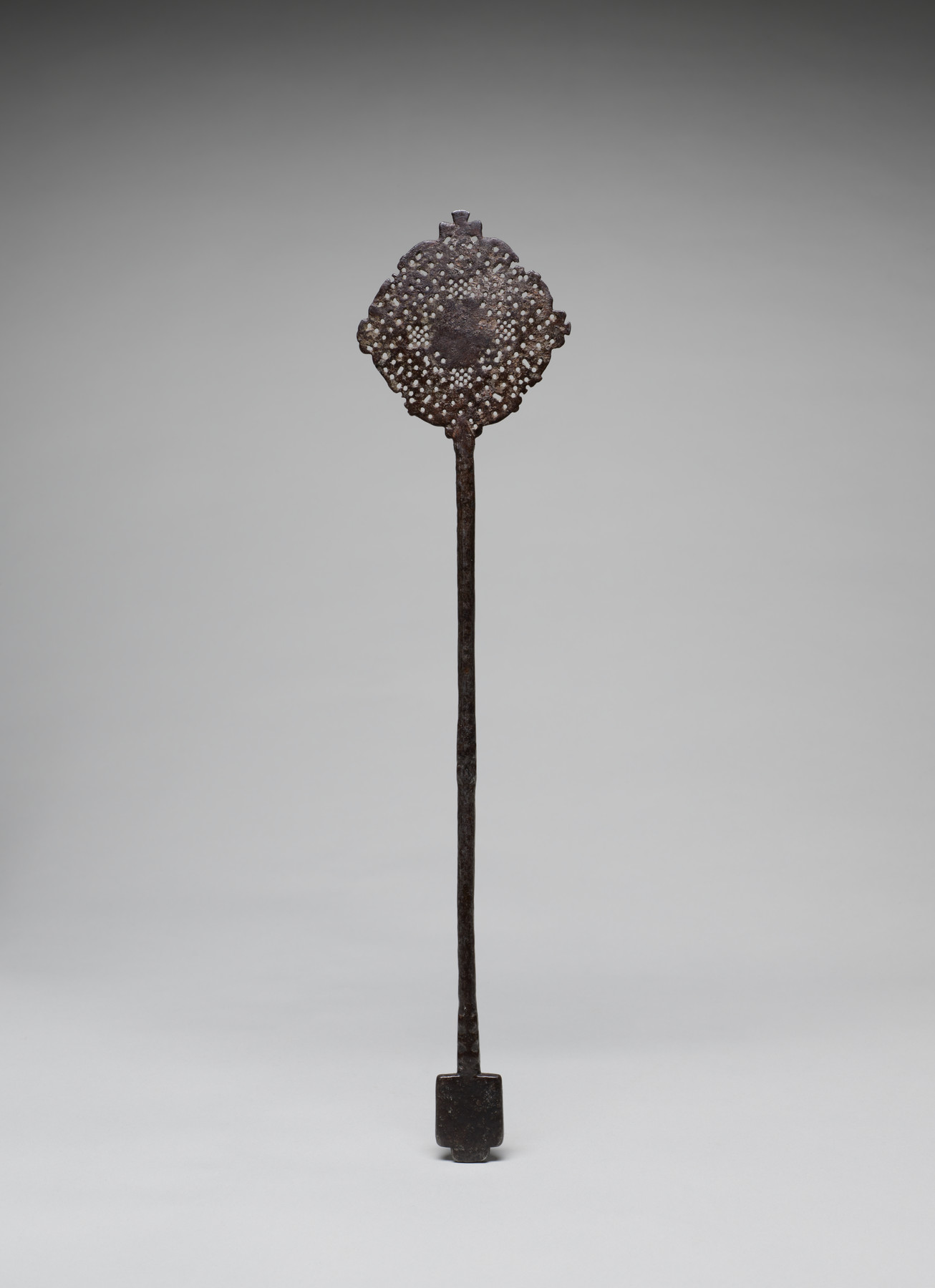
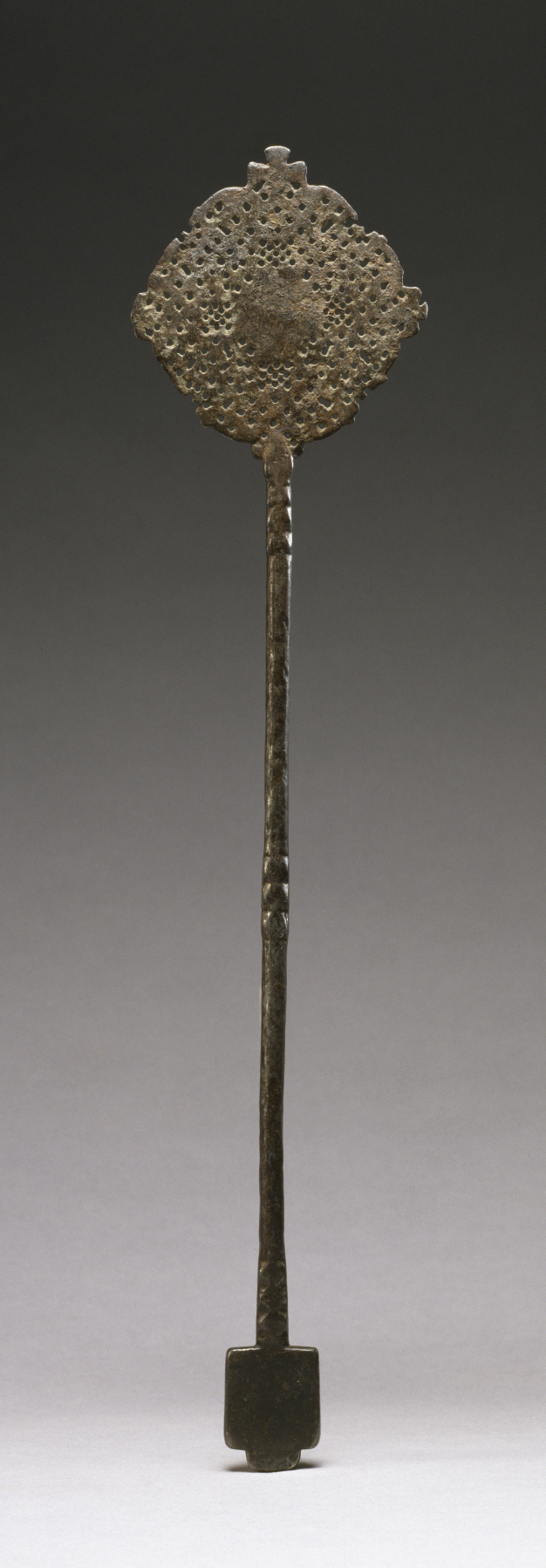
Hand Cross
(Ethiopia)
Ethiopian metal hand crosses are typically constructed from silver, brass, or iron that has been hammered into shape rather than cast using the lost-wax method. These objects draw their formal inspiration from processional crosses, and their creators often imitated styles that had been developed at great religious centers such as Lalibala. The formal relationship of the pierced hand cross to lattice work processional crosses is evident in the drilled holes of its body, an attempt to imitate the form of larger objects. Although their reliance on pre-existing models makes hand crosses difficult to date, these objects were an important means of transmitting local styles, particularly as they were designed to be portable.
Provenance
Provenance (from the French provenir, 'to come from/forth') is the chronology of the ownership, custody, or location of a historical object. Learn more about provenance at the Walters.
Knopfelmacher Collection [1925-2010], New York [date and mode of acquisition unknown]; William Wright Gallery, New York; Nooter Collection, 1990; Walters Art Museum, 1997, by gift.
Exhibitions
| 2006-2007 | Angels of Light: Ethiopian Art from the Walters Art Museum. Birmingham Museum of Art, Birmingham; Smith College Museum of Art, Northampton; Museum of Biblical Art, New York. |
Geographies
Ethiopia (Place of Origin)
Measurements
H: 13 3/8 x W: 3 x D: 5/16 in. (34 x 7.6 x 0.8 cm)
Credit Line
Gift of Nancy and Robert Nooter, 1997
Location in Museum
Not on view
Accession Number
In libraries, galleries, museums, and archives, an accession number is a unique identifier assigned to each object in the collection.
In libraries, galleries, museums, and archives, an accession number is a unique identifier assigned to each object in the collection.
52.297