
 Creative Commons License
 Creative Commons License
 Creative Commons License
 Creative Commons License
 Creative Commons License
 Creative Commons License
 Creative Commons License
 Creative Commons License
 Creative Commons License
 Creative Commons License


Human Effigy Pendant
(Ancient Americas )
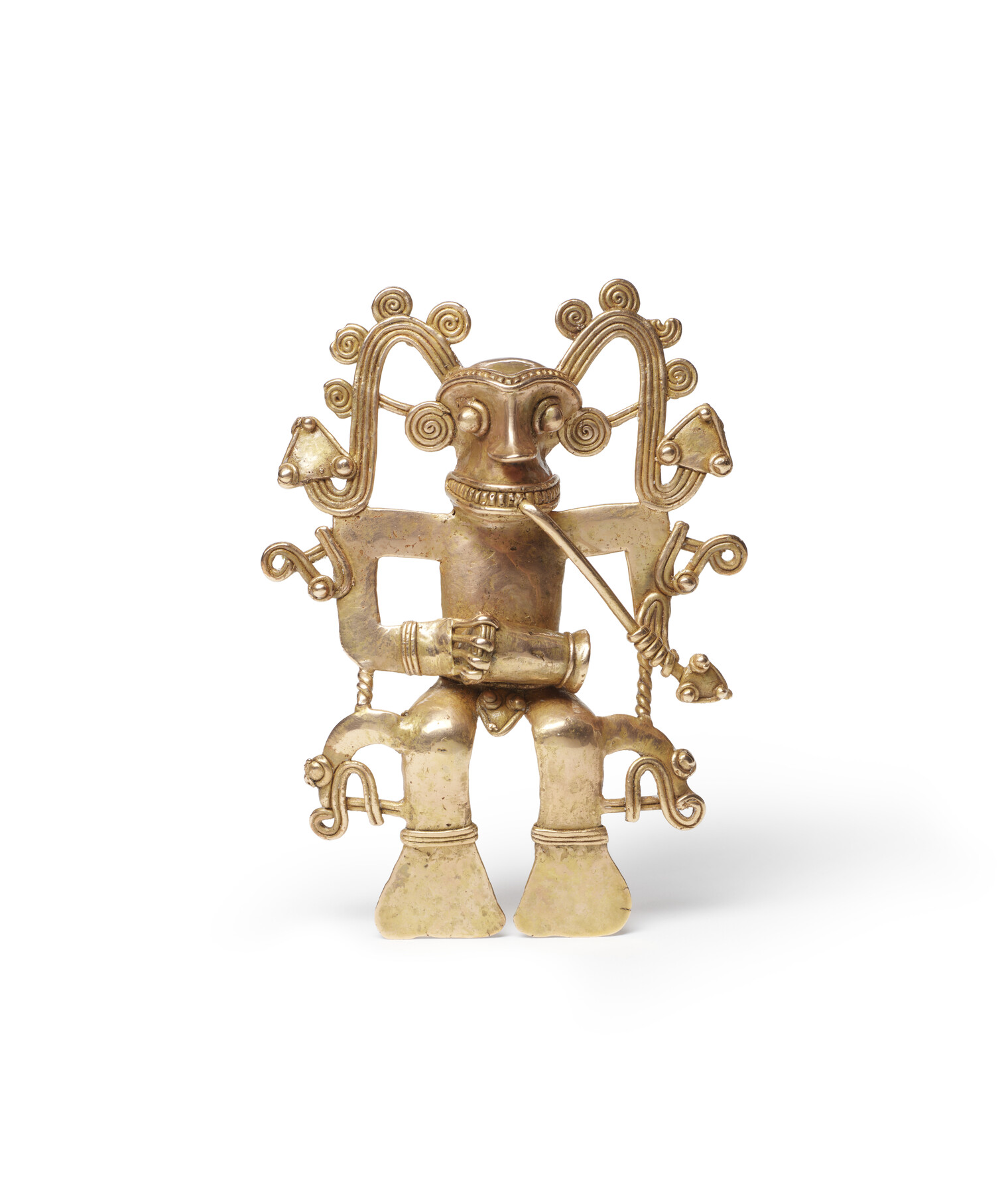
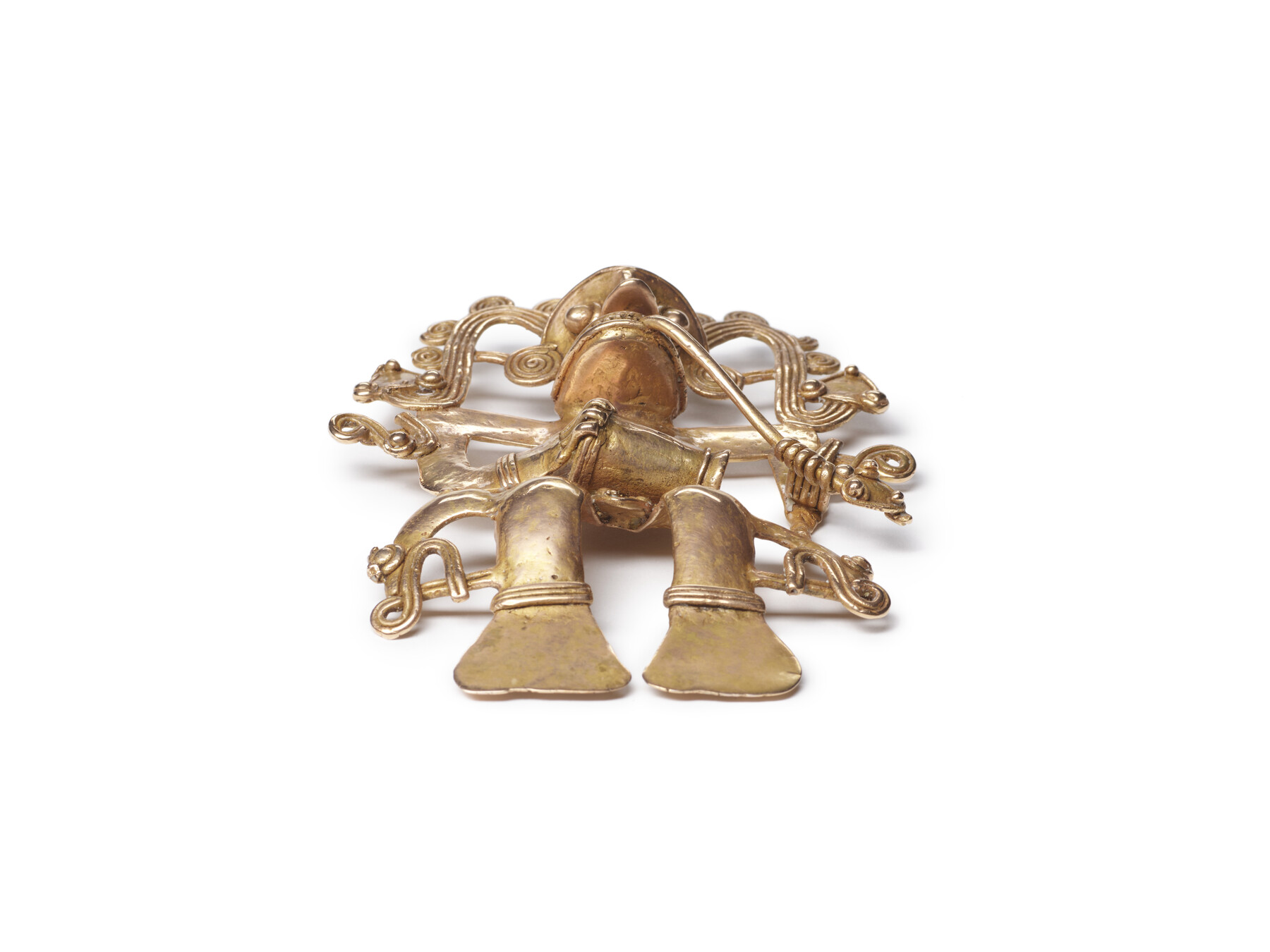
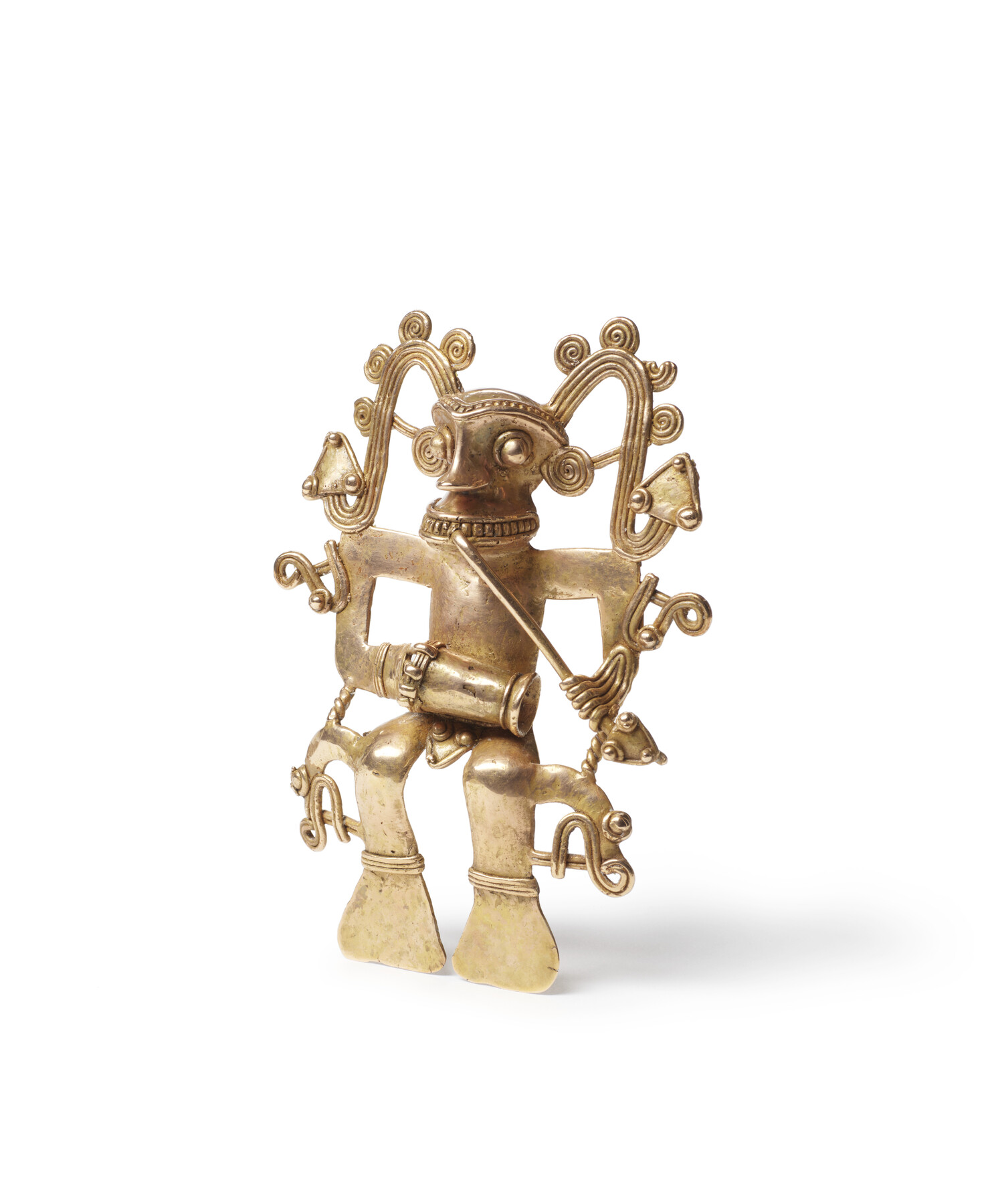
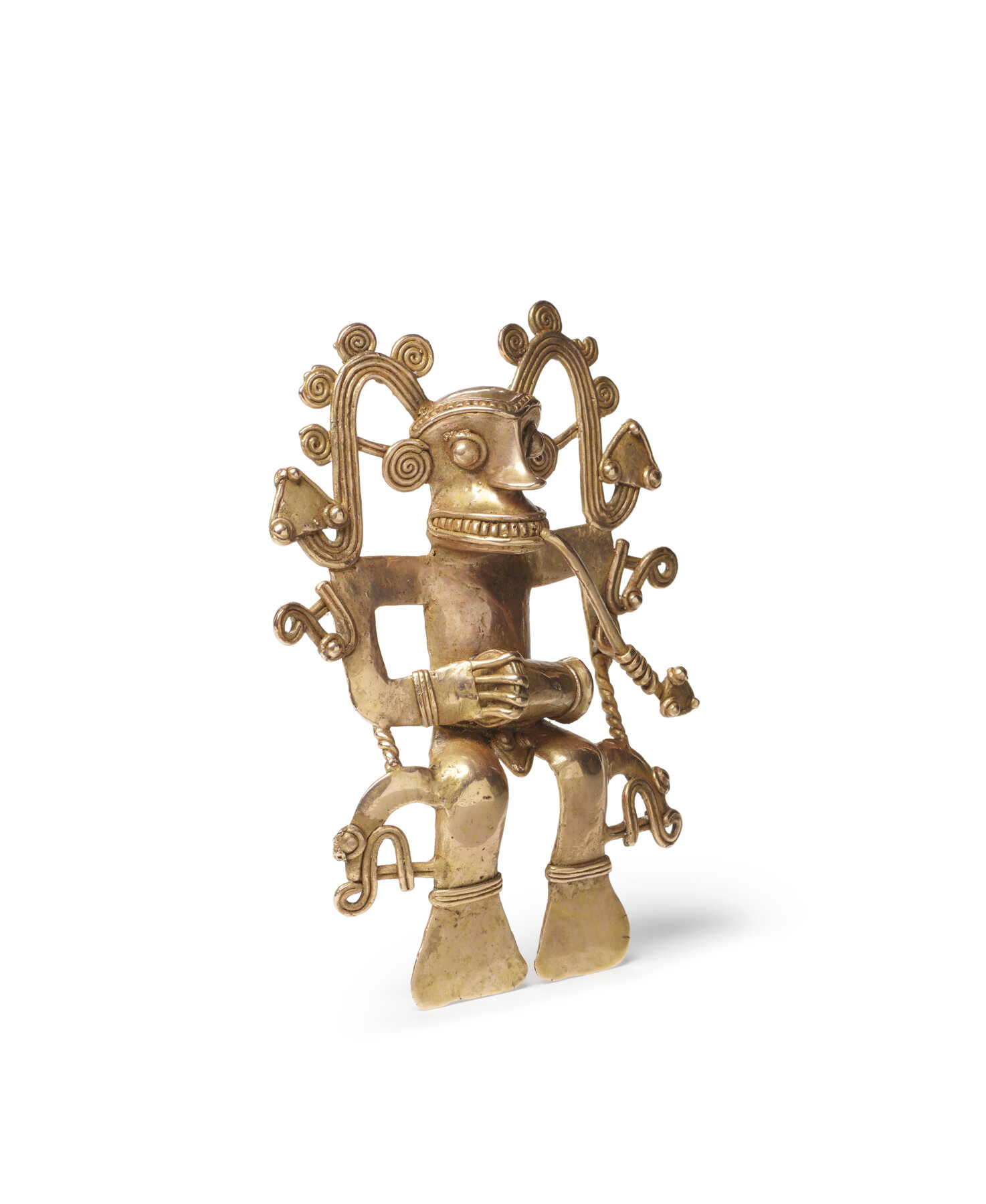
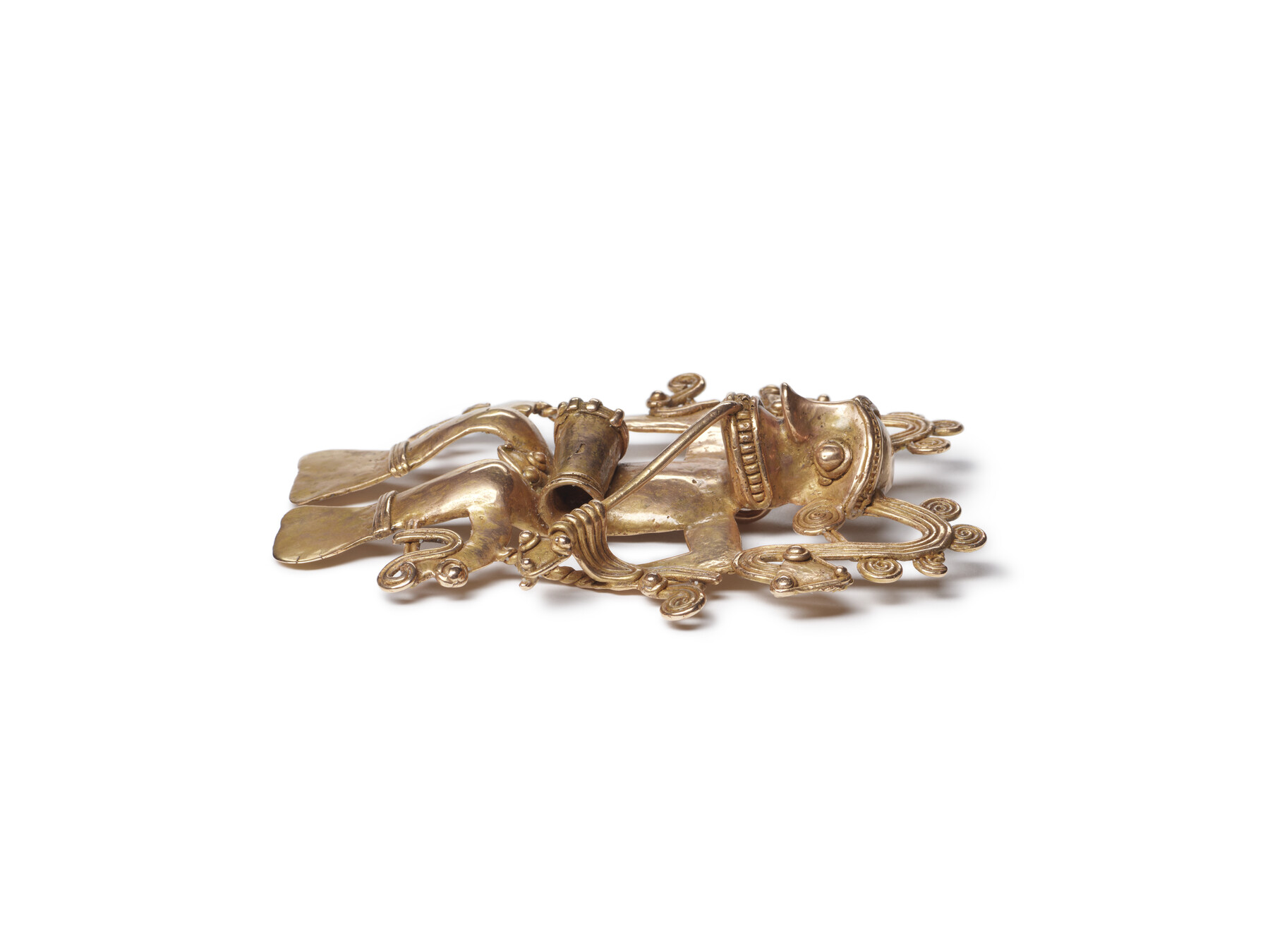
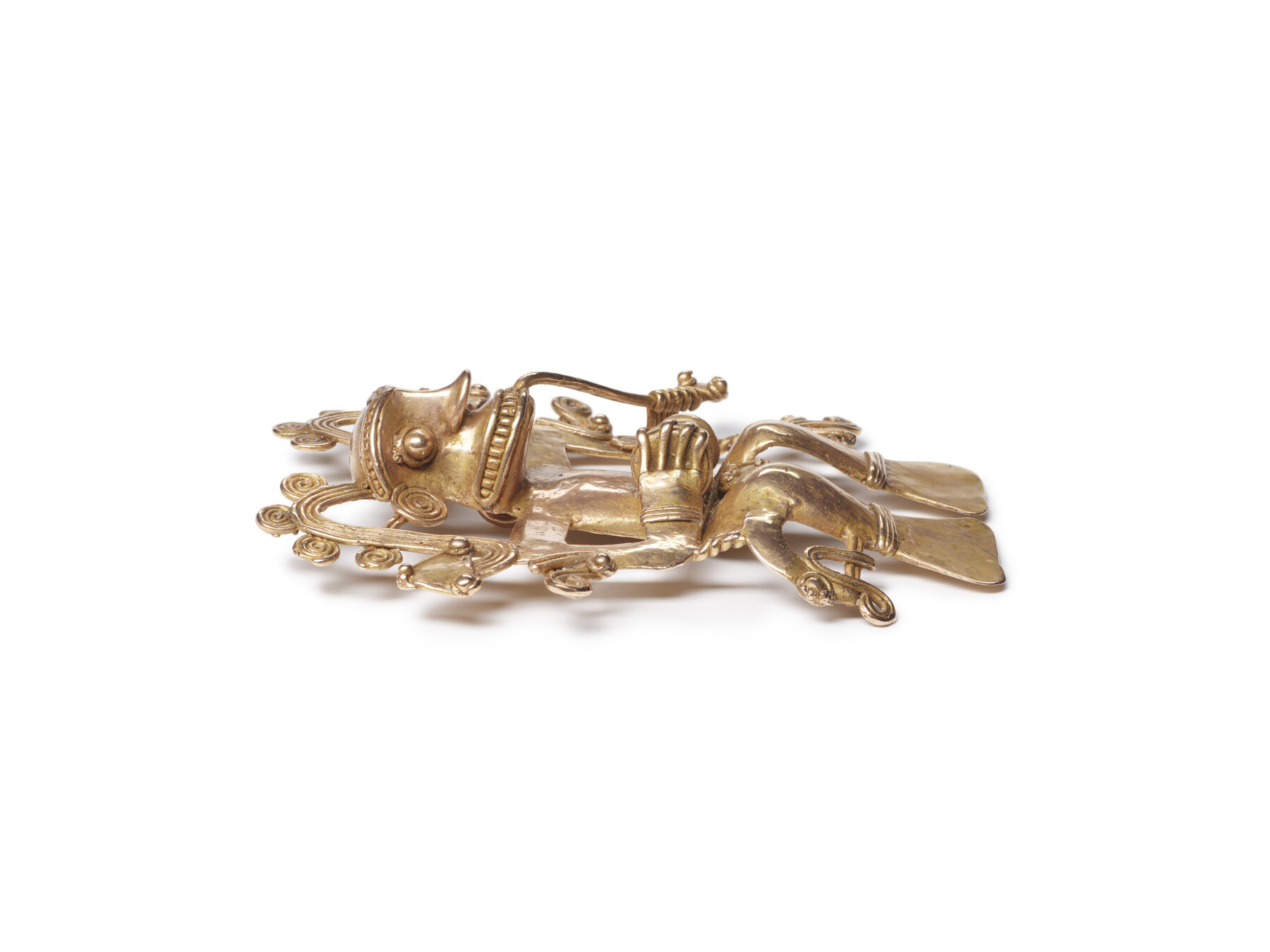
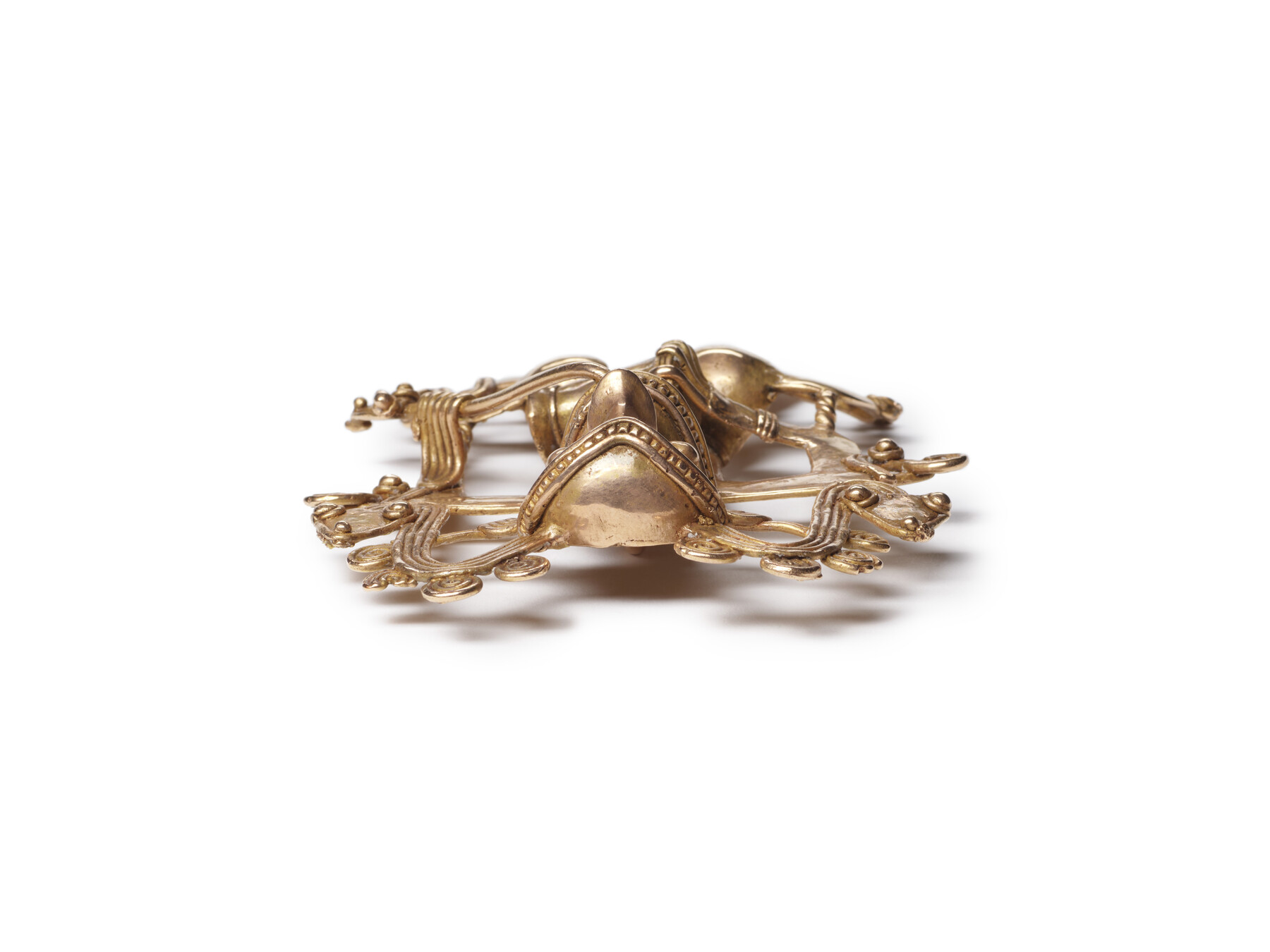
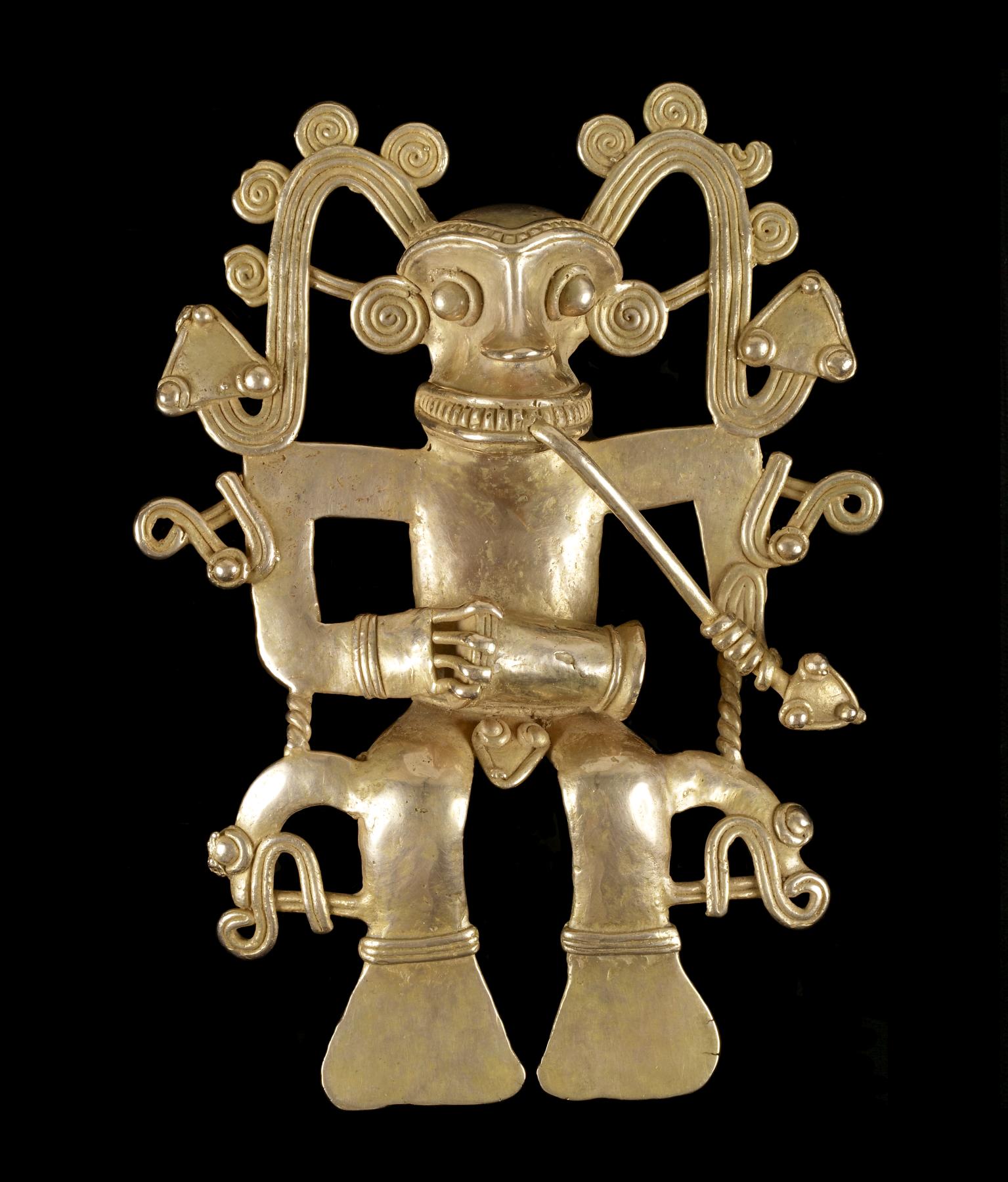
After 500 CE, gold became the dominant medium for fashioning personal adornments. Bracelets, effigy pendants, and large pectorals and headbands were decorated with geometric motifs and cast in the shape of animals and shamanic spirit forms. Goldsmiths in southwestern Costa Rica perfected the lost-wax casting technique introduced from Colombia sometime after 300 CE. Diquís artisans produced individualistic styles expressing local beliefs while sharing pictorial narratives and pectoral forms with societies throughout the region, especially the Chiriquí of adjacent western Panama. The elaborate figural pendants include representations of shamans in their animal spirit forms, sometimes depicted dancing and playing instruments during the transformational rites. This figural pendant features a performer playing a small drum, held in his right hand, and a flute rendered as a serpent and held to his mouth. The figure's bent knees imply dance, a common element of shamanic transformation rituals. His spiritual state is signified by the two serpent-spirits emanating from his head, the center of identity, and by the saurian heads emerging from his shoulders and knees. The shaman's round ears and wide, narrow mouth may reveal his spirit form as that of a bat.
Provenance
Provenance (from the French provenir, 'to come from/forth') is the chronology of the ownership, custody, or location of a historical object. Learn more about provenance at the Walters.
Acquired by Throckmorton Fine Art, New York; purchased by John G. Bourne, Sante Fe, 2003; given to John G. Bourne Foundation, 2003 [1]; given to Walters Art Museum, 2013.
[1] according to Bourne Foundation accounts
Exhibitions
| 2018-2019 | Transformation: Art of the Ancient Americas. The Walters Art Museum, Baltimore. |
| 2015 | Gold of the Ancient Americas. The Walters Art Museum, Baltimore. |
| 2012-2013 | Exploring Art of the Ancient Americas: The John Bourne Collection Gift. The Walters Art Museum, Baltimore; Frist Center for the Visual Arts, Nashville. |
Conservation
| Date | Description | Narrative |
|---|---|---|
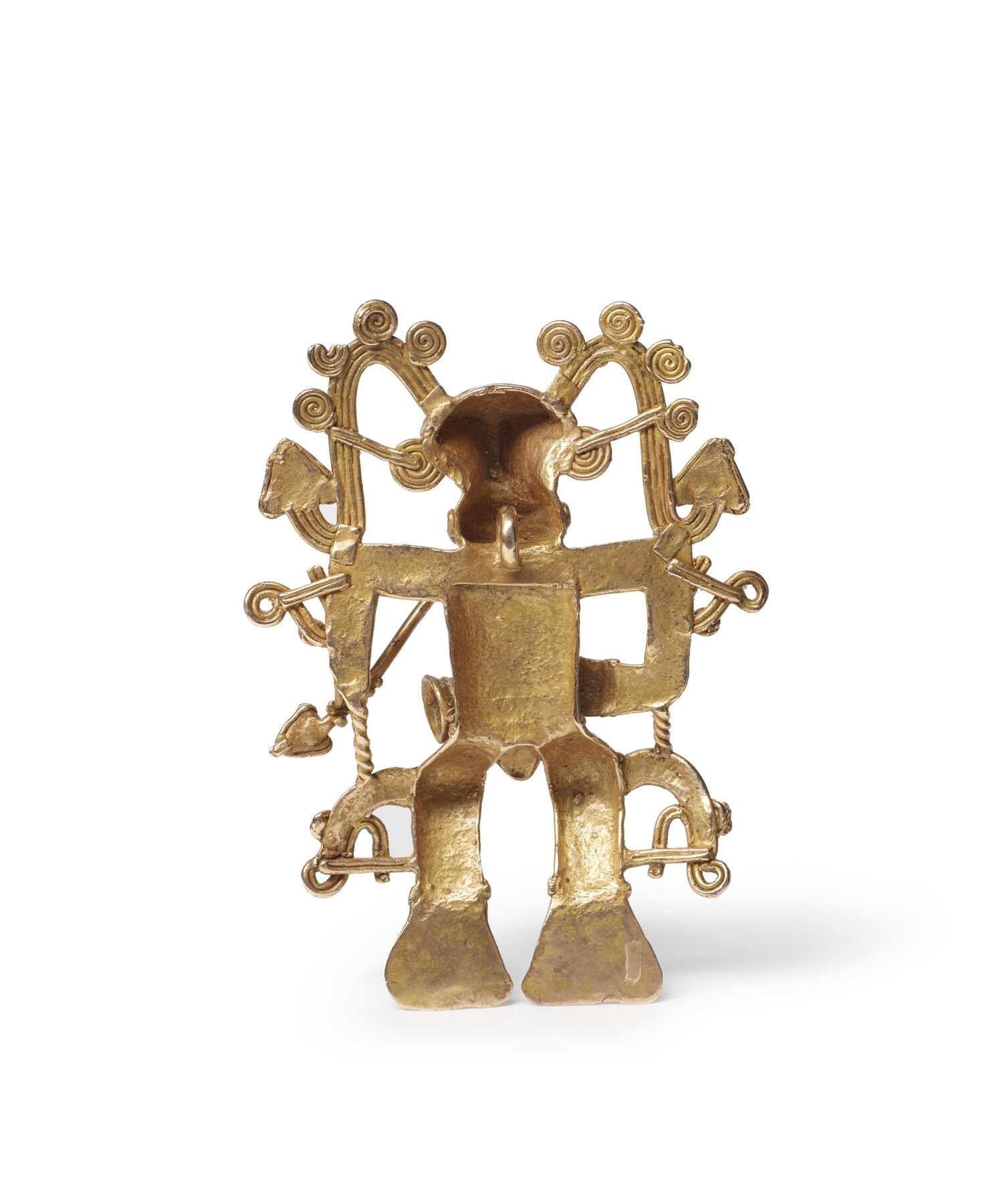
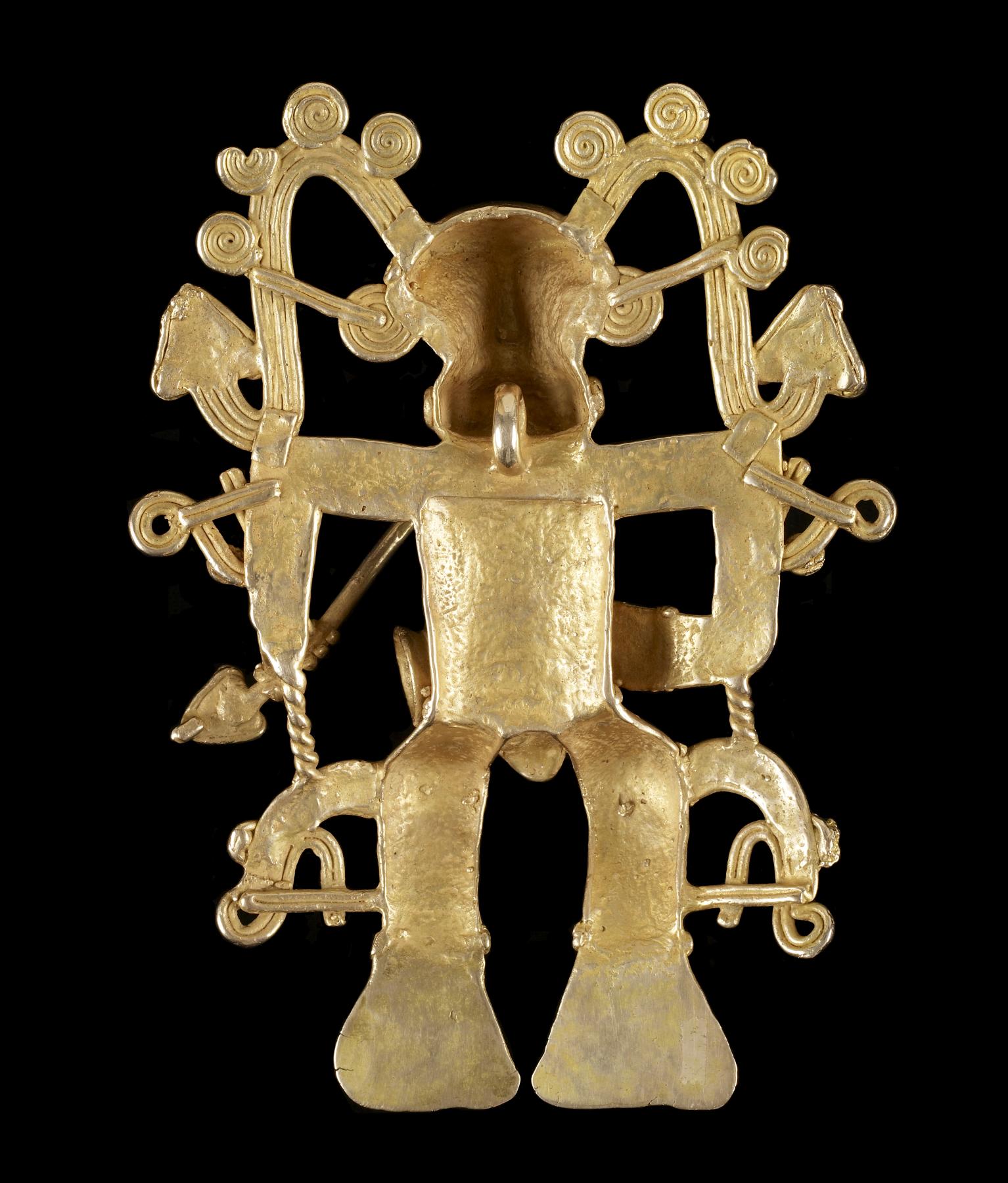
| 1/1/2011 | Examination | This gold-colored object is cast from tumbaga, an alloy of copper, gold, and silver frequently used in the ancient Americas. Though it appears to be pure gold, the presence of 26.6% copper and 2.6% silver was confirmed using a nondestructive technique called x-ray fluorescence spectroscopy (XRF). The proper combination of metals and the single casting of the piece (including the spiral designs seen at the top) help to confirm the authenticity of this object. Small metal tabs or bridges at the back were part of the construction of the original wax model. |
Geographies
Costa Rica , Diquís (Place of Origin)
Measurements
H: 5 3/4 x W: 4 1/8 x D: 1 3/16 in. (14.61 x 10.48 x 3 cm)
Credit Line
Gift of John G. Bourne Foundation, 2013
Location in Museum
Charles Street: Second Floor: Latin American Art / Arte Latinoamericano
Accession Number
In libraries, galleries, museums, and archives, an accession number is a unique identifier assigned to each object in the collection.
In libraries, galleries, museums, and archives, an accession number is a unique identifier assigned to each object in the collection.
2009.20.74