
 Creative Commons License
 Creative Commons License
 Creative Commons License
 Creative Commons License
 Creative Commons License
 Creative Commons License
 Creative Commons License
 Creative Commons License
 Creative Commons License
 Creative Commons License


Female Ballplayer Figurine
(Ancient Americas )
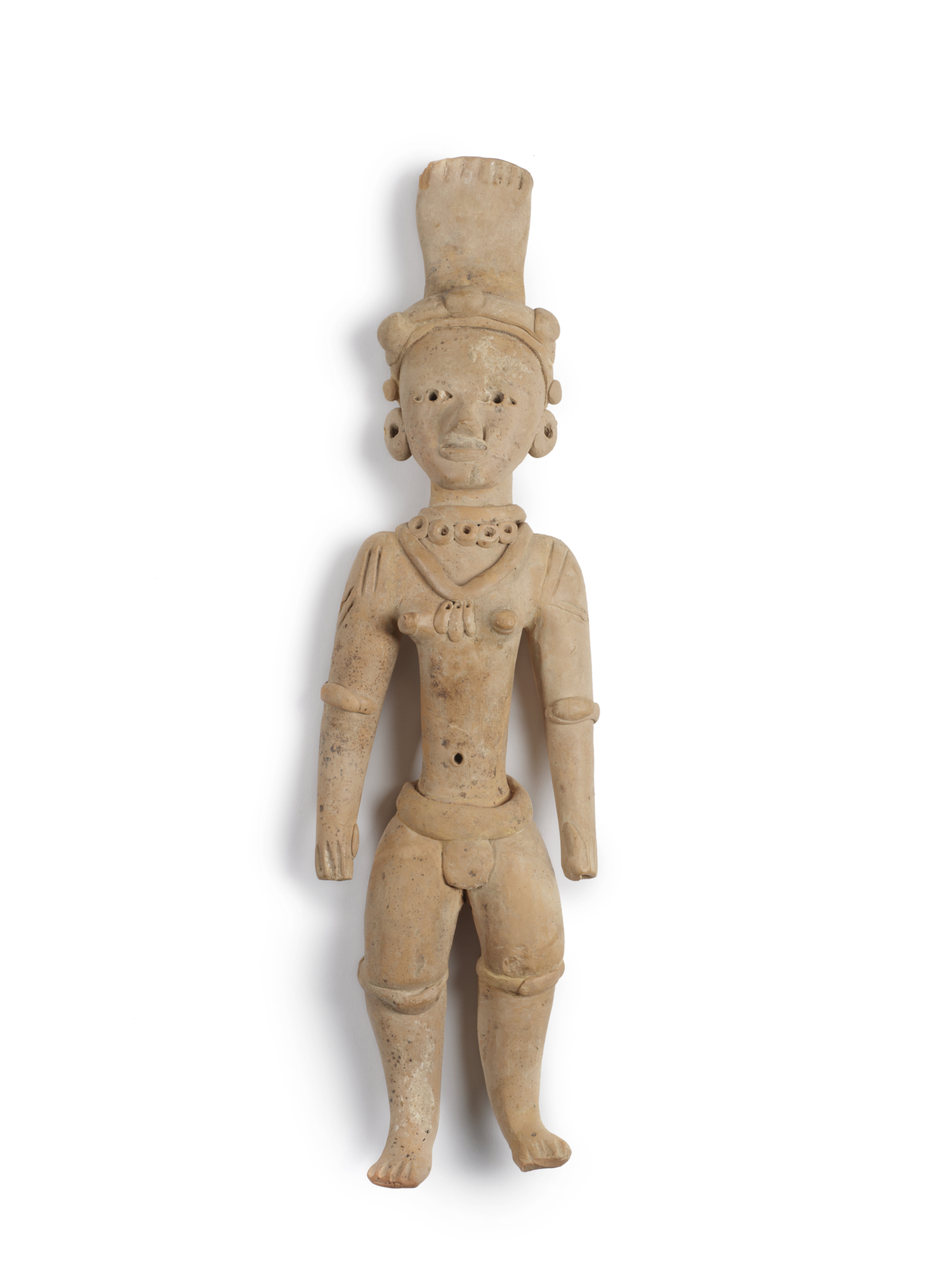
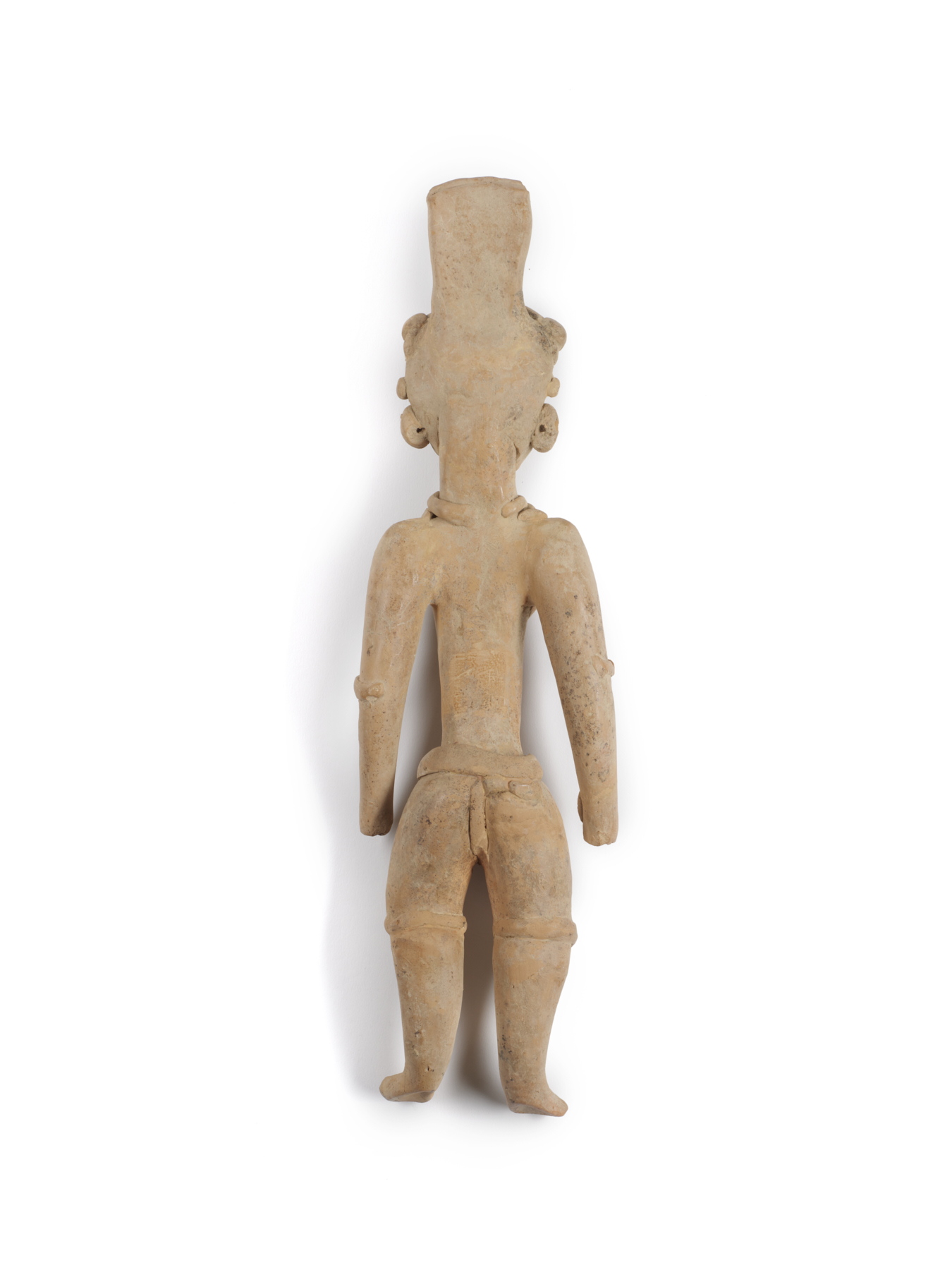
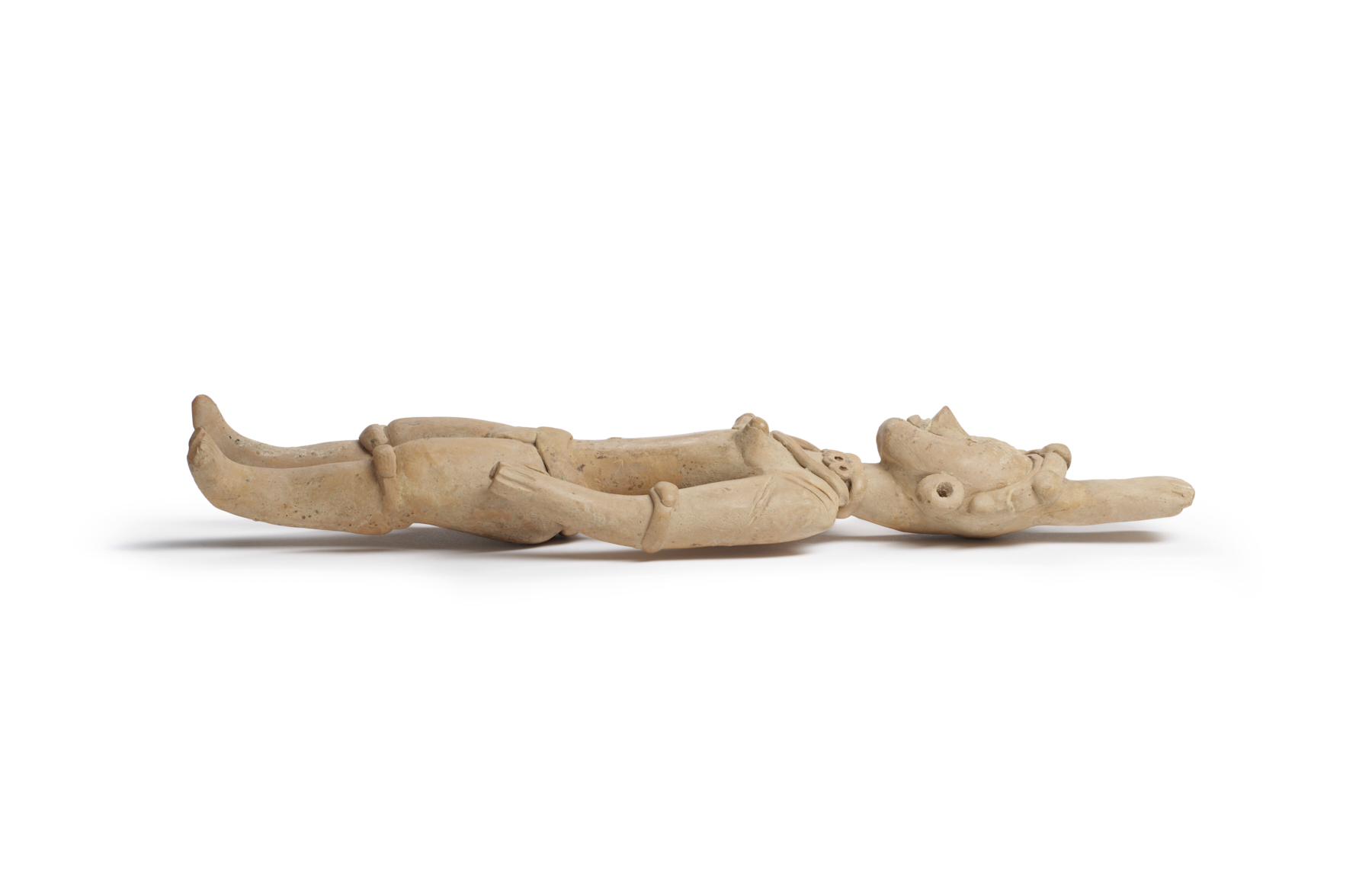
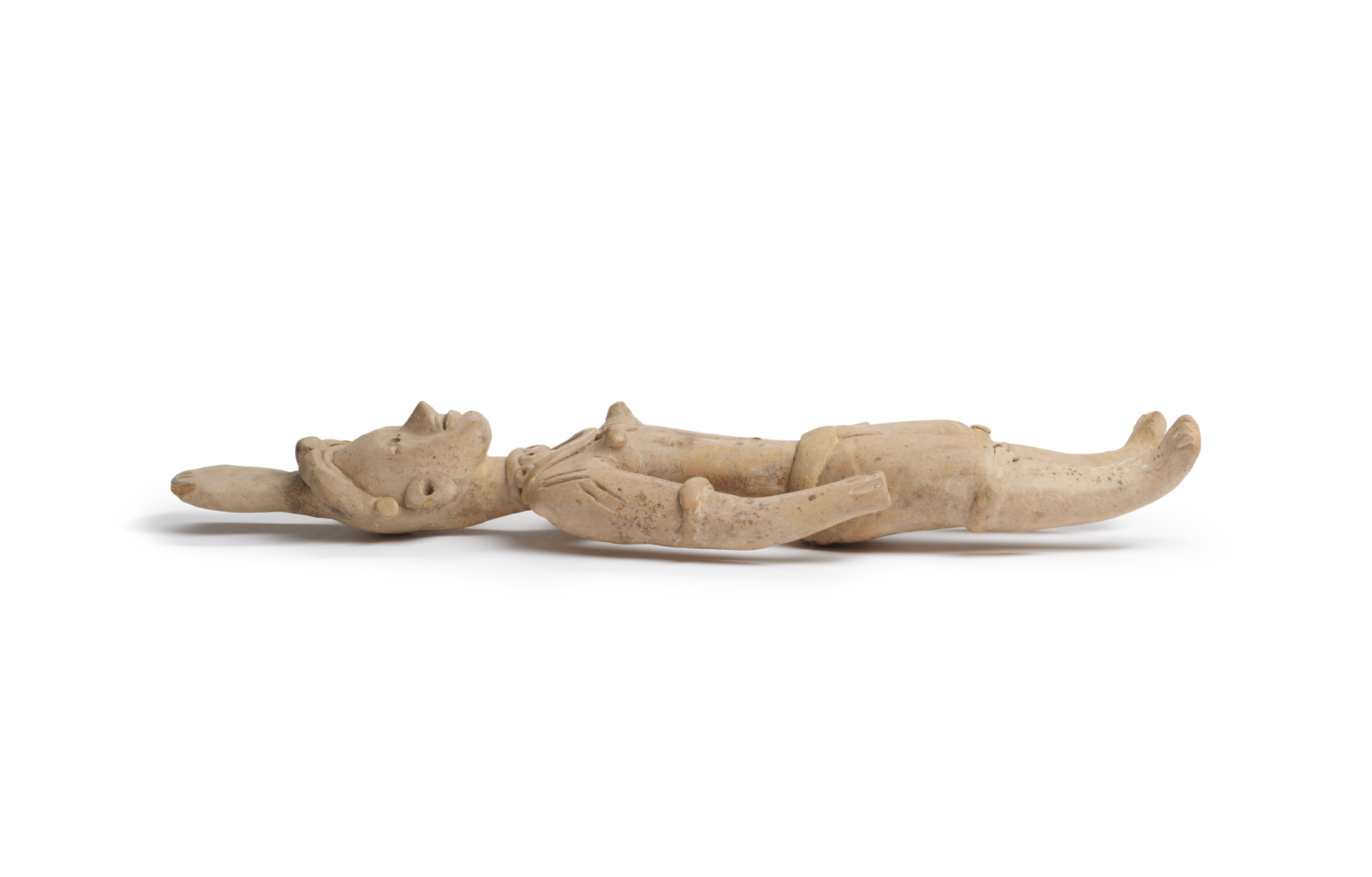
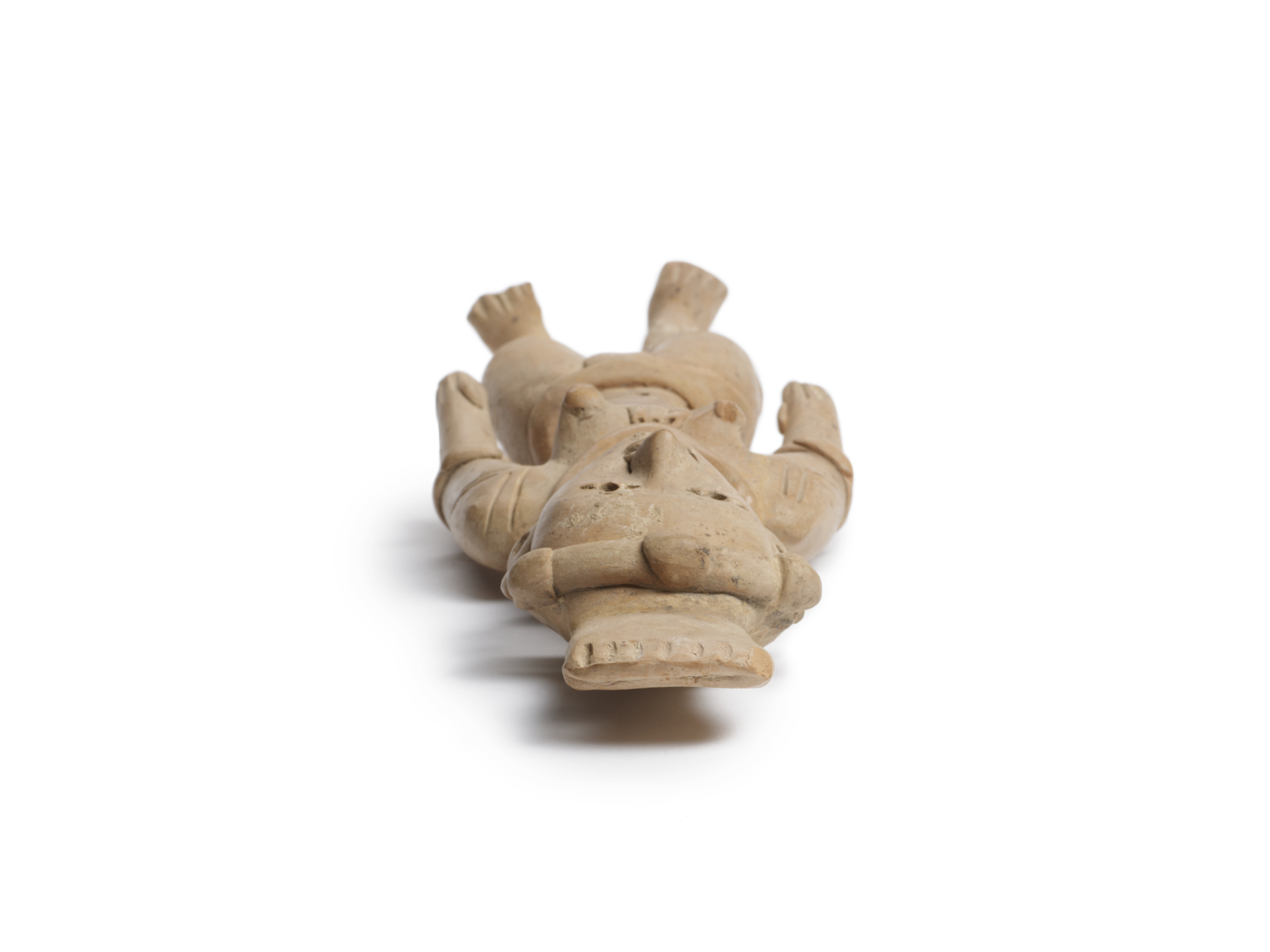
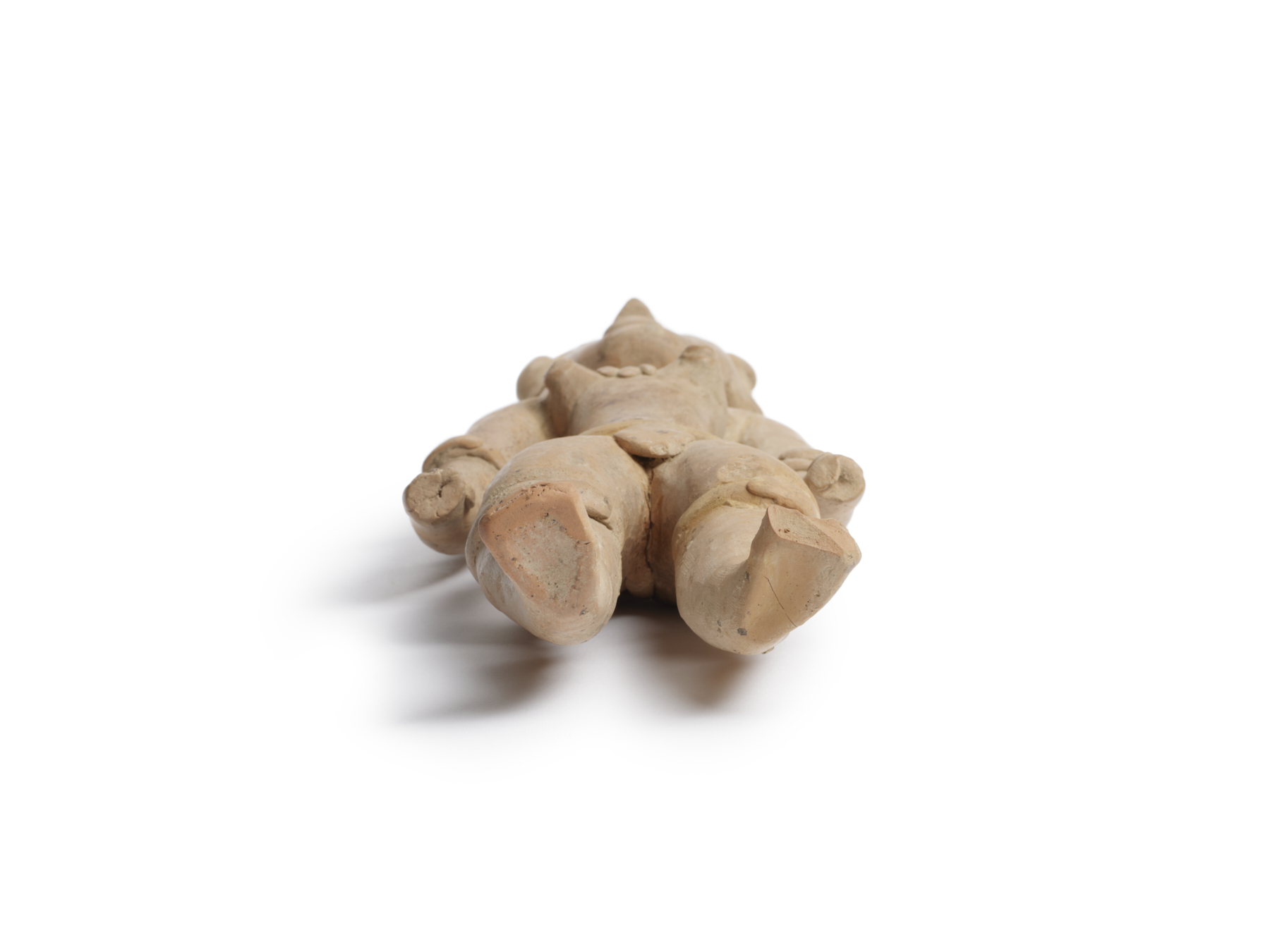
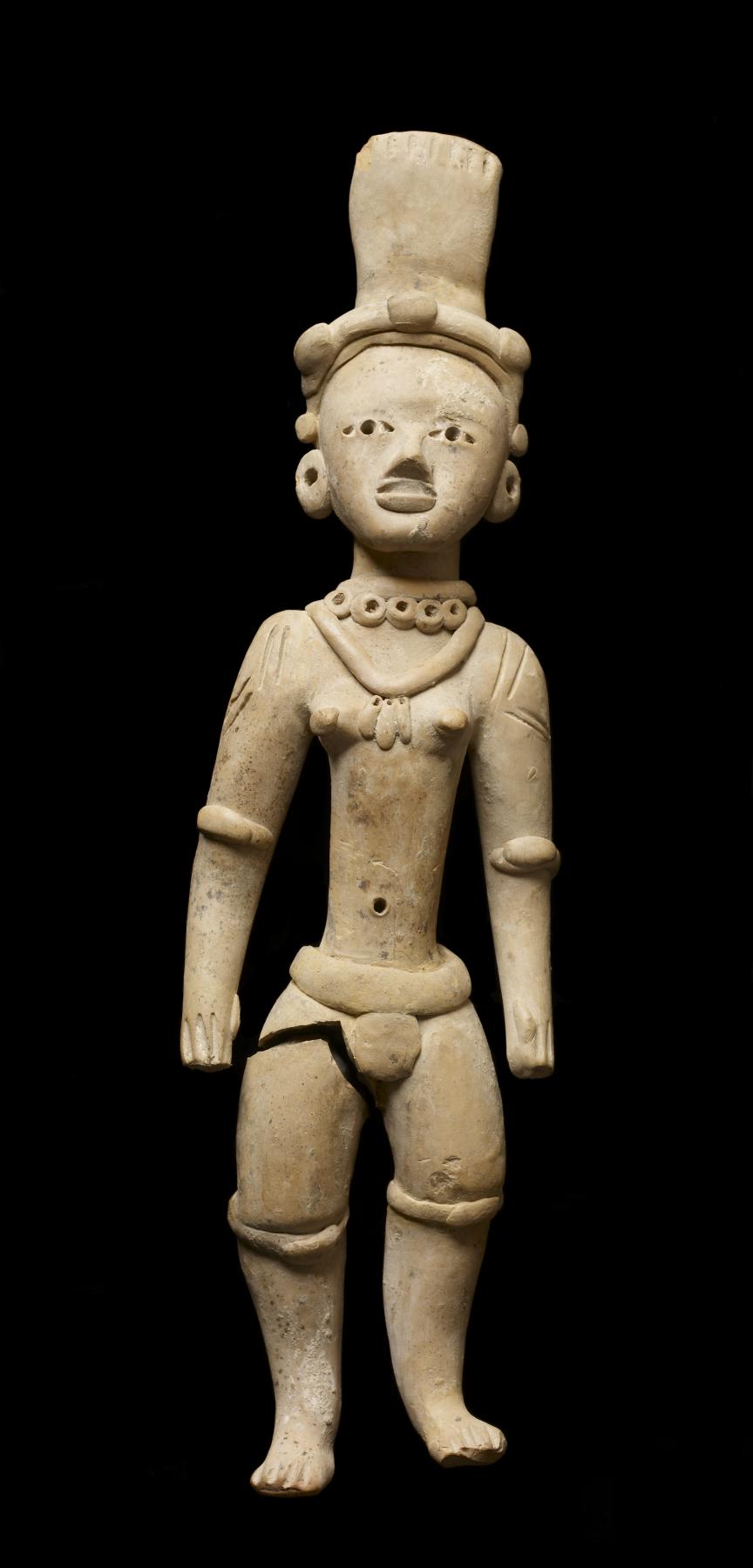
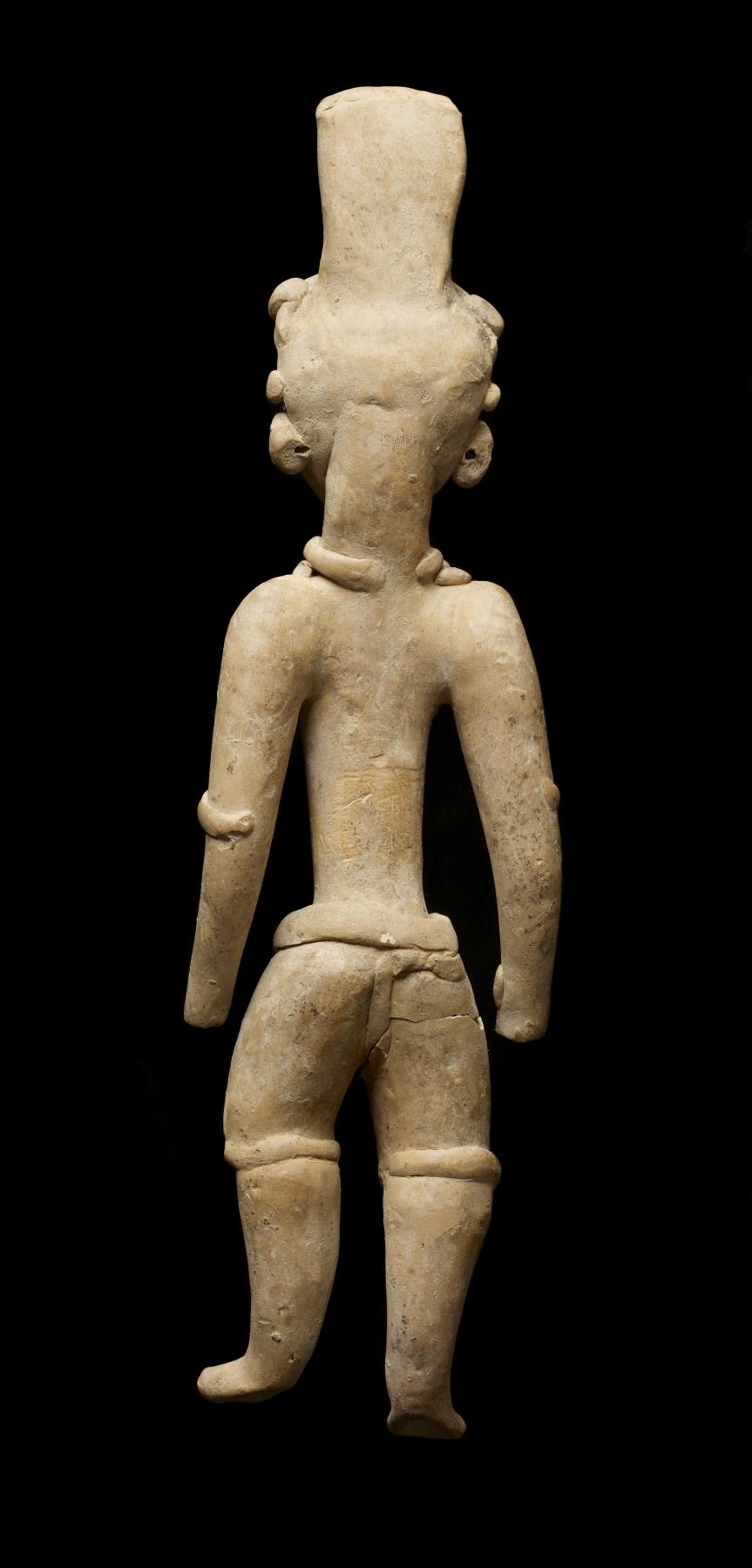
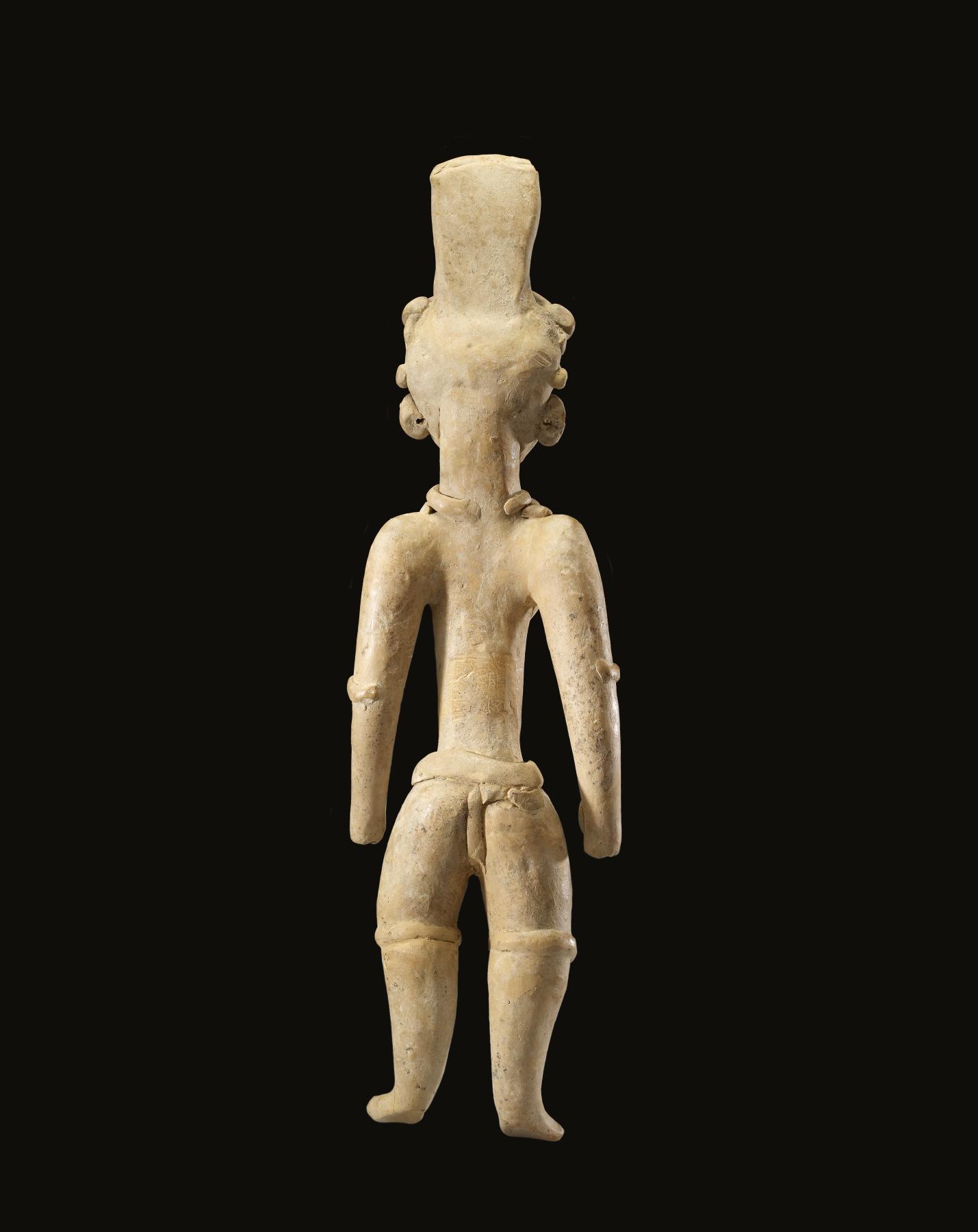
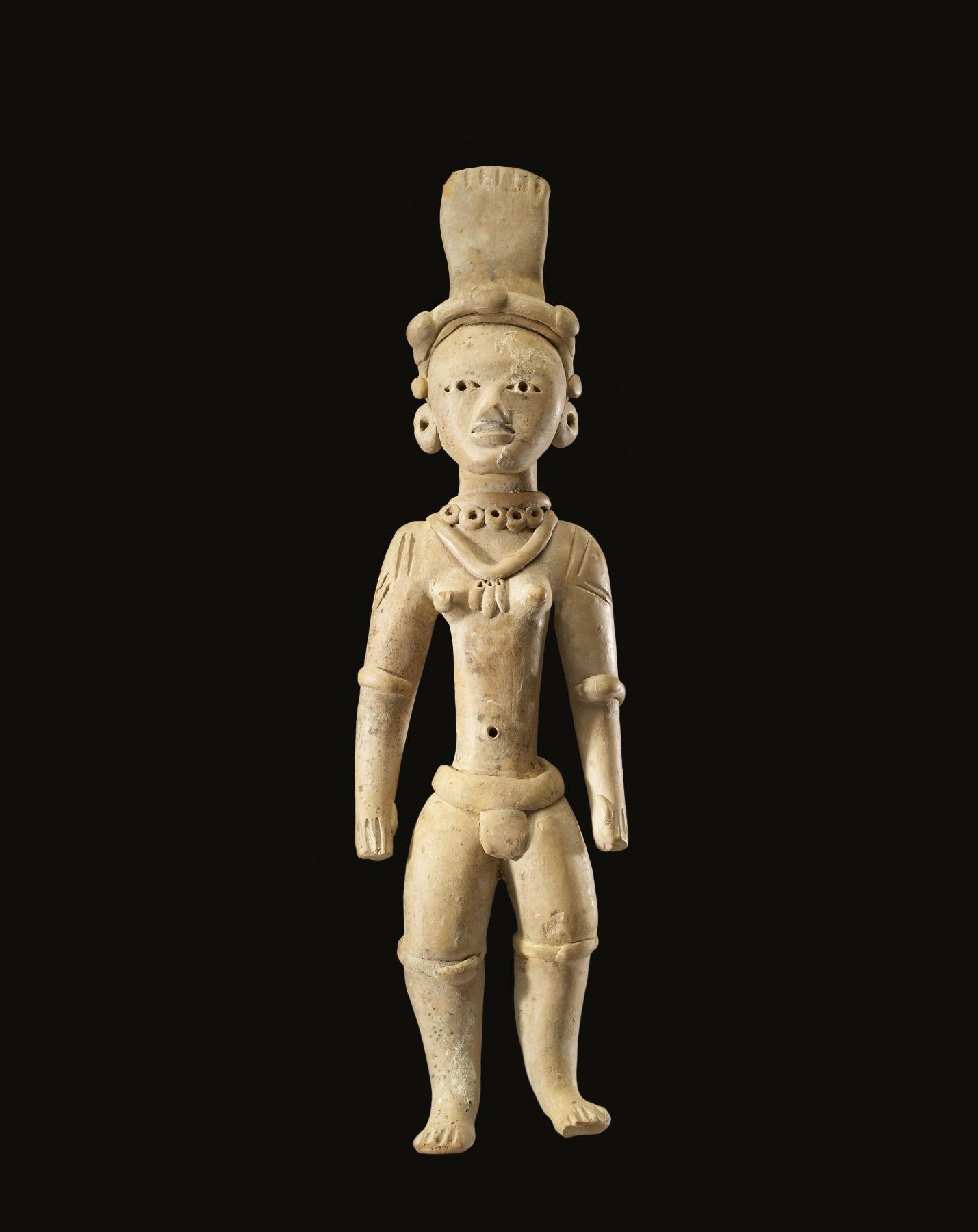
The ritual ballgame was especially popular among many societies of the Gulf Coast, the Classic Period site of El Tajín being famous for its eleven formal ballcourts adorned with stone, stucco, and painted decoration. Ceramic and stone representations of ballplayers were produced in large numbers throughout Veracruz; the Huastecs of the north are well known for pottery figurines depicting these athlete-performers. Although most of the figurines portray males, female players are frequently represented in Huastec art, their production spanning at least six hundred years. The Classic Period figurine wears the usual hip wrap ("yoke"), elbow pads, and knee protectors of Mesoamerican ballplayers. She sports the head wrap and erect panache of feathers (portraying a diving bird) typically seen on other Huastec ballplayer figurines. Her personal adornments include wide earflares, a choker necklace of spherical beads, and a longer necklace with three celtlike pendants; such jewelry was usually made of jadeite. Body paint or intentional scarification lines embellish her shoulders, another feature frequently seen on ballplayer portrayals.
Provenance
Provenance (from the French provenir, 'to come from/forth') is the chronology of the ownership, custody, or location of a historical object. Learn more about provenance at the Walters.
Stendahl Galleries, Los Angeles; purchased by John G. Bourne, Santa Fe, New Mexico, between 1970 and 1979; given to Walters Art Museum, 2013.
Exhibitions
| 2012-2013 | Exploring Art of the Ancient Americas: The John Bourne Collection Gift. The Walters Art Museum, Baltimore; Frist Center for the Visual Arts, Nashville. |
Geographies
Mexico, Veracruz (Place of Origin)
Measurements
H: 13 7/8 x W: 3 3/4 x D: 1 13/16 in. (35.2 x 9.6 x 4.6 cm)
Credit Line
Gift of John G. Bourne, 2013
Location in Museum
Charles Street: Second Floor: Latin American Art / Arte Latinoamericano
Accession Number
In libraries, galleries, museums, and archives, an accession number is a unique identifier assigned to each object in the collection.
In libraries, galleries, museums, and archives, an accession number is a unique identifier assigned to each object in the collection.
2009.20.165