
 Creative Commons License
 Creative Commons License
 Creative Commons License


Figural Pendant
(Ancient Americas )
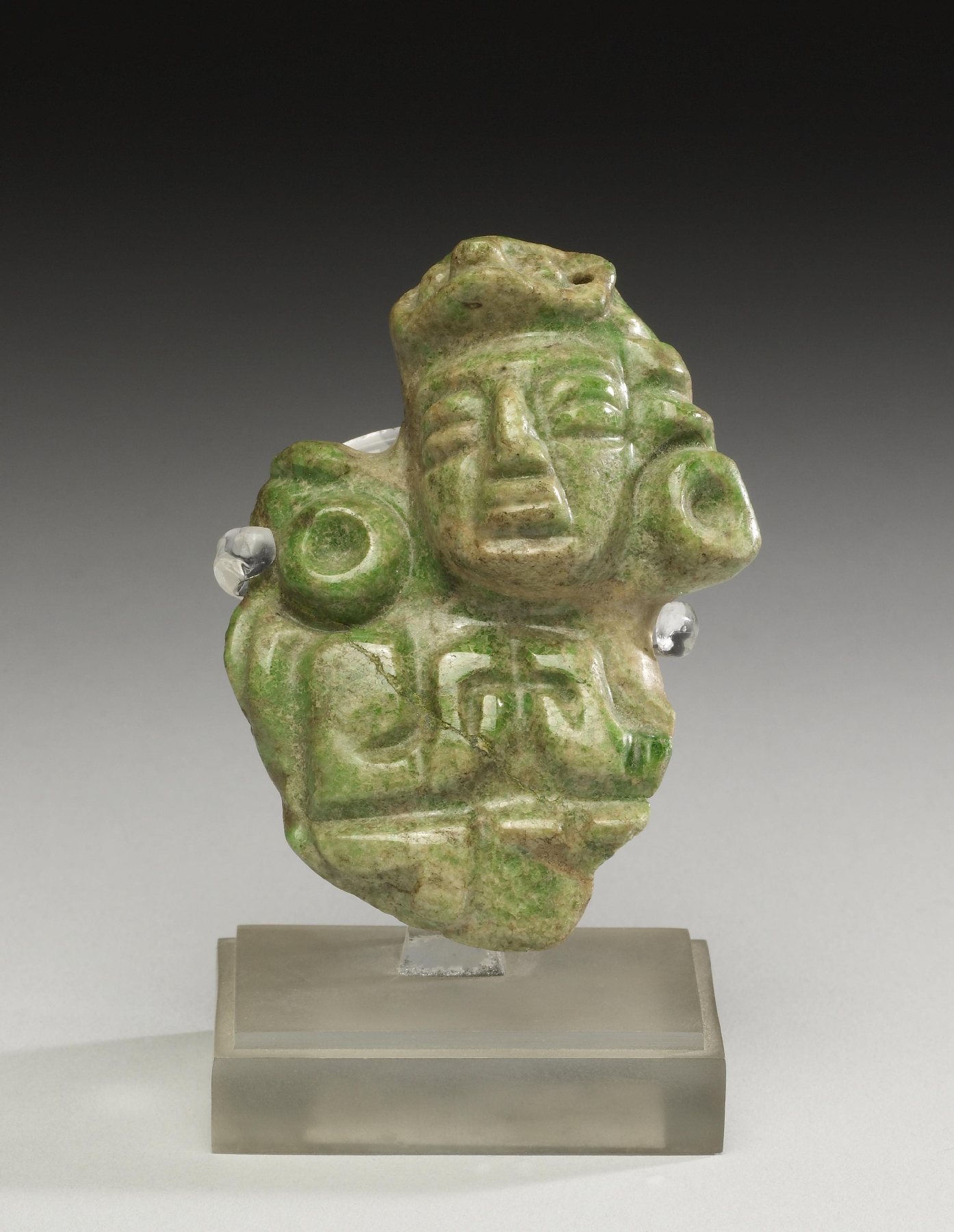
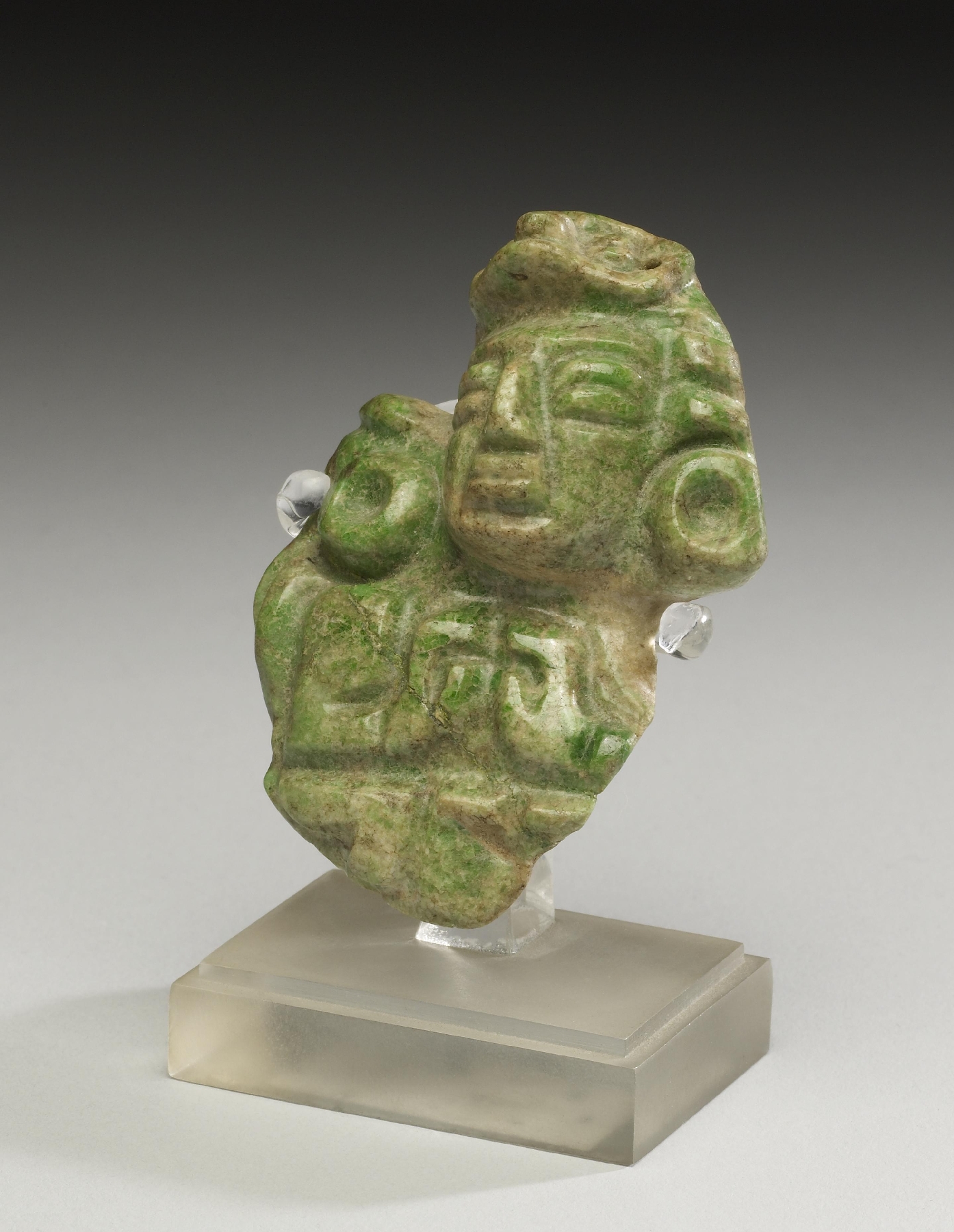
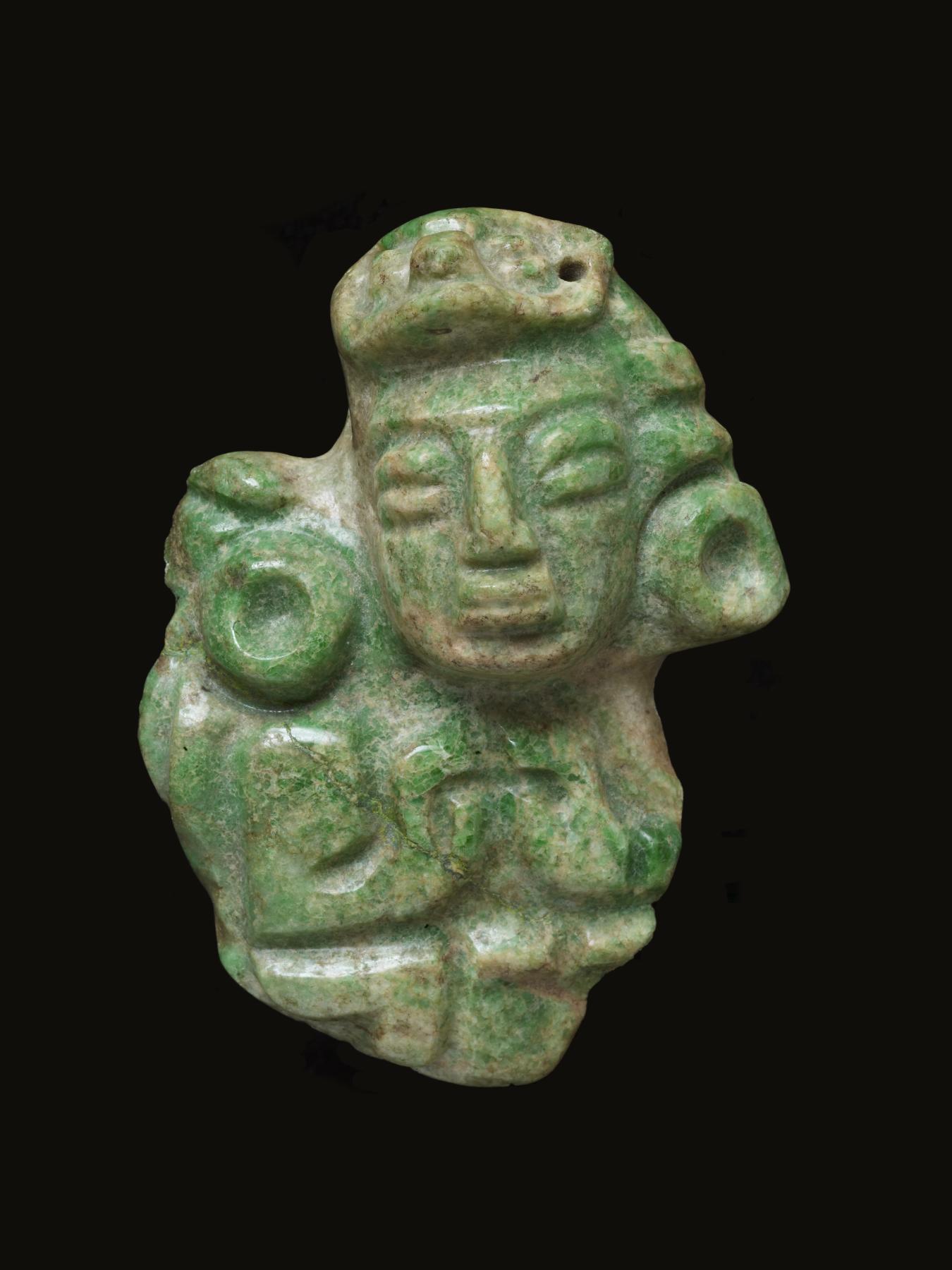
Jadeite is a dense alumina silicate of the pyroxene mineral family. The preferred stone for denoting status and sacredness throughout Mesoamerica, its value was based on its relative scarcity, the polished stone's bright, shiny surface , its translucent colors (ranging from light green to a rich blue-green), and the challenge of carving the stone due to the stone's hardness. In addition to the impressive visual qualities and scarcity, jadeite was symbolically linked to the miracle of the earth's fecundity, the maize god, and the life-giving promise of green plants and blue-green water. Together, these attributes made jadeite the most valuable of all materials to adorn the nobility and the gods. The Maya also fashioned adornments from similar green-colored stones whose visual properties resemble those of jadeite. It is difficult to discern the correct geological identification of these adornments without technical analyses.
The Early Classic pendant is expertly carved from a small jadeite boulder, the artist deftly sculpting the irregularly shaped stone into an emotive figural artwork. The carver accentuated the earflares which serve as a frame for the figure's serene face as well as an overt sign of his high status.
Provenance
Provenance (from the French provenir, 'to come from/forth') is the chronology of the ownership, custody, or location of a historical object. Learn more about provenance at the Walters.
Sotheby's New York, May 31, 1985, Lot 119; Throckmorton Fine Art, New York; John G. Bourne, May 13, 1993, by purchase; by bequest to Walters Art Museum, 2017.
Exhibitions
| 2012-2013 | Exploring Art of the Ancient Americas: The John Bourne Collection Gift. The Walters Art Museum, Baltimore; Frist Center for the Visual Arts, Nashville. |
Conservation
| Date | Description | Narrative |
|---|---|---|
| 10/3/2011 | Examination | examined for exhibition |
Geographies
Honduras
(Place of Origin)
Mexico (Place of Origin)
Belize (Place of Origin)
Measurements
H: 2 11/16 x W: 1 7/8 x D: 1/2 in. (6.86 x 4.83 x 1.27 cm)
Credit Line
Bequest of John G. Bourne, 2017
Location in Museum
Charles Street: Second Floor: Latin American Art / Arte Latinoamericano
Accession Number
In libraries, galleries, museums, and archives, an accession number is a unique identifier assigned to each object in the collection.
In libraries, galleries, museums, and archives, an accession number is a unique identifier assigned to each object in the collection.
2009.20.263