
 Creative Commons License
 Creative Commons License


Footed Dish with Animal Motifs
(Ancient Americas )
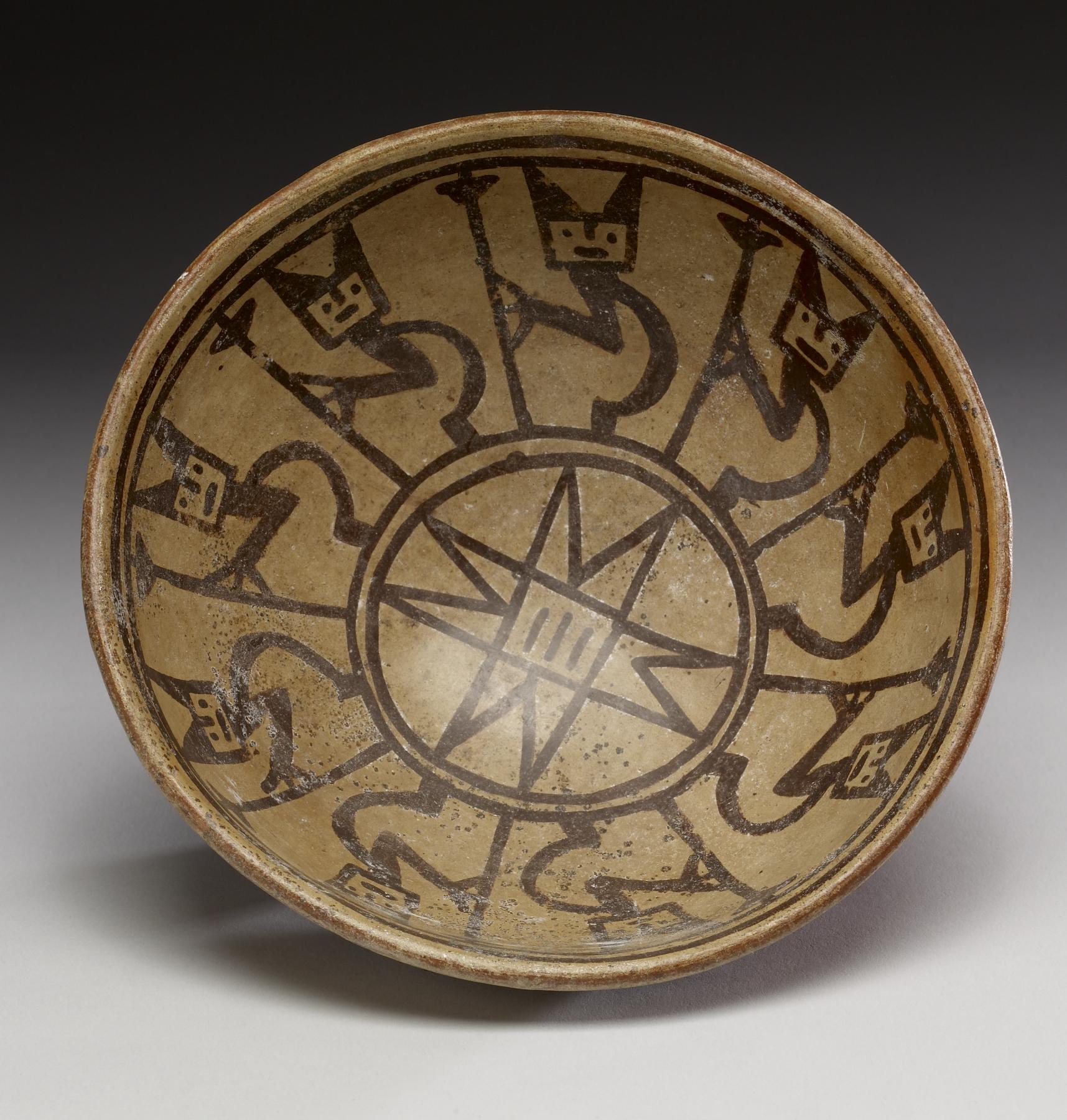
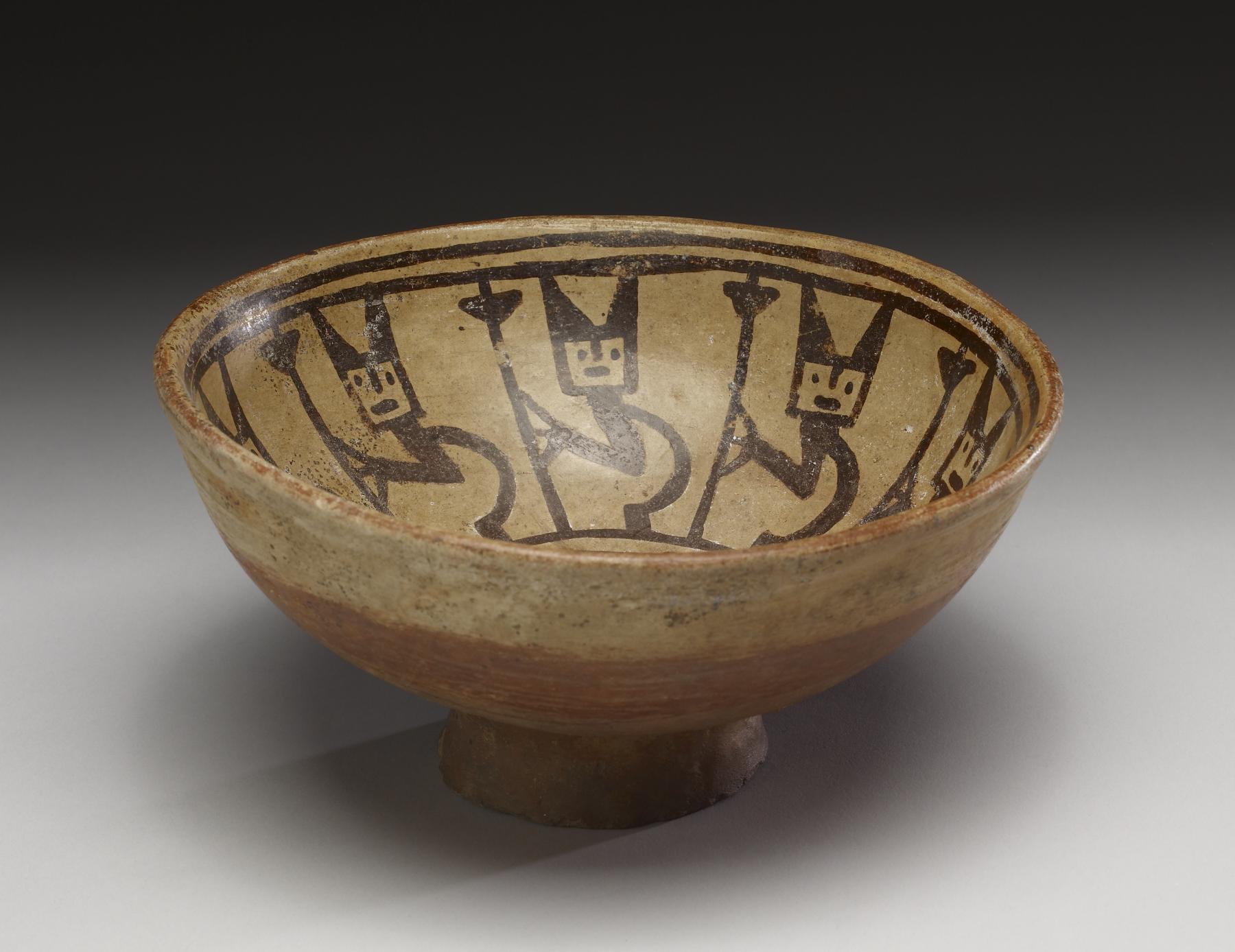
This bowl shows a staff-bearing feline, likely a puma, repeated many times around the surface of the bowl. At the center, an eight-pointed star, broken into four directions, may represent a stylized image of the known world and its cardinal directions. Pumas, as some of the most powerful predators of the Americas, were highly important in the mythology of the Andes, and this likely has a meaning not well-understood today.
Dishes on short, ring-shaped bases were common in the Nariño region straddling the border between Ecuador and Colombia. They were carefully shaped, burnished (carefully polished with a stone), and painted with different colors of slip, a thinned out clay. Many of the Nariño vessels show highly abstracted patterns, like this one.
Provenance
Provenance (from the French provenir, 'to come from/forth') is the chronology of the ownership, custody, or location of a historical object. Learn more about provenance at the Walters.
Economos Works of Art [date and mode of acquisition unknown]; John G. Bourne, 1990s, by purchase; by bequest to Walters Art Museum, 2017.
Exhibitions
| 2012-2013 | Exploring Art of the Ancient Americas: The John Bourne Collection Gift. The Walters Art Museum, Baltimore; Frist Center for the Visual Arts, Nashville. |
Geographies
Ecuador
(Place of Origin)
Colombia (Place of Origin)
Measurements
H: 3 5/8 x Diam: 7 5/16 in. (9.21 x 18.54 cm)
Credit Line
Bequest of John G. Bourne, 2017
Location in Museum
Charles Street: Second Floor: Latin American Art / Arte Latinoamericano
Accession Number
In libraries, galleries, museums, and archives, an accession number is a unique identifier assigned to each object in the collection.
In libraries, galleries, museums, and archives, an accession number is a unique identifier assigned to each object in the collection.
2009.20.280