
 Creative Commons License
 Creative Commons License
 Creative Commons License
 Creative Commons License
 Creative Commons License
 Creative Commons License
 Creative Commons License
 Creative Commons License
 Creative Commons License
 Creative Commons License
 Creative Commons License
 Creative Commons License
 Creative Commons License
 Creative Commons License
 Creative Commons License
 Creative Commons License
 Creative Commons License
 Creative Commons License
 Creative Commons License
 Creative Commons License


Gatchina Palace Egg
(18th and 19th Centuries )
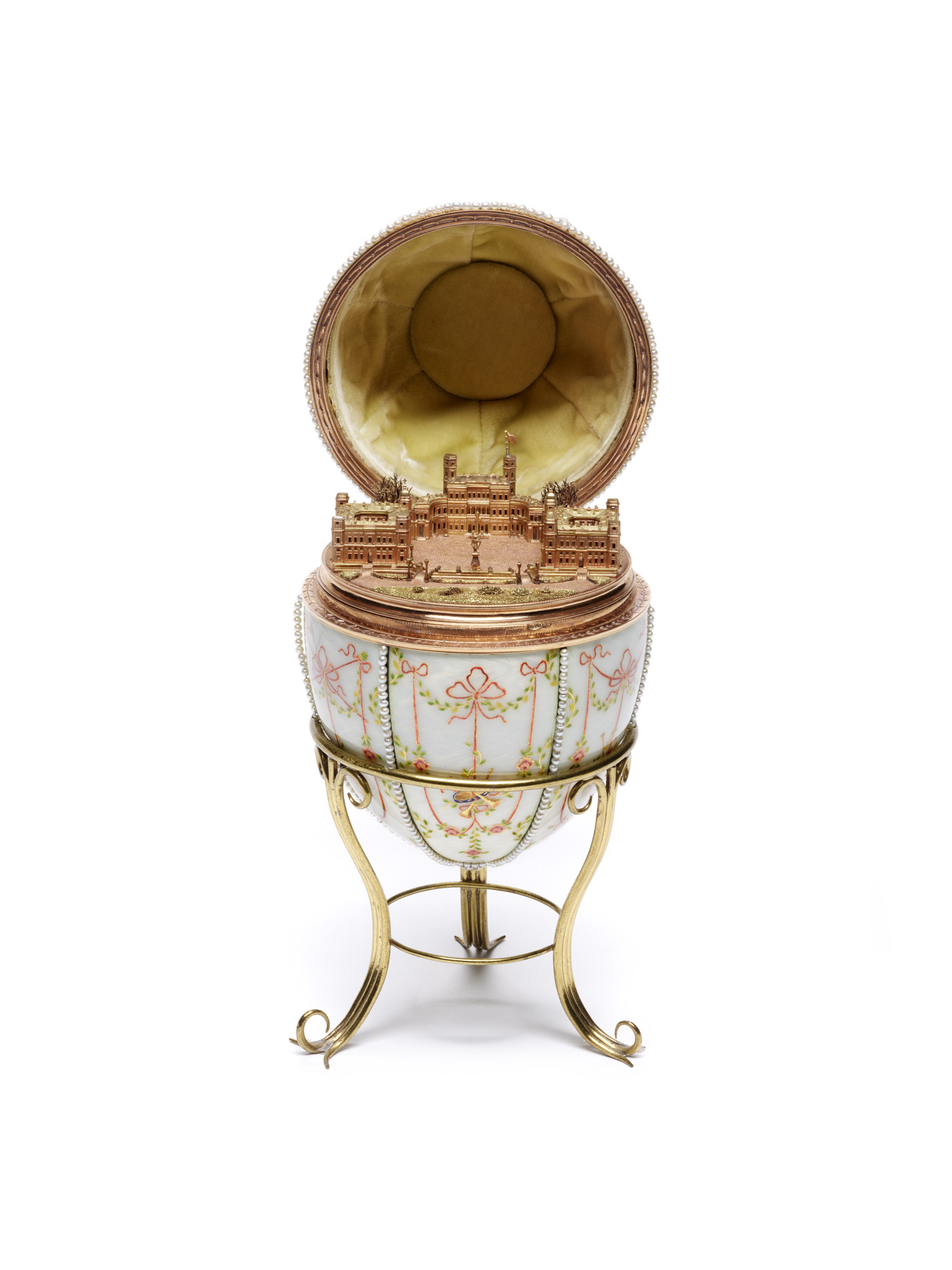
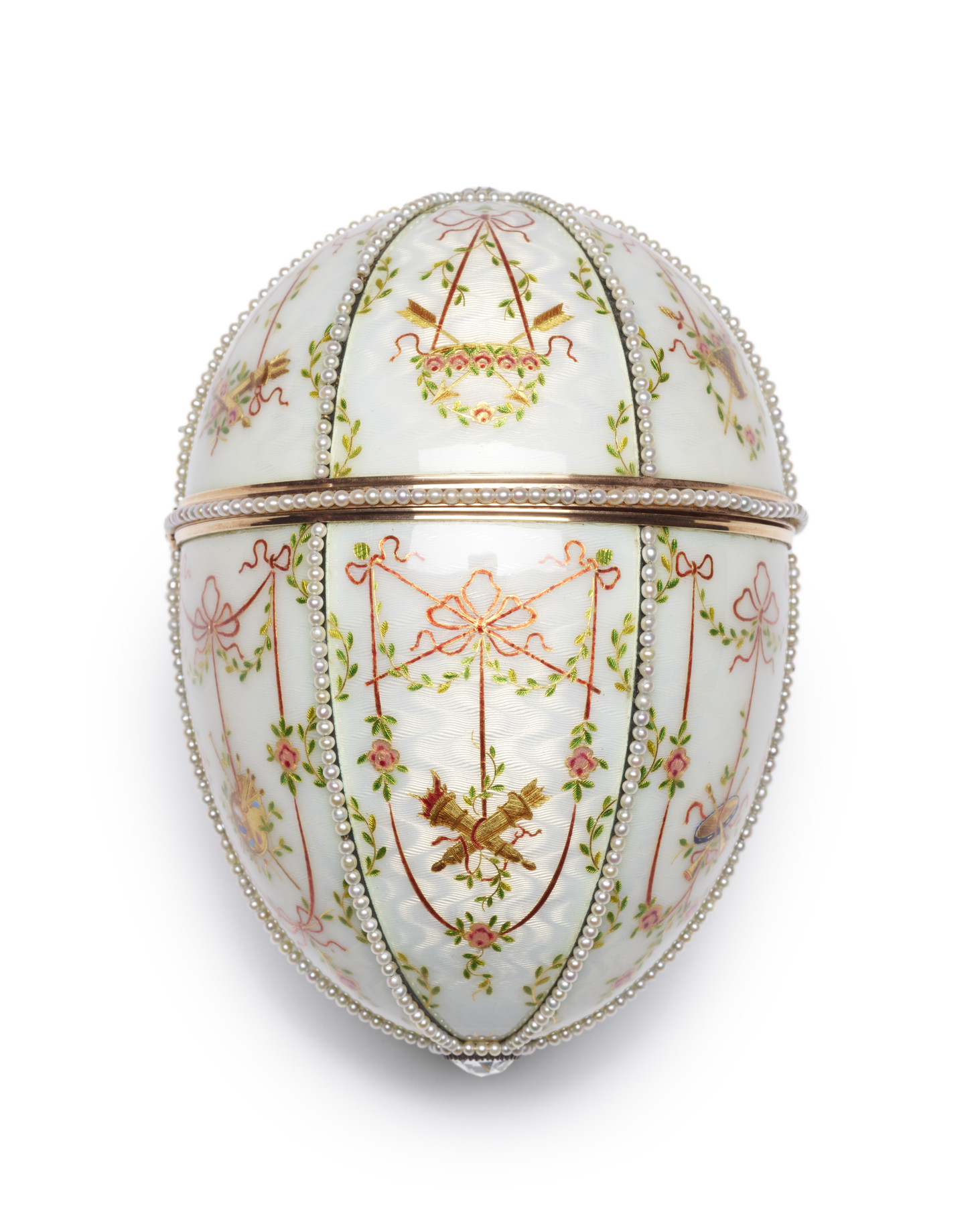
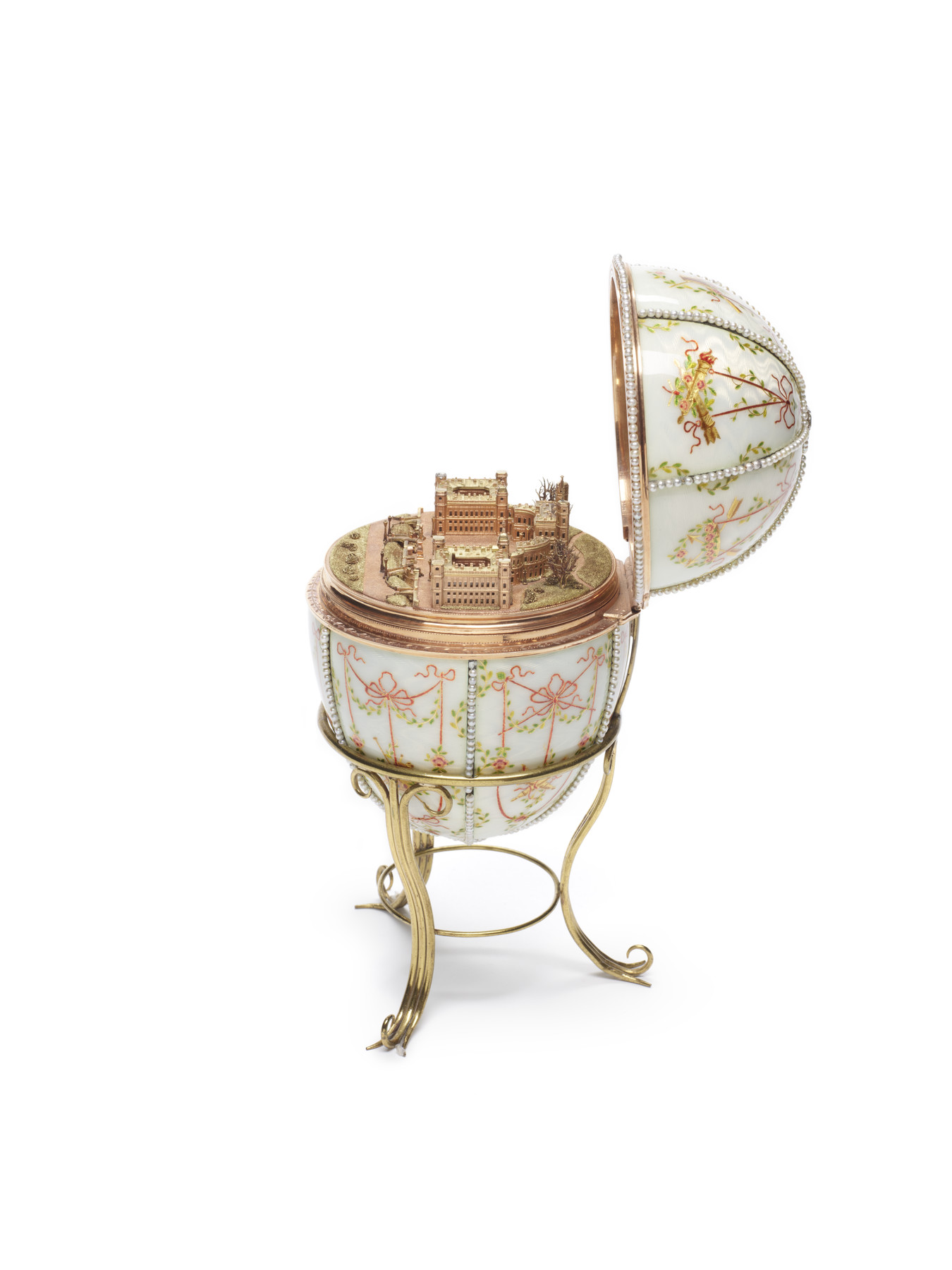
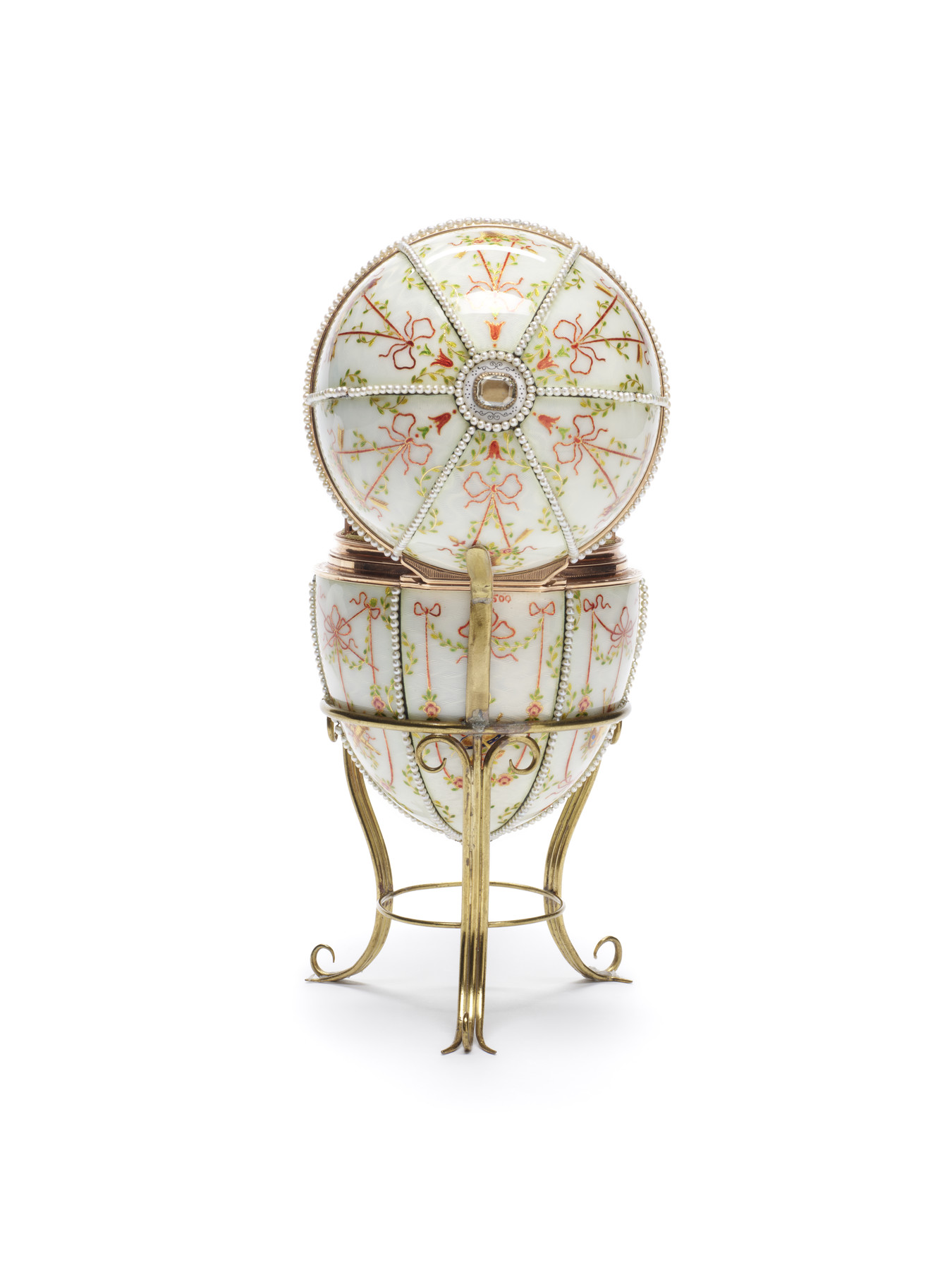
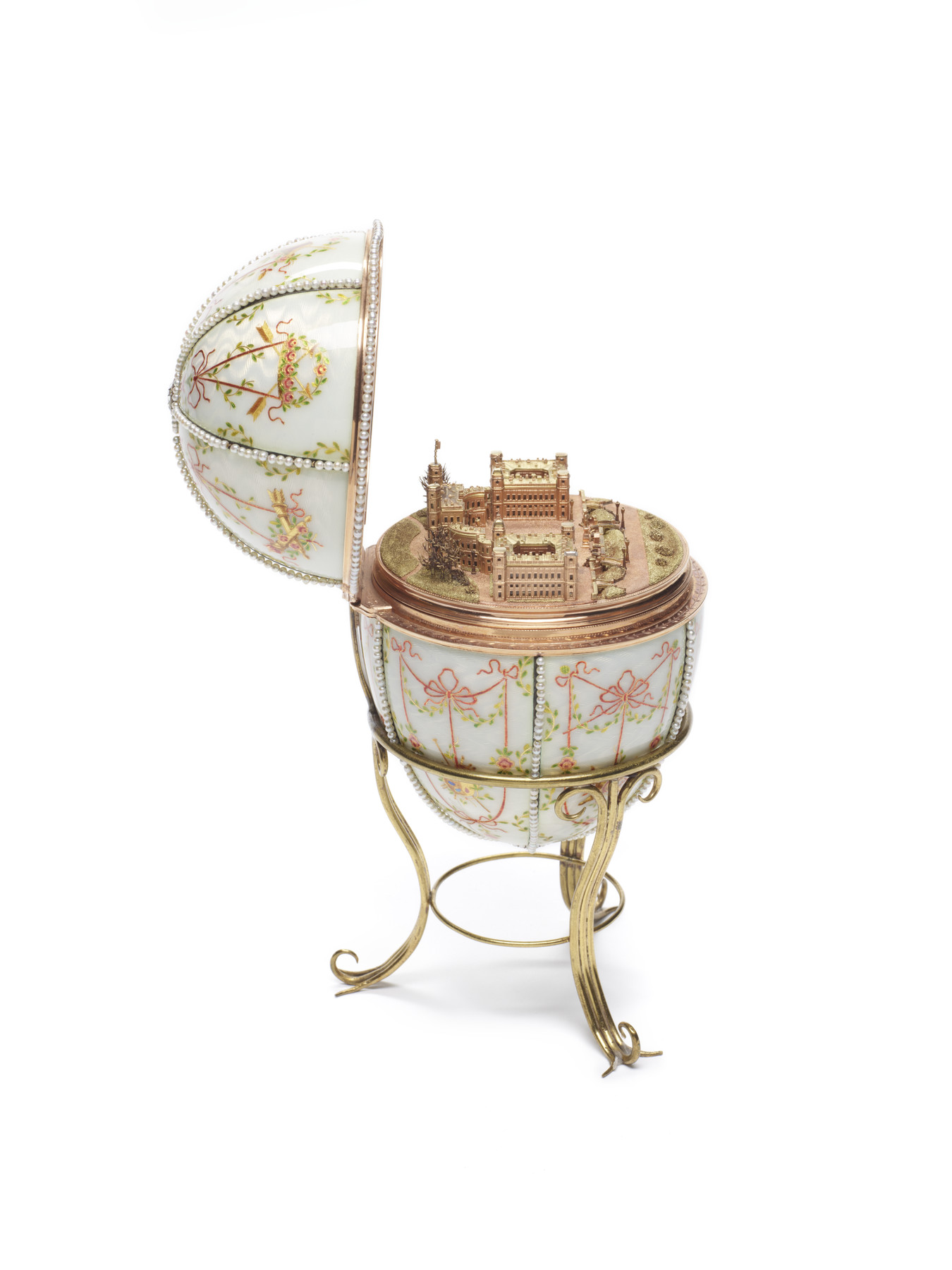
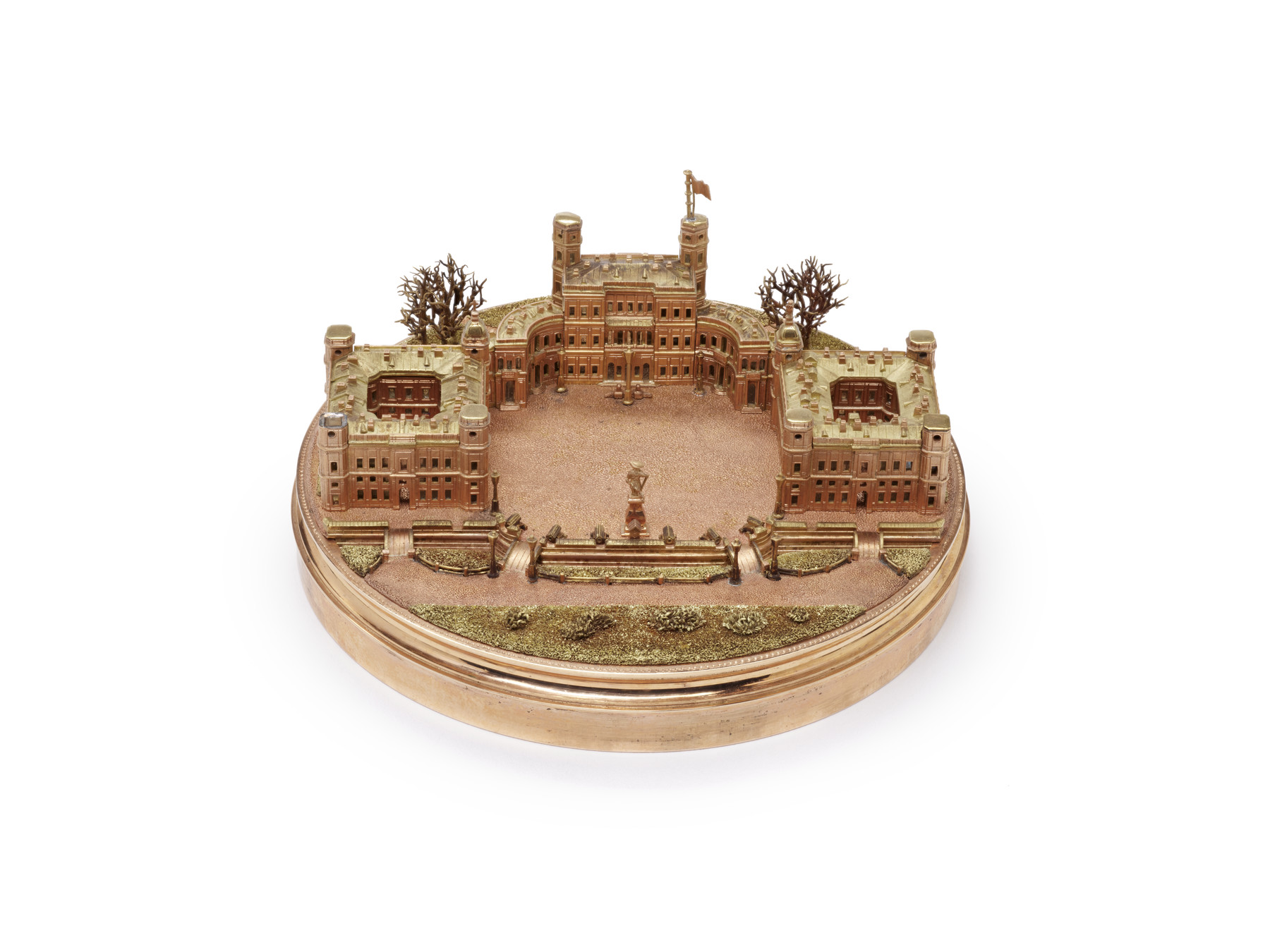
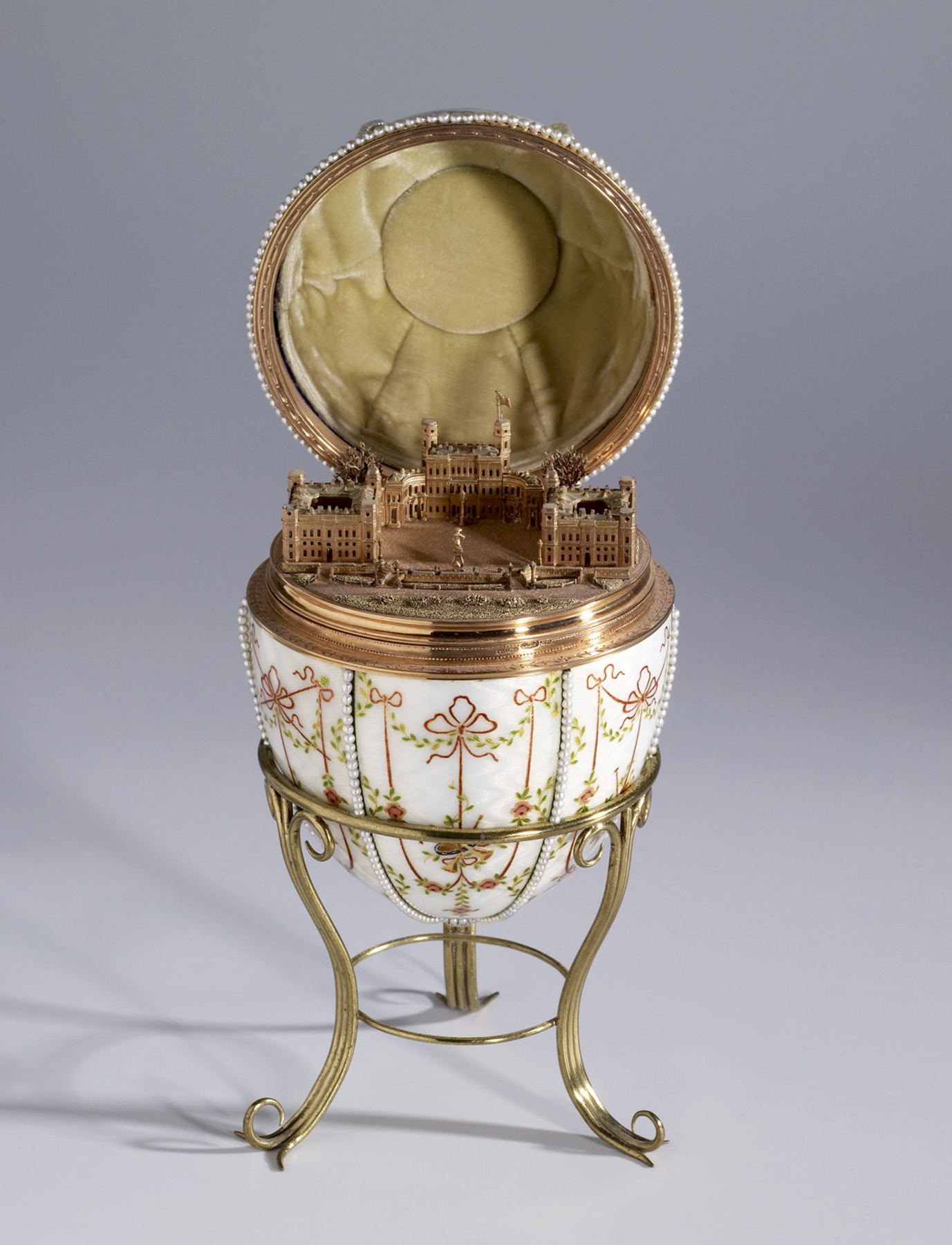
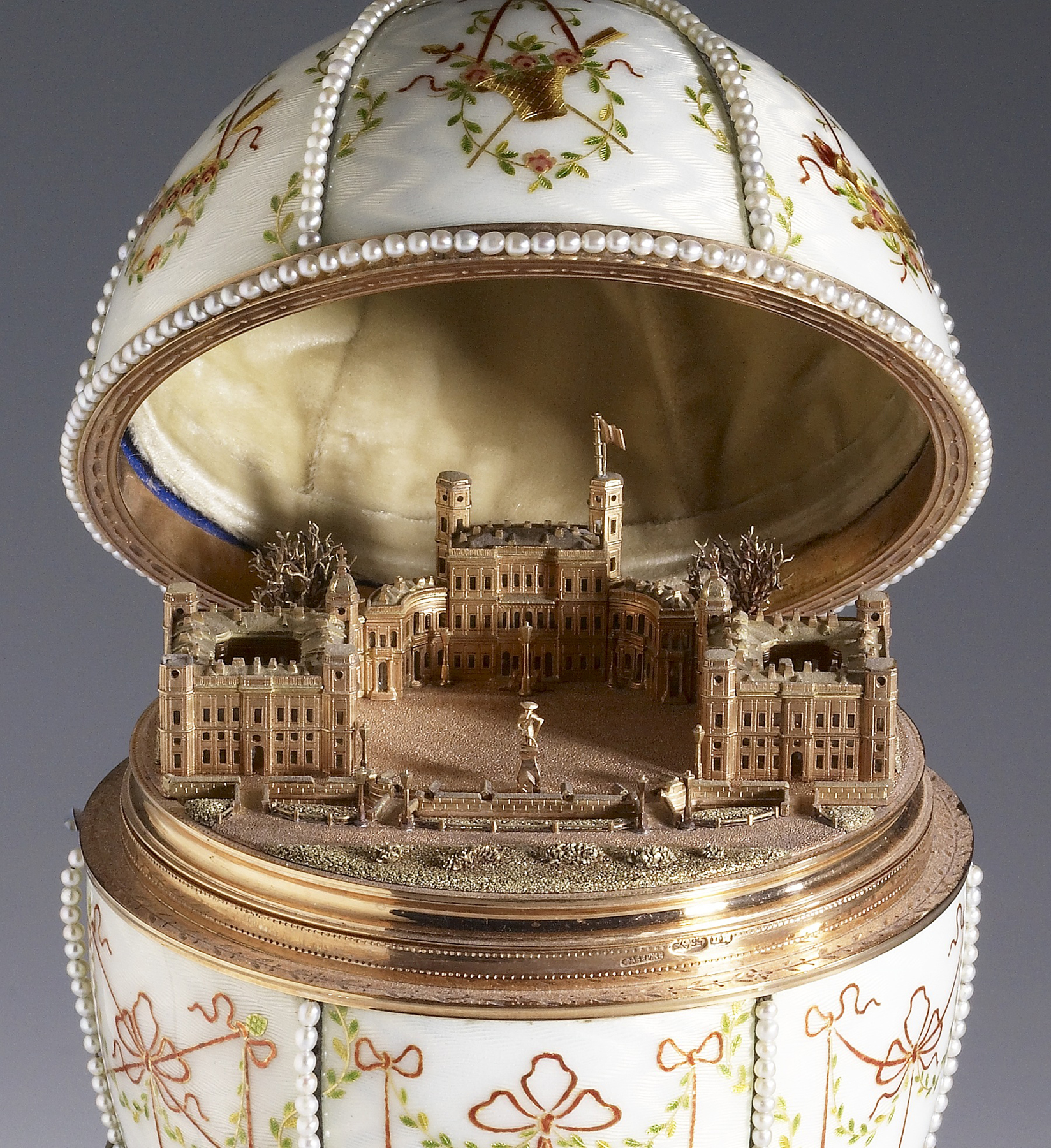
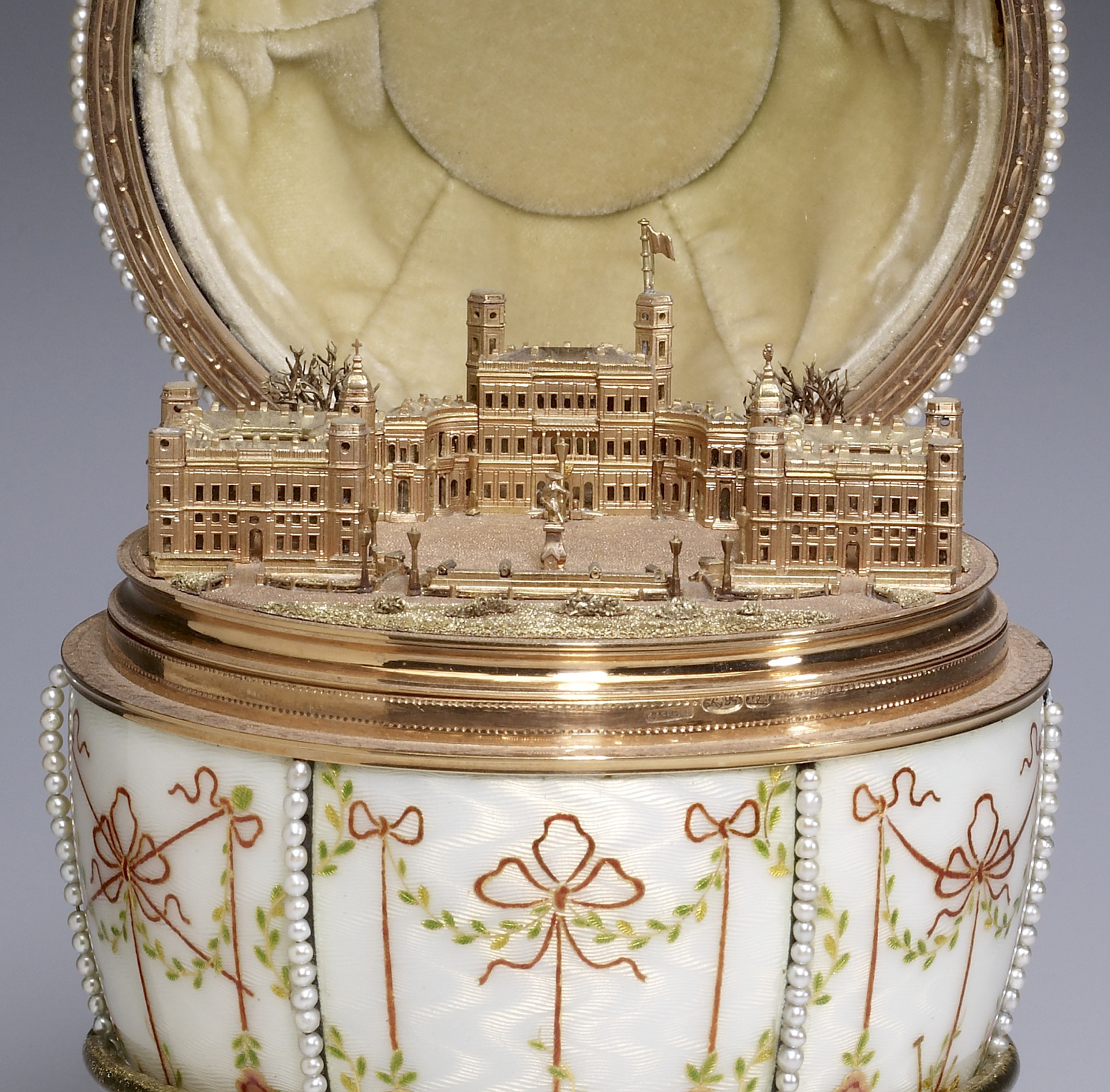
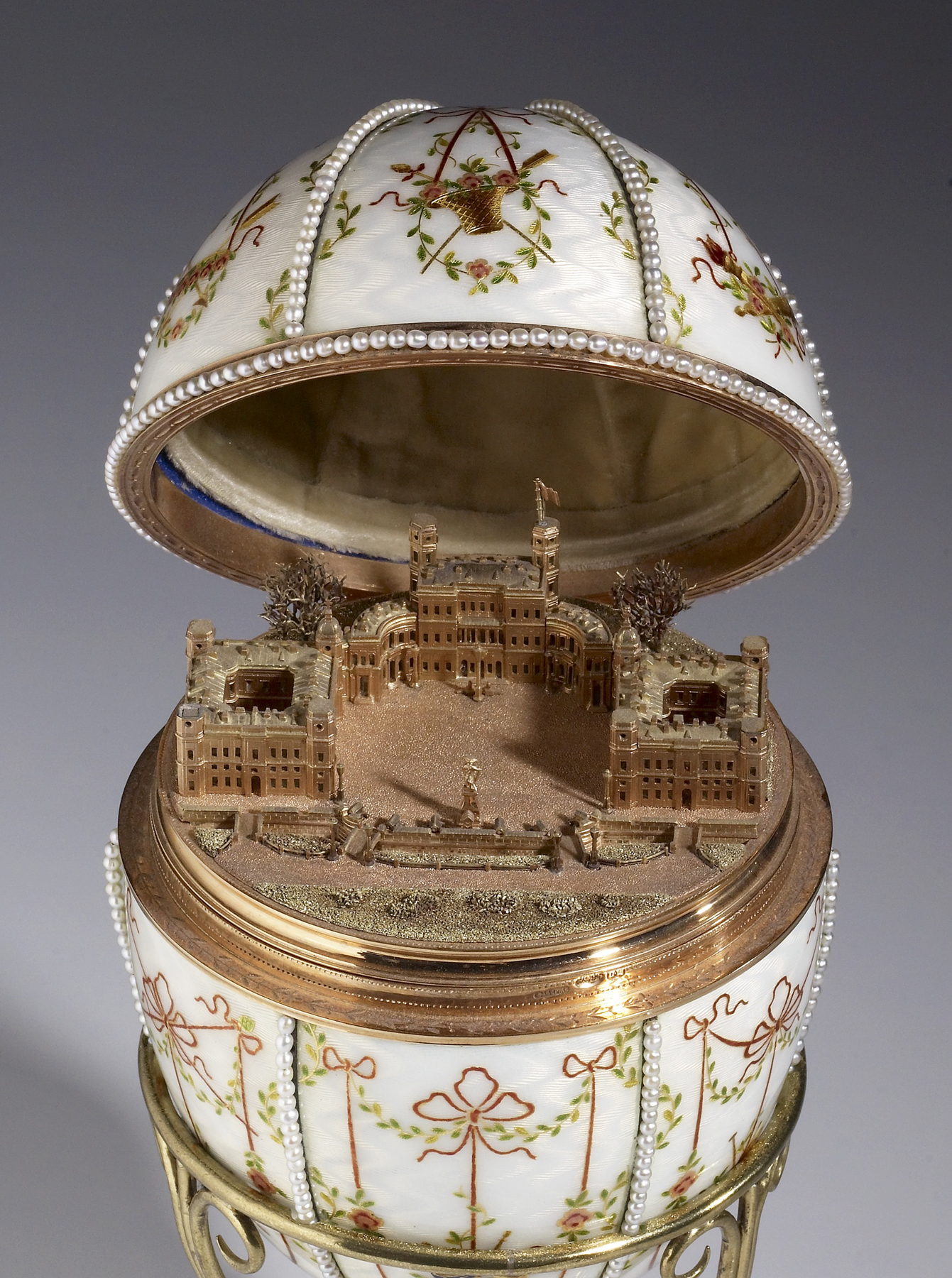
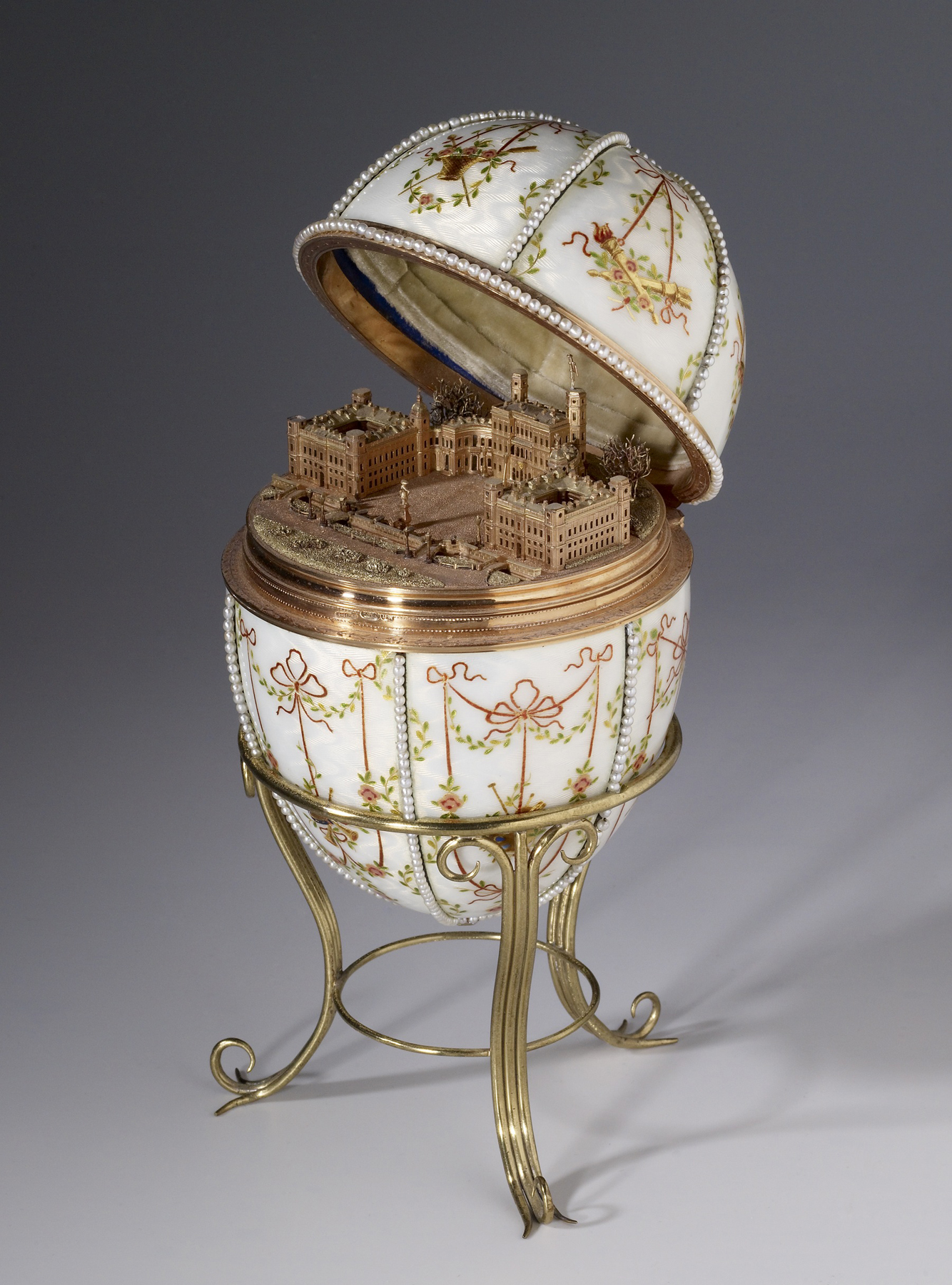
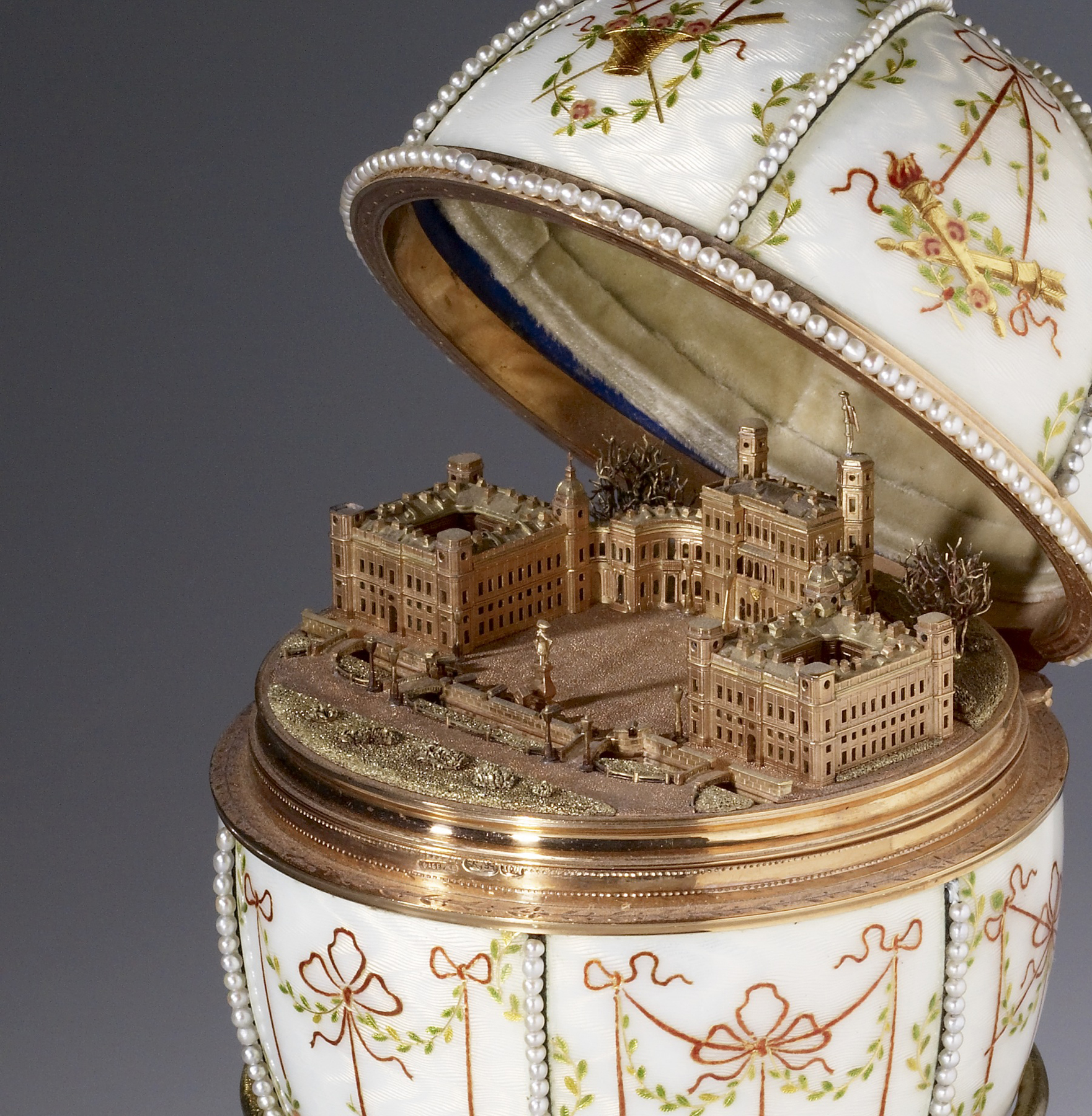
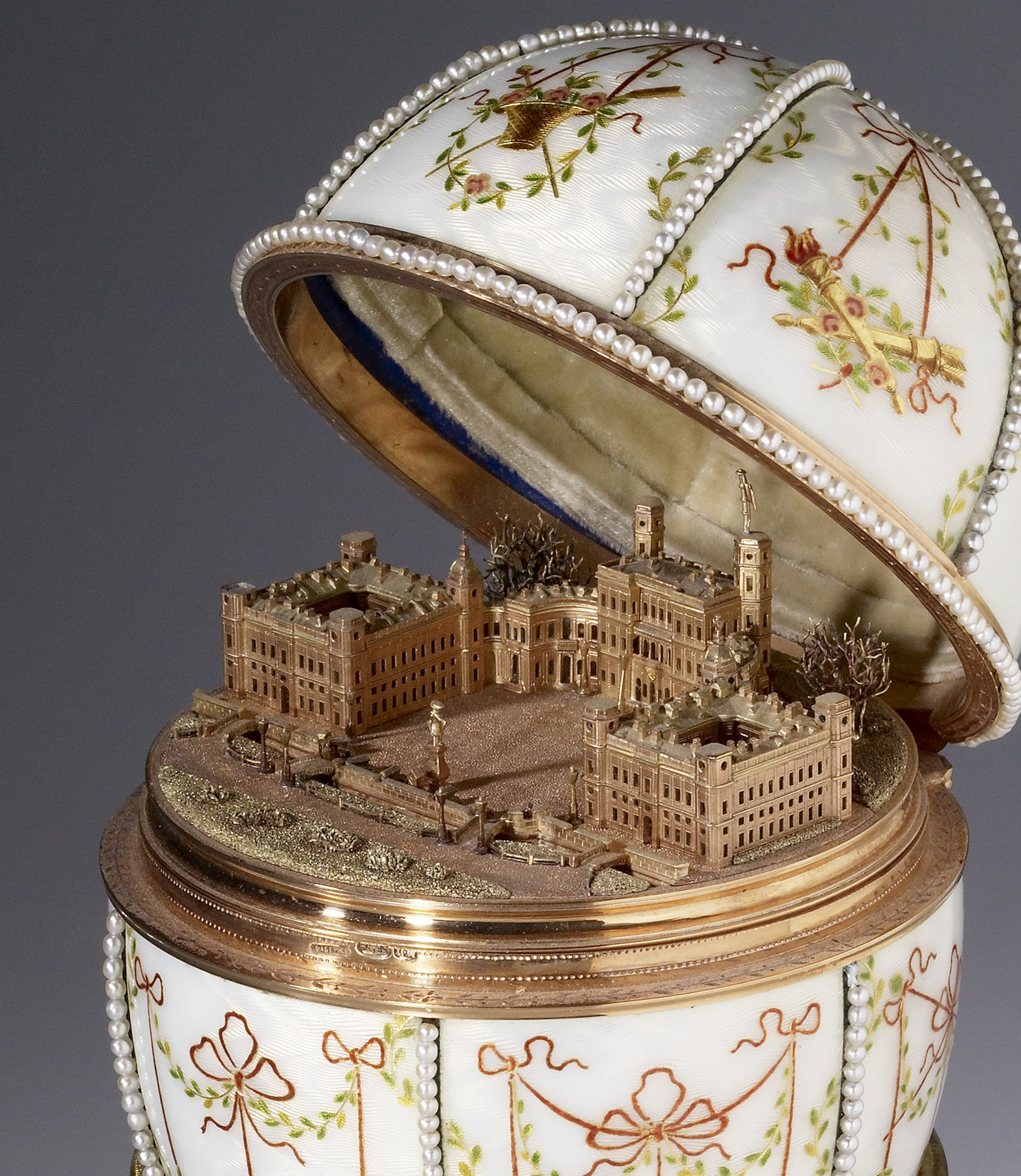
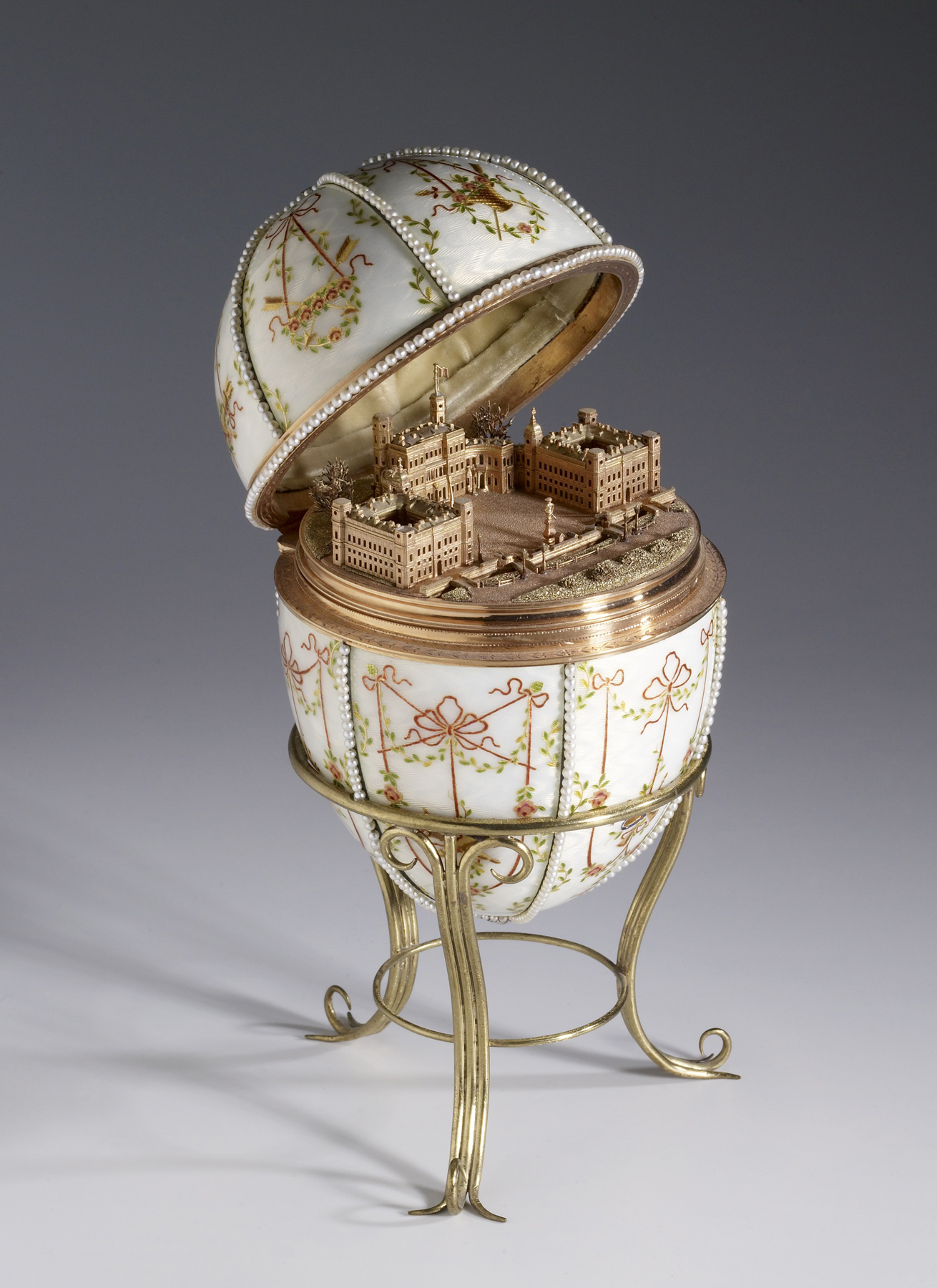
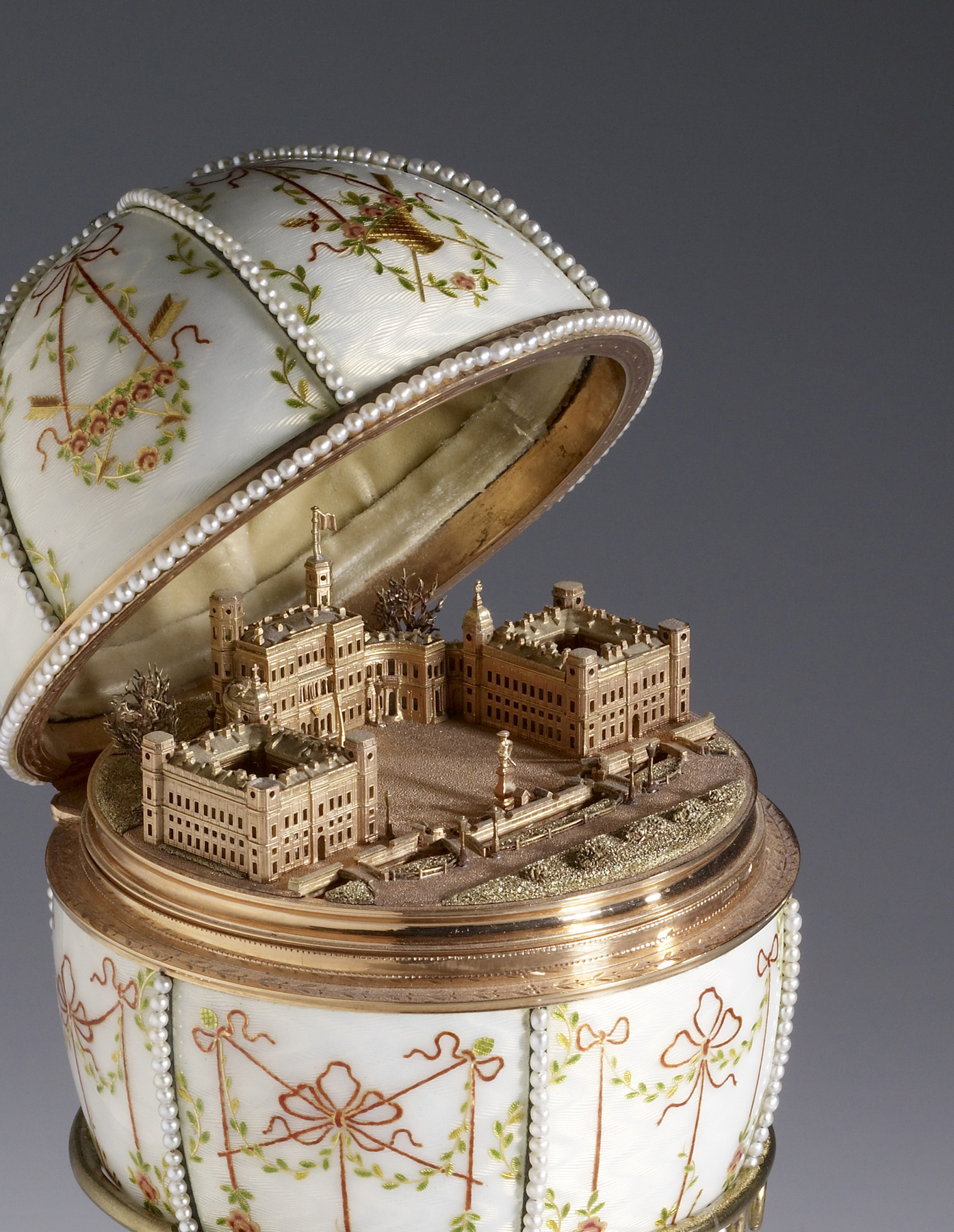
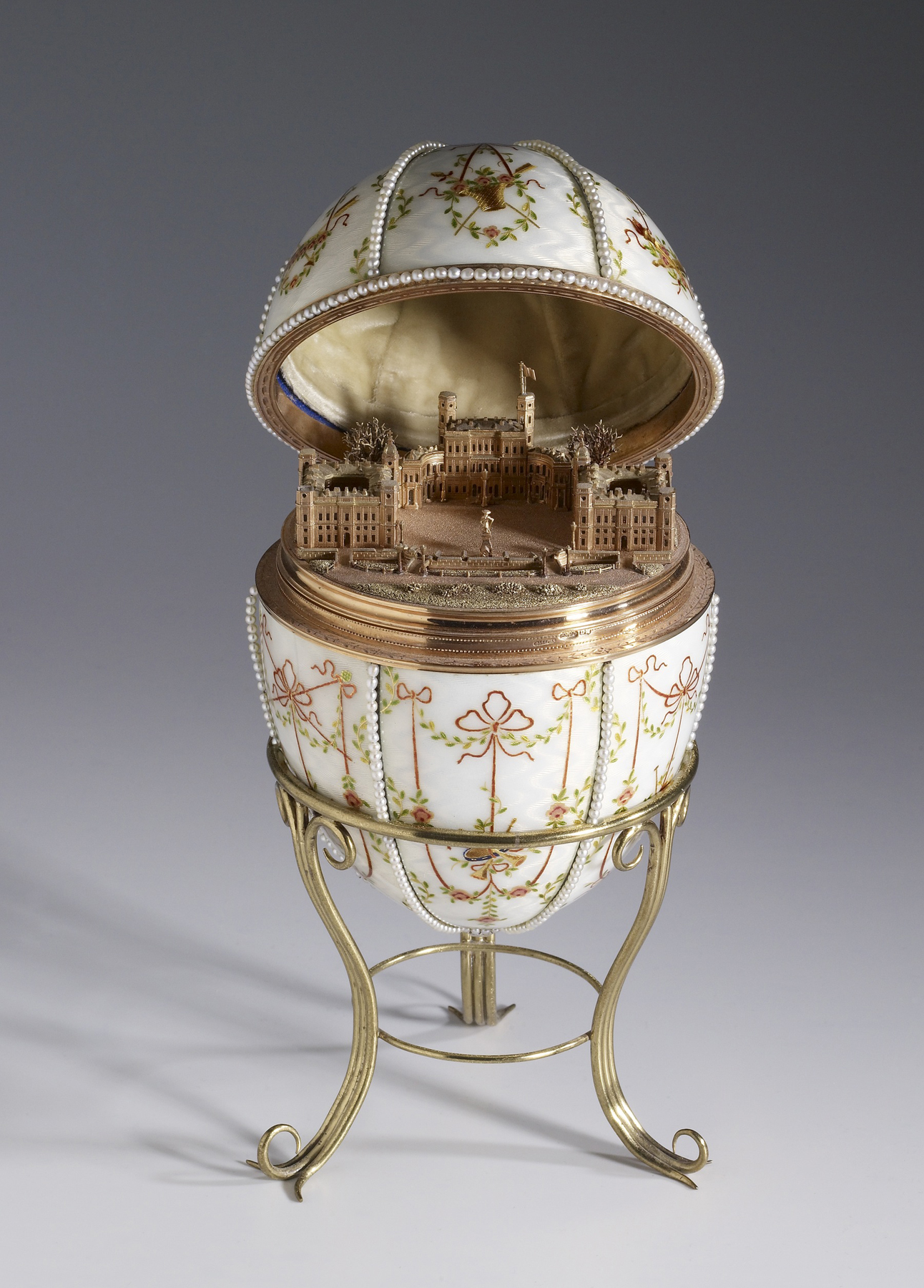
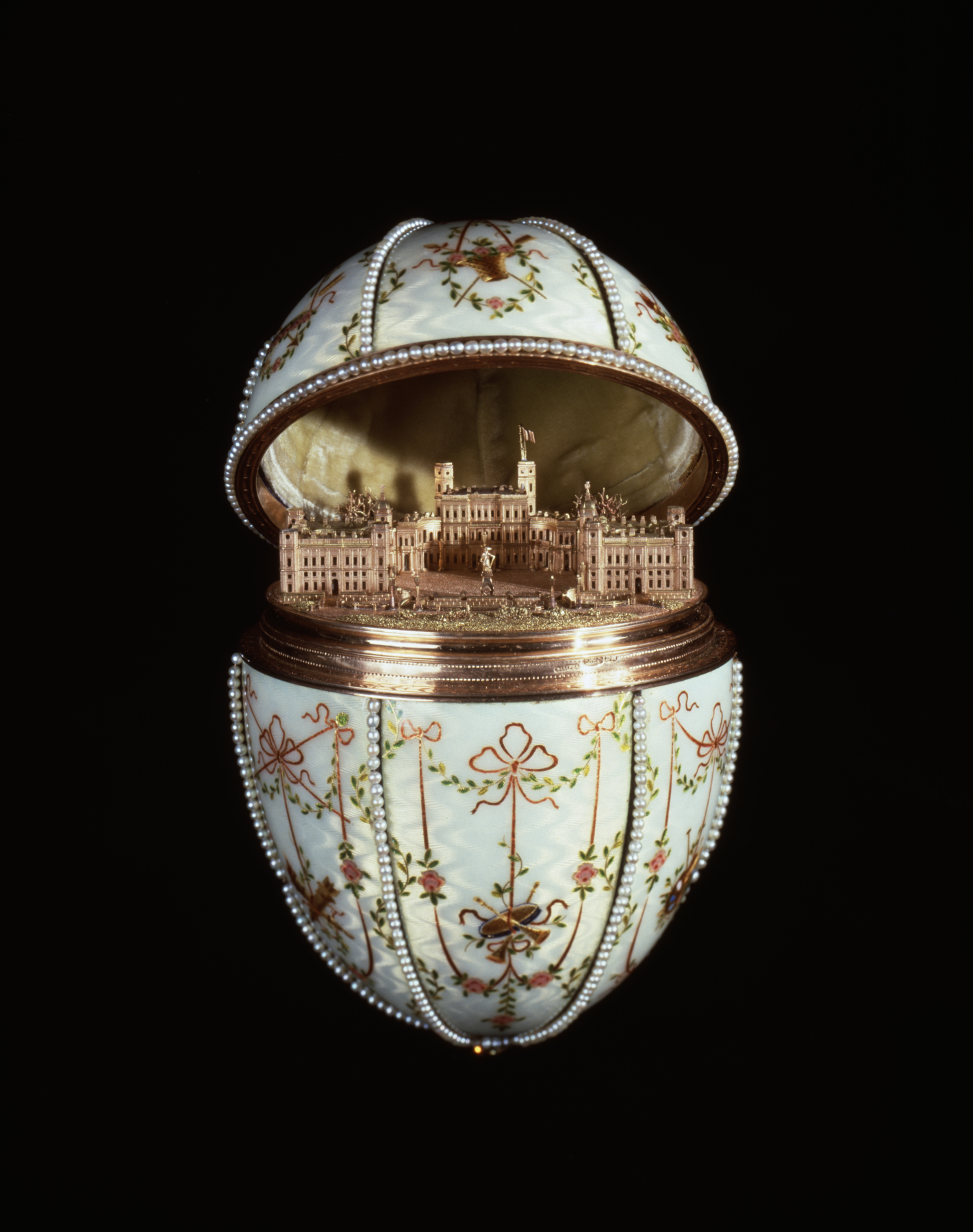
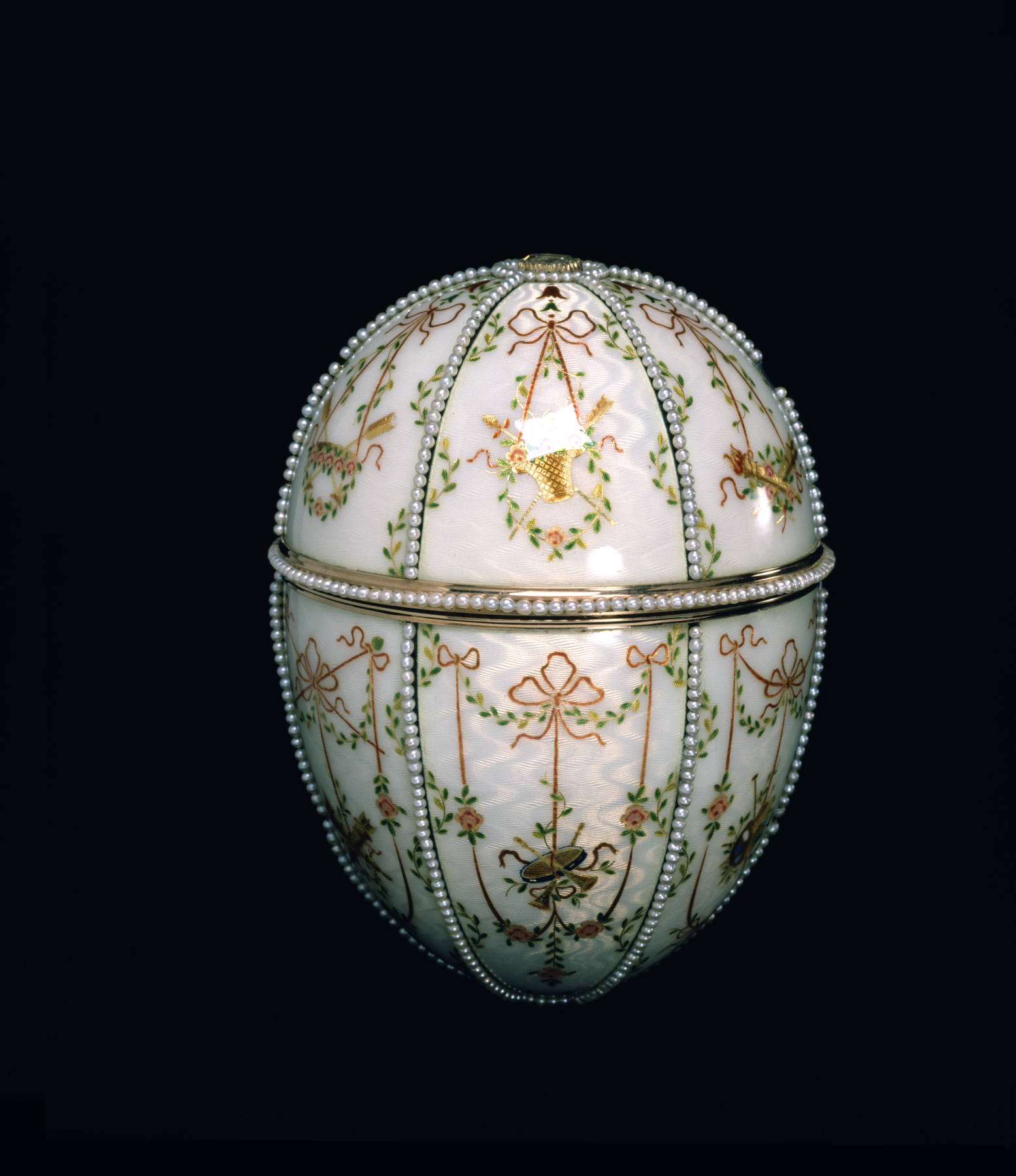
Continuing a practice initiated by his father, Alexander III, Tsar Nicholas II presented this egg to his mother, the dowager empress Marie Fedorovna, on Easter 1901. The egg opens to reveal as a surprise a miniature gold replica of the palace at Gatchina, located 30 miles southwest of St. Petersburg. Built for Count Grigorii Orlov, the palace was acquired by Tsar Paul I and served as the winter residence for Alexander III and Marie Fedorovna.
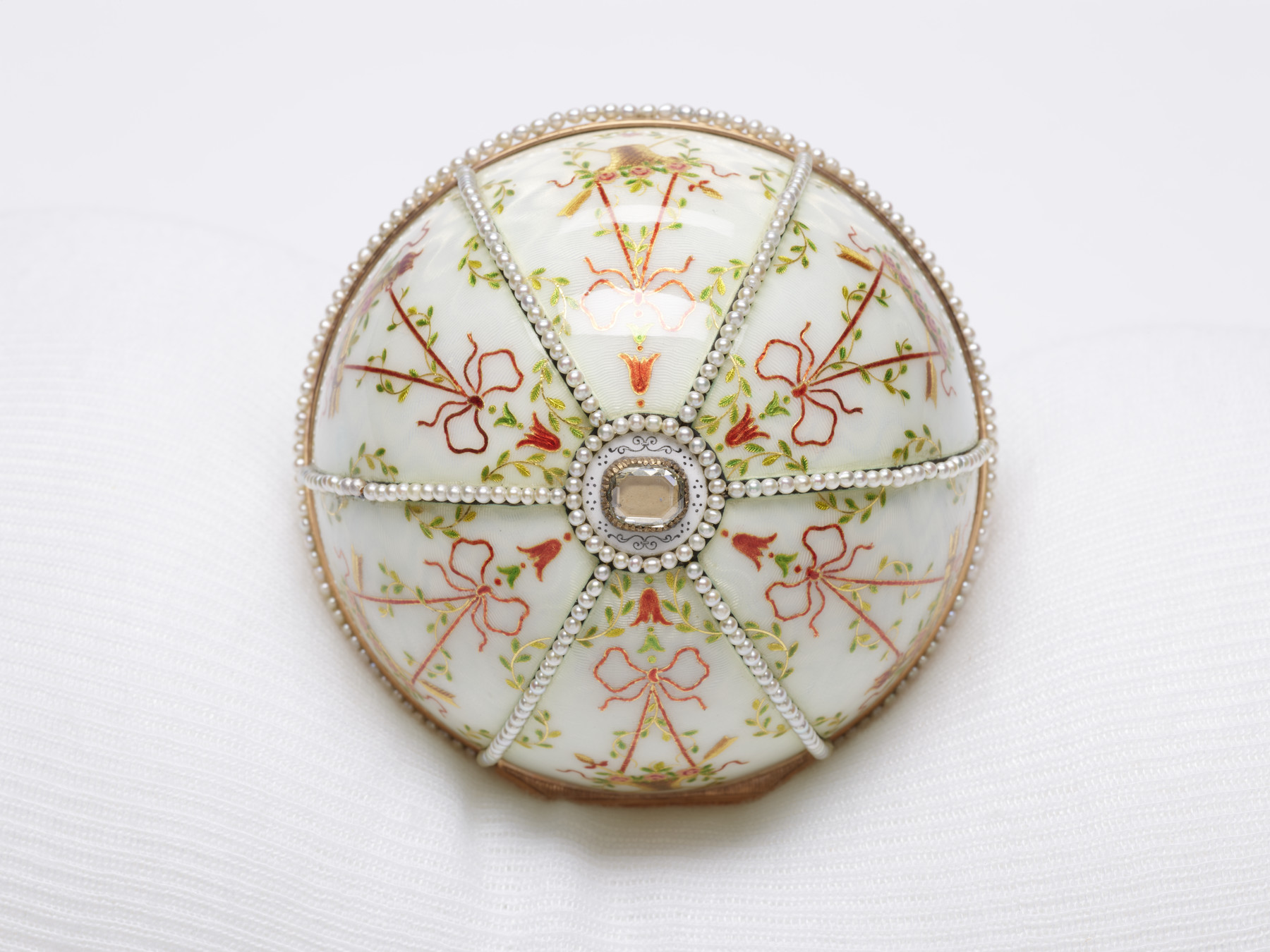
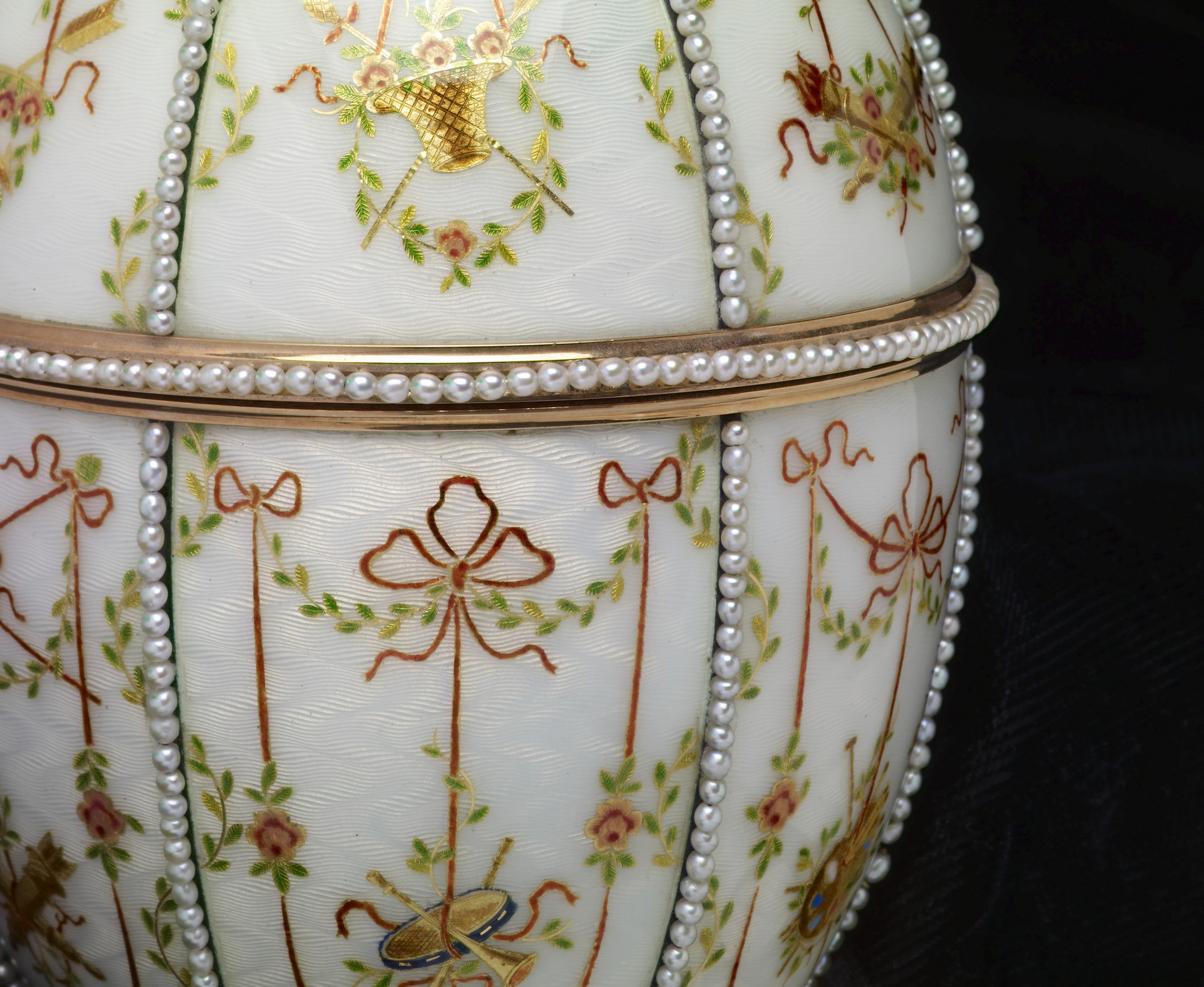
Fabergé's revival of 18th-century enameling techniques, including the application of multiple layers of translucent enamel over "guilloché," or mechanically engraved gold, is demonstrated in the shell of the egg. So meticulously did Fabergé's workmaster, Mikhail Perkhin, execute the palace that one can discern such details as cannons, a flag, a statue of Paul I (1754-1801), and elements of the landscape, including parterres and trees.
Provenance
Provenance (from the French provenir, 'to come from/forth') is the chronology of the ownership, custody, or location of a historical object. Learn more about provenance at the Walters.
Tsar Nicholas II, St. Petersburg; Dowager Empress Marie Fedorovna, St. Petersburg, April 1, 1901, by gift [retained in Anichkov Palace until 1917]; Alexandre Polovtsoff, Paris [date and mode of acquisition unknown]; Henry Walters, Baltimore, 1930, by purchase; Walters Art Museum, 1931, by bequest.
Exhibitions
| 2017-2018 | Fabergé and the Russian Crafts Tradition: An Empire's Legacy . The Walters Art Museum, Baltimore. |
| 2014-2016 | From Rye to Raphael: The Walters Story. The Walters Art Museum, Baltimore. |
| 2003-2004 | The Fabergé Menagerie. The Walters Art Museum, Baltimore; Columbus Museum of Art, Columbus; Portland Art Museum, Portland. |
| 1996-1997 | Russian Enamels. The Walters Art Gallery, Baltimore. |
| 1996 | The Palaces of St. Petersburg: Russian Imperial Style. Mississippi Arts Pavilion, Jackson. |
| 1988-1989 | A Millennium of Christianity: Russian Art from The Walters Art Gallery. The Walters Art Gallery, Baltimore. |
| 1986-1987 | Carl Fabergé in Context. Kunsthalle der Hypo-Kulturstiftung, Munchen. |
| 1984 | The Taste of Maryland: Art Collecting in Maryland 1800-1934. The Walters Art Gallery, Baltimore. |
| 1984 | Objects of Vertu: Precious Works of the Eighteenth Century. The Walters Art Gallery, Baltimore. |
| 1983 | Fabergé. A La Vieille Russie, Inc., New York. |
| 1959-1960 | Russian Art: Icons and Decorative Arts from the Origin to the Twentieth Century. The Walters Art Gallery, Baltimore. |
Conservation
| Date | Description | Narrative |
|---|---|---|
| 4/29/1977 | Treatment | repaired |
| 9/8/1982 | Treatment | cleaned; other |
Geographies
Russia, St. Petersburg (Place of Origin)
Measurements
H: 5 x Diam: 3 9/16 in. (12.7 x 9.1 cm)
Credit Line
Acquired by Henry Walters, 1930
Accession Number
In libraries, galleries, museums, and archives, an accession number is a unique identifier assigned to each object in the collection.
In libraries, galleries, museums, and archives, an accession number is a unique identifier assigned to each object in the collection.
44.500