 Creative Commons License

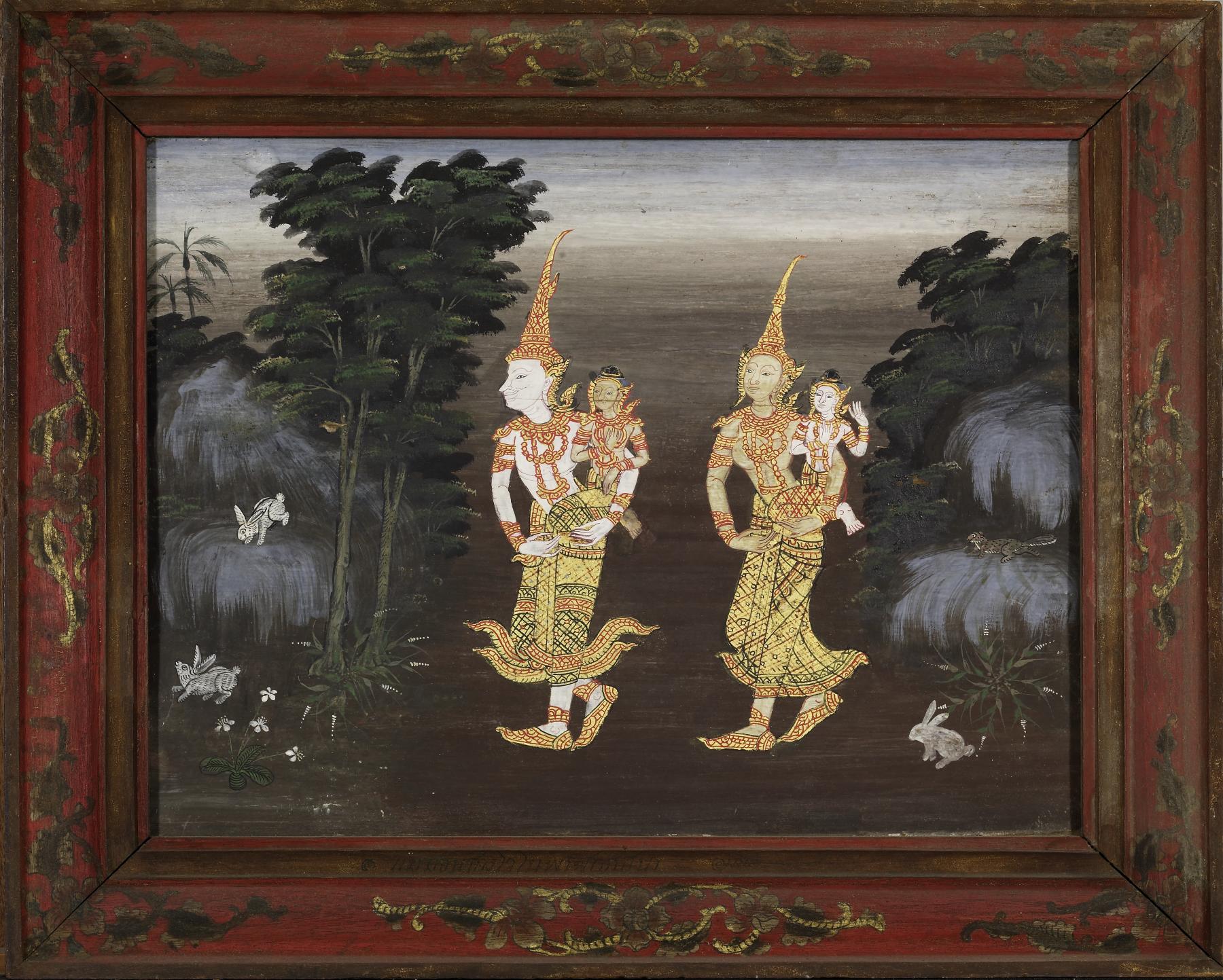
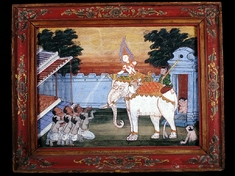
Vessantara Jataka, Chapter 4: Vessantara, Maddi, Jali, and Kanha Enter the Forest
(Southeast Asia )
The Vessantara Jataka emphasizes the virtue of charity through the story of a prince. Vessantara was a prince and one of the Buddha’s past incarnations. This painting shows the exiled prince with his wife and children at the edge of the entrance to the mountains. The king of this land was touched by the story of the family’s exile and offered his throne, but the prince refused even to stay in a palace. The king then ordered a hunter to patrol the entrance to the mountain that the family was heading to. After the family settled in the mountains, while their mother was away, Prince Vessantara, who aspired to perfect generosity, agreed to give the two children to the wicked Jujaka as his slaves.
The artist depicts the figures and creatures in a Thai style, but the landscape includes elements of European conventions like shading and a desire to show receding space.
Inscription
Provenance
Provenance (from the French provenir, 'to come from/forth') is the chronology of the ownership, custody, or location of a historical object. Learn more about provenance at the Walters.
Doris Duke Charitable Foundation's Southeast Asian Art Collection [date and mode of acquisition unknown]; Walters Art Museum, 2002, by gift.
Geographies
Thailand (Place of Origin)
Measurements
H: 17 1/2 x W: 21 5/8 in. (44.5 x 55 cm)
Credit Line
Gift from Doris Duke Charitable Foundation's Southeast Asian Art Collection, 2002
Location in Museum
Not on view
Accession Number
In libraries, galleries, museums, and archives, an accession number is a unique identifier assigned to each object in the collection.
In libraries, galleries, museums, and archives, an accession number is a unique identifier assigned to each object in the collection.
35.234
Do you have additional information?
Related Objects
Vessantara Jataka, Chapter 5: The Woodsman Cataputta's Dogs Send Jujaka Up a Tree
Vessantara Jataka, Chapter 7: Jujaka and the Hermit Accala
Vessantara Jataka, Chapter 8: Jali at Vessantara's Feet
Vessantara Jataka, Chapter 11: While Jujaka Sleeps the Children are Cared For
Vessantara Jataka, Chapter 5: The Brahmin Jujaka with his wife Amittapana
Vessantara Jataka, Chapters 12 & 13: Jali's Army Recovers Vessantara and Returns to the Capital
Vessantara Jataka, Chapter 2: Kalinga Brahmins are Given the White Elephant