
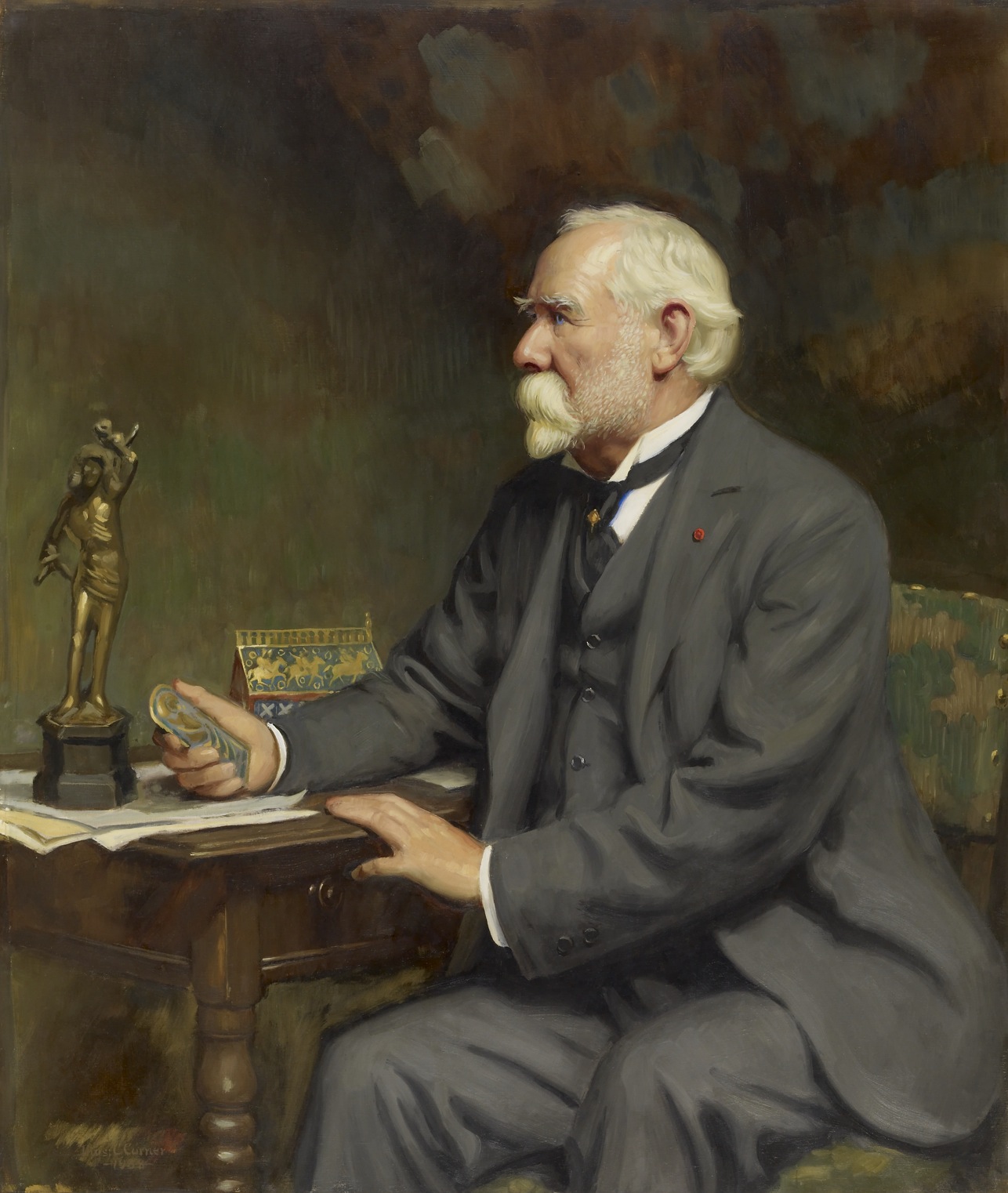
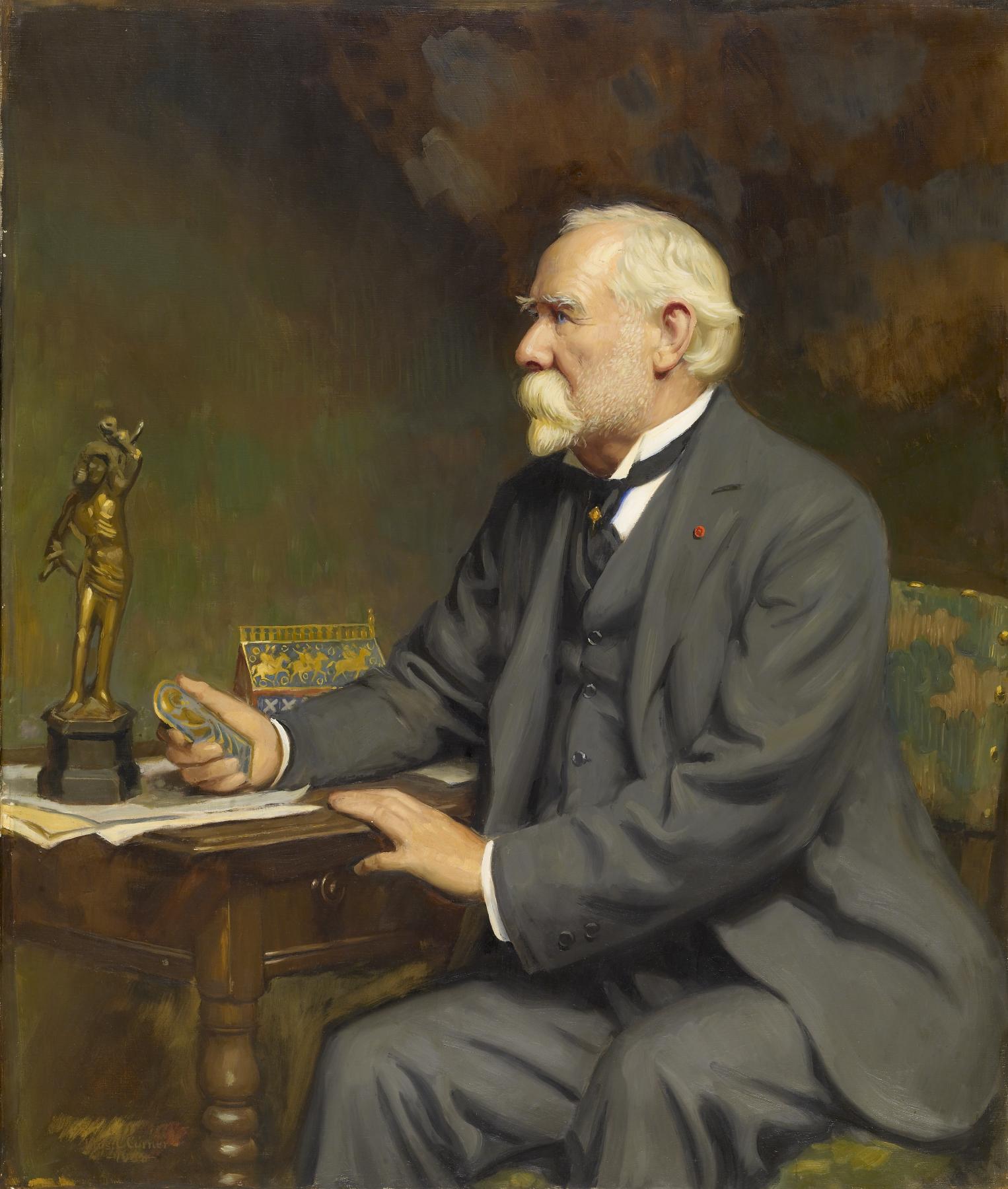


Portrait of Henry Walters
(18th and 19th Centuries )
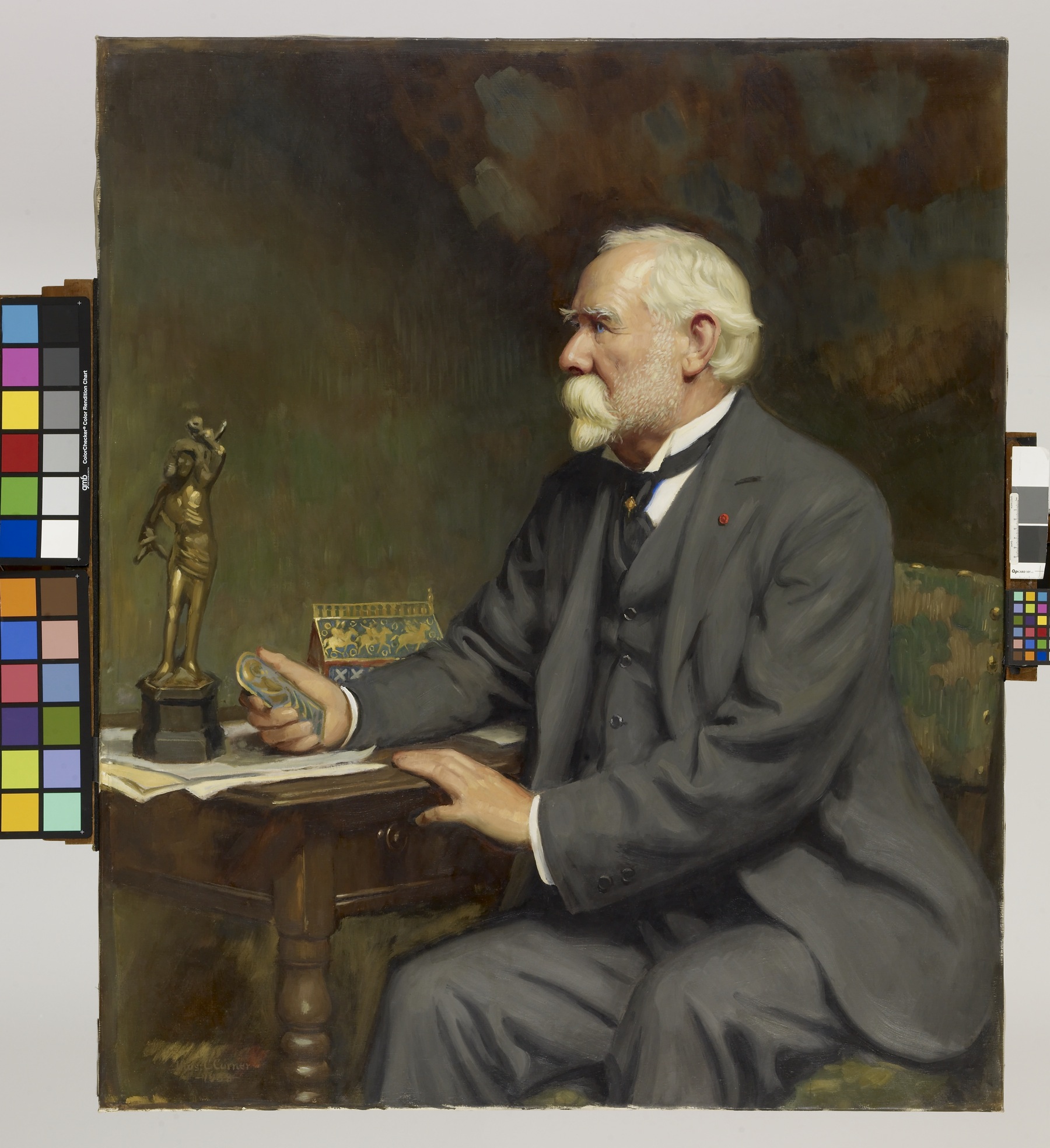
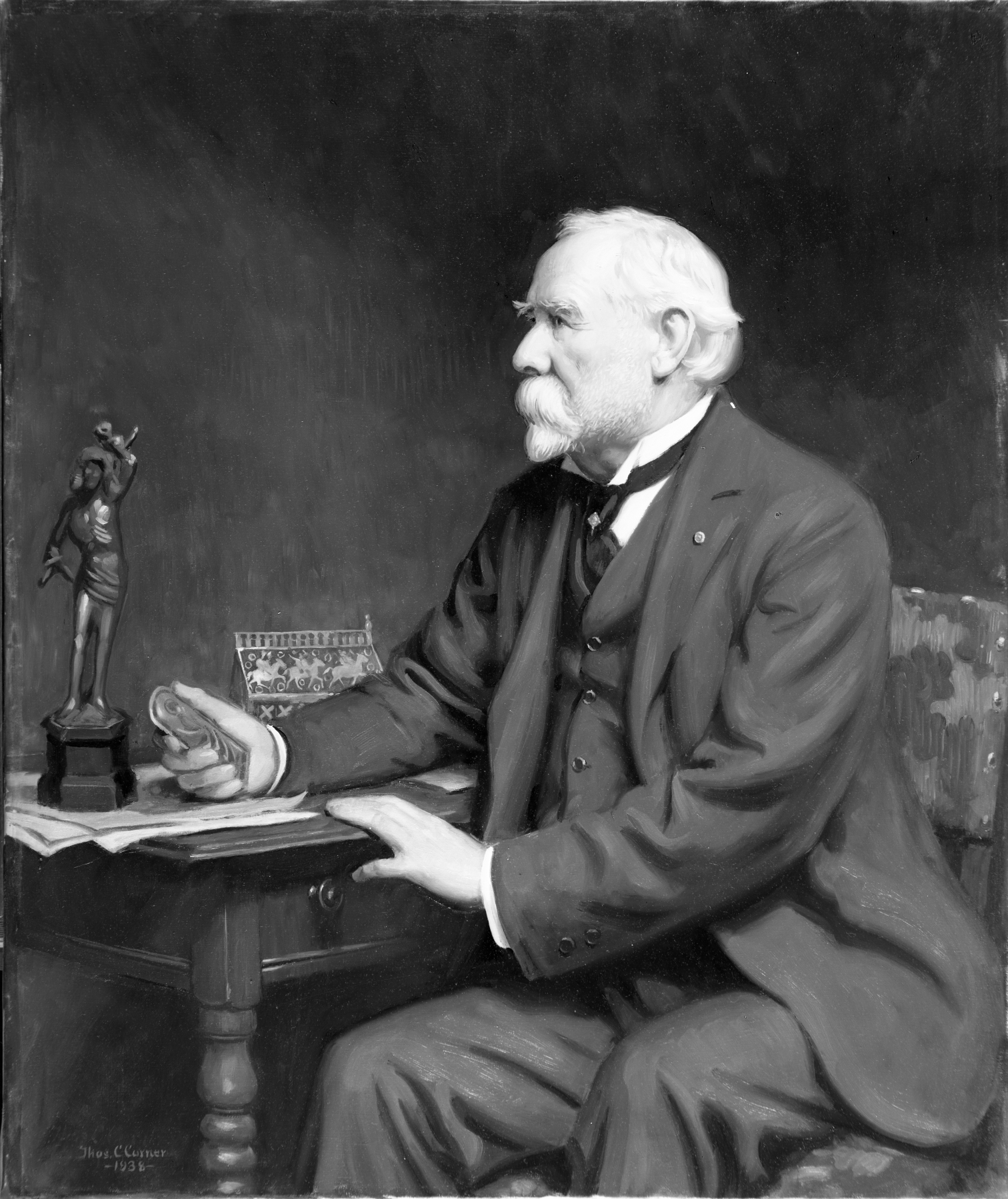
In this posthumous portrait by the Baltimore born artist, Thomas Cromwell Corner, the founder of the Walters Art Museum, Henry Walters (1848-1931), is shown with three objects from his collection: a Mosan enamel plaque of the 12th century (44.101), a Limoges enamel reliquary of the 13th century (44.78), and a German brass statuette of St. Sebastian of the early 16th century (53.34). Henry is shown wearing the same stick-pin decorated with a Carthaginian stater that appears in another posthumous portrait commissioned from Frank O. Salisbury (37.2000). This stick-pin is now in the museum's collection (59.699).
When the portrait was unveiled at the museum on the evening of 27 January 1940, Henry Watson Kent gave a talk on "Henry Walters, the Collector" and Erwin Panofsky spoke on "The International Style of about 1400." Over three hunndred people were reported to have attended.
Inscription
Provenance
Provenance (from the French provenir, 'to come from/forth') is the chronology of the ownership, custody, or location of a historical object. Learn more about provenance at the Walters.
Walters Art Museum, 1937, by commission from the artist.
Exhibitions
| 2014-2016 | From Rye to Raphael: The Walters Story. The Walters Art Museum, Baltimore. |
| 2012 | Touch and the Enjoyment of Sculpture: Exploring the Appeal of Renaissance Statuettes. The Walters Art Museum, Baltimore. |
| 1995 | The Allure of Bronze. The Walters Art Gallery, Baltimore. |
Geographies
USA (Place of Origin)
Measurements
H: 45 11/16 x W: 38 9/16 in. (116 x 98 cm)
Credit Line
Commissioned from the artist, 1937
Location in Museum
Not on view
Accession Number
In libraries, galleries, museums, and archives, an accession number is a unique identifier assigned to each object in the collection.
In libraries, galleries, museums, and archives, an accession number is a unique identifier assigned to each object in the collection.
37.1682
 Creative Commons License