The Walters Art Museum

Online Collection

Explore the Art Collection keyboard_arrow_down close
  • Explore By...
  • Category
  • Date
  • Medium
  • Creator
  • Places
  • Museum Locations
The Walters Art Museum walters-logo-white
  • Events
  • Art
  • Give Now
  • Visit
    • Plan Your Visit
    • Directions & Parking
    • Tours
    • Guidelines
    • Accessibility
  • Exhibitions
    • Current
    • Upcoming
    • Past
  • What to Do
    • Exhibitions
    • Events
    • Learn
  • Art & Research
    • Our Collection
    • Conservation
    • Journal
    • Manuscripts
    • Publications
    • Provenance
  • Join & Give
    • Support the Walters
    • Partnership
    • Ways to Give
    • Gala & Party
    • Volunteer
Image for Tripod Vessel
tooltip-icon Creative Commons License

Creative Commons Zero

Download Image Zoom
Image for Tripod Vessel
tooltip-icon Creative Commons License

Creative Commons Zero

Download Image Zoom
Image for Tripod Vessel
tooltip-icon Creative Commons License

Creative Commons Zero

Download Image Zoom
  • arrow_forward_ios
  • arrow_forward_ios
Tripod Vessel Thumbnail

Tripod Vessel

Costa Rican (Atlantic Watershed) (Artist)
300-700 (late Period IV-early Period V)
earthenware
(Ancient Americas )

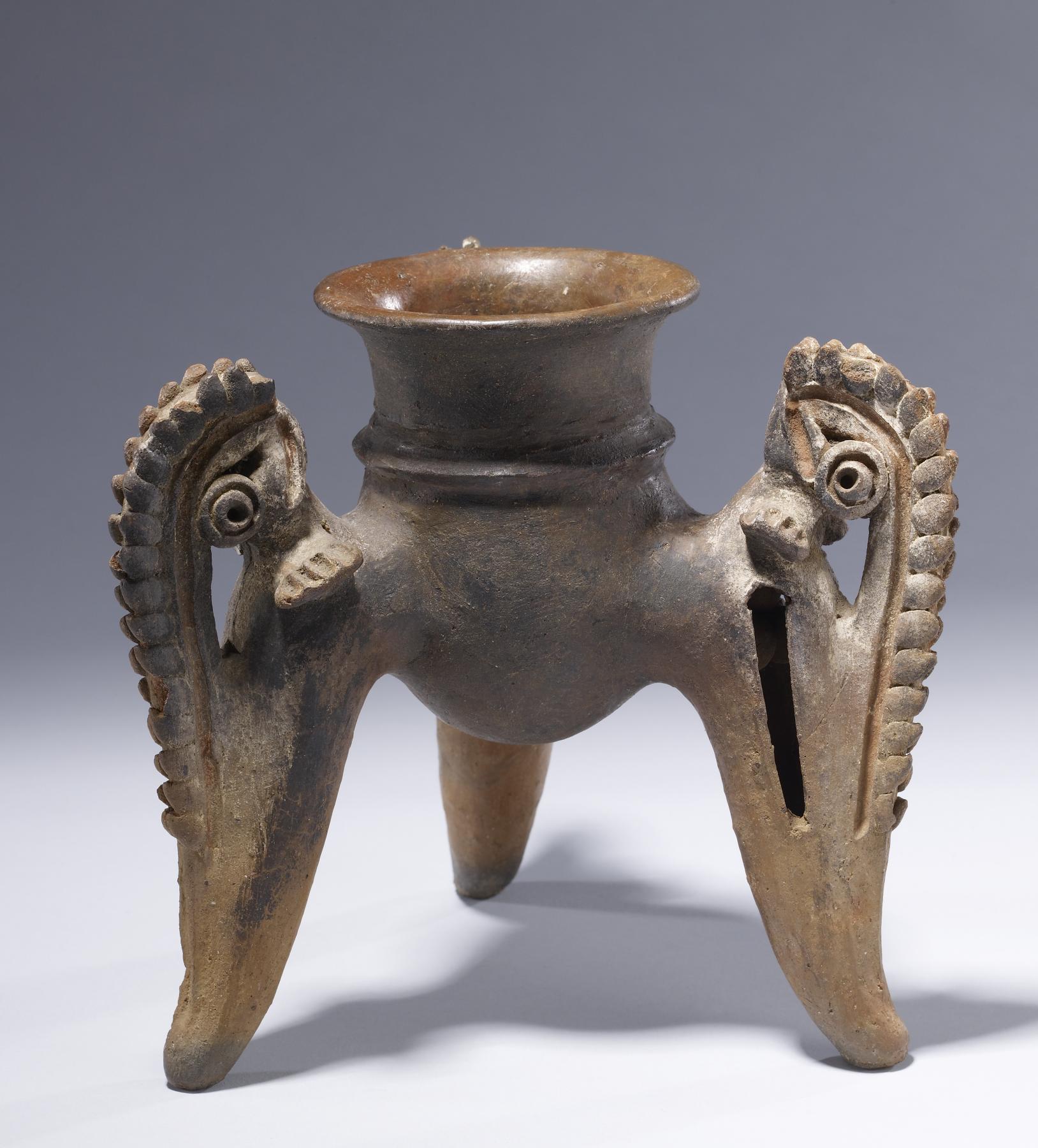
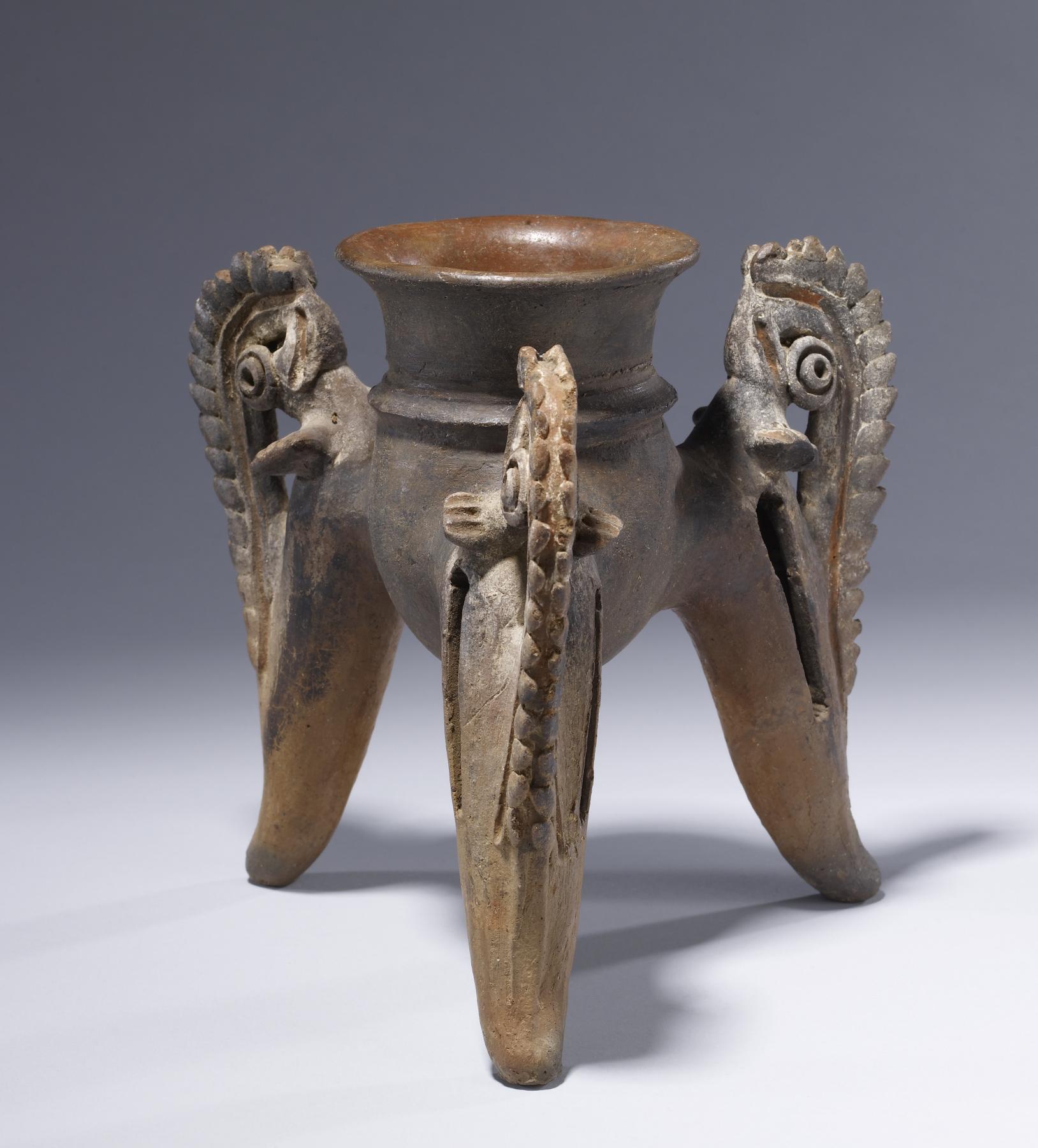
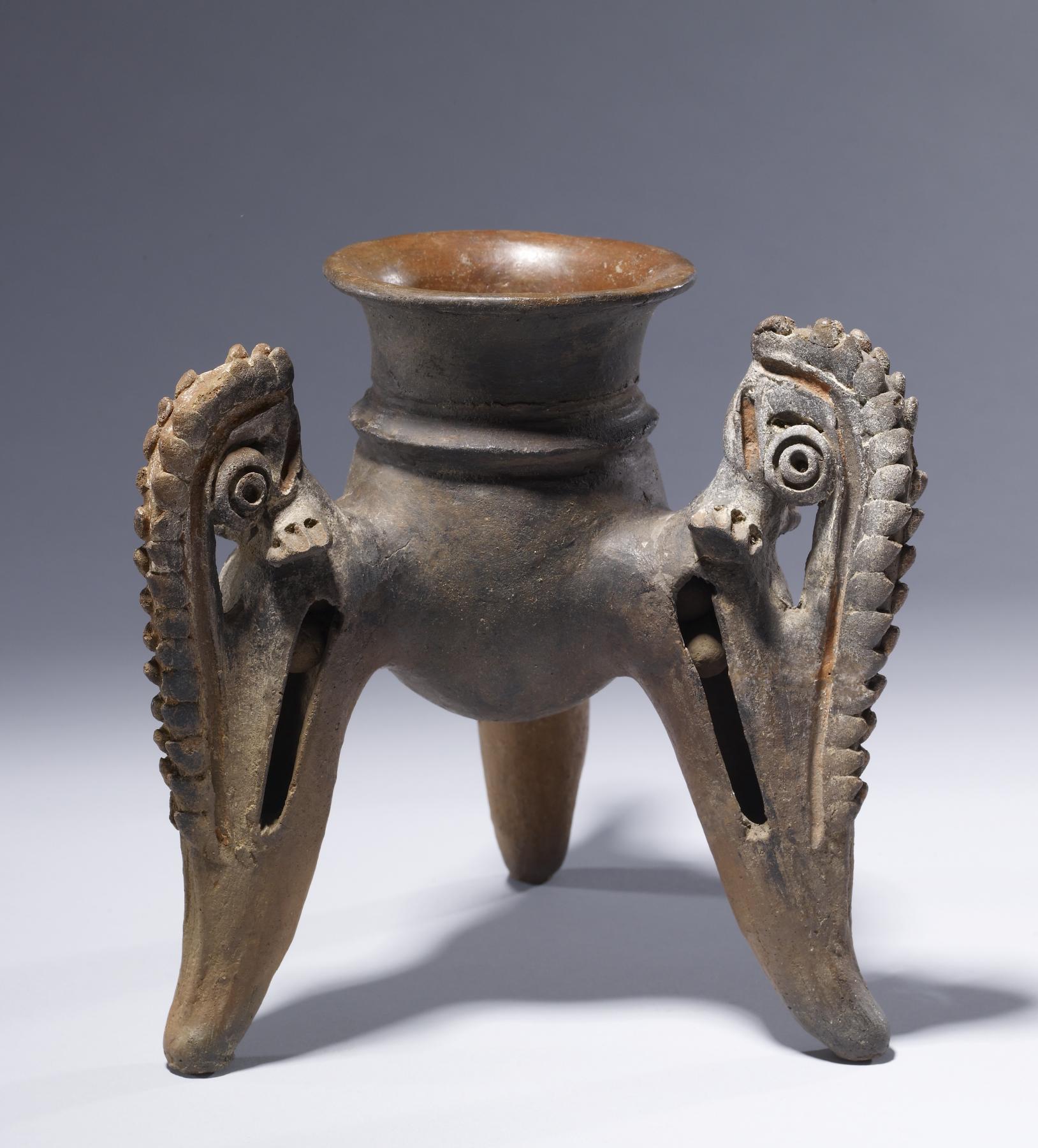
This small, bulbous vessel is supported by three legs which resemble the seahorses found along the coasts of Central America. The seahorses emerge from the legs of the vessel, the frills of their backs and distinct shape of their faces making them easily recognizable as they curl into the center. Their eyes are deeply impressed, giving them the double rimmed trait common throughout animal depictions in pre-Columbian art. The seahorses perch on hollow, bulb-shaped legs with small ovoid windows cut into the sides of the front two legs. Through these slits, a small ball can be seen resting in the shaft. The exterior has a dark, gritty, and worn appearance, while the inside of the vessel is burnished and shines a rich brown.

Provenance
Provenance (from the French provenir, 'to come from/forth') is the chronology of the ownership, custody, or location of a historical object. Learn more about provenance at the Walters.

John G. Bourne [date and mode of acquisition unknown].

Share
  • social-item
  • social-item
  • social-item

Geographies

Costa Rica (Place of Origin)

Measurements

H: 7 1/8 x W: 7 3/16 x D: 6 1/4 in. (18.1 x 18.2 x 15.9 cm)

Credit Line

Gift of John G. Bourne, 2014

Location in Museum

Charles Street: Second Floor: Latin American Art / Arte Latinoamericano

Accession Number

In libraries, galleries, museums, and archives, an accession number is a unique identifier assigned to each object in the collection.

2009.20.210

Do you have additional information?

Notify the curator

The Walters Logo

600 N. Charles St.
Baltimore, MD 21201

+1 410 547 9000

Free. Open Wednesday.
10 a.m.–5 p.m.

  • About
  • Press
  • Donate
  • Newsletter
  • Careers
  • Contact
  • Privacy Policy
  • Copyright Info
Facebook Instagram X YouTube
modal close
Image for
tooltip-icon Creative Commons License

Tooltip description to define this term for visitors to the website.

zoom-btn zoom-btn preview-download
Image for
tooltip-icon Creative Commons License

Tooltip description to define this term for visitors to the website.

zoom-btn zoom-btn preview-download
Image for
tooltip-icon Creative Commons License

Tooltip description to define this term for visitors to the website.

zoom-btn zoom-btn preview-download
  • arrow_forward_ios
  • arrow_forward_ios