
 Creative Commons License
 Creative Commons License


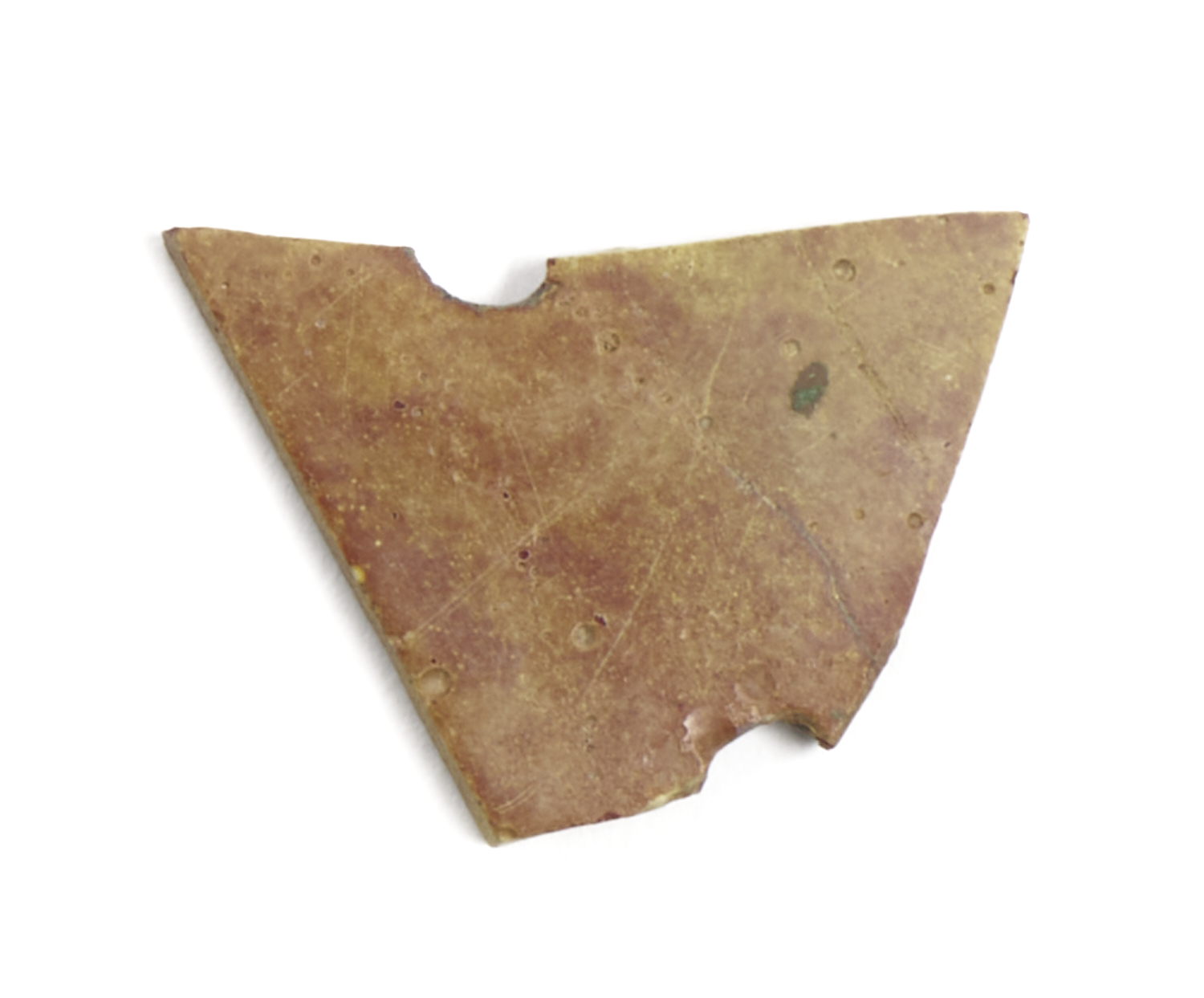
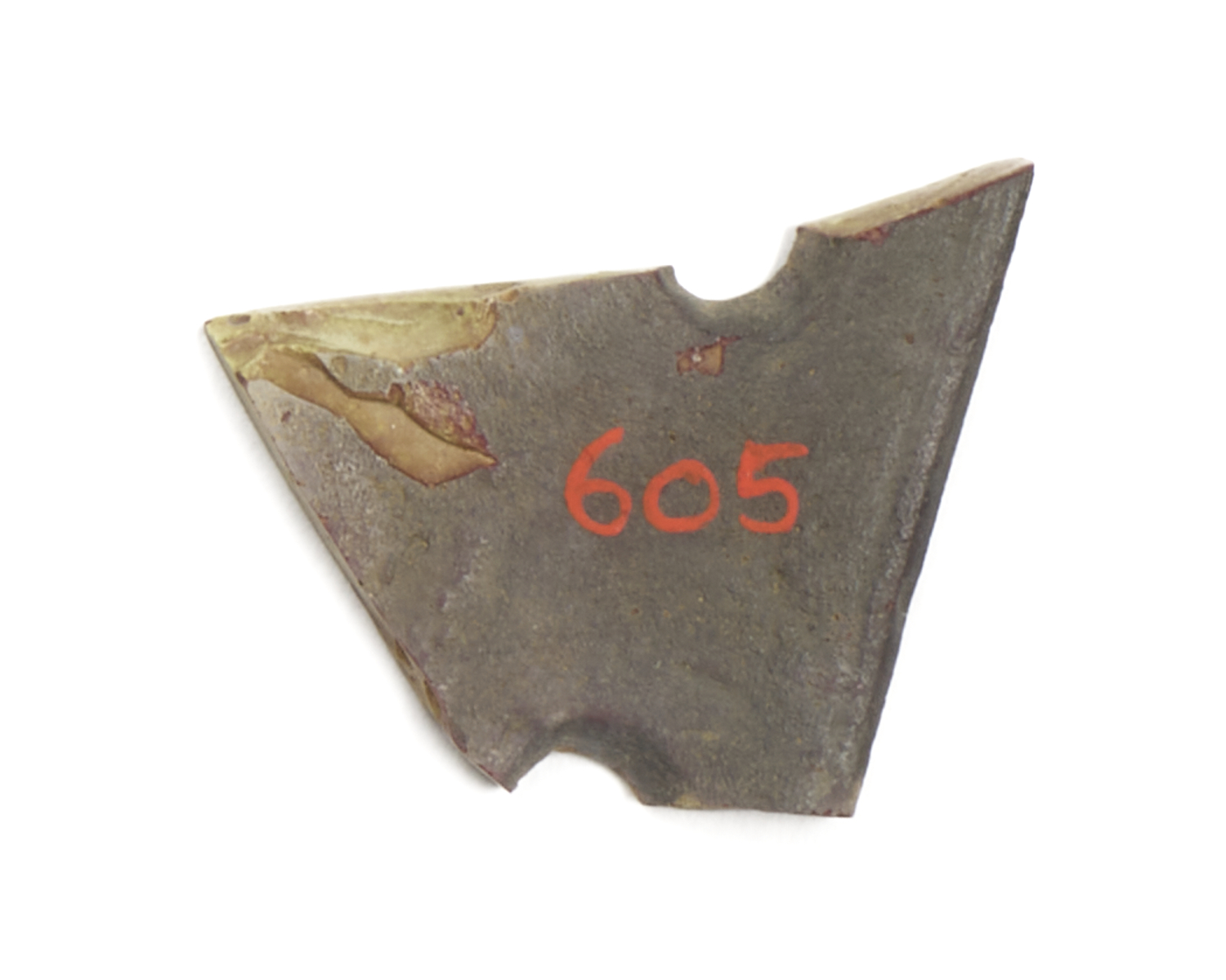
Fragment
This inlay representing an unknown decorative element was purchased by Henry Walters as part of a group of hundreds of glass fragments thought to belong to an Egyptian shrine (naos), which would have contained an image of a deity. The glass would have been mounted on wood panels. The large group included many identifiable elements, such as dark red body parts representing the exposed skin of men, while dark blue body parts represent the skin of male gods and light blue represents goddesses. White five-point stars in dark blue strips represent the night sky, and the ground is probably represented by dark red strips with alternating orange and gray semicircles. Other elements include hieroglyphs representing “life” and “power,” yellow curls representing the “sidelock of youth,” crocodile heads, parts of Egyptian royal and divine crowns, and patterned sections.
Assuming that the fragments originally belonged together in antiquity, the two dark-blue crocodile heads among the pieces indicated that the shrine might belong to a male deity with crocodile features. Groupings of elements of the glass shrine have been found to closely resemble reliefs from the Ptolemaic temple of the crocodile-headed god Sobek at Kom Ombo, Egypt.
Provenance
Provenance (from the French provenir, 'to come from/forth') is the chronology of the ownership, custody, or location of a historical object. Learn more about provenance at the Walters.
Khawam Brothers, Cairo [date and mode of acquisition unknown]; Henry Walters, Baltimore, 1931, by purchase; Walters Art Museum, 1931, by bequest.
Credit Line
Acquired by Henry Walters, 1931
Location in Museum
Not on view
Accession Number
In libraries, galleries, museums, and archives, an accession number is a unique identifier assigned to each object in the collection.
In libraries, galleries, museums, and archives, an accession number is a unique identifier assigned to each object in the collection.
47.605