
 Creative Commons License
 Creative Commons License
 Creative Commons License
 Creative Commons License
 Creative Commons License
 Creative Commons License
 Creative Commons License
 Creative Commons License
 Creative Commons License
 Creative Commons License
 Creative Commons License


Days against genetically-modified corn
(Ancient Americas )
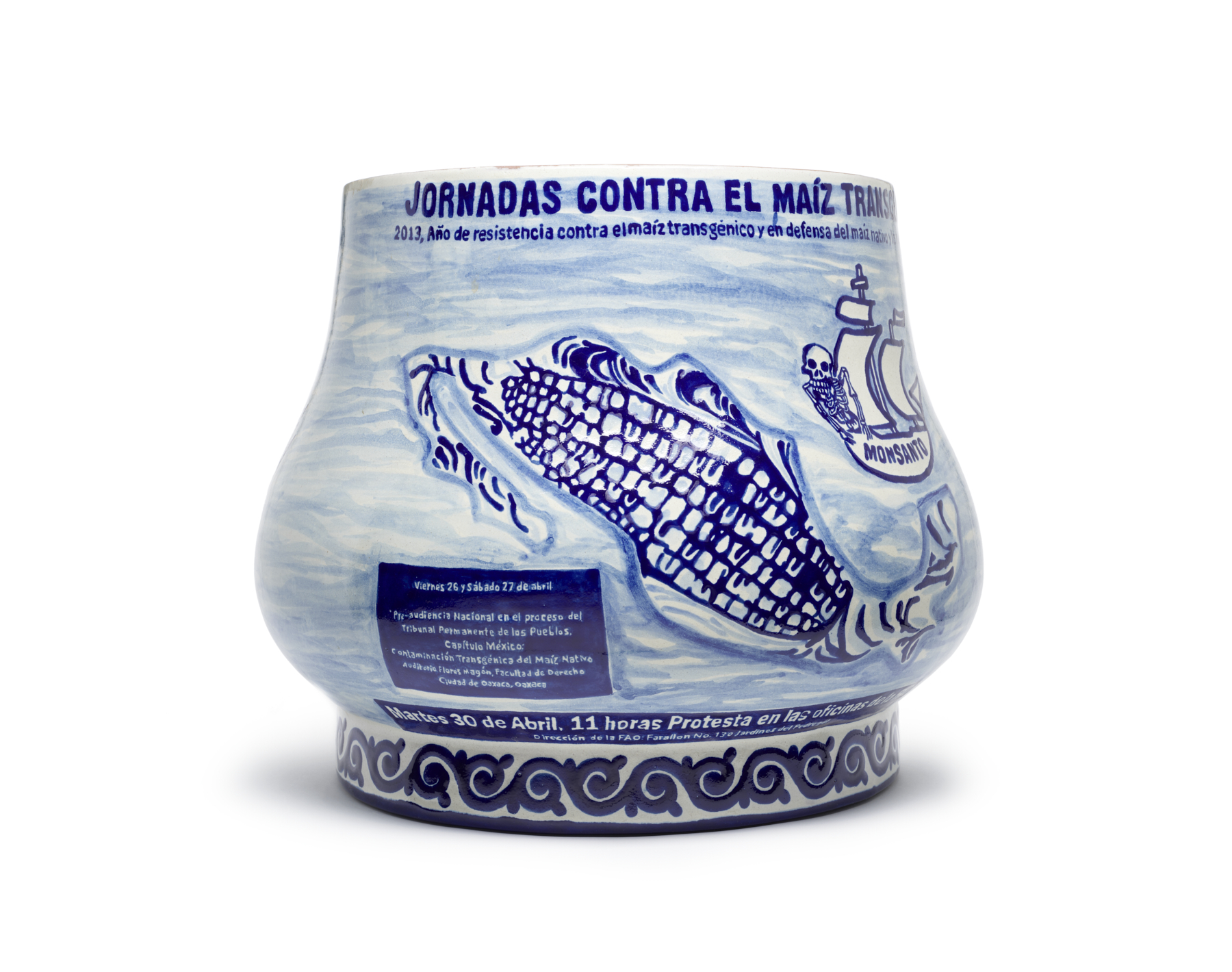
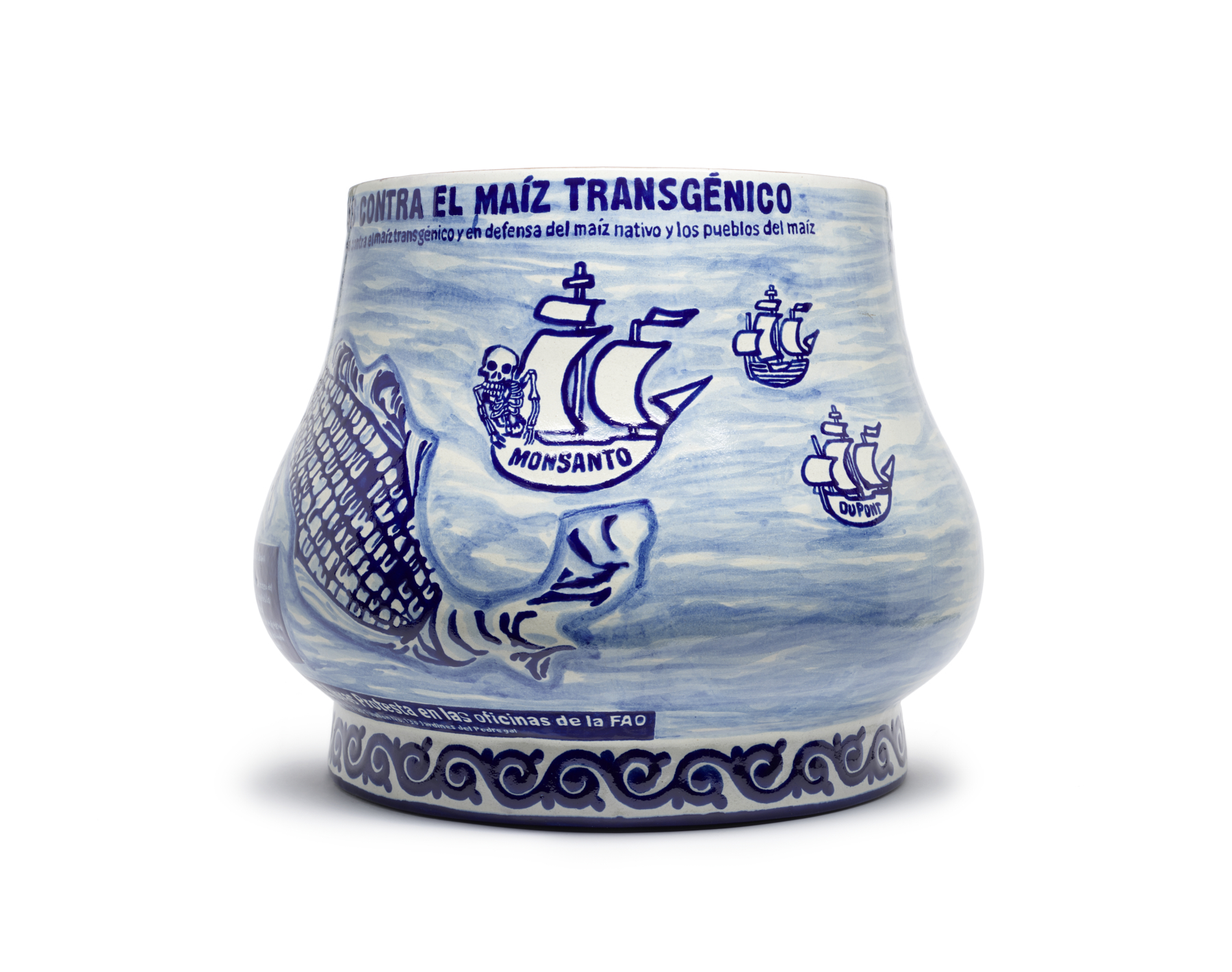
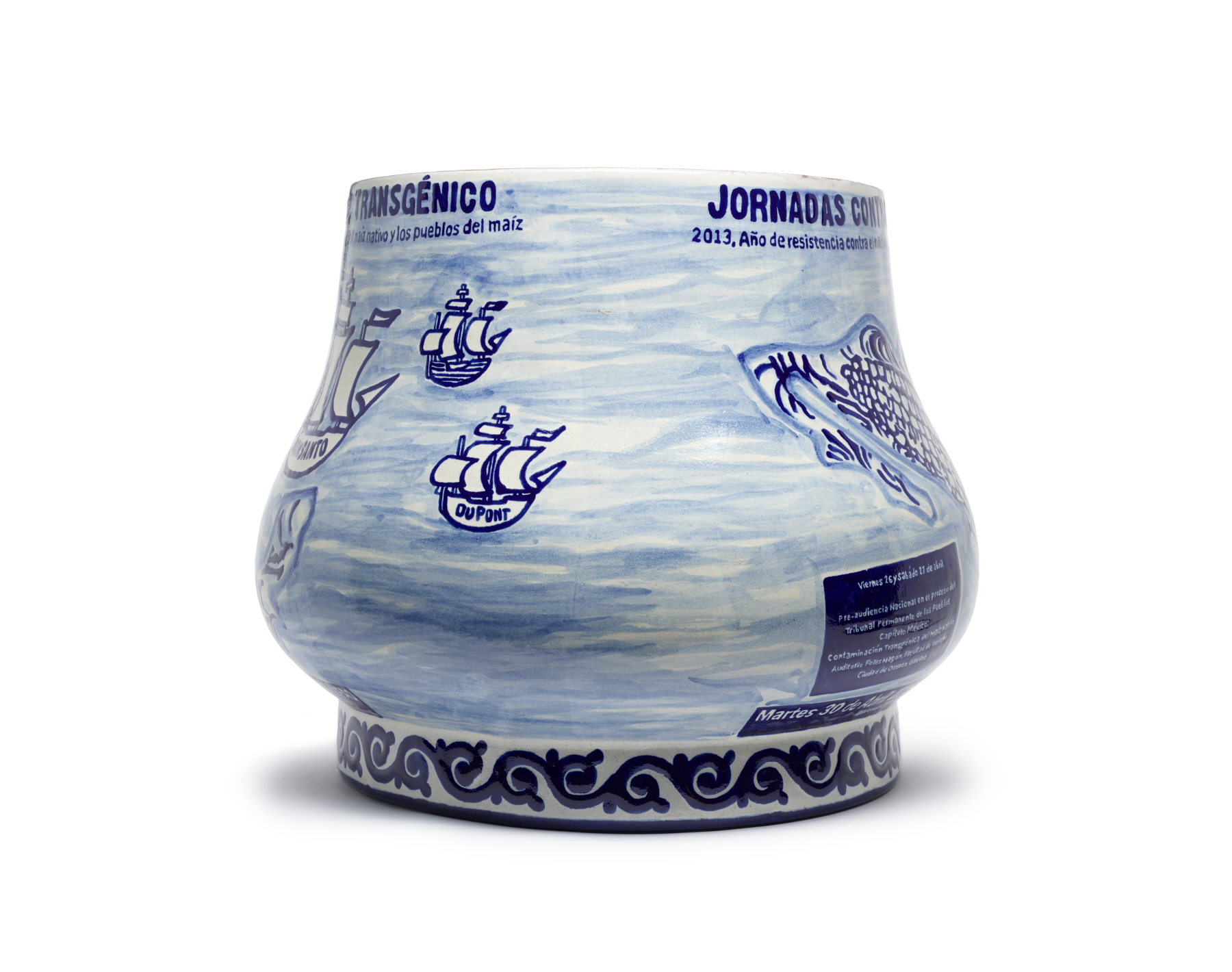
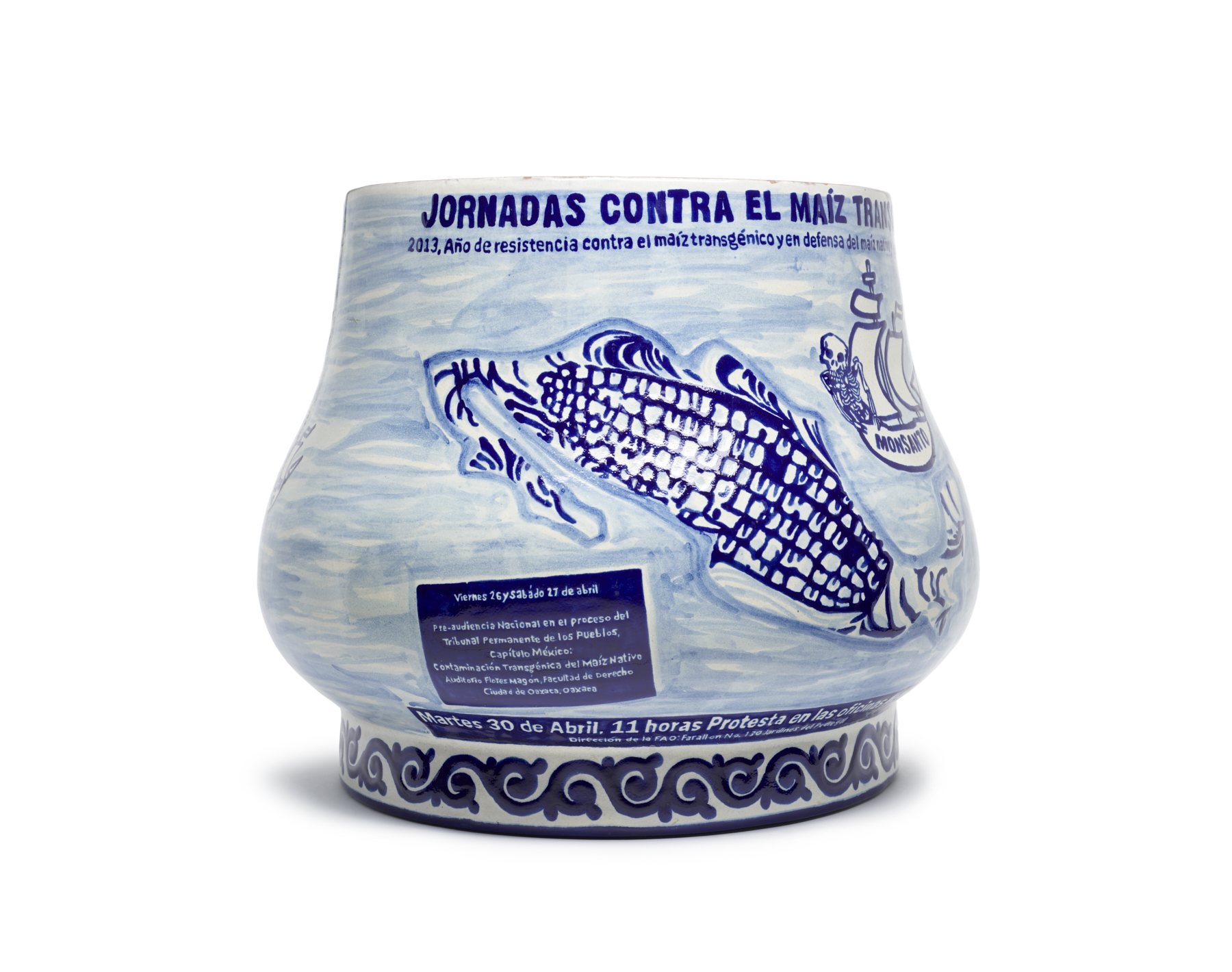
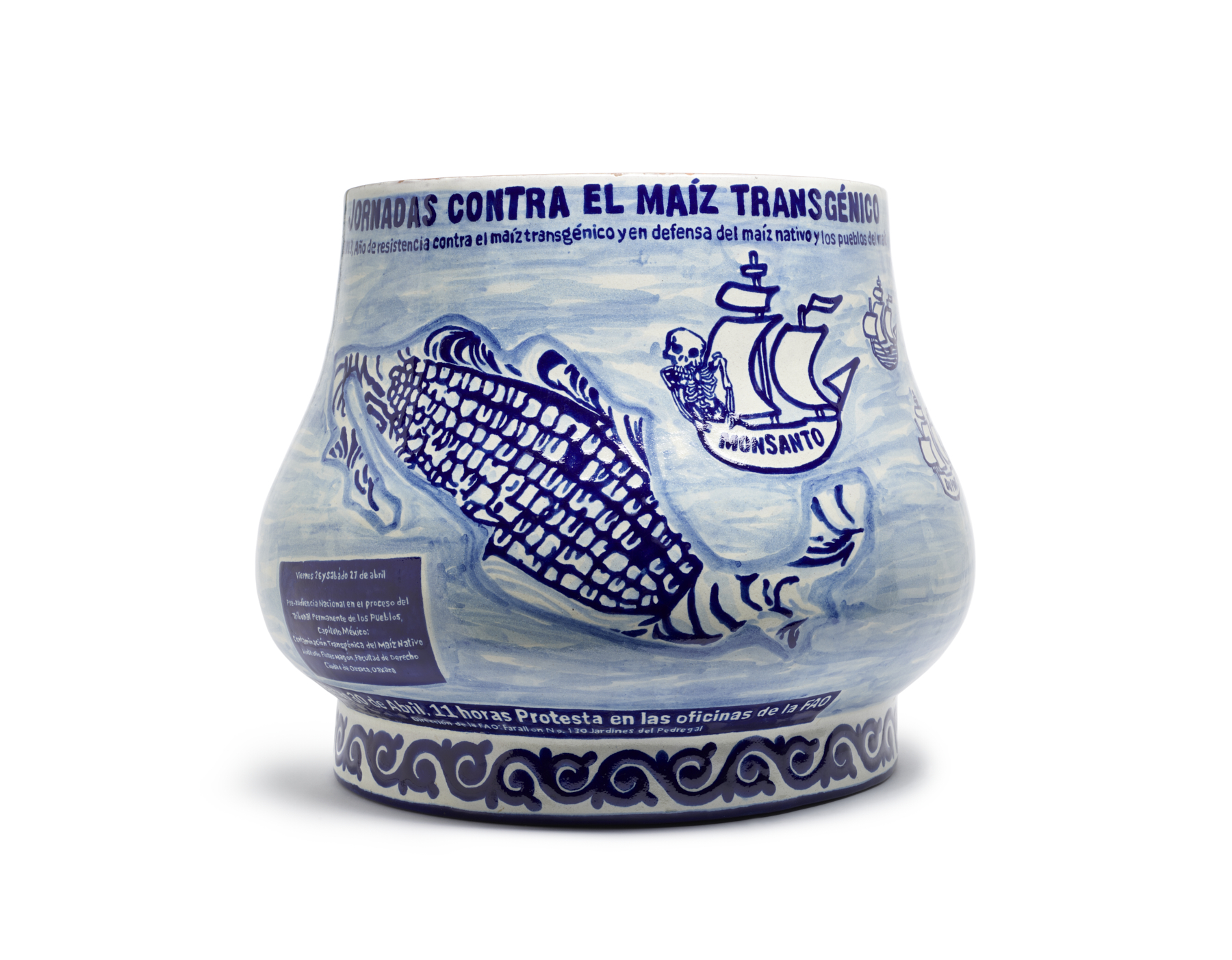
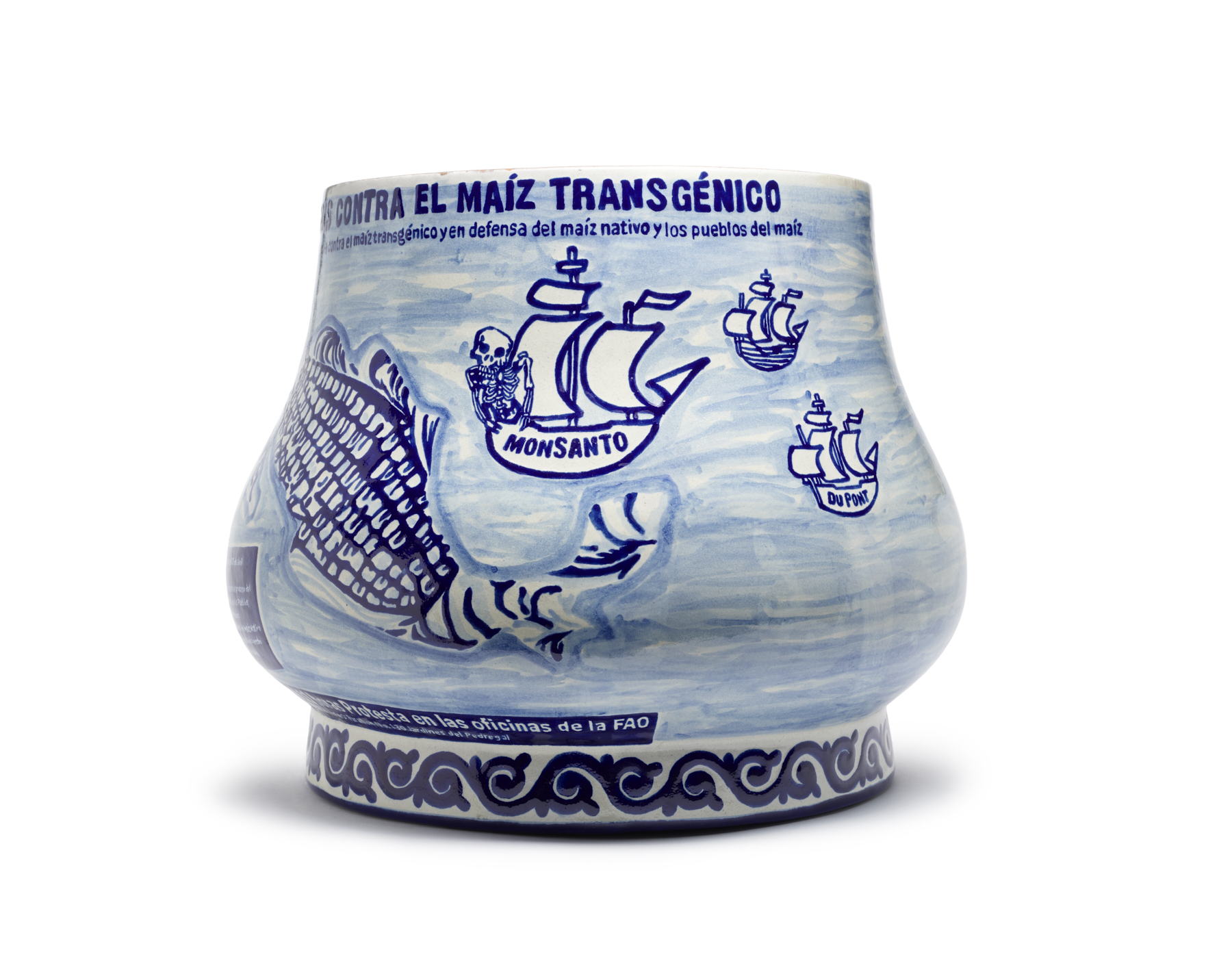
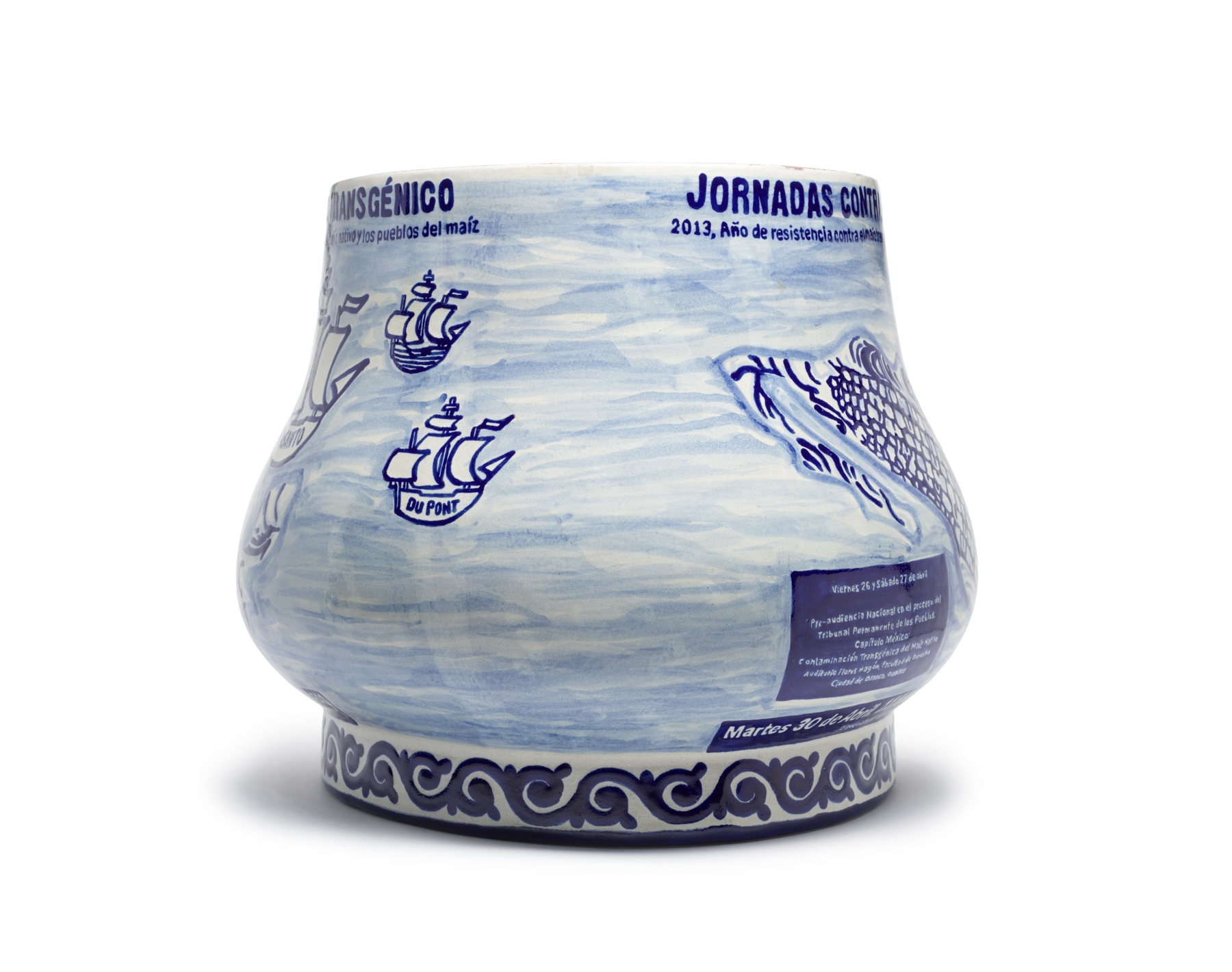
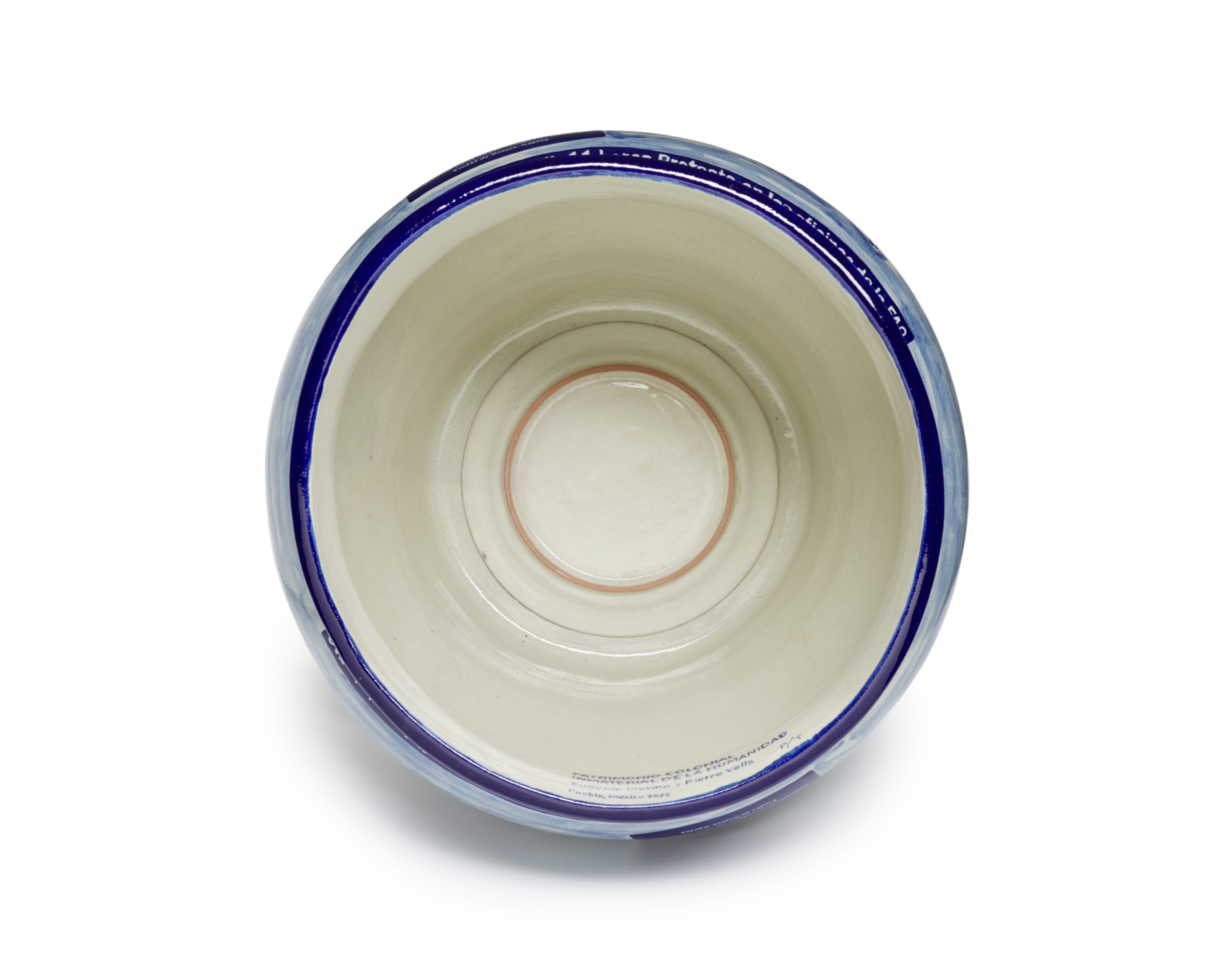
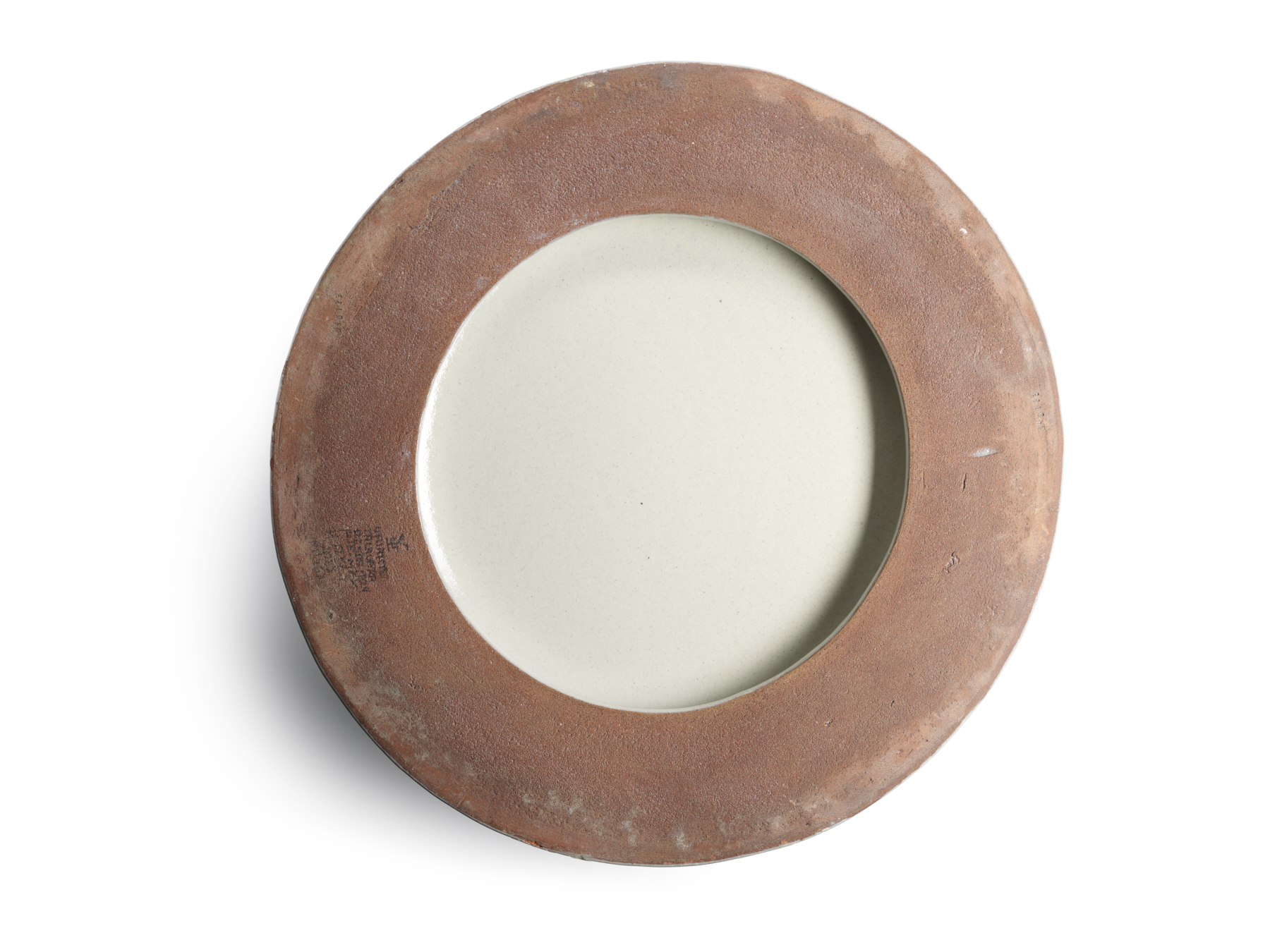
An upturned blue and white maiolica container is decorated with a large ear of corn painted diagonally to approximate the shape of the modern nation of Mexico. At the viewer’s right, a ship that resembles a Spanish colonial galleon approaches the corn cob/coast of Mexico. A skeleton leans forward from it, and “Monsanto” is written on the ship’s body. Another such ship, marked “DuPont” is on the back of the piece. At the left, a blue label describes protests against genetically modified corn that took place in Mexico City and Oaxaca in 2013. The bottom of the scene is the vessel’s neck (since it is upturned), painted with a floriate pattern common to talavera.
Now a global culinary staple, corn was developed in Mexico about 10,000 years ago. Originally a wheat-like grass with tiny seeds at the end, zea mays was bred over time into the corncobs we know today, probably in southern Mexico or northern Guatemala. It is used widely in religious life, and is central to myth and the diet of people of Indigenous and mixed-race peoples of Mexico and Guatemala. Literally thousands of native varieties, in colors ranging from red, white, purple, blue, and nearly black, can fill almost any ecological niche in today’s Mexico and Central America.
When the NAFTA treaty came into effect in 1992, however, the Mexican market began to be flooded by industrially bred corn from the US, where farmers were subsidized by the government, meaning they could export corn at lower prices. Not only was this a disruption to traditional farming, but the amino acid profile of such corn was different, meaning that in combination with beans that were another traditional staple of the diet, less protein could be synthesized by the human body, leading to greater malnutrition in Mexico.
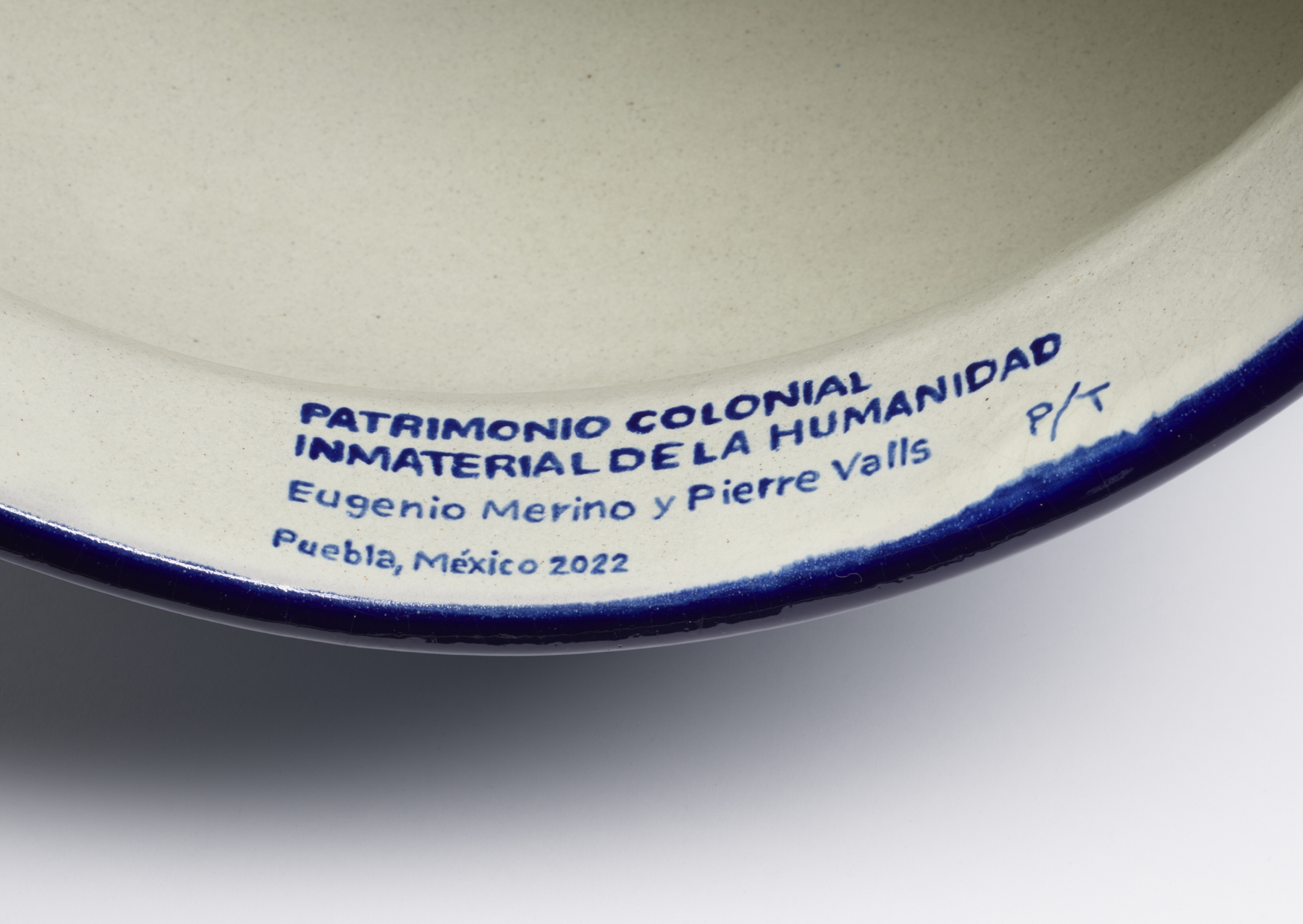
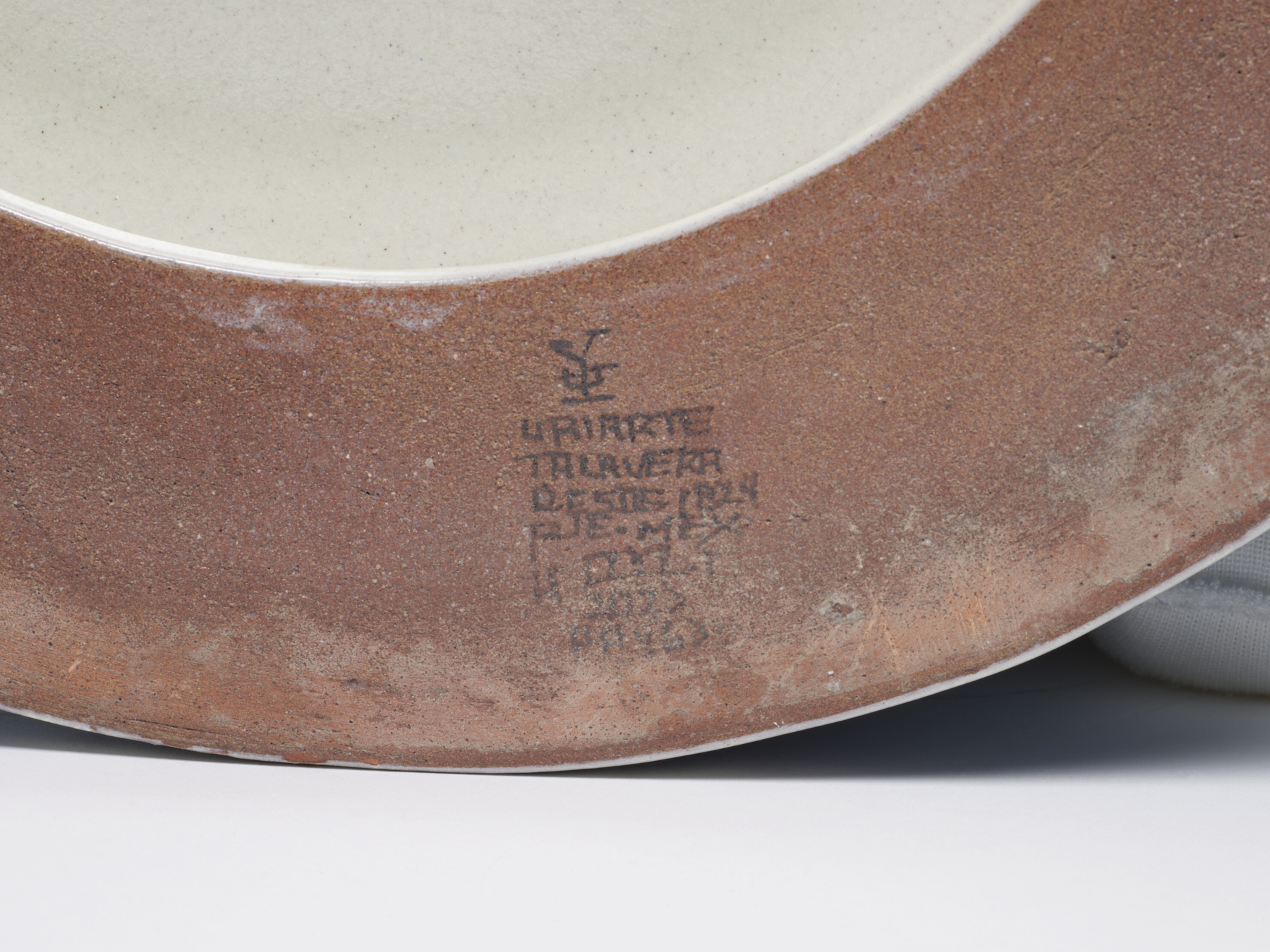
Adding insult to injury, agro-chemical and seed companies, particularly Monsanto, began selling seeds for genetically-modified corn, as well as herbicide chemicals, particularly Roundup, at low prices to some large-scale farmers in Mexico. The extensive use of Roundup was detrimental to farmers’ health and often blew onto other fields, killing local corn, which has not been bred to resist it, as Monsanto corn has. Additionally, when such seeds accidentally blew over onto other farms, their owners could be sued.. By 2013, due to these and other issues with Monsanto and a decreasing water availability, local farmers were more and more forced to sell or leave their lands, often emigrating to larger towns and cities or even leaving Mexico to support their families. This vessel commemorates 2013 Mexico City protests (Jornadas) against genetically modified corn, celebrated “in defense of corn and the peoples of corn.” This Talavera vessel is part of a project by the Italian and French-Mexican artists Eugenio Merino and Pierre Valls. They state that this project, “Intangible colonial cultural patrimony (PCIH) is a project that offers theoretical and artistic reflections on colonialism and neocolonialism in Mexico, from its beginnings in 1519 to the present day. “ They have chosen to work with Uriarte Talavera workshop, a company that has been working in Puebla since 1824, and is the longest continually-operating Talavera maker in Mexico.
Provenance
Provenance (from the French provenir, 'to come from/forth') is the chronology of the ownership, custody, or location of a historical object. Learn more about provenance at the Walters.
Uriarte Talavera, Puebla, Mexico, 2023, by creation via RoFA Gallery, Potomac, MD; Walters Art Museum, 2024, by purchase.
Measurements
H: 19 11/16 × W: 21 1/4 in. (50 × 54 cm)
Credit Line
Museum purchase with funds provided by the John G. Bourne Fund for Arts of the Americas, 2024
Location in Museum
Charles Street: Second Floor: Latin American Art / Arte Latinoamericano
Accession Number
In libraries, galleries, museums, and archives, an accession number is a unique identifier assigned to each object in the collection.
In libraries, galleries, museums, and archives, an accession number is a unique identifier assigned to each object in the collection.
48.2900