
 Creative Commons License
 Creative Commons License
 Creative Commons License
 Creative Commons License
 Creative Commons License
 Creative Commons License
 Creative Commons License
 Creative Commons License
 Creative Commons License
 Creative Commons License
 Creative Commons License


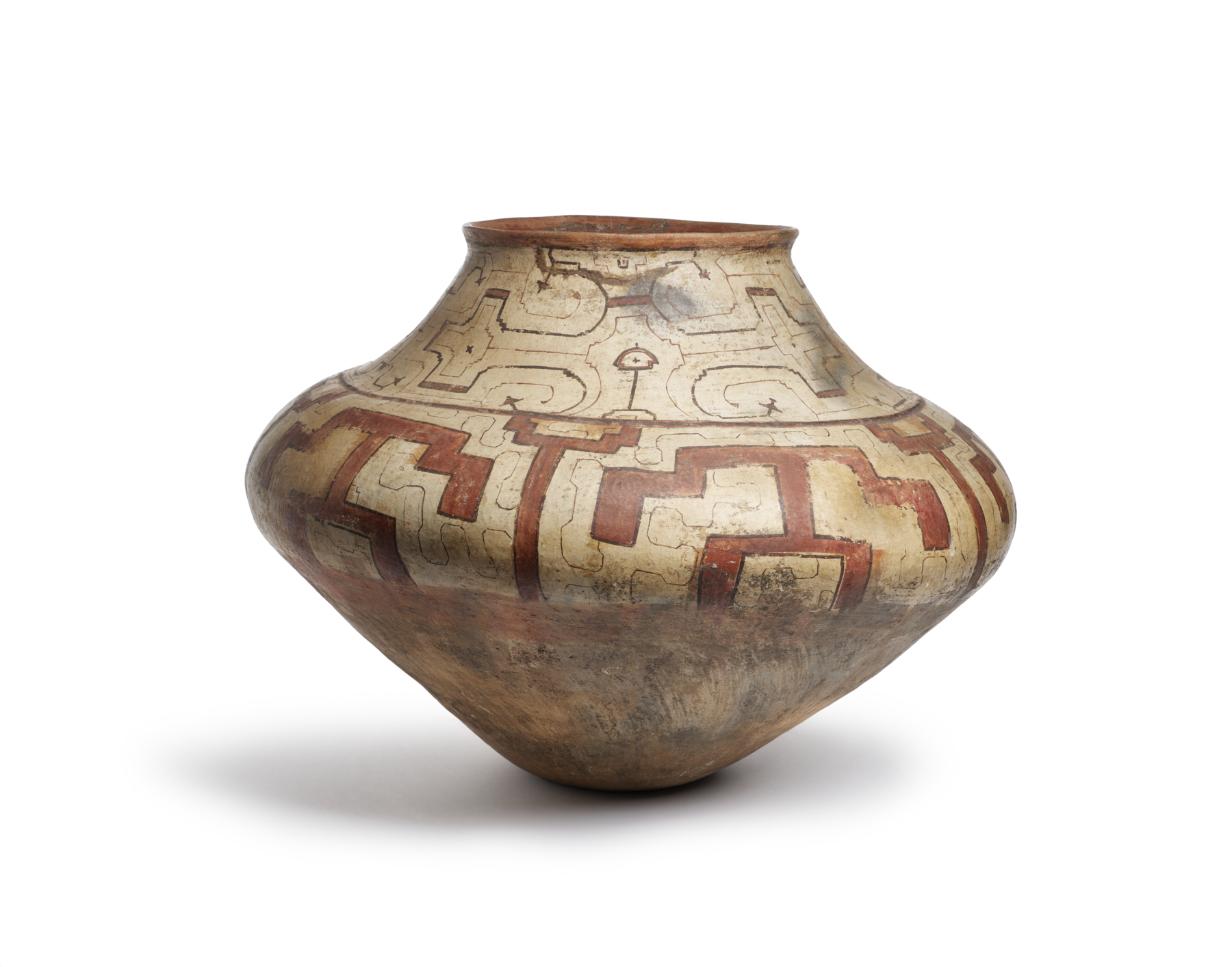
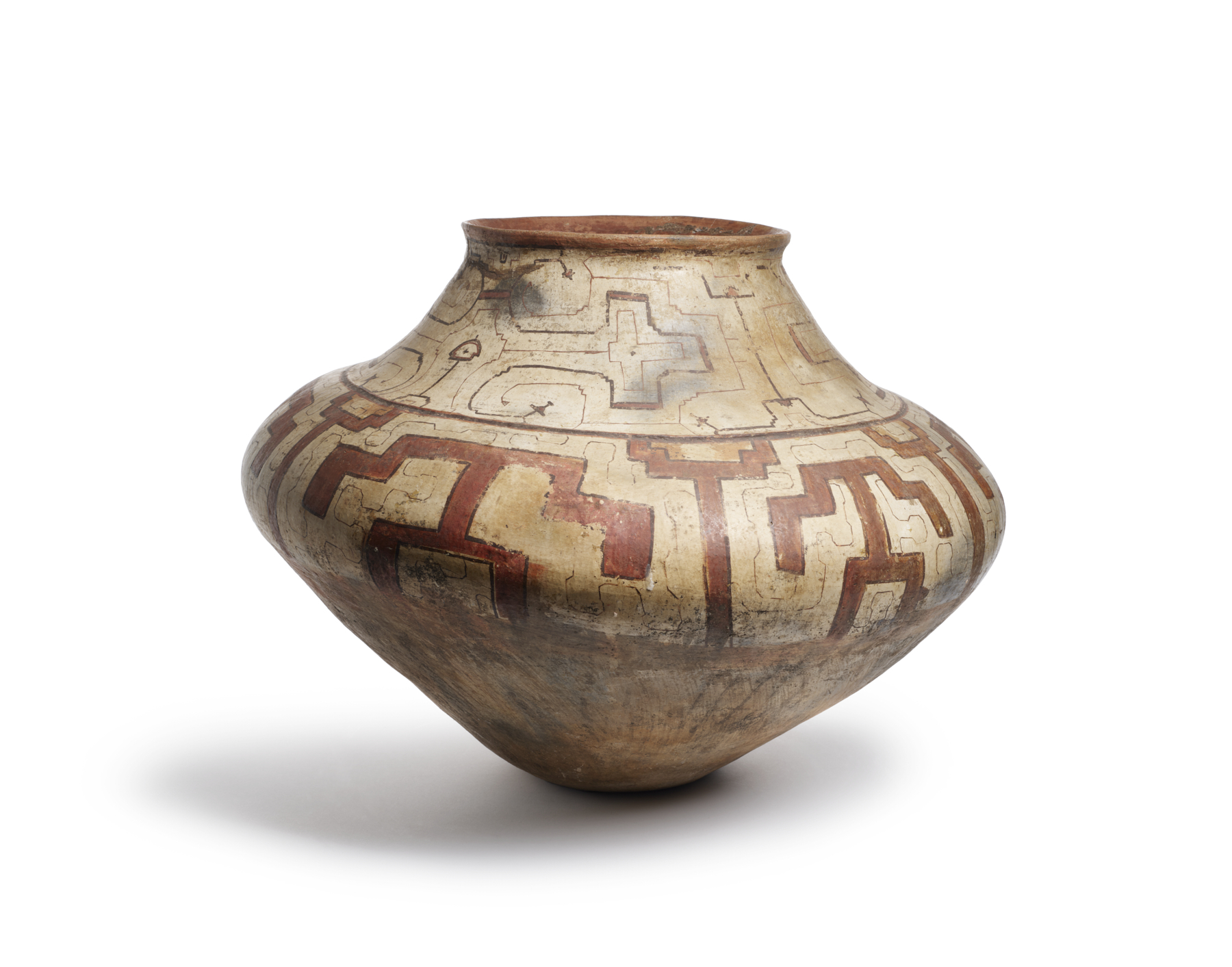
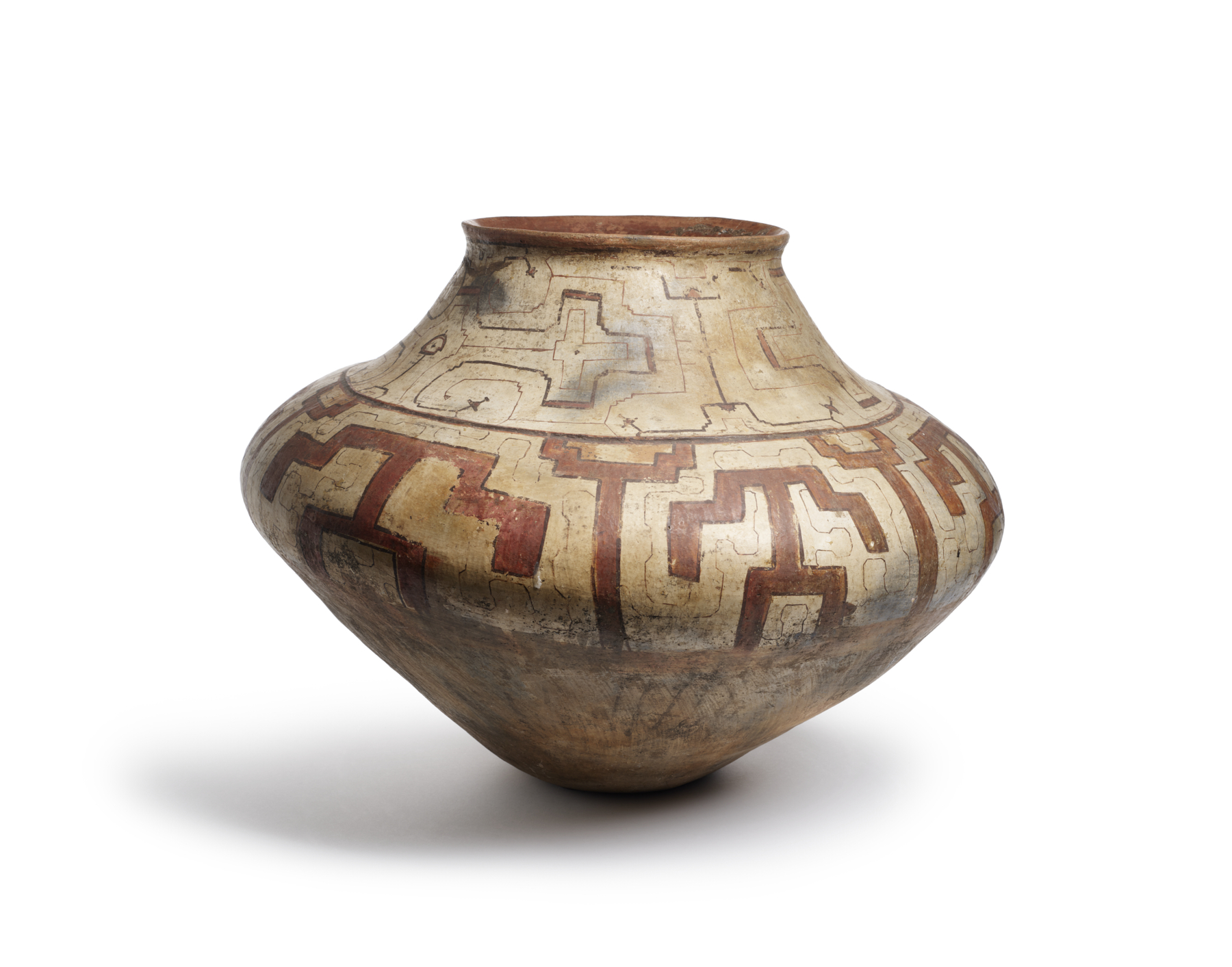
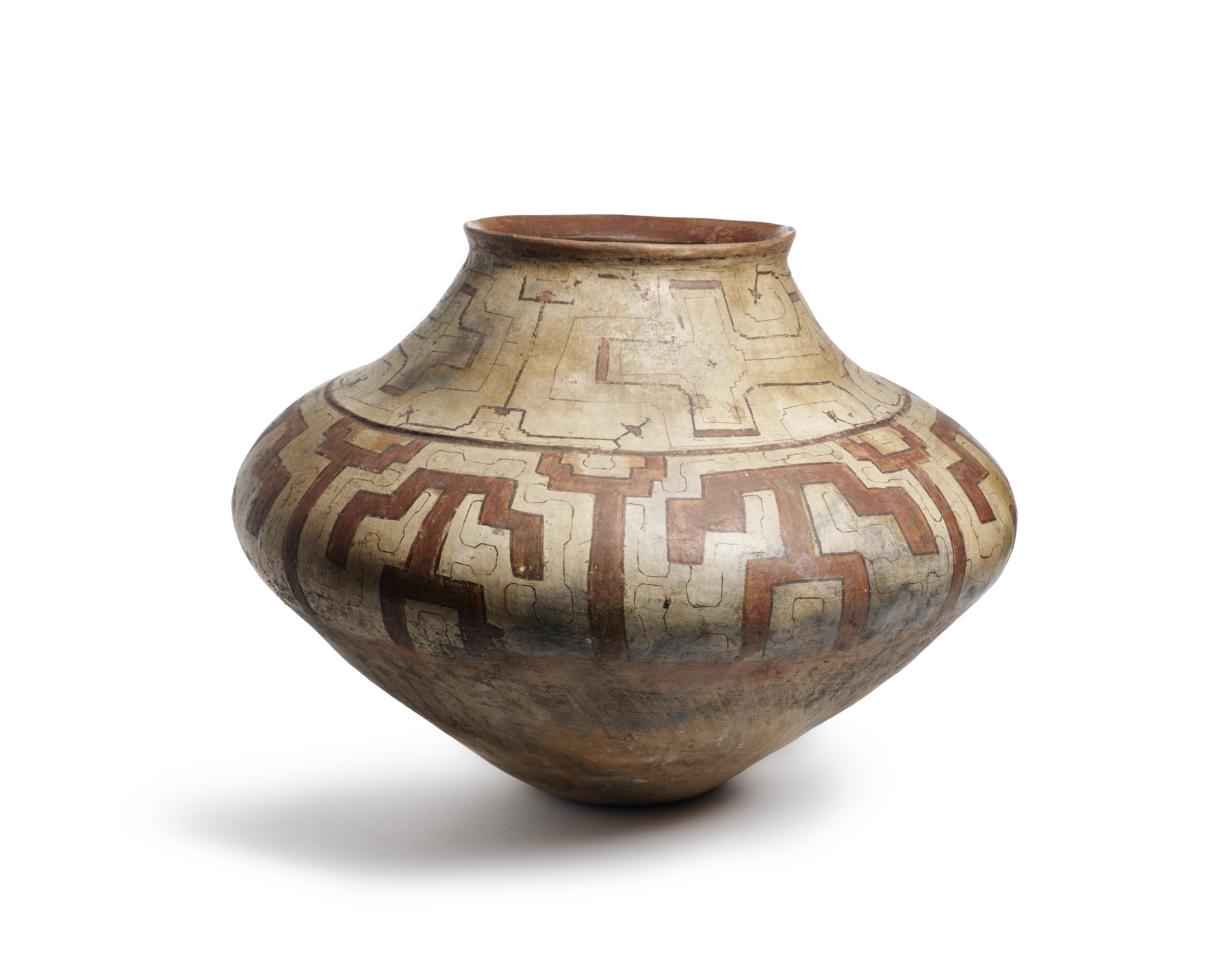
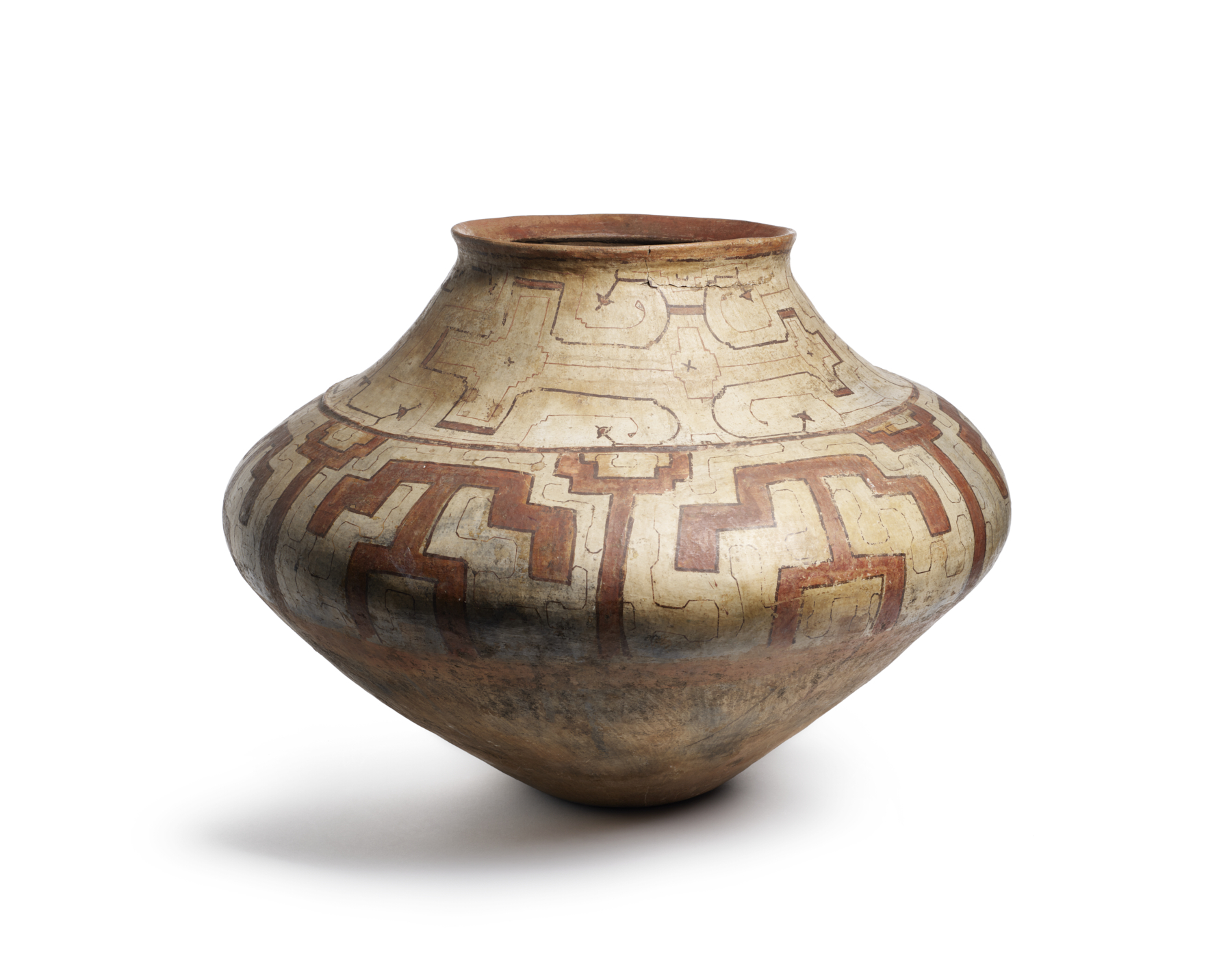
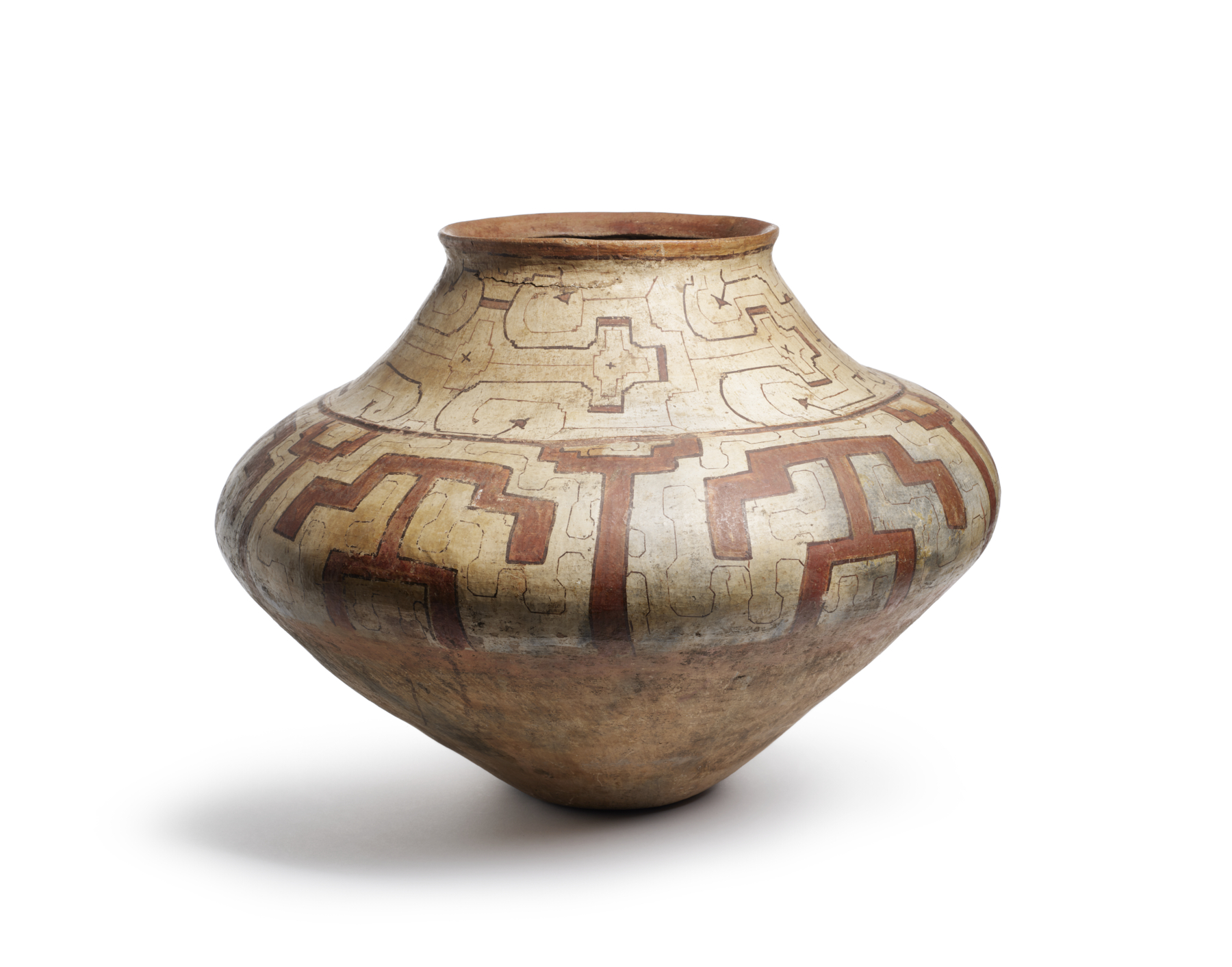
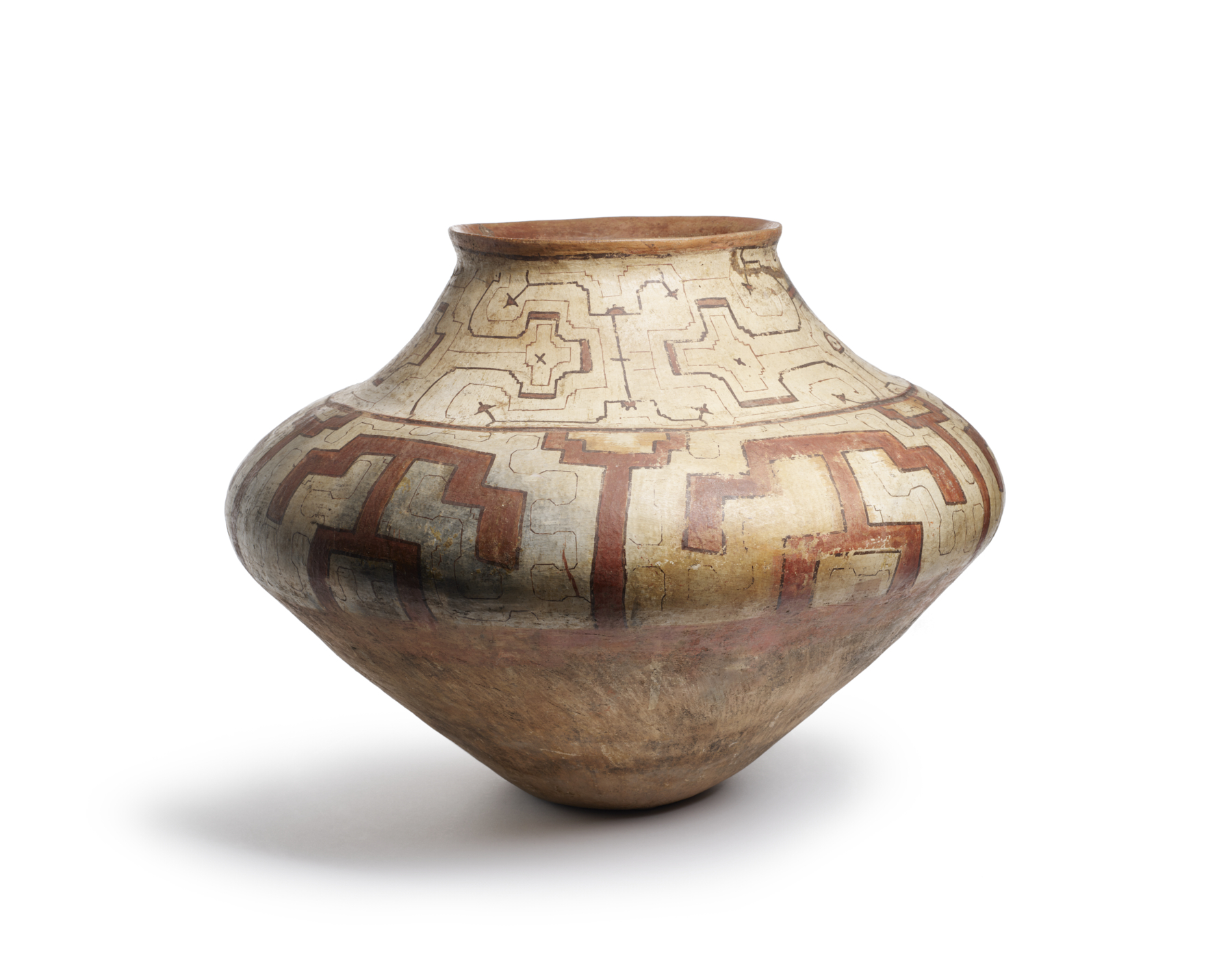
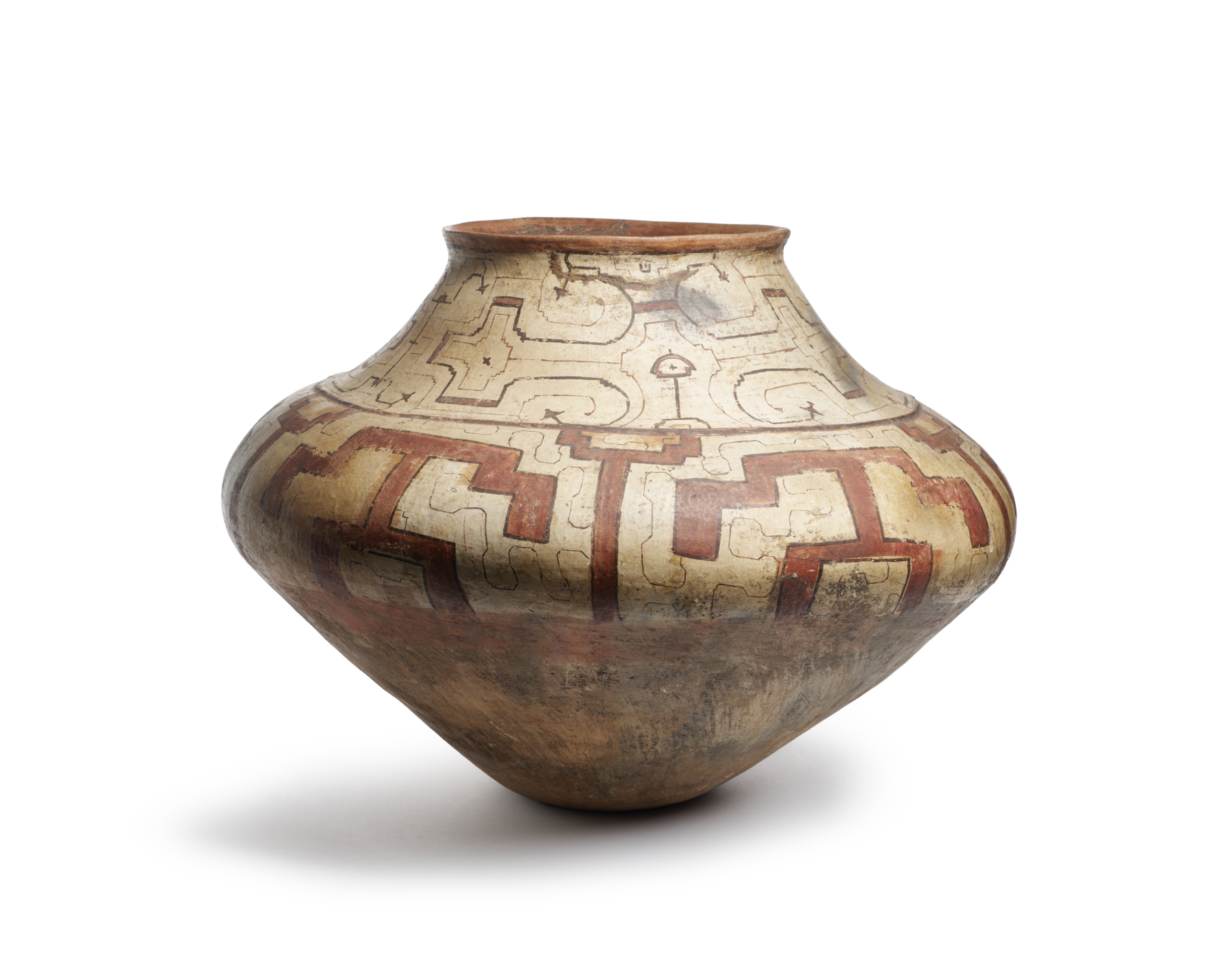
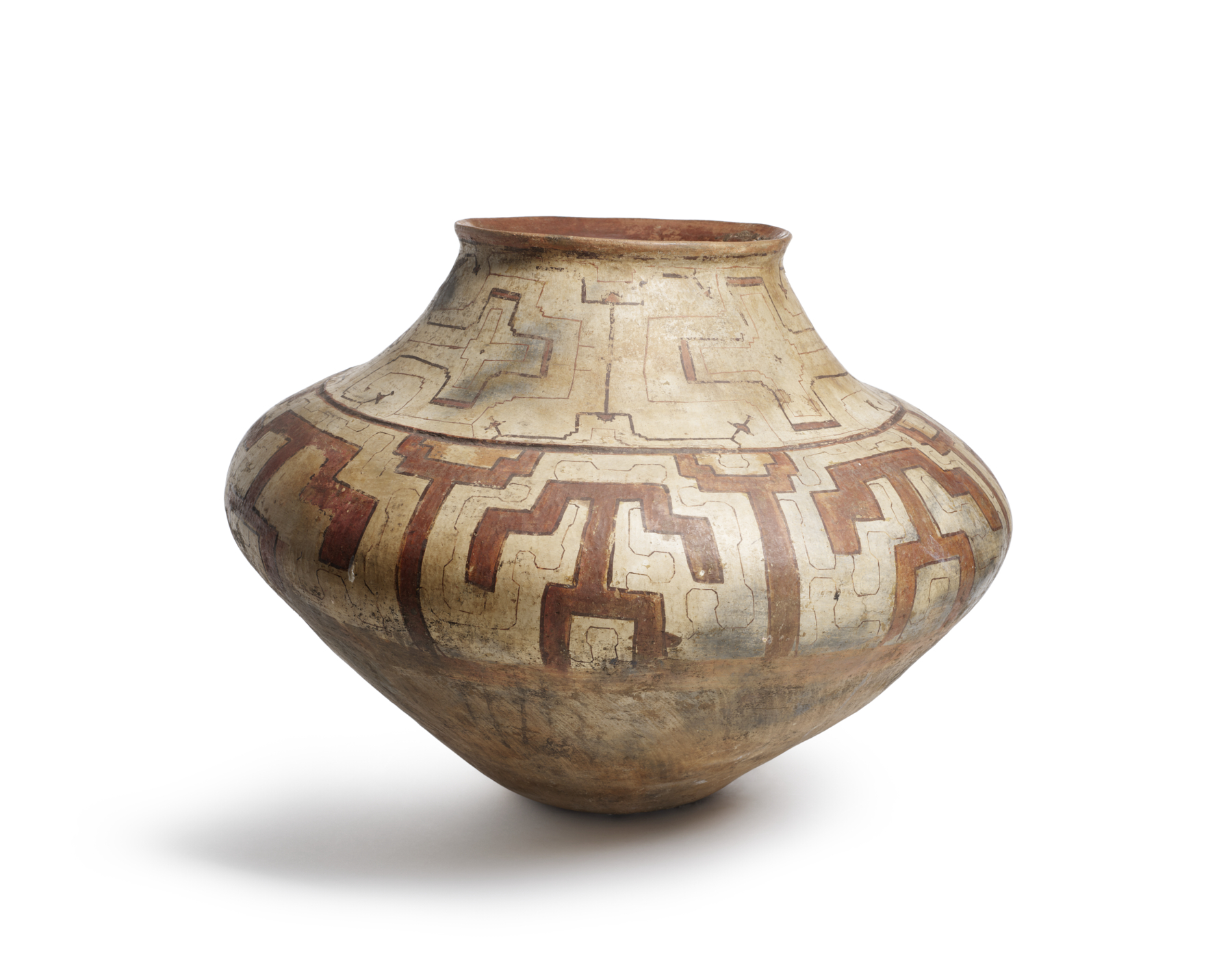
Mahuetá (Fermenting vessel)
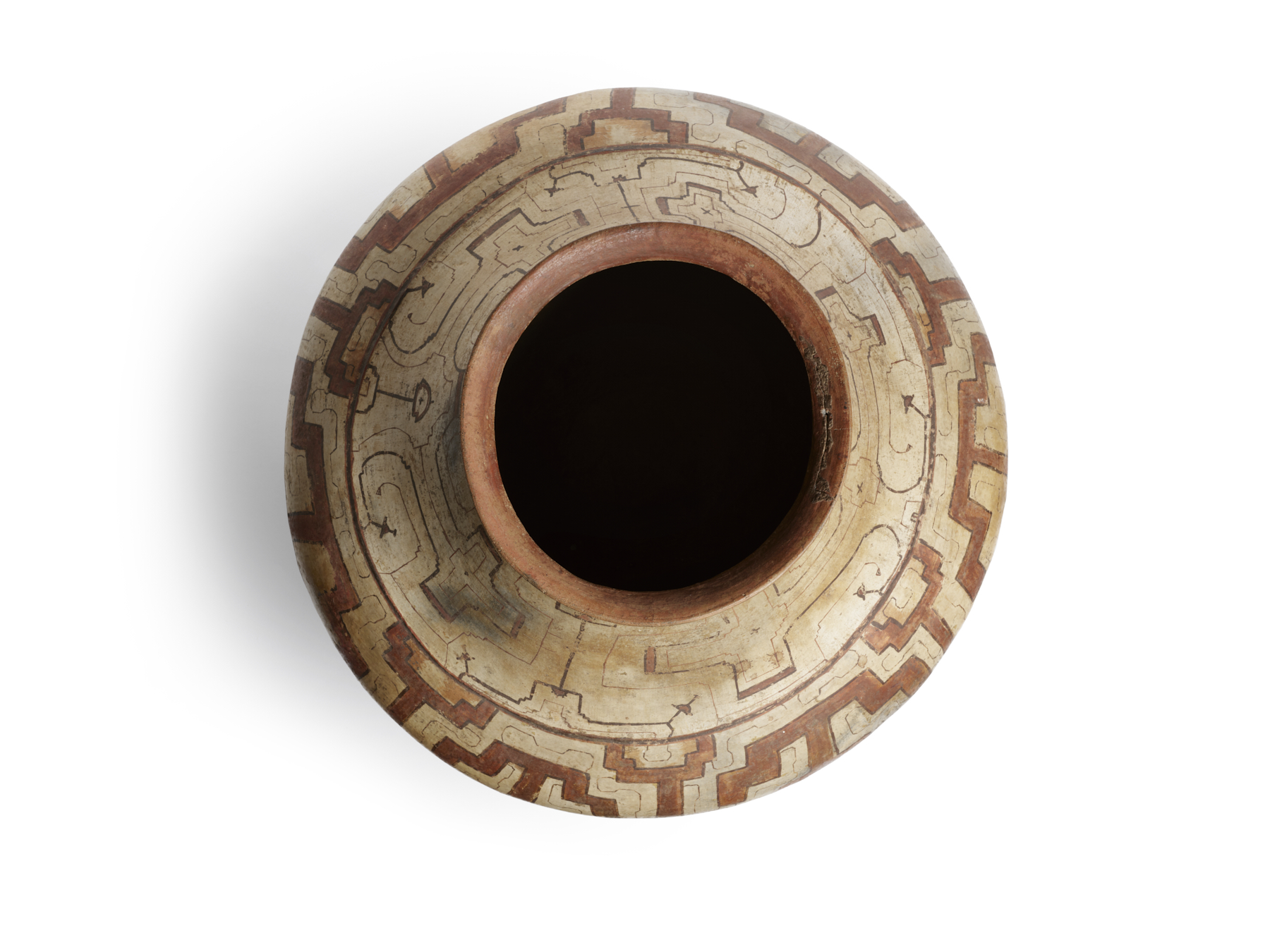
Only women of the Shipibo-Conibo culture make these large round vessels, known as mahuetá, creating them for their domestic needs. The Shipibo-Conibo have traditionally lived in small villages in Peru along the Ucayali River, a major tributary of the Amazon. The mahuetá vessels are used for fermenting masato, a kind of beer made from yucca root. Although these vessels are specifically for use in their homes, women cover them with elaborate designs known as kené, painted in black and white slip on the red color of the ceramic. They do not use measuring tapes or special stencils to execute the designs. They replicate them from dreams and visions, and then execute them onto the surface of the clay. This creative process seems to have developed over hundreds, perhaps even thousands, of years.
.
Provenance
Provenance (from the French provenir, 'to come from/forth') is the chronology of the ownership, custody, or location of a historical object. Learn more about provenance at the Walters.
Paul S. Shepard, Tucson, AZ, by 1985, by purchase; Curt L. Decker, Baltimore, 1985, by purchase; Walters Art Museum, 2024, by gift.
Measurements
H: 18 1/2 × Diam: 25 1/4 in. (47 × 64.1 cm)
Credit Line
Gift of Curtis Decker, 2024
Location in Museum
Accession Number
In libraries, galleries, museums, and archives, an accession number is a unique identifier assigned to each object in the collection.
In libraries, galleries, museums, and archives, an accession number is a unique identifier assigned to each object in the collection.
48.2904