
 Creative Commons License
 Creative Commons License
 Creative Commons License
 Creative Commons License
 Creative Commons License
 Creative Commons License
 Creative Commons License
 Creative Commons License
 Creative Commons License


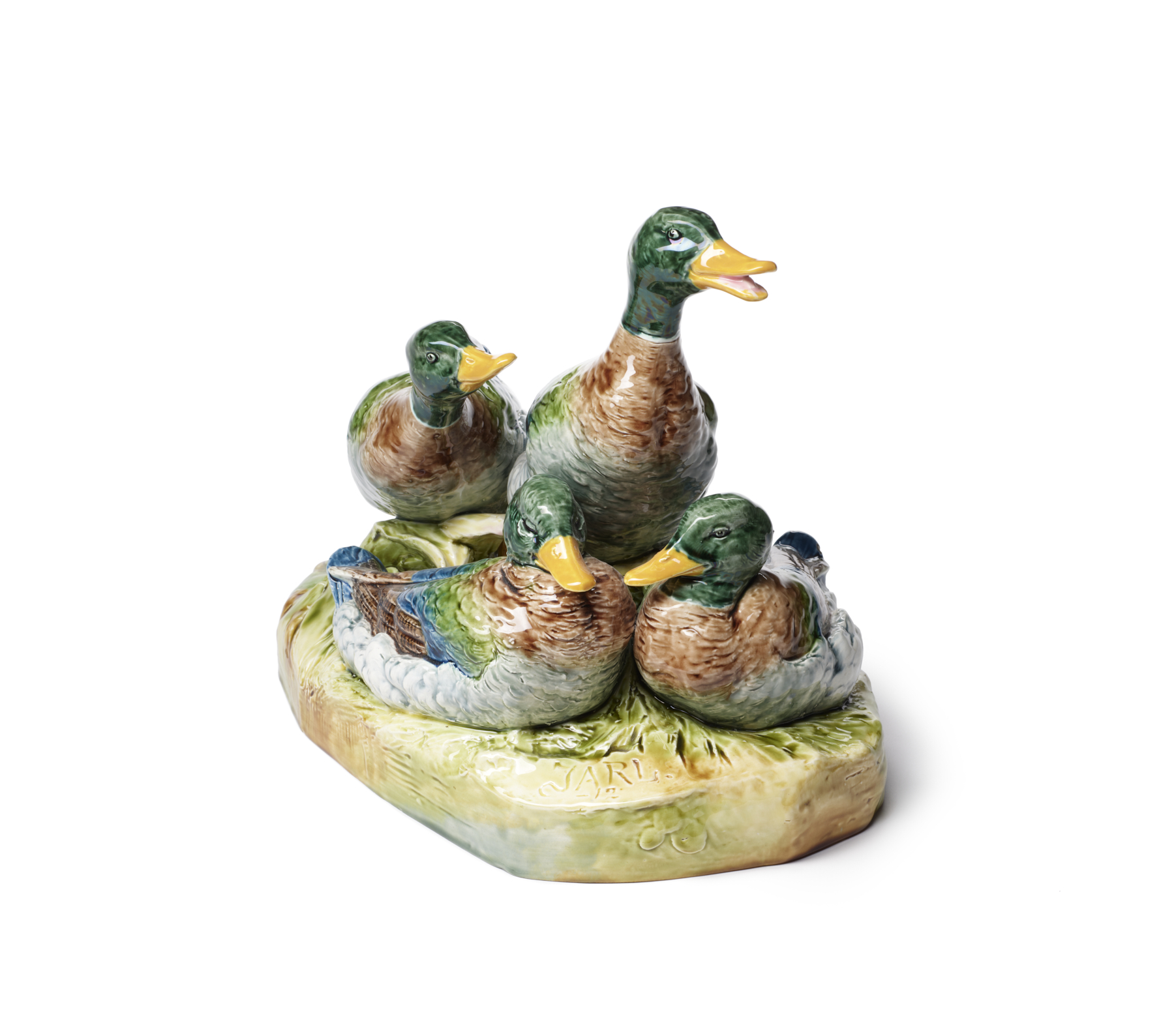
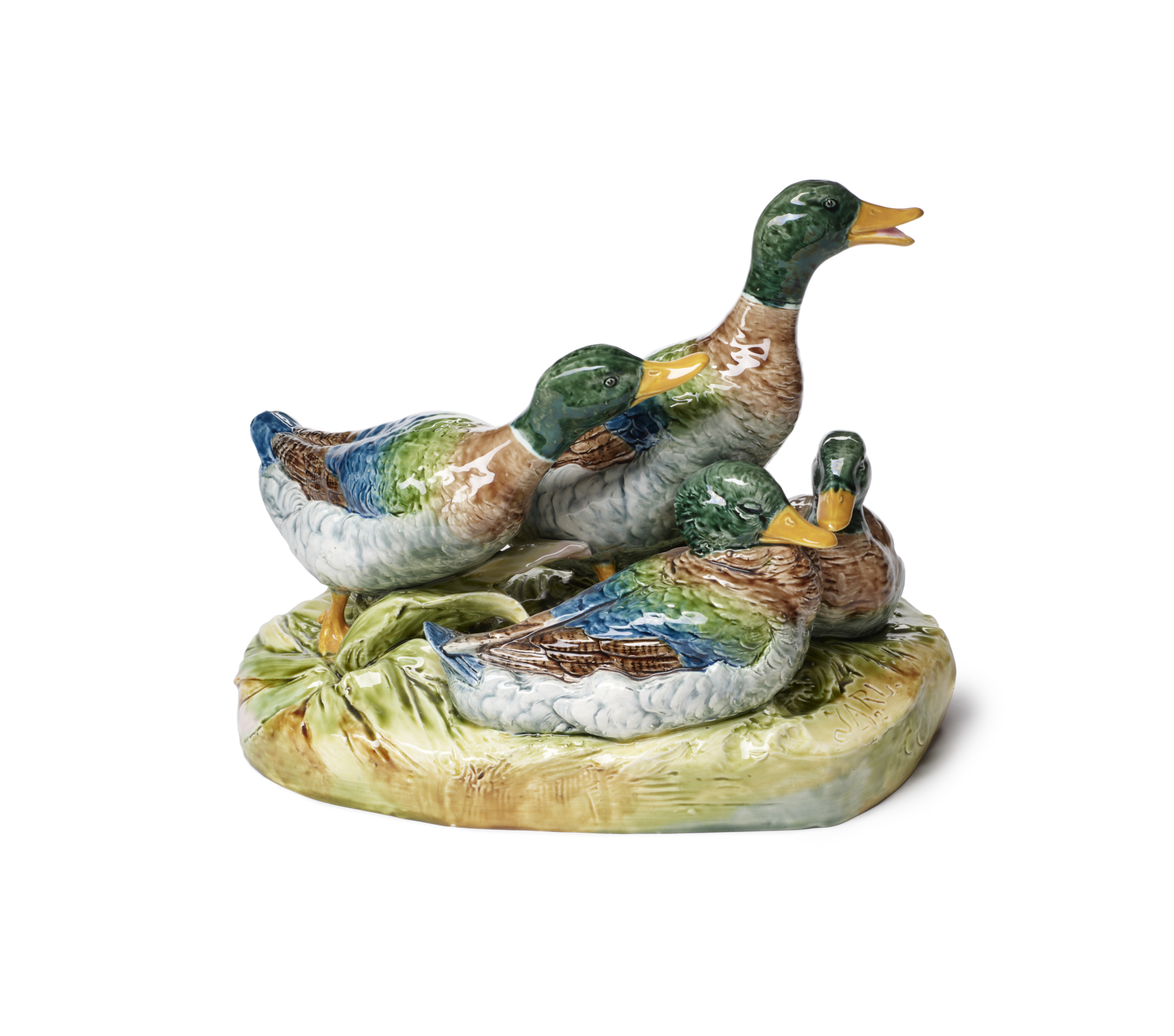
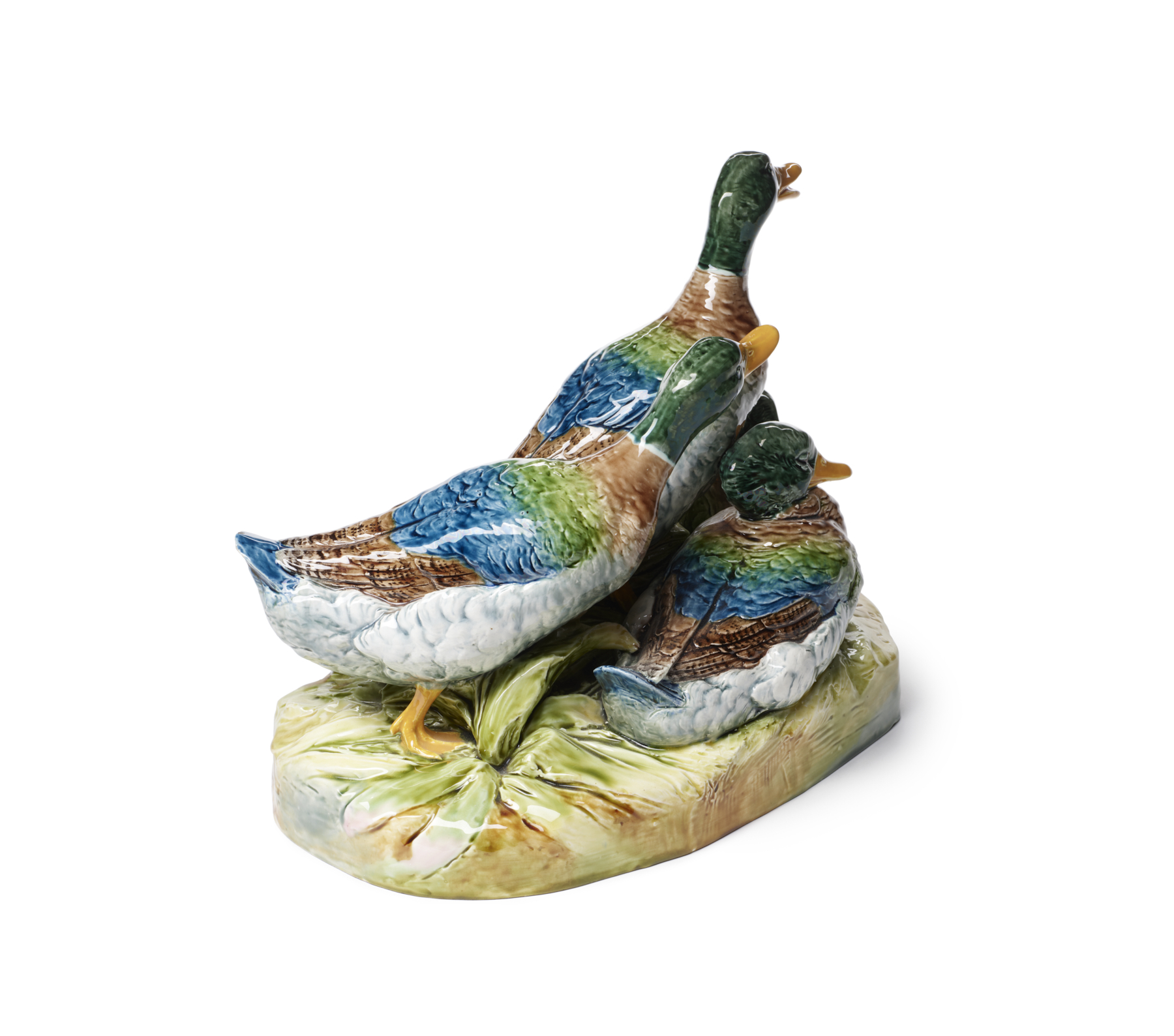
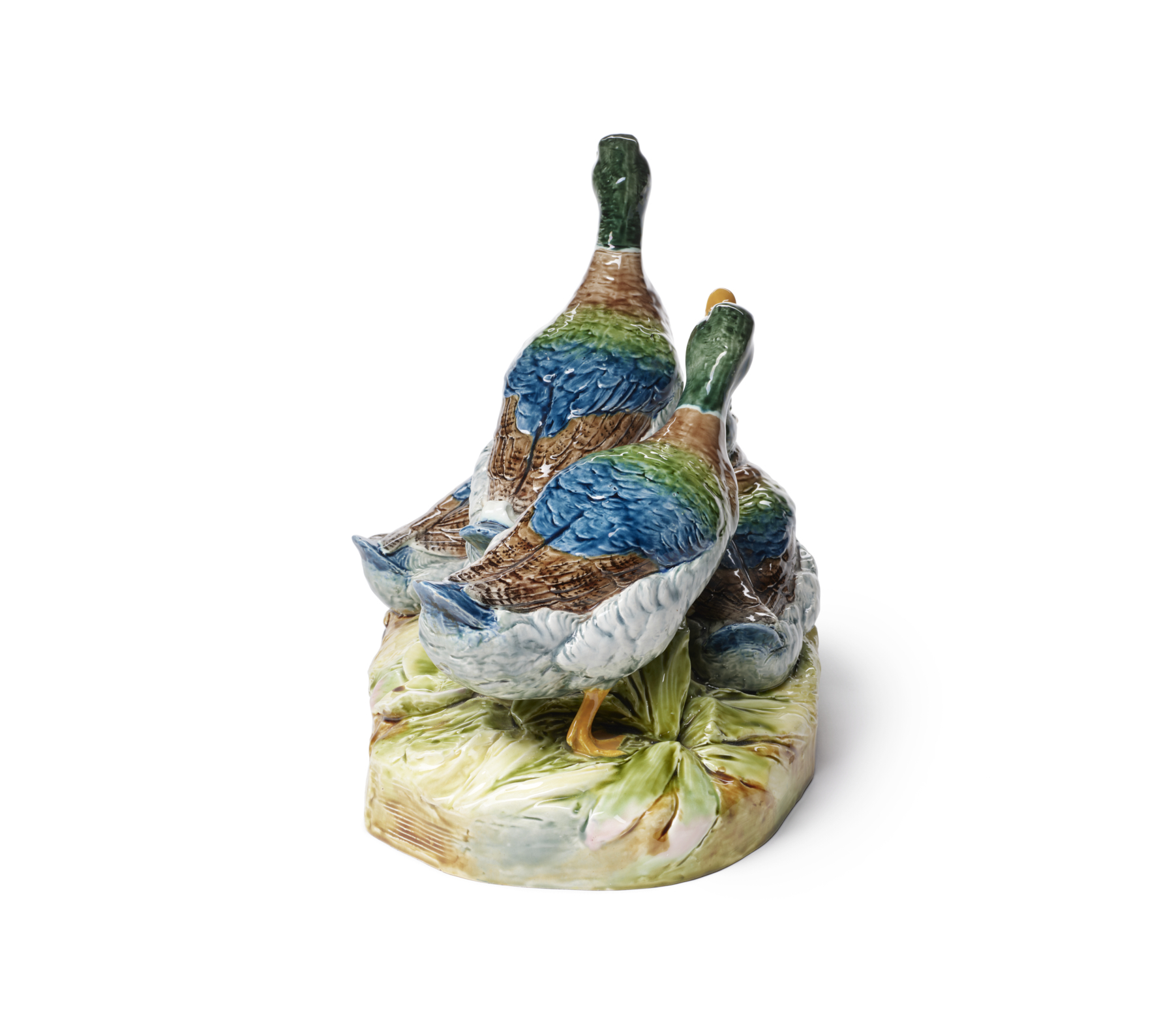
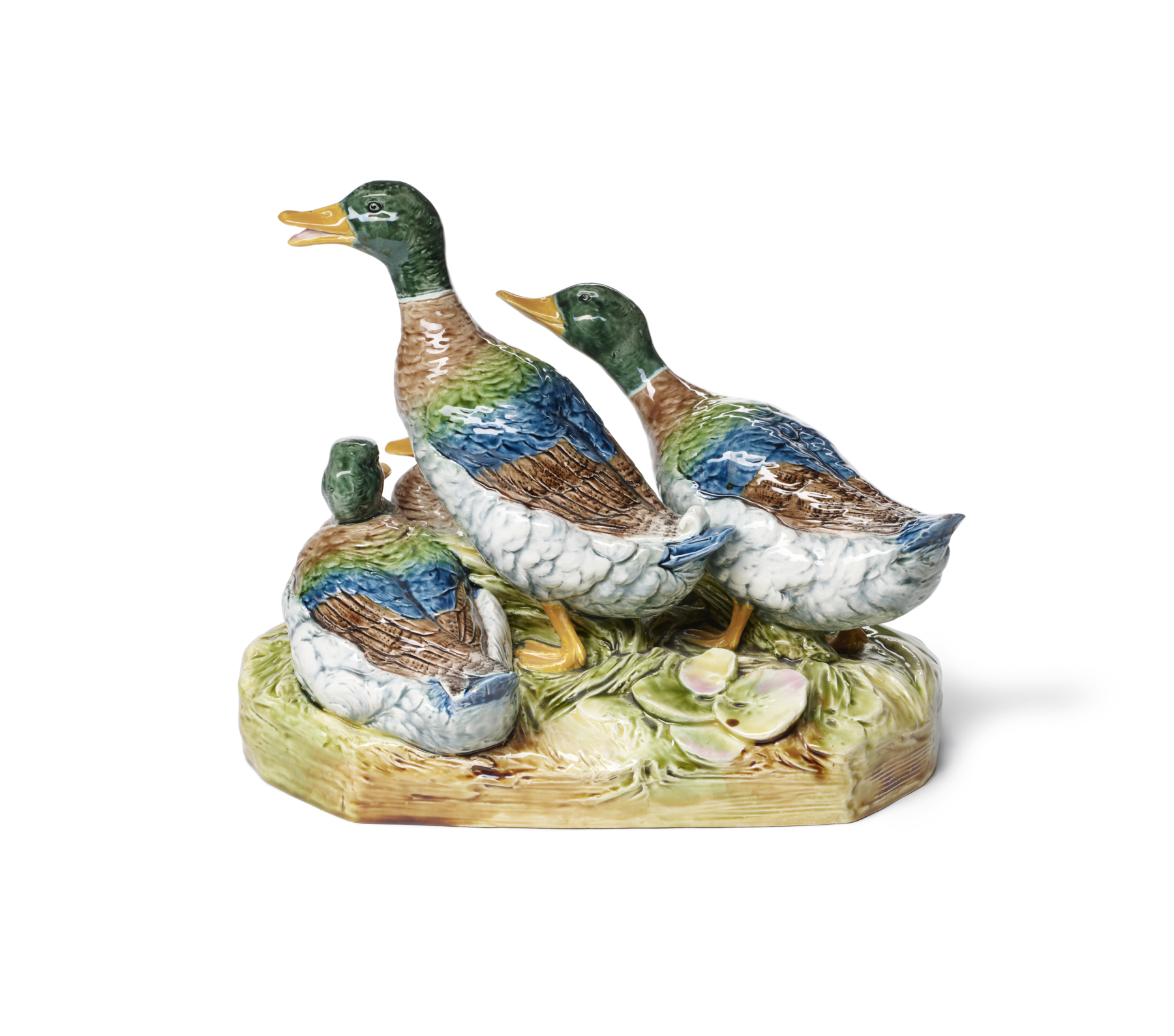
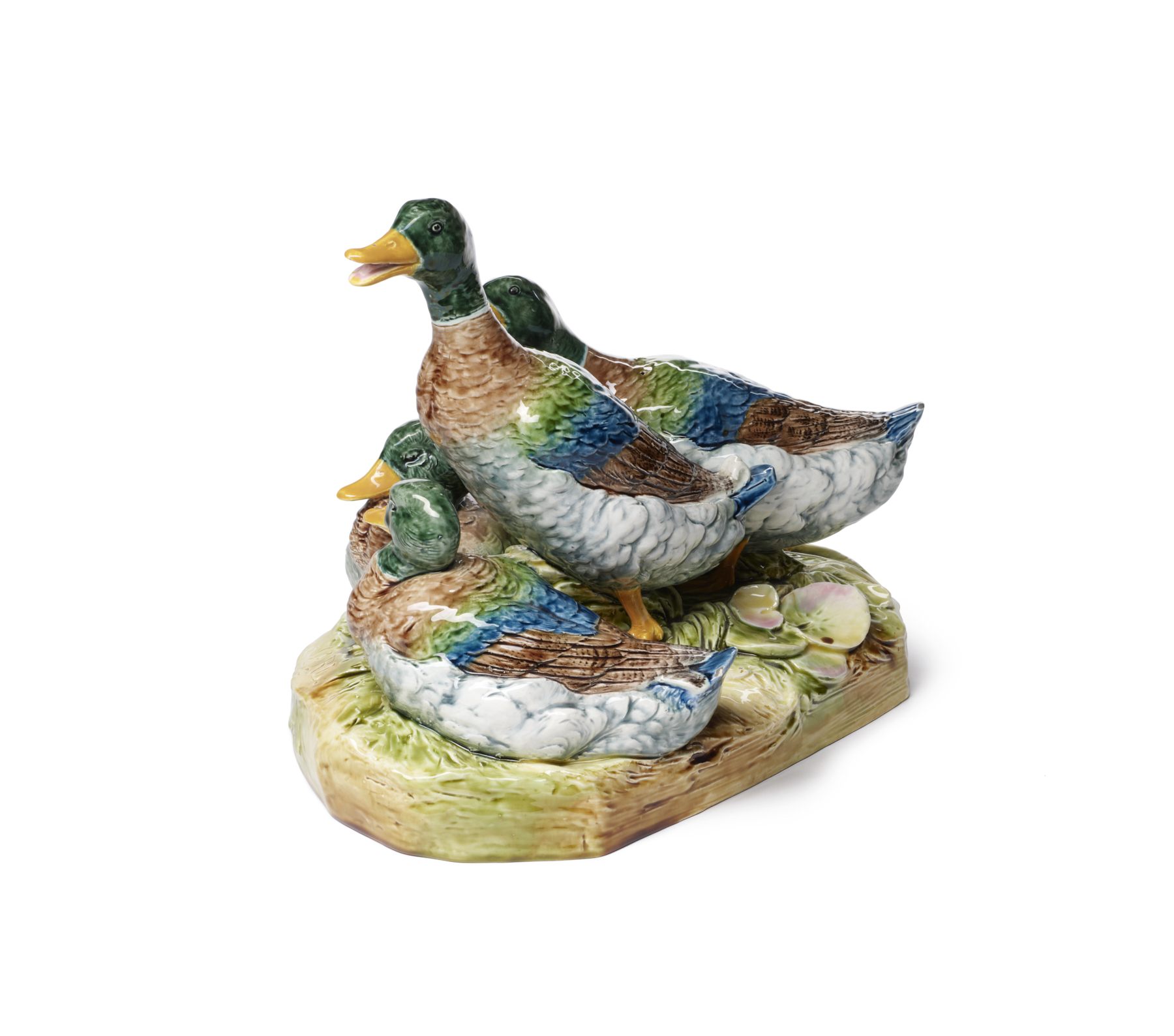
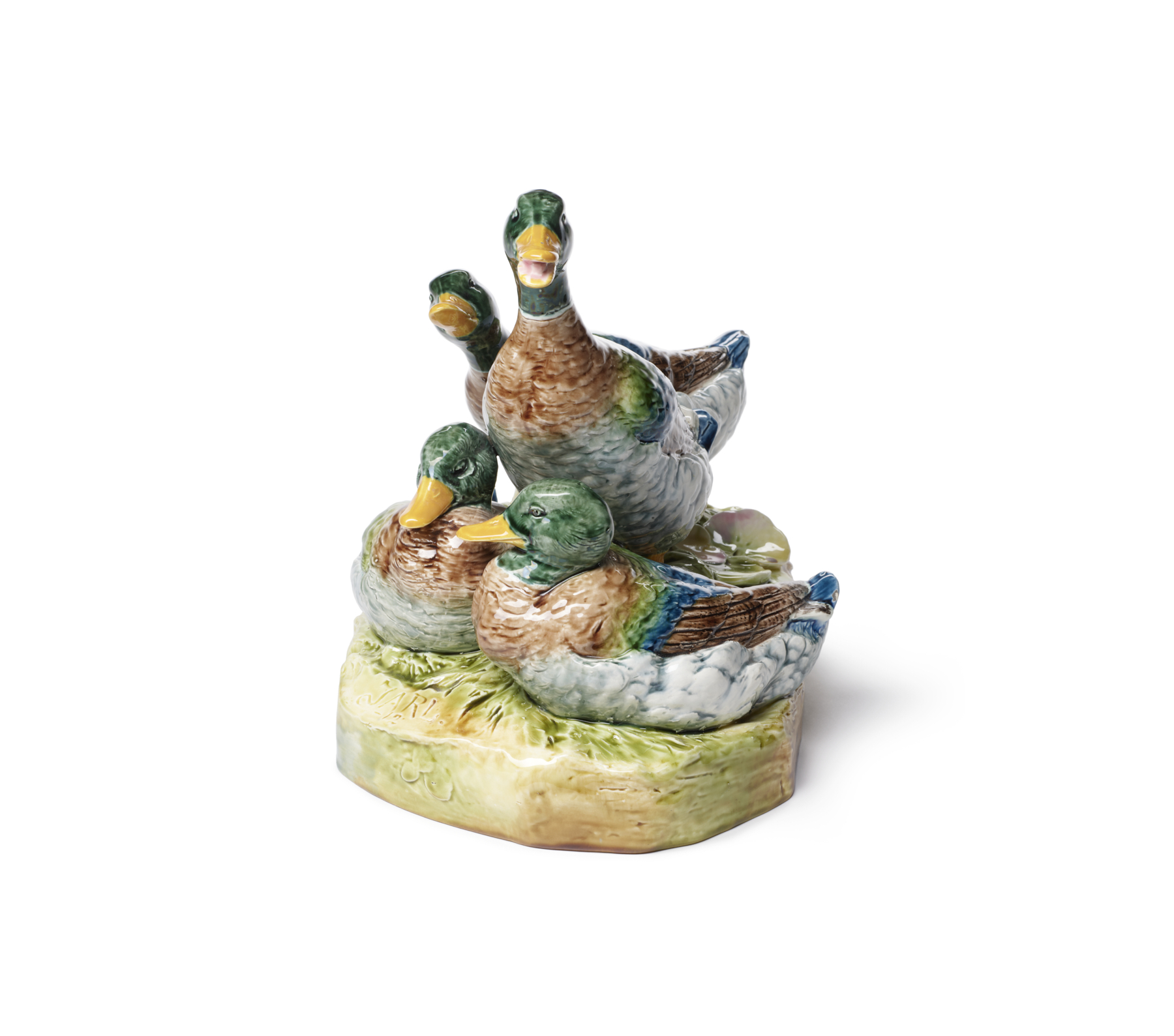
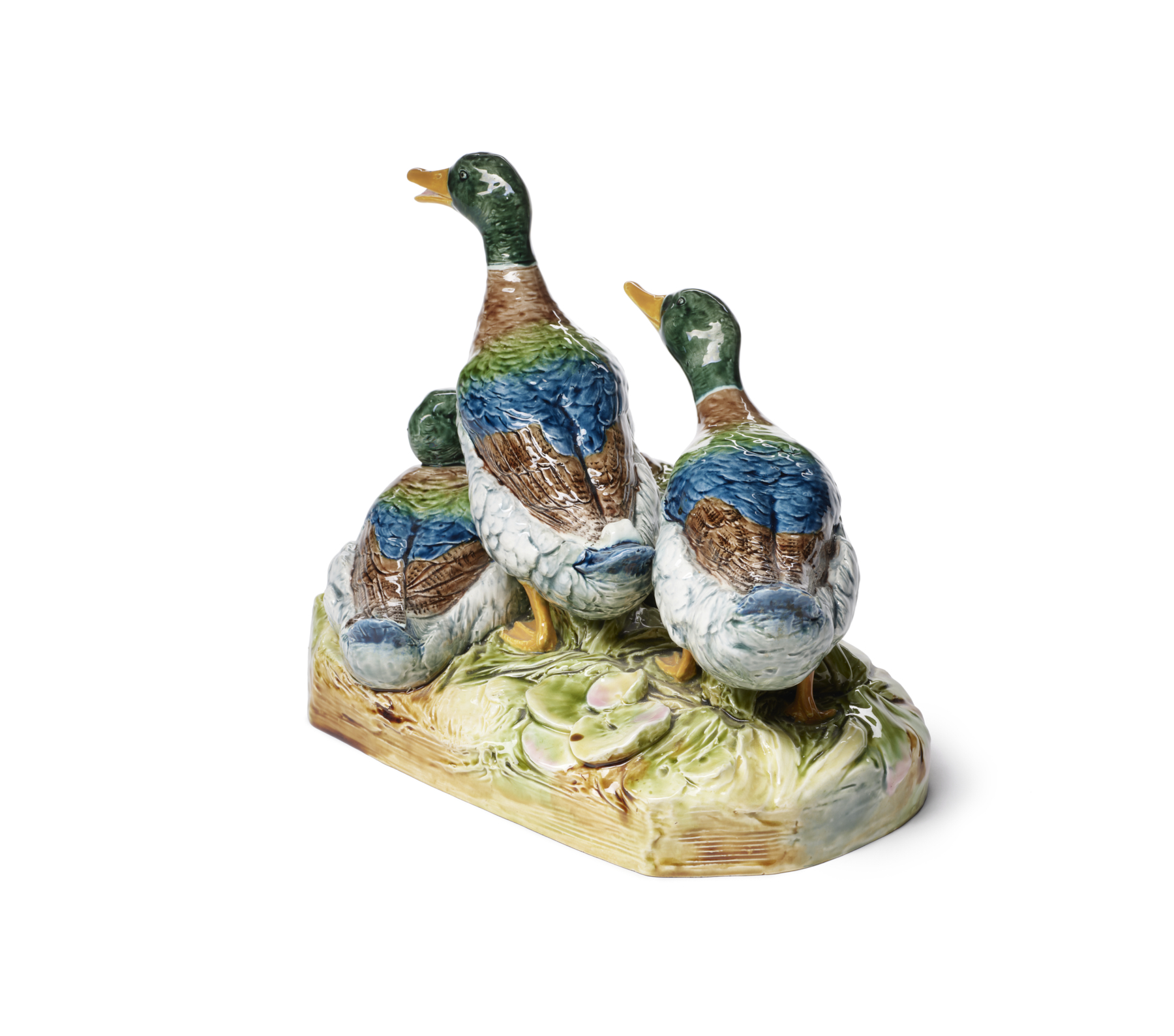
Figural Group of Four Mallard Ducks
A factory to produce porcelain was established in the Bohemian city of Dux, Austria (today Duchcov, Czech Republic) in 1853. Dux / Duchcov is in the region of Bohemia not far from the present-day German border, in an area which had developed into a ceramic manufacturing center from the late 18th century forward. In 1860 the factory was purchased by Eduard Eichler (1830–1887), an experienced ceramic modeler and businessman, who greatly expanded its production and sales. The firm continued to be successful and diversify its offerings after his death, first under the management of his widow and then his son-in-law, who transformed it into a corporation in 1897, the Duxer Porzellan-Manufaktur. A 1906 trade directory for the ceramic industry in Germany and Austria-Hungary noted the firm then employed about 450 workers and produced figures, jardinieres, vases, smoking paraphernalia, and more in porcelain as well as majolica and other earthenware bodies. In addition to its sales within the Austro-Hungarian Empire and Germany, the company exported its products to Australia, Belgium, Denmark, England, France, Italy, Norway, Sweden, Russia, and the United States in the early 20th century. Indeed, around 1900, the firm adopted “Royal Dux” as a trademark for its products, likely to appeal to English-speaking markets, like Australia, the UK, and US. The company exhibited at international exhibitions, including at the 1904 Louisiana Purchase Exposition in St. Louis, Missouri, where the firm was awarded a first prize for its display of porcelain and majolica figures, vases, and trays.
This lively group of four male mallards, or wild ducks, was designed by Otto Jarl (1856–1915). Born into a humble background in Uppsala County, Sweden, Jarl first trained at Stockholm’s Tekniska skolan (Technical School, today Konstfack University of Arts, Crafts and Design). By 1879 or 1880 he had moved to Vienna where he attended the Akademie der bildenden Künste (Academy of Fine Arts), studying under the sculptor Edmund Ritter von Hellmer (1850–1935). Jarl also had support from Friedrich von Schmidt (1825–1891), a leading Viennese architect and designer, who would become his father-in-law after his marriage to Frida Schmidt. Jarl soon came to specialize in sculpting animals, regularly exhibiting such works in the annual exhibitions of the Gesellschaft Bildender Künstler Wiens (Association of Artists of Vienna) in the 1890s and first decade of the 20th century. He gained wider exposure by being included in the display of Austrian art shown at the World’s Columbian Exposition in Chicago, the international exhibition that took place in 1893, where he showed a sculpture of a creeping tiger. His most significant public sculpture was a massive depiction of a lion, installed as a monument to Franz Xaver Hackher zu Hart (1764–1837), an Austrian military officer who led the successful defense of the castle fortress in Graz from the siege by Napoleon’s French forces in 1809. Installed in 1909 on Graz’s Castle Hill, it was unfortunately melted down in 1943 to supply the Nazi war effort.
Jarl had his sculptures produced in bronze by the early 1890s, in editions that made his work accessible to the middle classes. In 1903 and 1904 he created several animal models for the Meissen Porcelain Manufactory that were critically acclaimed at the time, including a large polar bear model over half a meter in length. It is likely around this time that Jarl began providing models to other ceramic manufacturers including the Austrian firms Riessner, Stellmacher & Kessel (Amphora Pottery) and Duxer Porzellan-Manufaktur (Royal Dux). For the latter Jarl created a range of animal sculptures, both individuals and groups, including tigers, lions, a deer, a bear, and a cockatoo. These works are marked with the sculptor’s last name “JARL” molded on the outside of the bases on which the animals stand–testament to the value of the artist’s “signature” to both the manufacturer and the buyers of these ceramic sculptures. The mallard group carries such a signature as well as “–12”, likely indicating the model was designed in 1912.
Inscription
Provenance
Provenance (from the French provenir, 'to come from/forth') is the chronology of the ownership, custody, or location of a historical object. Learn more about provenance at the Walters.
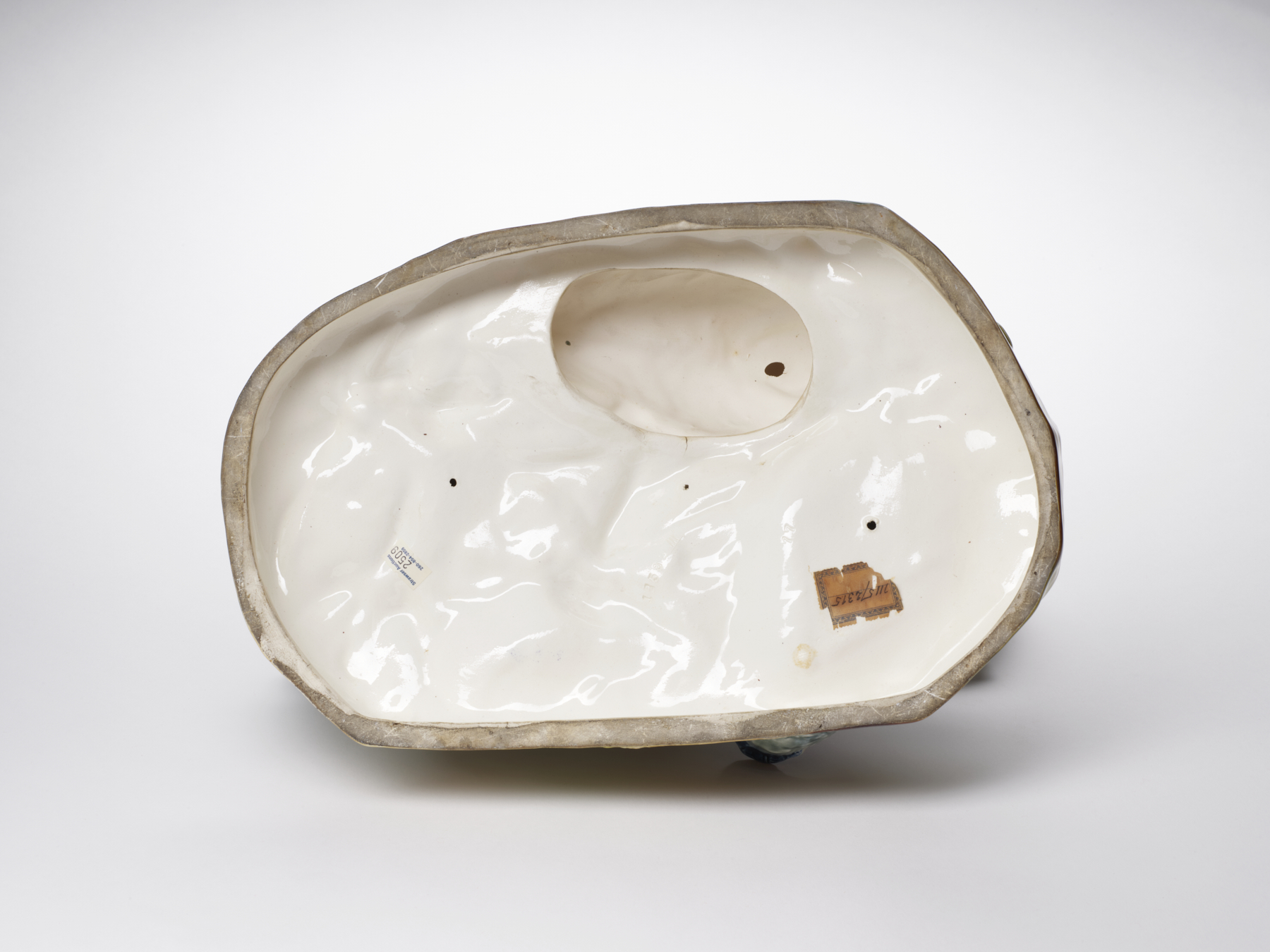
Strawser Auction Group, Hatfield, Pennsylvania, "Fine Majolica for the Connoisseur," 31 October 2015, lot 78; purchased by Deborah and Philip English, Baltimore, 2015; given to the Walters Art Museum, 2024.
Measurements
H: 11 3/8 × W: 14 × D: 9 1/2 in. (28.9 × 35.6 × 24.1 cm)
Credit Line
Gift of Deborah and Philip English, 2024
Location in Museum
Not on view
Accession Number
In libraries, galleries, museums, and archives, an accession number is a unique identifier assigned to each object in the collection.
In libraries, galleries, museums, and archives, an accession number is a unique identifier assigned to each object in the collection.
48.2917