
 Creative Commons License
 Creative Commons License
 Creative Commons License
 Creative Commons License
 Creative Commons License
 Creative Commons License
 Creative Commons License
 Creative Commons License
 Creative Commons License


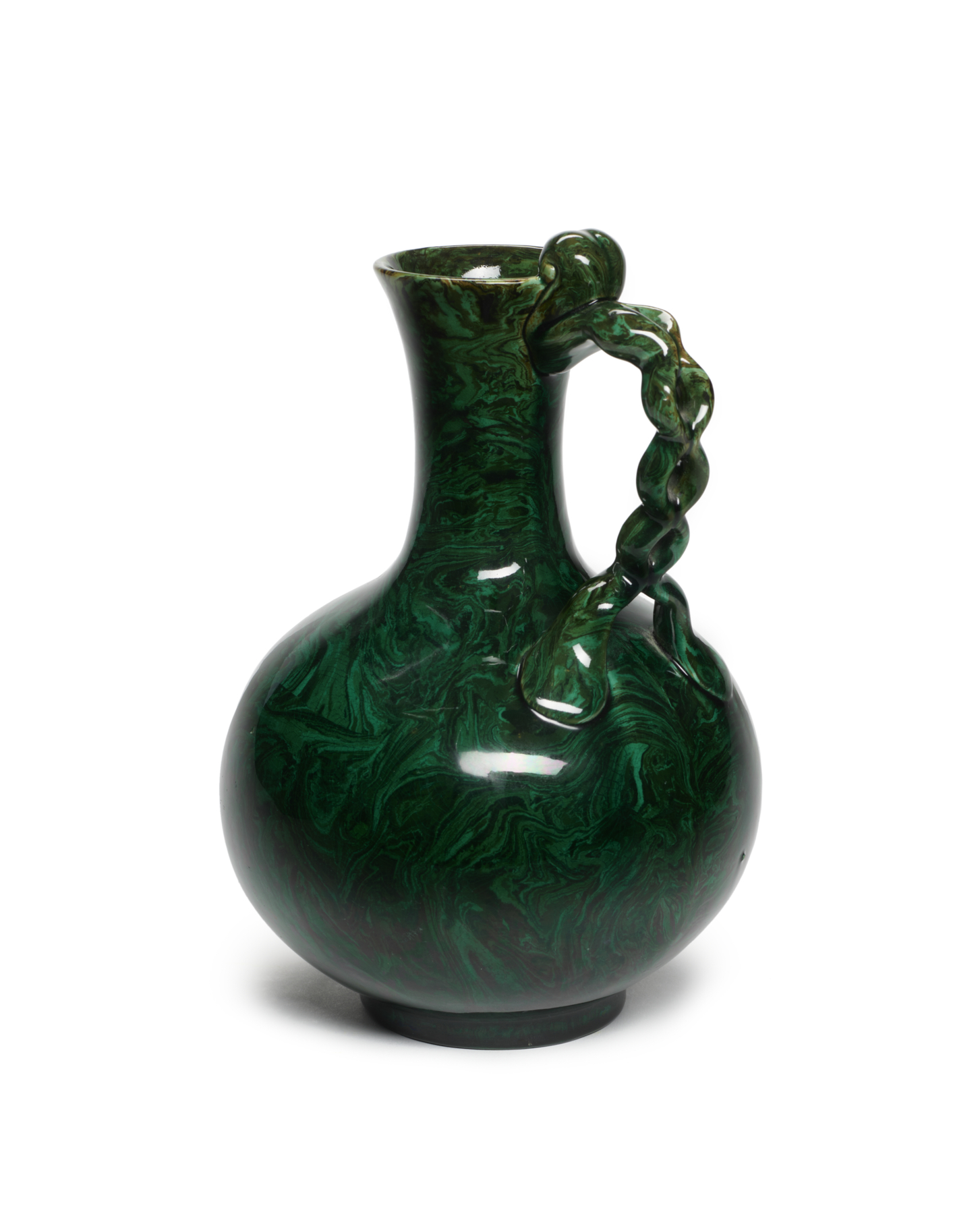
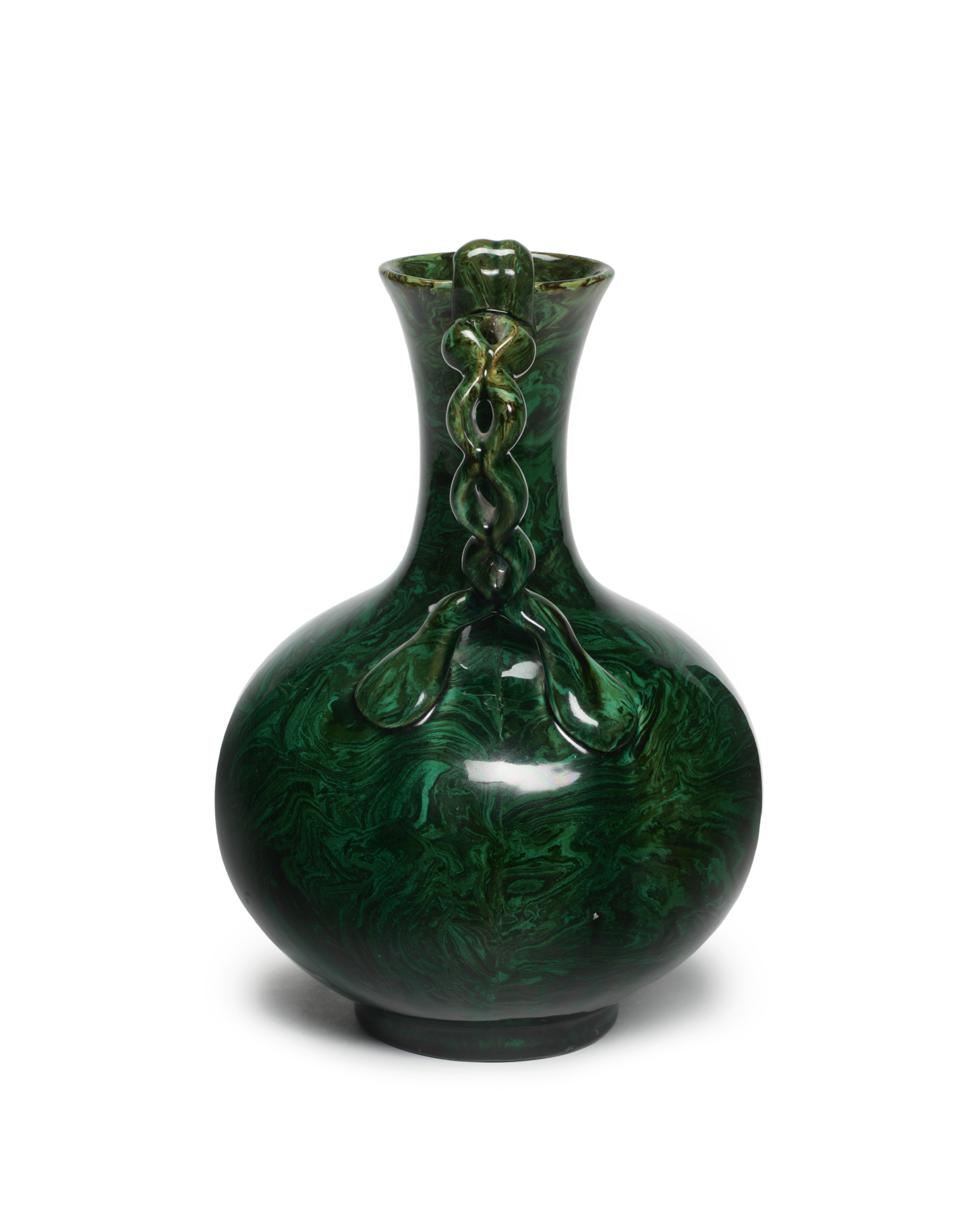
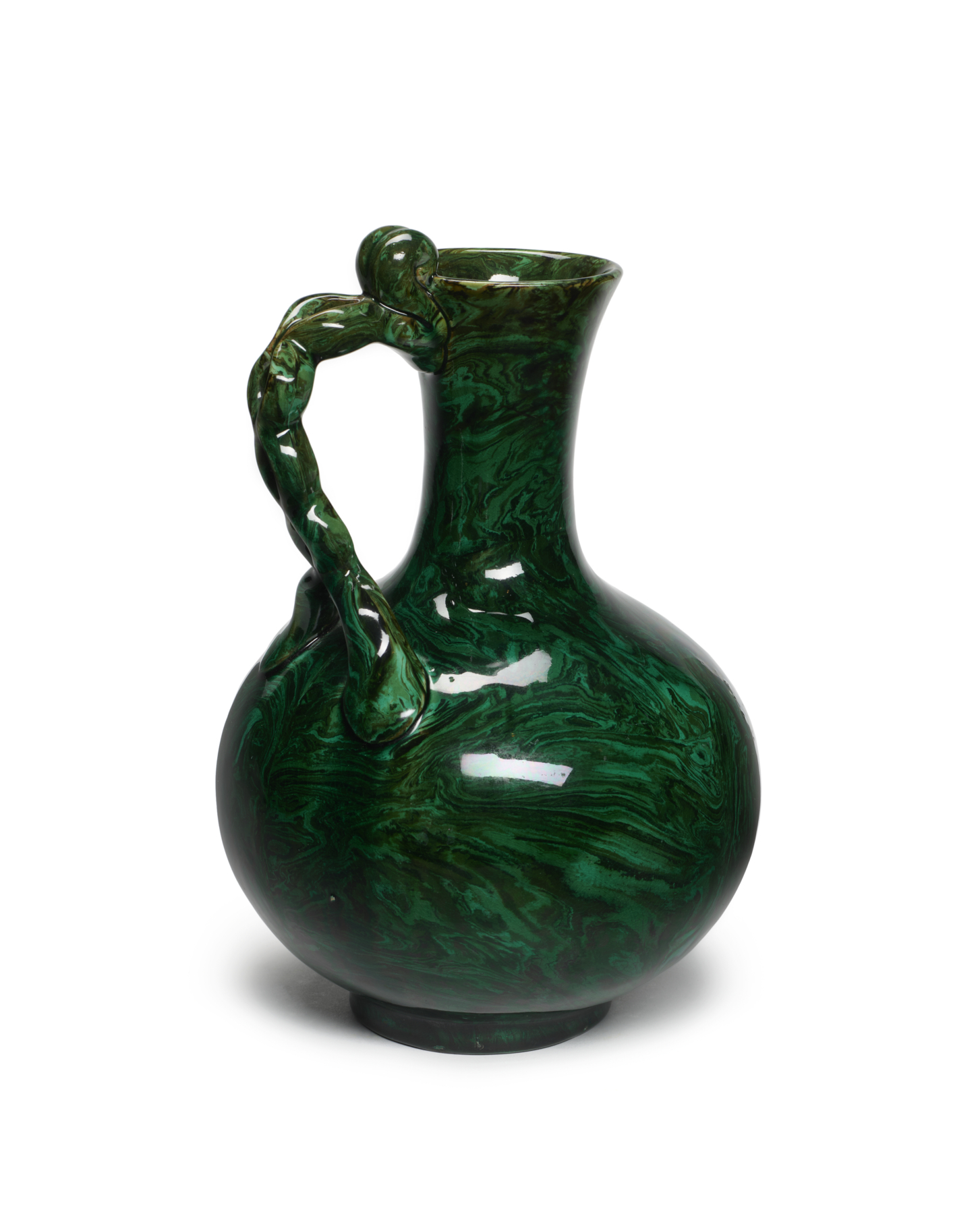
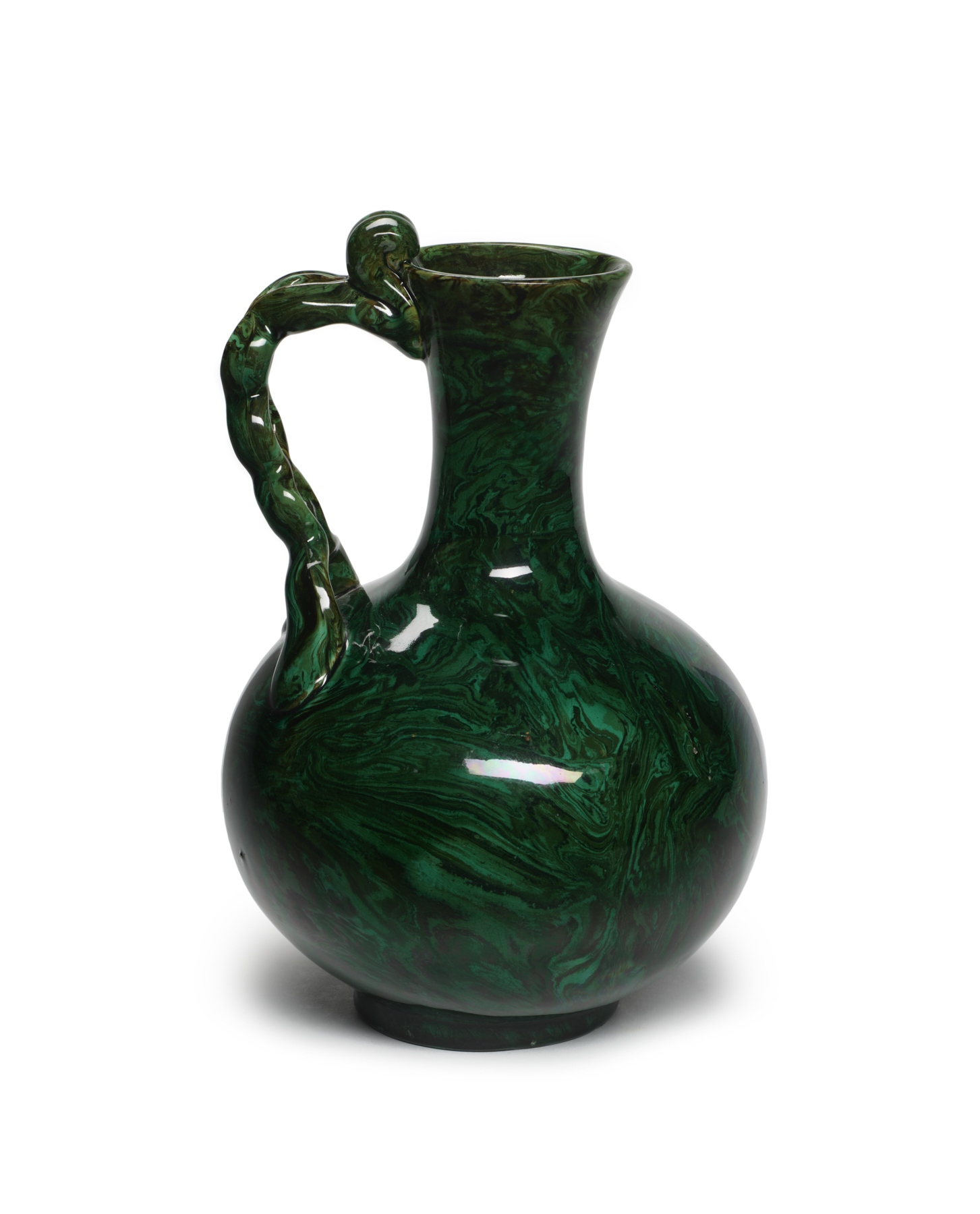
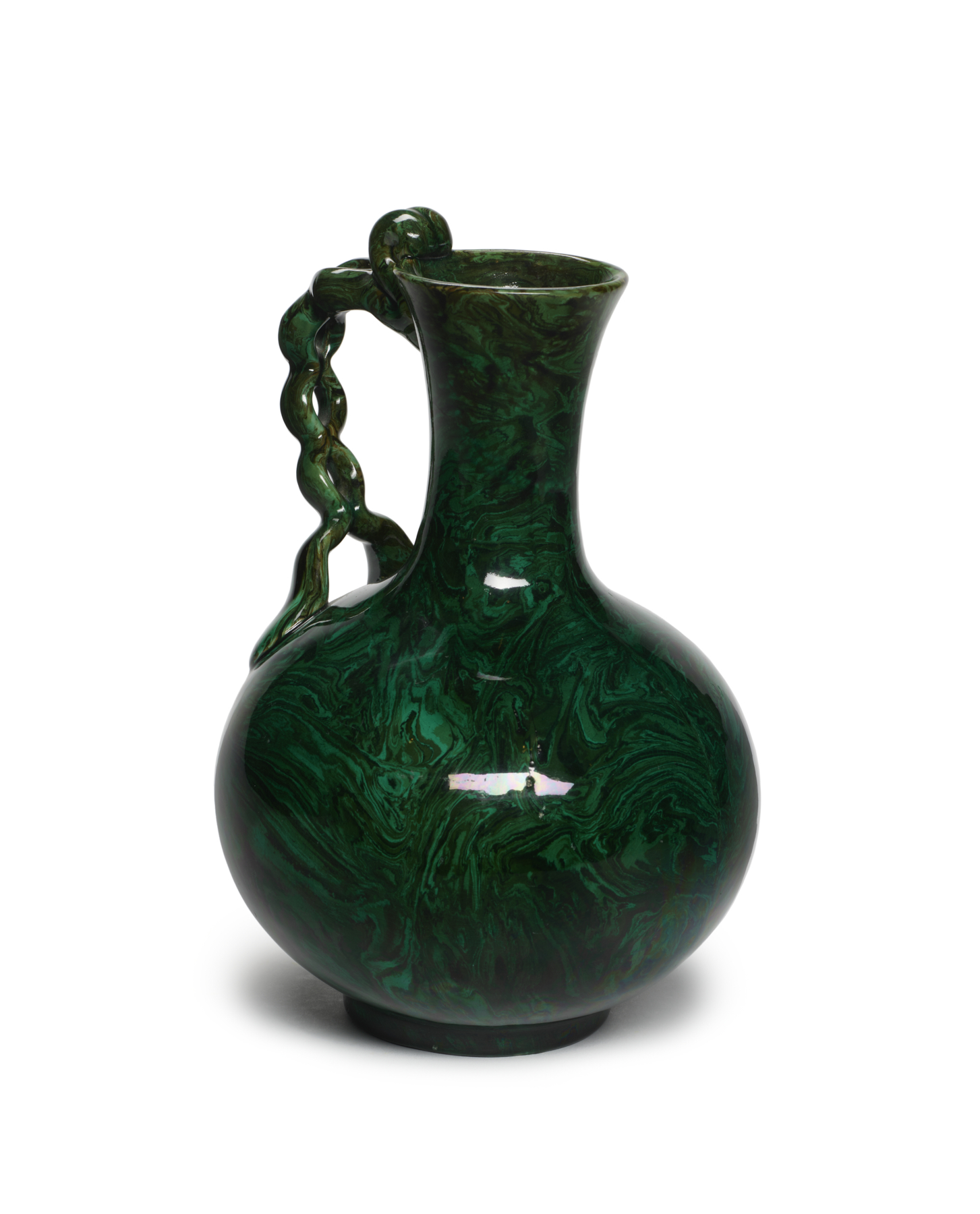
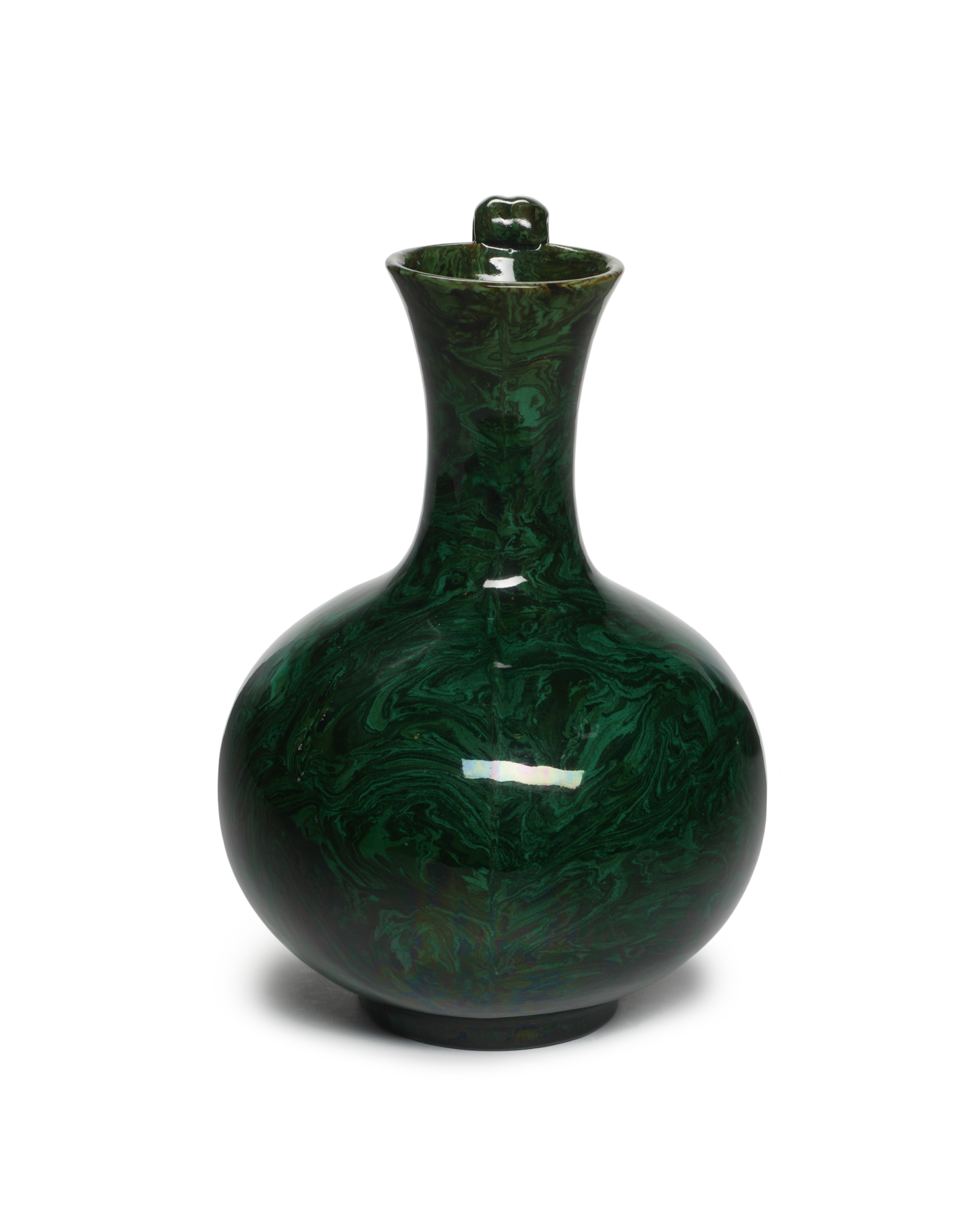
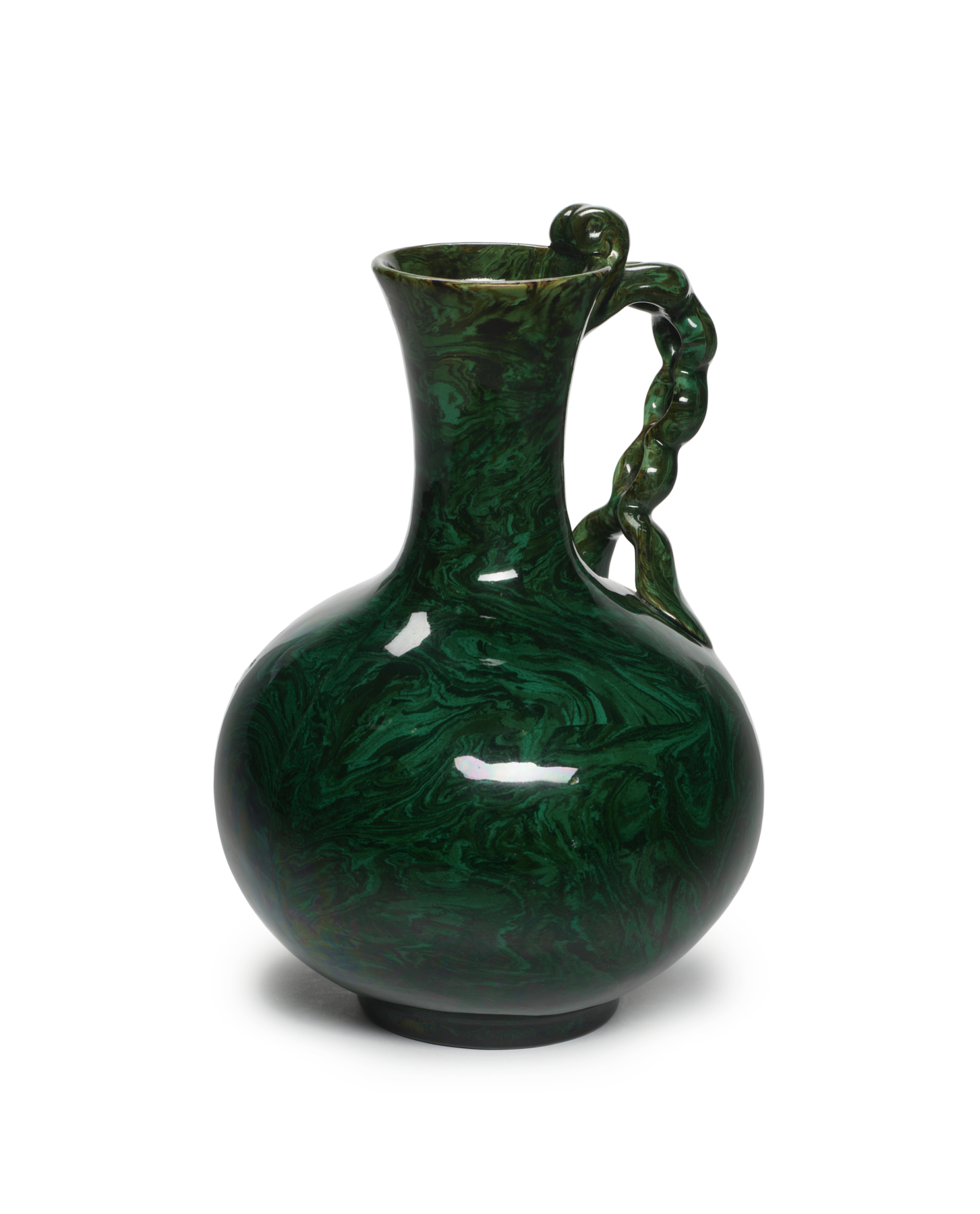
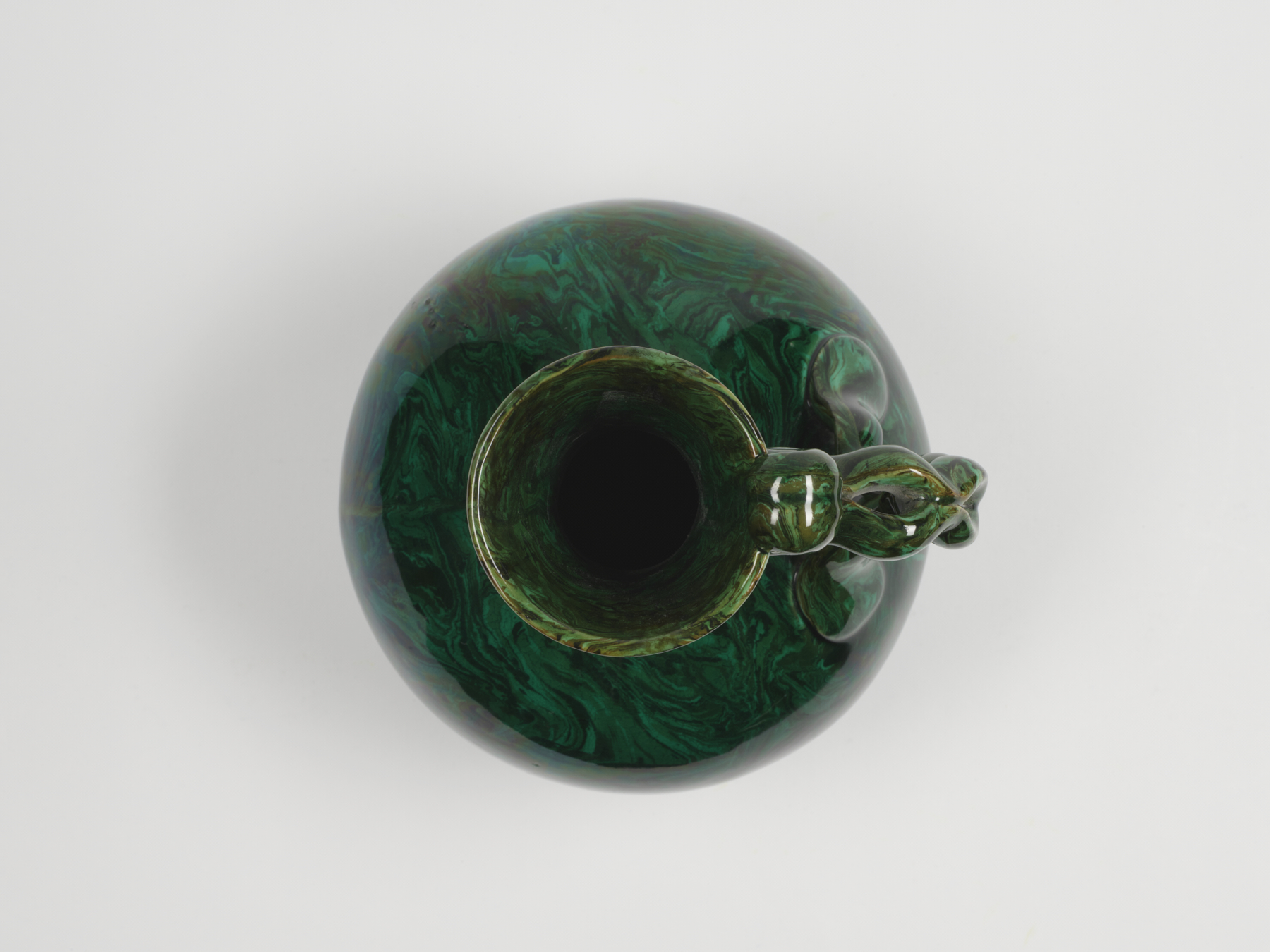
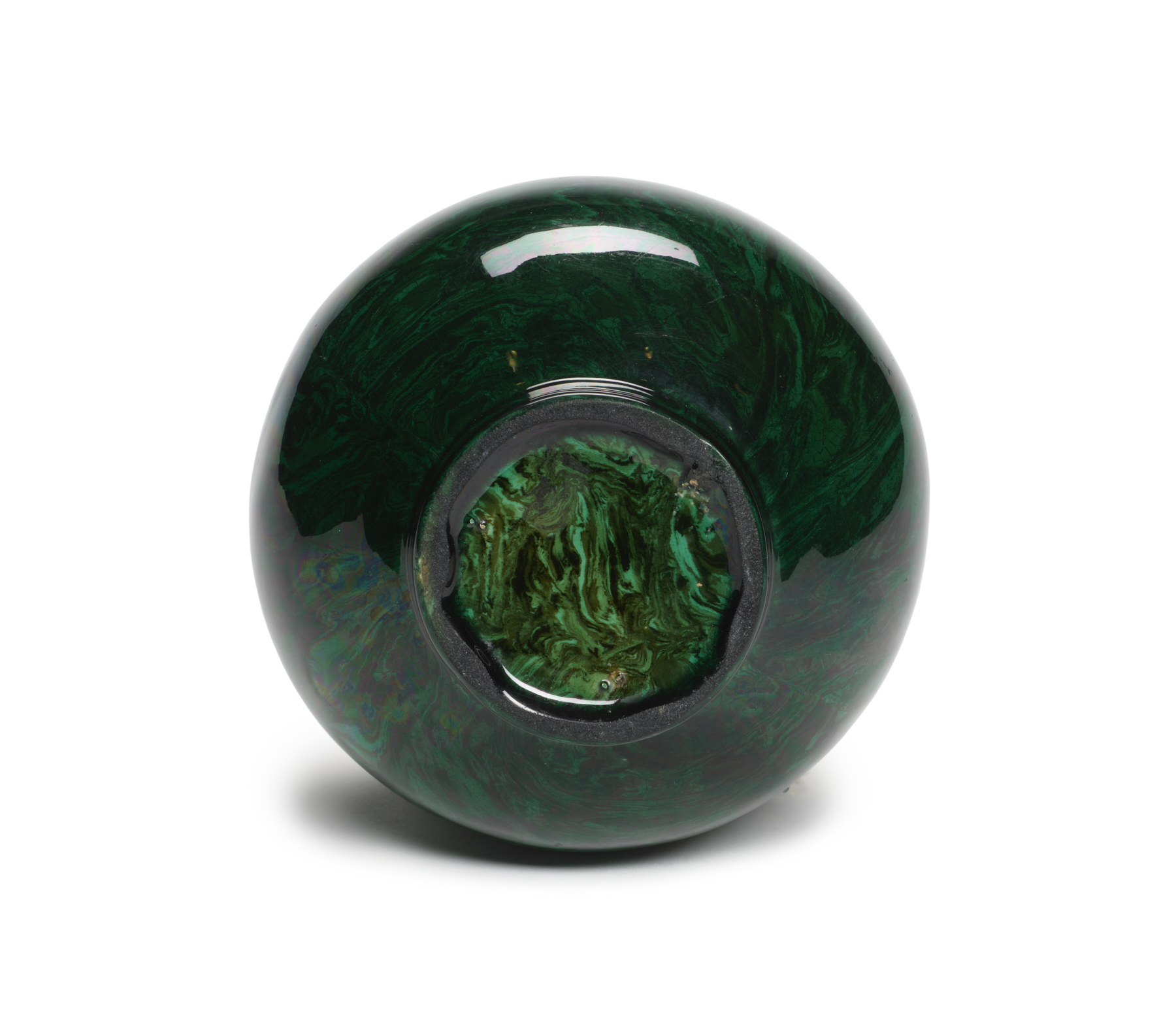
Veralum Jug, shape no. 596
To create this jug Minton & Co. took direct inspiration from an ancient Roman glass jug that had been found near St. Albans in Hertfordshire, England. This area was the location of Verulamium, the third largest city in Roman Britain. The Roman jug was discovered in 1813 inside a stone coffin just outside of the Roman walls of the ancient city. In addition to surviving nearly intact, this blown glass jug is notable for its unusual openwork handle. Minton modelers took pains to replicate this in the jug model introduced around 1855, which also takes its name “Verulam” from the ancient jug’s place of discovery.
Minton showed this model, likely for the first time, in its exhibit at the second major world’s fair, the 1855 Exposition Universelle in Paris. In its expansive displays for the 1862 International Exhibition held in London, Minton featured a group of objects in decorations imitating semiprecious stones. This included an example of the Verulam Jug with a malachite decoration, the same richly colored finish we see on this example. Another example of the model in malachite was also shown in 1867 in Minton’s display at the Exposition Universelle in Paris.
Inscription
Provenance
Provenance (from the French provenir, 'to come from/forth') is the chronology of the ownership, custody, or location of a historical object. Learn more about provenance at the Walters.
Purchased by Deborah and Philip English, Baltimore, by 1996, [mode of acquisition unknown]; given to the Walters Art Museum, 2024.
Measurements
H: 9 5/8 × Diam: 6 1/2 in. (24.4 × 16.5 cm)
Credit Line
Gift of Deborah and Philip English, 2024
Location in Museum
Not on view
Accession Number
In libraries, galleries, museums, and archives, an accession number is a unique identifier assigned to each object in the collection.
In libraries, galleries, museums, and archives, an accession number is a unique identifier assigned to each object in the collection.
48.2919