
 Creative Commons License
 Creative Commons License
 Creative Commons License
 Creative Commons License
 Creative Commons License
 Creative Commons License


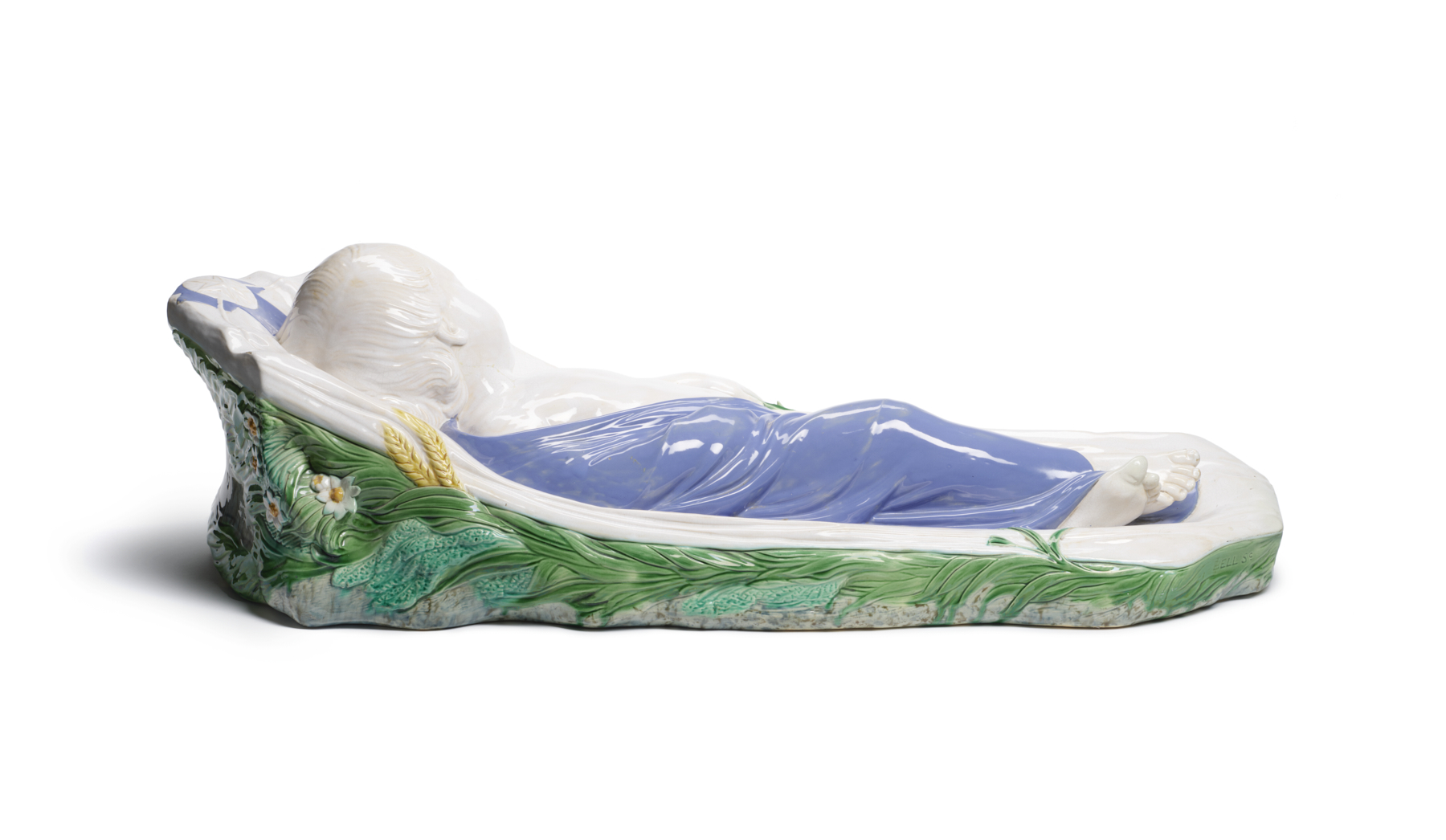
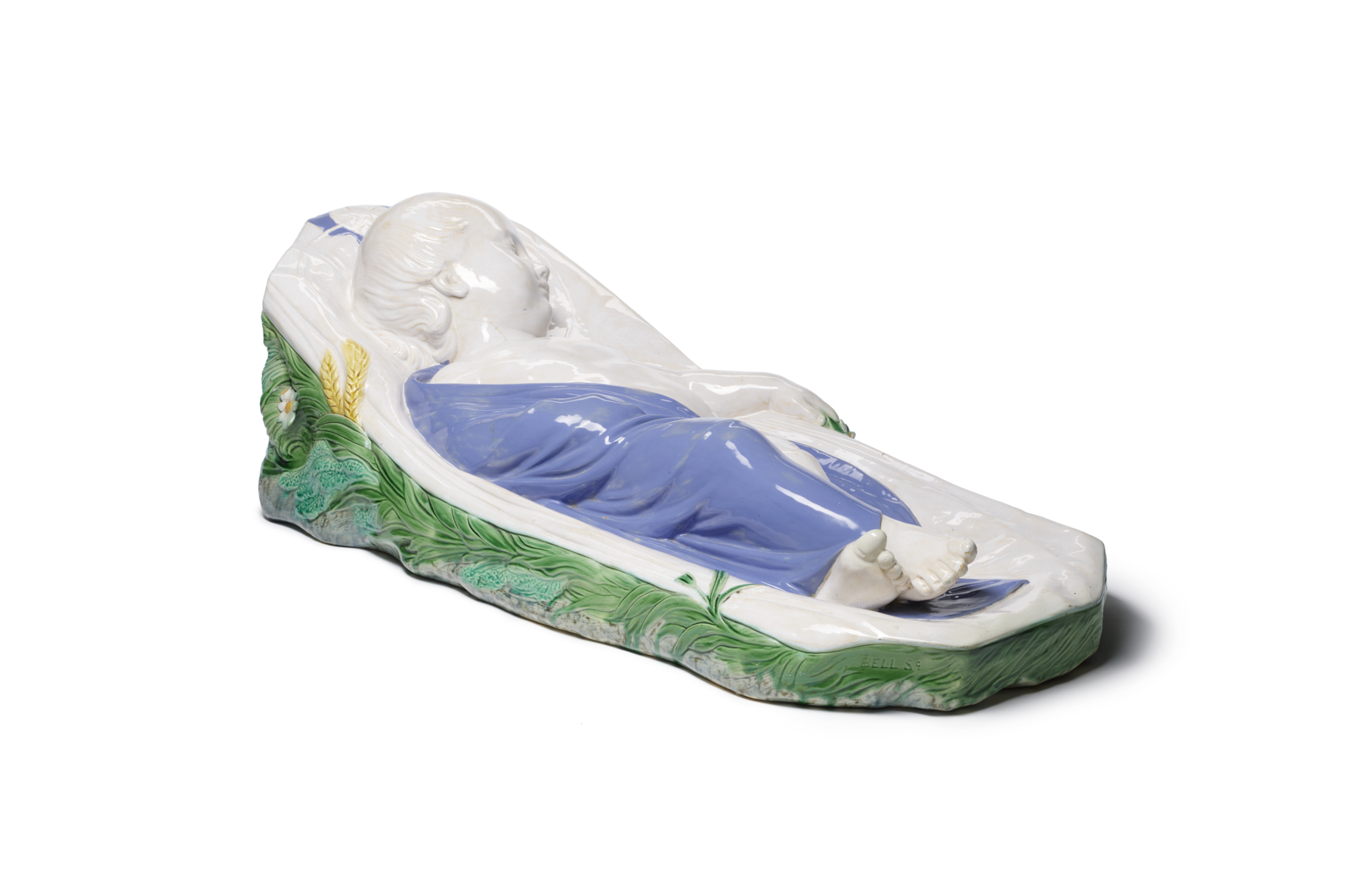
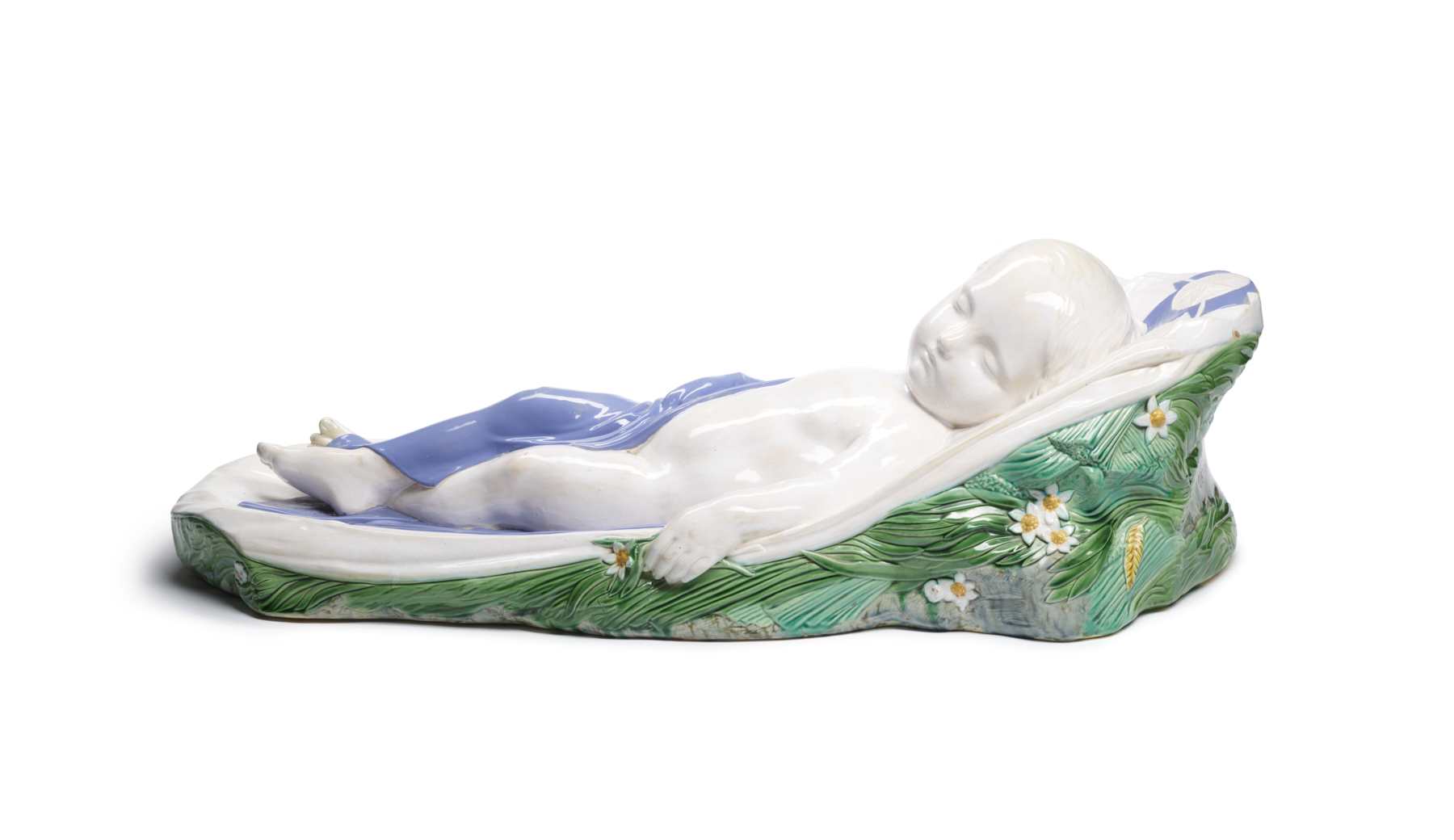
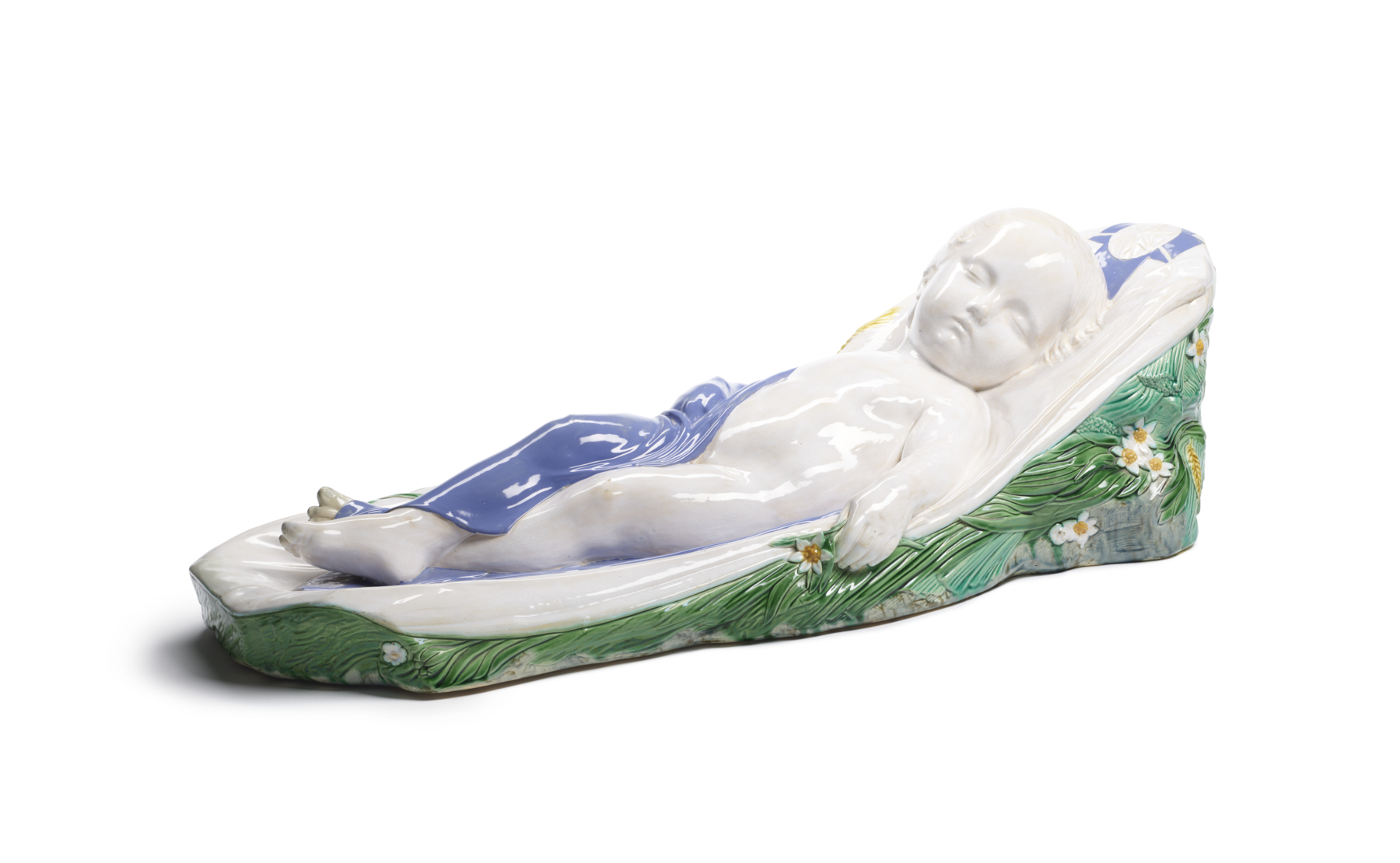
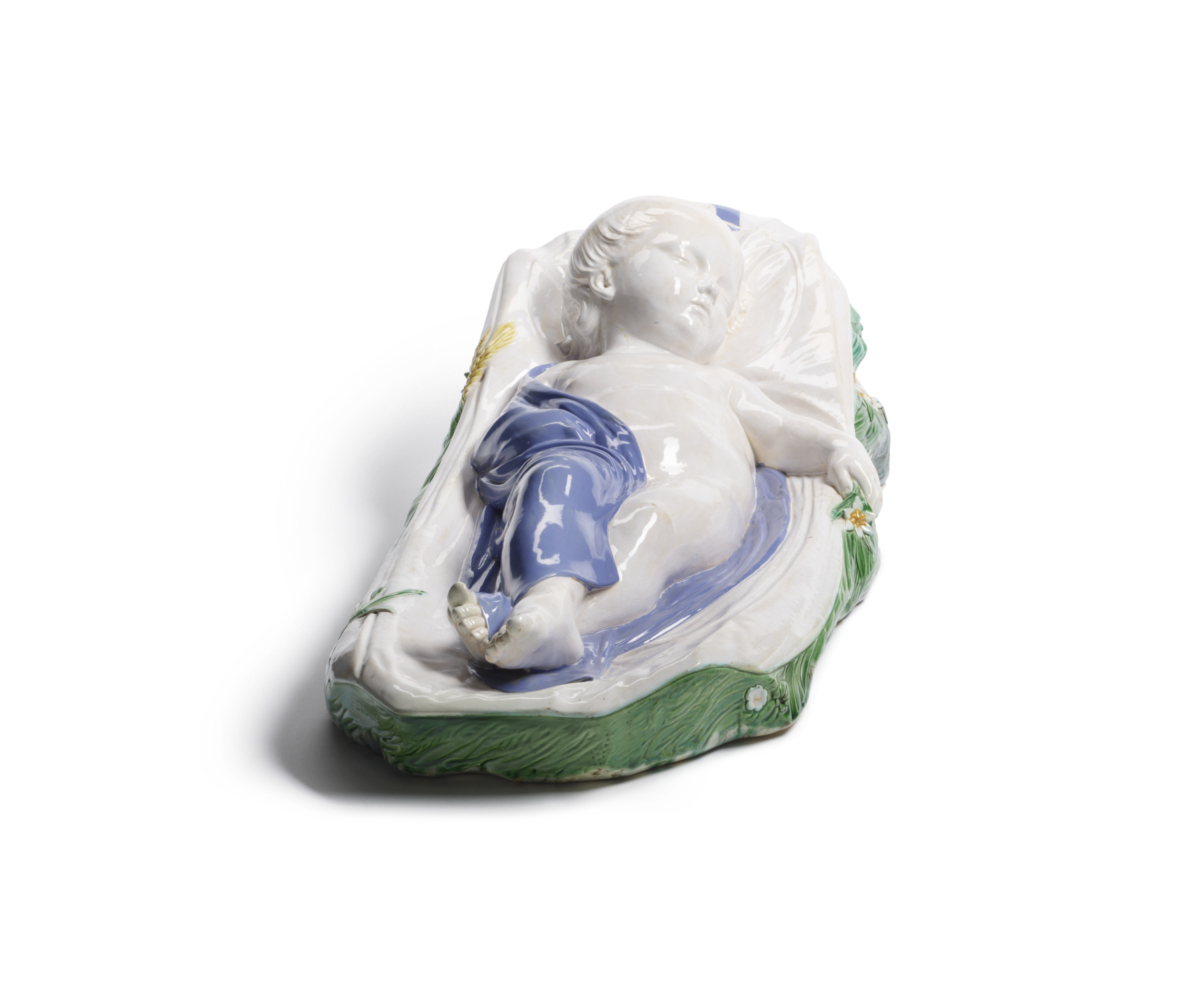
Star of Bethlehem, figure shape no. 420
In an article published in April 1863 a reporter for the Art-Journal, a leading periodical, detailed a visit to the studio of sculptor John Bell and described the “ideal and poetic” works there including one that was “all but finished”: “Entitled ‘The Star of Bethlehem,’ the delicate flower of that name helping the story, is a child–the allusion at once apparent–sleeping in an open basket cradle.” This white marble sculpture was soon to be translated into ceramic–by 1864 Minton & Co. had produced the example in the Walters collection. Indeed, Minton, a leading British manufacturer, was at the forefront of bringing contemporary sculpture to a much wider audience than could otherwise have accessed them by mass producing them in ceramic. This piece was likely primarily intended to be translated into parian, an unglazed porcelain that resembles marble, but here we see it realized in earthenware and vibrant majolica glazes. The white and blue glazes used here, in combination with the religious subject matter of the sleeping baby Jesus, strongly recalls Renaissance tin-glazed sculptural works created primarily in Florence by members of the Della Robbia family as well as others.
John Bell, a sculptor and designer for industry, was a leading English artist of the Victorian period, and by the time “Star of Bethlehem” was produced in the 1860s, was being commissioned to create major public monuments and statuary. Bell was born in Suffolk, but by his late teens was living and training in London, including at the Royal Academy. Following his training, he regularly showed at the prestigious Royal Academy and Society of Arts exhibitions, gaining widespread acclaim for his work by the late 1830s. He had a close collaboration with Minton & Co. from the mid-1840s onwards–the firm translated many of his works, often at smaller scale, into parian porcelain and mass-produced them. One notable example of this was a work titled “Babes in the Wood” which Bell first created in marble around 1842. This sculpture, which shares a similar format with “Star of Bethlehem,” was translated into parian and exhibited by Minton at the first major international exhibition or world’s fair, the Great Exhibition, held in London in 1851. Queen Victoria herself purchased a parian example of “Babes in the Wood” at the Great Exhibition, which is retained in the British Royal Collection today (accession no. RCIN 34116).
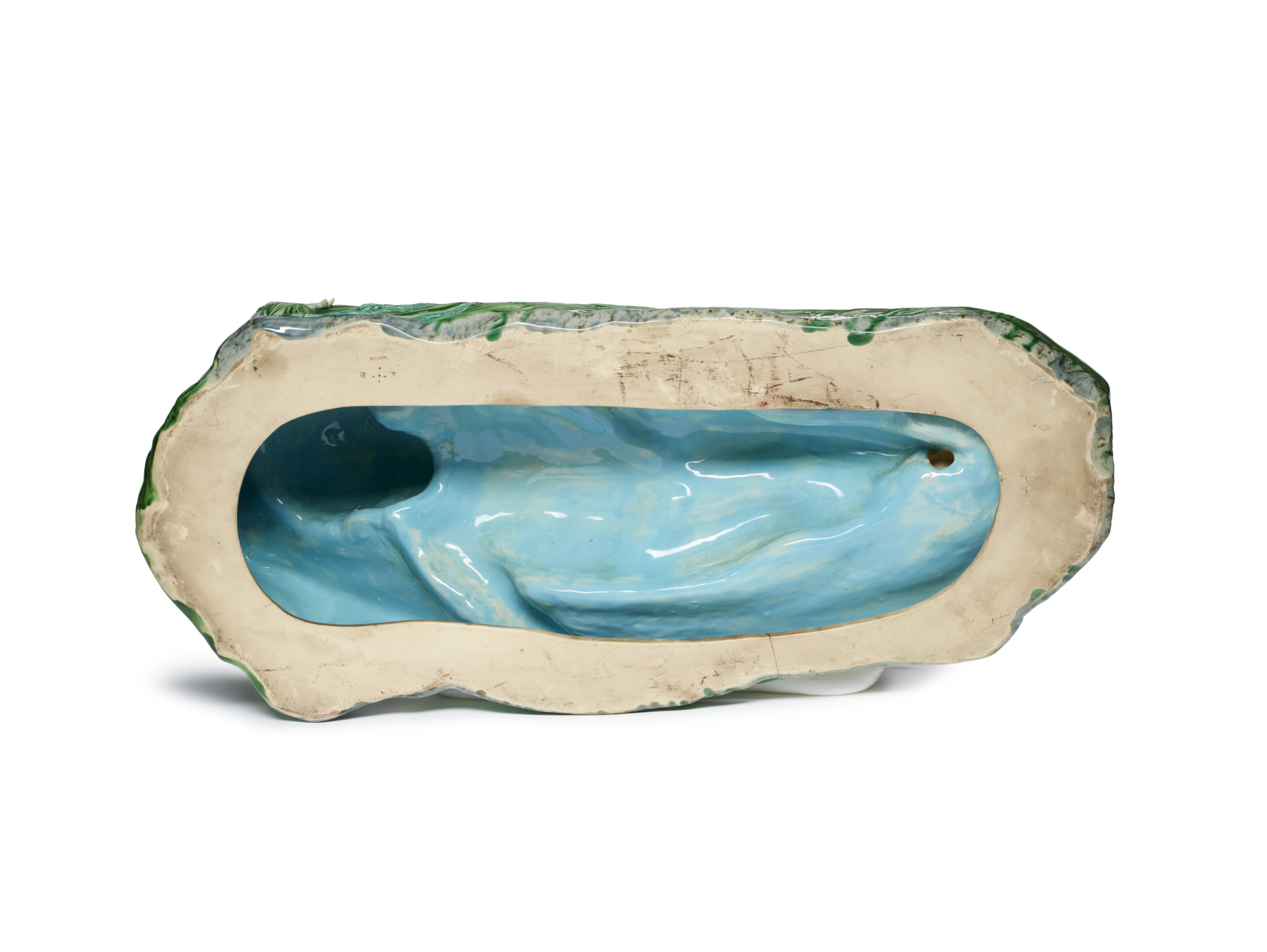
Inscription
Provenance
Provenance (from the French provenir, 'to come from/forth') is the chronology of the ownership, custody, or location of a historical object. Learn more about provenance at the Walters.
Nick Boston Antiques, London, by 2000; purchased by Deborah and Philip English, Baltimore, 2000; given to the Walters Art Museum, 2024.
Exhibitions
| 2021-2022 | Majolica Mania. The Bard Graduate Center, New York; The Walters Art Museum, Baltimore. |
Measurements
H: 9 1/4 x W: 31 x D: 13 1/8 in. (23.3 x 78.5 x 34.8 cm)
Credit Line
Gift of Deborah and Philip English, 2024
Location in Museum
Not on view
Accession Number
In libraries, galleries, museums, and archives, an accession number is a unique identifier assigned to each object in the collection.
In libraries, galleries, museums, and archives, an accession number is a unique identifier assigned to each object in the collection.
48.2924