
 Creative Commons License
 Creative Commons License
 Creative Commons License
 Creative Commons License
 Creative Commons License
 Creative Commons License
 Creative Commons License
 Creative Commons License
 Creative Commons License
 Creative Commons License
 Creative Commons License


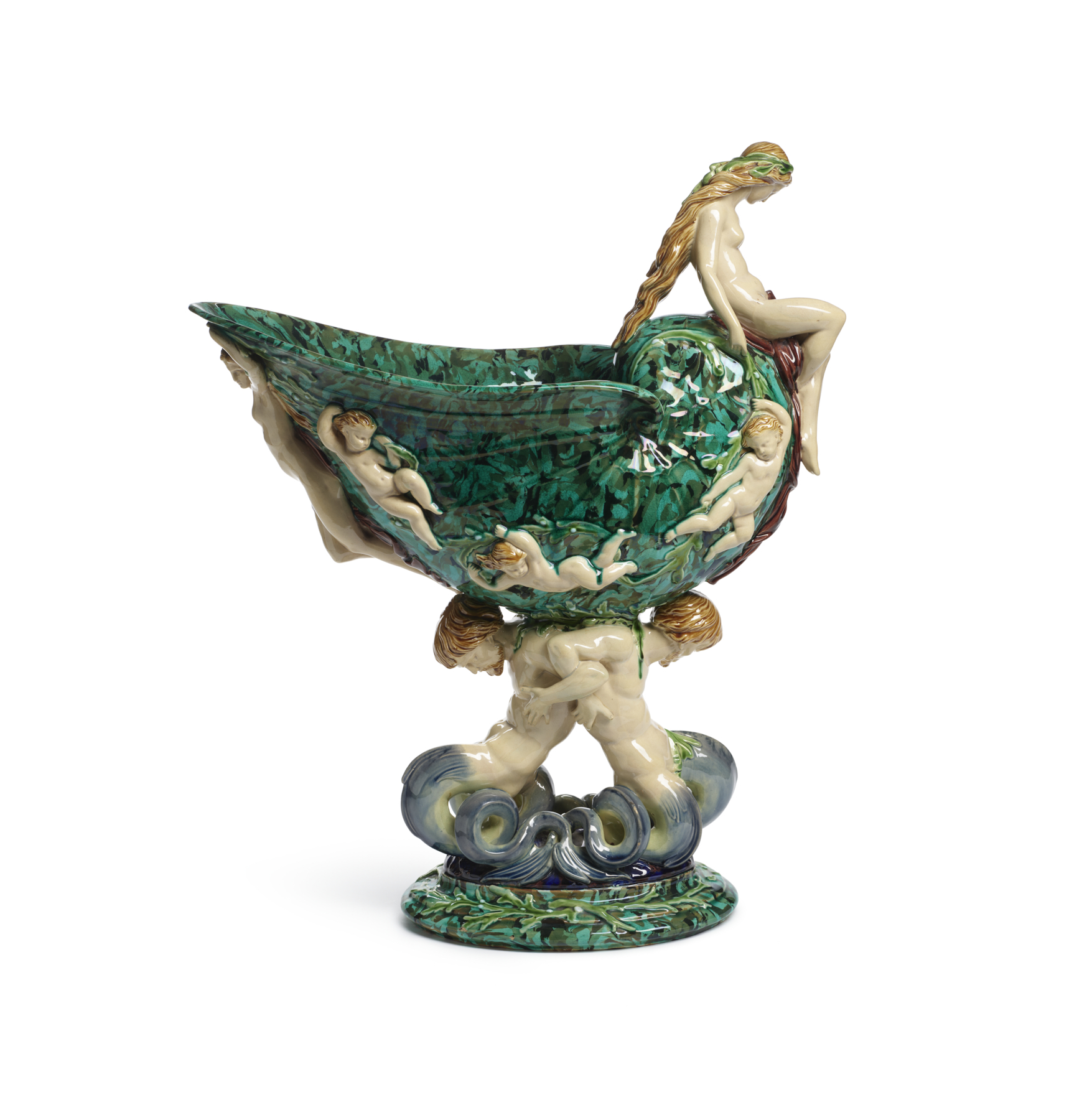
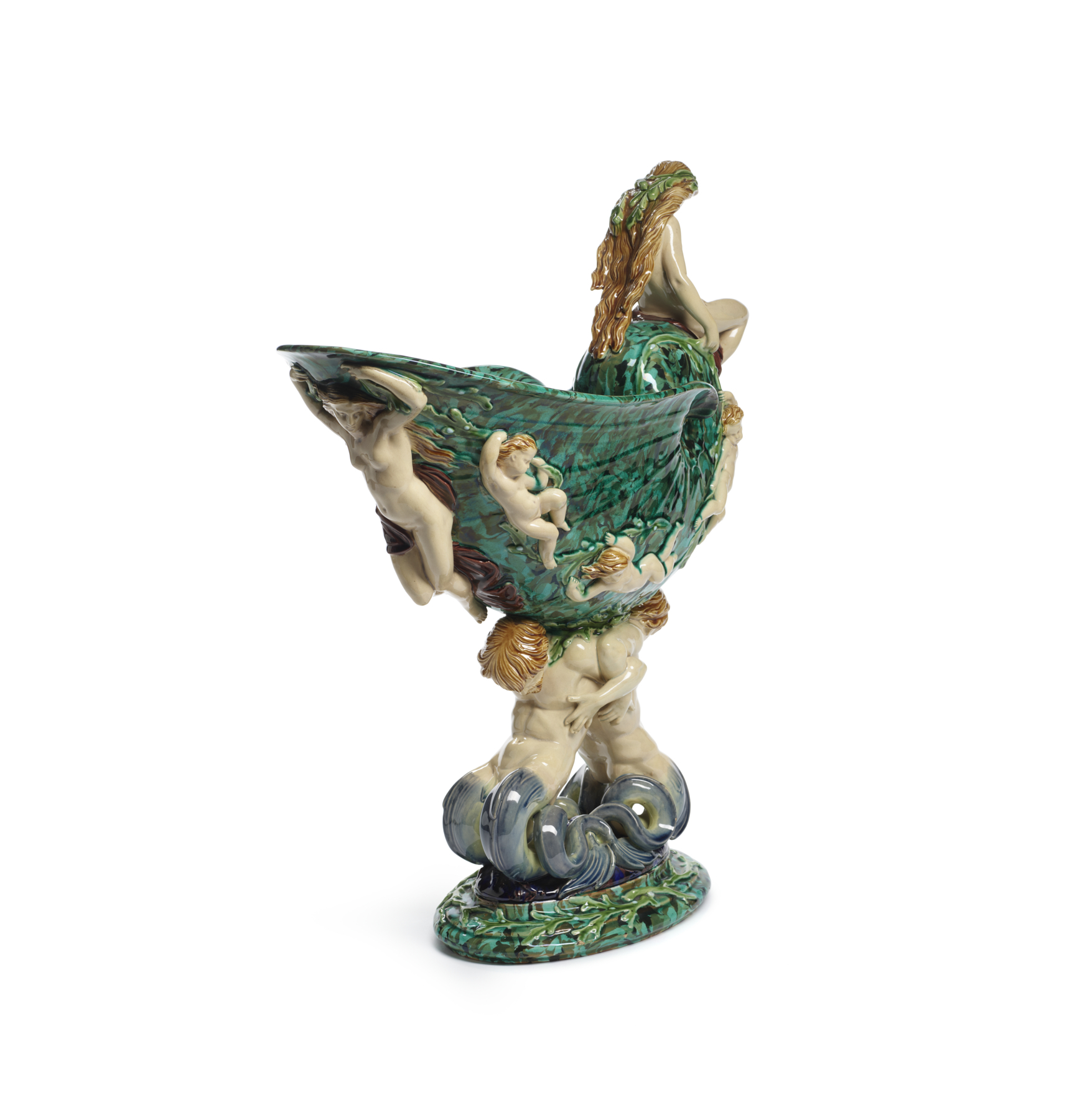
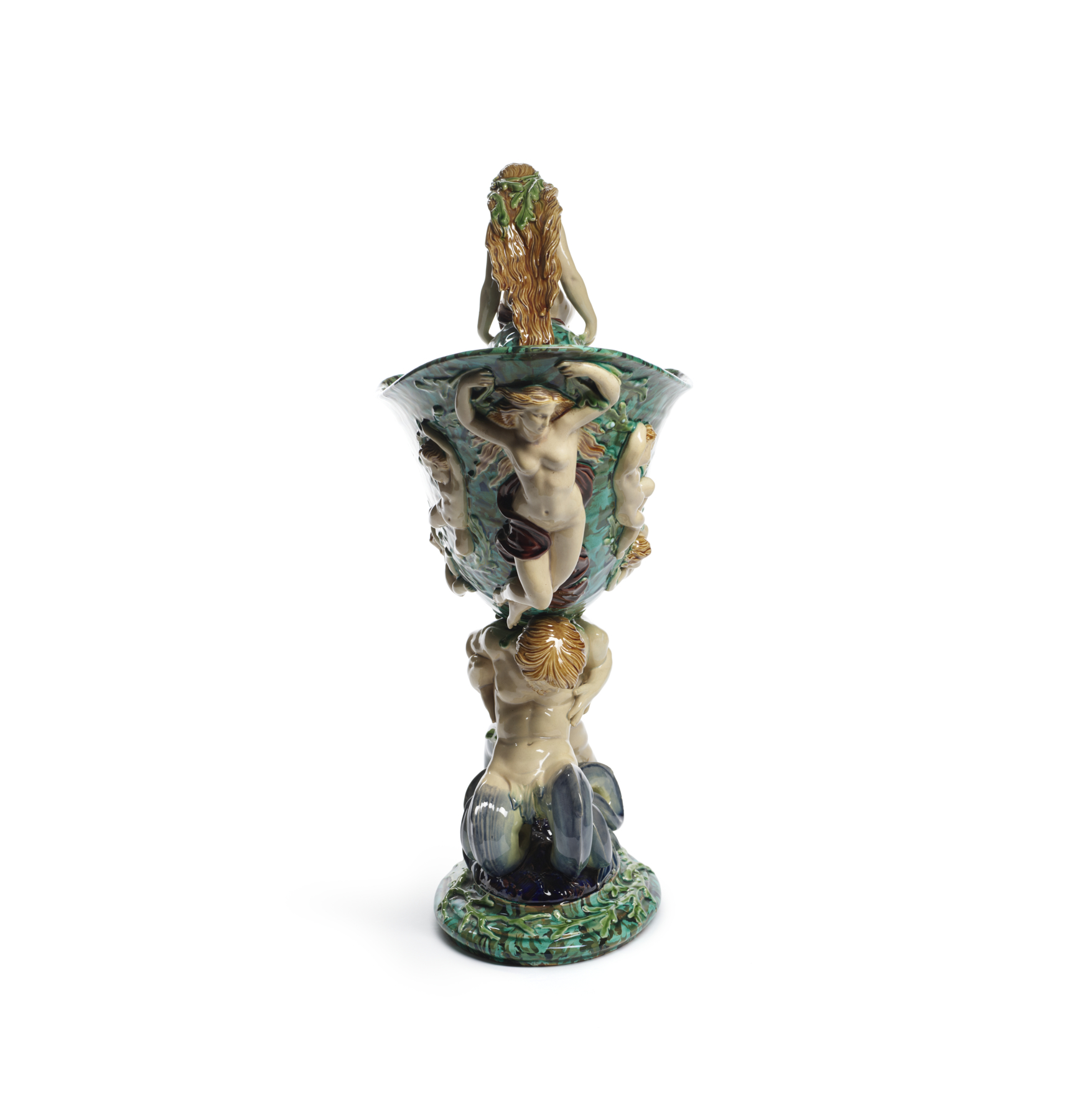
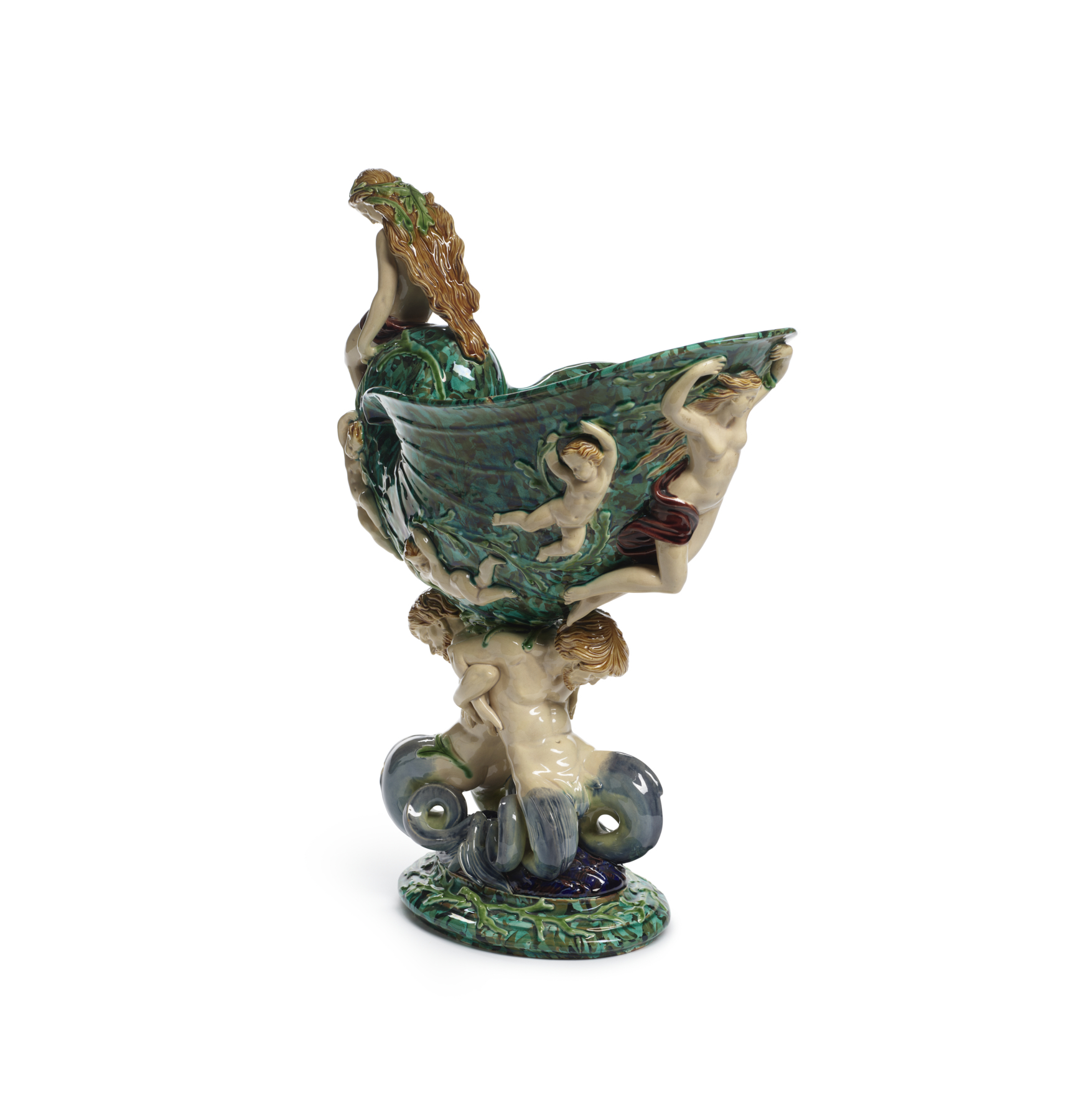
Nautilus Shell, shape no. 992
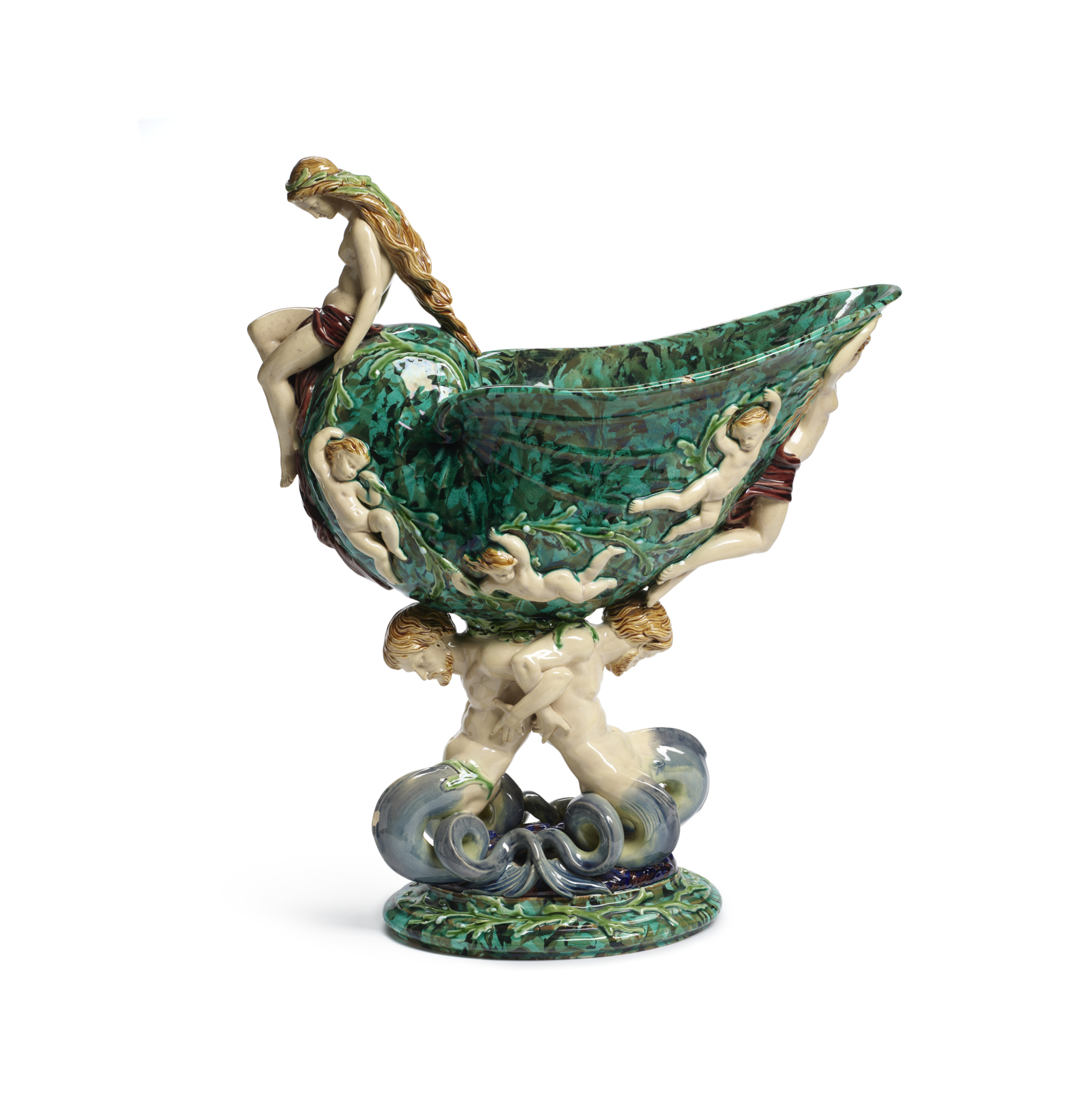
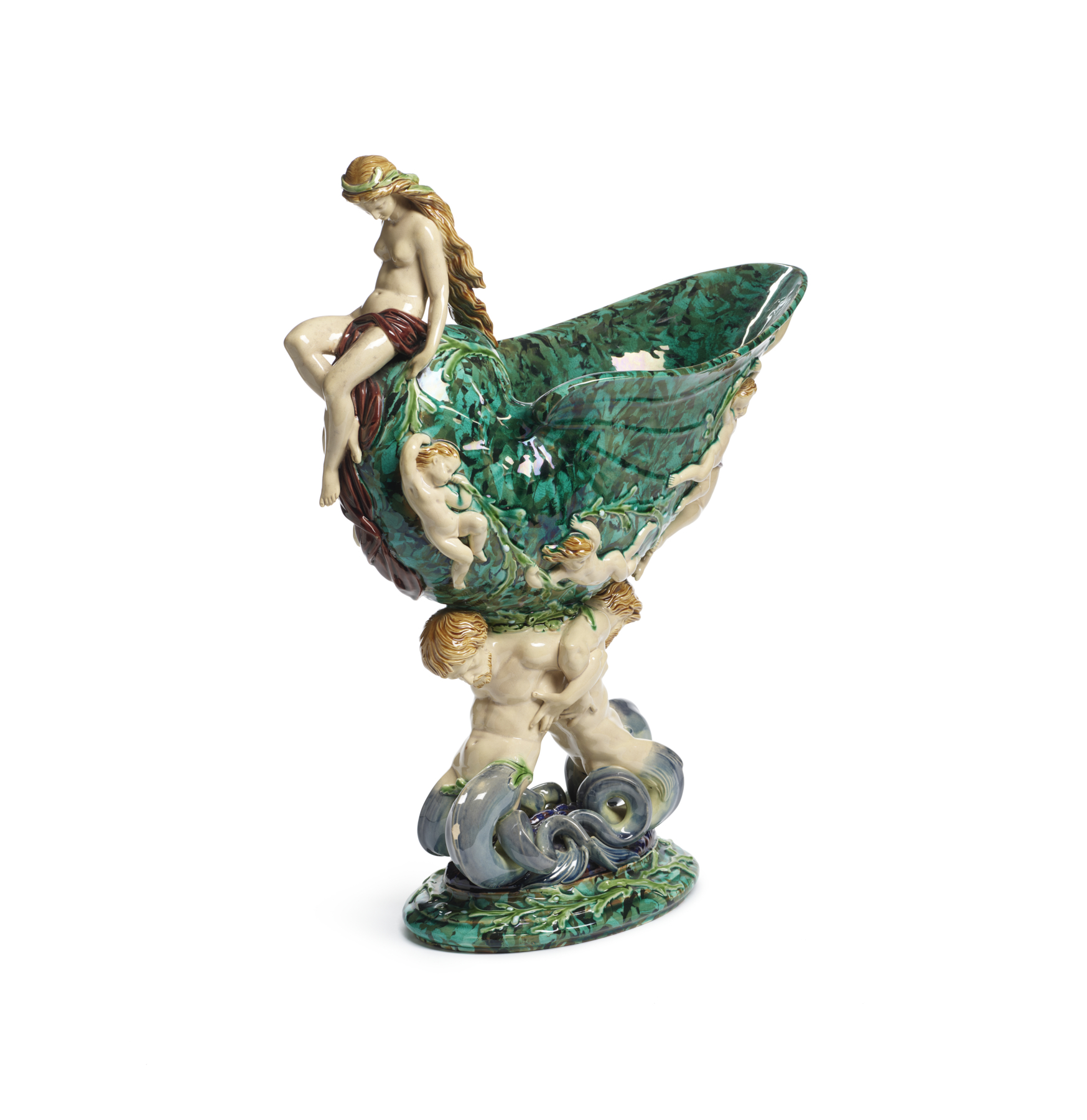
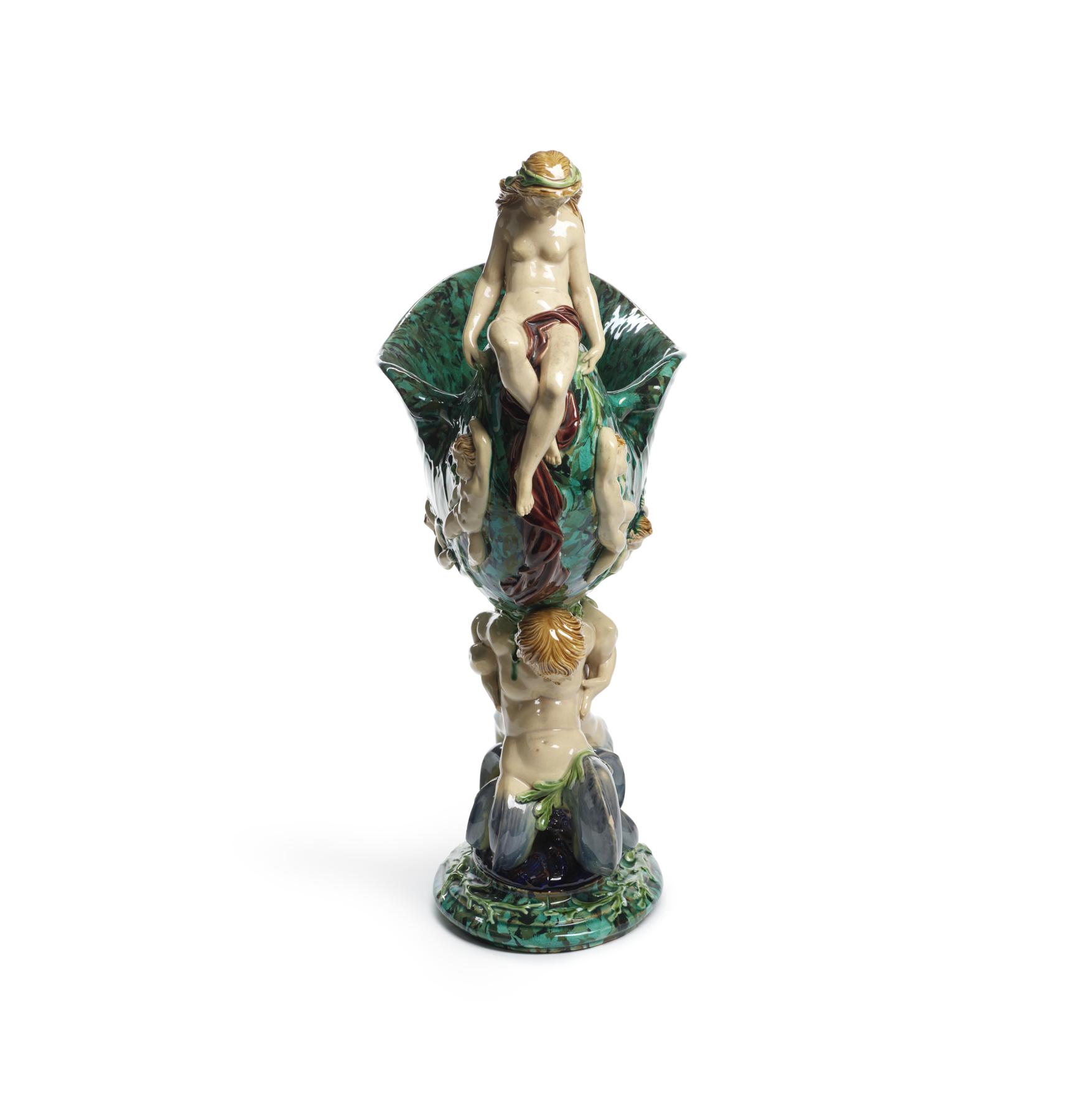
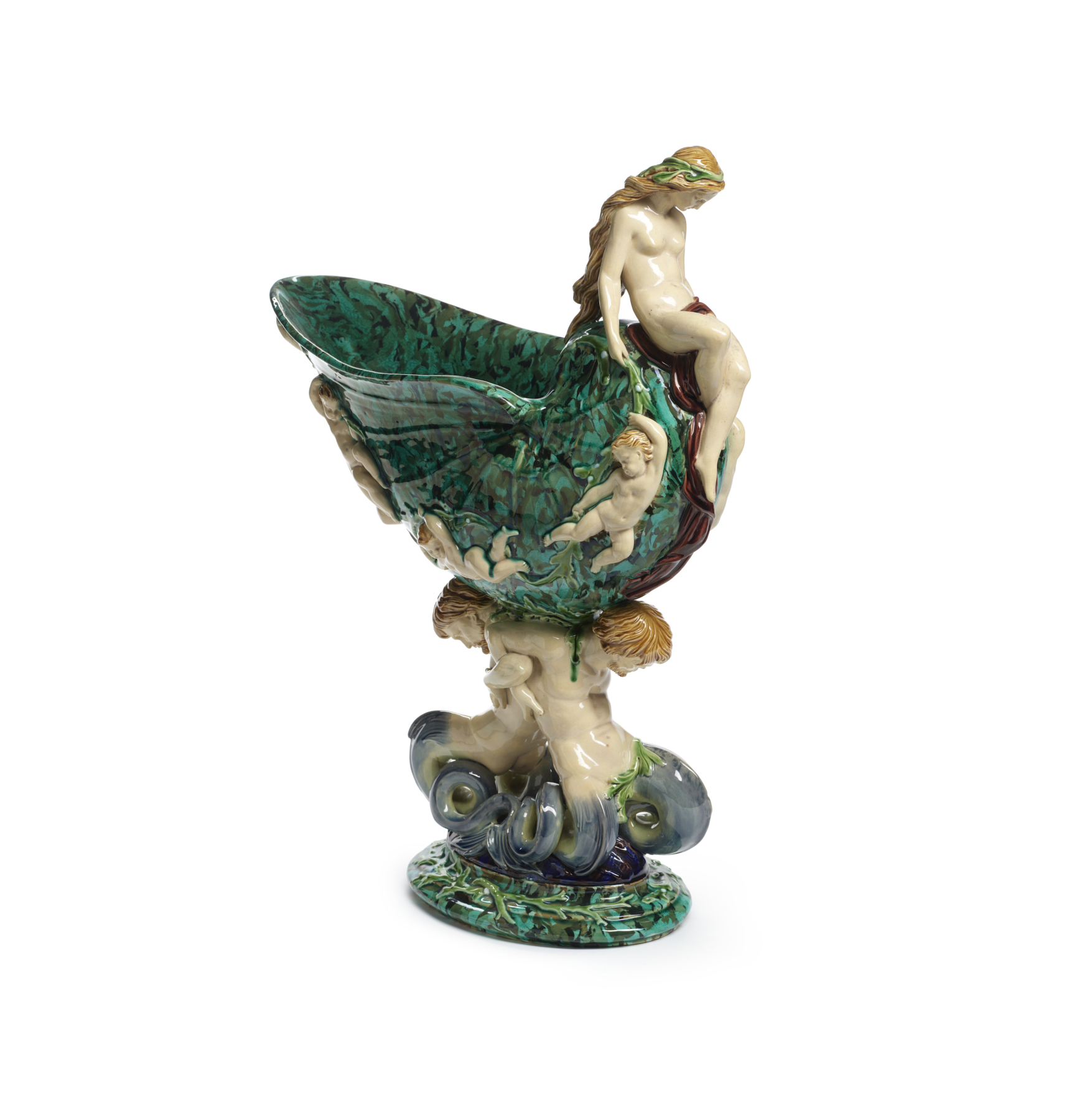
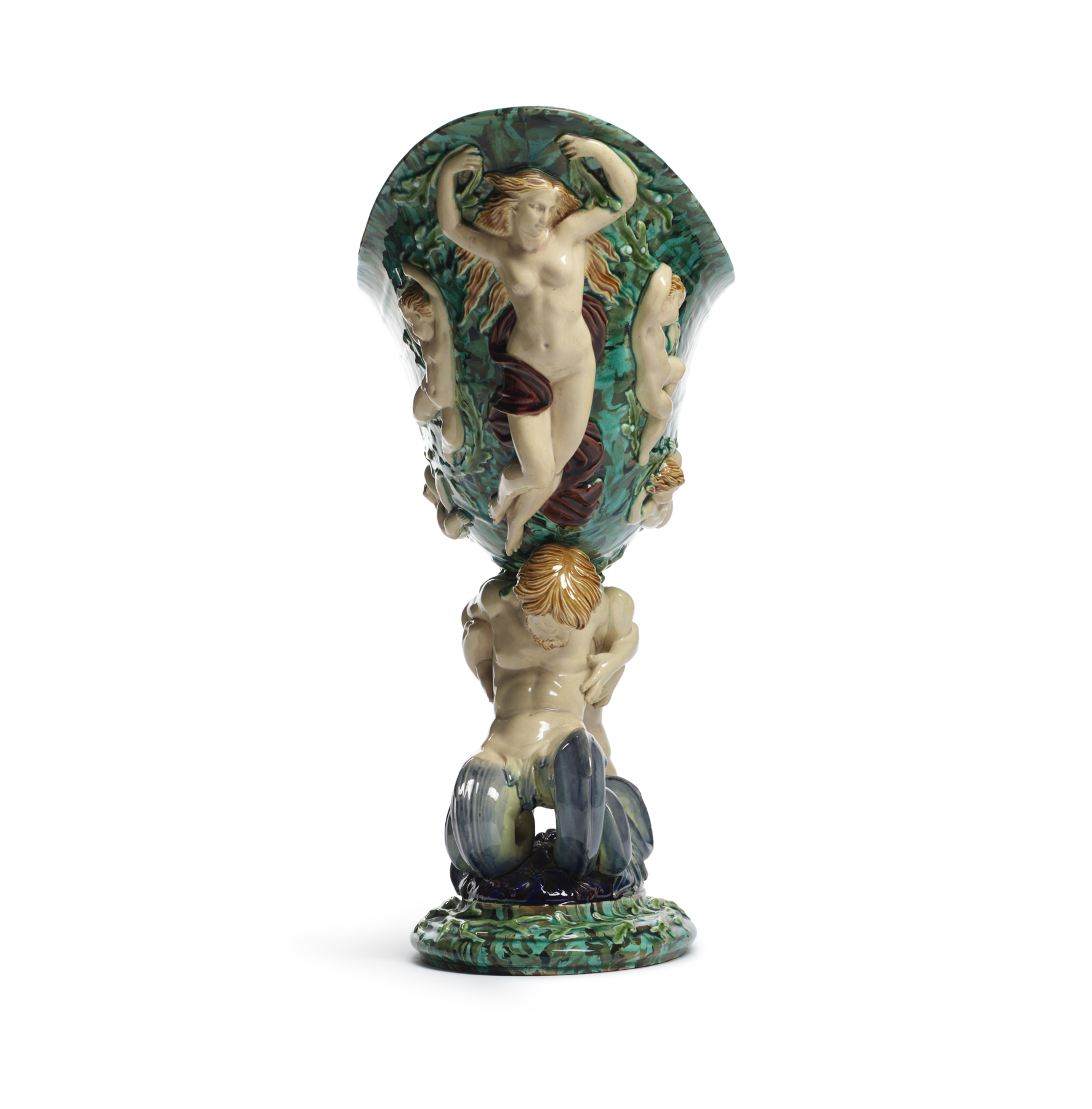
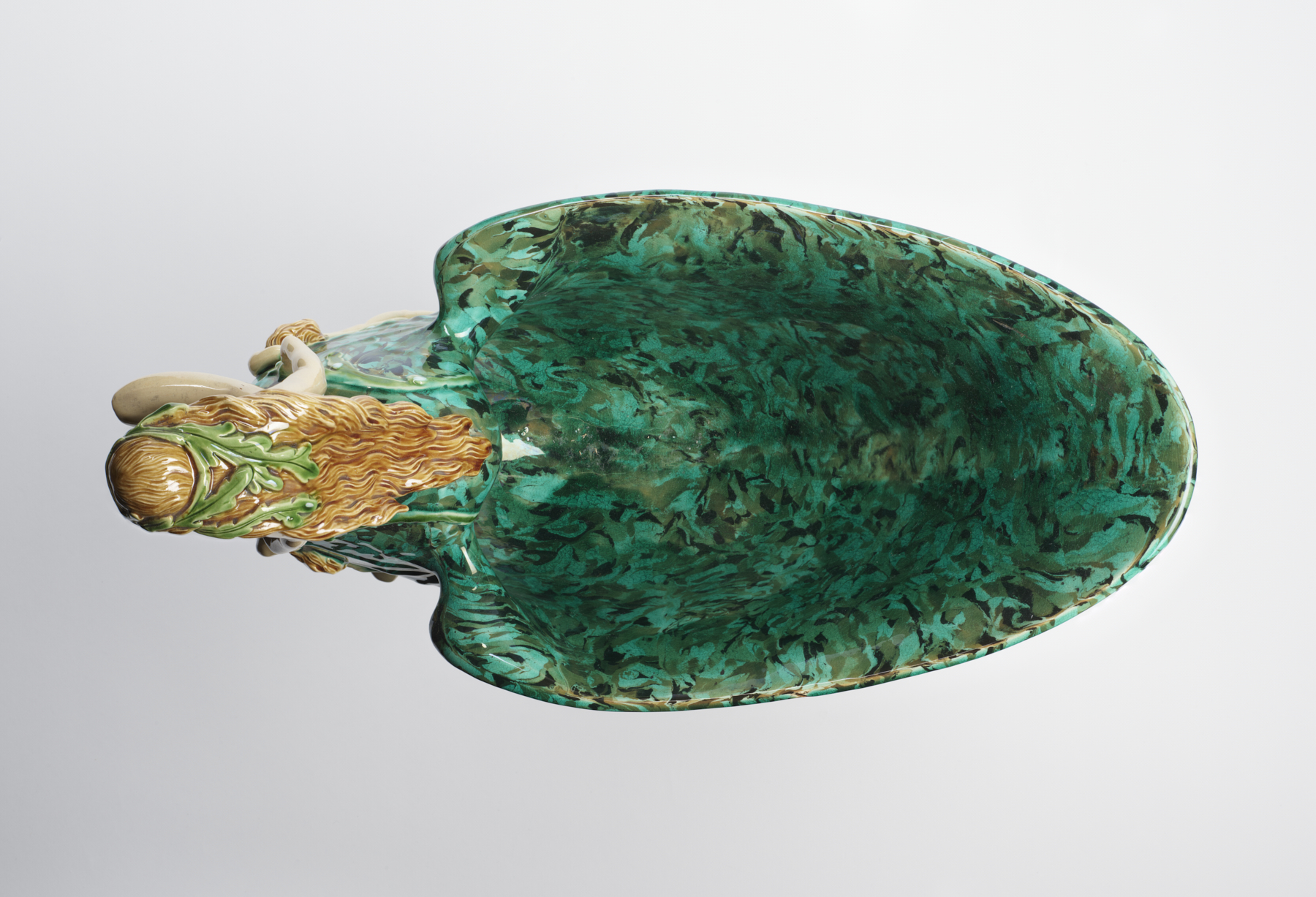
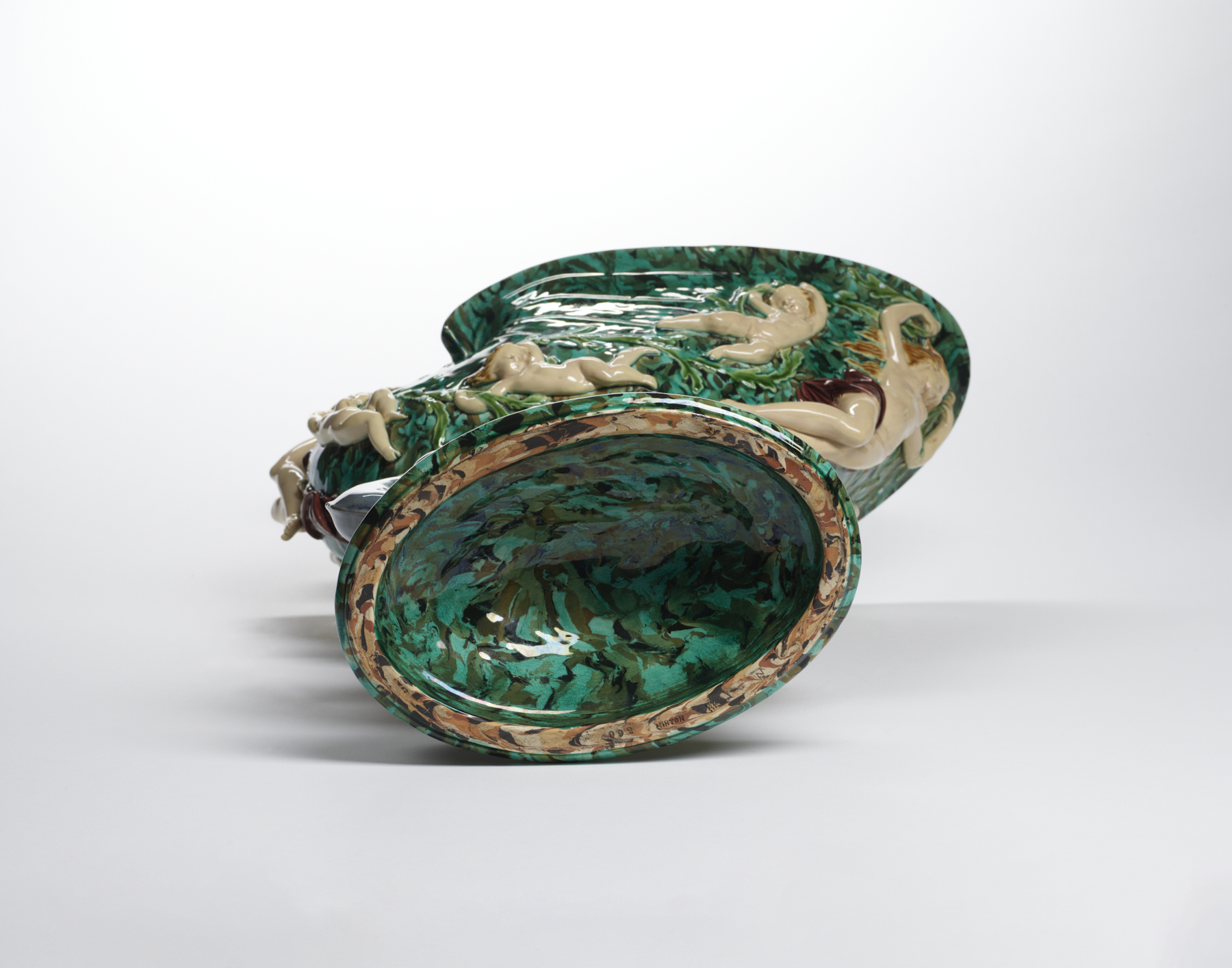
The leading British manufacturer Minton first displayed an example of this highly sculptural model at the London International Exhibition of 1862, a presentation that was much celebrated in the art and popular press of the time. This was due in no small part to the large amount of inventive majolica designs shown there. In its review of the Minton display, the Staffordshire Advertiser newspaper on May 31, 1862, highlighted this model in particular for a detailed description: “there is a nautilus shell, beautifully modelled by Mr. H. Protat, modelling master of the Hanley and Stoke Schools of Art. On the body of the shell, which is formed of a happy imitation of malachite, there is seated a marine Venus, and flying cupids, joined with sea-weed in bas relief, ornament both sides of the nautilus; two mermen, connected together form the supporters of this elegant work.” The “H. Protat” referred to as the creator of this model was Hugues Protât, a French-born and trained designer that was the chief modeler for Minton from around 1856 until about 1862. Protât was a leading freelance designer for the British ceramic industry in the 1860s and 1870s.
In the firm’s catalogue of its exhibit, entry D130 listed a “Nautilus Shell, No. 992, in imitation of Malachite, marine Venus on the top, embossed Cupids on the Shell, supported by two mermen.” In fact, Minton introduced a subset of majolica decorated to imitate semi-precious stones, including malachite and porphyry, at the 1862 exhibition. To create the look of malachite seen in piece the firm covered a mottled clay base in a rich, transparent green glaze–underlining the highly sophisticated use of ceramic bodies and glazes then being deployed by this innovative firm.
Minton majolica was sold by prestigious retailers on both sides of the Atlantic. In 1878 a writer for the “National Repository” magazine visited Tiffany & Co., the luxury goods purveyor in New York City. An article titled “A Walk through Tiffany’s,” appeared in the periodical’s July issue and was illustrated with an image of “Minton’s Faience” – an example of the Nautilus Shell model, which was then on offer at the New York retailer.
Inscription
Provenance
Provenance (from the French provenir, 'to come from/forth') is the chronology of the ownership, custody, or location of a historical object. Learn more about provenance at the Walters.
Sale, Sloan’s Auctioneers & Appraisers, Bethesda, Maryland, 17 September 1999, lot 1025; purchased by Deborah and Philip English, Baltimore, 1999; given to the Walters Art Museum, 2024.
Exhibitions
| 2021-2022 | Majolica Mania. The Bard Graduate Center, New York; The Walters Art Museum, Baltimore. |
Measurements
H: 21 × W: 17 × D: 8 5/8 in. (53.3 × 43.2 × 21.9 cm)
Credit Line
Gift of Deborah and Philip English, 2024
Location in Museum
Hackerman House at 1 West Mount Vernon Place: First Floor: Parlor
Accession Number
In libraries, galleries, museums, and archives, an accession number is a unique identifier assigned to each object in the collection.
In libraries, galleries, museums, and archives, an accession number is a unique identifier assigned to each object in the collection.
48.2928