
 Creative Commons License
 Creative Commons License
 Creative Commons License
 Creative Commons License
 Creative Commons License
 Creative Commons License
 Creative Commons License
 Creative Commons License


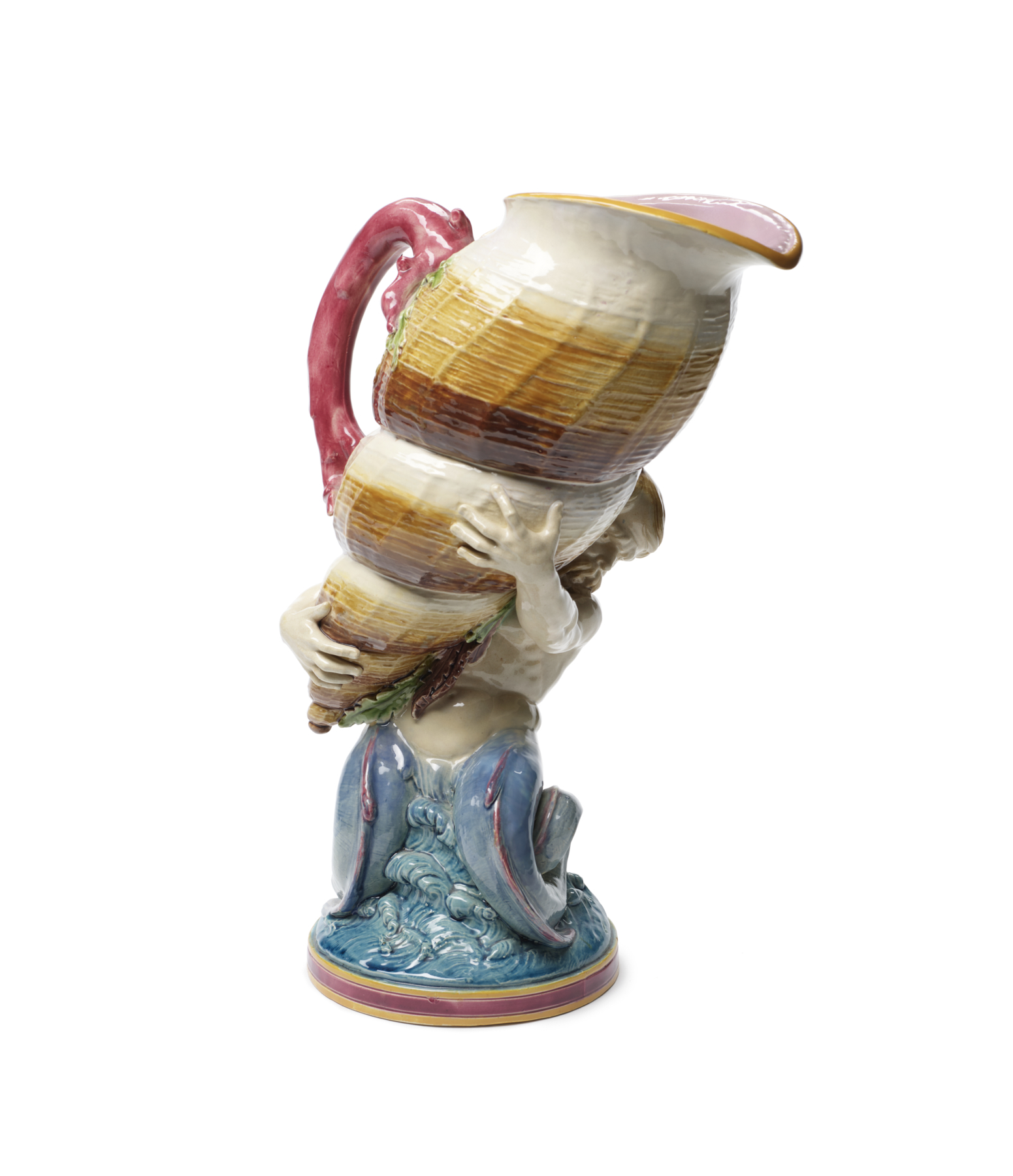
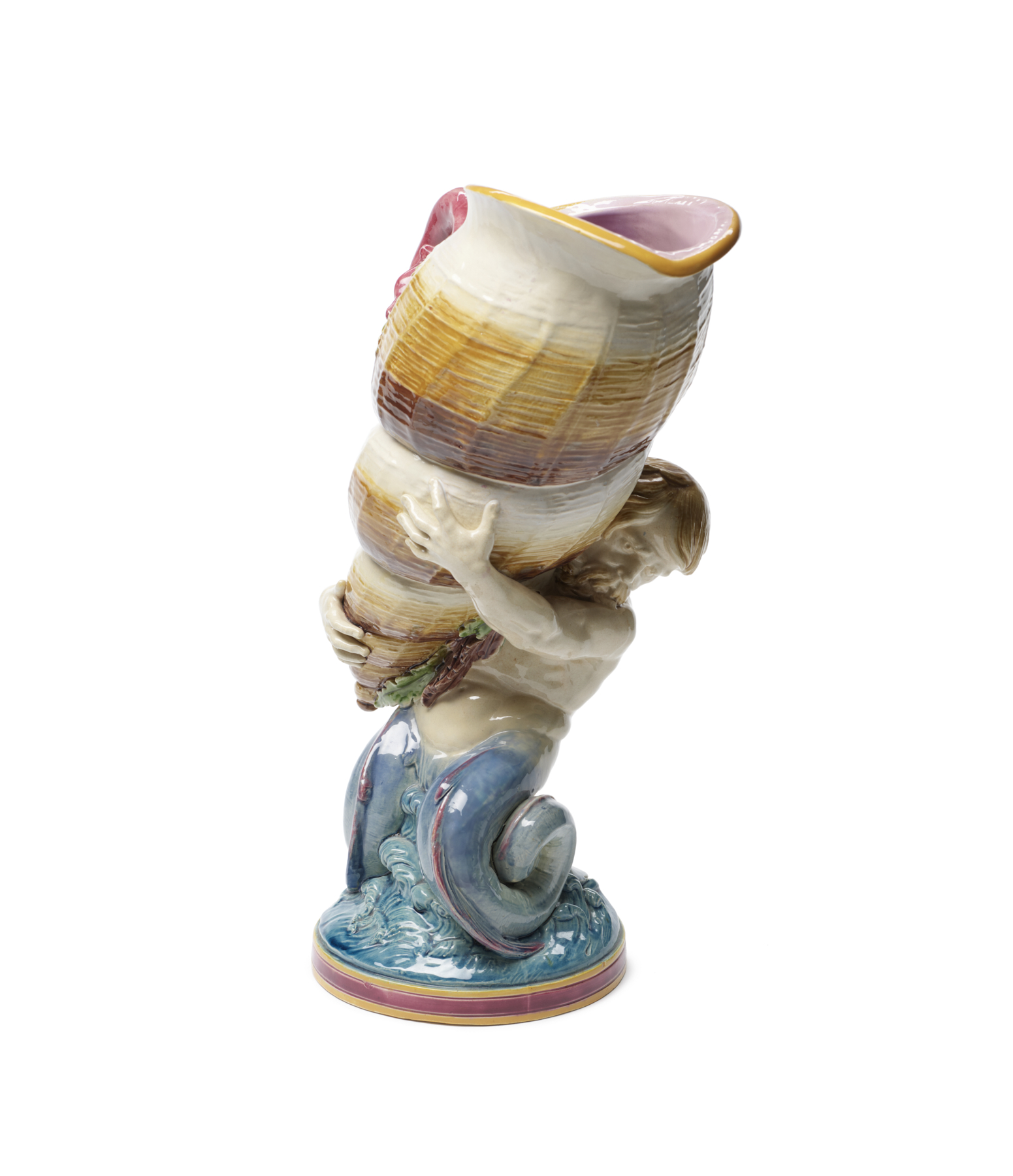
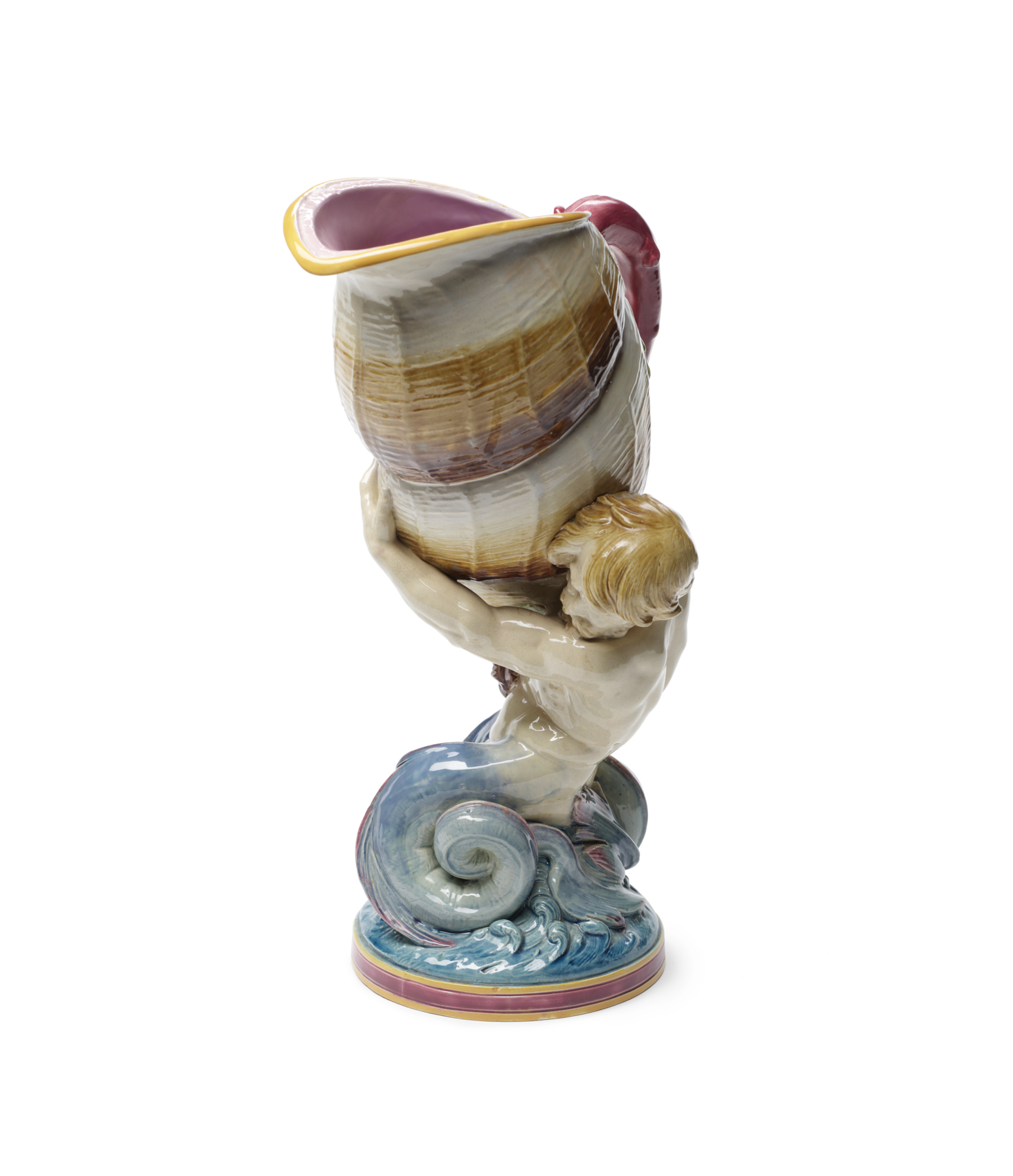
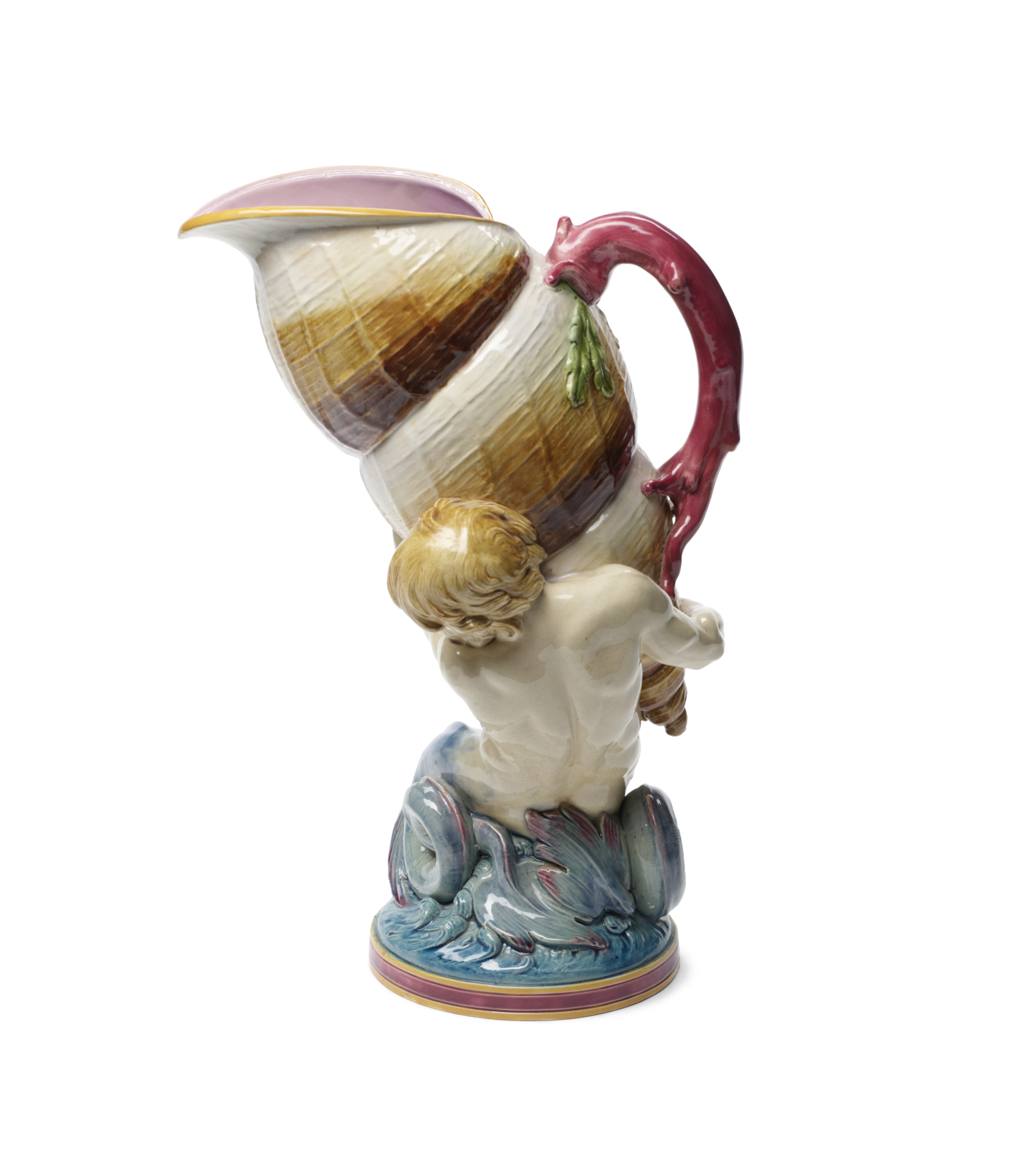
Triton Ewer, shape no. 1693
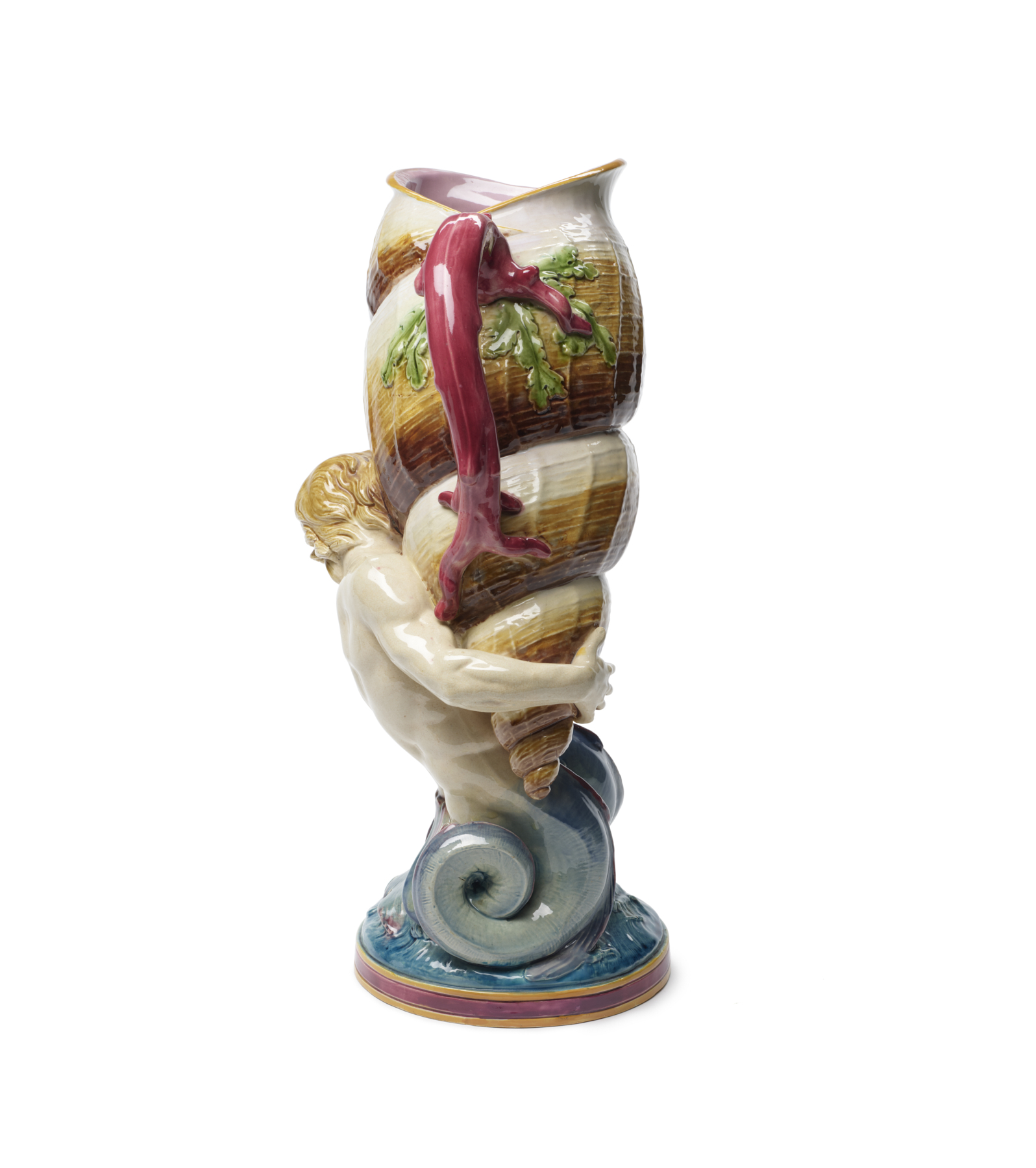
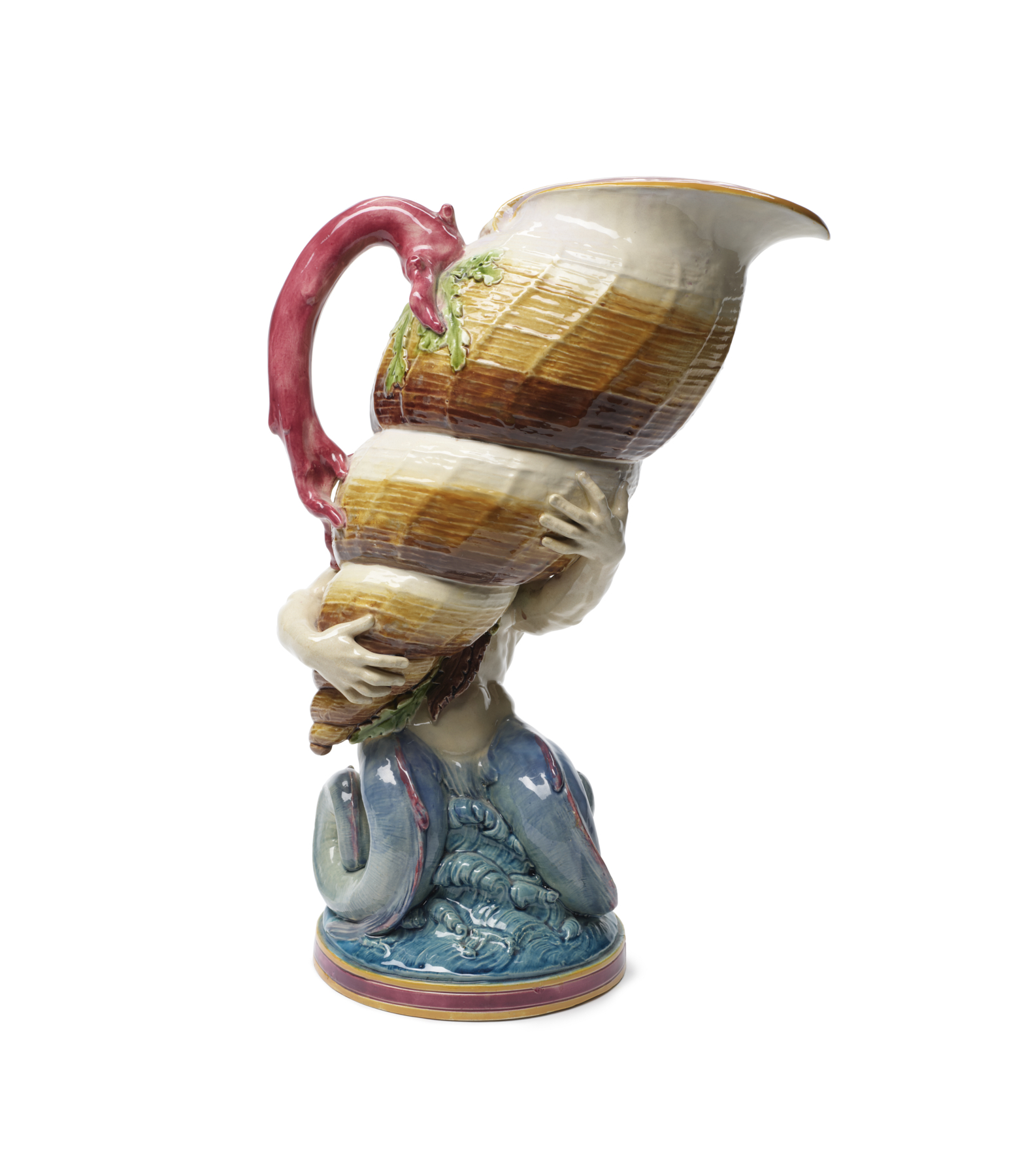
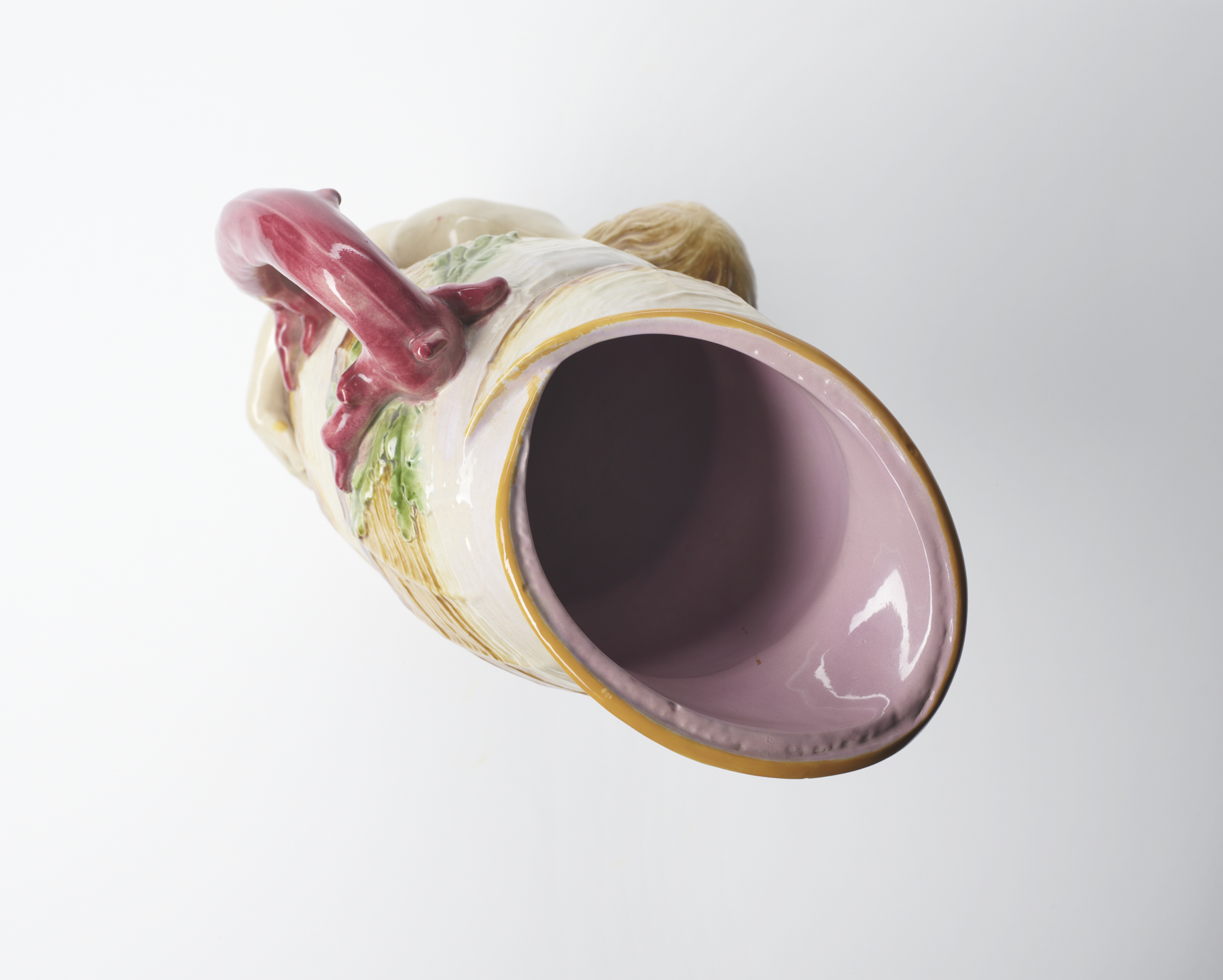
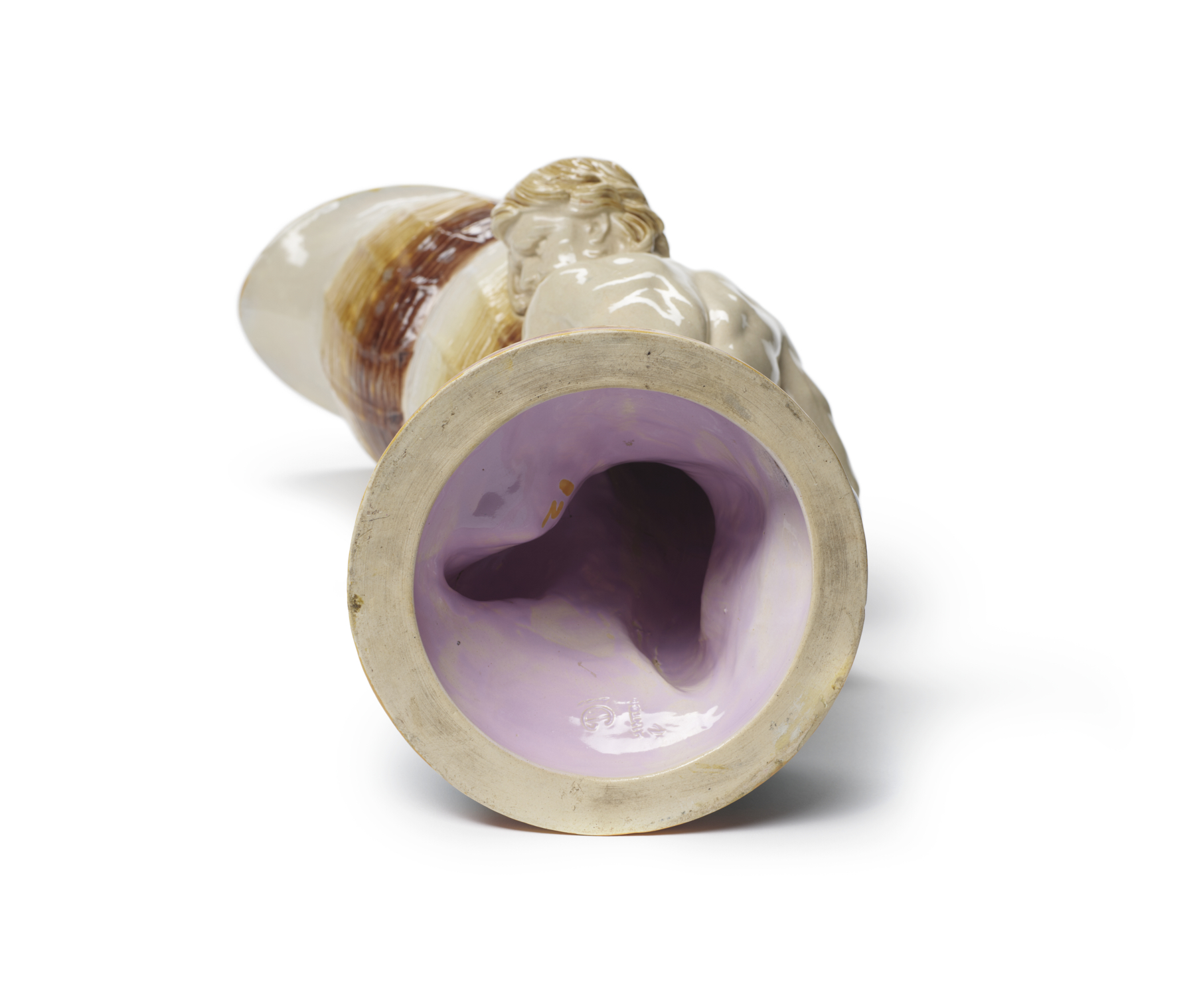
This ewer is formed as a male figure, with a nude human upper half and lower appendages formed as coiling fish’s tails, holding in his arms a large shell glazed in browns and off white. This shell forms the body of the ewer and its handle is modeled as a branch of coral glazed in a deep red color. The figure crouches on a round foot, the upper surface of which is formed as water raised into waves. This ewer is a wonderful example of leading British manufacturer Minton’s mastery of the creation of sculptural ceramic forms and sophisticated glazing that found its strongest expression in the firm’s signature product of the mid-19th century, majolica. This piece recalls Renaissance and baroque European antecedents and the revival of interest in these forms in the 19th century. In Renaissance Europe, shells and coral were prized objects collected for display in cabinets of curiosities—where they were often mounted in gold or gilded bronze. During the nineteenth century, in response to the widespread interest in conchology (the study and collection of shells), shells became popular domestic decorations. In its composition, Minton’s impressive Triton Ewer recalls Renaissance art but in a new dynamic form.
Inscription
Provenance
Provenance (from the French provenir, 'to come from/forth') is the chronology of the ownership, custody, or location of a historical object. Learn more about provenance at the Walters.
With Nick Boston Antiques, London, by 1998; purchased by Deborah and Philip English, Baltimore, 1998; given to the Walters Art Museum, 2024.
Measurements
H: 14 1/4 × Diam: 9 in. (36.2 × 22.9 cm)
Credit Line
Gift of Deborah and Philip English, 2024
Location in Museum
Not on view
Accession Number
In libraries, galleries, museums, and archives, an accession number is a unique identifier assigned to each object in the collection.
In libraries, galleries, museums, and archives, an accession number is a unique identifier assigned to each object in the collection.
48.2940