
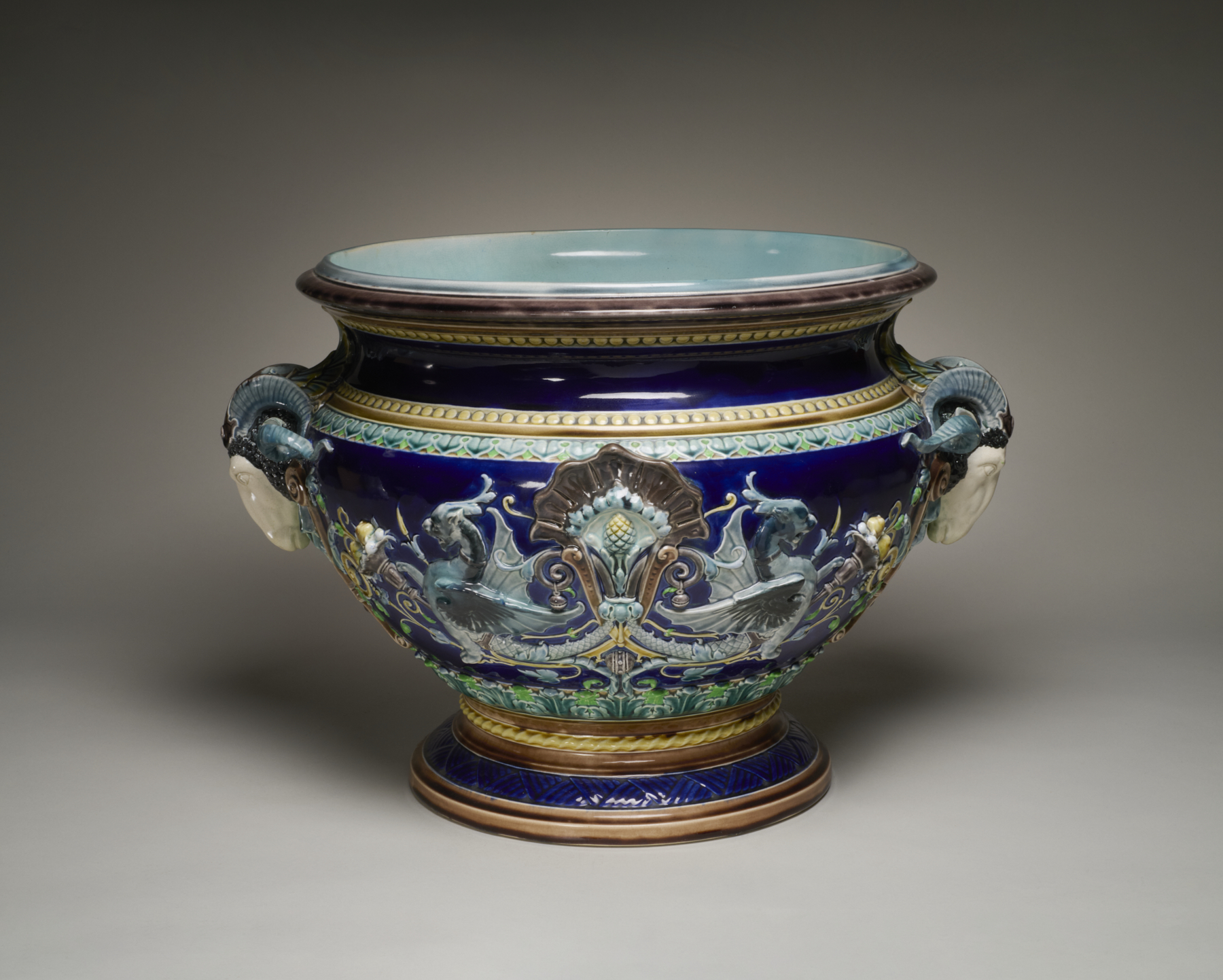
 Creative Commons License
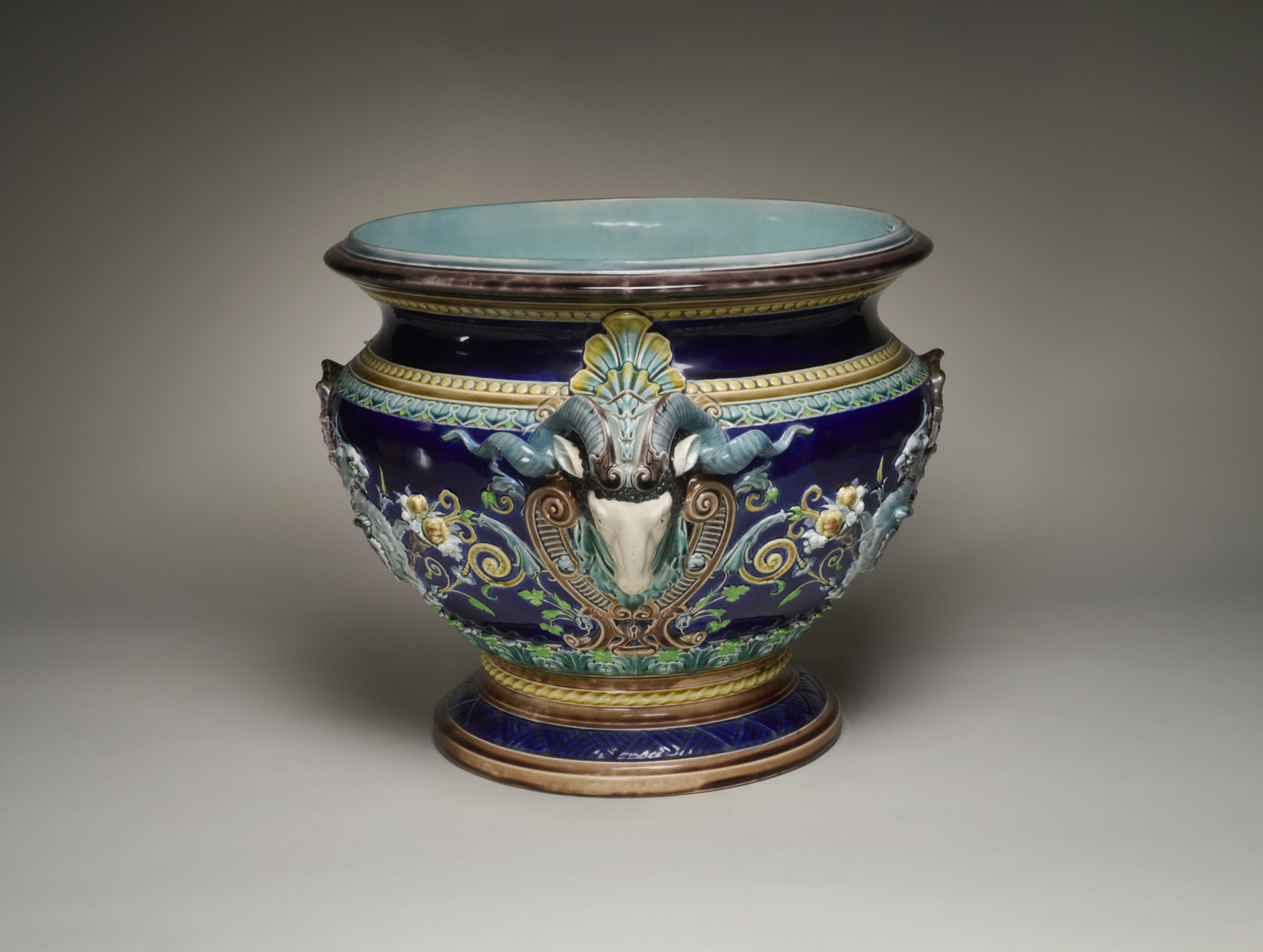 Creative Commons License
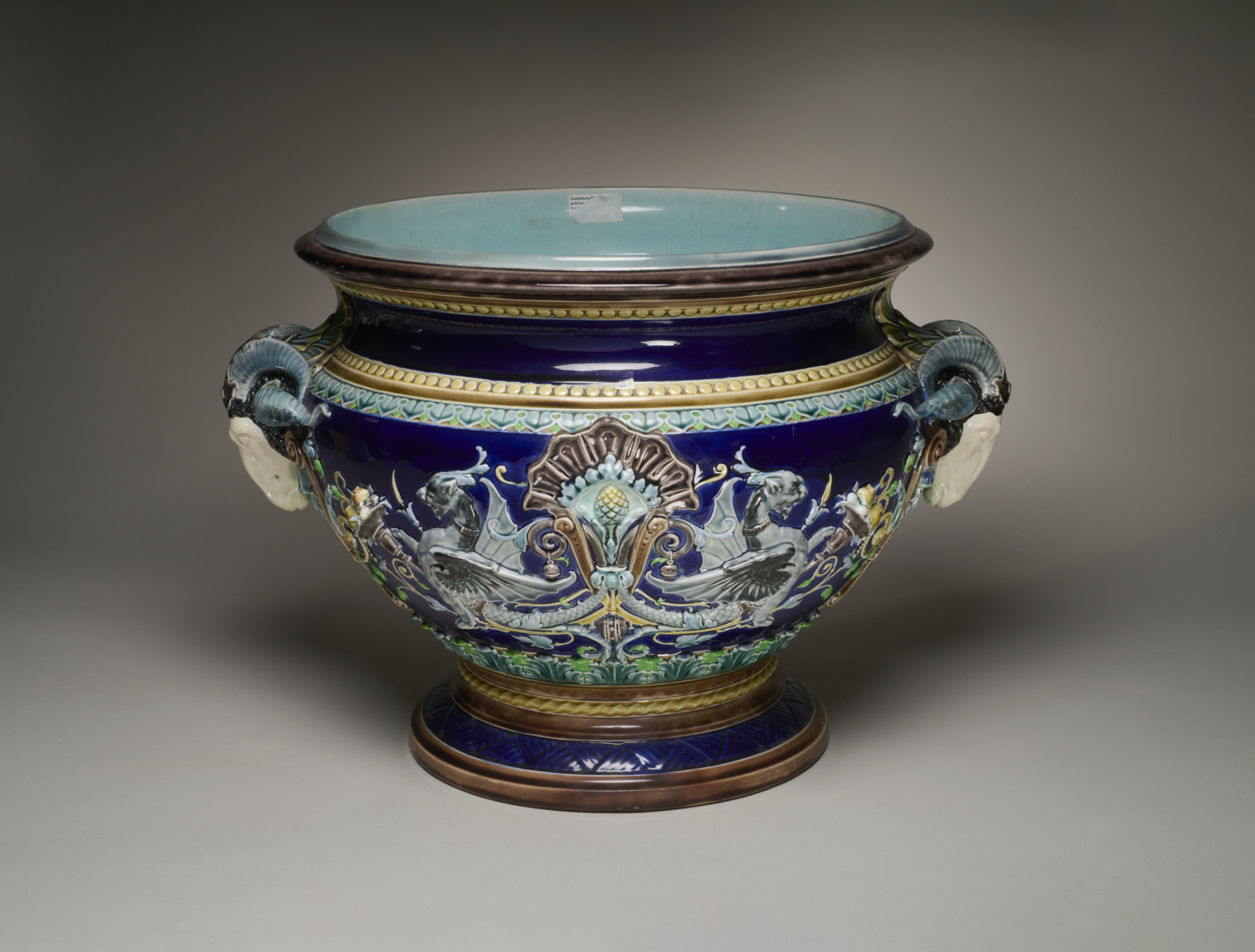 Creative Commons License
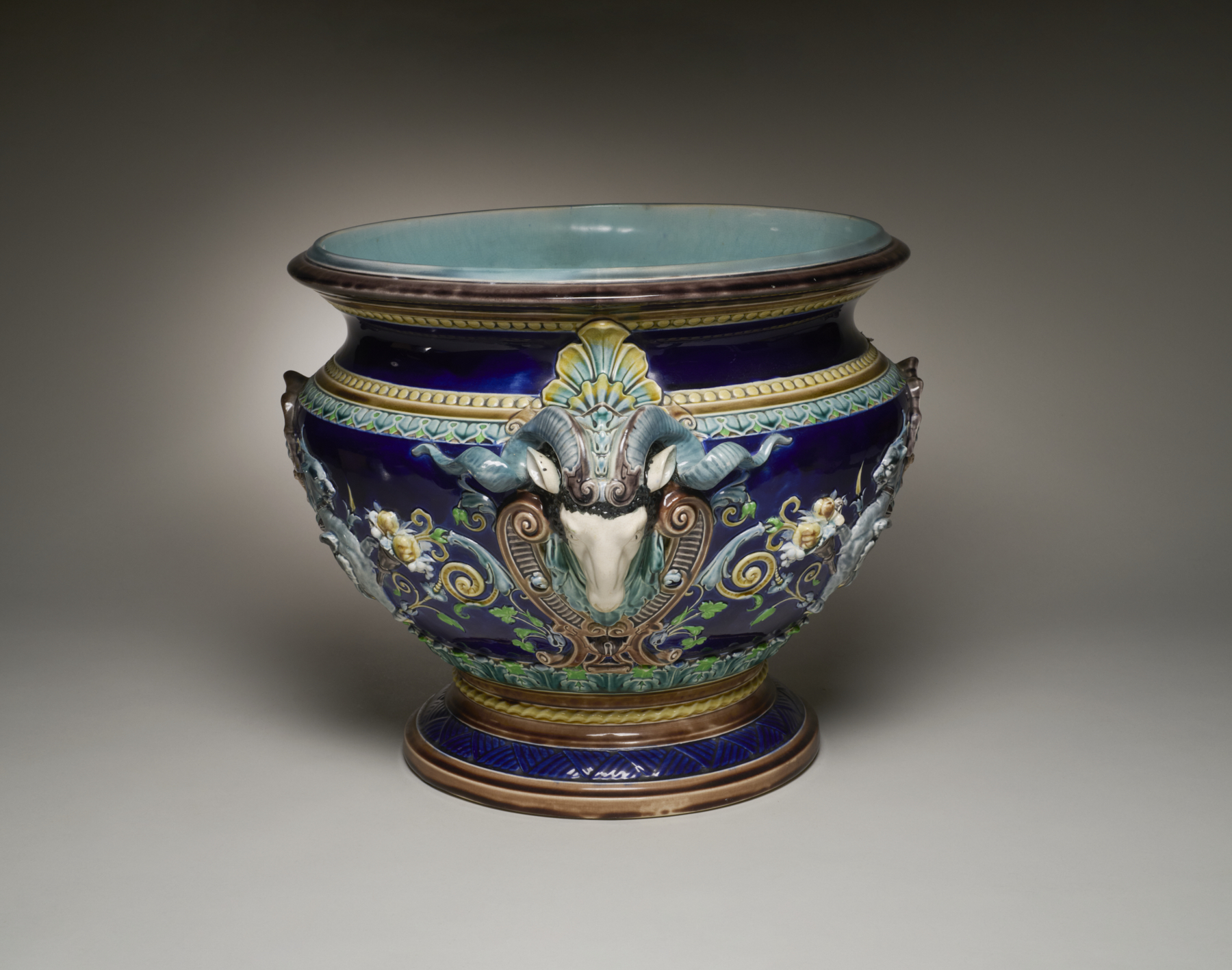 Creative Commons License
 Creative Commons License
 Creative Commons License


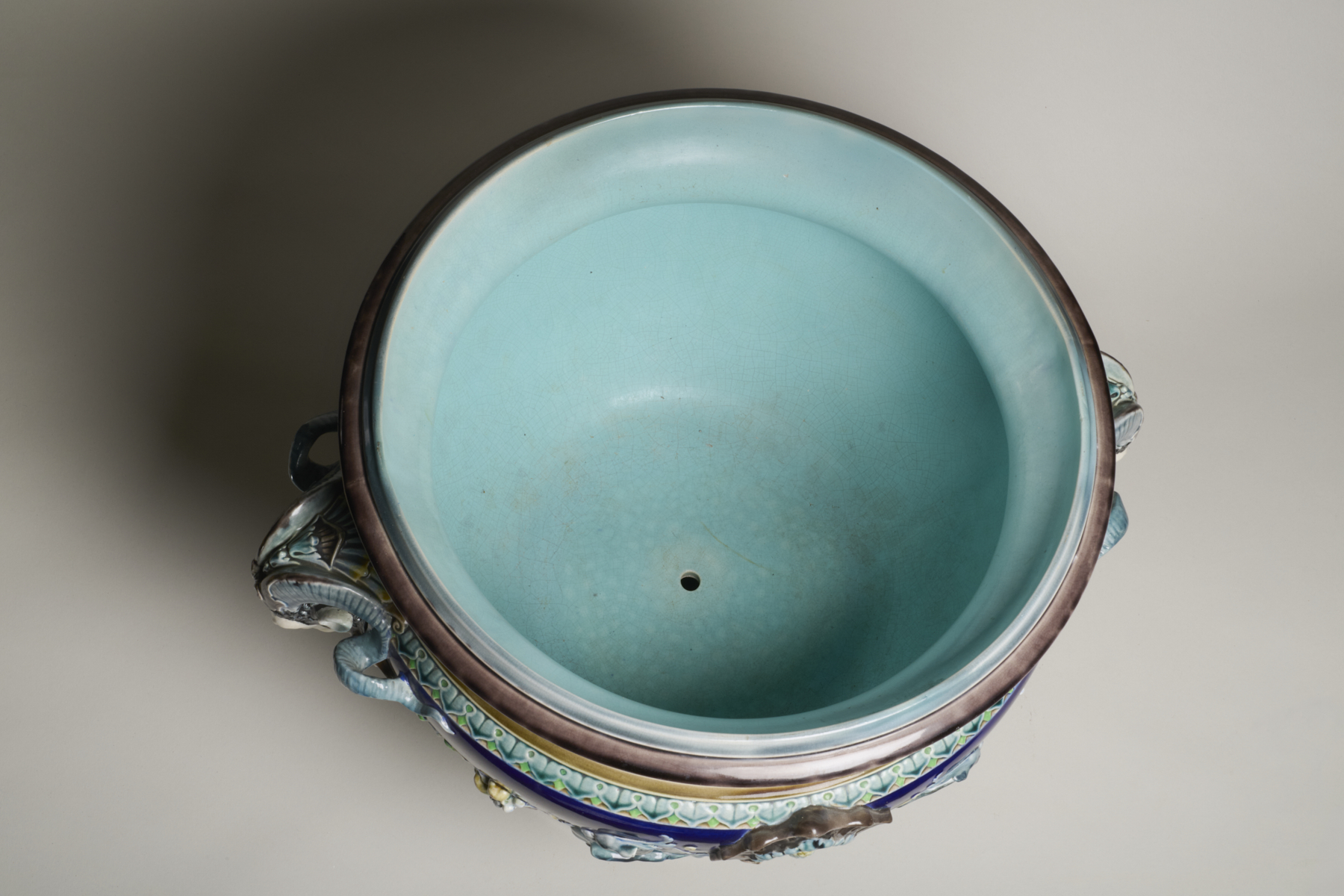
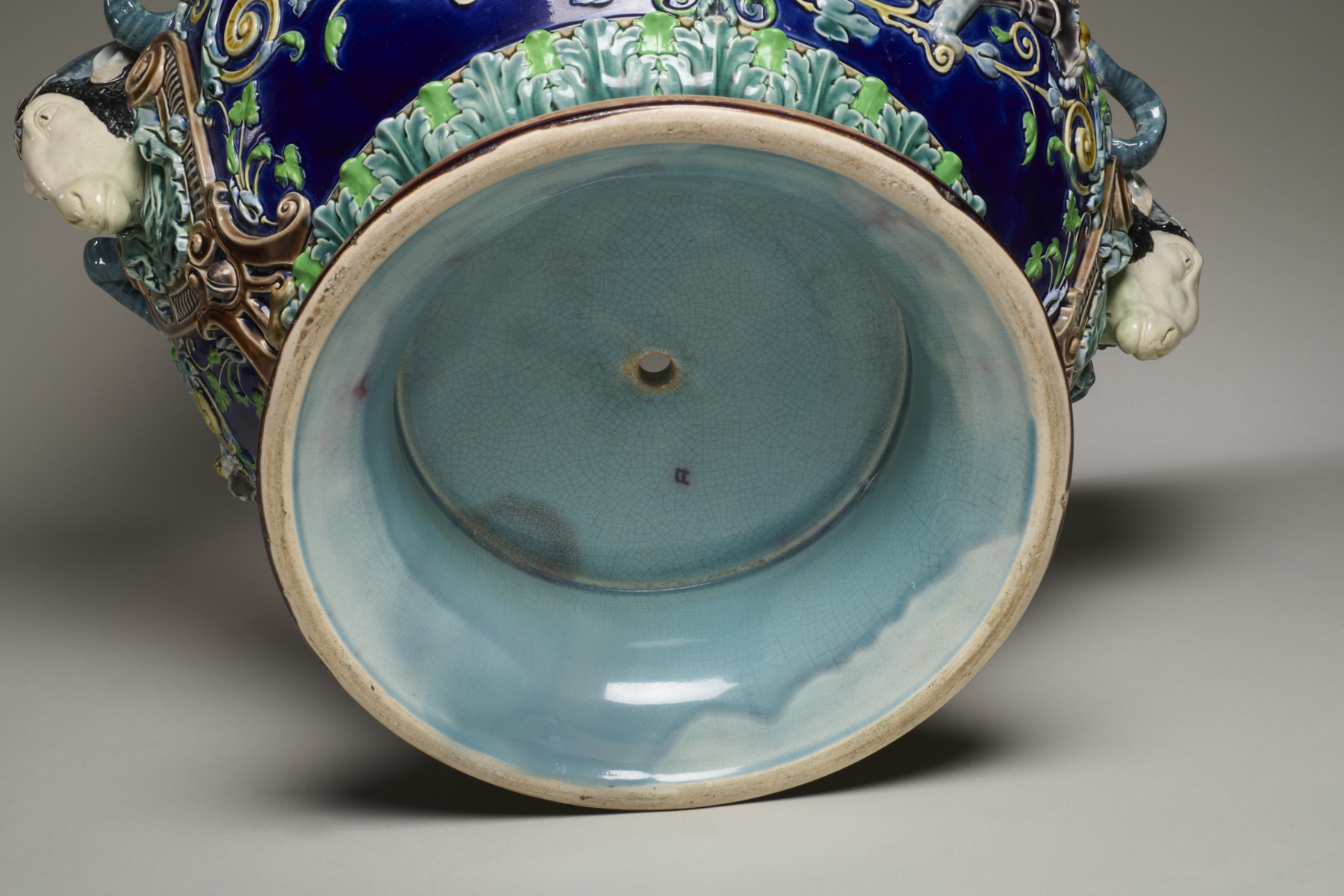
Jardiniere
In 1825, a ceramics factory was founded on the site of an existing brickworks in Gustavsberg, just to the east of Stockholm, Sweden. The location and local resources proved less than ideal for the production of fine ceramics, and the company initially made earthenware pottery with German clay, later manufacturing table wares and decorative figures in bone china with clay imported from England. In 1869, the firm started to make majolica and, alongside Rörstrand, became one of the two preeminent Swedish manufacturers of the ware. Both companies exhibited and exported their products internationally, for example Gustavsberg and Rörstrand participated in the 1876 Centennial Exhibition in Philadelphia. They were praised for their contributions in the book “The Masterpieces of the Centennial International Exhibition,” which proclaimed that, “Among the other European exhibitors, Sweden is worthy of particular mention for an excellent display of porcelain and pottery of various kinds, showing evidence of energy, enterprise, and skill fully adequate to make her independent of other nations in this industry.”
Gustavsberg models often imitate pieces made by other manufacturers, so much so that the firm was criticized for its lack of originality at the London International Exhibition of 1871. The influence of pieces made in the Renaissance Revival style by British companies like Copeland and Minton, as well as German manufacturers like Hugo Lonitz, are evident in the design of this jardinière. However, this model does not appear to be a direct copy of any one piece, but instead an amalgamation of elements and motifs combined from various sources.
Inscription
Provenance
Provenance (from the French provenir, 'to come from/forth') is the chronology of the ownership, custody, or location of a historical object. Learn more about provenance at the Walters.
Bearne’s, Exeter, United Kingdom, “Furniture Concurrently with Silver,” 8 April 2008, lot 332. Strawser Auction Group, Wolcottville, Indiana, “Majolica Auction,” 28 September 2019, lot 3391; purchased by Deborah and Philip English, Baltimore, 2019; given to the Walters Art Museum, 2025.
Measurements
H. 13 1/2 x W. 20 x D. 16 3/8 in. (34 x 50.8 x 41.5 cm)
Credit Line
Gift of Deborah and Philip English, 2025
Location in Museum
Not on view
Accession Number
In libraries, galleries, museums, and archives, an accession number is a unique identifier assigned to each object in the collection.
In libraries, galleries, museums, and archives, an accession number is a unique identifier assigned to each object in the collection.
48.2943