
 Creative Commons License
 Creative Commons License
 Creative Commons License
 Creative Commons License


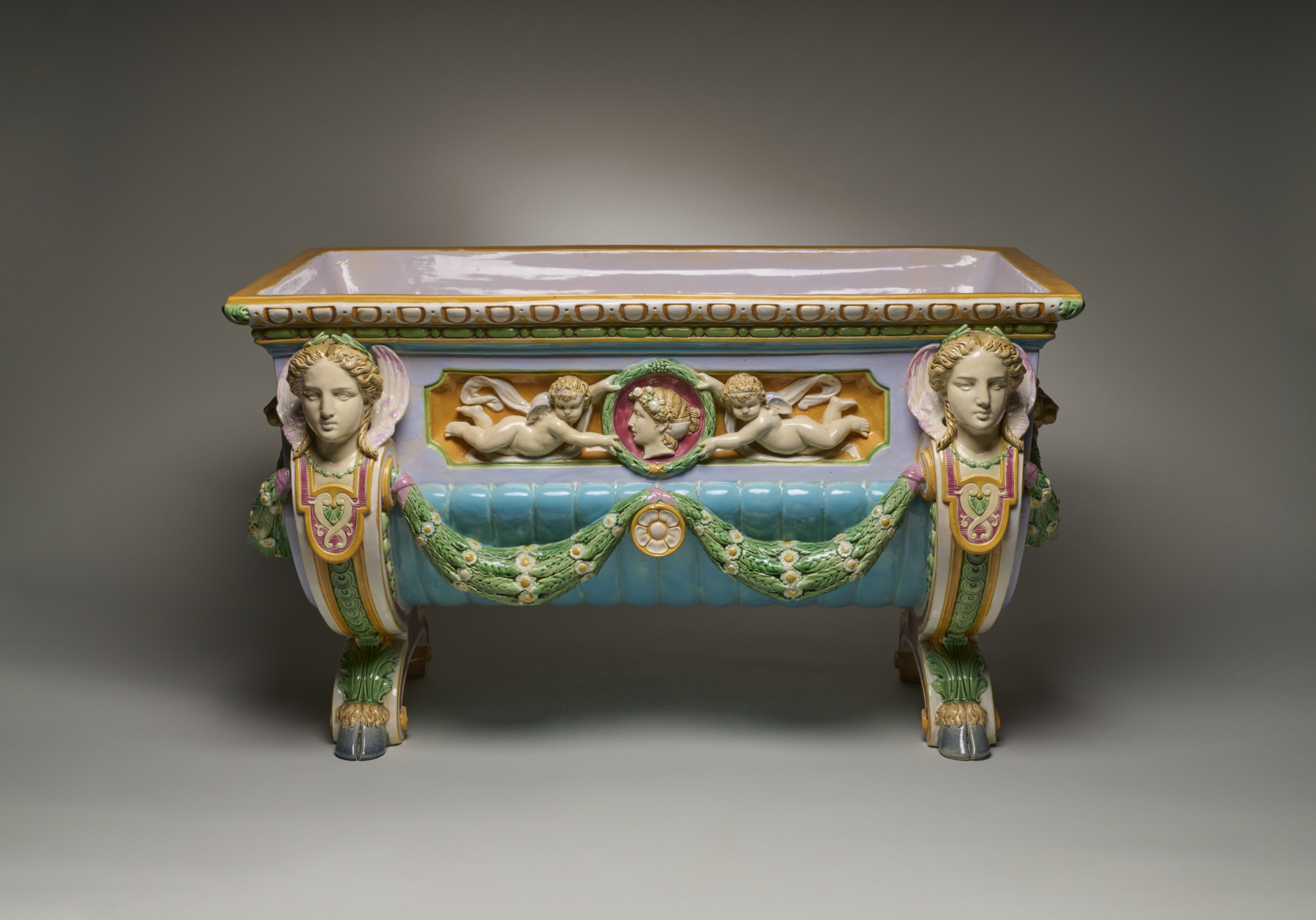
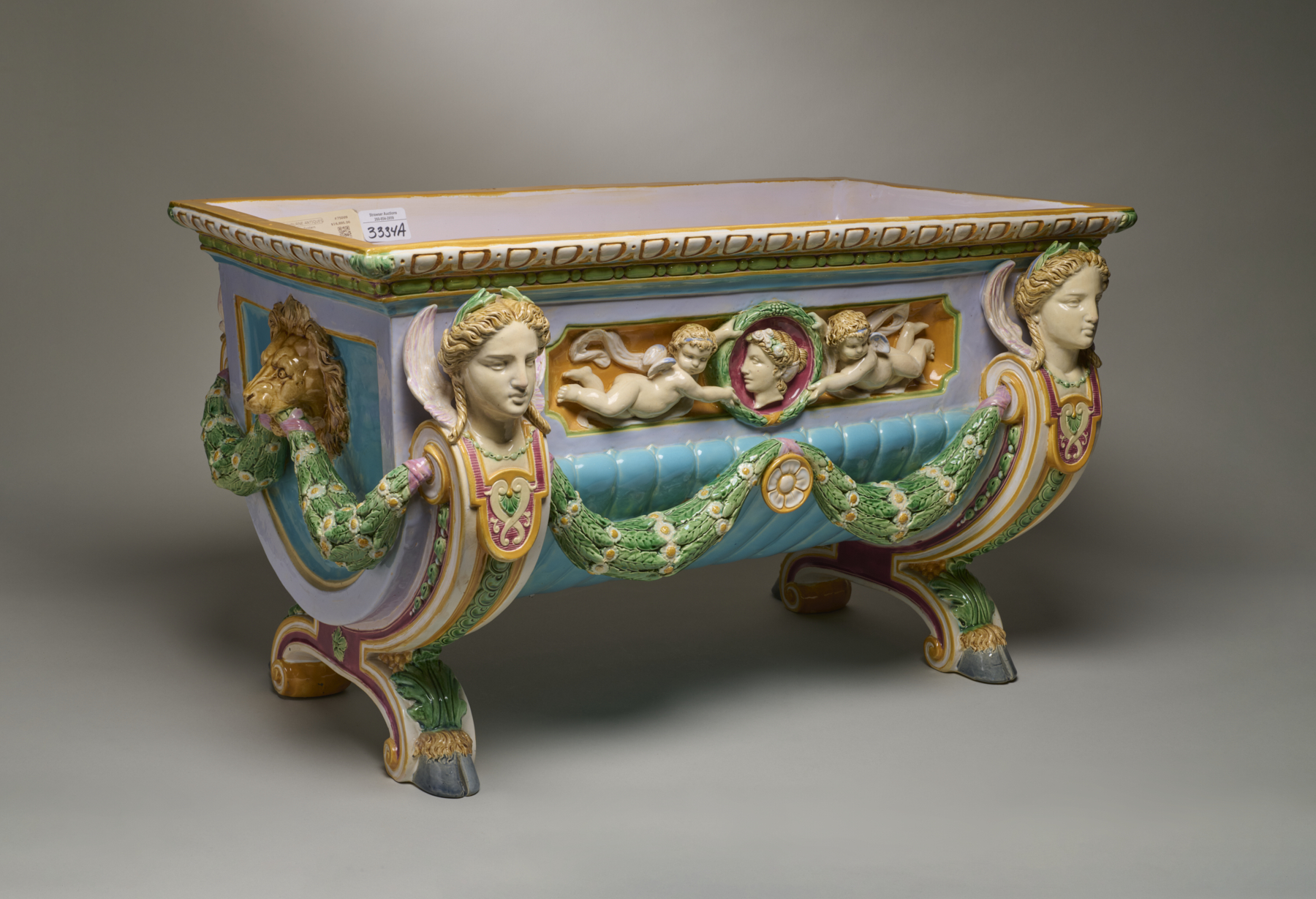
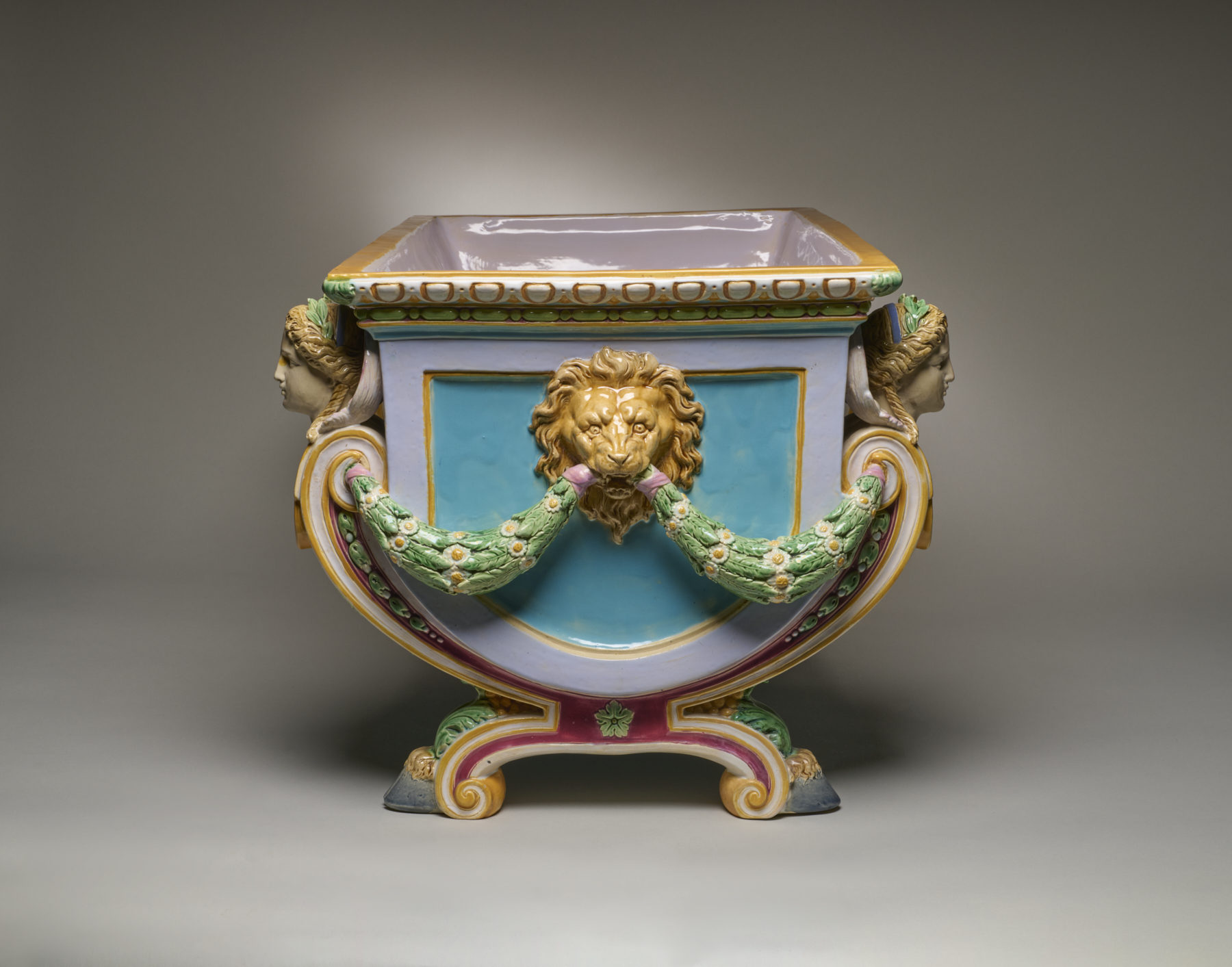
Jardiniere, shape no. 1220
By the mid-1860s, when this model was designed, Minton & Co. had truly realized the full potential of one of its chief products and successes of the period, majolica, as can be seen here. In its dynamic modeling and intricate detail this jardiniere is also a wonderful example of Minton’s mastery of Renaissance Revival style, which drew upon motifs often first developed in classical Greece and Rome and their subsequent revival and elaboration in European Renaissance art and architecture. While unmarked, this jardiniere is undoubtedly by Minton as it bears the attention to detail, fine modeling, and skillful application of a range of colorful majolica glazes characteristic to the work of this leading British manufacturer at its best. In addition, the form is documented in company records preserved today in the Minton Archive (Stoke-on-Trent City Archives). Indeed, other documents in the Minton Archive record the firm exhibited this model in majolica in its display at the 1873 international exhibition held in Vienna, Austria.
Inscription
Provenance
Provenance (from the French provenir, 'to come from/forth') is the chronology of the ownership, custody, or location of a historical object. Learn more about provenance at the Walters.
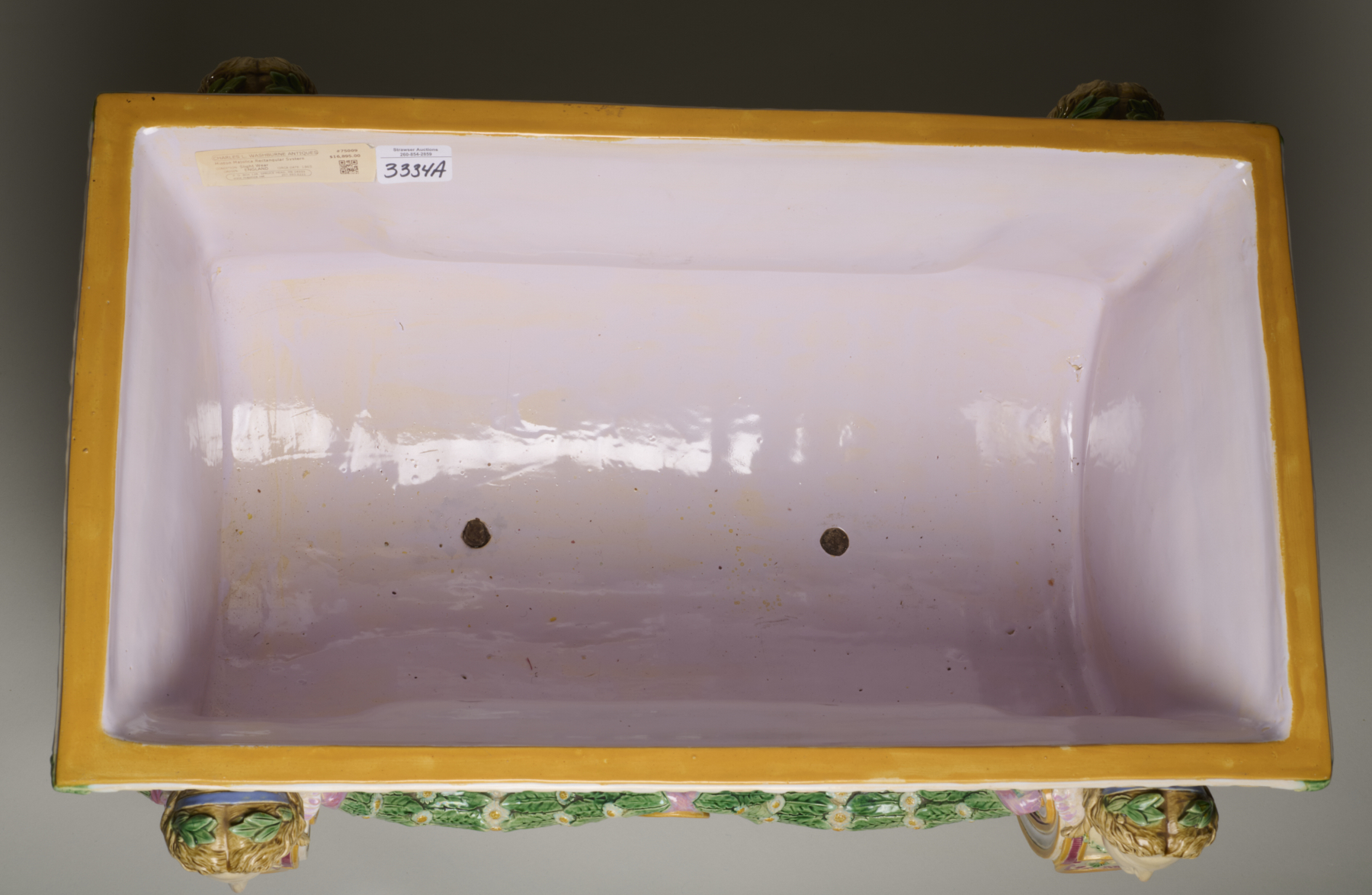
With Charles L. Washburne Antiques, Spruce Head, Maine, by 2019; sale, Strawser Auction Group, Wolcottville, Indiana, 25 May 2019, lot 3334A; purchased by Deborah and Philip English, Baltimore, 2019; given to the Walters Art Museum, 2025.
Measurements
H. 14 1/4 x W. 24 1/2 x D. 17 in. (36.3 x 62.5 x 43.2 cm)
Credit Line
Gift of Deborah and Philip English, 2025
Location in Museum
Not on view
Accession Number
In libraries, galleries, museums, and archives, an accession number is a unique identifier assigned to each object in the collection.
In libraries, galleries, museums, and archives, an accession number is a unique identifier assigned to each object in the collection.
48.2944