
 Creative Commons License
 Creative Commons License
 Creative Commons License
 Creative Commons License
 Creative Commons License
 Creative Commons License
 Creative Commons License


Clock
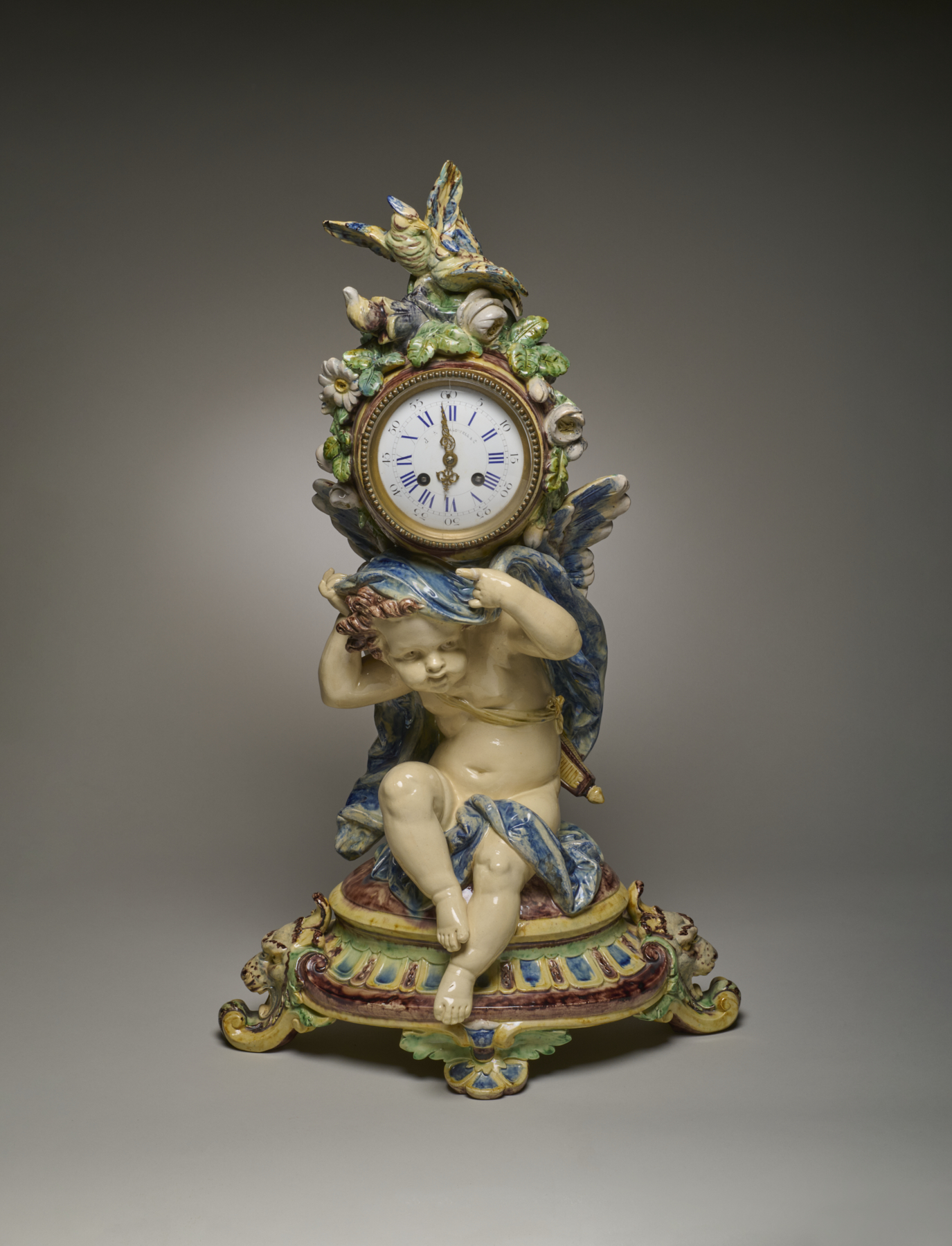
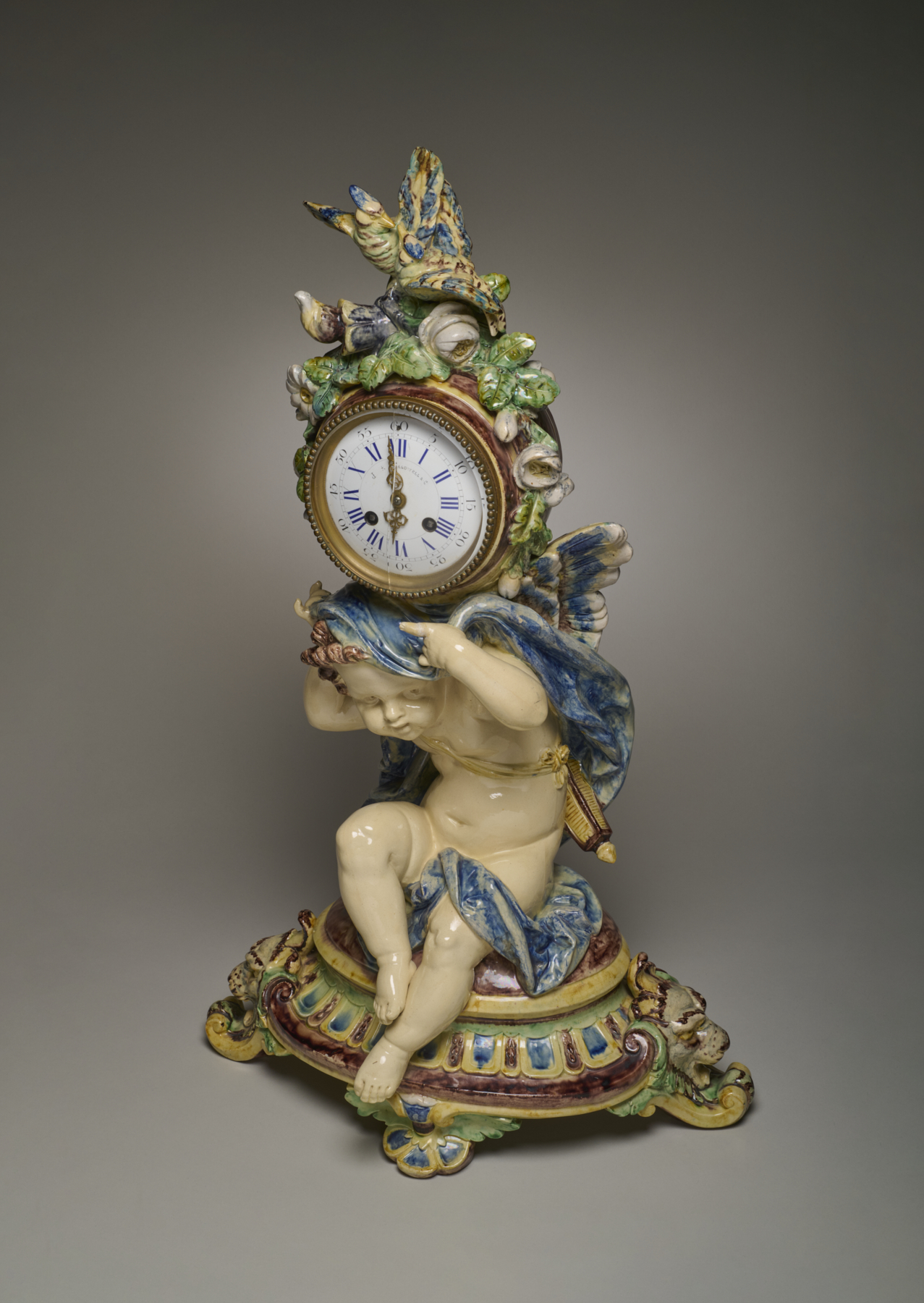
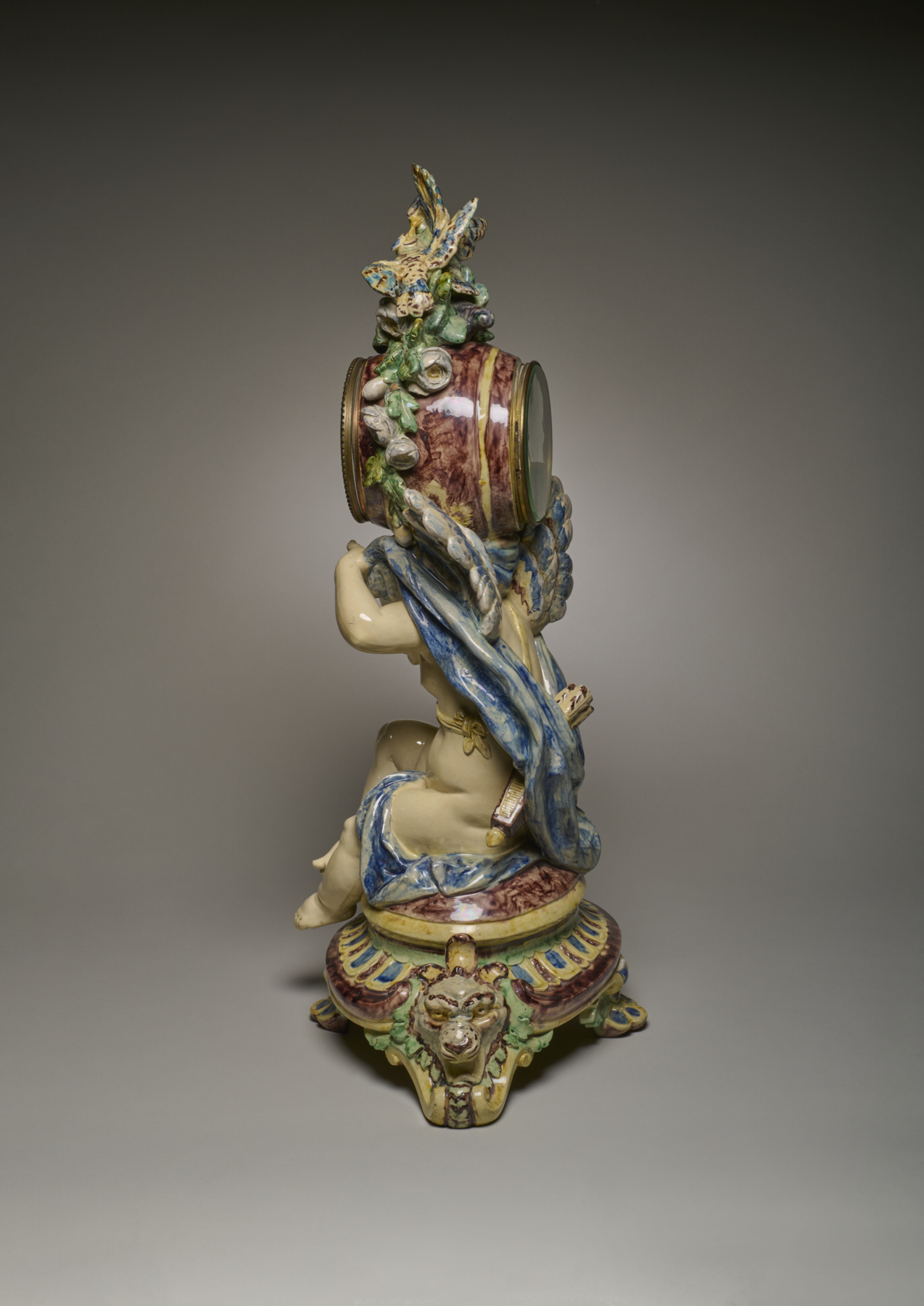
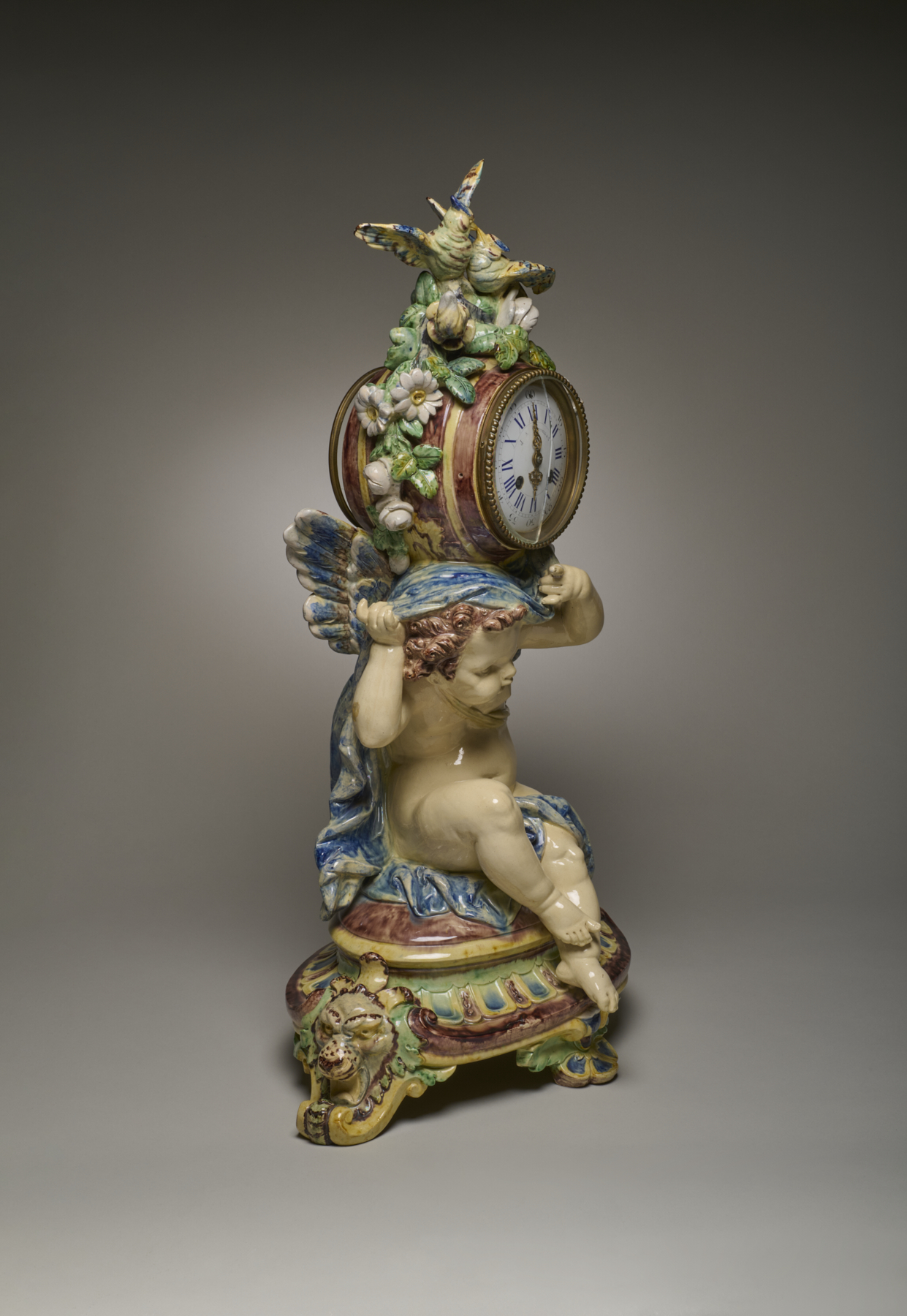
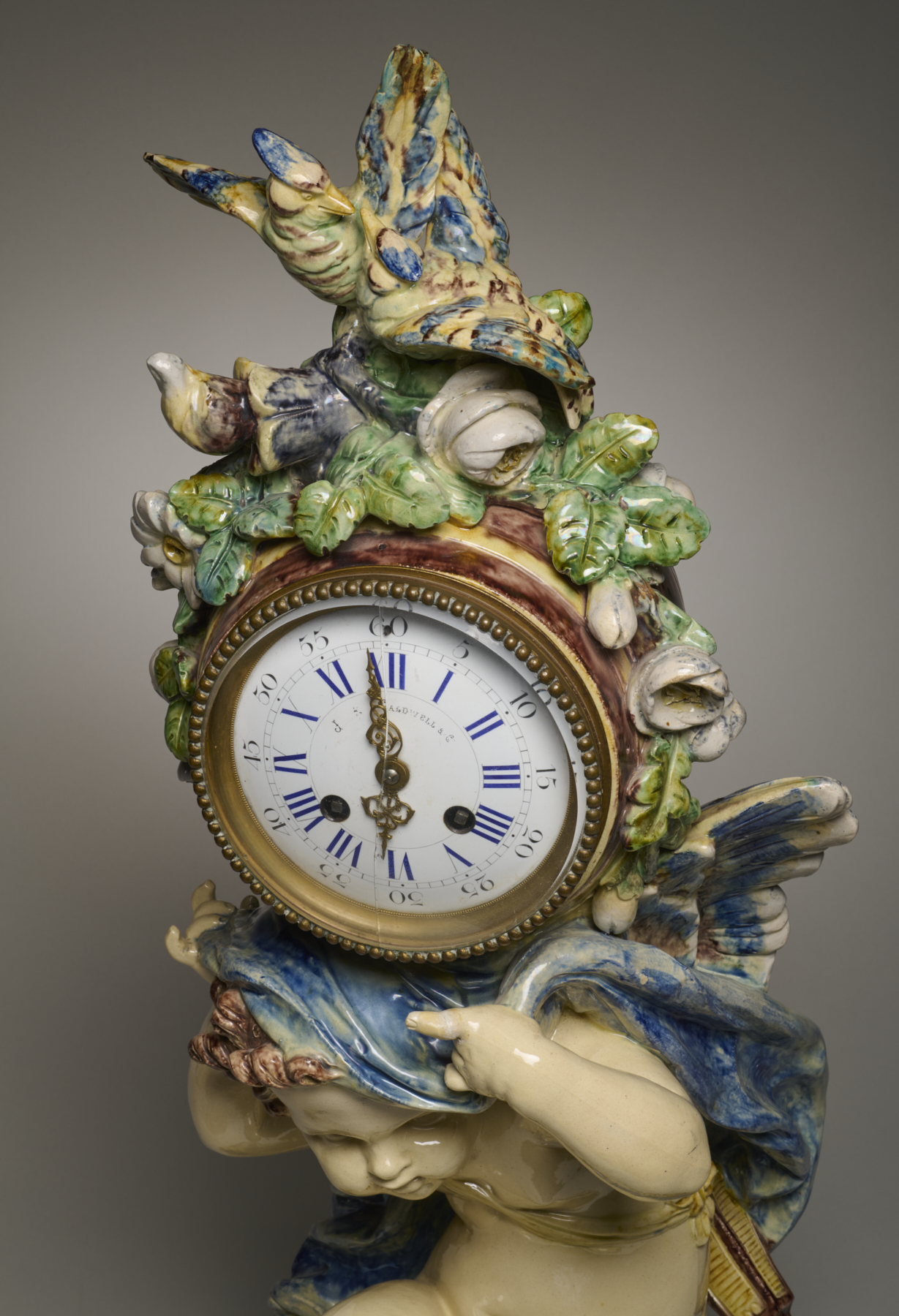
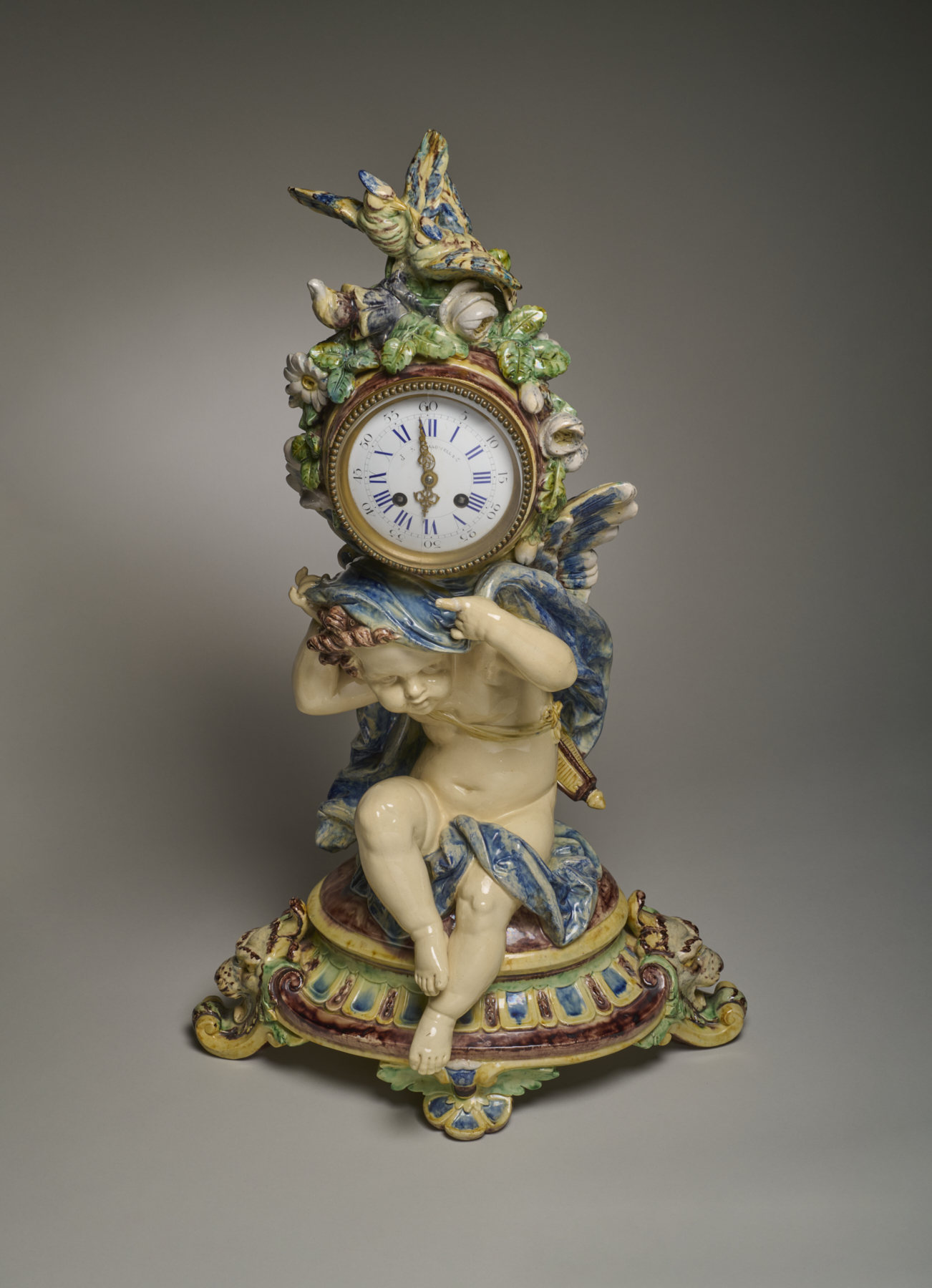
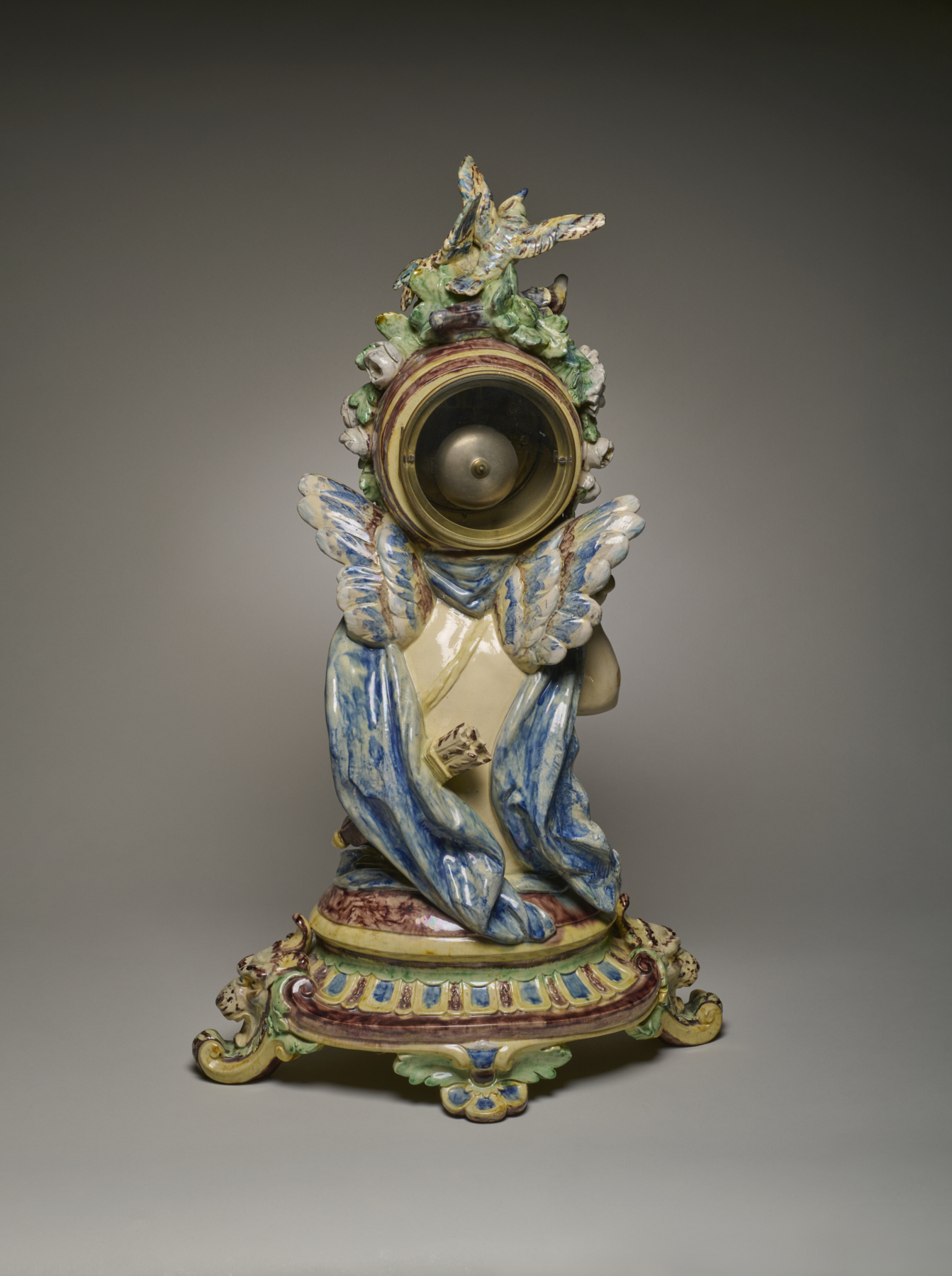
The case for this clock was likely made in the Parisian factory of Thomas Victor Sergent (1834–1906). Sergent, who frequently described himself as a “fabricant de faïences artistiques” or manufacturer of artistic earthenware, was celebrated for his craft during his lifetime. While his ceramics are still sought after today, he has been little researched and his full body work is not well-known. Sergent seems to have spent his childhood in Brittany, in the northwest of France. He was born in the small town of Iffendic but only two years later he is recorded living with his parents in Quimper, a coastal city known for its long history as well as its tin-glazed earthenware industry. At the age of 17 he joined the French army, completing his service in 1866 or 1867. Shortly after he left the army, Sergent moved to Paris, where he initially worked as a bookseller. In 1867 he married Marguerite Pauline Ponée (1849–1919). Marguerite Pauline's father Claude was a potter and her uncle and cousin, Victor and Achille Barbizet, were also important ceramicists in this period. With assistance from his wife and her family, Thomas Sergent soon embarked on a career as a ceramic manufacturer, a path he would follow until the early 1890s. His Paris-based company regularly participated in regional and international exhibitions, including the world’s fairs in Vienna in 1873, London in 1874, Philadelphia in 1876, and Paris in 1878, likely in part to gain greater recognition and sales, especially on an international scale. While Sergent’s firm is mostly known for making pieces in the so-called “Palissy” revival style—dining and decorative wares encrusted with life-like renderings of reptiles, fish, and other aquatic creatures—the firm also created a range of other products. Some of these are Renaissance or Rococo Revival in style and are characterized by the sensitive modeling and the skillful use of muted glazing evident in this clock. Other Sergent models, which unlike this clock bear the firm’s marks, feature similar motifs of birds with outstretched wings, further supporting the attribution to Sergent.
In the 19th century mantel and wall clocks became increasingly popular in Europe and the United States and ceramic manufacturers created a range of ornamental models that could house clockwork mechanisms. Prominently displayed on the face of this clock is “J. E. Caldwell & Co.,” signaling that the clock was made for this Philadelphia-based retailer, importer, and manufacturer of jewelry, silver, and other luxury goods. Born in Poughkeepsie, New York, James Emmot Caldwell (1813–1881) trained as a silversmith before serving a second apprenticeship to a New York City watchmaker. In 1836, Caldwell moved to Philadelphia, where he worked for other firms as a jewelry importer and watchmaker before opening the first J. E. Caldwell & Co. store at 163 Chestnut Street in 1839. By 1869 the firm was operating at 902 Chestnut Street and advertised “J. E. Caldwell & Co., Jewellers, have had made especially to their order in Europe and in America, an entirely NEW STOCK of CHOICE GOODS.” These goods included, with top billing, a selection of “Very Fine Paris Mantle Clocks (every movement with the new improvements) and New Side Ornaments to Match.” In 1876, Caldwell & Co. exhibited at the Centennial Exposition in Philadelphia and were praised for their display of Philadelphia-made silver. The company kept up to date with the latest international trends in both jewelry and ceramics. On November 13, 1876, Caldwell & Co. ran an advertisement for “Stone Cameos! just received, the gold medal cameos exhibited at the Exposition of the Palace d’Industrie Paris, 1876.” While Caldwell & Co. retained a reputation for its fine jewelry and especially silver, the company appears to have developed a specialty in imported clocks as well as European ceramics. In addition to purchasing choice examples from the pottery and porcelain displays at the Paris Exposition Universelle in 1878, the company issued Jennie J. Young’s review of the ceramic exhibits, originally published in Lippincott’s Magazine, in a pamphlet available to potential patrons both at the Caldwell store and by mail. The firm continued to advertise a wide selection of ceramics and clocks over the next several years and, indeed, clocks bearing the Cadwell & Co. trademark which were made by the French manufacturers Longwy, Keller & Guérin, and Gien, as well as the German company Royal Bonn and the Hungarian firm Zsolnay have appeared on the secondary market in recent years.
Inscription
Provenance
Provenance (from the French provenir, 'to come from/forth') is the chronology of the ownership, custody, or location of a historical object. Learn more about provenance at the Walters.
Collection of Deborah and Philip English, Baltimore, by 2016 [date and mode of acquisition unknown]; given to the Walters Art Museum, 2025.
Measurements
H. 25 7/8 x W. 15 7/8 x D. 11 in. (56 x 40.3 x 28 cm)
Credit Line
Gift of Deborah and Philip English, 2025
Location in Museum
Not on view
Accession Number
In libraries, galleries, museums, and archives, an accession number is a unique identifier assigned to each object in the collection.
In libraries, galleries, museums, and archives, an accession number is a unique identifier assigned to each object in the collection.
48.2946