
 Creative Commons License
 Creative Commons License
 Creative Commons License
 Creative Commons License
 Creative Commons License


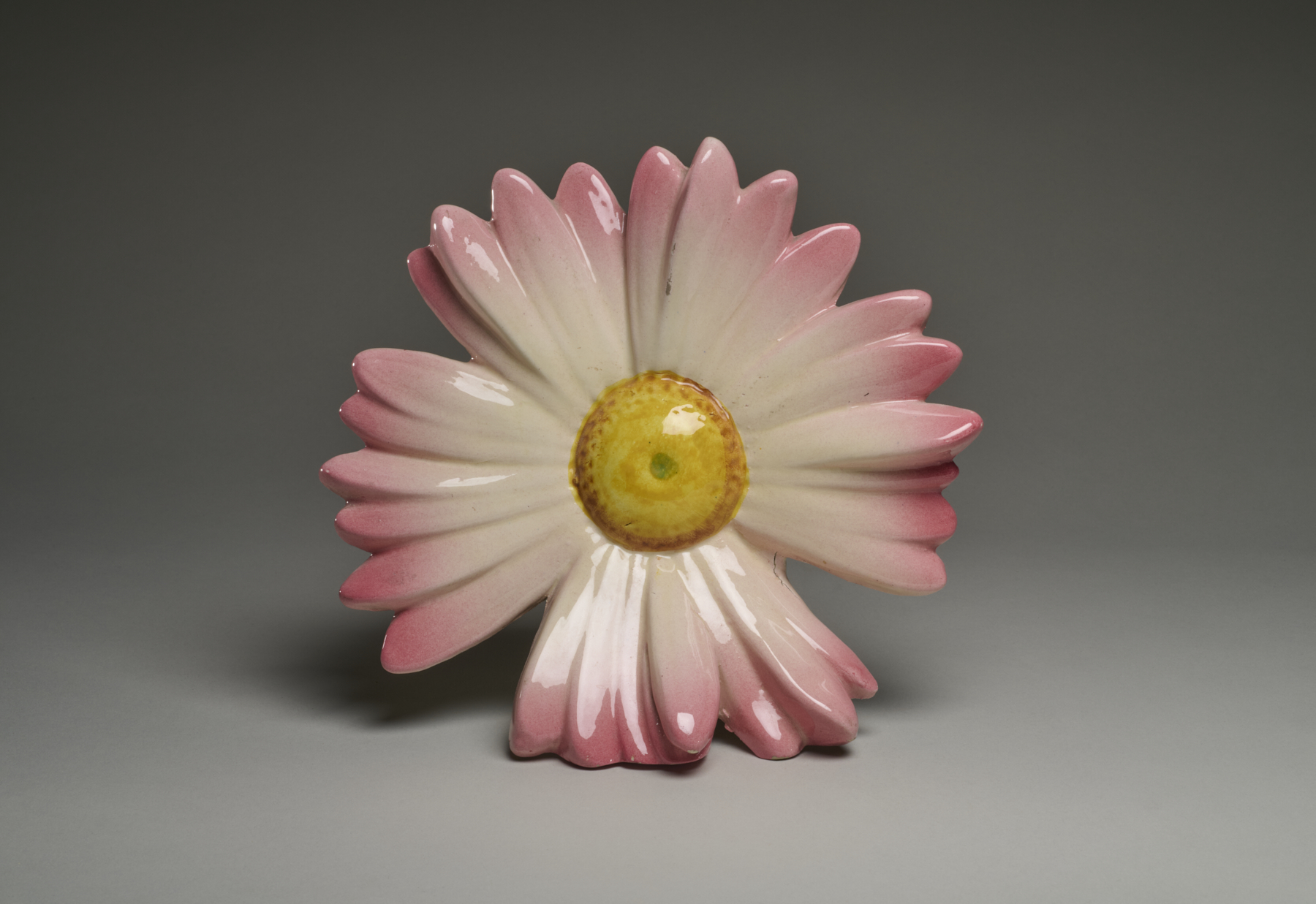
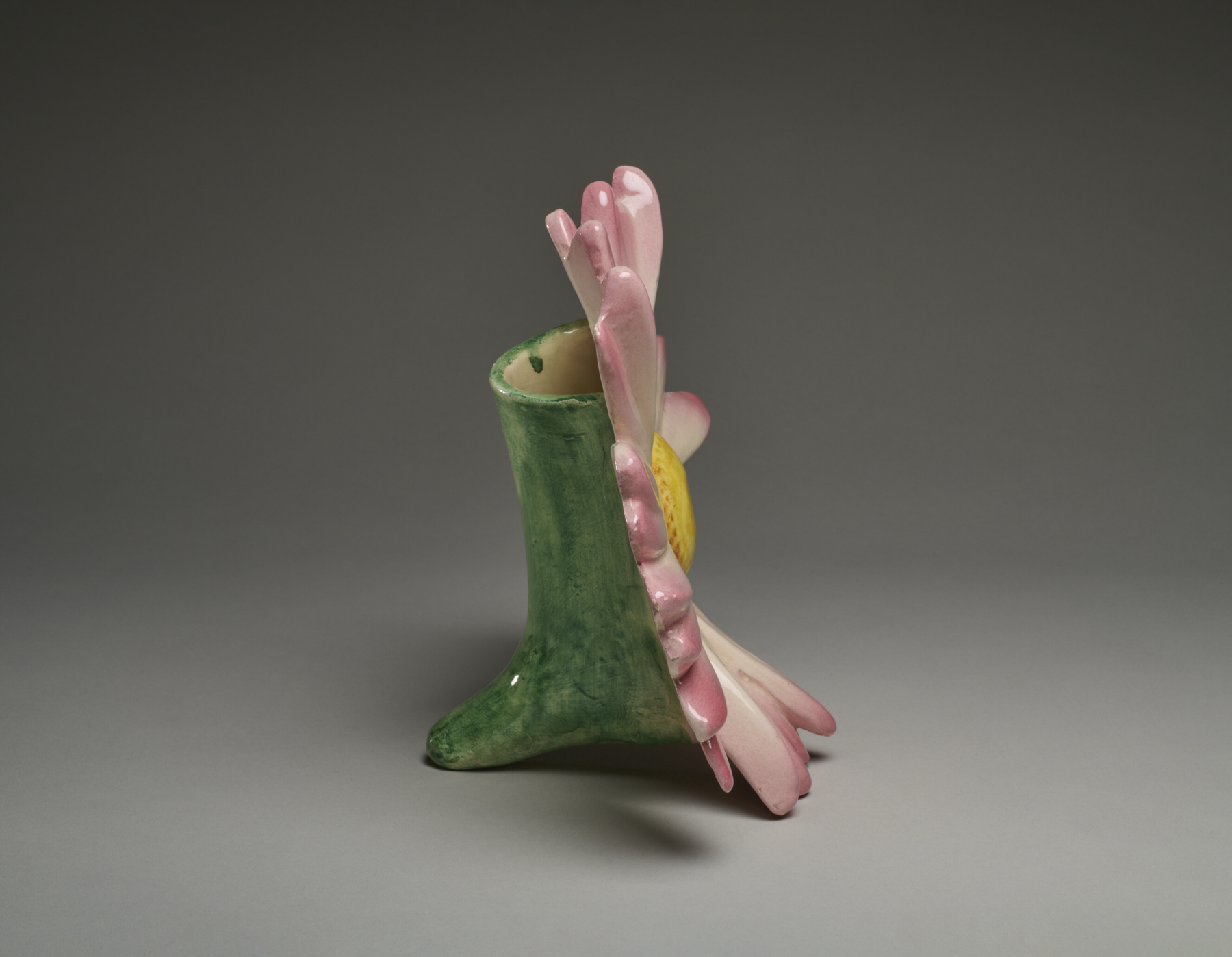
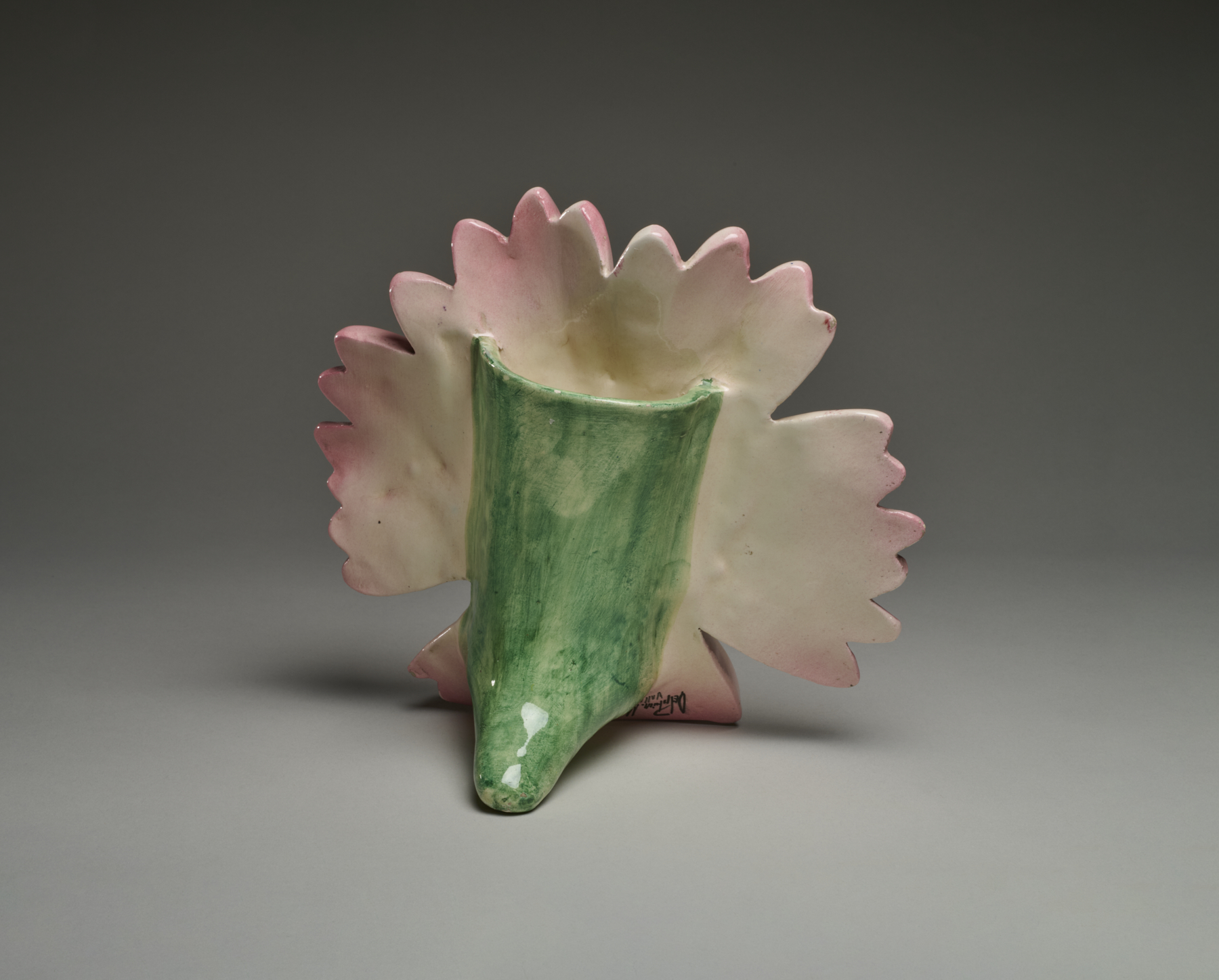
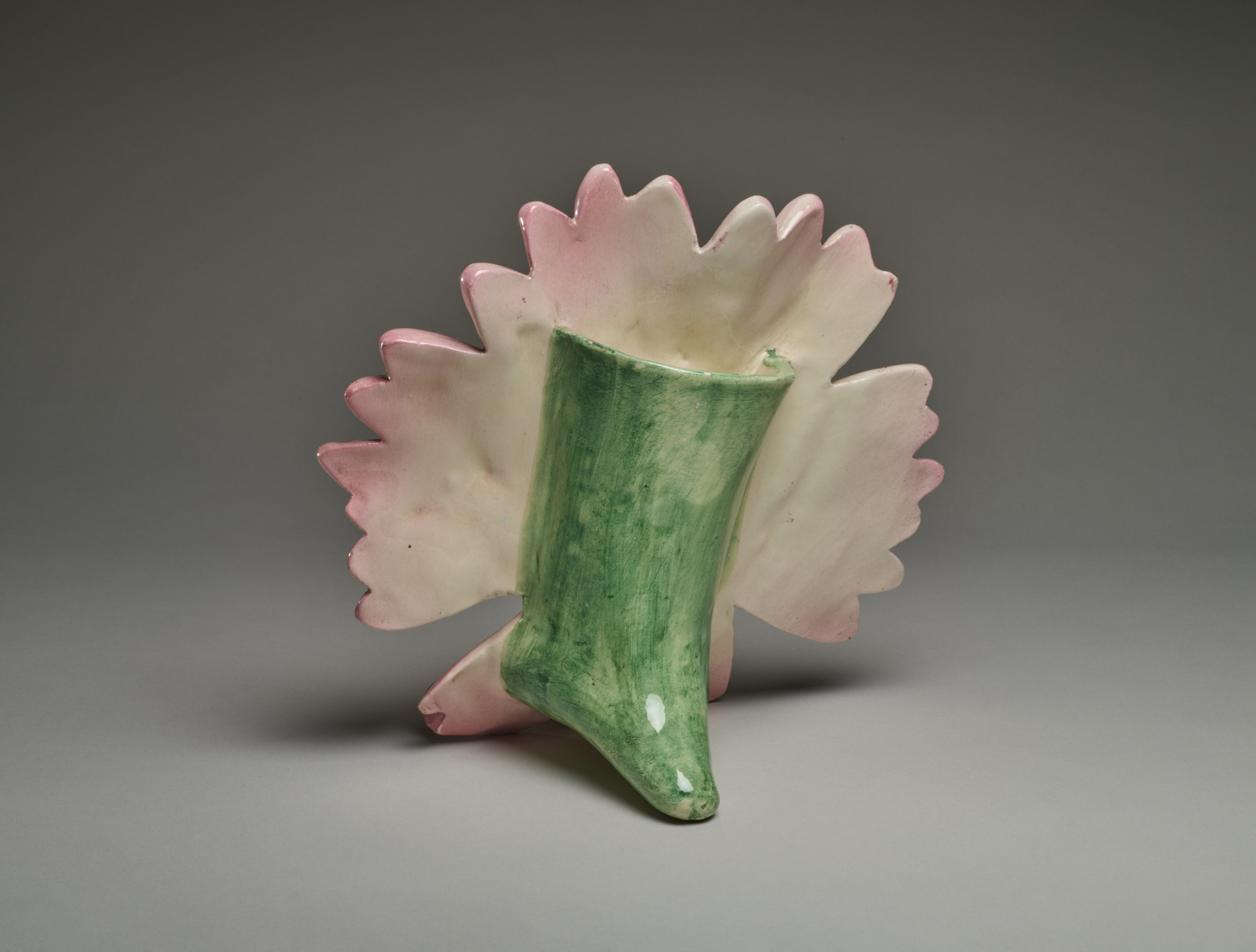
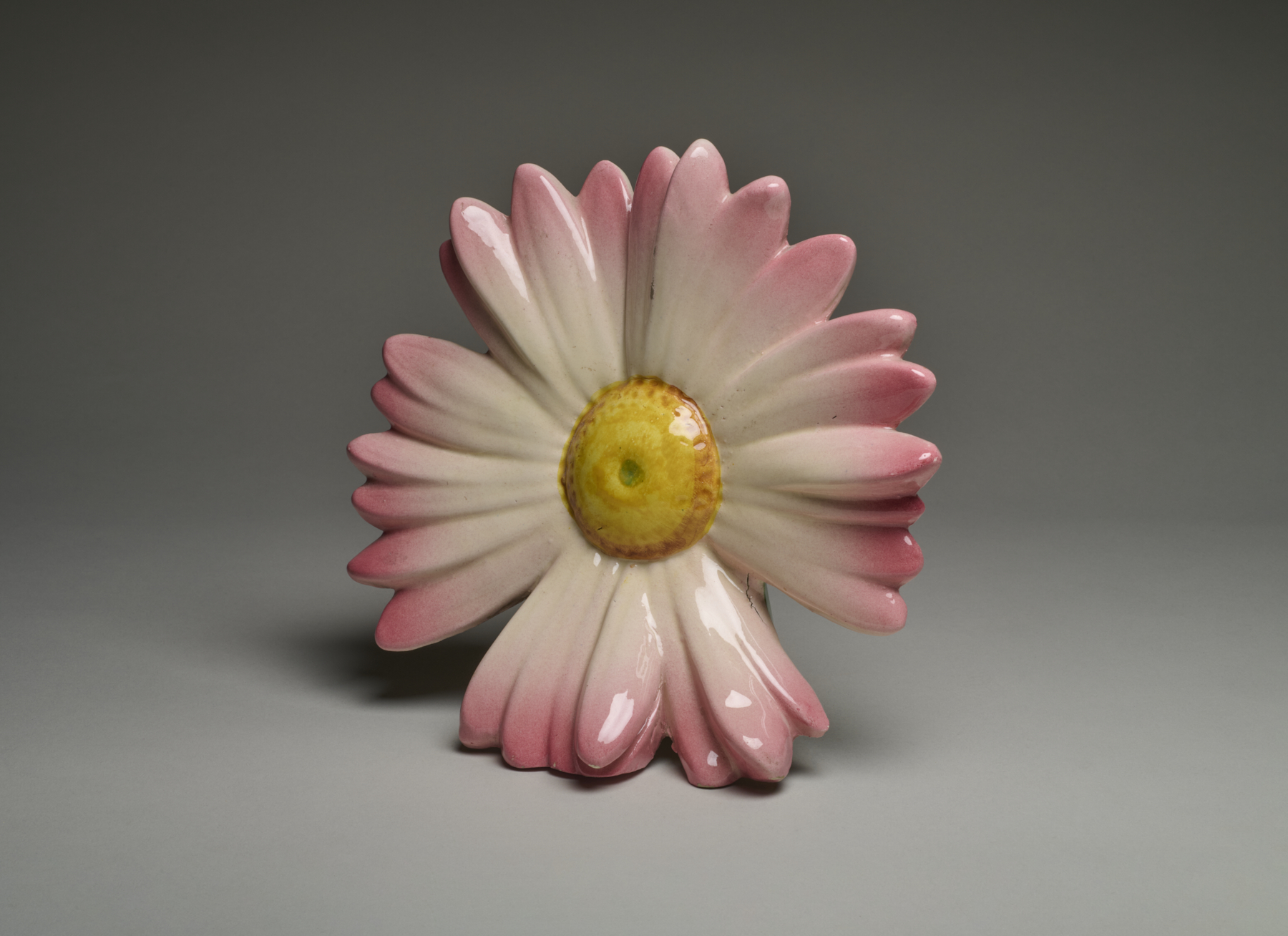
Vase in the Form of a Daisy
In the 18th century, Pierre Massier (1707–1748) established a pottery in Vallauris, a town in the Côte d'Azur region of southern France. His descendants, brothers Jacques Massier (1806–1871) and Jérôme Massier (1820–1909) took over the family pottery, where they continued to produce simple, utilitarian wares for household use. Jacques had two sons, Delphin (1836–1907) and Clément (1844–1917), who, by the age of twelve, were serving apprenticeships in the family trade. An anecdote, attributed to Clément Massier, describes a possible explanation for the company’s shift from utilitarian earthenwares towards sophisticated ornamental ceramics. As the story goes, in the summer of 1859, an Italian artist from Bologna named Gaetano Gandolfi arrived in Vallauris and began to work for the Massiers. The Italian master potter introduced the family, and especially the talented young Clément, to plaster molds, colorful enamels, and neoclassical forms that would inspire future production. The name Gaetano Gandolfini is associated with an eighteenth-century painter and sculptor from Bologna, who died in 1802, well before Clément and Delphin Massier’s time. Perhaps there was another Gaetano Gandolfini working in Italy and France in this later period, perhaps the Massier family employed an influential Italian master potter by another name altogether, or perhaps the story is entirely apocryphal. In any case, in 1873, a few years after Jacques Massier’s death, ownership of the pottery was divided up between Clément and Delphin and their cousin Jean-Baptiste Massier (1850–1916), the son of Jacques’ brother and business partner, Jérôme. Clément, Delphin, and Jérôme spread out in Vallauris and began to work independently. In 1883, Clément, the most ambitious of the Massier potters, relocated his factory to nearby Golfe-Juan, a seaside town well-trafficked by tourists, where he met with great artistic and commercial success. He is still recognized today for developing the superior luster glazes that are highlights of his firm’s work. By 1889, when Clément Massier exhibited to great acclaim at the Exposition Universelle in Paris, Delphin Massier had established his own factory, Delphin Massier et Cie.
While Delphin Massier’s ceramics are overshadowed by his younger brother’s achievements in the realm of art pottery, his firm’s careful attention to form is clear from the striking images in its 1908 catalog. Rows of models are carefully arranged by shape and size and photographed against a black background that emphasizes their meticulously crafted silhouettes. Delphin Massier & Cie. specialized in creating elaborate large-scale vases and stands, as well as small and highly detailed figures of plants and animals. The present vase corresponds with model 599/2 in the 1908 catalog. This model is the second largest example out of five variations on the daisy or “marguerite” design featured in the catalog, each one a different size. Massier created an entire genre of decorative works based on floriforms, including a series based on roses, tulips, pansies, anemones, sunflowers, chrysanthemums, irises, wild roses, and orchids, as well as daisies. There is some overlap between the wares made by the firms founded by Delphin and his cousin Jérôme Massier. Whether or not they collaborated, the two potteries were undoubtedly in close competition with one another due to their proximity in Vallauris. While an undated catalog from Jérôme Massier’s factory showcases a more limited range of wares than those offered by Delphin Massier, it includes a strikingly similar design for a daisy wall pocket.
In 1907, Delphin Massier died and the company was reorganized the following year, but it seems likely that the pottery continued to produce existing models. In January 1911, "Majolica Art Pottery Made by Delphin Massier, France" was advertised by New York-based retailers Wilhelm & Descenyi and Christian J. Dierckx in an issue of the American publication Ladies’ Home Journal. Marc Clergue, Jérôme Massier’s son-in-law, reunited the potteries founded by Delphin and Jérôme in 1920. A 1922 notice in the Annuaire du Commerce Didot-Bottin (a French business directory), advertised the “Faiences Artistiques” of the firm “Jérôme-Massier fils & Delphin-Massier réunies." Subsequently the company name was restyled as J. et D. Massier. It finally closed in 1990.
Inscription
Provenance
Provenance (from the French provenir, 'to come from/forth') is the chronology of the ownership, custody, or location of a historical object. Learn more about provenance at the Walters.
Strawser Auction Group, Wolcottville, Indiana, “Majolica Auction,” 28 September 2019, lot 3357; purchased by Deborah and Philip English, Baltimore, 2019; given to the Walters Art Museum, 2025.
Measurements
H. 7 3/4 x W. 8 3/4 x D. 5 3/8 in. (19.7 x 22.3 x 13.5 cm)
Credit Line
Gift of Deborah and Philip English, 2025
Location in Museum
Not on view
Accession Number
In libraries, galleries, museums, and archives, an accession number is a unique identifier assigned to each object in the collection.
In libraries, galleries, museums, and archives, an accession number is a unique identifier assigned to each object in the collection.
48.2948