The Walters Art Museum

Online Collection

Explore the Art Collection keyboard_arrow_down close
  • Explore By...
  • Category
  • Date
  • Medium
  • Creator
  • Places
  • Museum Locations
The Walters Art Museum walters-logo-white
  • Calendar
  • Art
  • Shop
  • Give Now
  • Visit
    • Plan Your Visit
    • Hours
    • Directions & Parking
    • Food, Drink, & Shop
    • Free Admission
    • Tours
    • Accessibility
    • Visitor Promise
  • Experience
    • Virtual Museum
    • Exhibitions & Installations
    • Programs & Events
    • Collections
    • Buildings
    • Baltimore
  • Support
    • Support the Walters
    • Corporate Partnerships
    • Institutional Funders
    • Evening at the Walters
    • Volunteers
  • About
    • Mission & Vision
    • Leadership
    • Strategic Plan
    • Land Acknowledgment
    • Research
    • Policies
Image for Covered Jar
tooltip-icon Creative Commons License

Creative Commons Zero

Download Image Zoom
Image for Covered Jar
tooltip-icon Creative Commons License

Creative Commons Zero

Download Image Zoom
Image for Covered Jar
tooltip-icon Creative Commons License

Creative Commons Zero

Download Image Zoom
Image for Covered Jar
tooltip-icon Creative Commons License

Creative Commons Zero

Download Image Zoom
Image for Covered Jar
tooltip-icon Creative Commons License

Creative Commons Zero

Download Image Zoom
  • arrow_forward_ios
  • arrow_forward_ios
Covered Jar Thumbnail

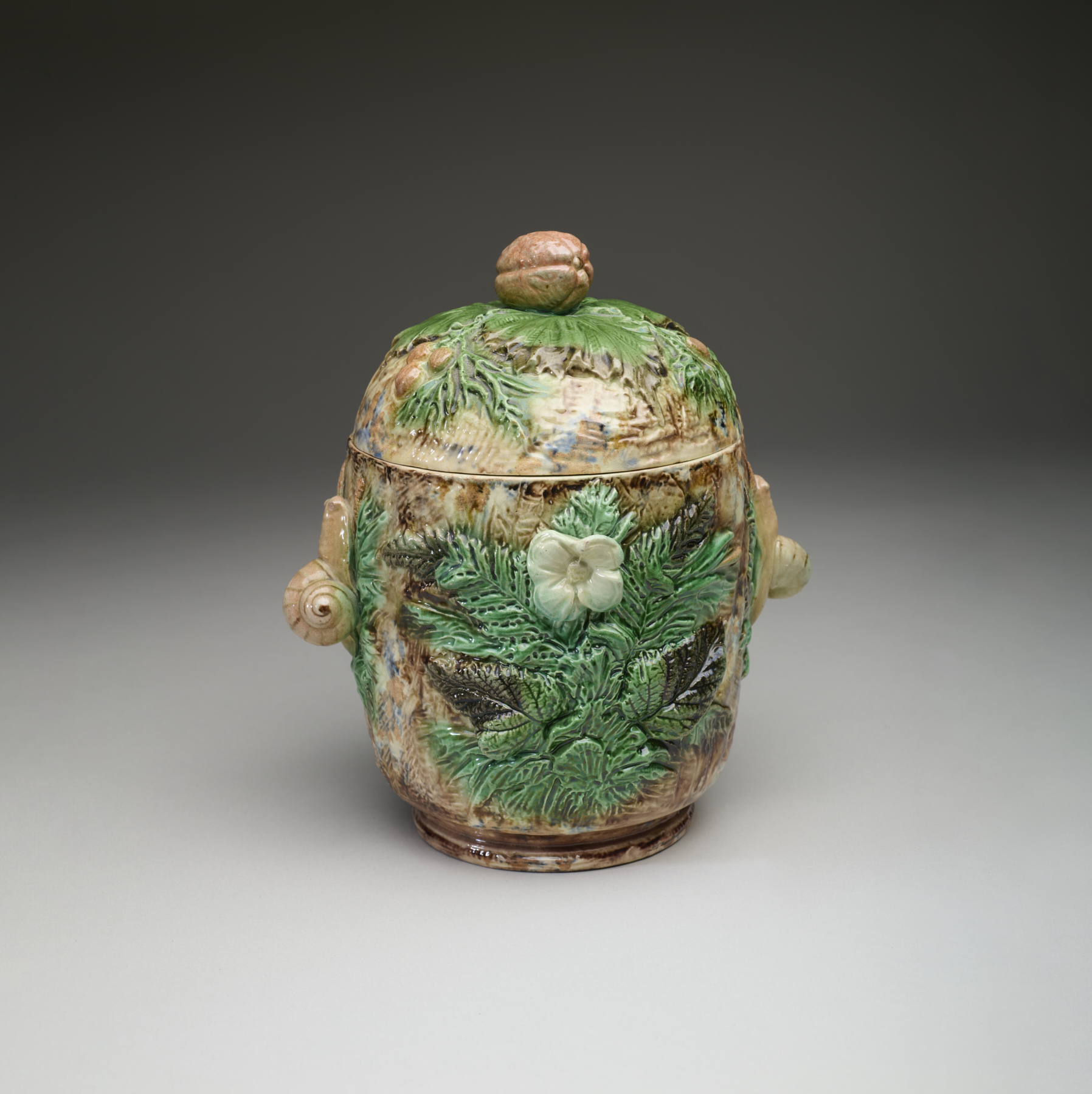
Covered Jar

French (?) (Manufacturer)
ca. 1860-1890
lead-glazed earthenware (majolica)

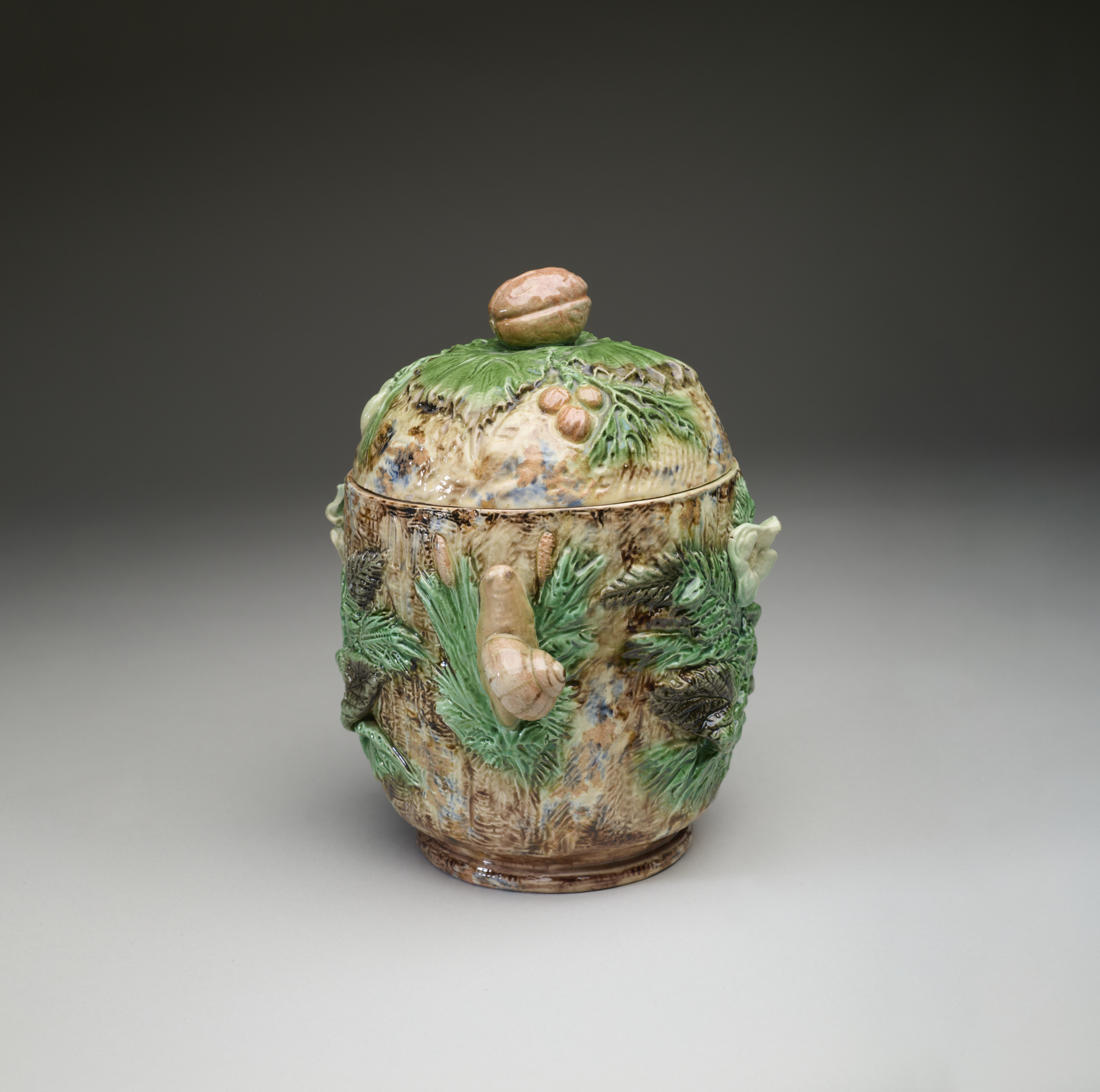
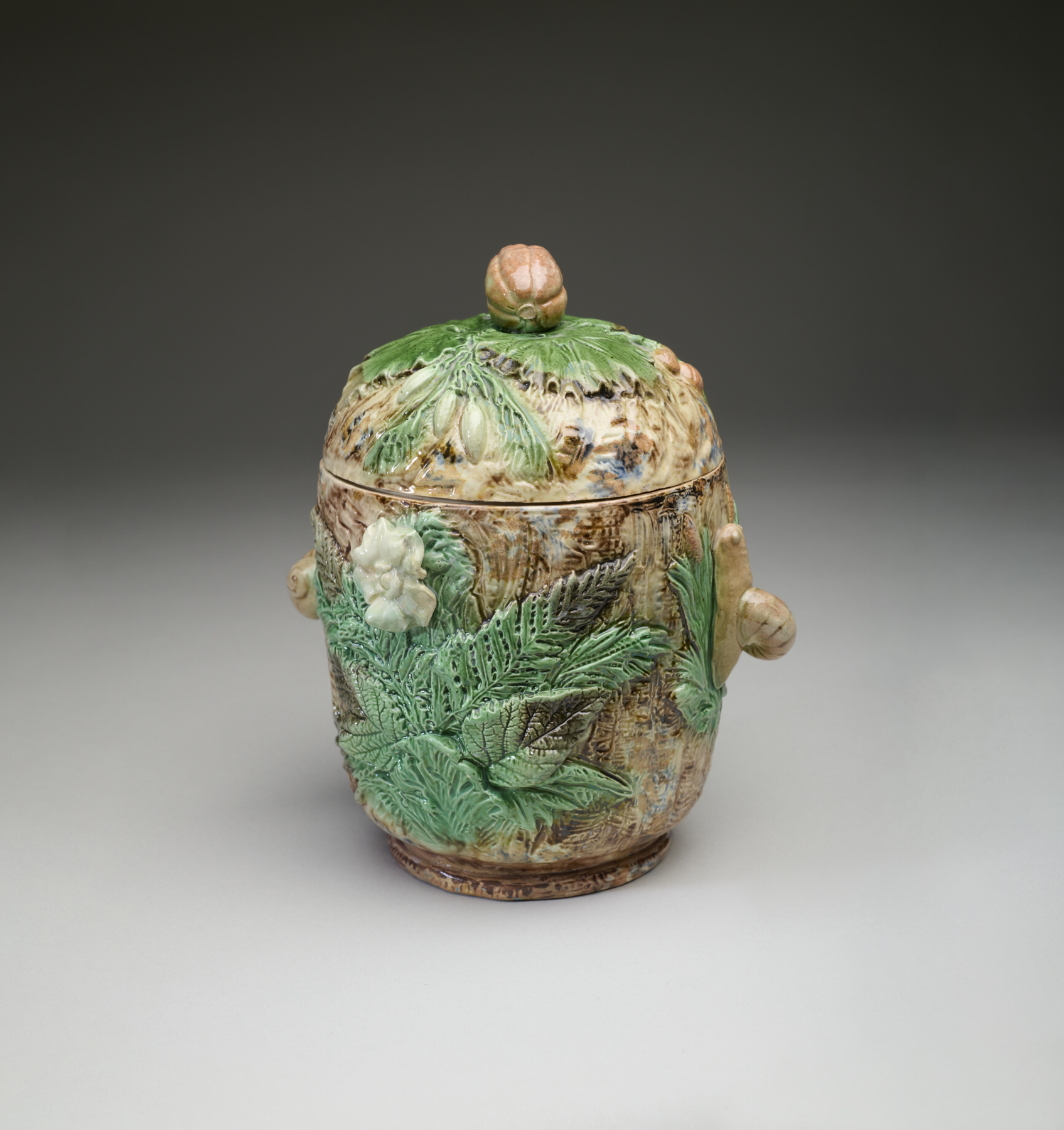
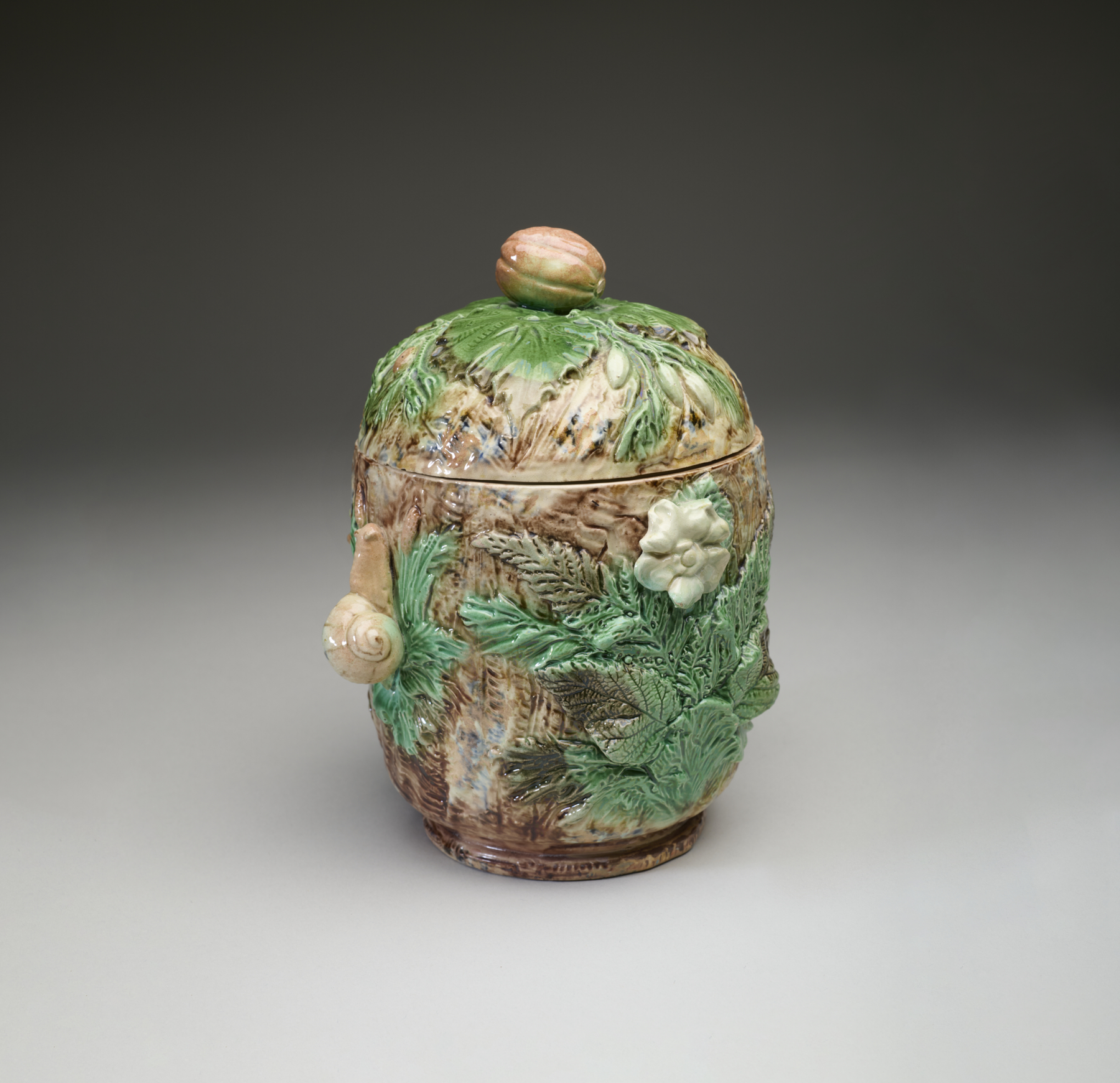
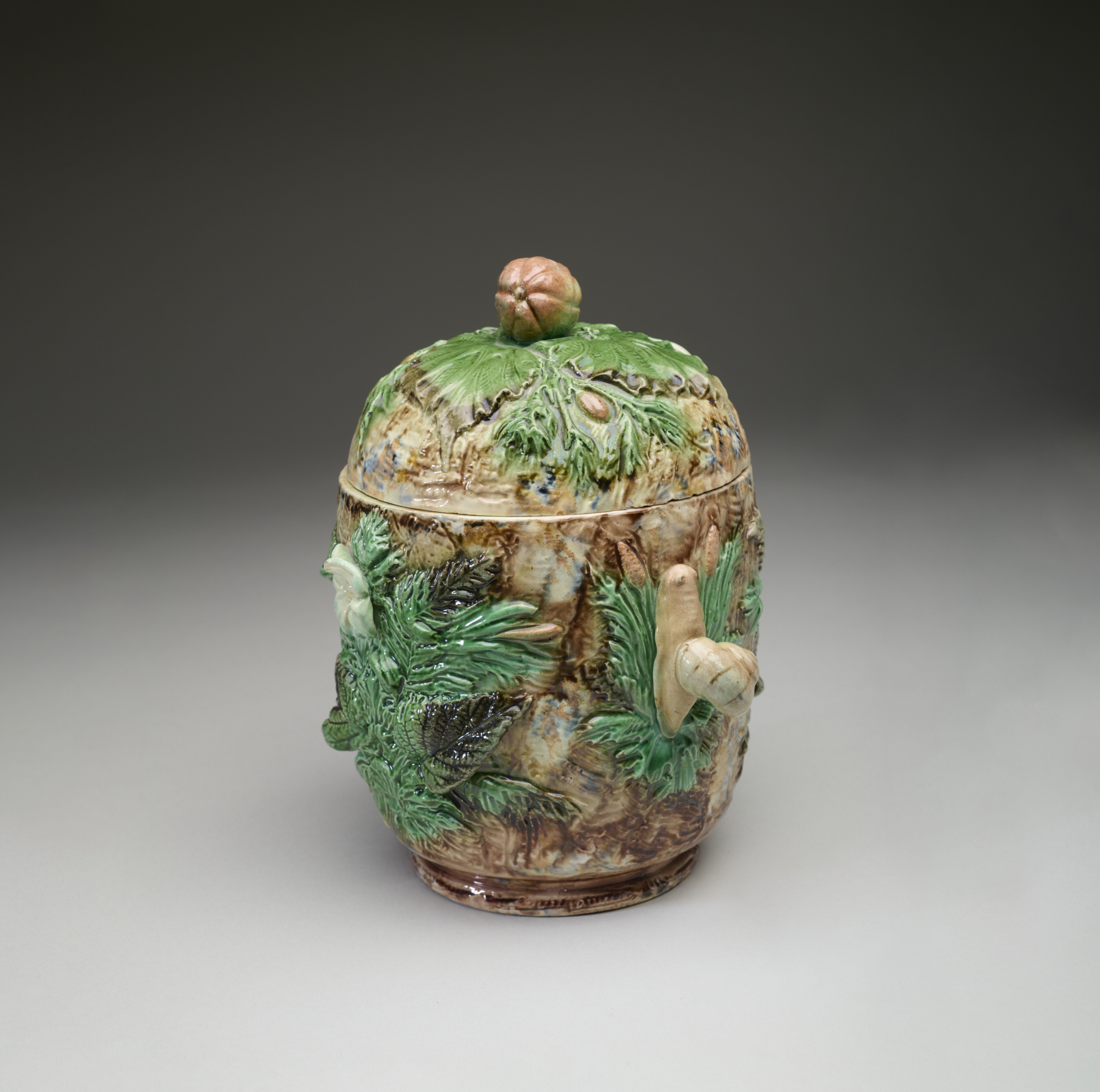
The snail-shaped handles on this jar speak to the fashion for ceramics inspired by the work of French Renaissance potter Bernard Palissy (1510-1590) that swept Europe in the second half of the 19th century. Rather than copying the aquatic themes realized in the forms of molded fish, amphibians, shells, and crustaceans on the pieces associated with the Palissy style, the decoration of this jar evokes a woodland landscape. This piece shares characteristics not only with Palissy-inspired works made in Portugal but also with the “rustic” style works modeled in the shape of logs and tree trunks associated with French makers. In England, manufacturers like Minton also created works in this rustic mode, decorated with ferns and foxgloves, that celebrated the native species found within the understory of the English forest.

The overall form, wide mouth, and domed cover of this jar suggests that it was made to store tobacco. In the 19th-century home, tobacco jars, or humidors, were among the varied suite of objects, including spittoons, ashtrays and smoking stands, pipes, smoking jackets and caps, that were designed especially for tobacco consumption. Majolica manufacturers throughout Europe created vessels that catered to the rituals of taking tobacco. In this period, smoking was considered to be a masculine habit and the rustic decoration of this jar was likely conceived with the smoking room or library in mind. This example is visually similar to surviving tobacco jars marked with the initials of French maker Thomas Sergent, and is likely of French manufacture. Further research, guided by the mark on the bottom of the vessel, could reveal the maker.

Inscription

[Maker’s Mark?] impressed on underside of jar: EF [or EE?] / 199
[Collector’s Label] rectangular paper label affixed to underside of jar, inscribed in blue ink: C36

Provenance
Provenance (from the French provenir, 'to come from/forth') is the chronology of the ownership, custody, or location of a historical object. Learn more about provenance at the Walters.

Collection of Deborah and Philip English, Baltimore, by 1998 [date and mode of acquisition unknown]; given to the Walters Art Museum, 2025.

Share
  • social-item
  • social-item
  • social-item

Measurements

H. 7 × W. 6 1/4 × D. 5 7/16 in. (17.8 × 15.9 × 13.8 cm)

Credit Line

Gift of Deborah and Philip English, 2025

Location in Museum

Not on view

Accession Number

In libraries, galleries, museums, and archives, an accession number is a unique identifier assigned to each object in the collection.

48.2949

Do you have additional information?

Notify the curator

Hours

  • Wednesday—Sunday: 10 a.m.—5 p.m.
  • Thursday: 1–8 p.m.
  • Monday—Tuesday: Closed

Location

600 N. Charles St.
Baltimore, MD
21201

Phone

410-547-9000

  • Visit
  • Experience
  • What's On
  • About
  • Shop
  • Support The Walters
copyright

The Walters Art Museum

  • Accessibility
  • Privacy Policy/Terms of Use
  • Copyright Info
  • facebook
  • instagram
  • twitter
modal close
Image for
tooltip-icon Creative Commons License

Tooltip description to define this term for visitors to the website.

zoom-btn zoom-btn preview-download
Image for
tooltip-icon Creative Commons License

Tooltip description to define this term for visitors to the website.

zoom-btn zoom-btn preview-download
Image for
tooltip-icon Creative Commons License

Tooltip description to define this term for visitors to the website.

zoom-btn zoom-btn preview-download
Image for
tooltip-icon Creative Commons License

Tooltip description to define this term for visitors to the website.

zoom-btn zoom-btn preview-download
Image for
tooltip-icon Creative Commons License

Tooltip description to define this term for visitors to the website.

zoom-btn zoom-btn preview-download
  • arrow_forward_ios
  • arrow_forward_ios