
 Creative Commons License
 Creative Commons License
 Creative Commons License
 Creative Commons License
 Creative Commons License
 Creative Commons License
 Creative Commons License
 Creative Commons License


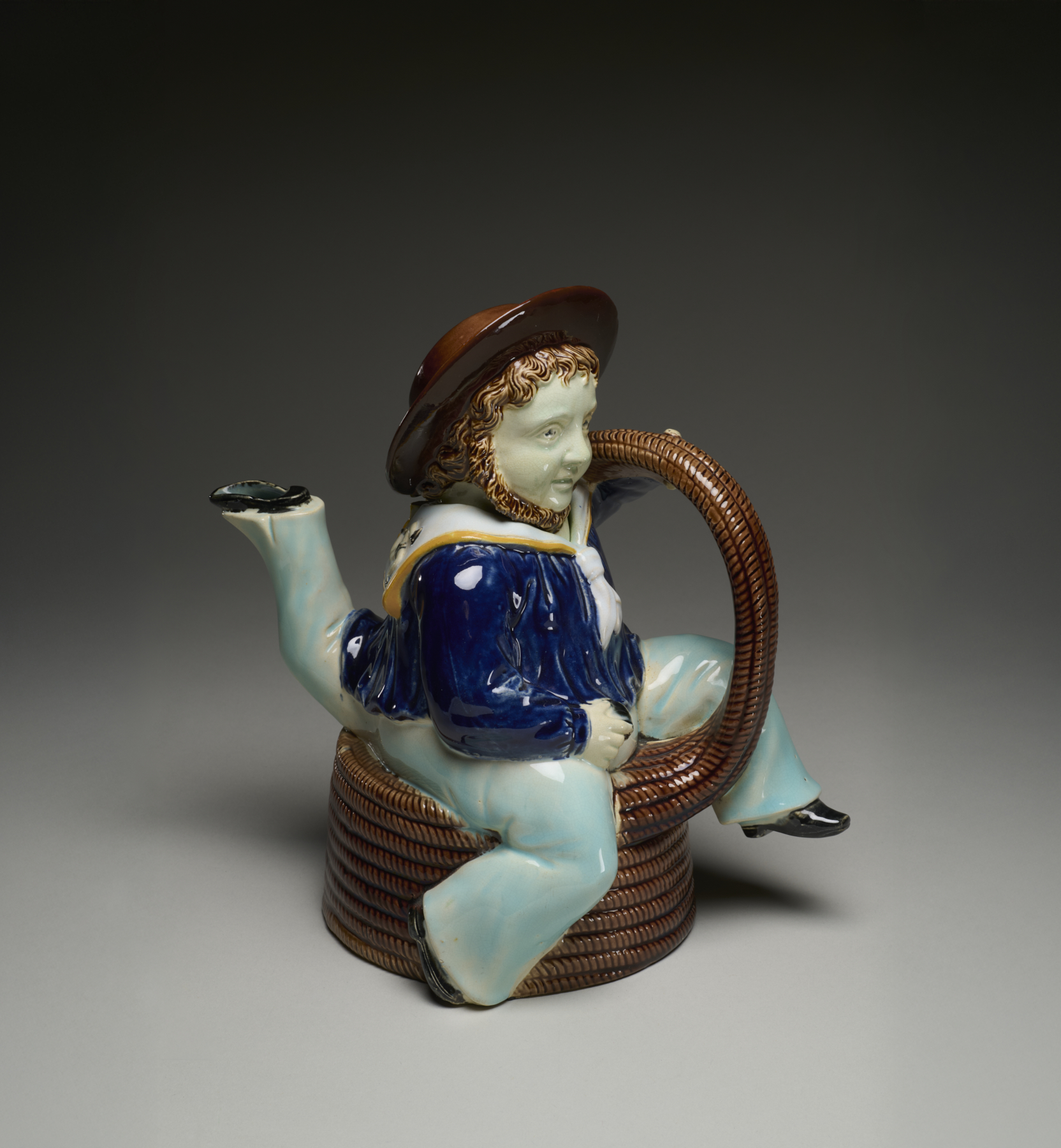
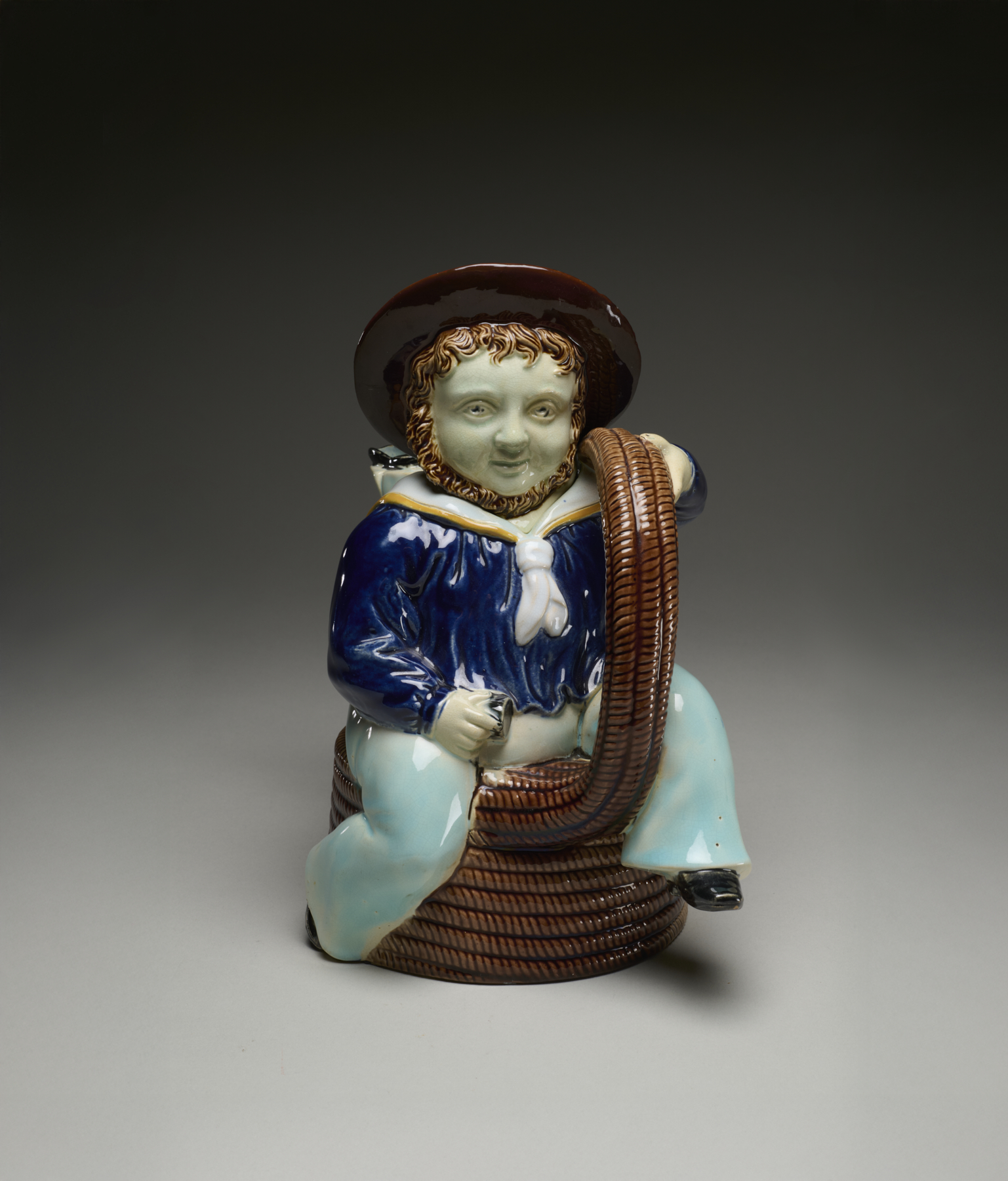
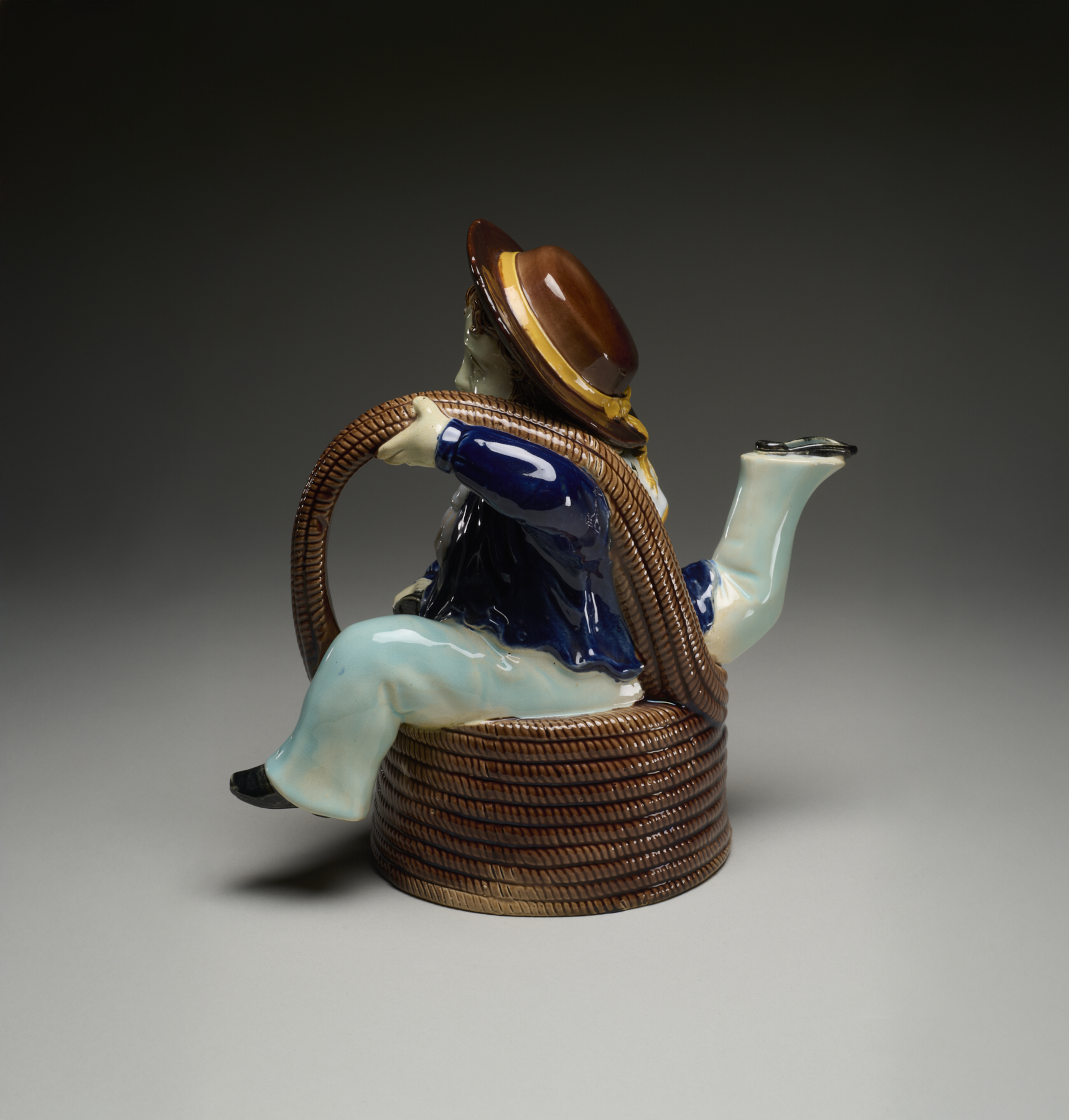
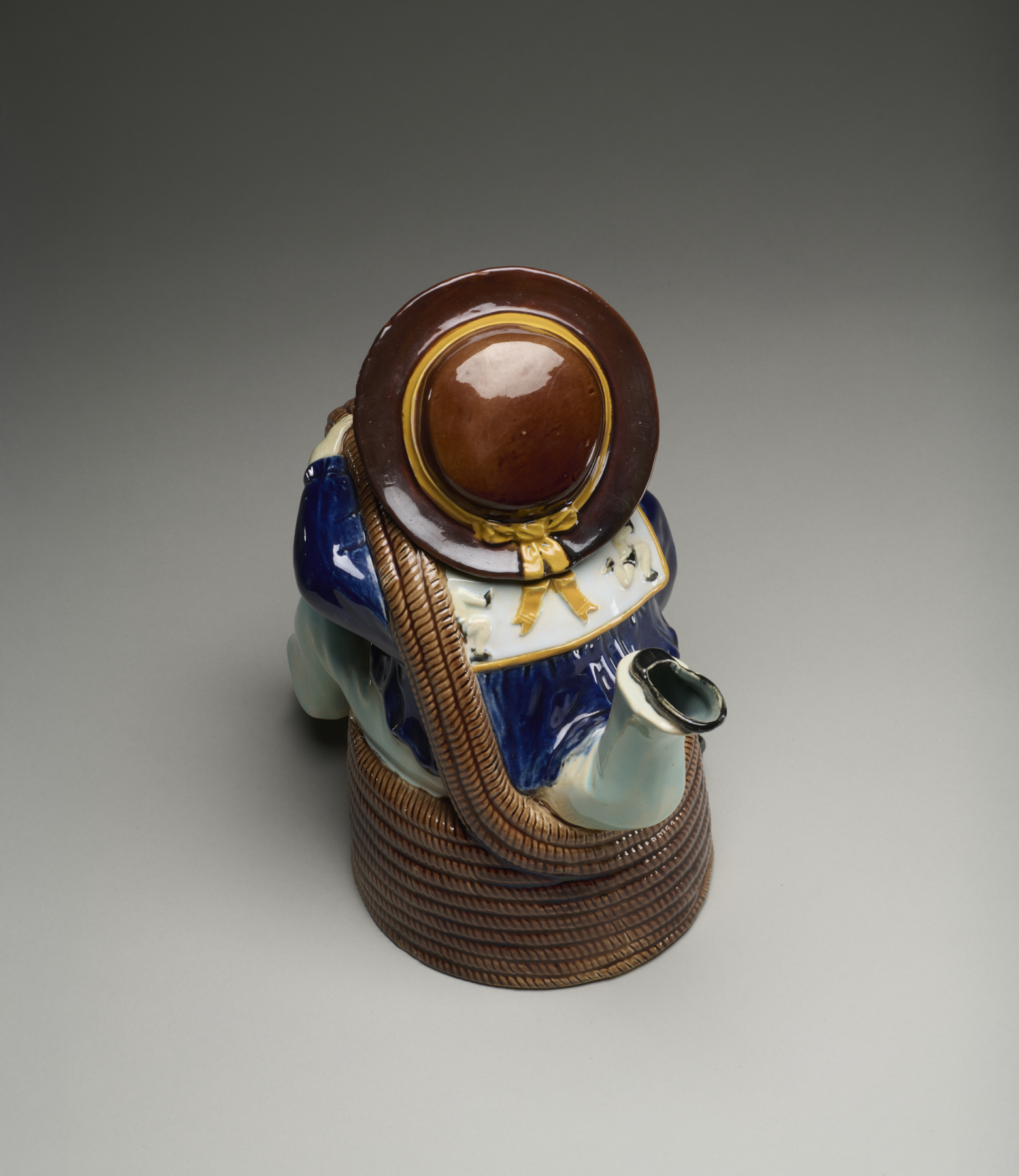
Isle of Man Souvenir Teapot
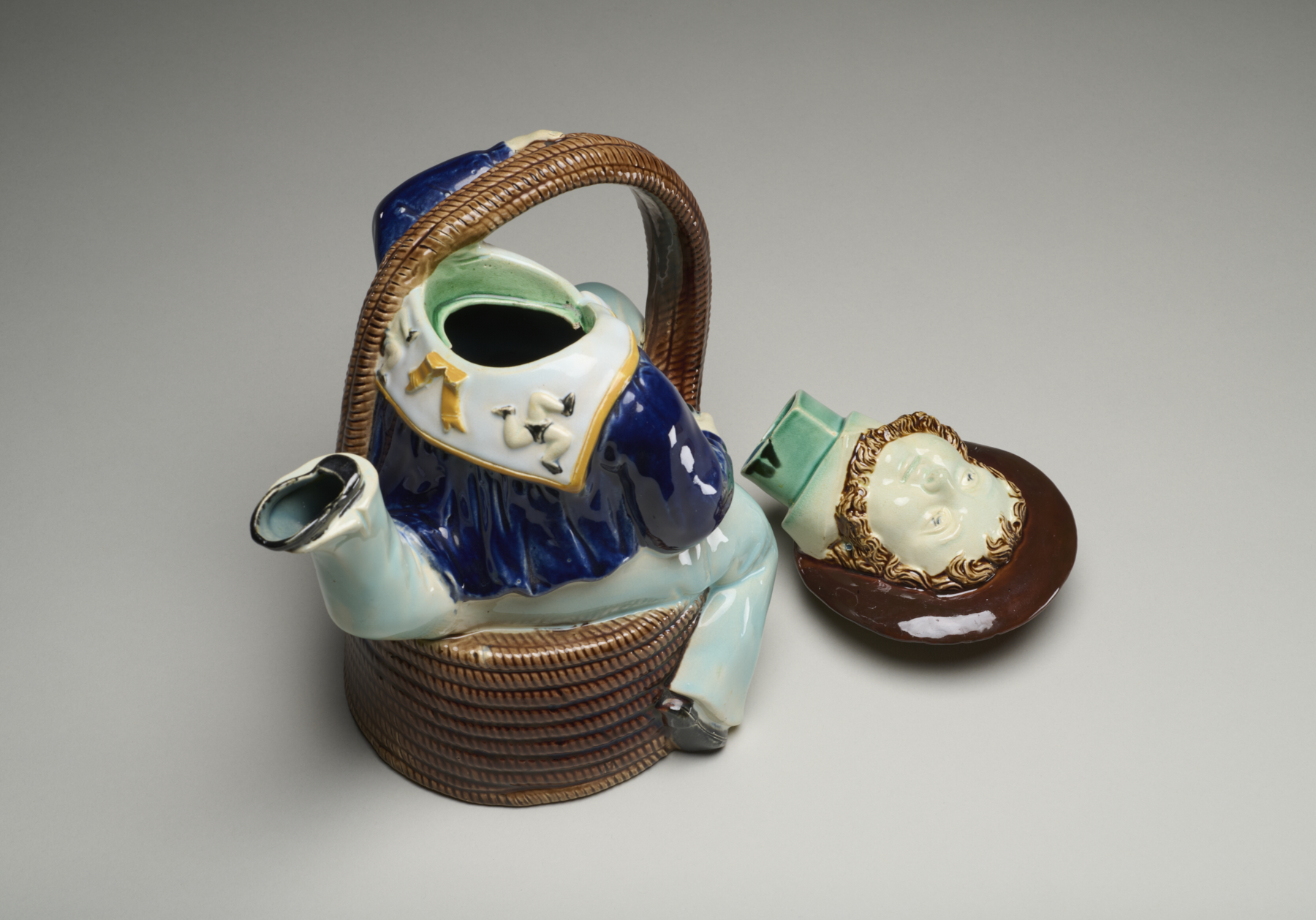
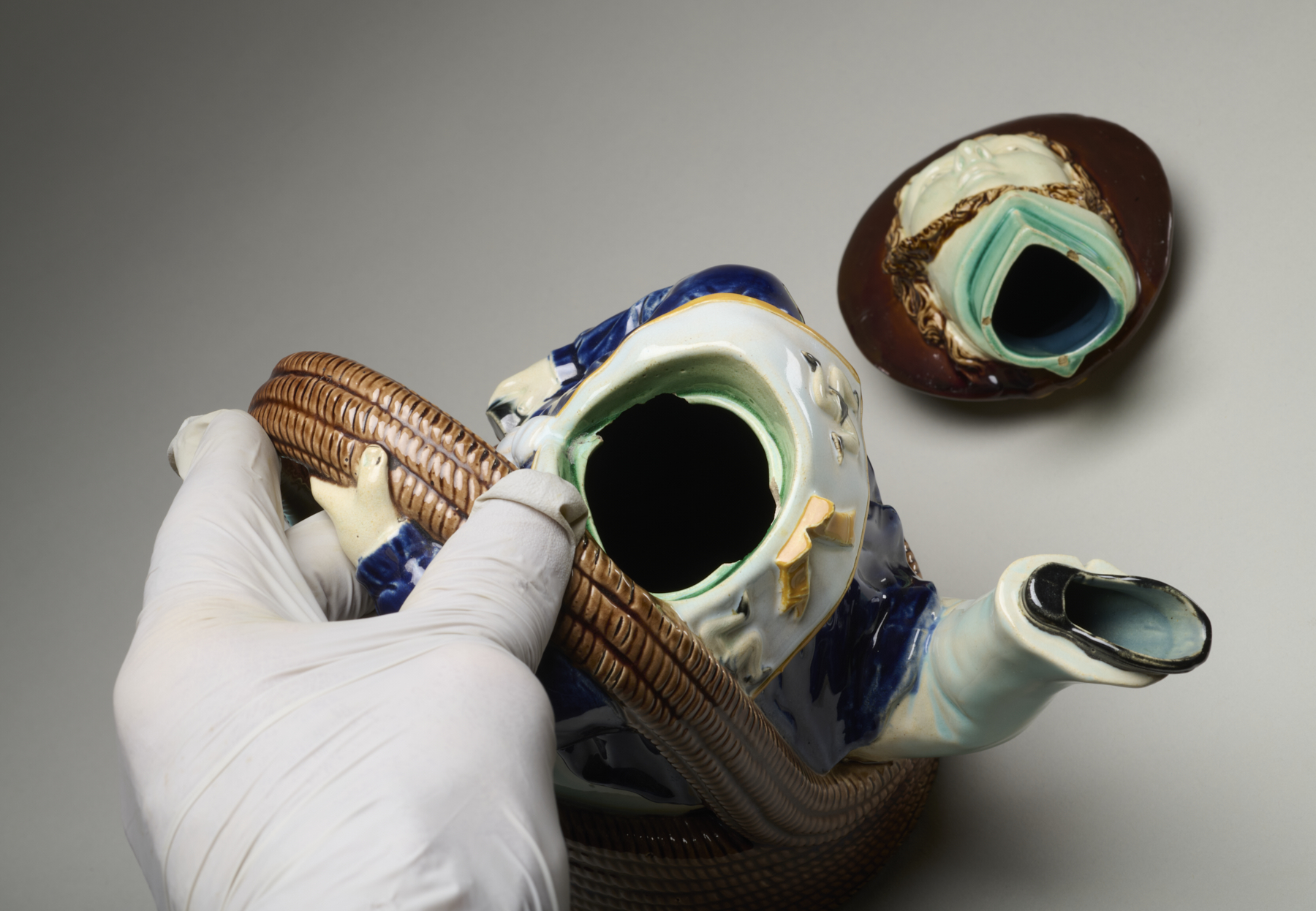
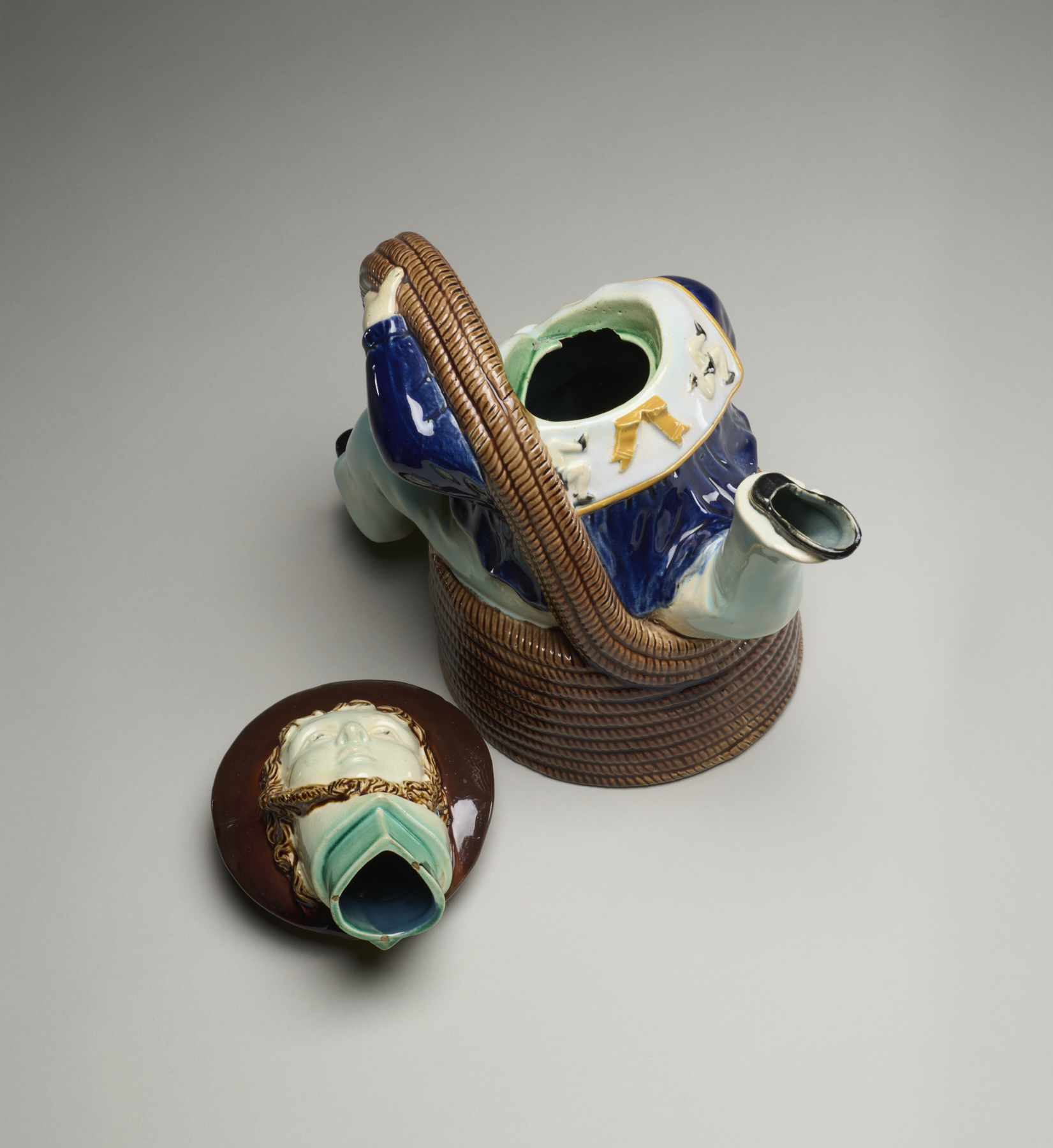
Nineteenth-century manufacturers capitalized upon the increasing time for leisure among the middle classes and the corresponding expanded tourist market, to create souvenir products—including a few in majolica—that commemorated local events, historical buildings, and notable landmarks. This novelty teapot model was sold as a souvenir of the Isle of Man, the British island territory located in the Irish Sea between Great Britain and Ireland. The sailor form evokes the importance of seafaring to the Isle’s economy and culture. The three legs of the sailor echo the three-legged motif, or triskelion (triskeles), that appears on the sailor’s kerchief. This has been a symbol connected to the Isle of Man since the 12th century and appears on the island’s coat of arms which originated in the mid-1200s. These teapots were commissioned and sold by William Broughton, who operated “Broughton China Rooms” on Duke Street in Douglas, the capital and largest city on the Isle of Man. Broughton’s business seems to have been in operation from at least the early 1870s until around 1900.
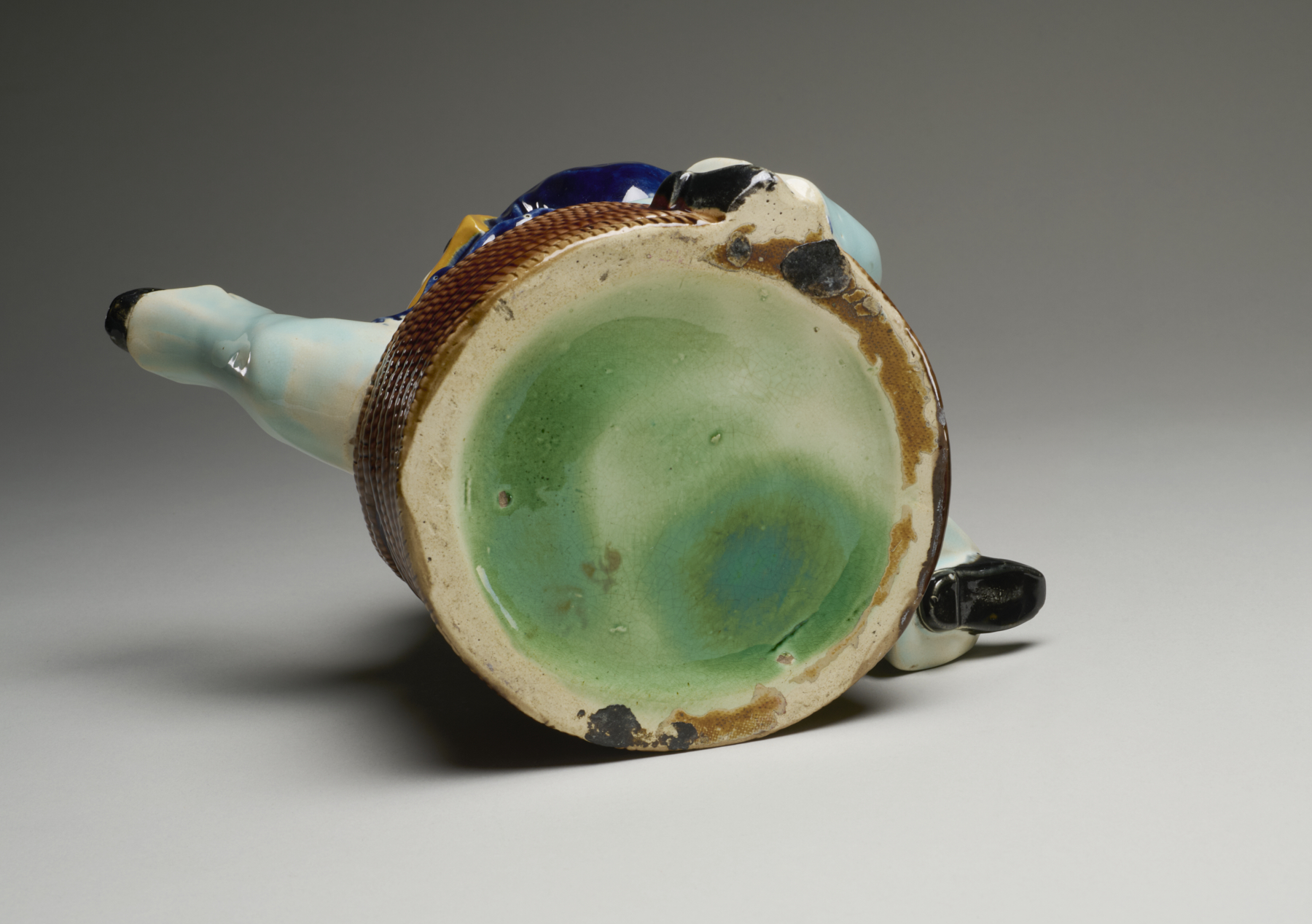
The Isle of Man teapots were likely manufactured by more than one English pottery, although the glazing on this example is characteristic of the production of the Joseph Holdcroft factory. Joseph Holdcroft (ca. 1832–1904) was trained and employed at Minton & Co. before establishing his own, eponymous firm in the early 1860s. His company began majolica production in about 1870 in the Staffordshire town of Longton. Holdcroft’s business strategy was anchored in manufacturing large quantities of mid-range majolica, supplemented by higher-quality pieces–like this teapot–that garnered positive press reviews and upheld the company’s reputation. Although the firm was capable of manufacturing premium majolica in novel shapes, it was sometimes more of an imitator than an innovator, and was known to copy designs of rival potteries. The company continued to make majolica into the 1890s.
Inscription
Provenance
Provenance (from the French provenir, 'to come from/forth') is the chronology of the ownership, custody, or location of a historical object. Learn more about provenance at the Walters.
Collection of Deborah and Philip English, Baltimore, by 2022 [date and mode of acquisition unknown]; given to the Walters Art Museum, 2025.
Measurements
H. 8 1/2 × W. 8 7/16 × D. 5 9/16 in. (22.3 × 21.4 × 14.2 cm)
Credit Line
Gift of Deborah and Philip English, 2025
Location in Museum
Not on view
Accession Number
In libraries, galleries, museums, and archives, an accession number is a unique identifier assigned to each object in the collection.
In libraries, galleries, museums, and archives, an accession number is a unique identifier assigned to each object in the collection.
48.2950