
 Creative Commons License
 Creative Commons License
 Creative Commons License
 Creative Commons License
 Creative Commons License


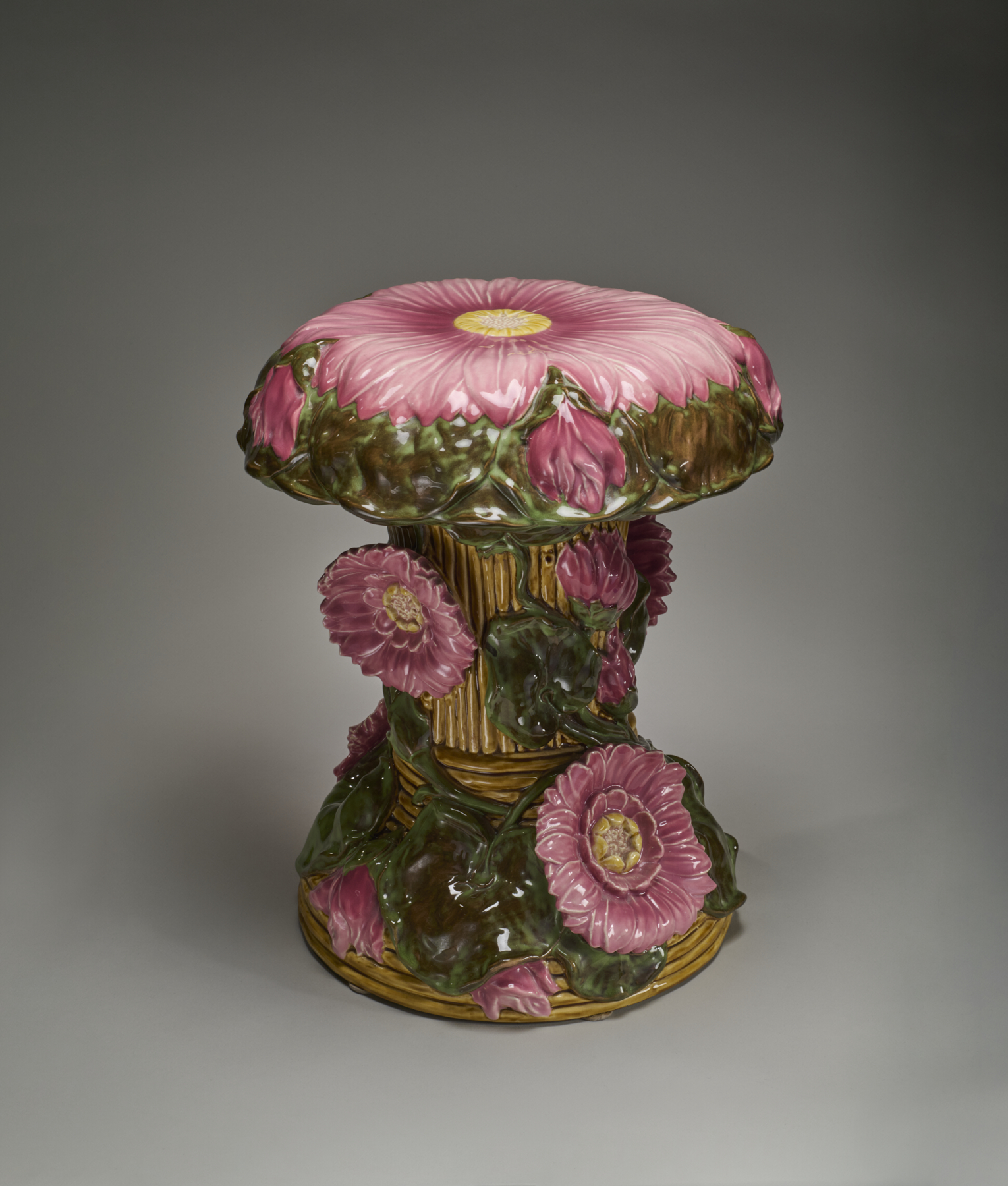
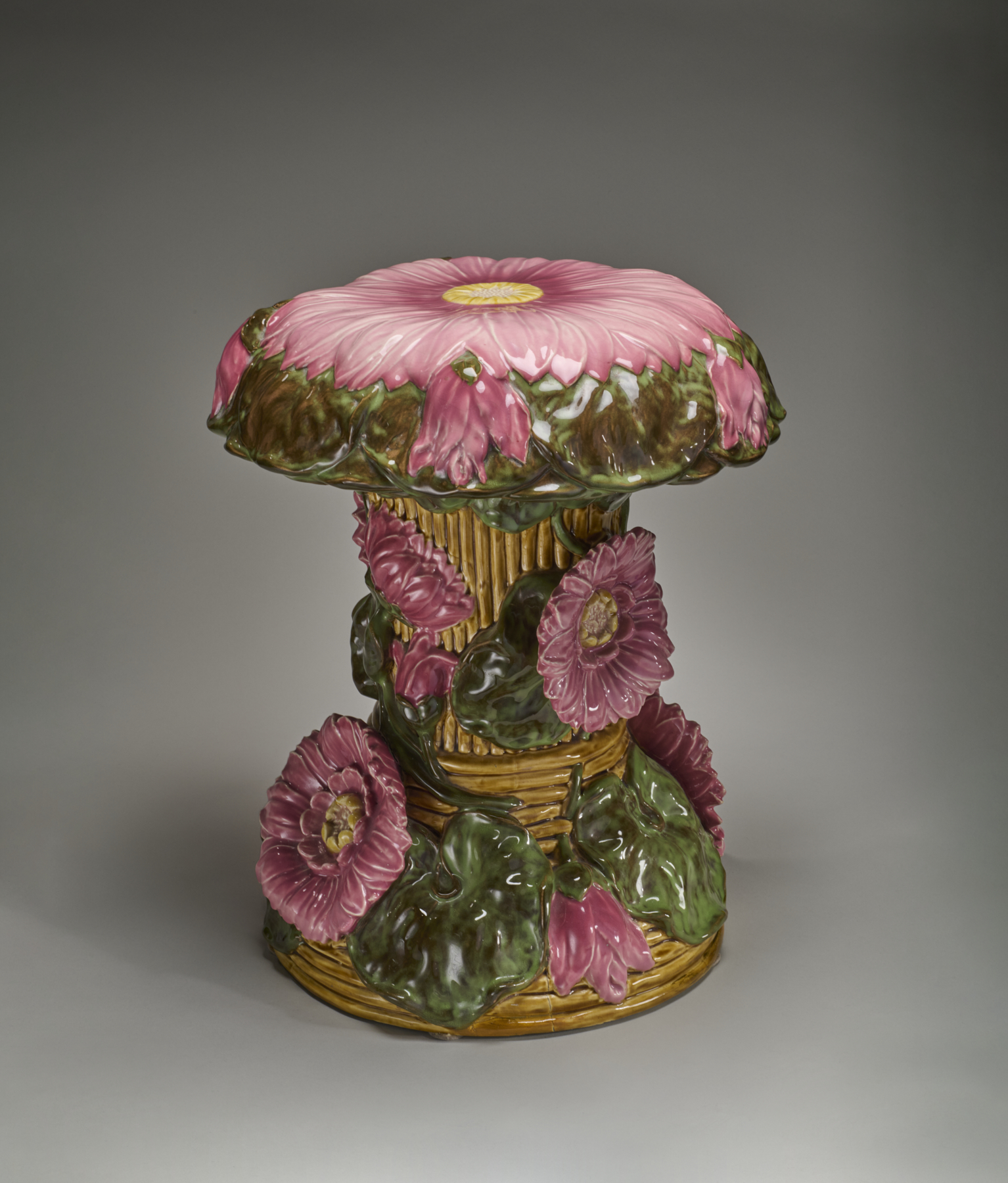
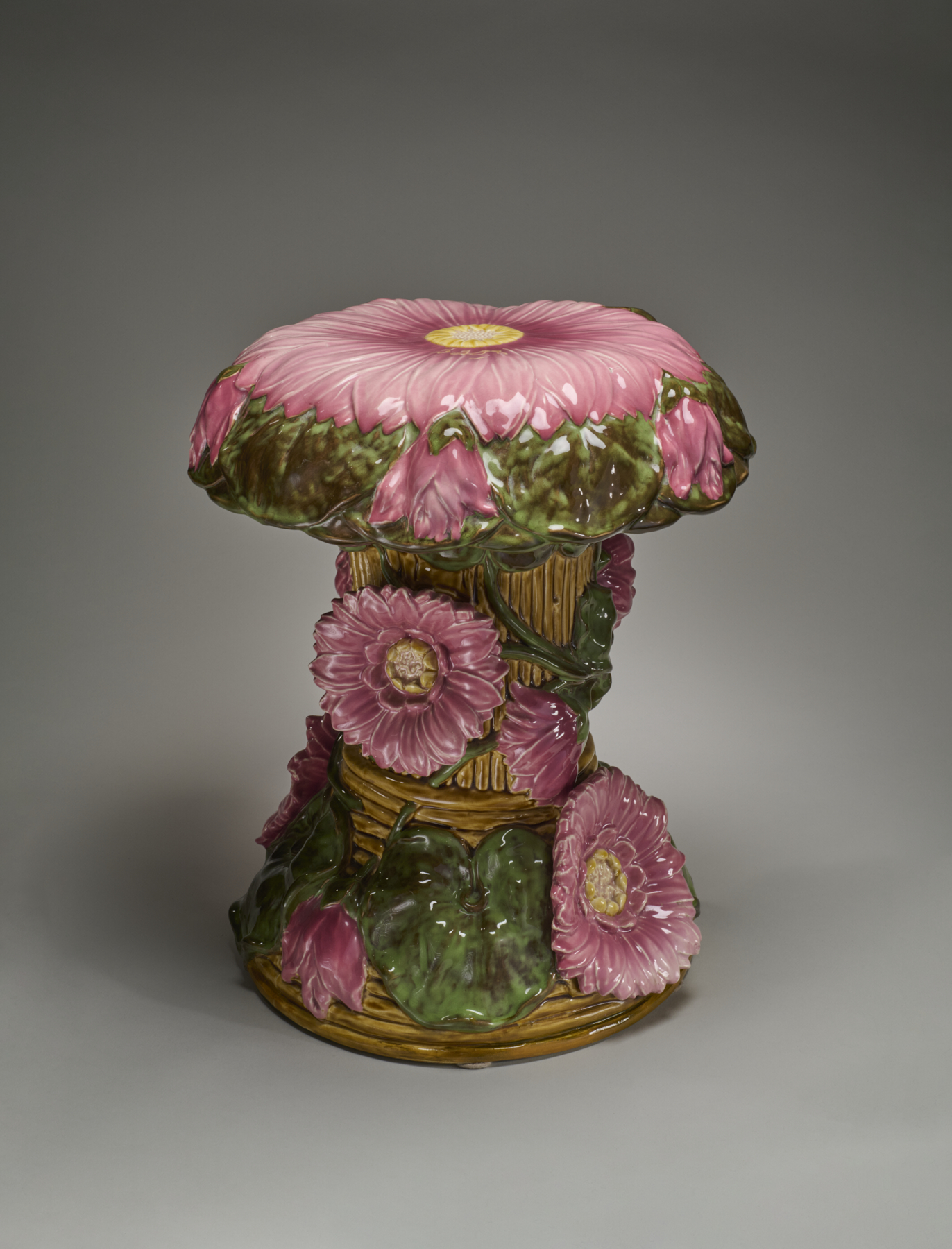
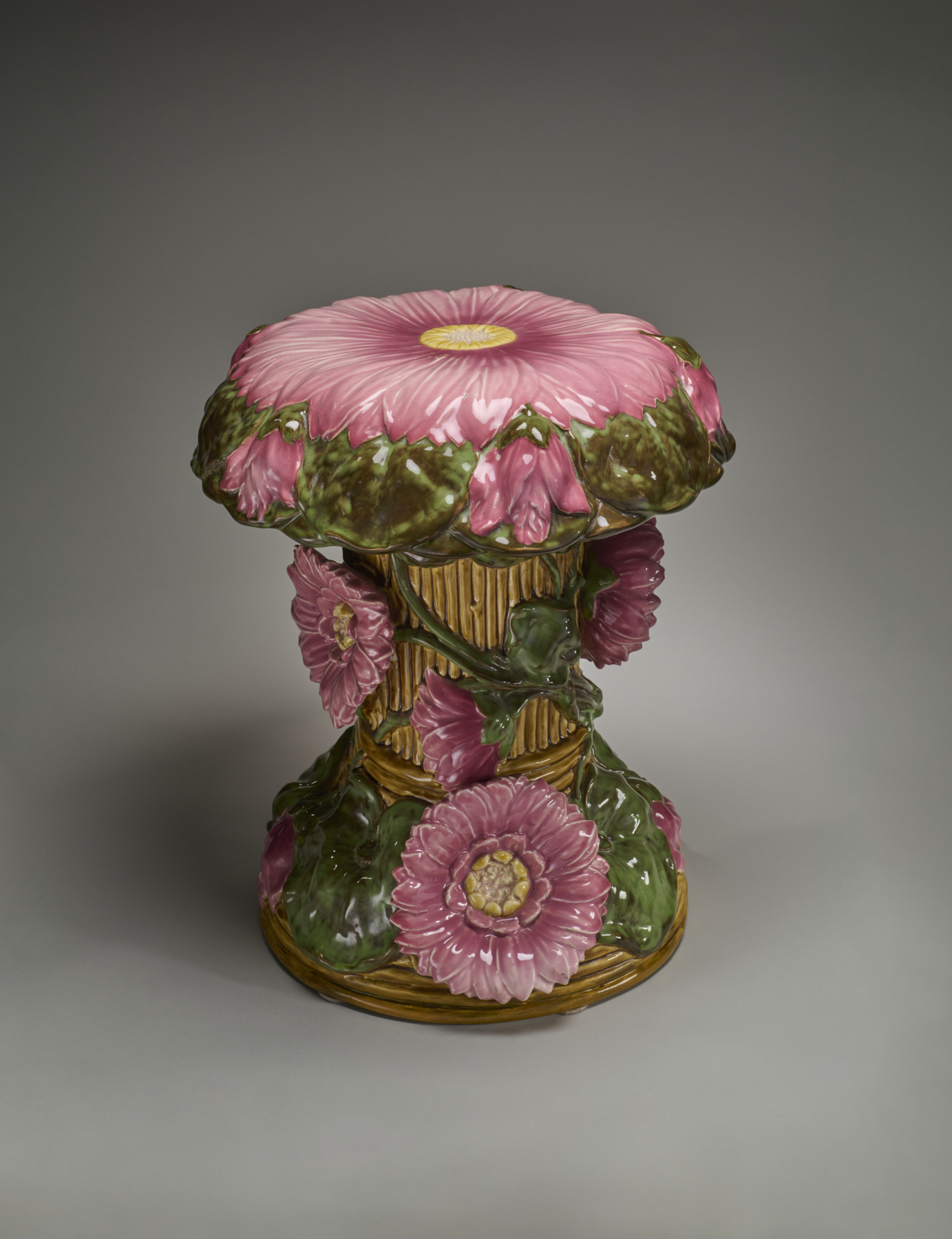
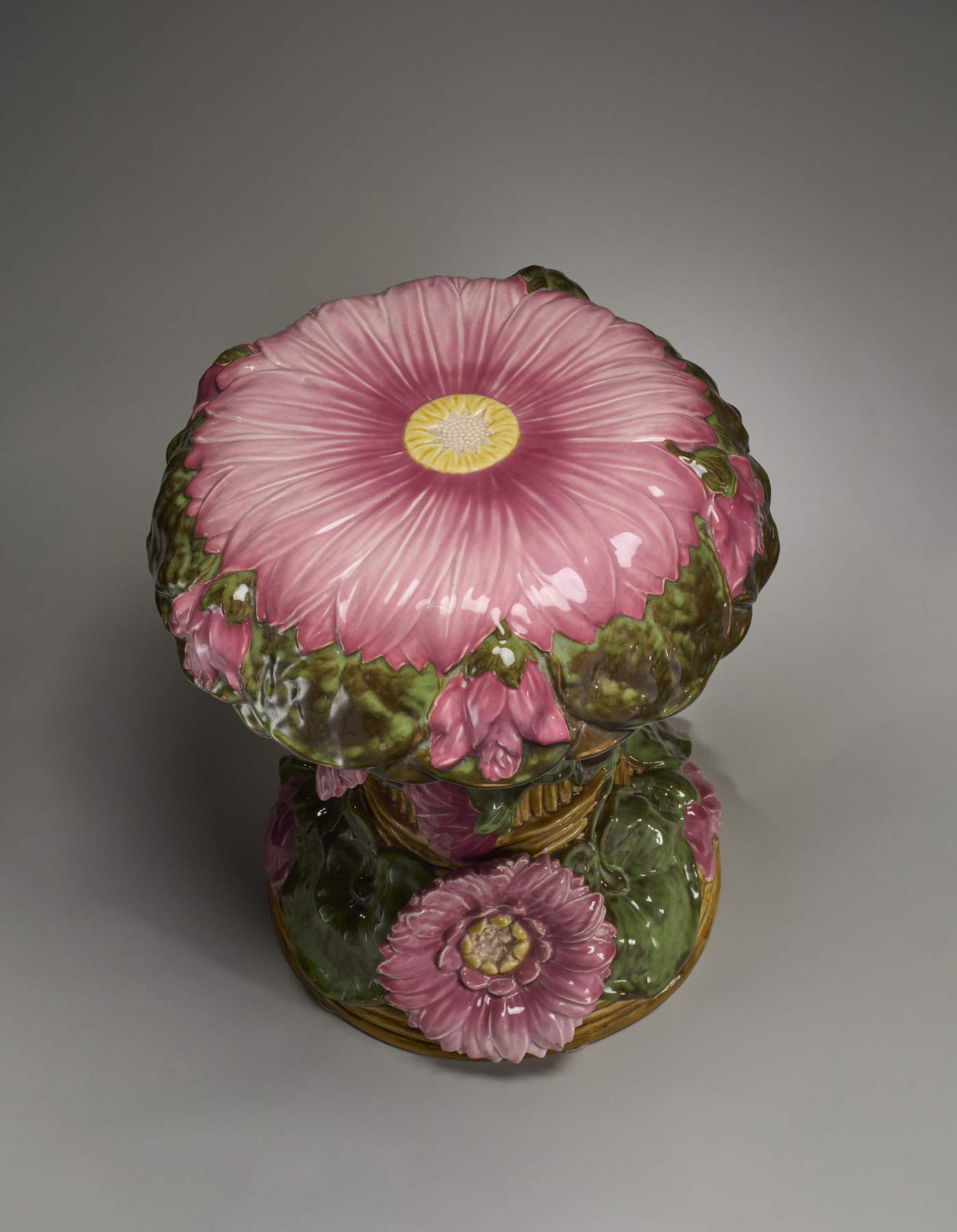
“Lotus” Garden Seat, Model Number 3698
The Zsolnay Porcelain Manufacturing Company was founded in 1853 by Miklós Zsolnay (1800–1880) in Pécs, Hungary, an important city in the country’s southwest, near the border with Croatia. Miklós Zsolnay’s son, Ignác (1826–1890), assumed leadership of the company a year later. After ten challenging years, Ignác ceded ownership to his brother, the merchant and experienced businessman Vilmos Zsolnay (1828–1900). Vilmos quickly implemented improvements to the company’s leadership and established a school to train workers, recruited both from the surrounding region and abroad. Under his direction, the company began to exhibit and export its wares internationally, participating first in the Vienna International Exhibition of 1873. The exhibition exposed Zsolnay to the latest innovations in both design and technology and connected the company with established ceramic factories in Germany, France, England, and Austria. From this point onward, the firm would regularly present its designs at international expositions, receiving orders from all over Europe. The company’s displays were honored with numerous accolades and prestigious awards, including the grand prize at the 1878 Exposition Universelle in Paris.
After the 1873 Vienna International Exhibition, Vilmos Zsolnay’s daughters, Teréz (1854–1944) and Júlia (1856–1950), played an active role in Zsolnay’s artistic direction, creating many new designs for the company. The company’s substantial archive reveals the extent to which the Zsolnay sisters immersed themselves in the active study of art history, taking research trips abroad, and corresponding with their father through letters about ideas for new products. In a journal entry dated 1881, Teréz Zsolnay recounted how her sister Júlia returned home from a family trip to Paris with “one single treasure; a drawing of an Egyptian wooden spoon depicting a lotus bulb with a braided stem.” This spoon inspired Júlia to create an entire series of designs for table ware based on the lotus motif, including tea wares, spoons, and serving dishes. According to Teréz, the designs achieved such lasting success that they were “manufactured continuously after the first quarter of 1881.” In 1883, Júlia married Tádé Sikorski (1852–1940), a Polish architect trained in Munich and Vienna. The two had met the previous year when Sikorski toured the Zsolnay factory. Sikorski assumed the role of Zsolnay’s lead designer, working for the company until 1918. In 1891, Sikorski revisited his wife’s popular “Lotus” designs, expanding the range to include large scale objects like flower stands, lamps, and presumably garden seats. Items from the expanded “Lotus” series, offered in a variety of colors, were the company’s most popular offerings at the 1893 World’s Columbian Exposition in Chicago. The original design for the “Lotus” garden seat, model no. 3698, is preserved in the Zsolnay Archive at the Janus Pannonius Museum in Pécs.
Along with the artistic talents of his daughters and son-in-law, Vilmos Zsolnay’s innovative experimentation with materials was a vital ingredient in the company’s success. In 1893 he perfected a stunning iridescent glaze, dubbed “eosin” for Eos, the Greek goddess of the dawn, that seems to have been ideally suited to the Art Nouveau designs and dominated the factory’s production for the next twenty years. In addition to executing imaginative designs for majolica housewares and jewel-like art ceramics, the Zsolnay company developed “pyrogranite” ceramics with a frost and weather resistant formula that were suitable for outdoor installation. This material facilitated Zsolnay’s many collaborations with Hungary’s leading architects, and resulted in some of the era’s most recognizable buildings, including Budapest’s Museum of Applied Arts. Zsolnay ceramics were essential to the distinctive style of the Hungarian urban landscape that emerged at the end of the 19th and early 20th centuries.
When Vilmos Zsolnay died in 1900, his son Miklós (1857–1922) took over the company. Miklós had been actively involved with the business side of the firm since the 1870s, and under his leadership the company continued to achieve both financial success and artistic excellence. In 1914, Zsolnay was the largest company in Austro-Hungary. World War I and the associated limitations on international trade, as well as a growing demand for mass-marketed goods, stunted the company’s growth and artistic output. Despite numerous setbacks, Zsolnay weathered the challenges of the twentieth century and remains in operation today.
Inscription
Provenance
Provenance (from the French provenir, 'to come from/forth') is the chronology of the ownership, custody, or location of a historical object. Learn more about provenance at the Walters.
Strawser Auction Group, Hatfield, Pennsylvania, "Fine Majolica For The Connoisseur 2016," 29 October 2016, lot 217; purchased by Deborah and Philip English, Baltimore, 2016; given to the Walters Art Museum, 2025.
Measurements
H: 17 1/4 × Diam: 14 1/2 in. (43.8 × 37 cm)
Credit Line
Gift of Deborah and Philip English, 2025
Location in Museum
Not on view
Accession Number
In libraries, galleries, museums, and archives, an accession number is a unique identifier assigned to each object in the collection.
In libraries, galleries, museums, and archives, an accession number is a unique identifier assigned to each object in the collection.
48.2951