
 Creative Commons License
 Creative Commons License
 Creative Commons License
 Creative Commons License
 Creative Commons License
 Creative Commons License
 Creative Commons License


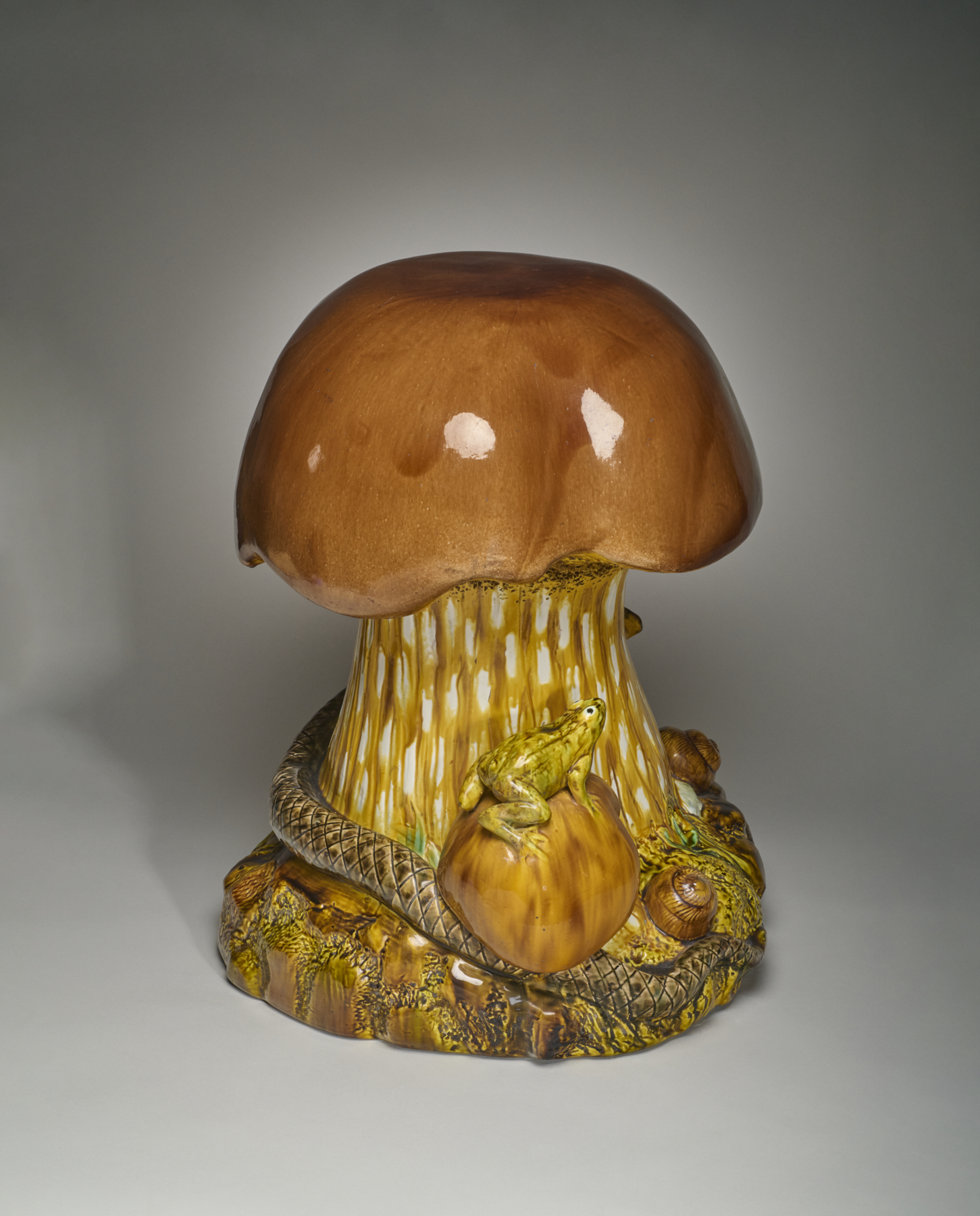
Garden Seat
While Villeroy & Boch is recognized today as one of the important German ceramics manufacturers, the modern company emerged over the course of the 18th and 19th centuries from a network of interconnected factories strategically located across Germany, France, and Luxembourg. The history of this storied firm begins with François Boch (1695–1754), who managed a successful iron foundry in Audun-le-Tiche, Lorraine, which specialized in making cannonballs. Aiming to establish a less dangerous career path for his children, Boch opened a small pottery. François Boch was assisted by three sons, Pierre-Joseph (1736–1818), Jean-François (1735–1817), and Dominique (1734–1810), as well as a daughter, Catherine, who married Pierre Valette in 1756. Valette had access to closely guarded trade secrets that helped the Boch family improve their recipes for earthenware, through the addition of limestone, to approximate the beauty and durability of porcelain. From the start, the pottery at Audun-le-Tiche relied upon nearby Luxembourg, in the Austrian Netherlands, both for the raw materials to produce stoneware and earthenware and for a steady supply of customers. When Lorraine became a part of France in the year 1766, this vital relationship was threatened. Luckily, the Boch company’s ceramics were already recognized in cosmopolitan Luxembourg for their exceptional quality and value, and the company managed to avert disaster by obtaining a royal permit from the Empress Maria Theresa of Austria to relocate their factory from Audun-le-Tiche to Septfontaines, Luxembourg. In 1792, Pierre-Joseph Boch became the leader of the company. In 1795, the Septfontaines factory was occupied by French troops during the Siege of Luxembourg, and the company was forced to abandon production. After seven months of conflict, the factory was all but destroyed and had to be painstakingly rebuilt.
Pierre-Joseph Boch ensured that his son and heir, Jean-François, received a formal education in the sciences. Having attended L’École des Sciences in Paris, Jean-François was intent on building on his father’s work in the ceramics industry. He purchased an abandoned abbey along the River Saar in Mettlach, Prussia, where, with assistance from skilled workers from Septfontaines, he set about creating a new pottery. Along with developing improvements to the traditional firing process and kiln design, he began to experiment with copper-plate engraving. At Mettlach, Jean-François Boch made the acquaintance of Nicolas Villeroy, an administrator in the salt-mine industry who managed a pottery in nearby Wallerfanger and occasionally supplied the Mettlach factory with raw materials. Both men had traveled to England, where they were deeply impressed by the efficiency and technical prowess of companies like Wedgwood. In contrast to the educated, experimental Boch, who had grown up in the ceramics business, Villeroy was an established businessman and experienced entrepreneur, but not an artisan. Together, the strengths of the two men complemented each other. Rather than competing with one another, they eventually combined their talents and resources in the 1836 merger that created the company Villeroy & Boch. Following the merger, the company was finally substantial enough to hold its own against the formidable English ceramics industry.
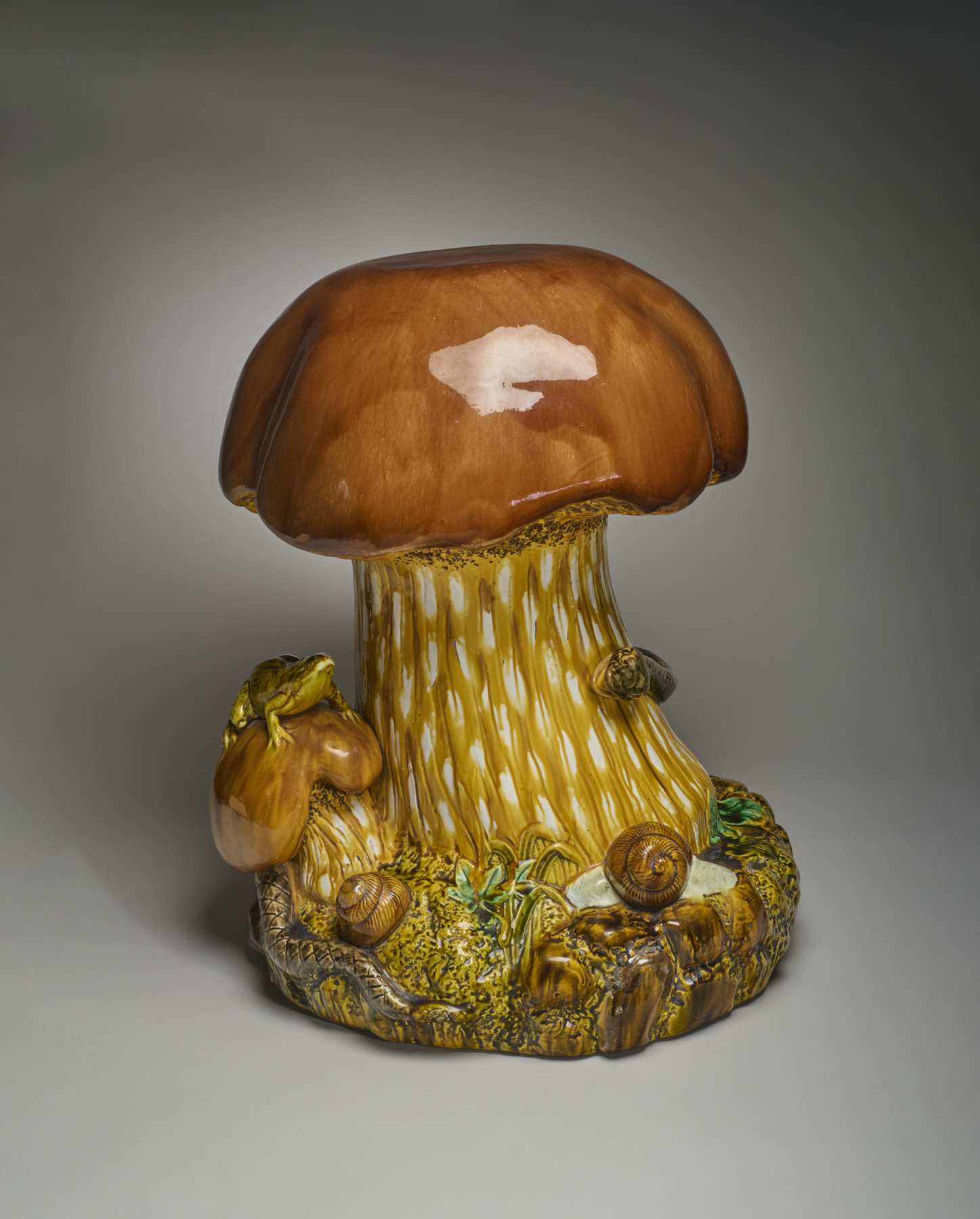
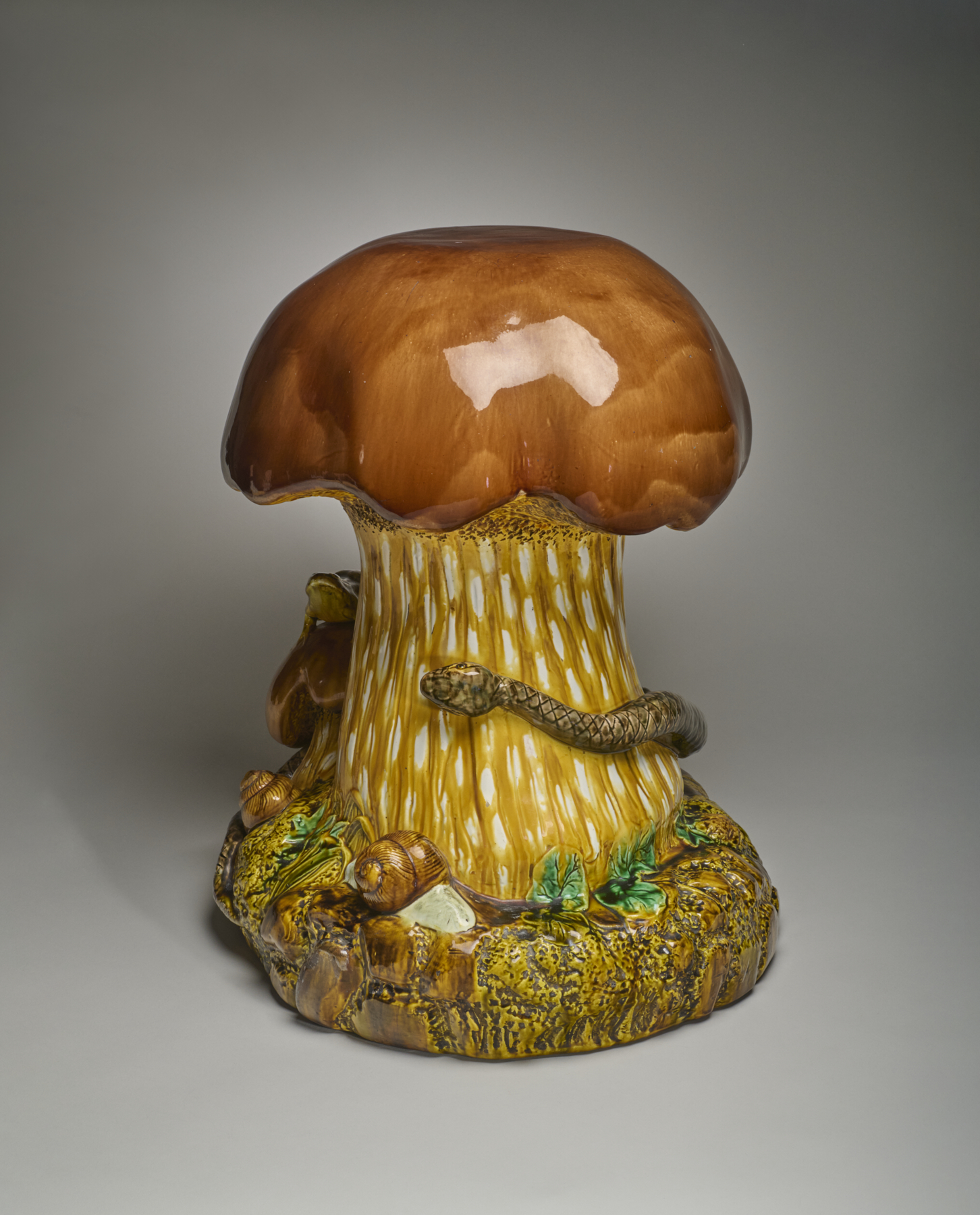
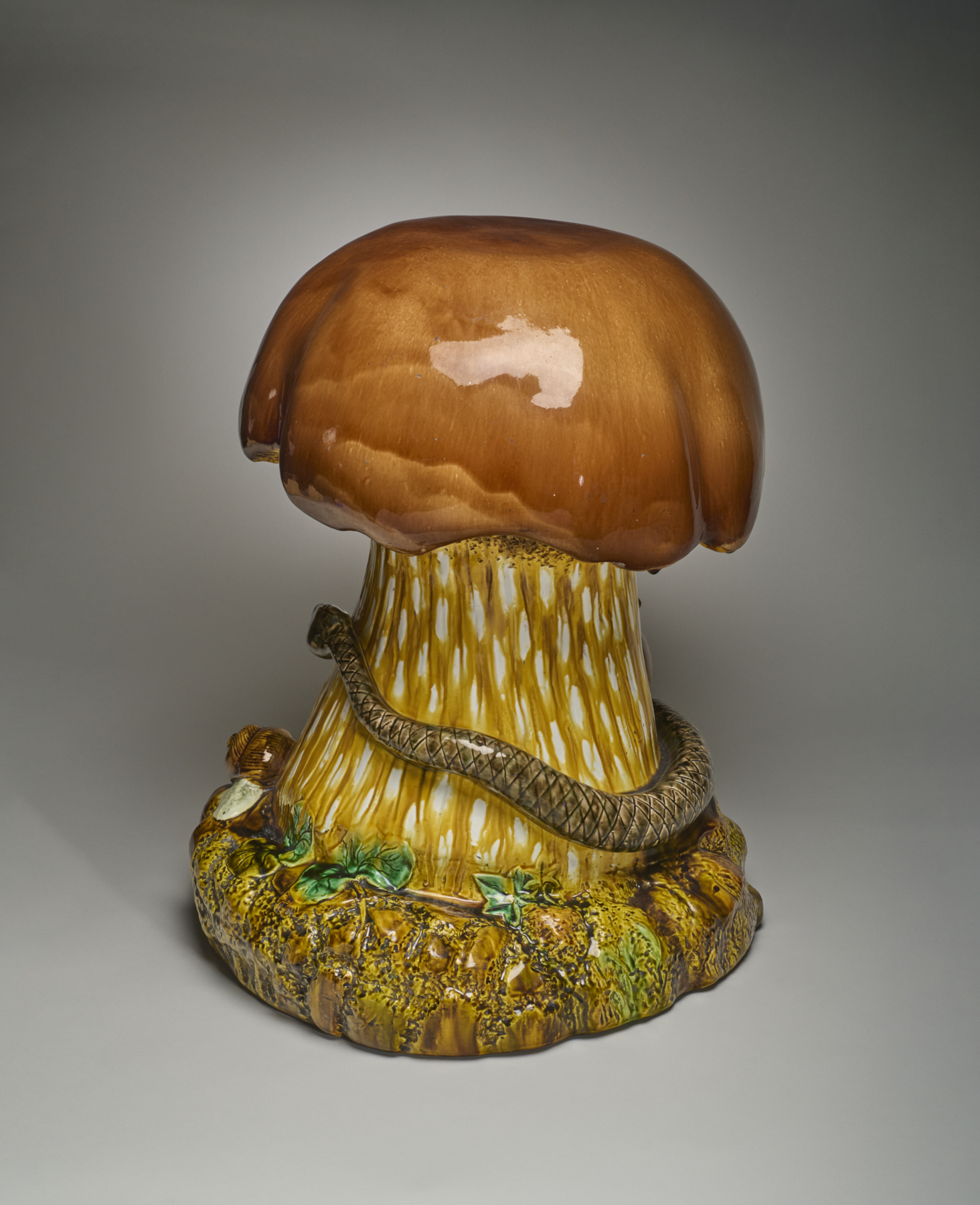
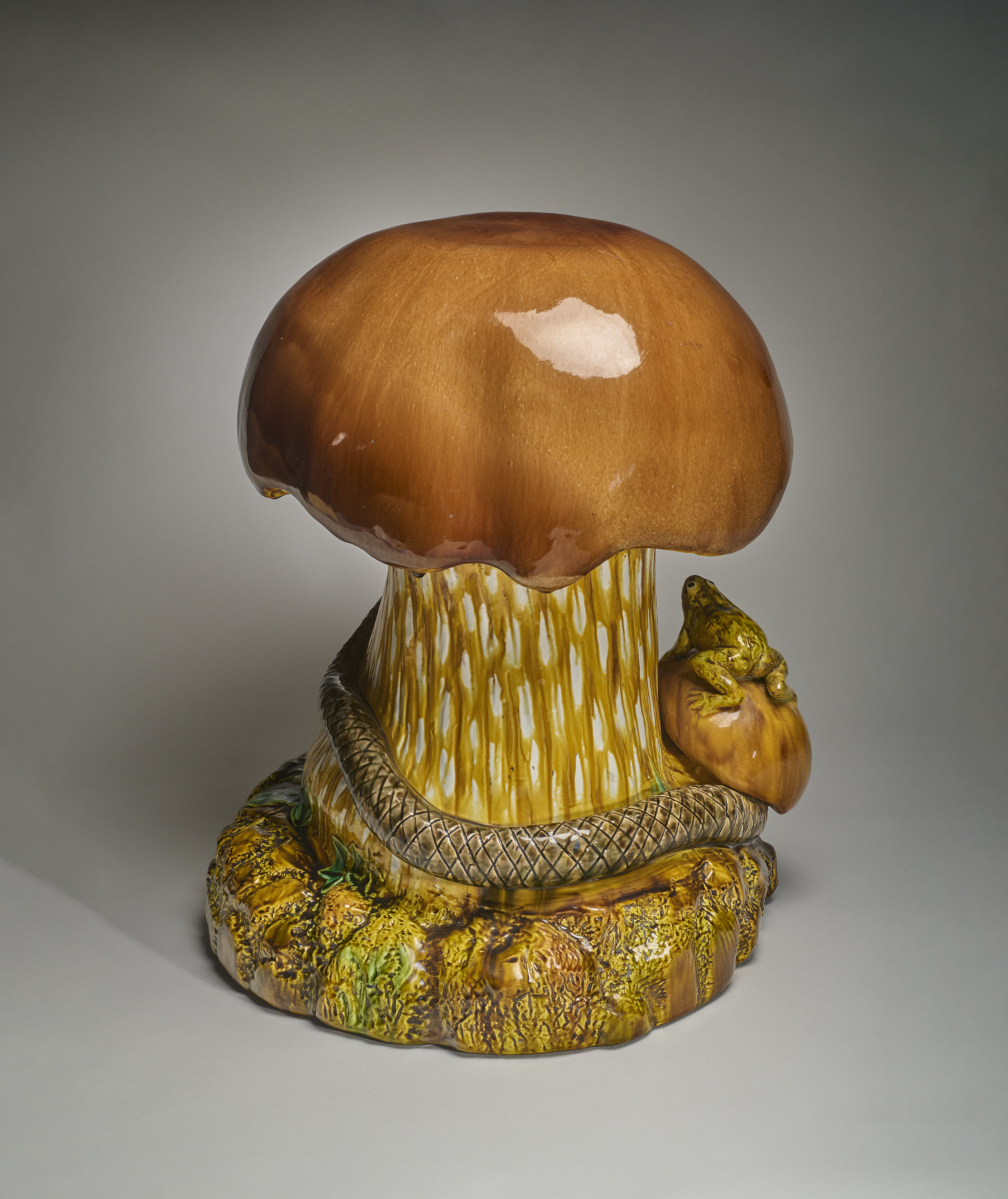
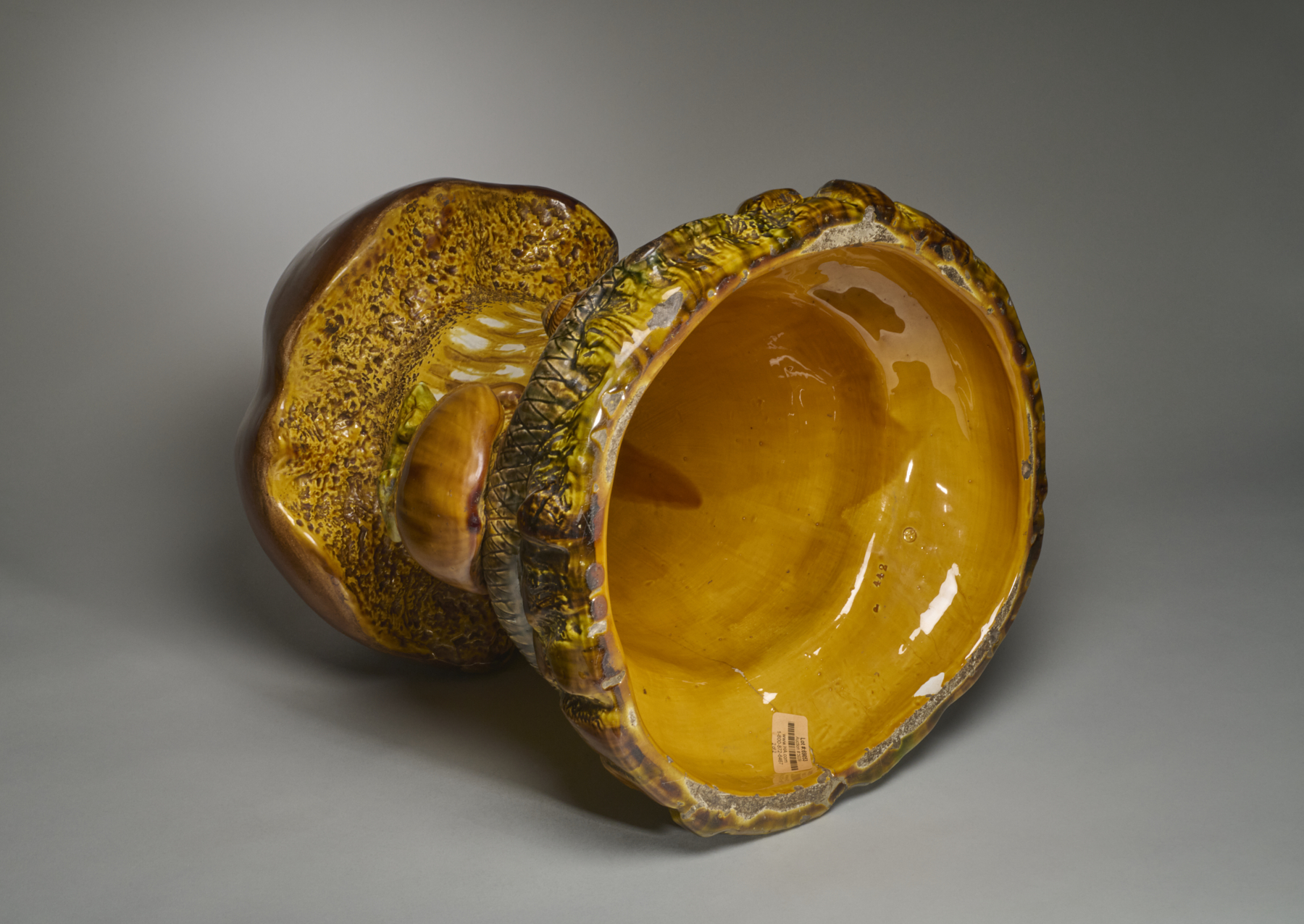
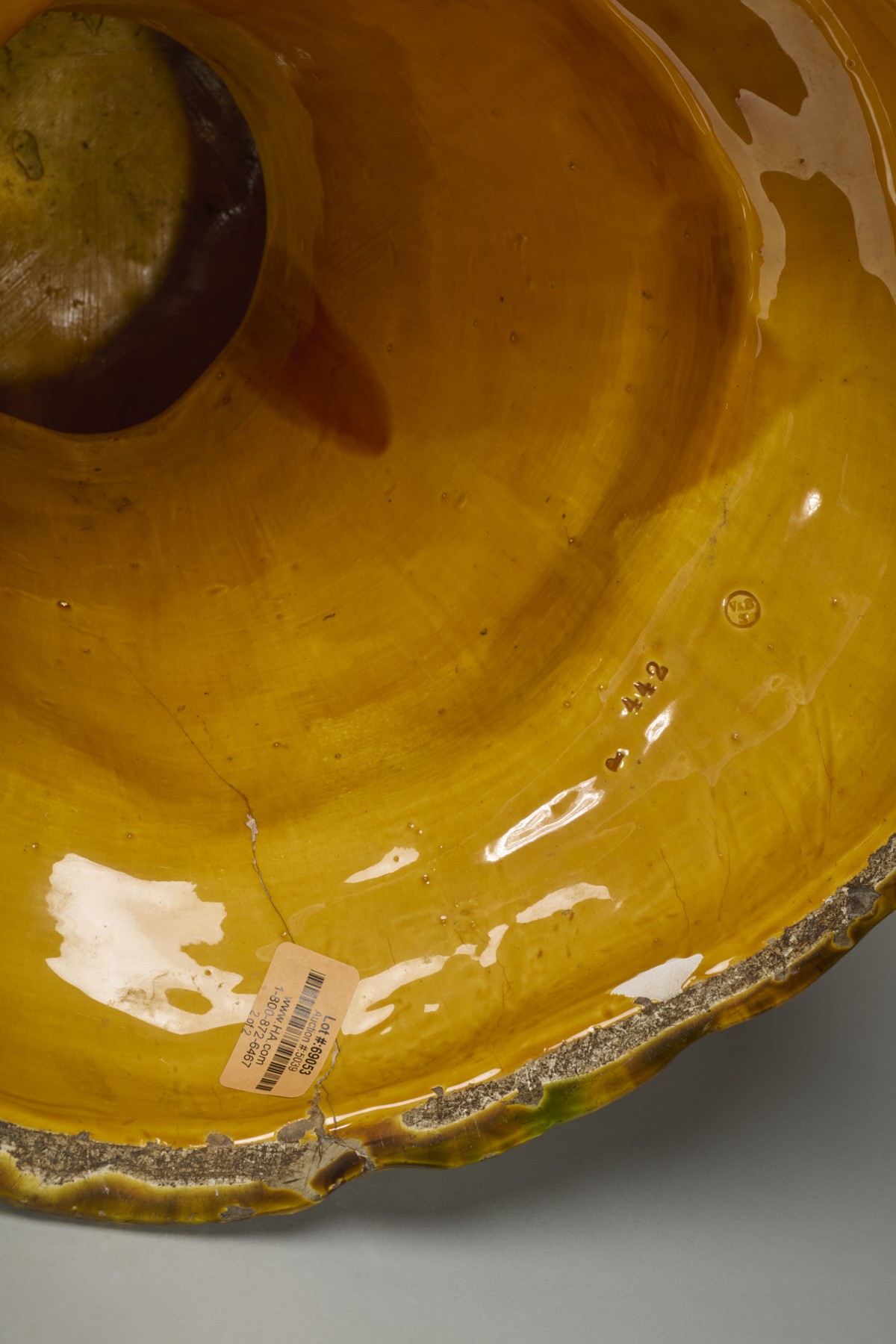
The mark on this garden seat reveals that it was made at the company’s factory in Schramberg, Baden-Württemberg, Germany, where Villeroy & Boch manufactured majolica from 1883 until 1912. The company’s majolica production was mainly limited to table wares and sculptural pieces of this scale are rare. The highly three-dimensional frogs, snails, and snake incorporated into this piece could be seen as nods to the work of Bernard Palissy (ca. 1510–1589) and his followers, which were a major source of inspiration for 19th-century potters. While its decoration gestures back to Renaissance ceramics, the garden seat is a decidedly 19th-century form that speaks to the rise of home conservatories. Impervious to water damage, ceramic furniture was perfectly suited for use in a garden or greenhouse. The design of this playful trompe l’oeil garden seat plays up its appropriateness for outdoor use, employing plants and animals to evoke a woodland setting. Like a fairytale come to life, the whimsical form of this garden seat is quite appropriate for a piece made in the Black Forest region of Germany.
Inscription
Provenance
Provenance (from the French provenir, 'to come from/forth') is the chronology of the ownership, custody, or location of a historical object. Learn more about provenance at the Walters.
Heritage Auction Galleries, Dallas, Texas,"2010 May Signature Decorative Arts & Design Auction,Sale Number 5039," 26 May 2010, lot 69053; purchased by Deborah and Philip English, Baltimore, 2010; given to the Walters Art Museum, 2025.
Measurements
H: 19 3/8 × W: 16 1/2 × D: 15 3/8 in. (49.2 × 42.1 × 39 cm)
Credit Line
Gift of Deborah and Philip English, 2025
Location in Museum
Not on view
Accession Number
In libraries, galleries, museums, and archives, an accession number is a unique identifier assigned to each object in the collection.
In libraries, galleries, museums, and archives, an accession number is a unique identifier assigned to each object in the collection.
48.2952