
 Creative Commons License
 Creative Commons License
 Creative Commons License
 Creative Commons License
 Creative Commons License
 Creative Commons License
 Creative Commons License
 Creative Commons License


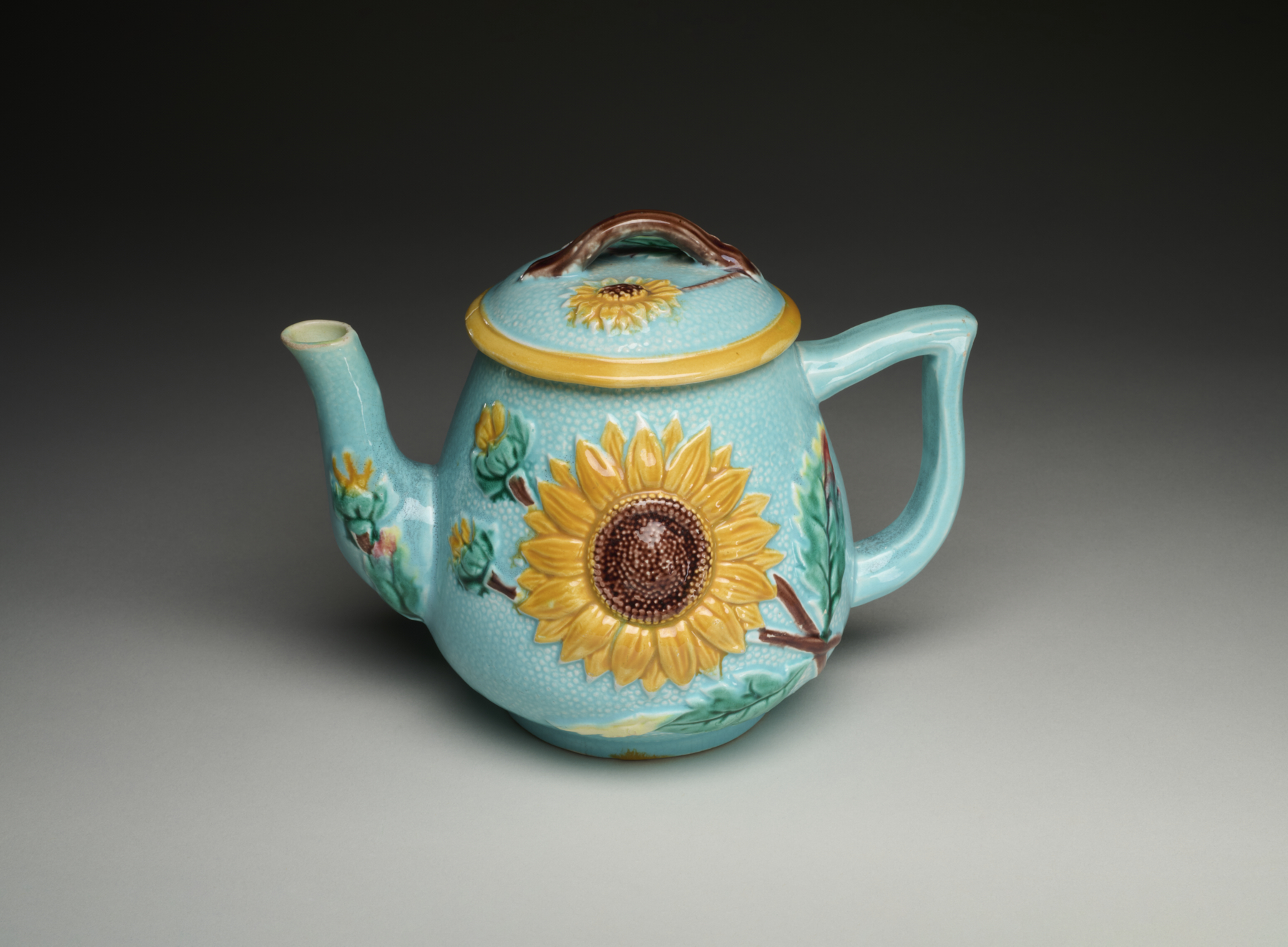
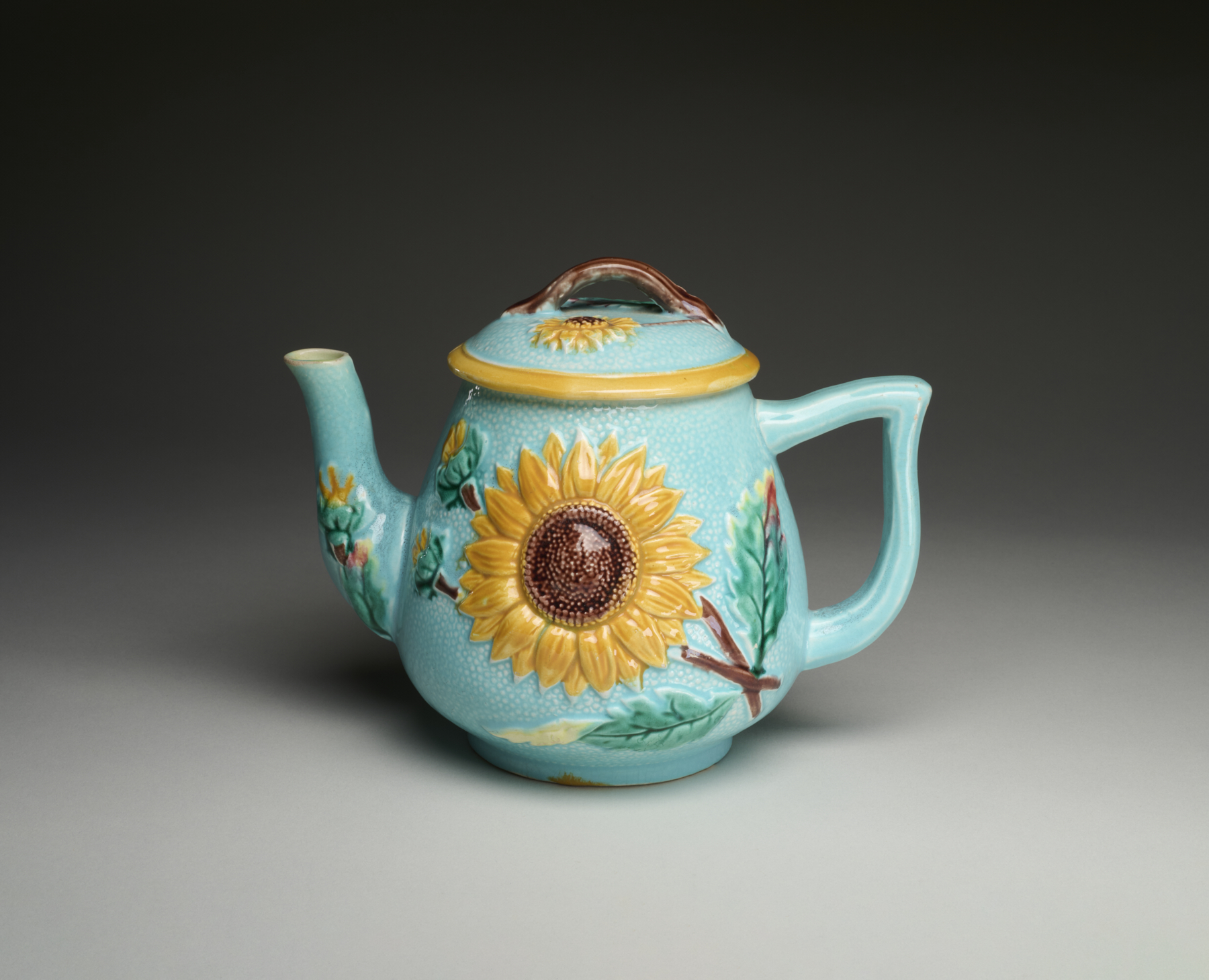
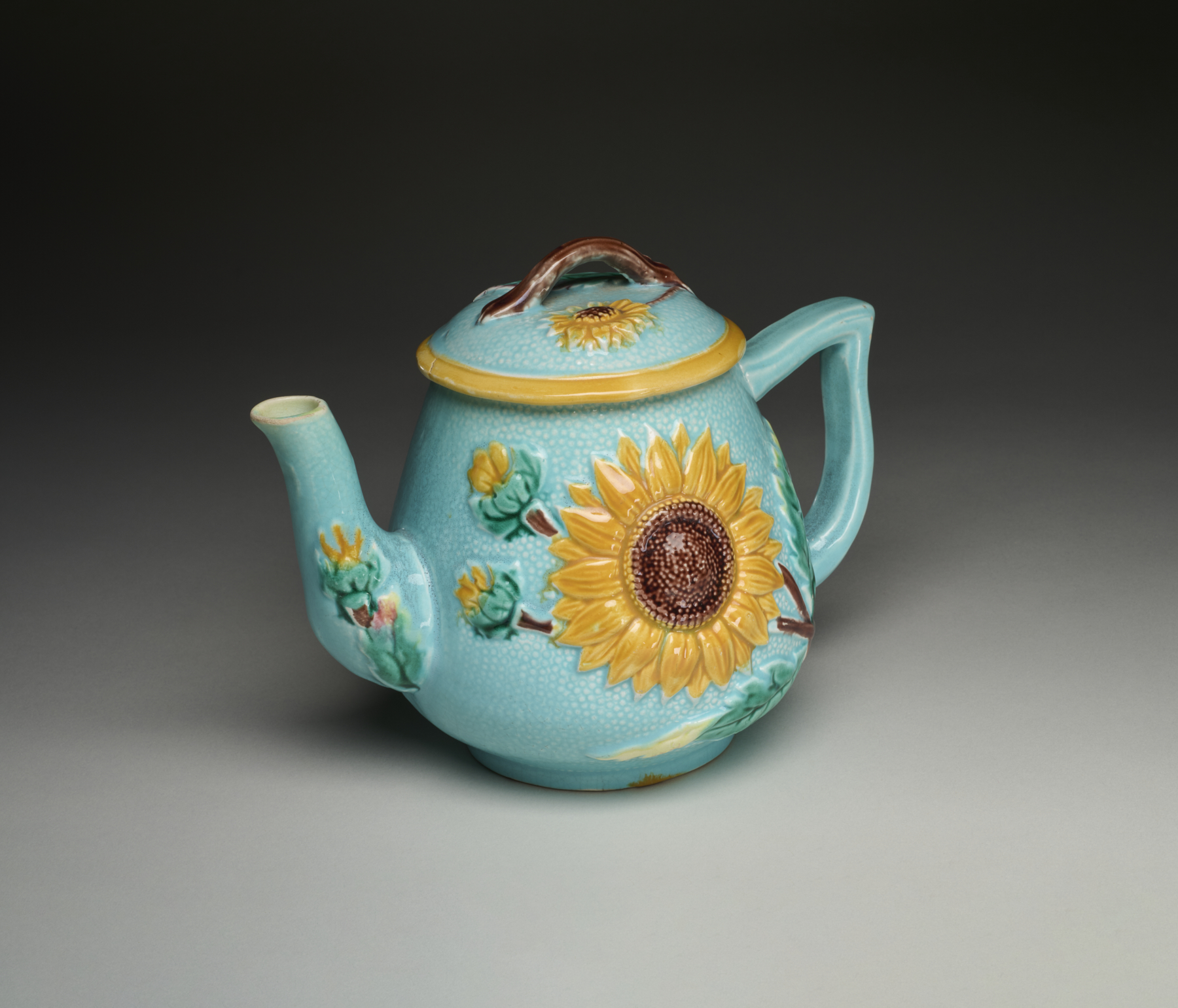
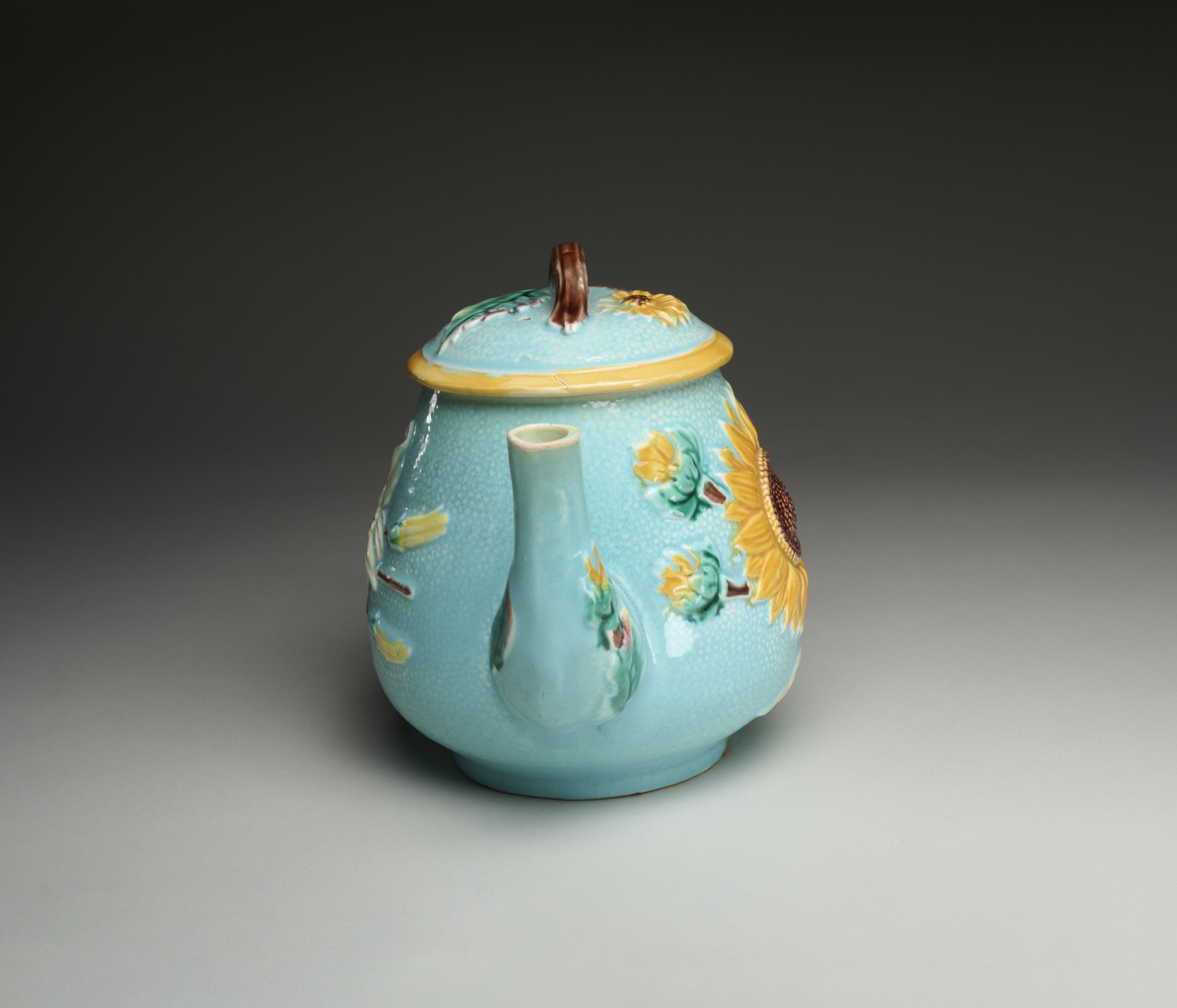
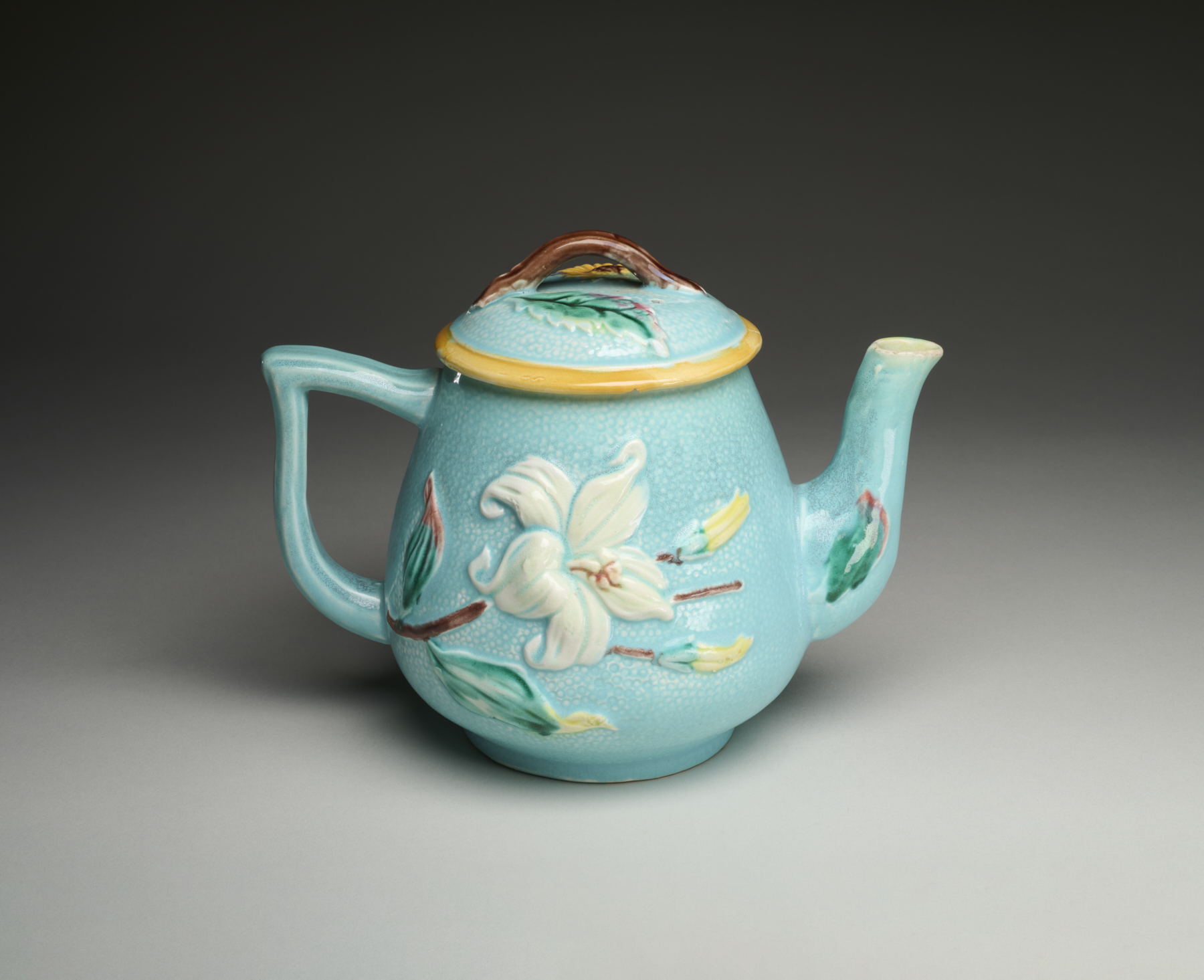
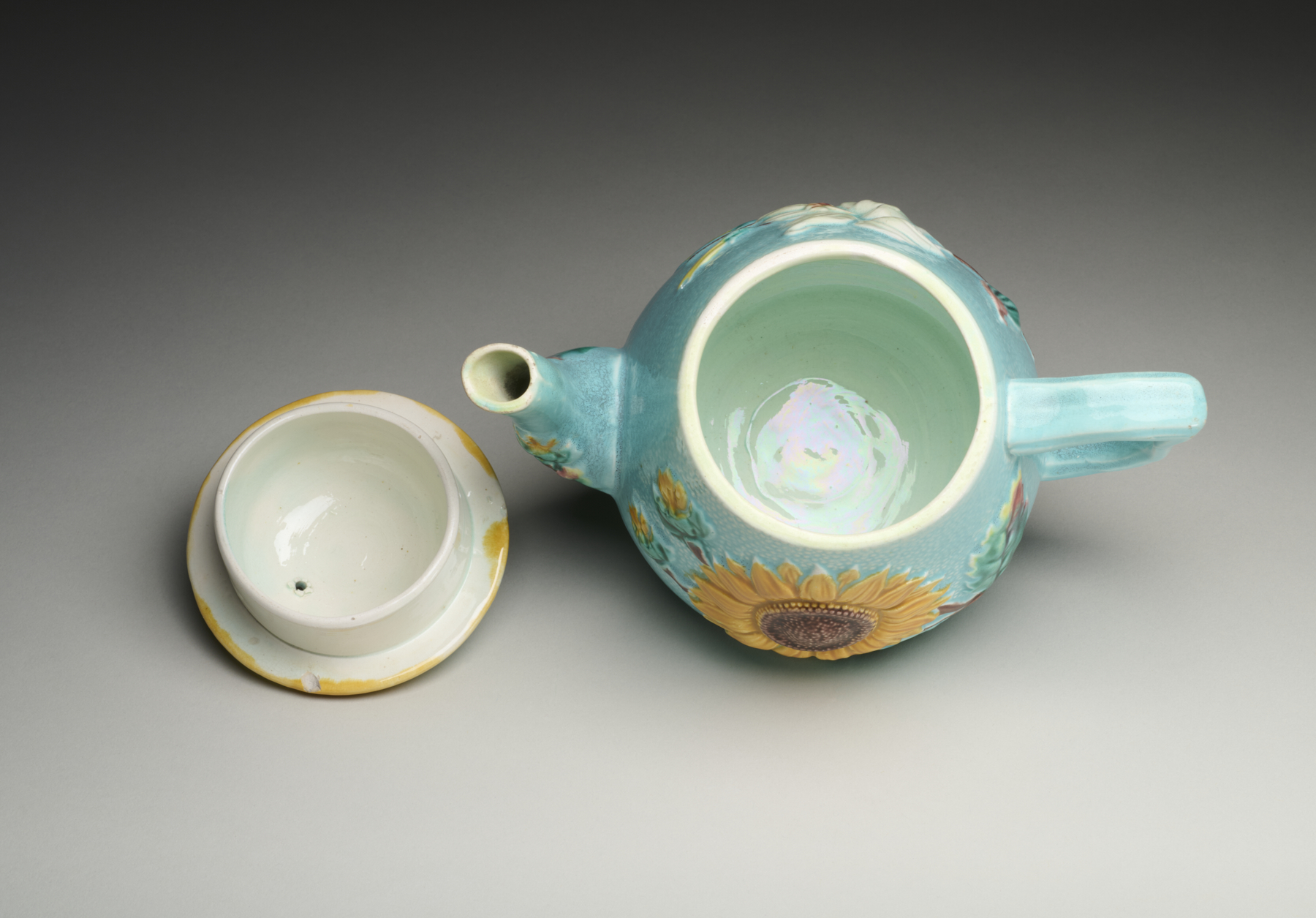
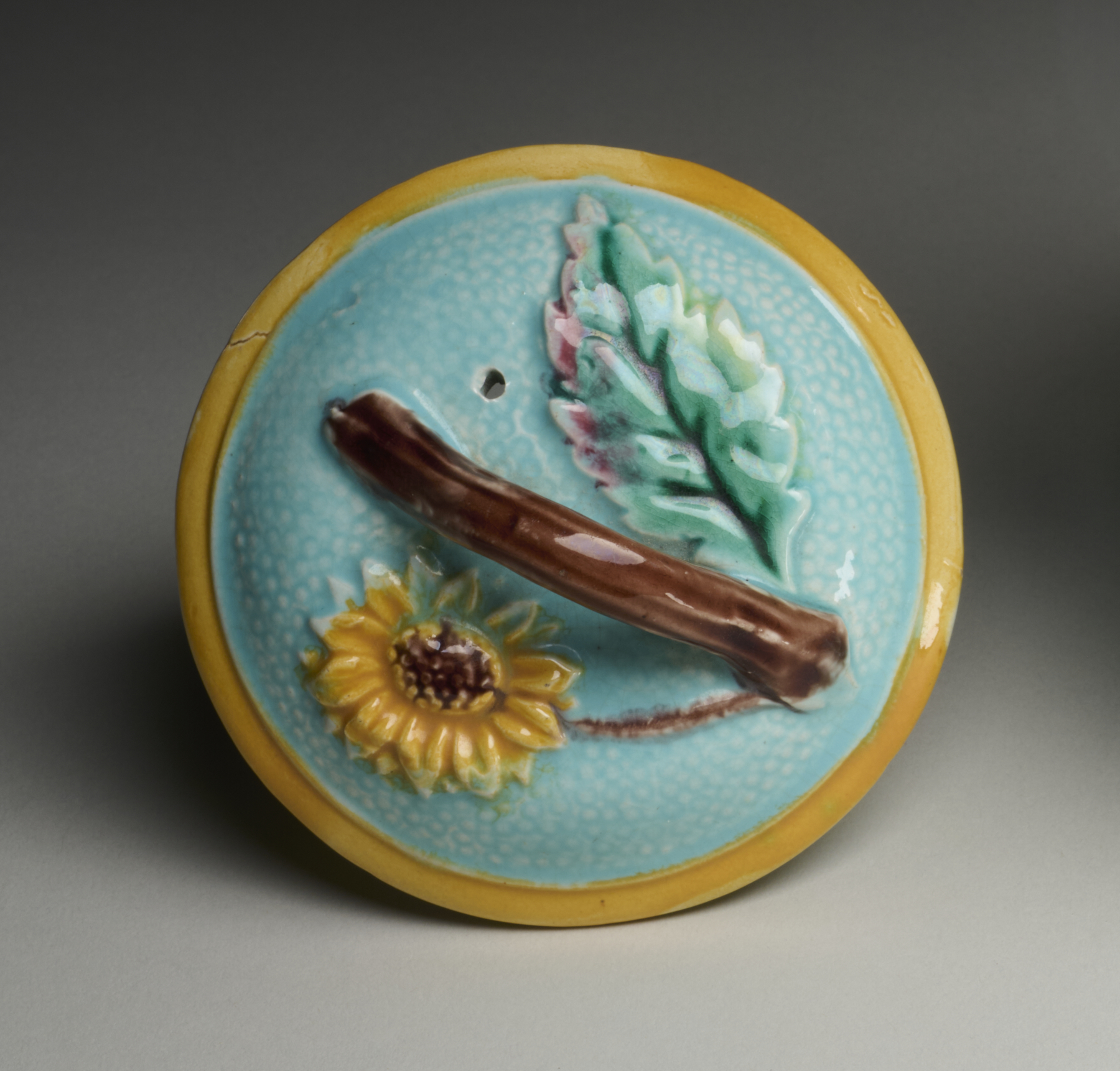
"Sunflower" Teapot
In 1860, the venerable firm of Josiah Wedgwood & Sons began manufacturing majolica, effectively ending the near monopoly on the ware that Minton & Co. had held for almost a decade. Other British manufacturers soon followed suit – largely those concentrated in the English county of Staffordshire, the heart of the British pottery industry. Some of these were established potteries with robust existing businesses, while many others were relatively recently founded, like Wardle & Co., the maker of this teapot.
Women comprised approximately 40 percent of the workforce in Staffordshire ceramic factories. Most were employed as “paintresses,” or on the "clay end," as attendants or assistants to the male potters. At Wardle & Co., however, there was an important exception—the pottery was owned and managed for many years by Eliza Wardle (ca. 1827–1889), widow of its founder, James Wardle (ca. 1823–1871). Known affectionately as “Mother Wardle,” she oversaw the firm’s growth from a small, struggling business into a successful ceramic manufacturer with a significant export trade. Wardle & Co. made majolica from about 1865, and from the mid-1870s, its production focus was on house- and tablewares, many of original design, finished in fine quality, colorful glazes. For more than thirty years, the firm was one of Britain’s major majolica manufacturers and exporters.
With “Sunflower,” Wardle catered to the fashion in the 1880s for motifs related to Aesthetic movement. This pattern, registered with the British government for design protection on July 19, 1882, pairs prominent sunflower and lily motifs on a variety of shapes including jugs, teapots, fruit dishes, wall pockets, trays, etc. Emblems of the fashionable Aesthetic movement, and archetypal symbols of beauty, these two flowers were often depicted together in other contexts, including in popular music and theater. Several other majolica manufacturers produced sunflower wares at this time including the British firms Samuel Lear; Josiah Wedgwood & Sons; and S. Fielding & Co.; as well as the American pottery Griffen, Smith & Company. The trade magazine Pottery Gazette commented on the sunflower rage in its January 1883 issue and singled out Wardle for using this motif “most judiciously.”
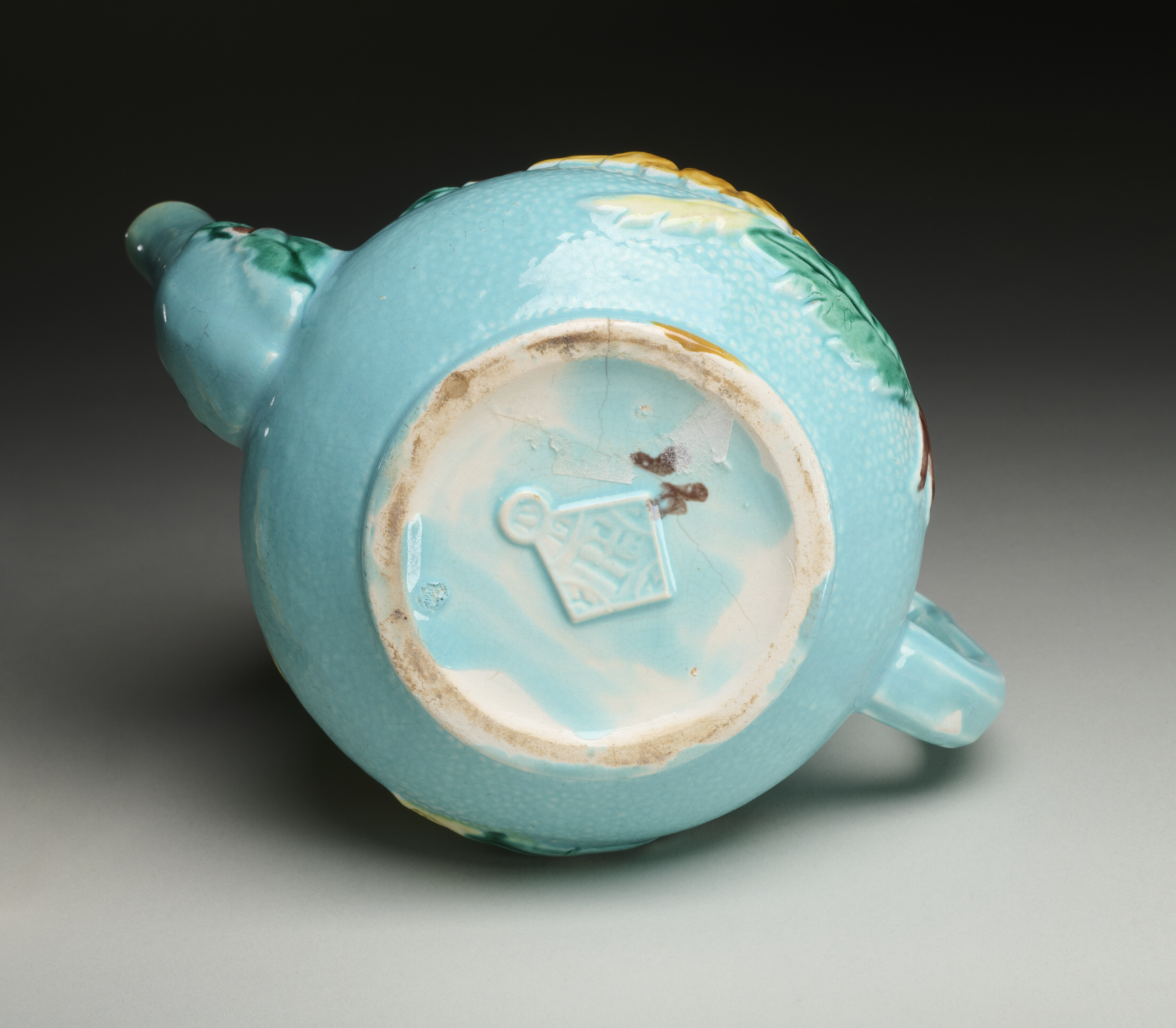
Inscription
Provenance
Provenance (from the French provenir, 'to come from/forth') is the chronology of the ownership, custody, or location of a historical object. Learn more about provenance at the Walters.
With Carol A. Kooperman (dealer), Blue Bell, Pennsylvania, by 2013 [date and mode of acquisition unknown]; purchased by Deborah and Philip English, Baltimore, 2013; given to the Walters Art Museum, 2025.
Measurements
H. 6 × W. 8 1/16 × D. 5 1/4 in. (15.3 × 20.5 × 13.4 cm)
Credit Line
Gift of Deborah and Philip English, 2025
Location in Museum
Not on view
Accession Number
In libraries, galleries, museums, and archives, an accession number is a unique identifier assigned to each object in the collection.
In libraries, galleries, museums, and archives, an accession number is a unique identifier assigned to each object in the collection.
48.2954