
 Creative Commons License
 Creative Commons License
 Creative Commons License
 Creative Commons License
 Creative Commons License
 Creative Commons License
 Creative Commons License


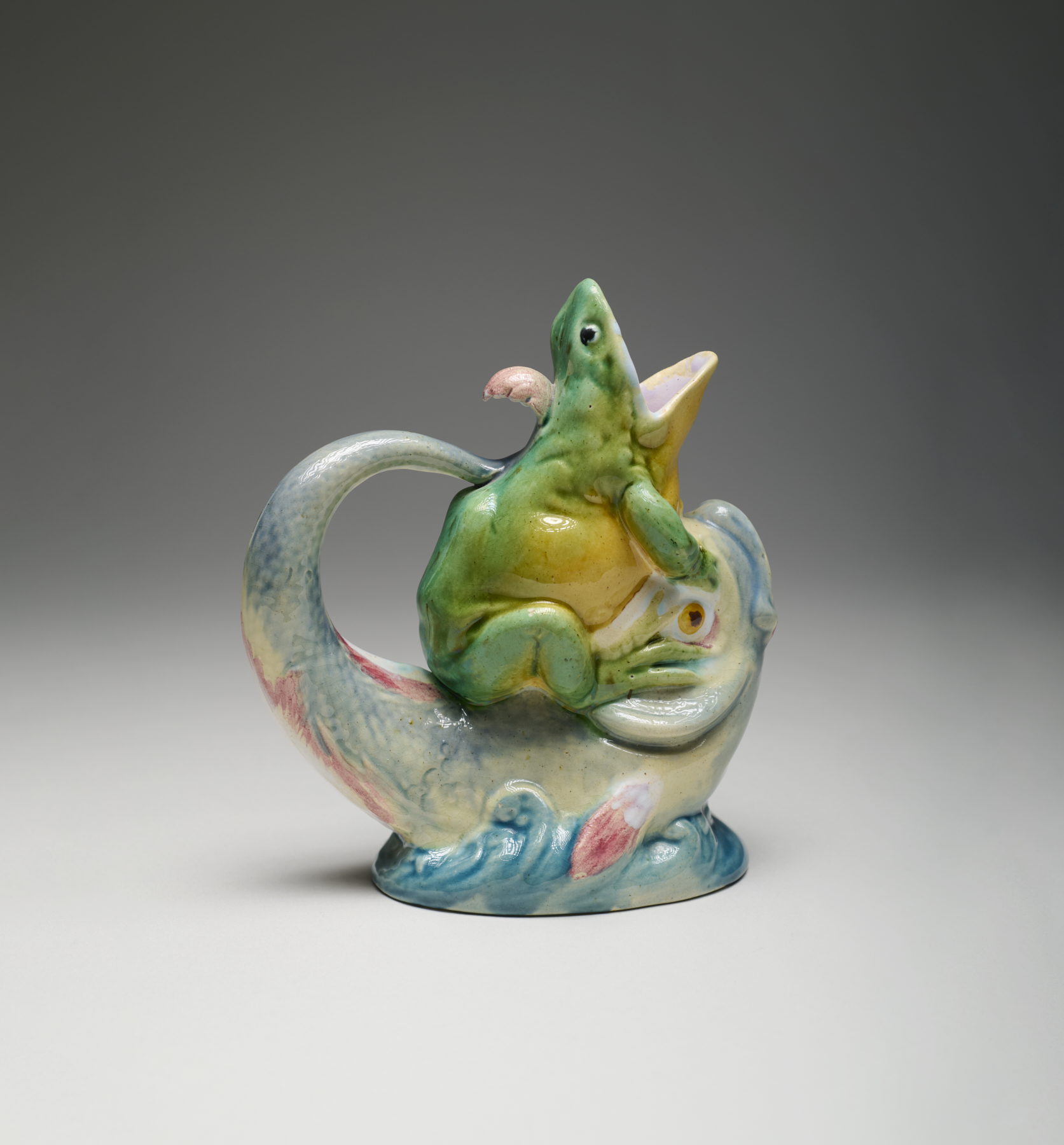
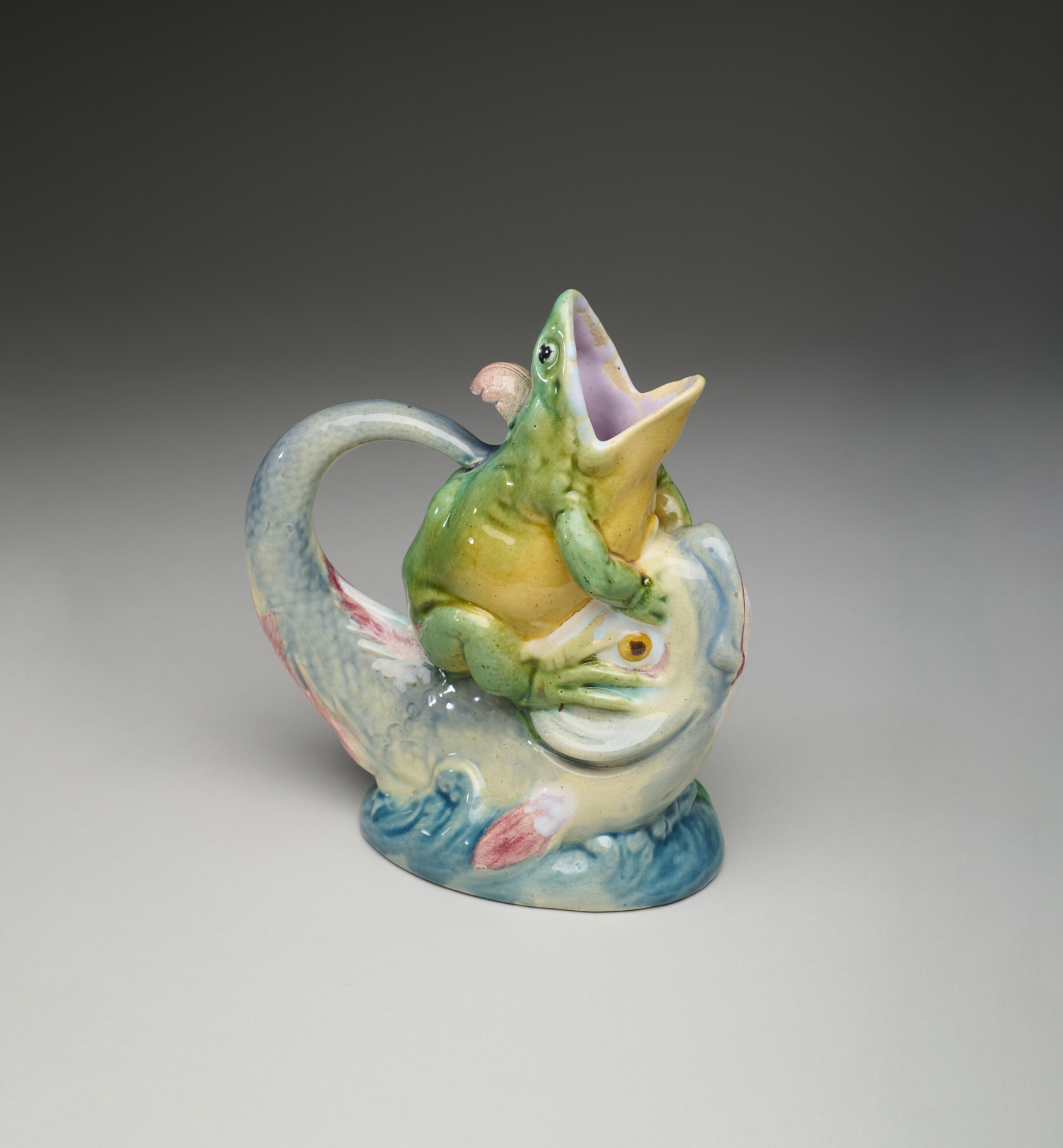
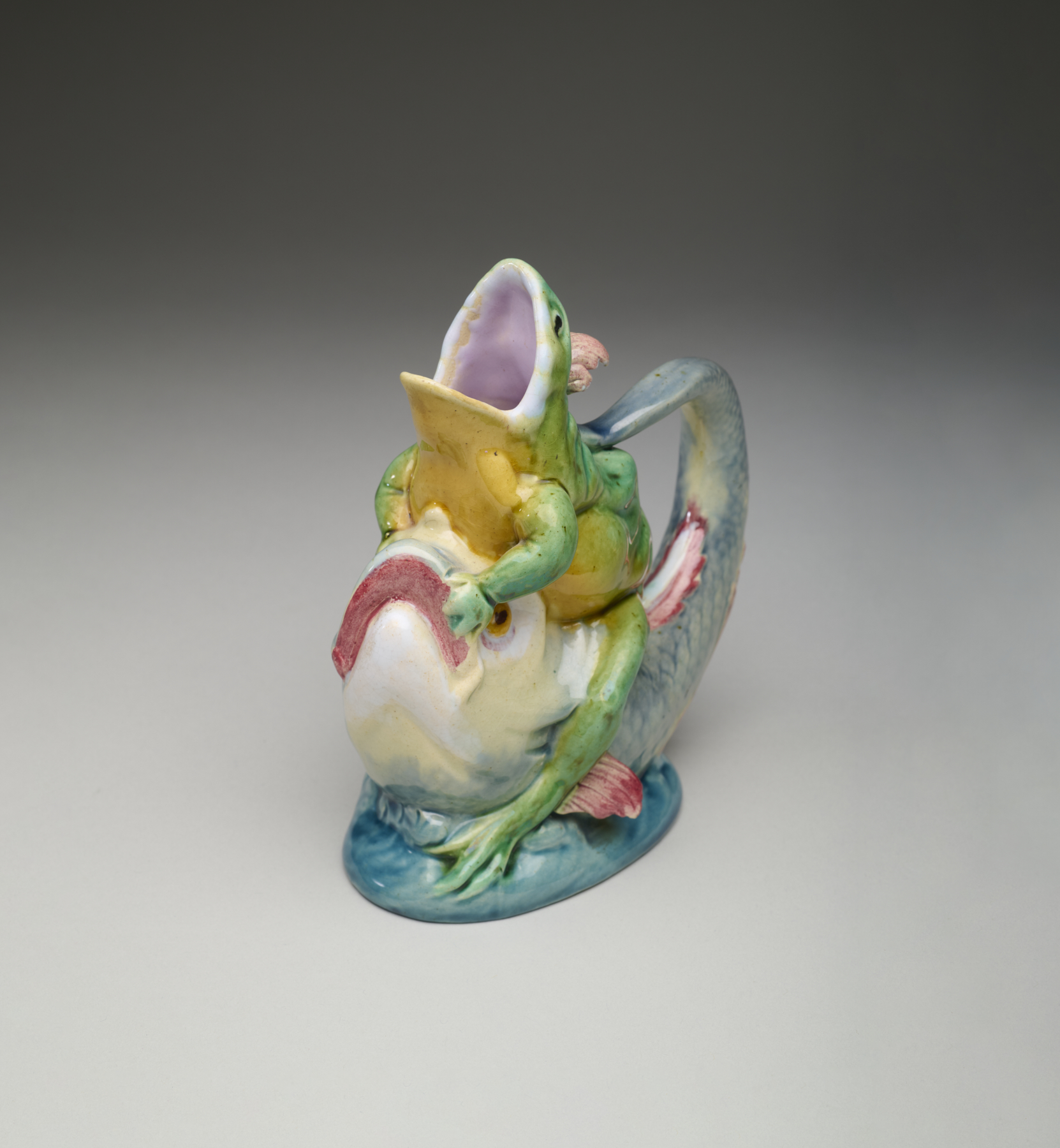
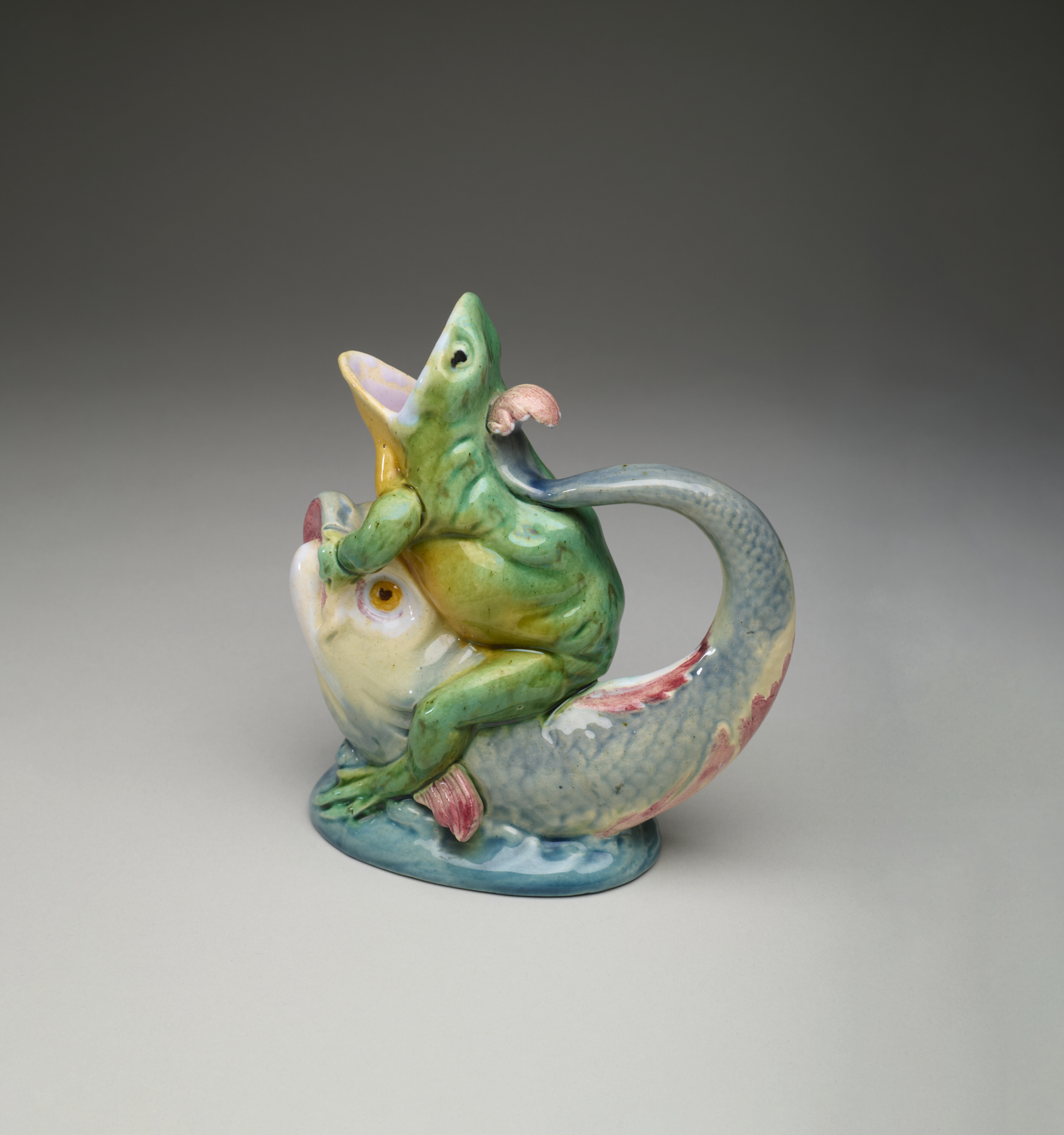
Cream Jug, shape no. 1971
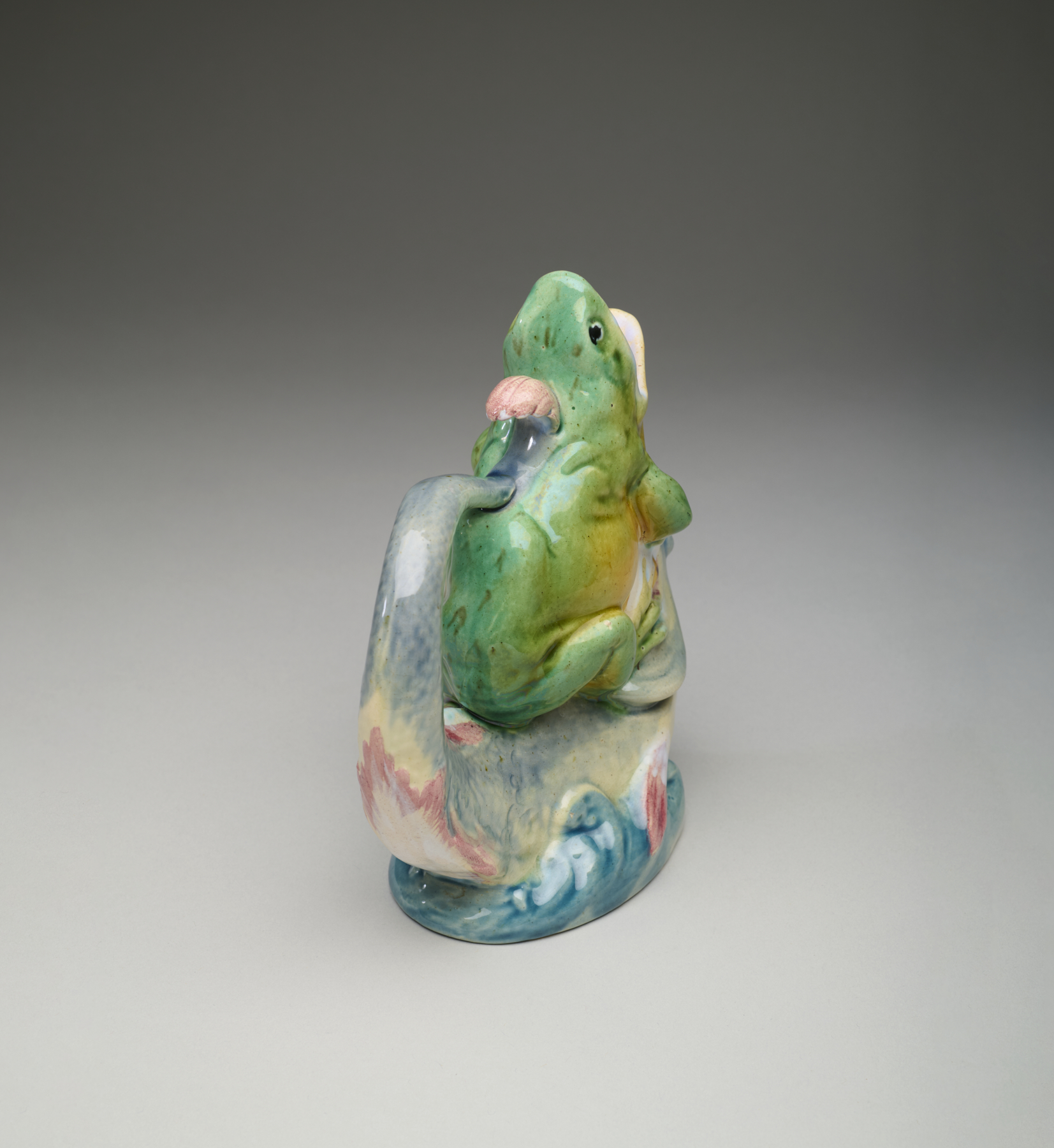
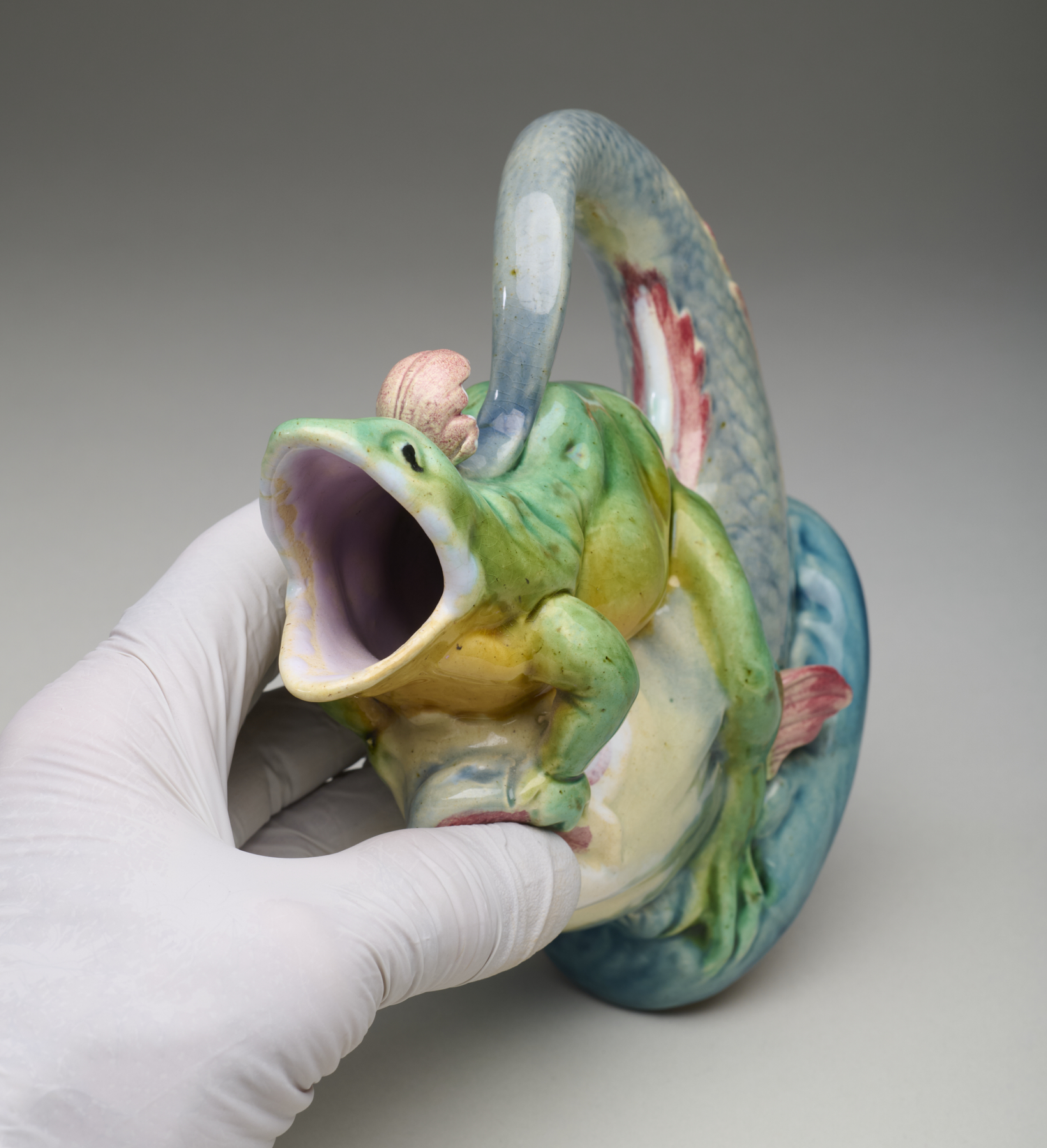
This small jug is formed as a frog riding on the back of a fish, which in turn rests on a base modeled as rippling blue-glazed water. The frog is decorated in bright shades of green and yellow with black applied to its eyes. The amphibian’s gaping mouth forms the jug’s opening and spout, its interior is glazed in light pink. The fish raises its head up under the frog’s belly and its upcurved tail, with its end resting on the frog's back, forms the jug’s handle. The fish is glazed in shades of gray, pink, and white, with ocher and black applied to its eyes.
British ceramic manufacturers created a range of ceramic novelties during the 1870s and 1880s, responding to consumer appetite for such playful models. Teapots formed as fish, monkeys, and even three-legged humans were all made in majolica as well as other materials. This “Cream Jug,” as Minton titled the model, fits within this subset of majolica. Its whimsical, playful form would have provided amusement and a topic of conversation for the breakfast or tea table of Victorian consumers.
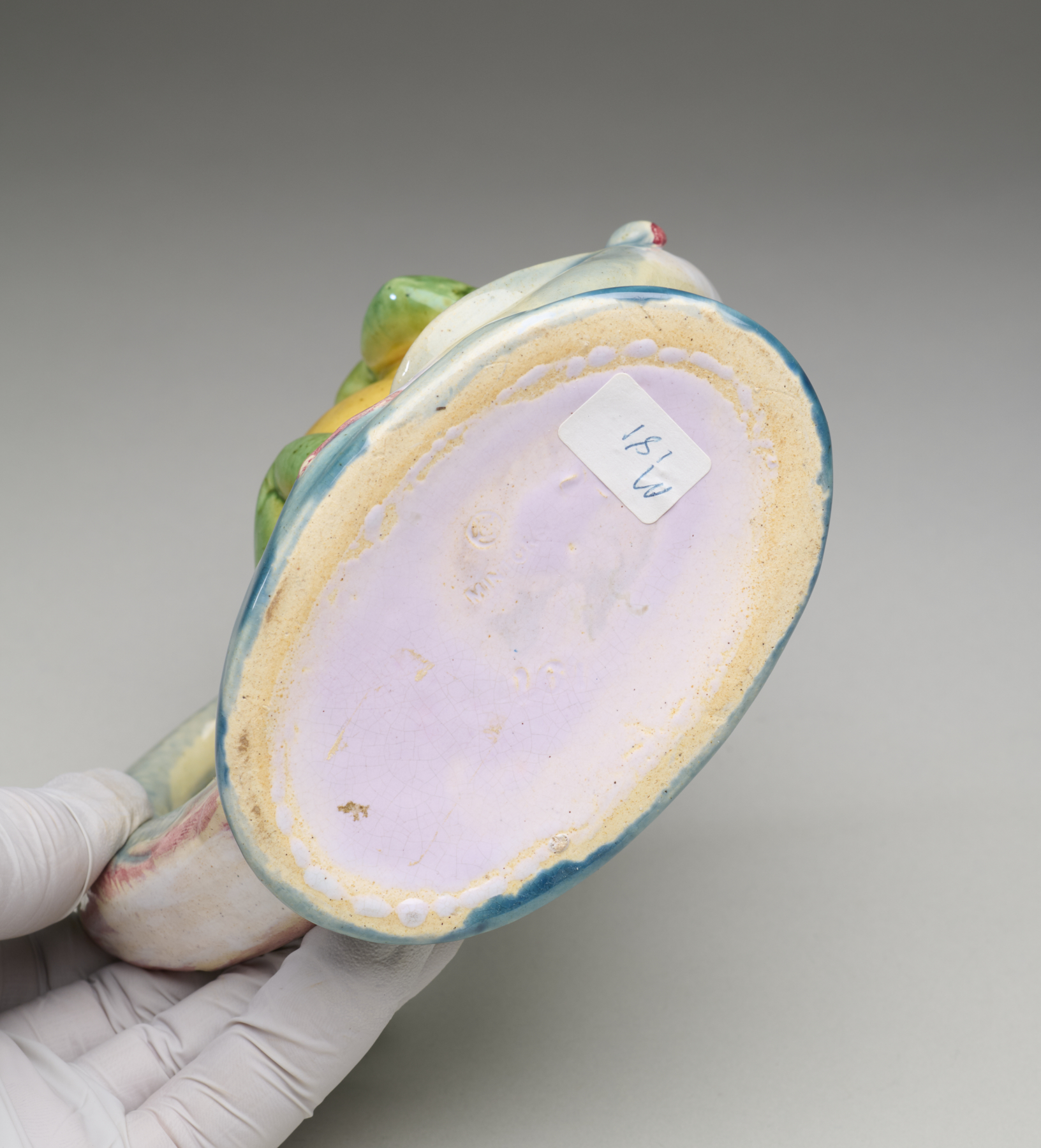
Inscription
Provenance
Provenance (from the French provenir, 'to come from/forth') is the chronology of the ownership, custody, or location of a historical object. Learn more about provenance at the Walters.
With Linda Ketterling (dealer), Toledo, Ohio, by 1998 [date and mode of acquisition unknown]; purchased by Deborah and Philip English, Baltimore, 1998; given to the Walters Art Museum, 2025.
Measurements
H: 6 1/4 × W: 5 1/2 × D: 2 3/4 in. (15.7 × 13.9 × 7 cm)
Credit Line
Gift of Deborah and Philip English, 2025
Location in Museum
Not on view
Accession Number
In libraries, galleries, museums, and archives, an accession number is a unique identifier assigned to each object in the collection.
In libraries, galleries, museums, and archives, an accession number is a unique identifier assigned to each object in the collection.
48.2957