
 Creative Commons License
 Creative Commons License
 Creative Commons License
 Creative Commons License


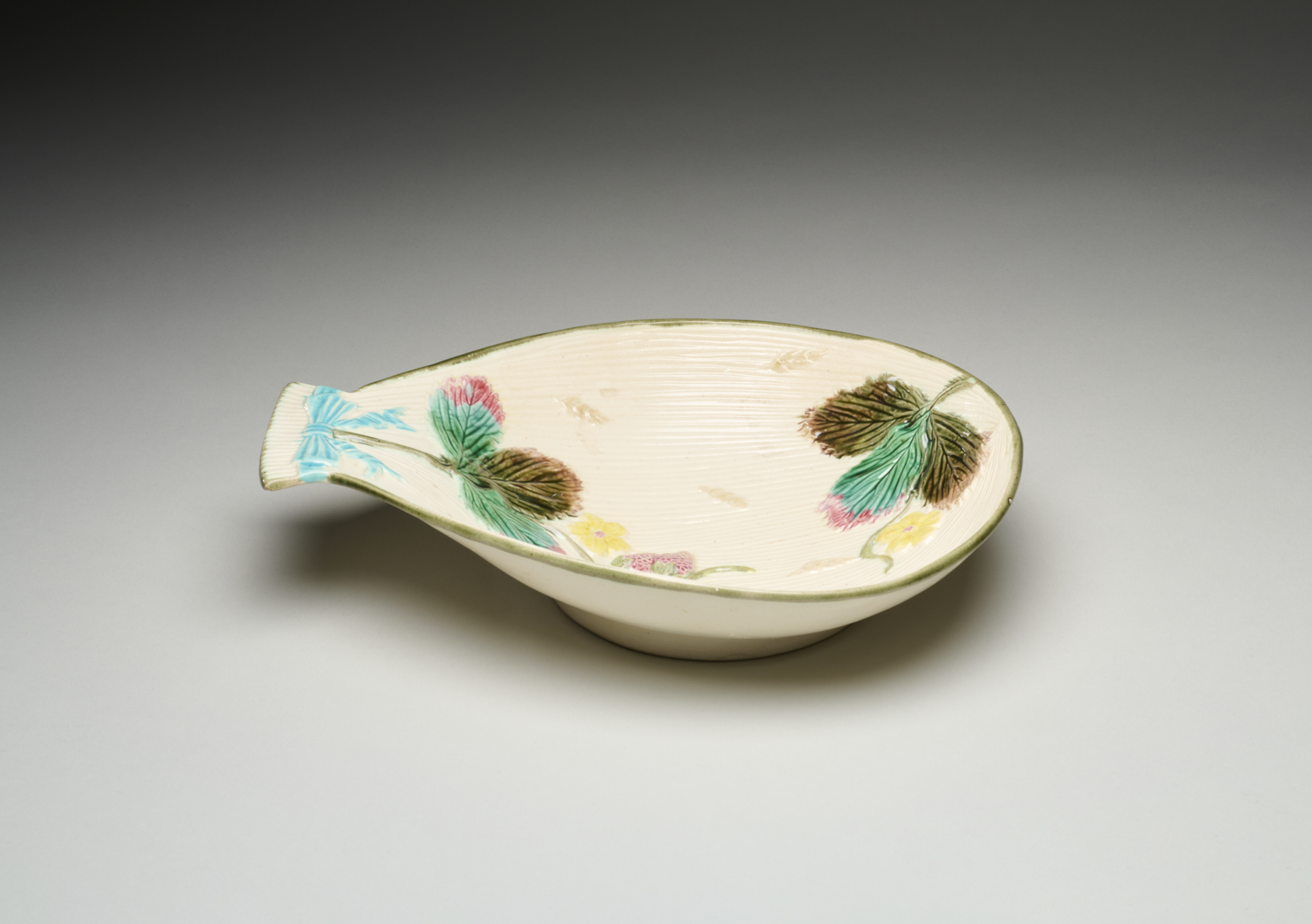
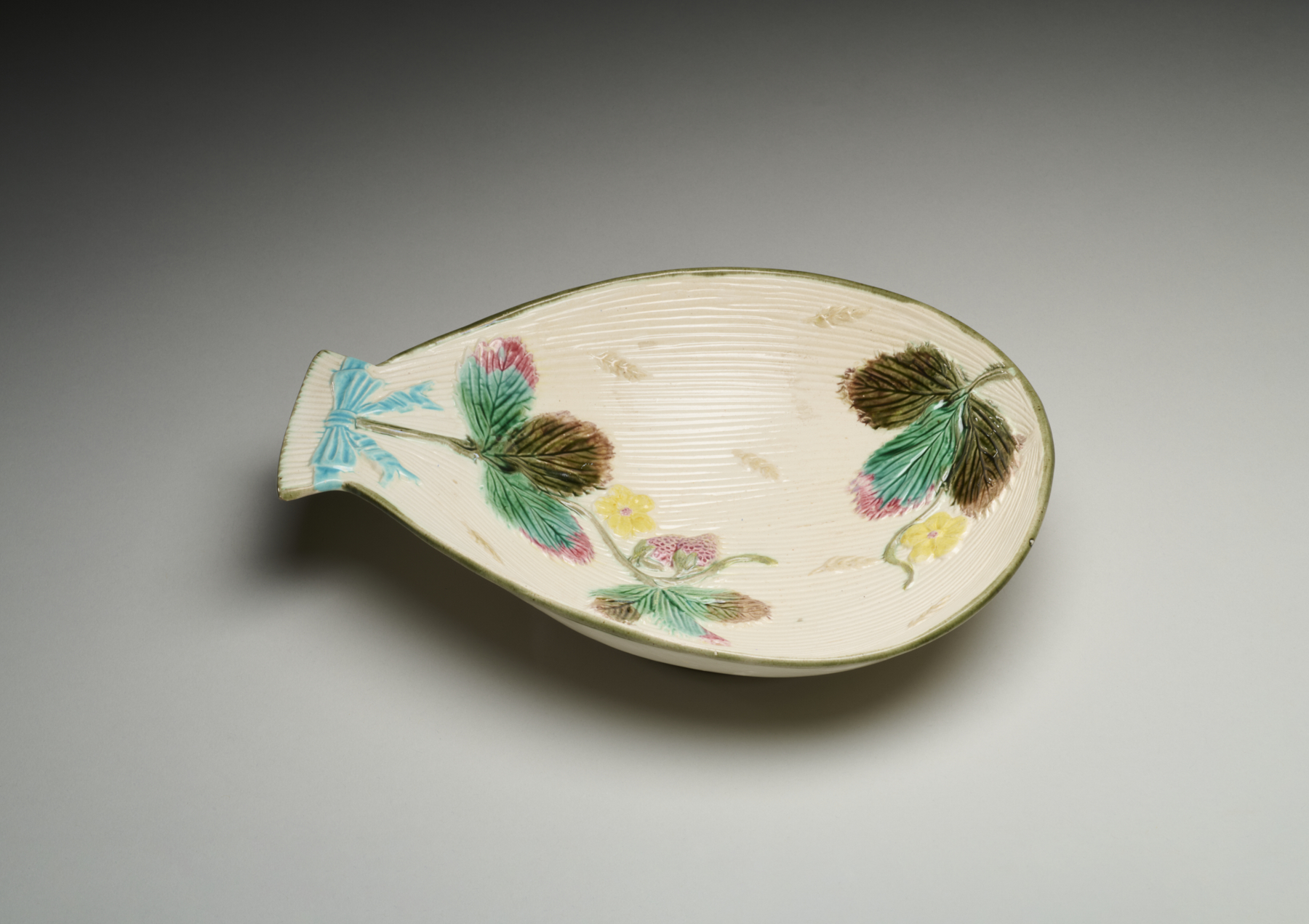
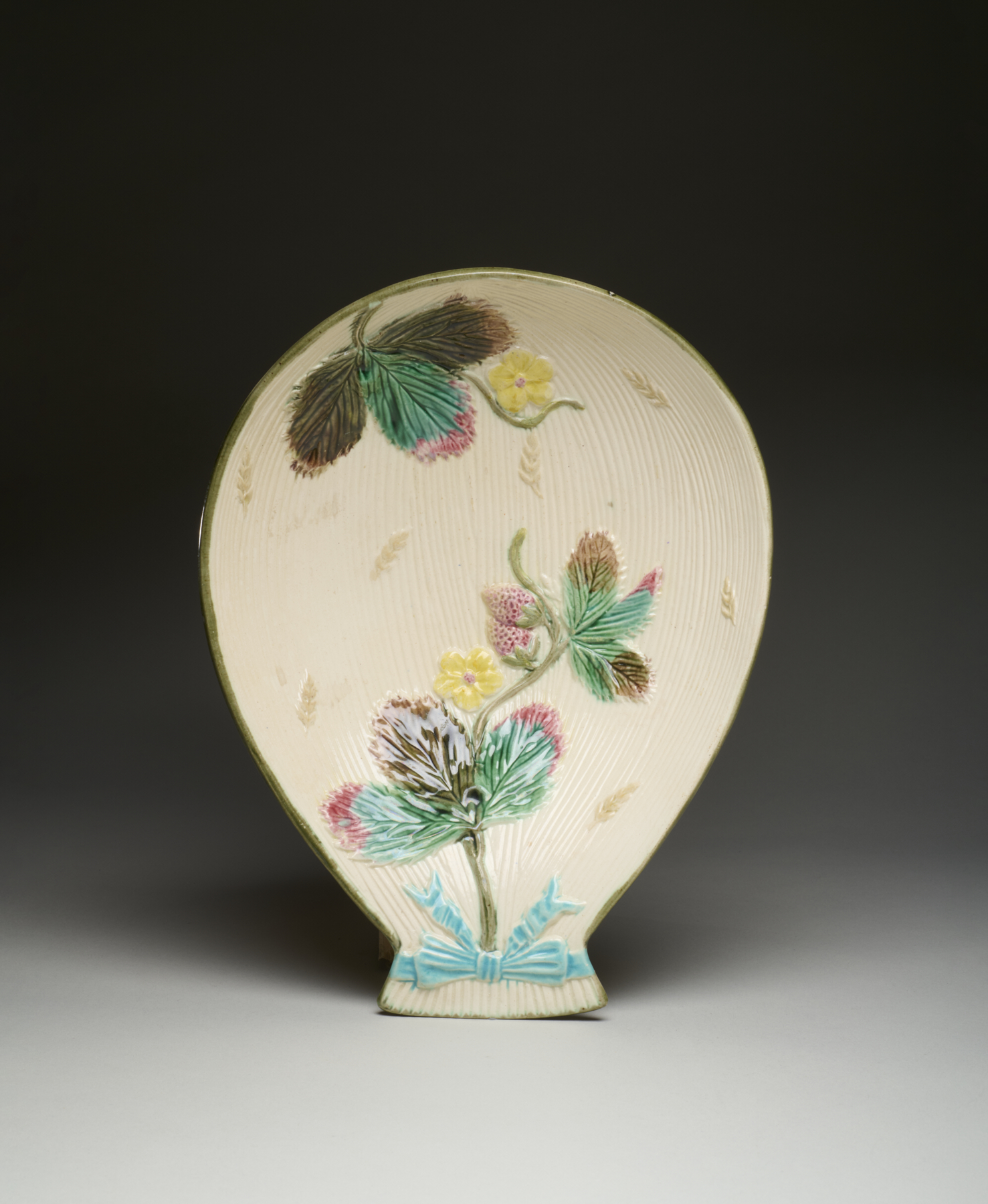
"Strawberry" Clifton Decor Dish
Baltimore developed into an important commercial center and port over the course of the eighteenth and nineteenth centuries. Founded in 1729 on the Chesapeake Bay, the city was ideally situated for Atlantic maritime trade, and as manufacturing grew, its reach expanded westward with the opening in 1830 of the Baltimore and Ohio Railroad. The surrounding region contained significant deposits of clay, flint, and other raw materials, as well as access to coal—resources essential to the development of a ceramic industry. As a major port of entry, second only to New York, Baltimore welcomed the many European migrants who ensured a steady supply of labor. All of these factors contributed to the success of Baltimore’s potteries in the late nineteenth century.
This dish is a good example of the majolica produced by the Baltimore-based D. F. Haynes & Co. in the 1880s. David Francis Haynes (1835–1908), a ceramics and glass importer and wholesaler, began operating the Chesapeake Pottery (founded 1880) in the Locust Point section of the city in 1882 and soon became known as one of the important American manufacturers of both practical and ornamental ceramics. One of D. F. Haynes & Co.’s early principal product lines was its “Clifton Decor” majolica, introduced in 1882, which remained in production until about 1886. Haynes’s manufacture of majolica reflects the popularity of the colorfully-glazed ware among American consumers, an appetite that had grown from the mid-1860s onwards when the English-made majolica was first imported in large quantities to the United States. American potteries like D. F. Haynes & Co. began to produce majolica in the late 1870s and through the 1880s, before the ware fell increasingly out of fashion in the 1890s. The white grounds found on the “Clifton Decor” ware made by Haynes reflect a popular style of majolica decoration pioneered by the British firm Josiah Wedgwood & Sons in 1878–9, and subsequently made by a variety of English and American makers.
Haynes hired seasoned Staffordshire potters to manage the works, including Frederick Hackney (1848–1892). Hackney had trained at Wedgwood, a leading English majolica manufacturer, and subsequently was a partner in Hackney, Kirkham & Co., the precursor to S. Fielding & Co., which specialized in the colorful earthenware. Chesapeake Pottery made a variety of wares from 1882 until 1912, but majolica was a mainstay in the firm’s early years. Many of Chesapeake’s patterns and decorations were adapted from English prototypes, especially those of Josiah Wedgwood & Sons.
By February 1883, D. F. Haynes & Co. was advertising an addition to its majolica line—a “Strawberry” jug. Once again, Chesapeake’s inspiration seems to have come from a Wedgwood prototype of the late 1870s. Many English and American manufacturers made patterns featuring strawberry motifs, as well as wares used to serve the spring fruit, in response to the growing popularity and availability of strawberries. Chesapeake’s “Strawberry” pattern was applied to a variety of shapes, including this dish.
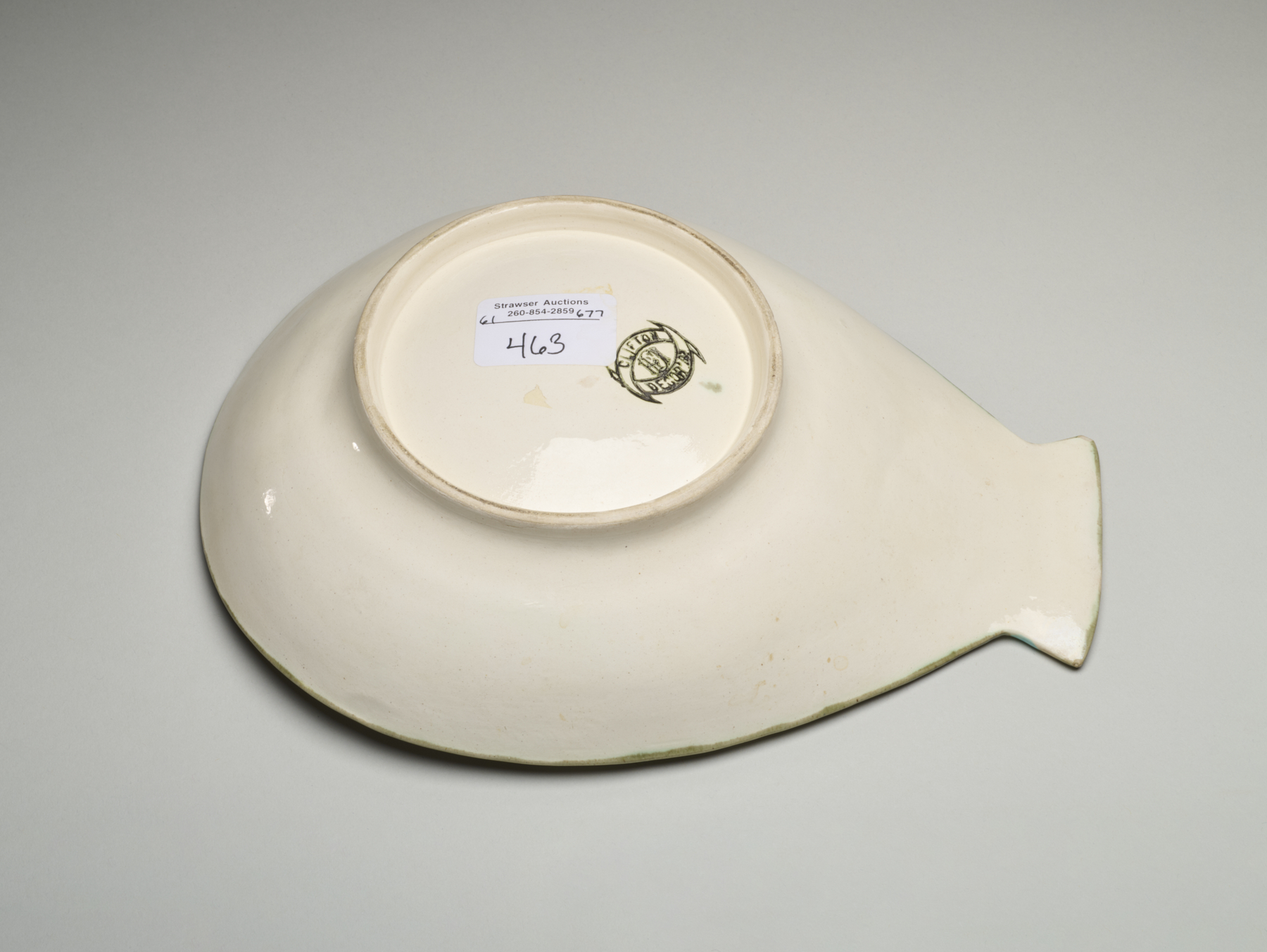
Inscription
Provenance
Provenance (from the French provenir, 'to come from/forth') is the chronology of the ownership, custody, or location of a historical object. Learn more about provenance at the Walters.
Strawser Auction Group, Hatfield, Pennsylvania, “Majolica, Staffordshire, & Oyster Plates,” 29 October 2010, lot 463; purchased by Deborah and Philip English, Baltimore, 2010; given to the Walters Art Museum, 2025.
Measurements
H: 2 3/8 × W: 10 × D: 7 3/4 in. (5.8 × 25.3 × 19.6 cm)
Credit Line
Gift of Deborah and Philip English, 2025
Location in Museum
Not on view
Accession Number
In libraries, galleries, museums, and archives, an accession number is a unique identifier assigned to each object in the collection.
In libraries, galleries, museums, and archives, an accession number is a unique identifier assigned to each object in the collection.
48.2961