
 Creative Commons License
 Creative Commons License
 Creative Commons License
 Creative Commons License
 Creative Commons License
 Creative Commons License
 Creative Commons License
 Creative Commons License


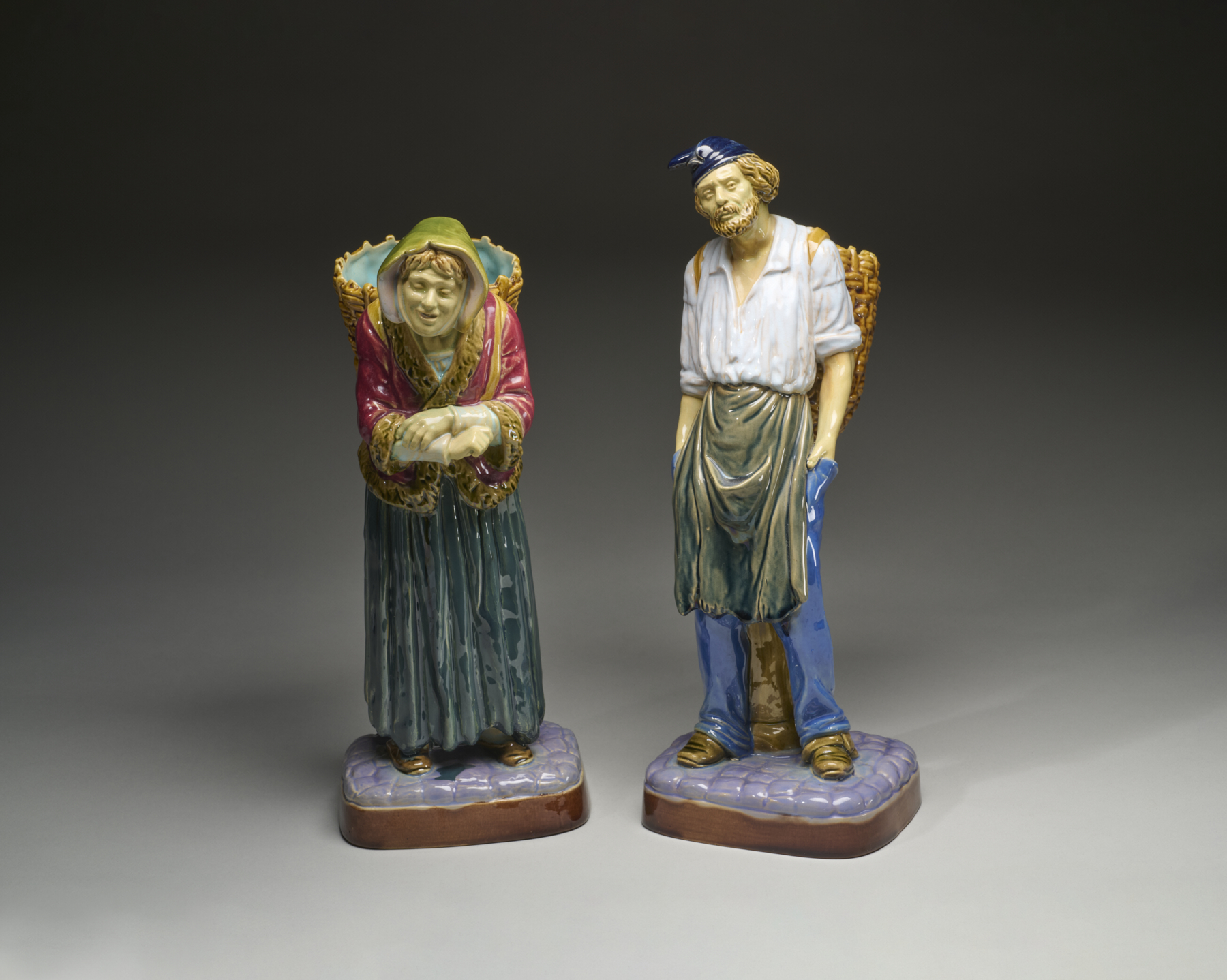
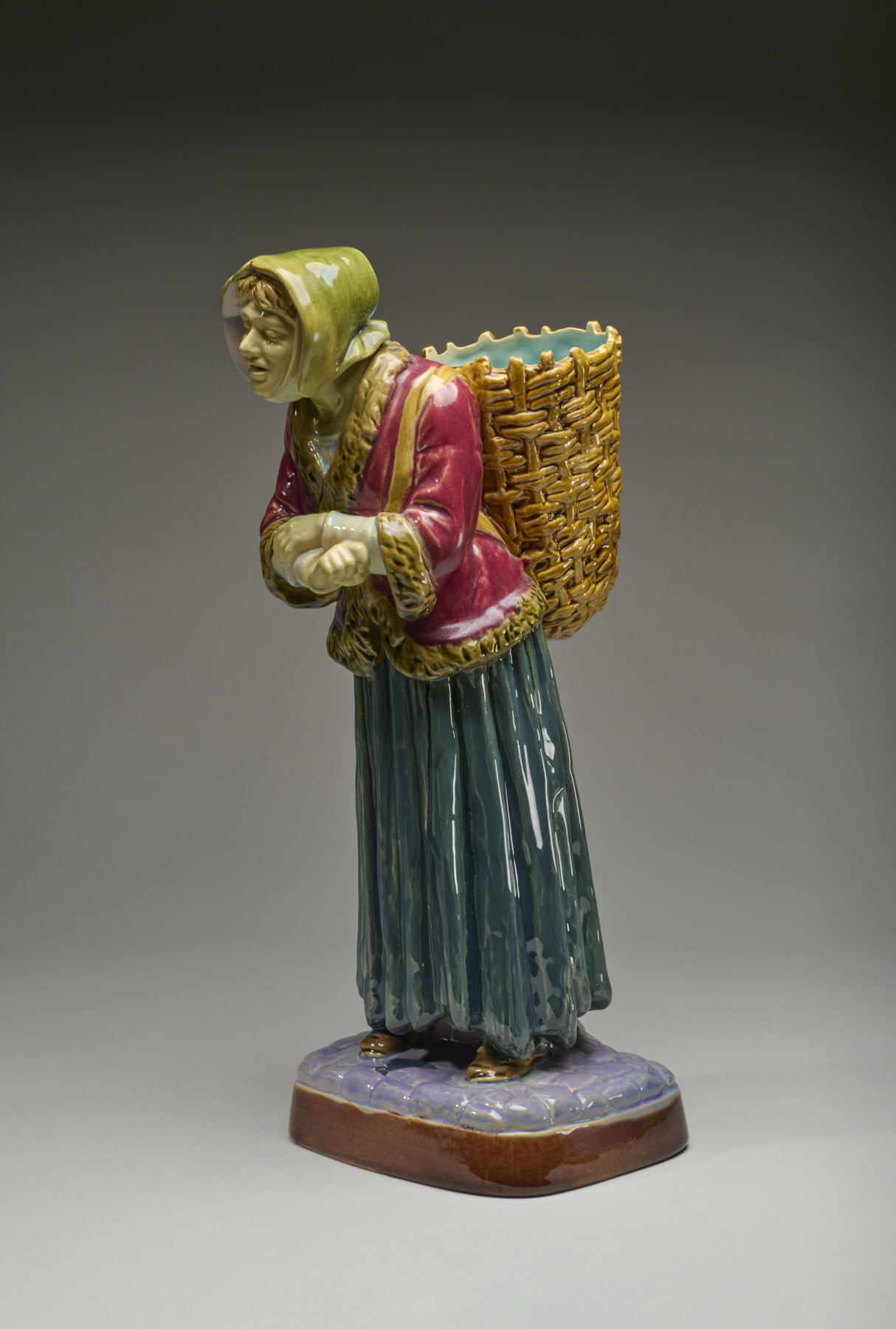
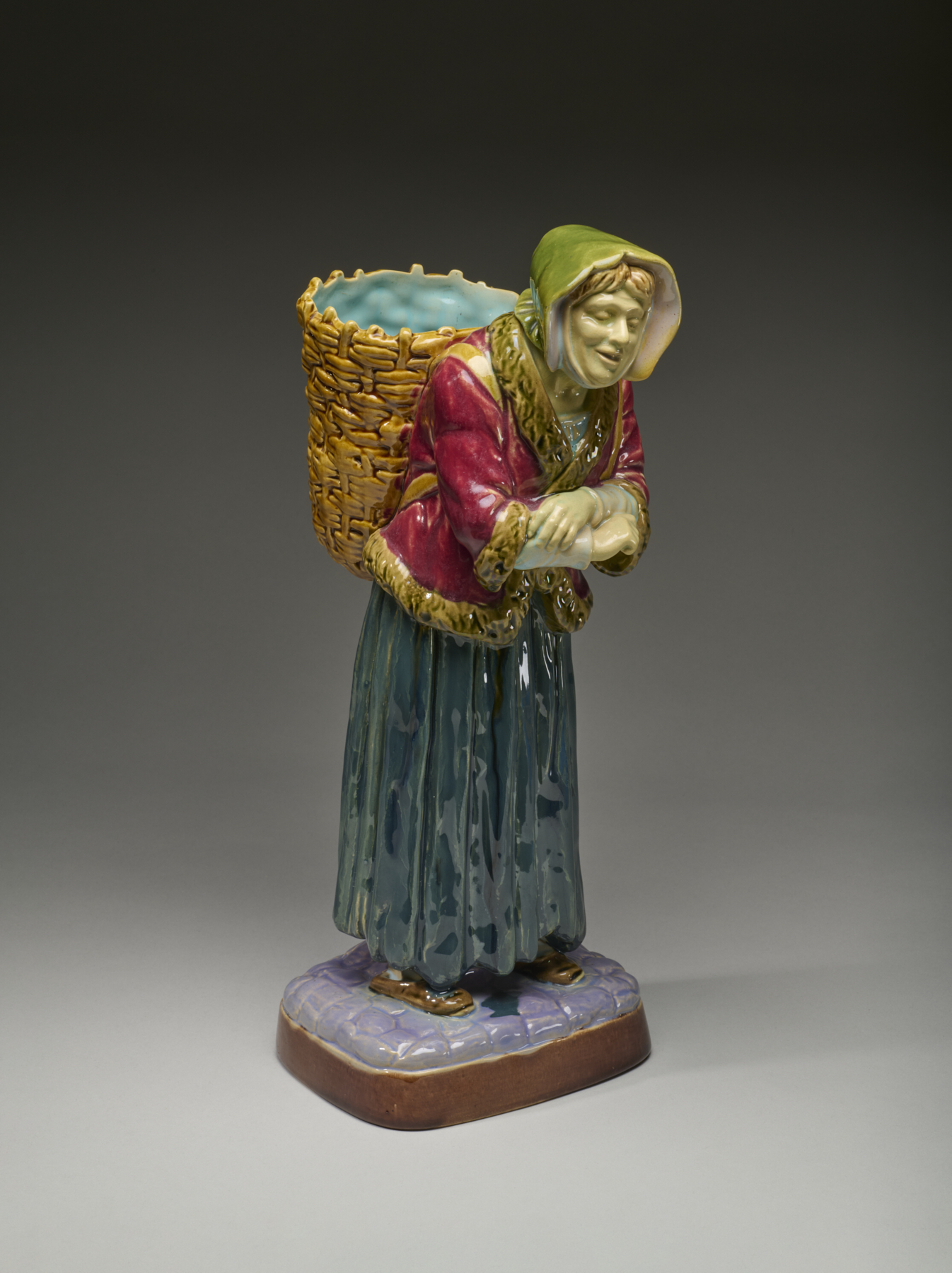
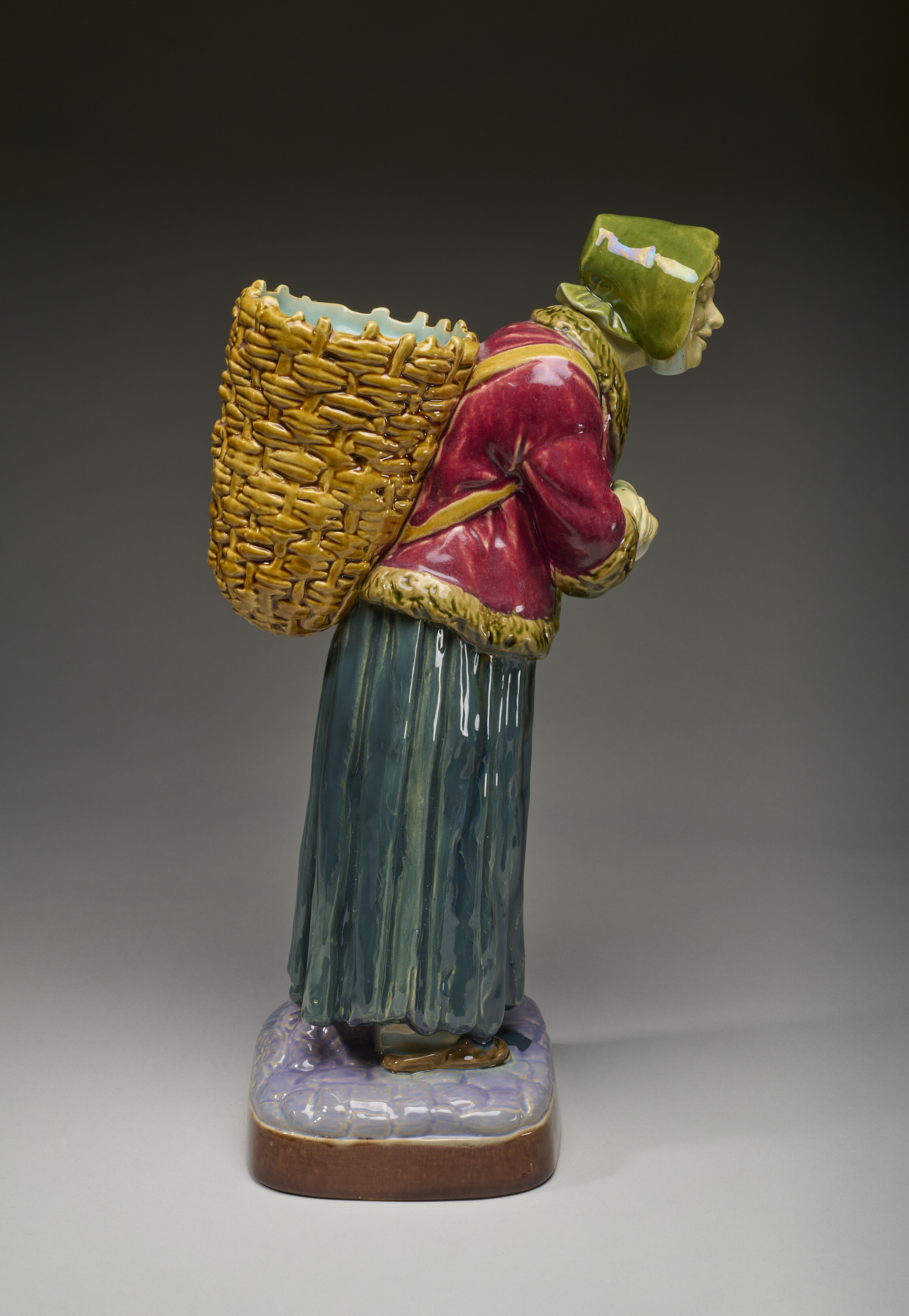
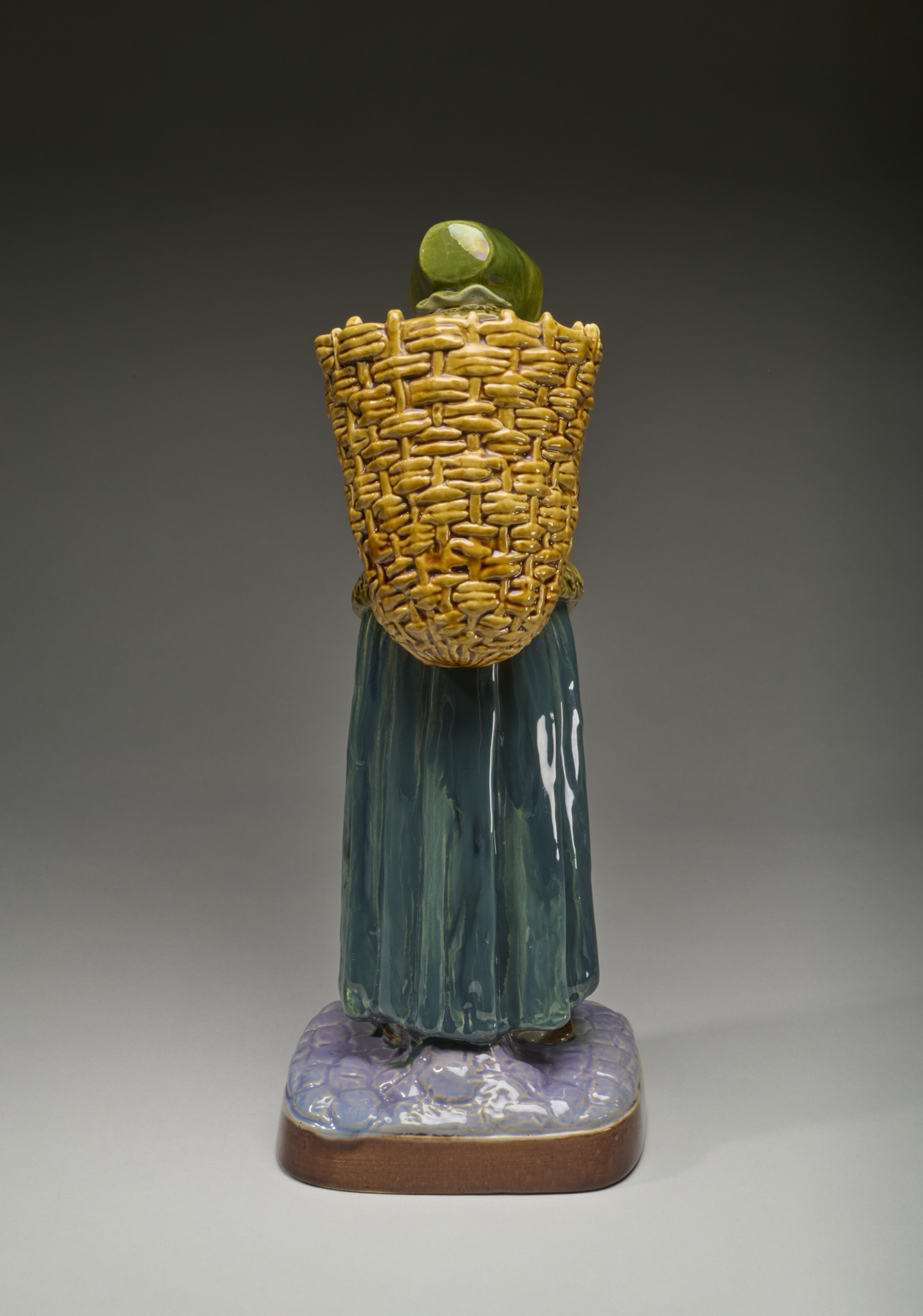
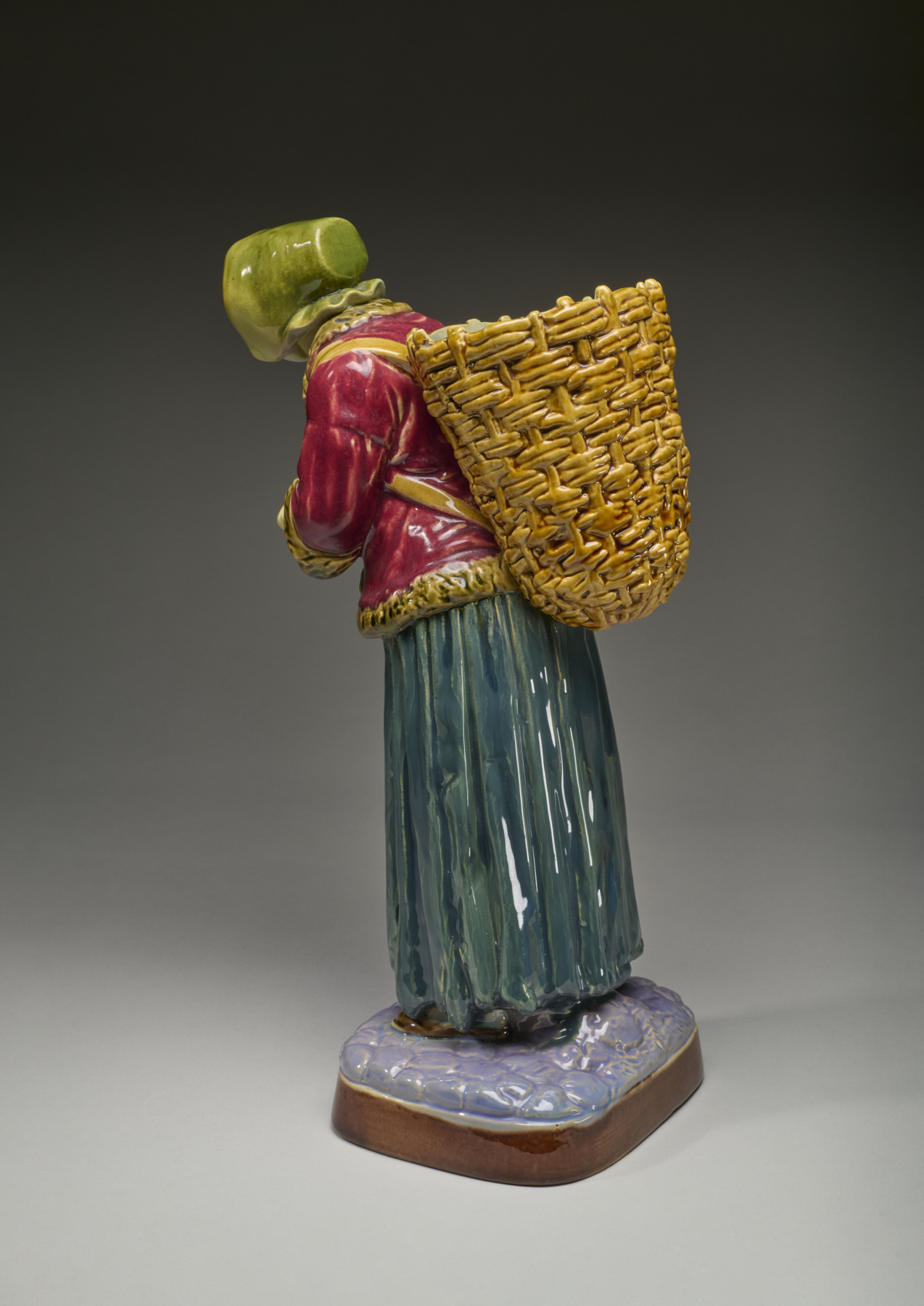
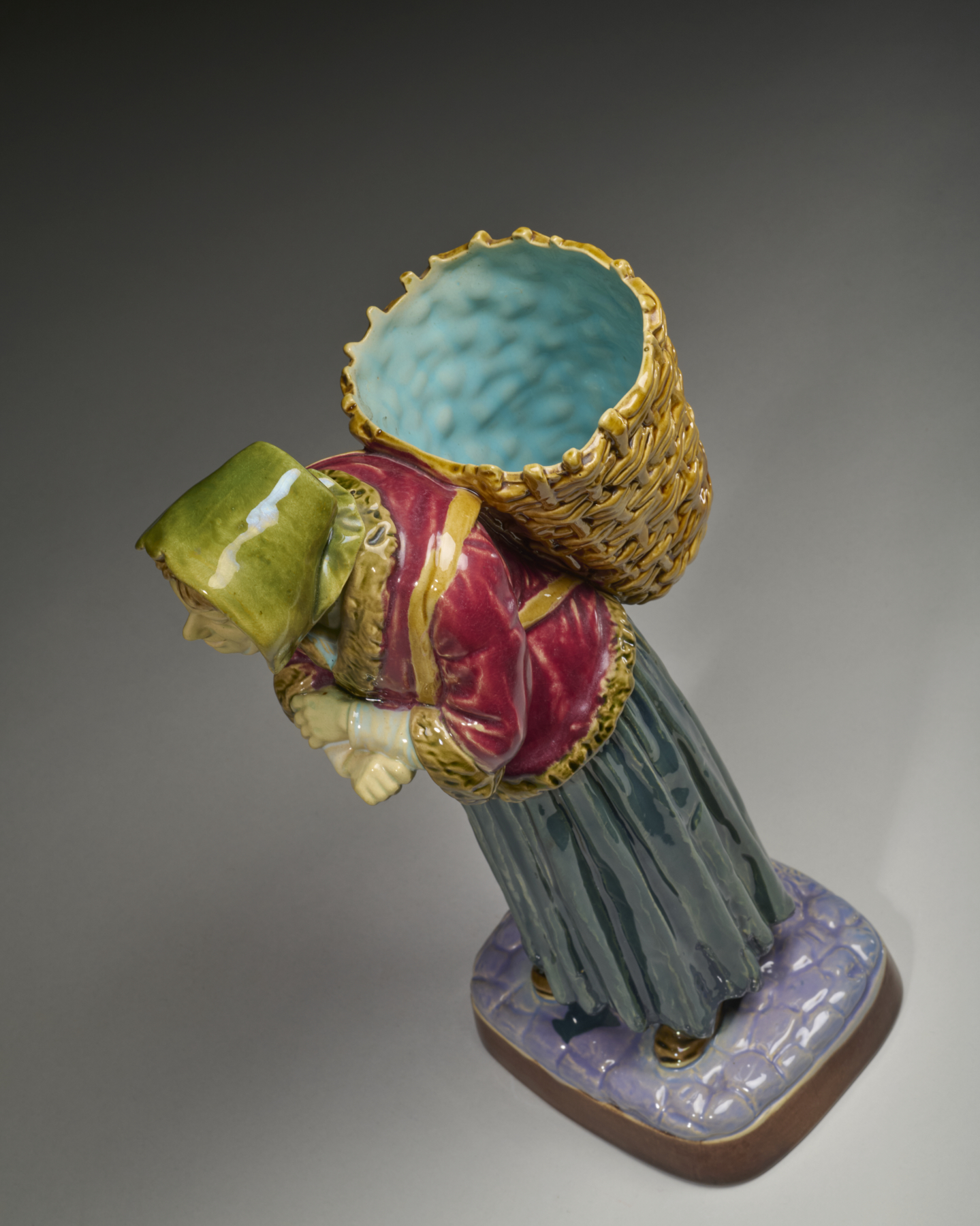
Figural Vase, shape no. 118
Based in England’s Staffordshire potteries district, William Brownfield & Son(s), a large manufacturer of stoneware, earthenware, and porcelain, produced majolica of outstanding quality throughout the 1870s and 1880s. In 1872, the firm hired Louis Jahn (1839–1911) as its first art director. Jahn, born in Germany, was one of several Continental artists who first came to England to work at Minton & Co., and he was instrumental in directing Brownfield’s product expansion. Like other well-capitalized Staffordshire firms, Brownfield employed celebrated freelance sculptor-modelers such as Albert-Ernest Carrier-Belleuse (1824–1887) and Hugues Protât (born 1816; active 1835–90) to design objects for both general production and exhibition display, shifting the firm’s reputation for moderately priced, useful domestic wares (which were crucial to its success) to what one contemporary reviewer deemed “the highest region of fine art in ceramics.”
In the face of the rapid changes caused by the Industrial Revolution and urbanization, many 19th-century ceramic manufacturers produced nostalgic wares evoking the rustic charms of the natural world and the English countryside. Indeed, this was not a new phenomenon; figures of shepherds and shepherdesses, milkmaids, and other rural “types” had been made by European potteries from the mid-18th century forward and often were presented in romanticized or idealized forms. This Brownfield figure and its pair (accession no. 48.2963), however, more honestly reflect the reality of life and work in rural areas during the Victorian period. Their stooped postures, aged bearings, and modest dress align with Brownfield’s body of work which, more than most manufacturers of the time, often included the unexpected and could even border into the grotesque.
The export trade was an important part of Brownfield’s sales strategy, and to that end, the firm advertised extensively and participated in the international exhibitions of the period. An example of this pair of figures were shown by the firm at the Melbourne International Exhibition of 1880–81, one of the important world’s fairs held in Australia, a significant export market for Brownfield.
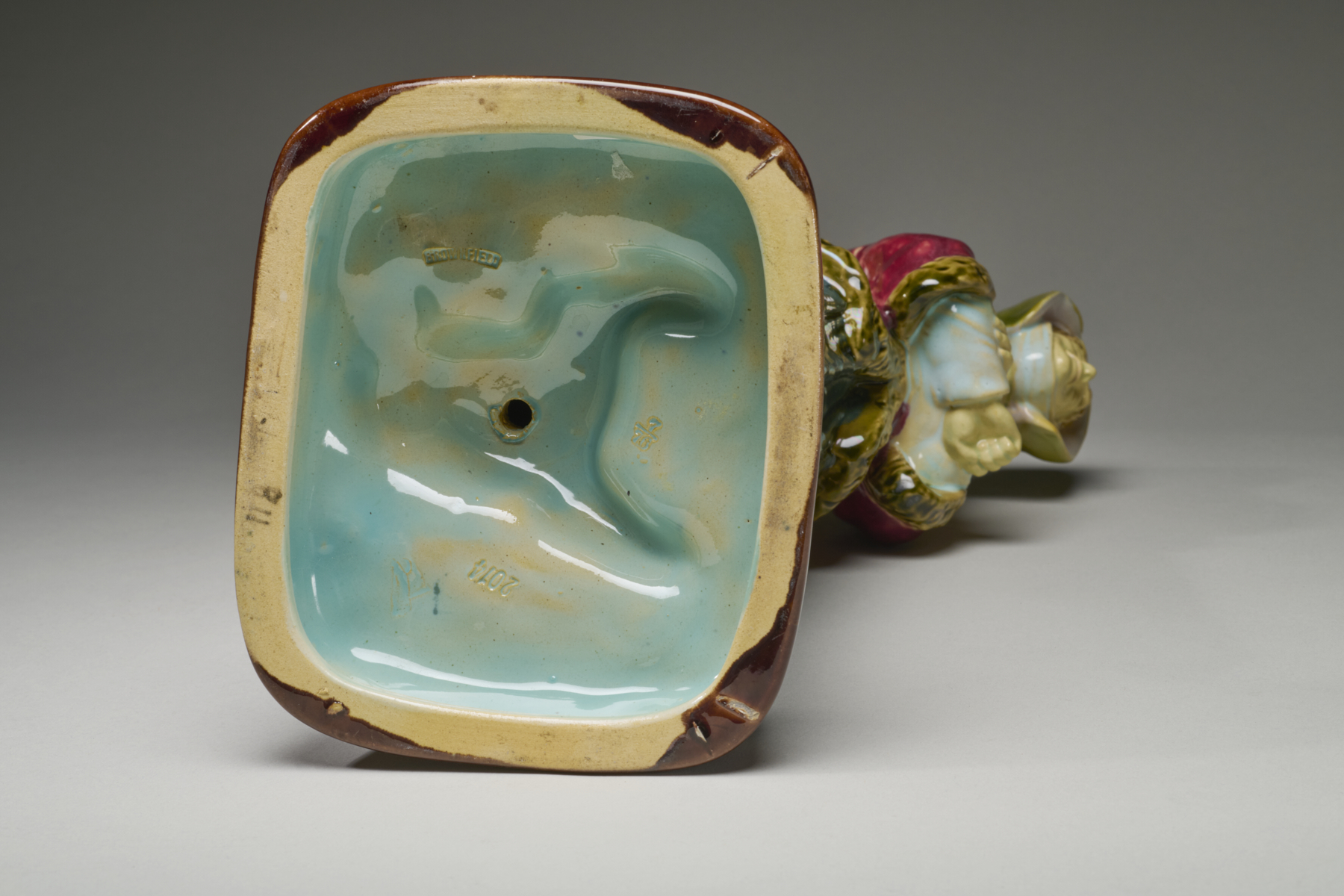
Inscription
Provenance
Provenance (from the French provenir, 'to come from/forth') is the chronology of the ownership, custody, or location of a historical object. Learn more about provenance at the Walters.
Sale, Skinner, Boston, “Fine Ceramics Featuring Majolica,” 30 May 1998, lot 11; purchased by Deborah and Philip English, Baltimore, 1998; given to the Walters Art Museum, 2025.
Exhibitions
| 2021-2022 | Majolica Mania. The Bard Graduate Center, New York; The Walters Art Museum, Baltimore. |
Measurements
H: 12 1/4 × W: 5 1/8 × D: 6 1/4 in. (31 × 13 × 16 cm)
Credit Line
Gift of Deborah and Philip English, 2025
Location in Museum
Not on view
Accession Number
In libraries, galleries, museums, and archives, an accession number is a unique identifier assigned to each object in the collection.
In libraries, galleries, museums, and archives, an accession number is a unique identifier assigned to each object in the collection.
48.2962