
 Creative Commons License
 Creative Commons License
 Creative Commons License
 Creative Commons License
 Creative Commons License
 Creative Commons License
 Creative Commons License
 Creative Commons License


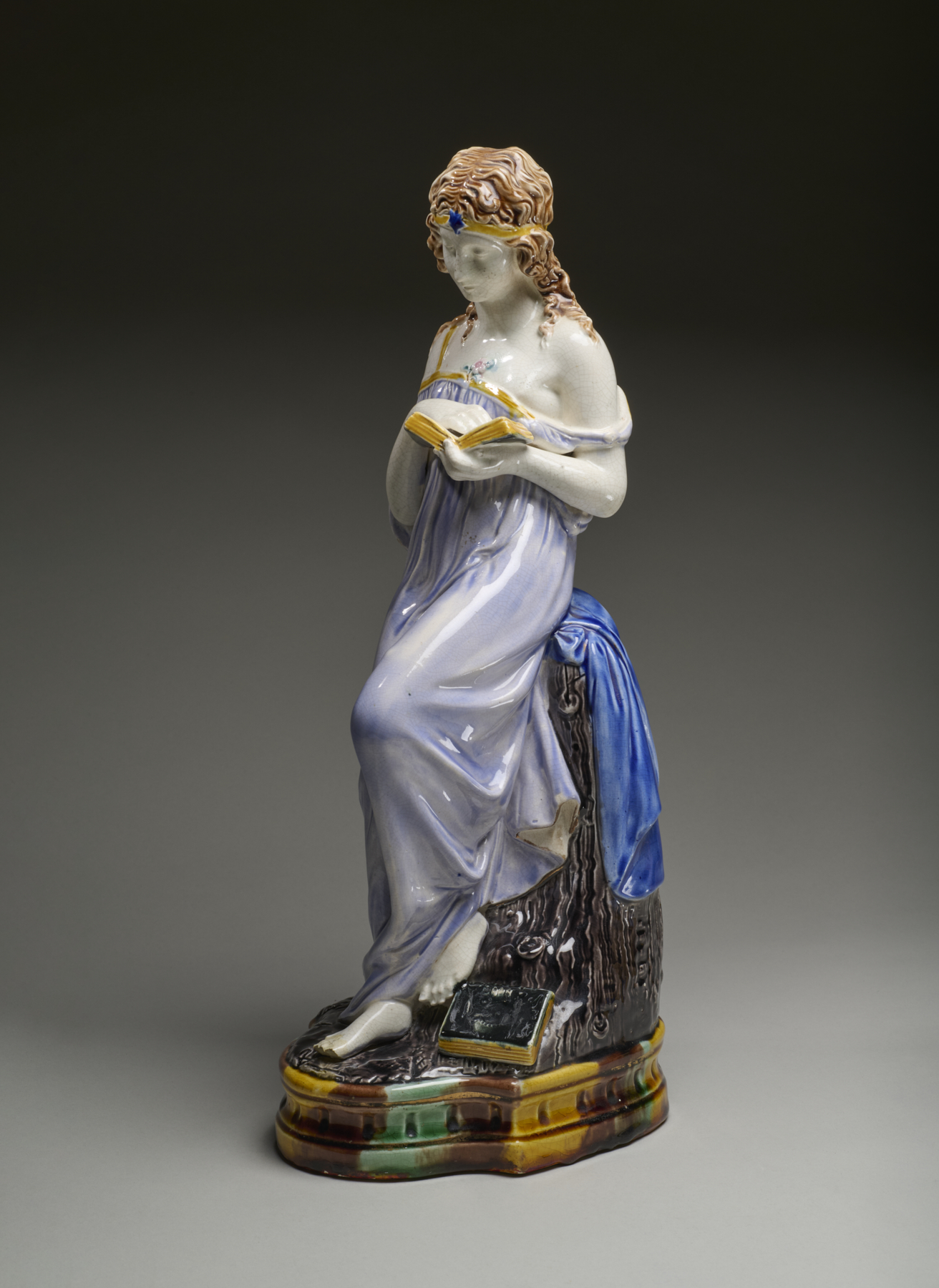
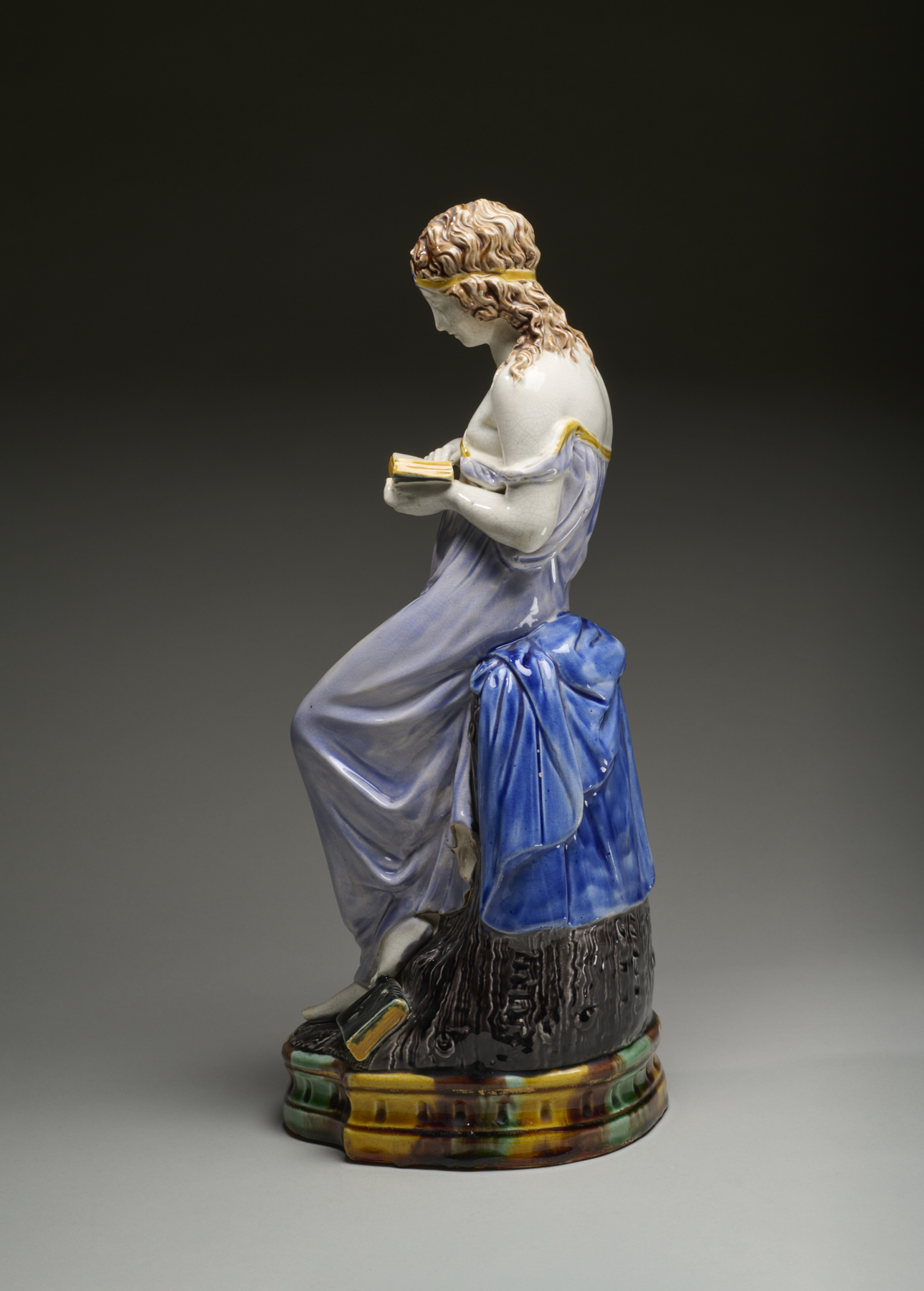
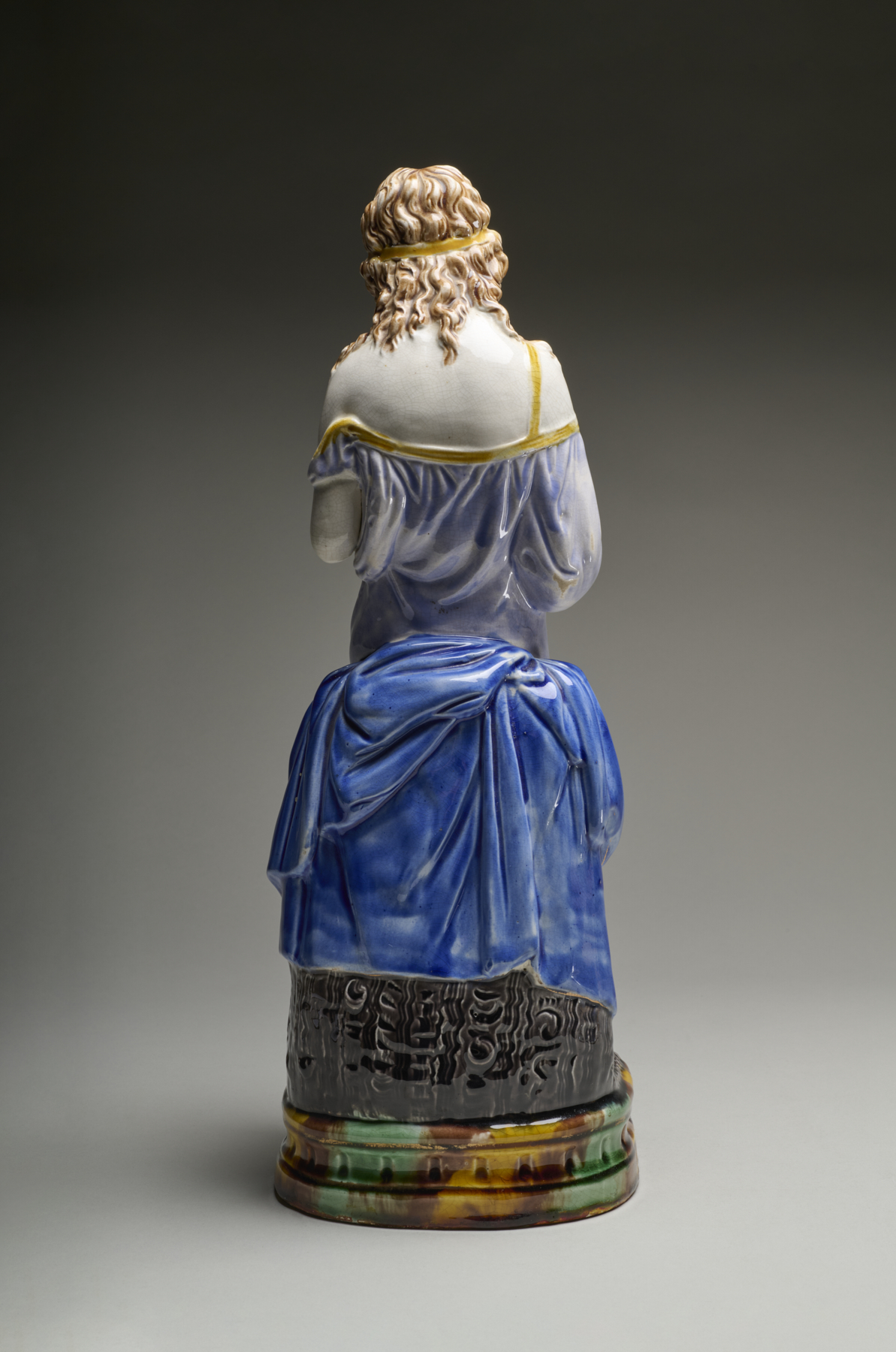
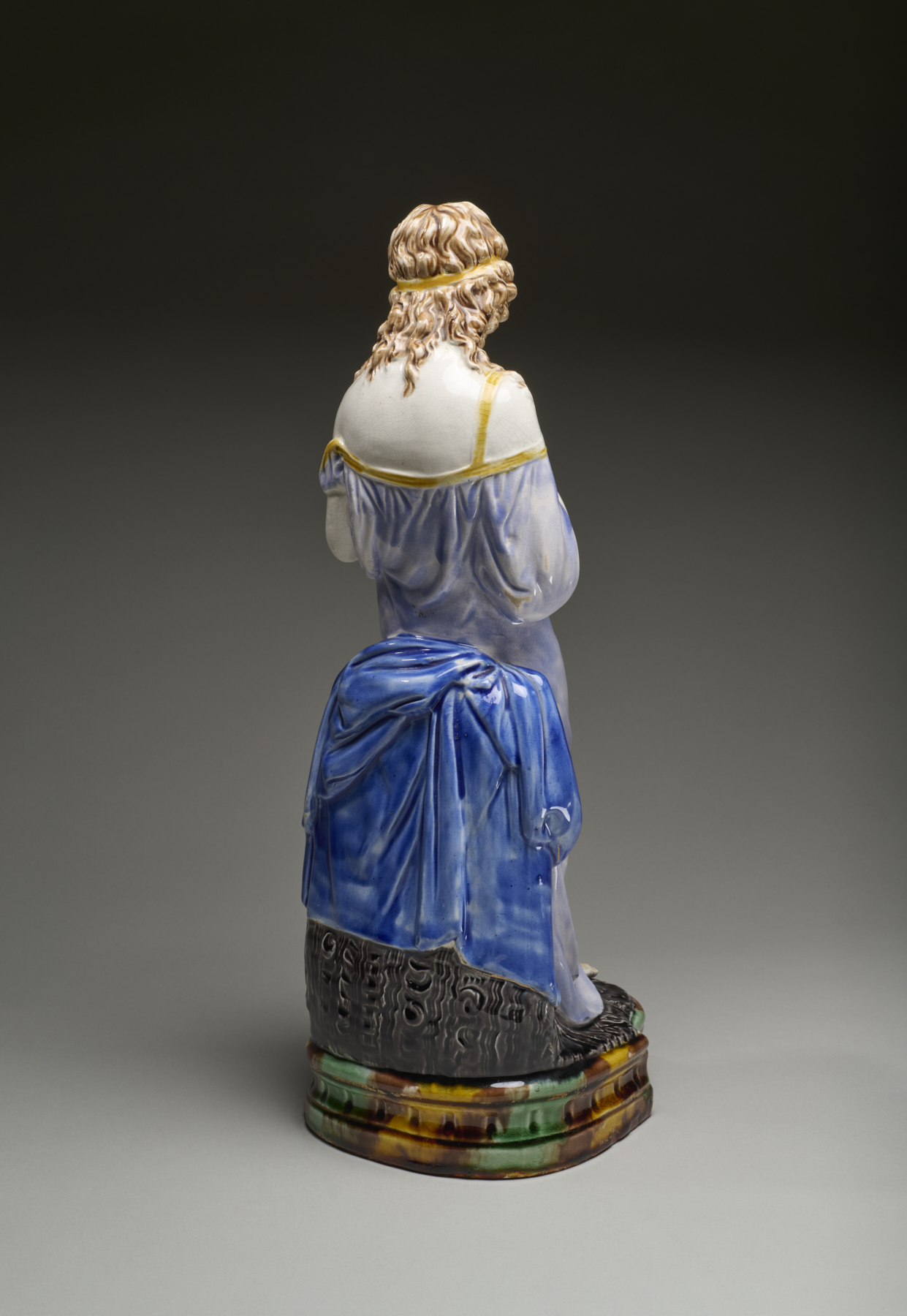
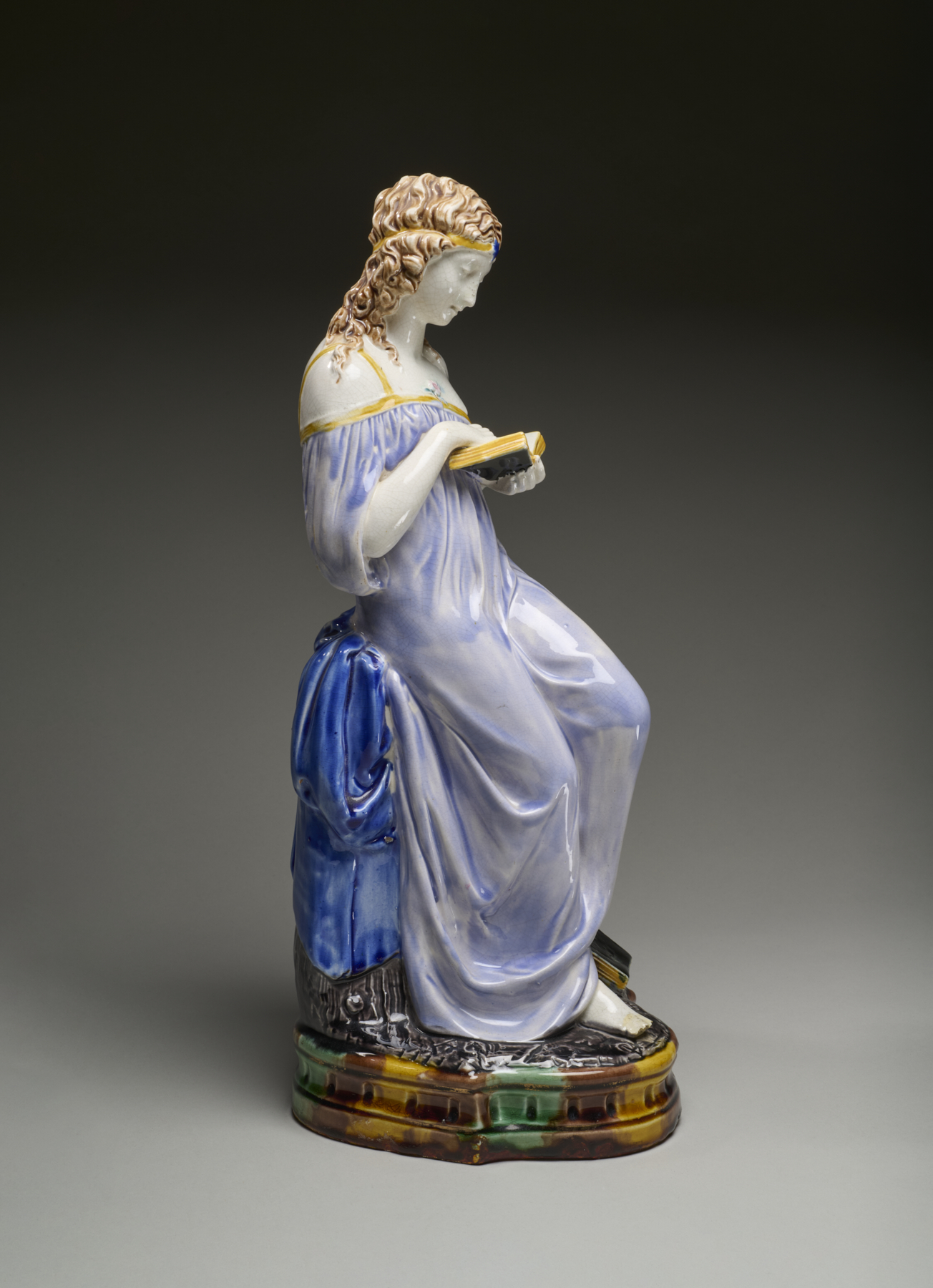
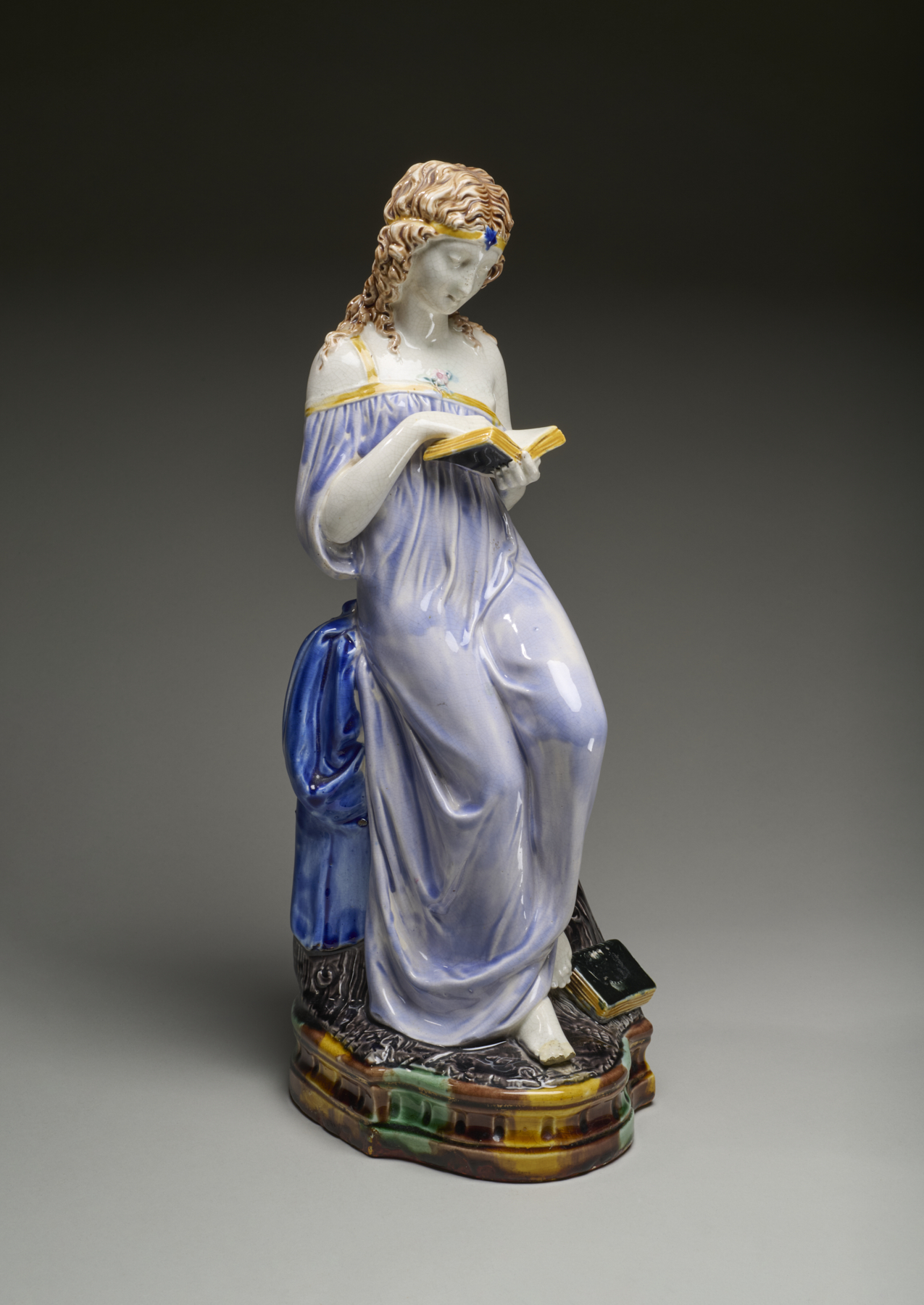
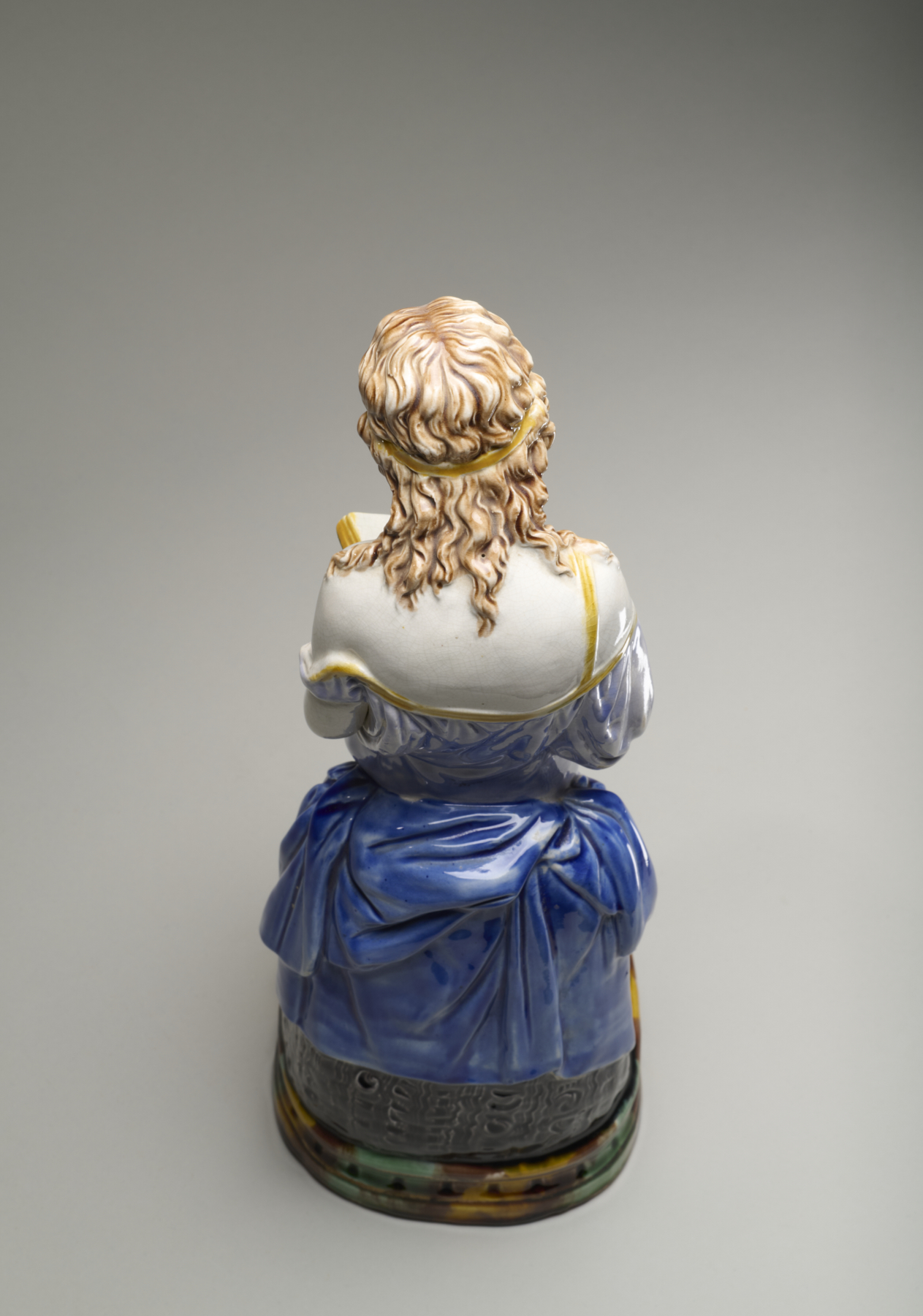
Reading Girl
W. T. Copeland & Sons (before 1868, W. T. Copeland), a giant of the 19th-century pottery industry, was comparable to fellow British firms Minton & Co. and Josiah Wedgwood & Sons in the exceptional quality and variety of its wares. Its vast output ranged from parian statuary, elegant hand-painted porcelain made for exhibition, and bone-china dinner sets to the humblest earthenware crockery and stoneware. In 1824, William Taylor Copeland (1797–1868) became a partner in the firm founded in 1770 by Josiah Spode I (1733–1797). The Spode firm was one of the largest and most important English ceramic manufacturers of the late 18th and 19th centuries. The company was responsible for perfecting transfer-printing on ceramics as well as developing a porcelain body that incorporated bone ash, the “bone china” that English manufacturers soon became well-known for. In 1833, Copeland bought out the Spode heirs and entered into a partnership with Thomas Garrett (1785–1865). They operated the factory under the name Copeland & Garrett were able to maintain its position as a leading ceramic manufacturer. This partnership continued until 1847, when Copeland became the firm’s sole proprietor.
In the 1840s the Copeland firm developed a porcelain body that was meant to be left unglazed, or in bisque state, and that was formulated to imitate white marble. Called “Statuary Porcelain” by the firm and known today as “parian” porcelain, this material was a main focus for the company’s production of ornamental wares for several decades. Copeland commissioned a number of the best sculptors and modelers of the period to realize designs that could be mass produced, thus making small-scale sculpture more accessible to the middle classes. Sometimes these designs were original models for the company, but frequently sculptors and the company would adapt existing artworks to make them in porcelain. That is the case with the “Reading Girl” model, which is a reduced version of a 1837 sculpture created by the British-Irish artist Patrick MacDowell (1799–1870), who first exhibited it in 1838 at the Royal Academy exhibition in London. The design for the Copeland statuary porcelain or parian version was created in 1869, but seems to have had its public debut at the London International Exhibition of 1871, where it was shown by the Ceramic and Crystal Palace Art-Union, a society founded in 1859 “for the encouragement of fine arts”. For a small annual fee members could choose one from a variety of ceramic artworks made exclusively for the Art-Union each year, such as the “Reading Girl” figure, which was an option in 1872.
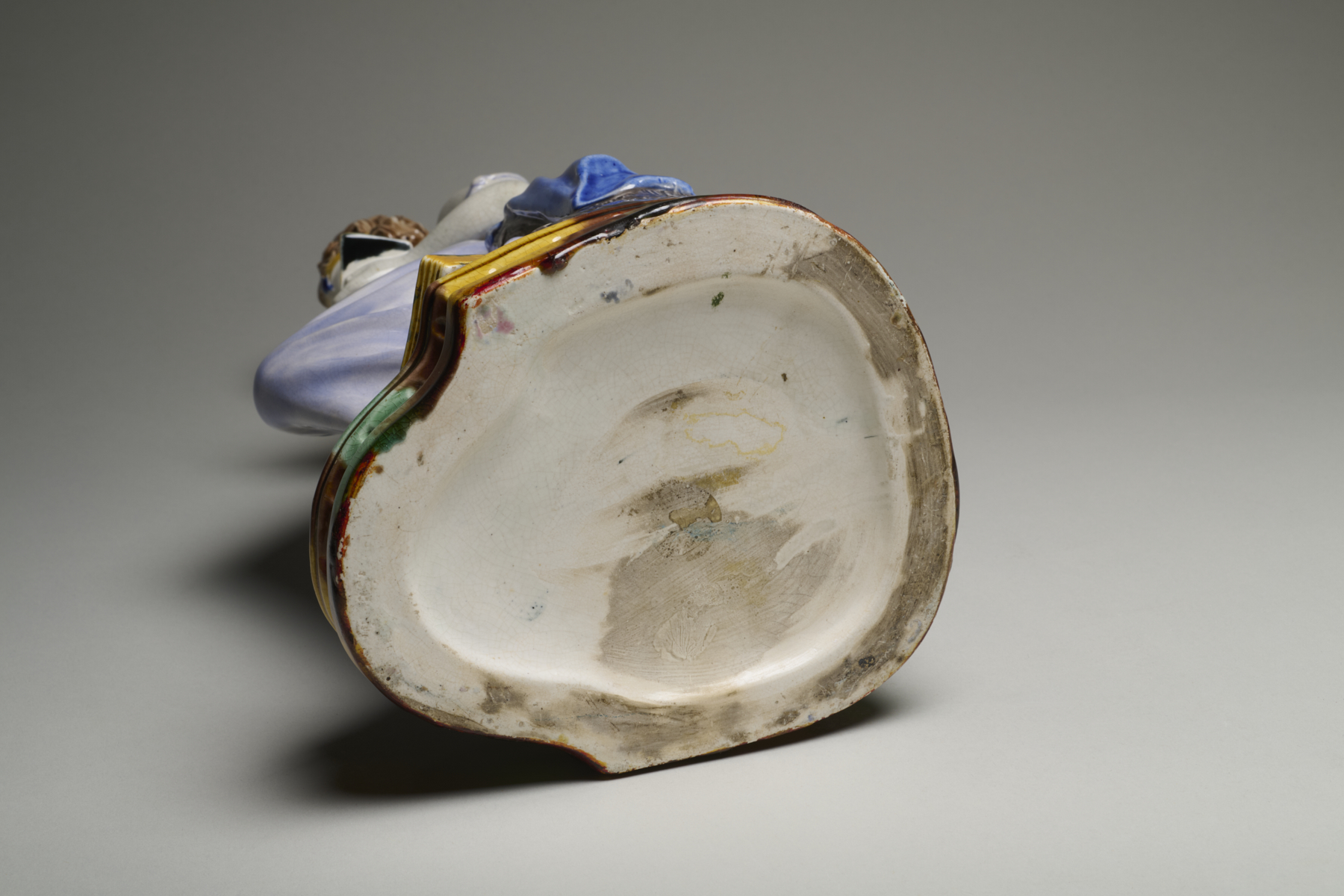
Copeland & Sons made superb majolica from the late 1860s through the early 1880s, and it seems likely that the majolica version of the “Reading Girl” considered here was created sometime after the parian design was developed in 1869. Interestingly, the parian and majolica versions do differ slightly, most notably in the plinth on which the figure leans – in the majolica version it is more textured and a book rests on one side by the figure’s feet. While the majolica example is not marked, it exhibits characteristics of the underlying clay body and glazing that are similar to marked Copeland majolica, and thus attribution to Copeland seems reasonable.
Inscription
Provenance
Provenance (from the French provenir, 'to come from/forth') is the chronology of the ownership, custody, or location of a historical object. Learn more about provenance at the Walters.
Collection of Deborah and Philip English, Baltimore, by 2016 [date and mode of acquisition unknown]; given to the Walters Art Museum, 2025.
Measurements
H: 14 7/8 × W: 5 1/2 × D: 6 3/8 in. (37.8 × 14 × 16.2 cm)
Credit Line
Gift of Deborah and Philip English, 2025
Location in Museum
Not on view
Accession Number
In libraries, galleries, museums, and archives, an accession number is a unique identifier assigned to each object in the collection.
In libraries, galleries, museums, and archives, an accession number is a unique identifier assigned to each object in the collection.
48.2964