
 Creative Commons License
 Creative Commons License
 Creative Commons License
 Creative Commons License
 Creative Commons License
 Creative Commons License
 Creative Commons License


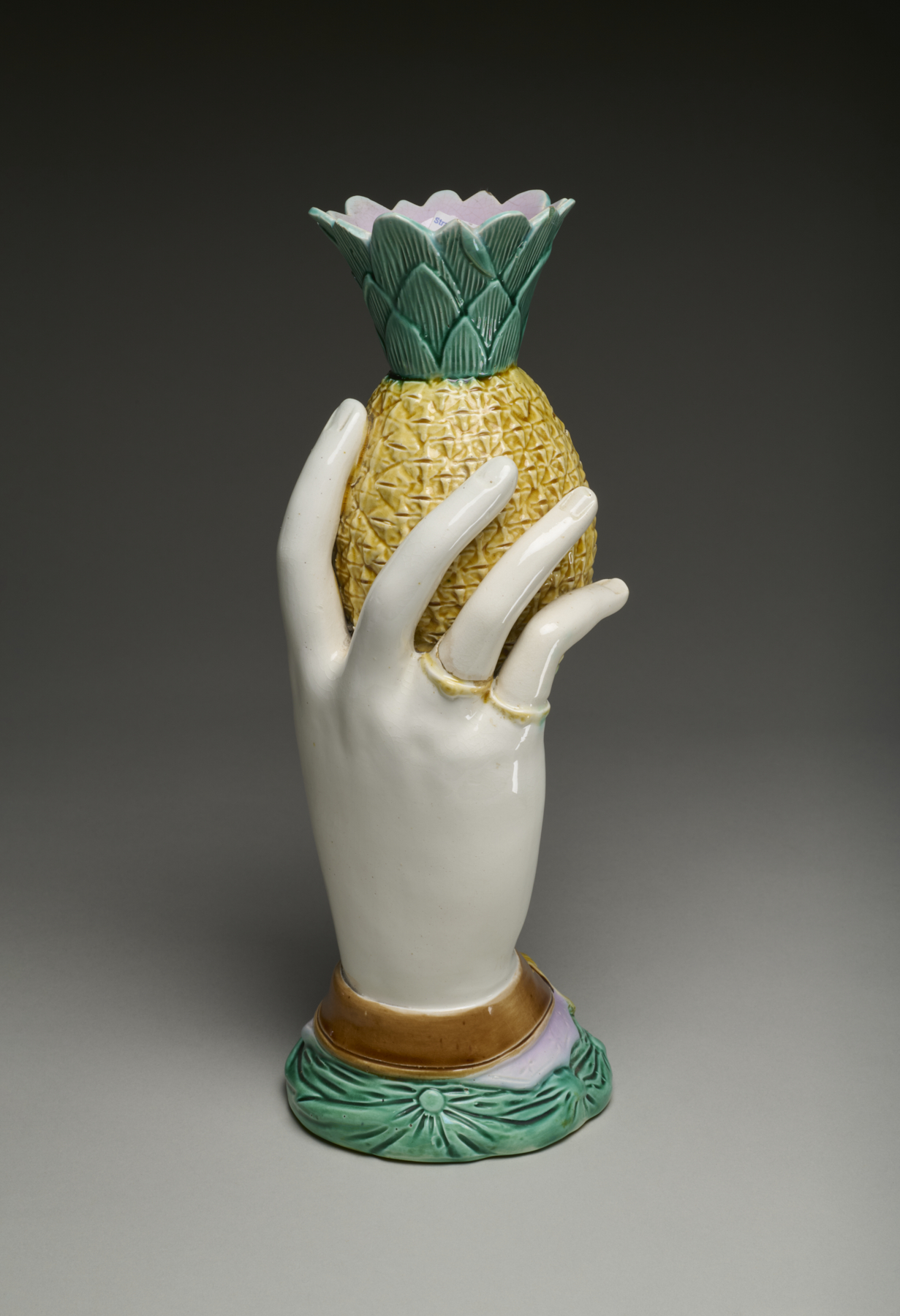
Vase
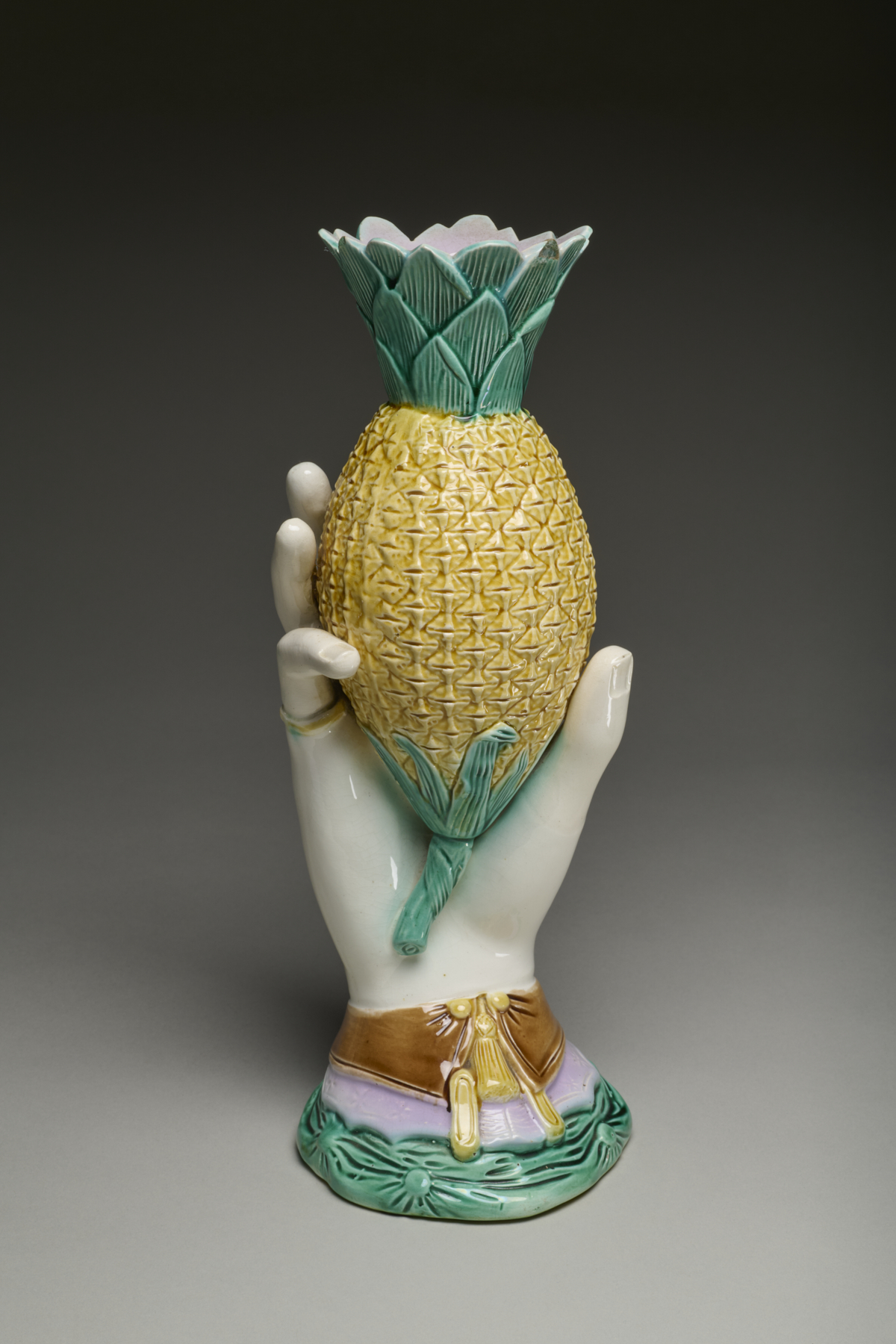
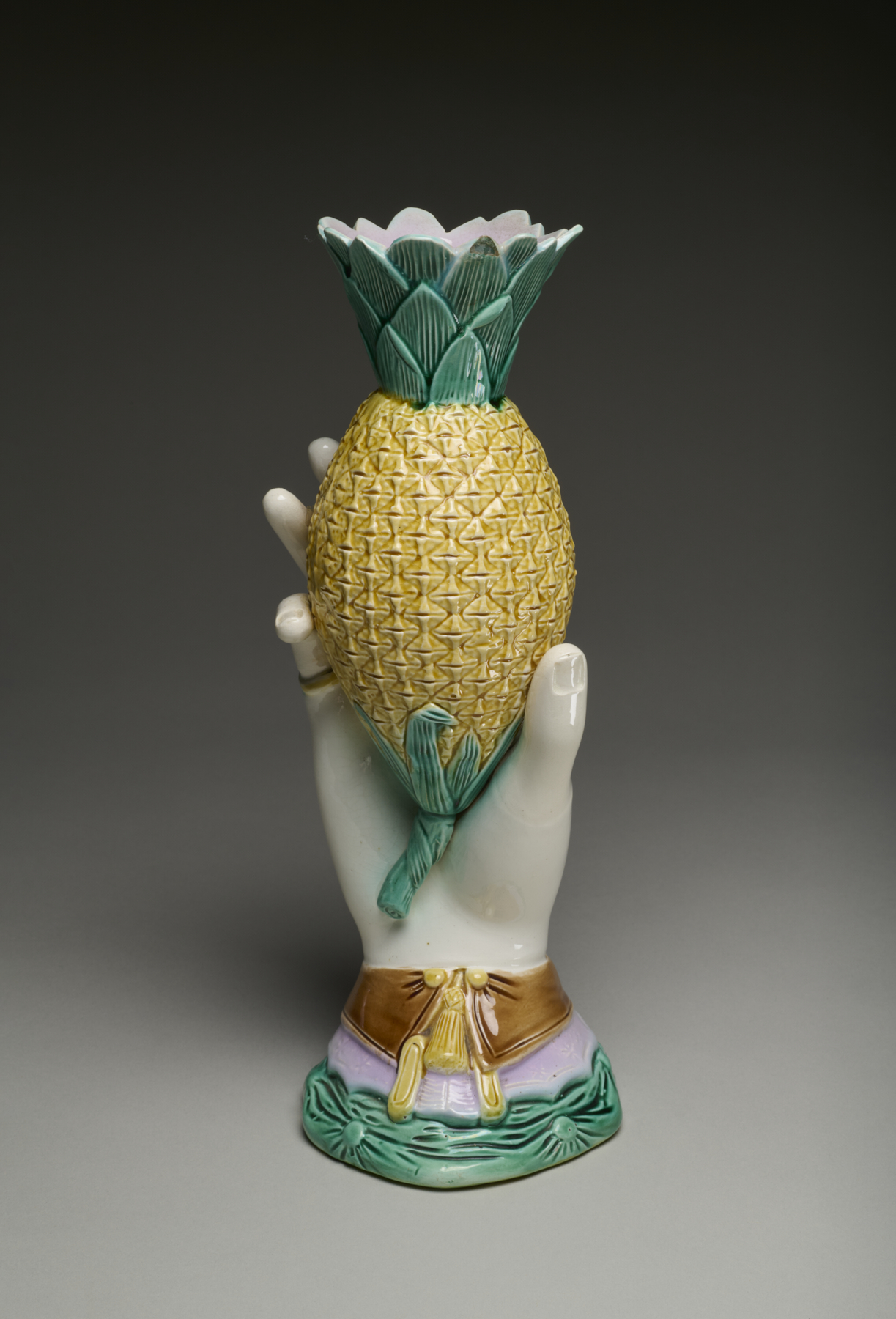
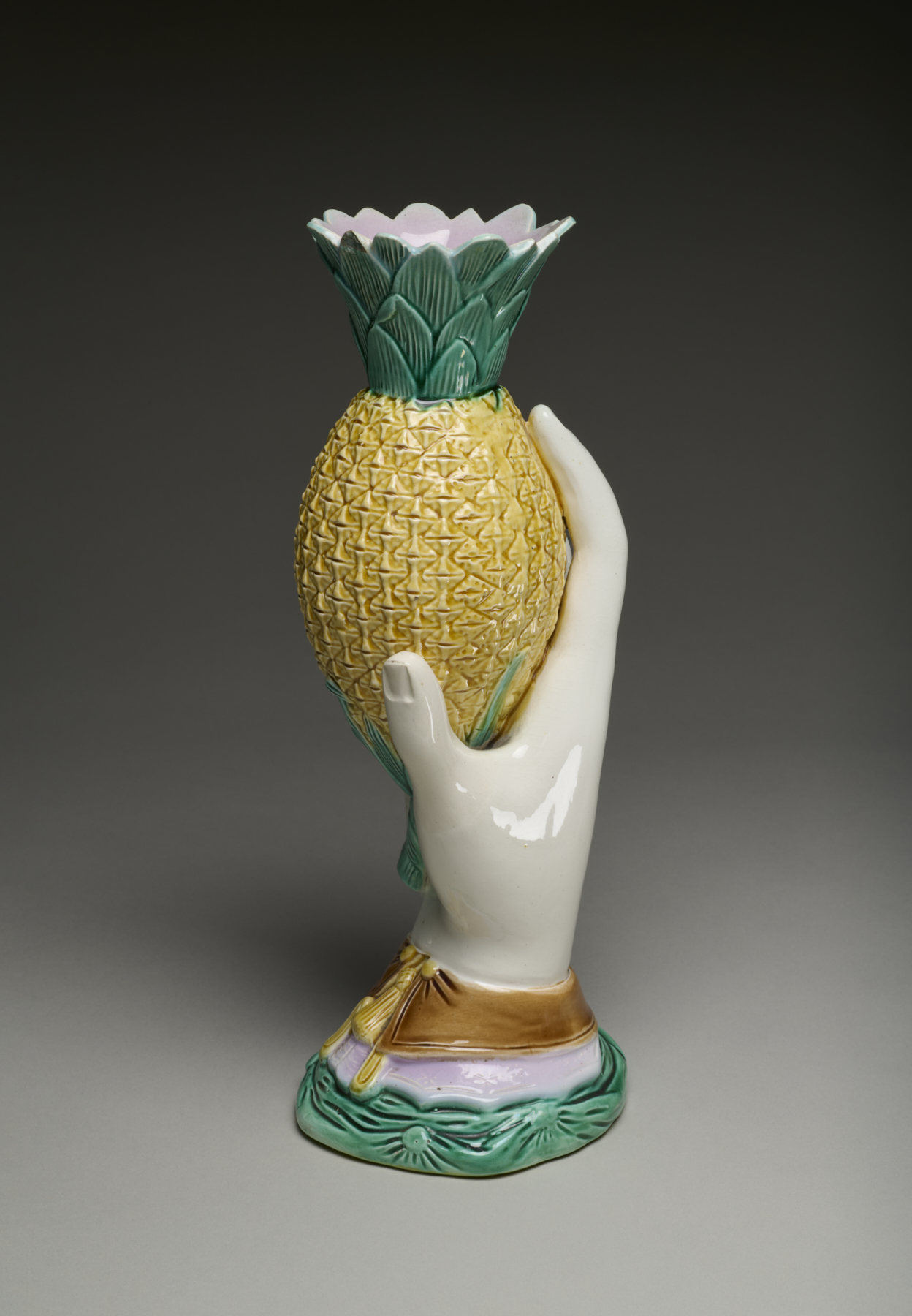
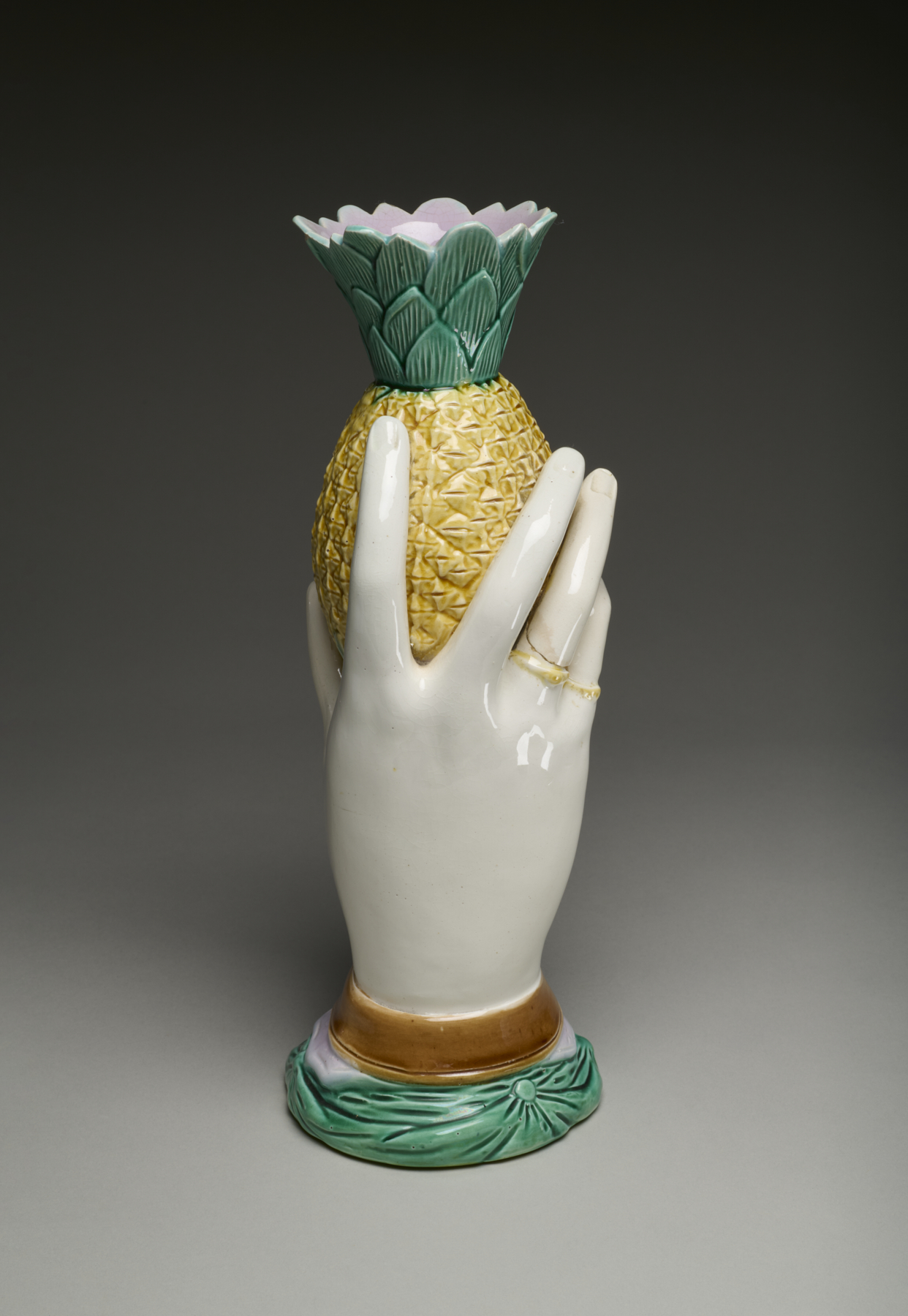
In 1860, the venerable firm of Josiah Wedgwood & Sons began manufacturing majolica, effectively ending the near monopoly on the ware that Minton & Co. had held for almost a decade. Other British manufacturers soon followed suit – largely those concentrated in the English county of Staffordshire, the heart of the British pottery industry. Some of these were established potteries with robust existing businesses, while many others were relatively recently founded, like the firm James Wardle, subsequently Wardle & Co., established in 1852, the maker of the present vase.
Women comprised approximately 40 percent of the workforce in Staffordshire ceramic factories. Most were employed as “paintresses,” or on the so-called clay end, as attendants or assistants to the male potters. At Wardle & Co., however, there was an exception—the pottery was owned and managed for many years by Eliza Wardle (ca. 1827–1889), widow of its founder, James Wardle (ca. 1823–1871). Known affectionately as “Mother Wardle,” she oversaw the firm’s growth from a small, struggling business into a successful ceramic manufacturer with a significant export trade. Wardle & Co. made majolica from about 1865, and from the mid-1870s, its production focus was on house- and tablewares, many of original design, finished in fine quality, colorful glazes. For more than thirty years, the firm was one of Britain’s major majolica manufacturers and exporters.
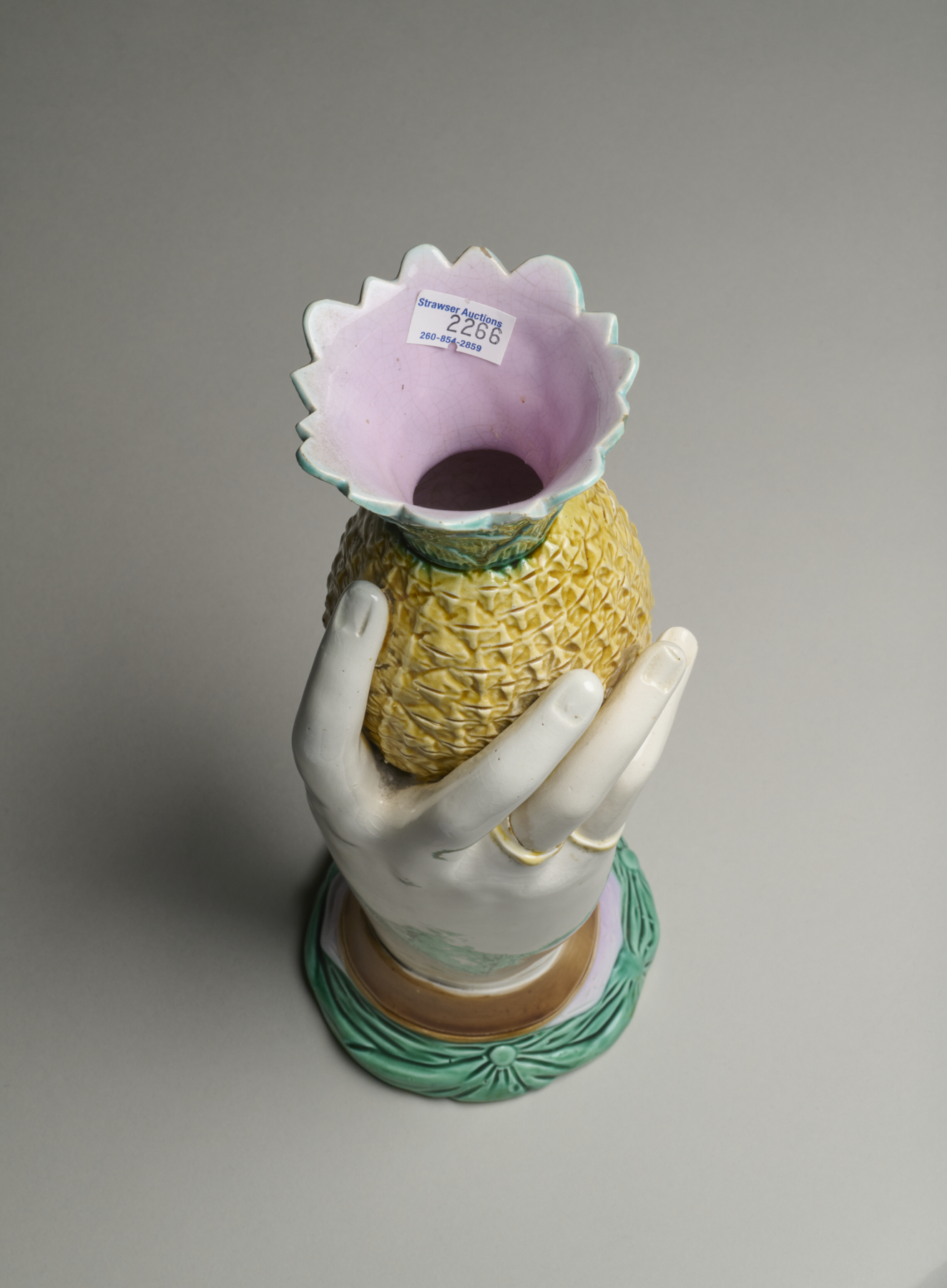
A vase formed as a woman's hand grasping an object was something of a bizarre, but fashionable novelty from the mid-1860s through the 1870s. One of the earliest examples was introduced in 1864 by the Worcester Royal Porcelain factory. Other British potteries, including Minton, Joseph Holdcroft, and George Jones also made hand vases. Wardle registered its vase design for a hand holding a pineapple for copyright protection with the British government on September 1, 1868, and seems to have had success with the model. The company made it in a variety of sizes and also created a version where the pineapple has been replaced with a corncob. In fact, the firm was still manufacturing the model in 1875 when the importer L. Straus and Sons featured it amongst the majolica it was wholesaling to the American market in an advertisement on the cover of the trade periodical "Crockery and Glass Journal."
Inscription
Provenance
Provenance (from the French provenir, 'to come from/forth') is the chronology of the ownership, custody, or location of a historical object. Learn more about provenance at the Walters.
Strawser Auction Group, Wolcottville, Indiana, “Majolica and Ceramics Auction,” 25 May 2021, lot 2266; purchased by Deborah and Philip English, Baltimore, 2021; given to the Walters Art Museum, 2025.
Measurements
H: 10 3/8 × Diam: 4 in. (26.4 × 10.2 cm)
Credit Line
Gift of Deborah and Philip English, 2025
Location in Museum
Not on view
Accession Number
In libraries, galleries, museums, and archives, an accession number is a unique identifier assigned to each object in the collection.
In libraries, galleries, museums, and archives, an accession number is a unique identifier assigned to each object in the collection.
48.2971