
 Creative Commons License
 Creative Commons License
 Creative Commons License
 Creative Commons License
 Creative Commons License
 Creative Commons License
 Creative Commons License


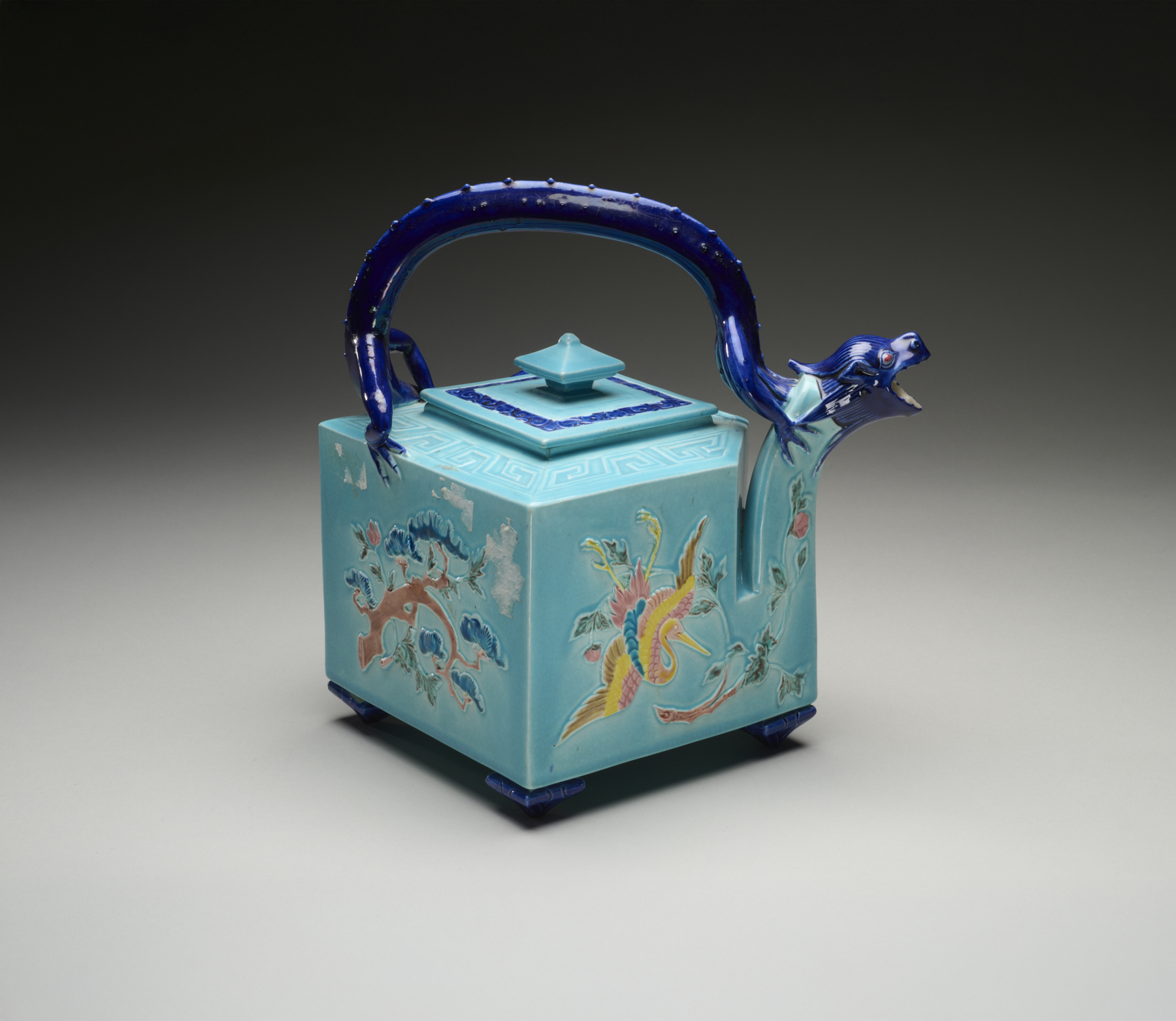
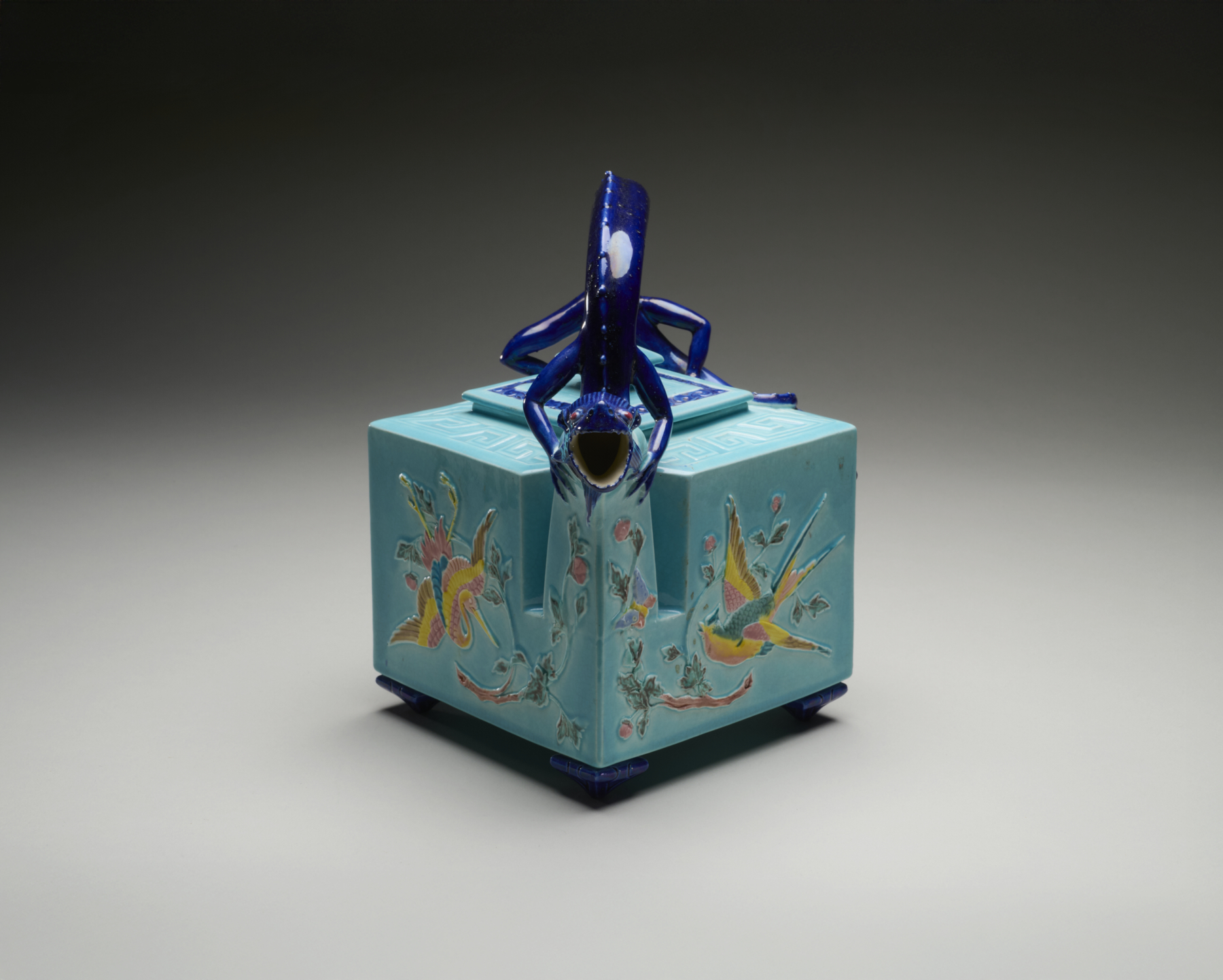
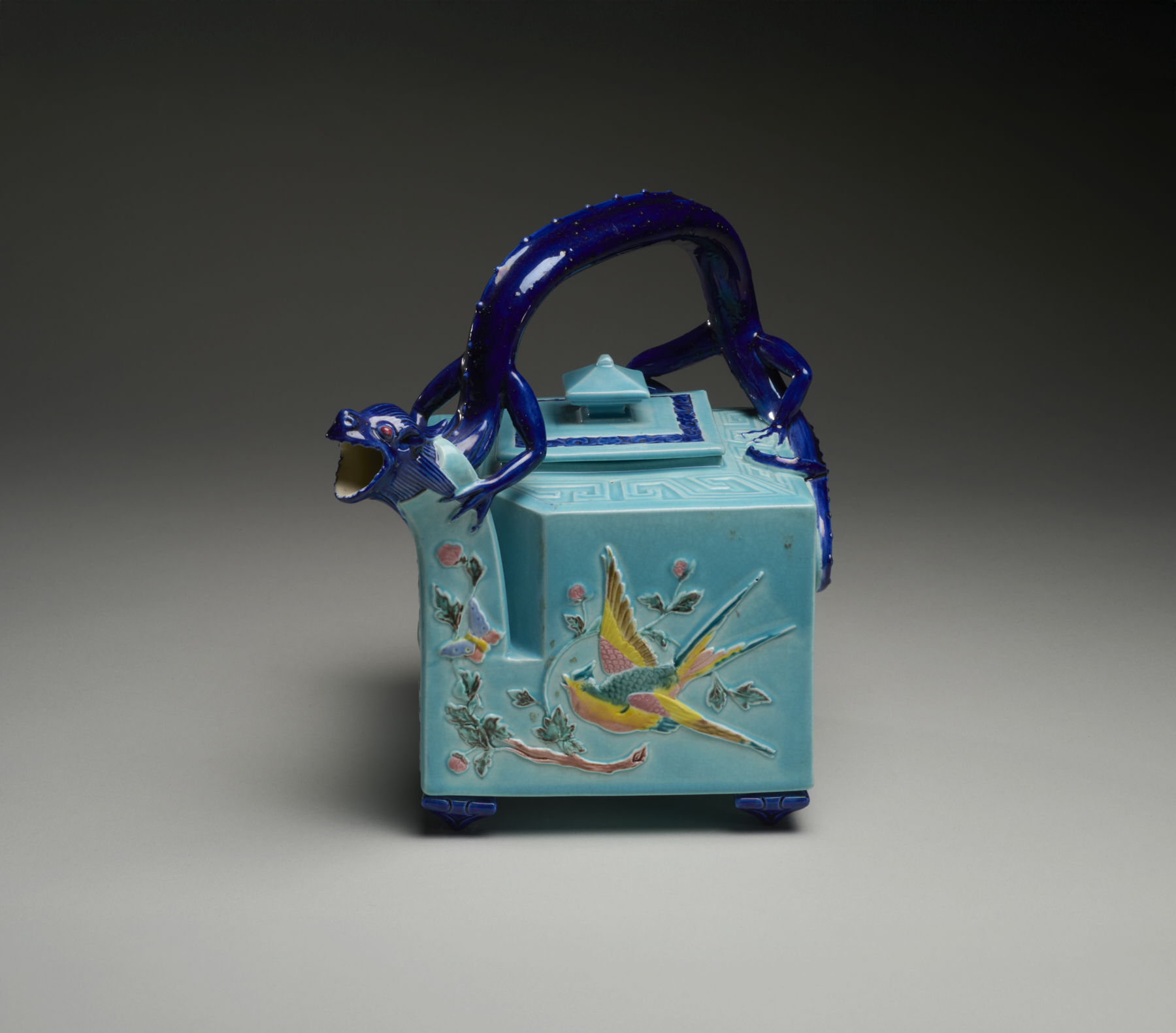
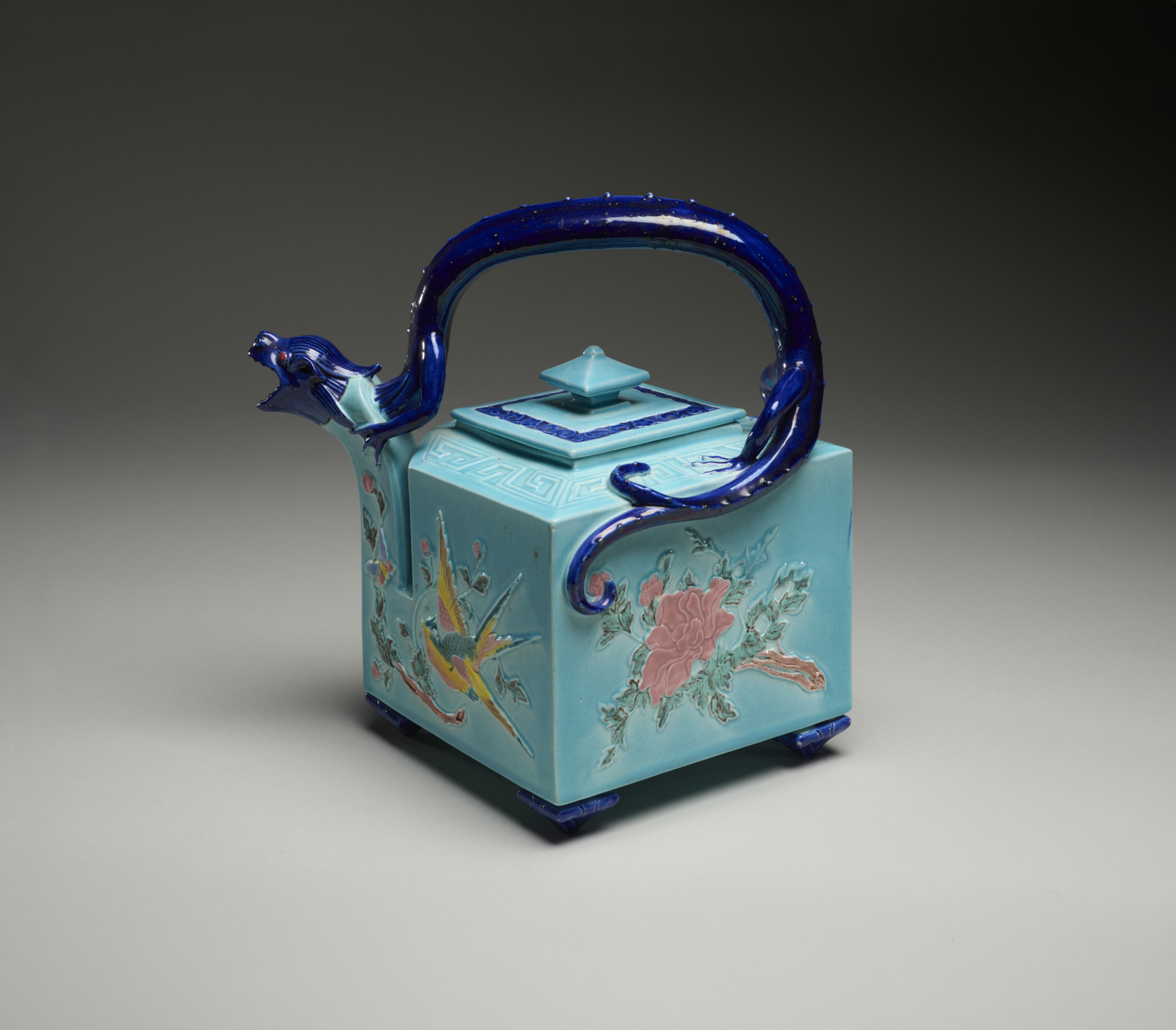
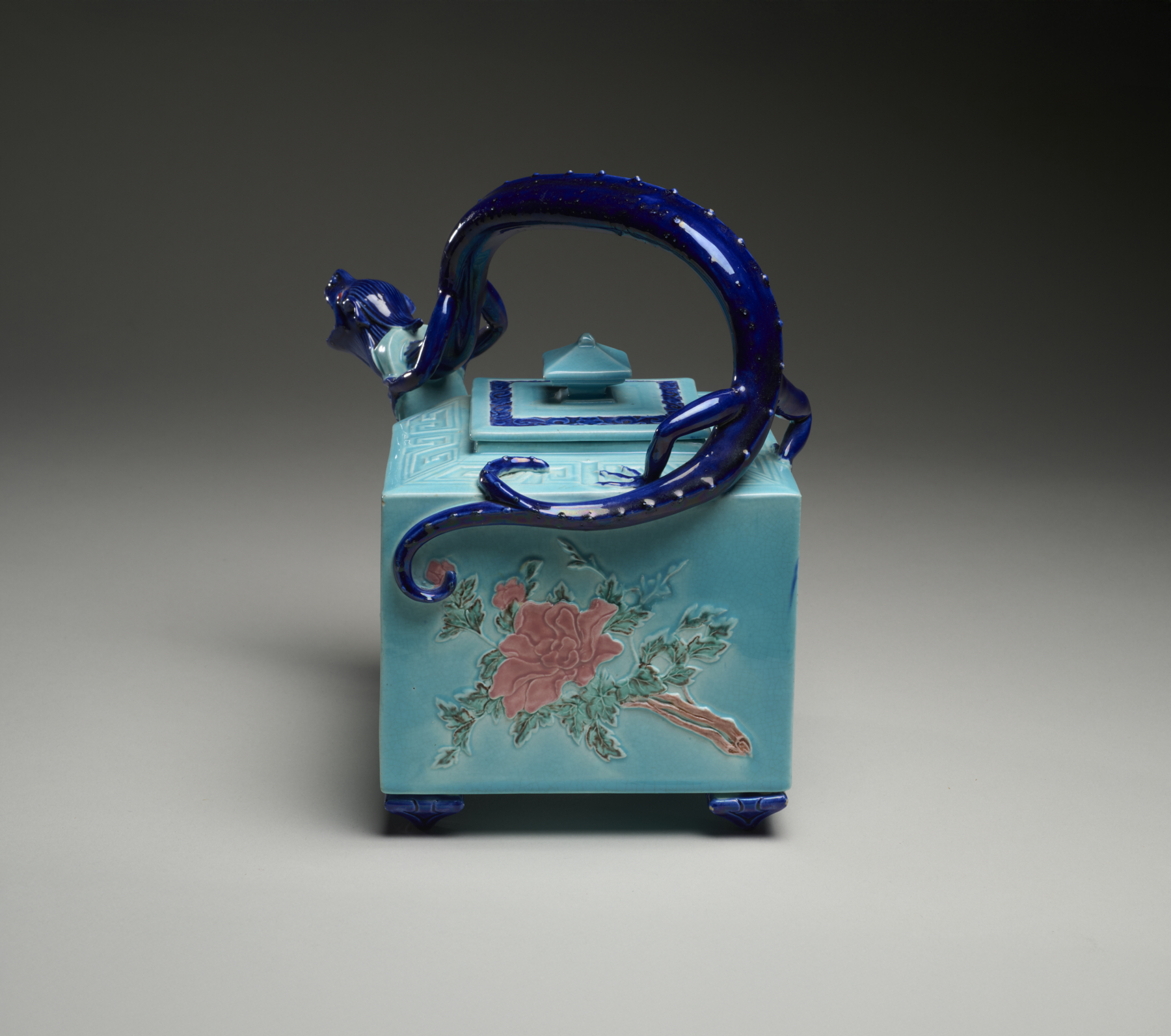
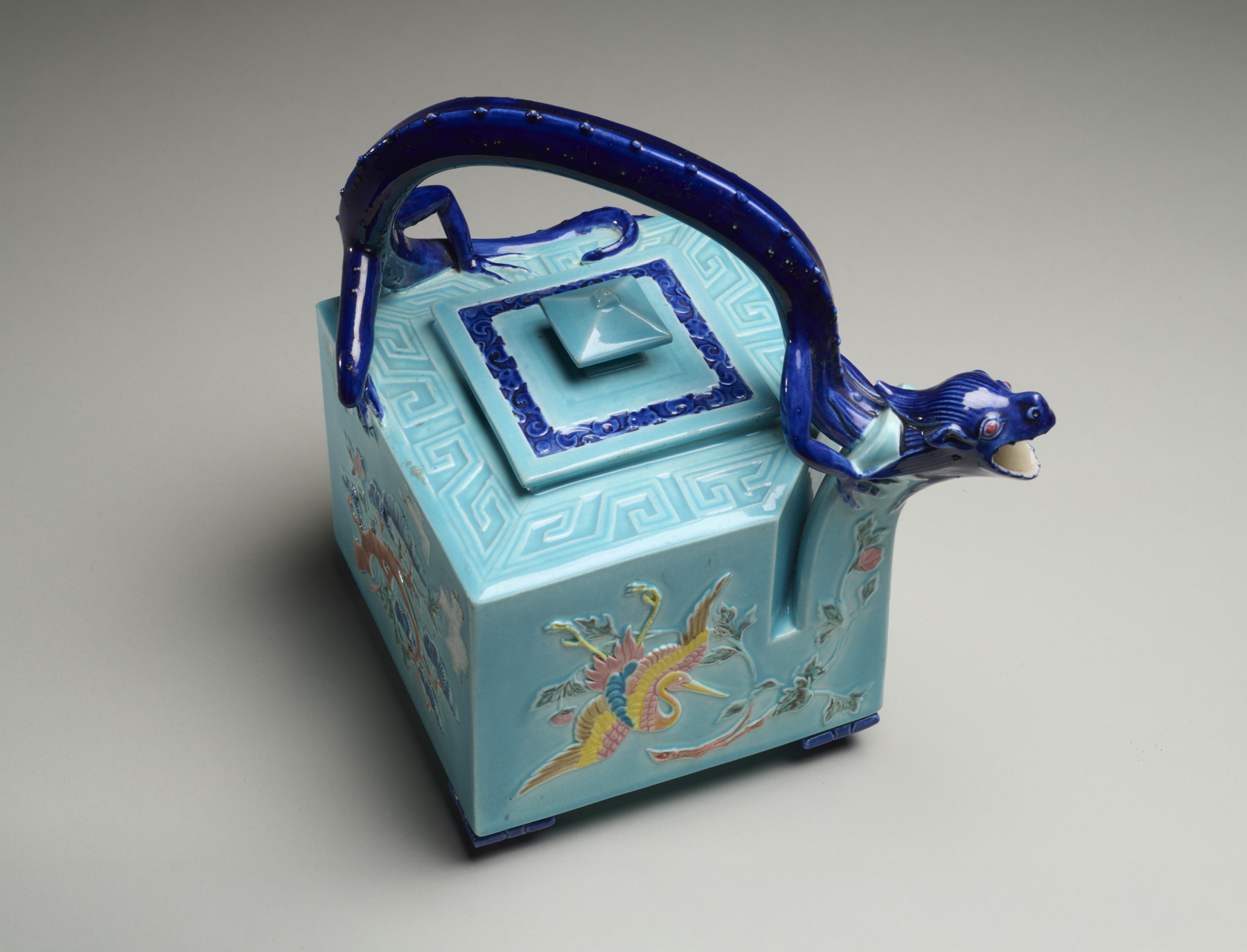
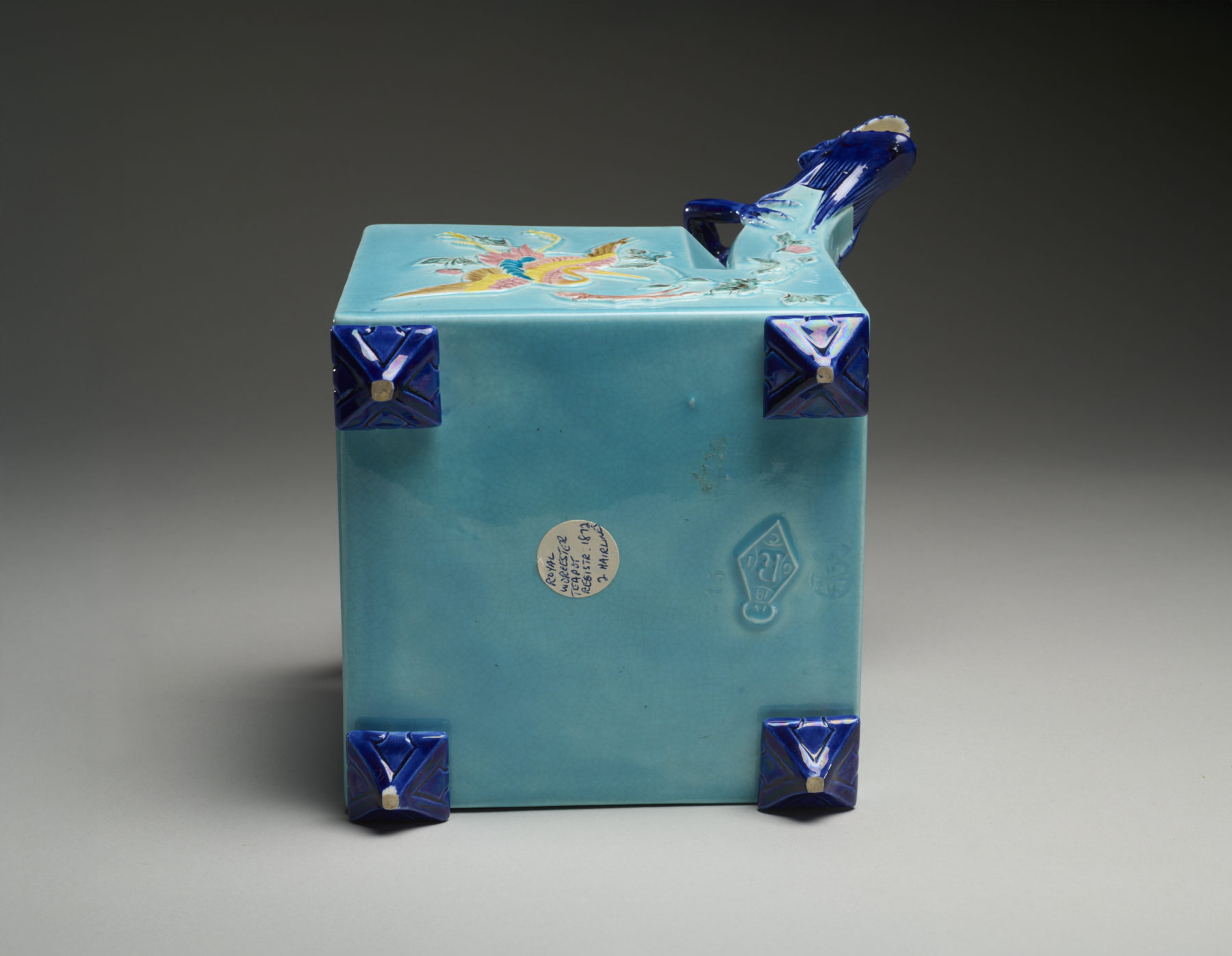
Japanese Tea Kettle, shape no. 254
Worcester Royal Porcelain Company, the only significant English majolica maker not situated in Staffordshire, was founded in 1751 in the city of Worcester in central England’s West Midlands region. The firm made its reputation in the production of high-quality porcelain, but by the 1840s, both its output and standing had declined. In the second half of the 19th century, under the leadership of a new owner, William Henry Kerr (1823–1879), and art director, Richard William Binns (1819–1900), the company embarked on a period of innovation. During this time, it introduced a variety of new ceramic bodies including earthenware with majolica glazes, which it began to manufacture in 1868. The firm subsequently received critical acclaim and international exhibition awards for the sophisticated design of its majolica, noteworthy for its fine, porcelain-like body.
The Worcester Royal Porcelain Company established a strong partnership with the Worcester School of Design (founded 1851), and built its workforce through the apprenticeship of young trainees such as James Hadley, the designer of this tea kettle. Hired in 1852 while still a student, Hadley eventually became the pottery’s chief modeler. He was responsible for some of the company’s most popular designs—in particular, its figural pieces and wares depicting animals.
Worcester art director Binns became fascinated by the arts of Asia after viewing the Japanese displays at the international exhibitions of 1862 and 1867. As part of his mission to provide his workforce with visual inspiration, in 1862, he began collecting Chinese and Japanese ceramics for display in a factory museum. This teapot model is one from a group of Asian-inspired wares that Worcester showed to great acclaim at the Vienna International Exhibition of 1873. The teapot’s form and the dragon handle as well as the decorative motifs on its sides were likely inspired by Chinese prototypes of the 17th and 18th century.
Worcester sometimes chose to copyright its designs by registering these models with the British Designs Registry. This government entity was created by the United Kingdom’s 1839 Designs Registration Act, which protected manufacturers from unauthorized copying of “ornamental” designs that were registered. As part of submitting a design for registration, a manufacturer had to include a “representation” of the design, often a drawing or, as time went on, a photograph, as was the case this model. These representations are now preserved at the UK’s National Archives and provide an invaluable source of information about Victorian design. Worcester registered this design on January 18, 1872.
Inscription
Provenance
Provenance (from the French provenir, 'to come from/forth') is the chronology of the ownership, custody, or location of a historical object. Learn more about provenance at the Walters.
Strawser Auction Group, Wolcottville, Indiana, “Spring Majolica Auction,” 23 May 2020, lot 3401; purchased by Deborah and Philip English, Baltimore, 2020; given to the Walters Art Museum, 2025.
Measurements
H: 7 1/2 × W: 8 1/4 × D: 6 7/8 in. (19.2 × 21.2 × 17.5 cm)
Credit Line
Gift of Deborah and Philip English, 2025
Location in Museum
Not on view
Accession Number
In libraries, galleries, museums, and archives, an accession number is a unique identifier assigned to each object in the collection.
In libraries, galleries, museums, and archives, an accession number is a unique identifier assigned to each object in the collection.
48.2972