
 Creative Commons License
 Creative Commons License
 Creative Commons License
 Creative Commons License
 Creative Commons License
 Creative Commons License
 Creative Commons License
 Creative Commons License
 Creative Commons License
 Creative Commons License
 Creative Commons License


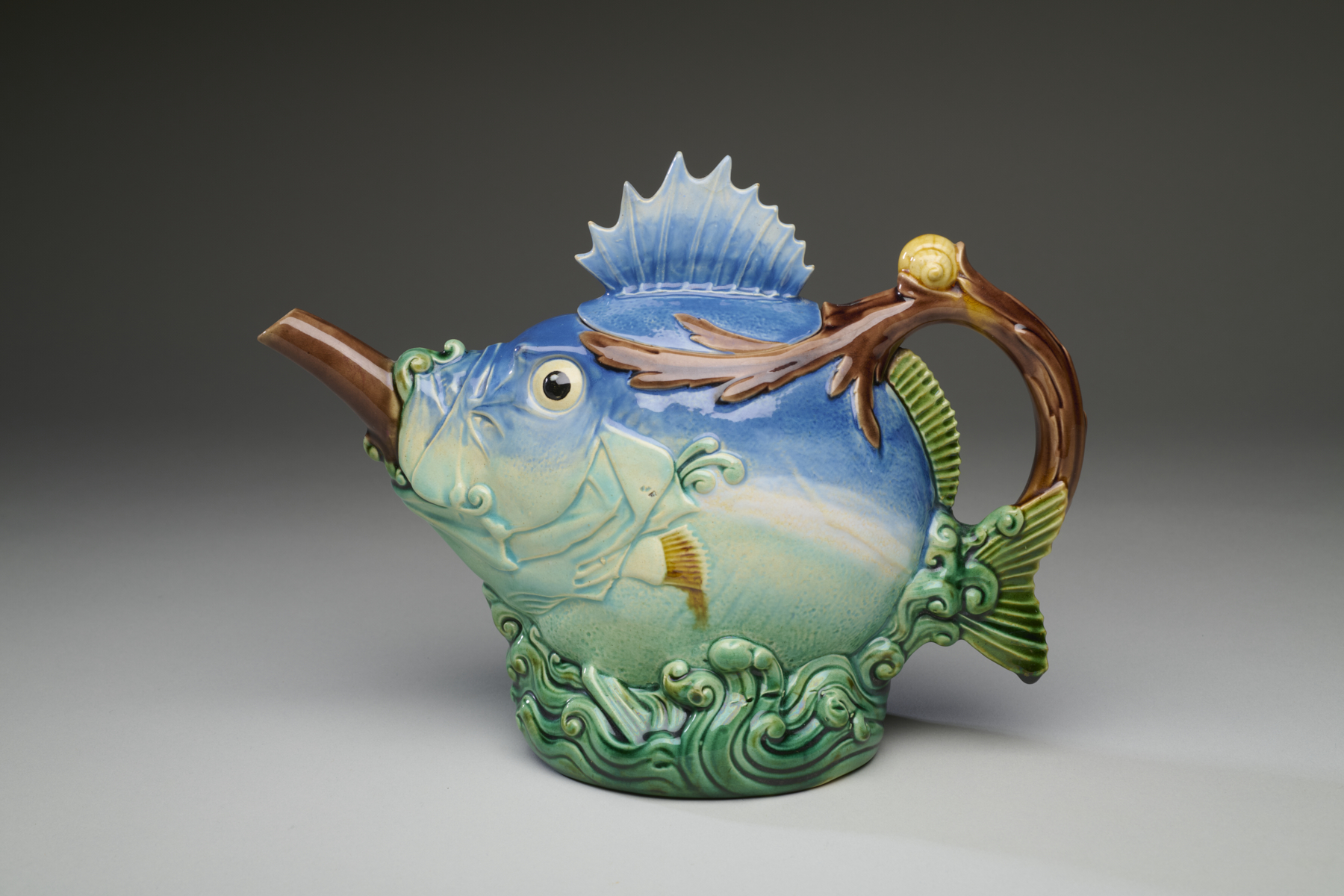
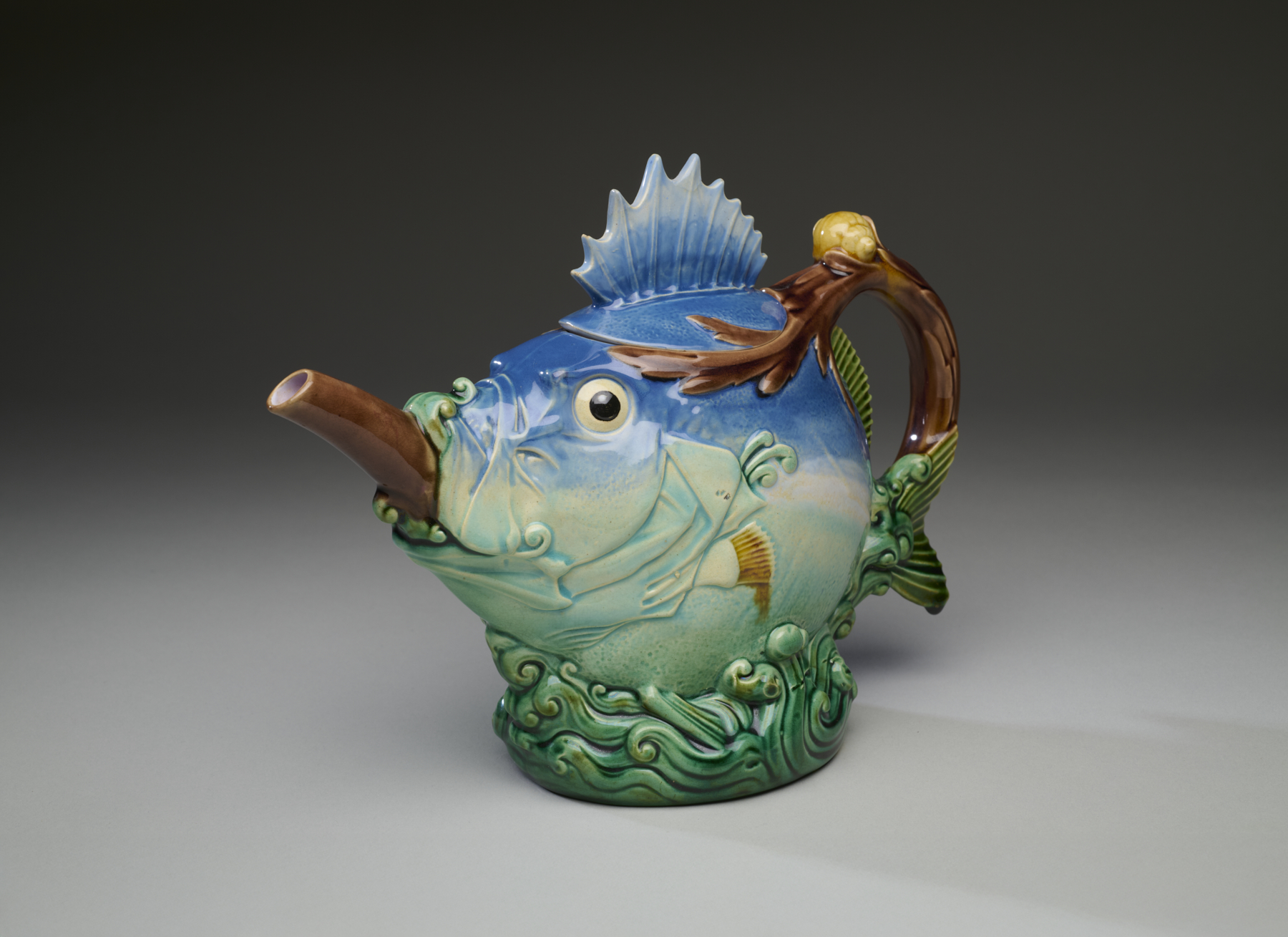
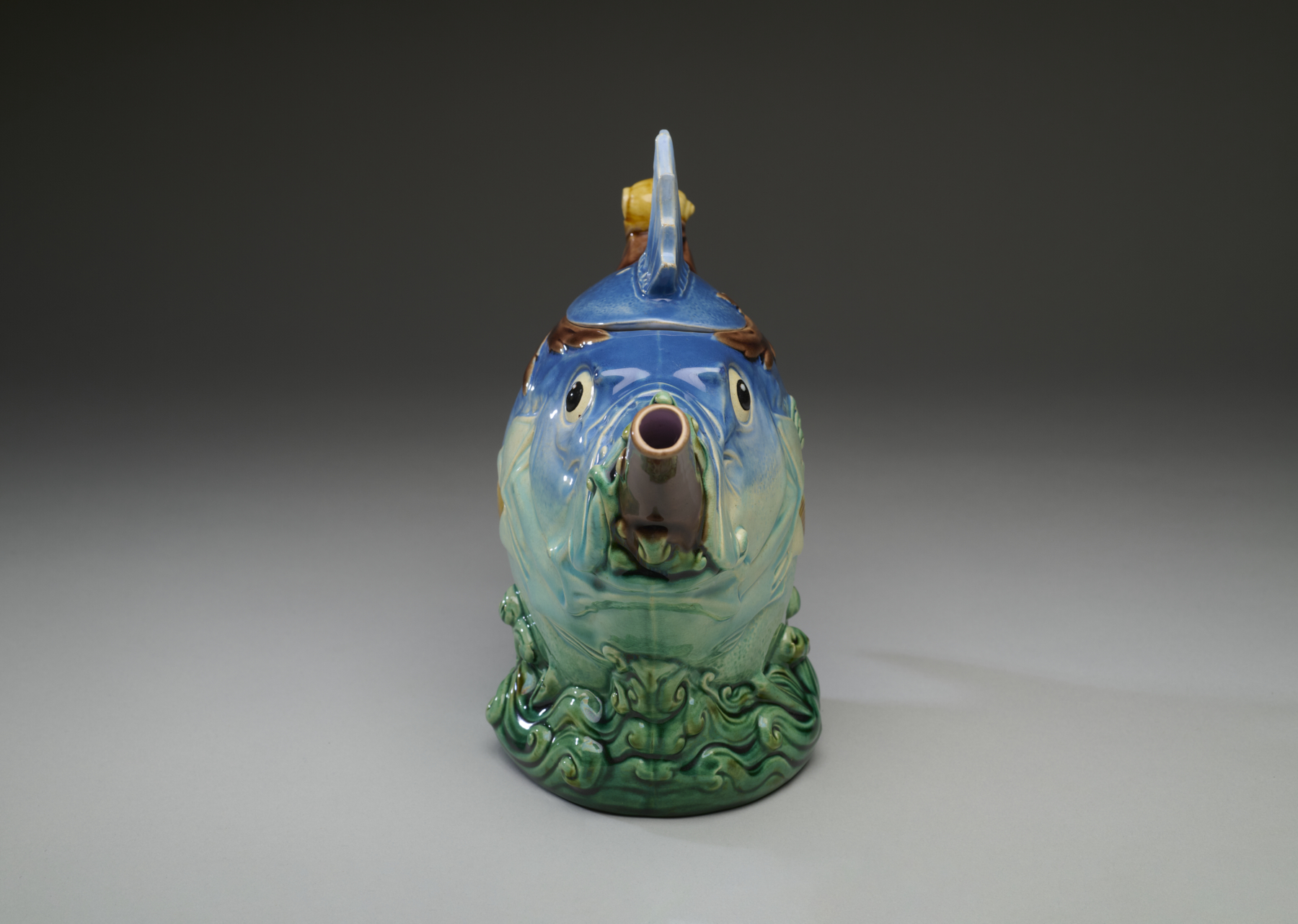
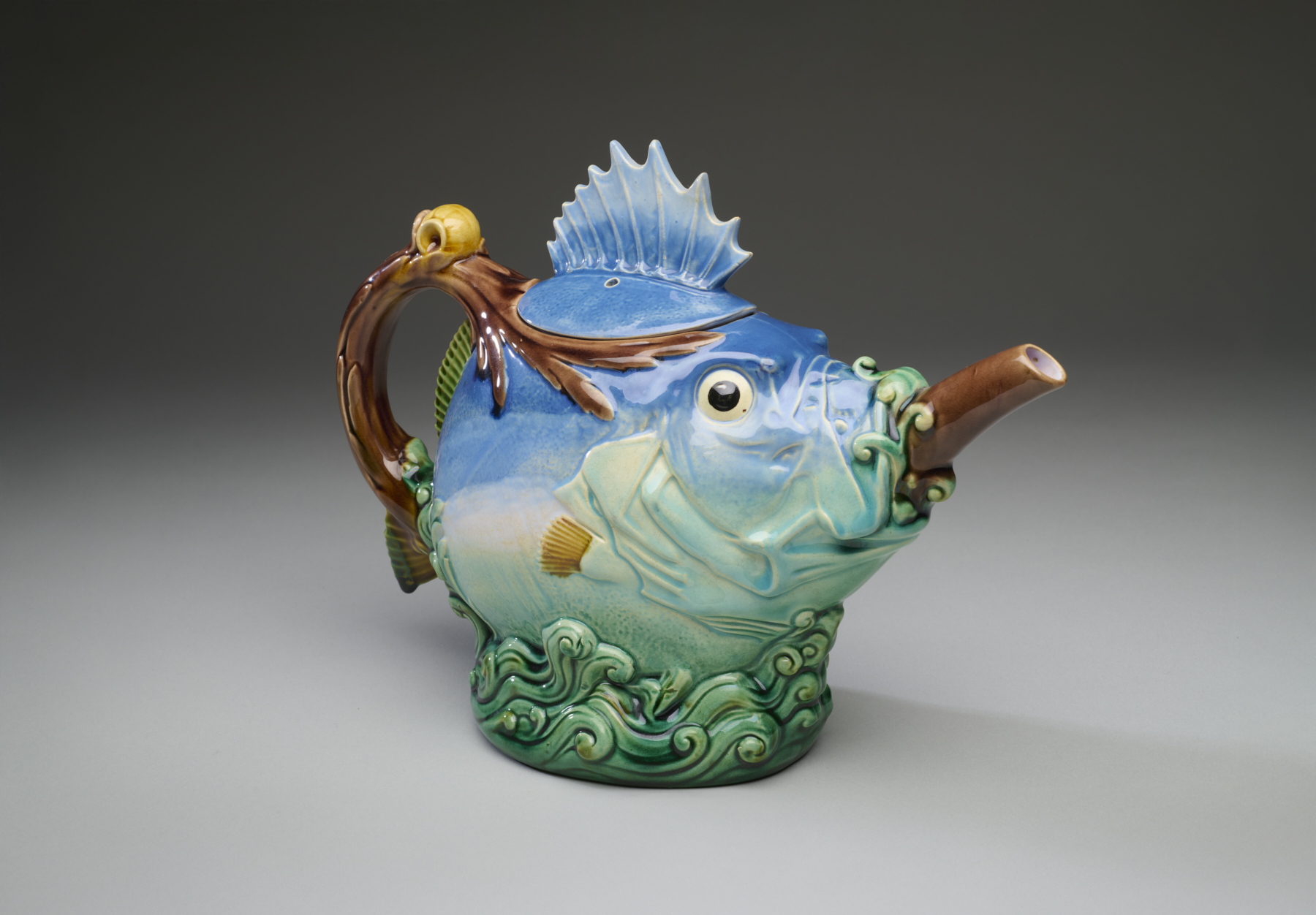
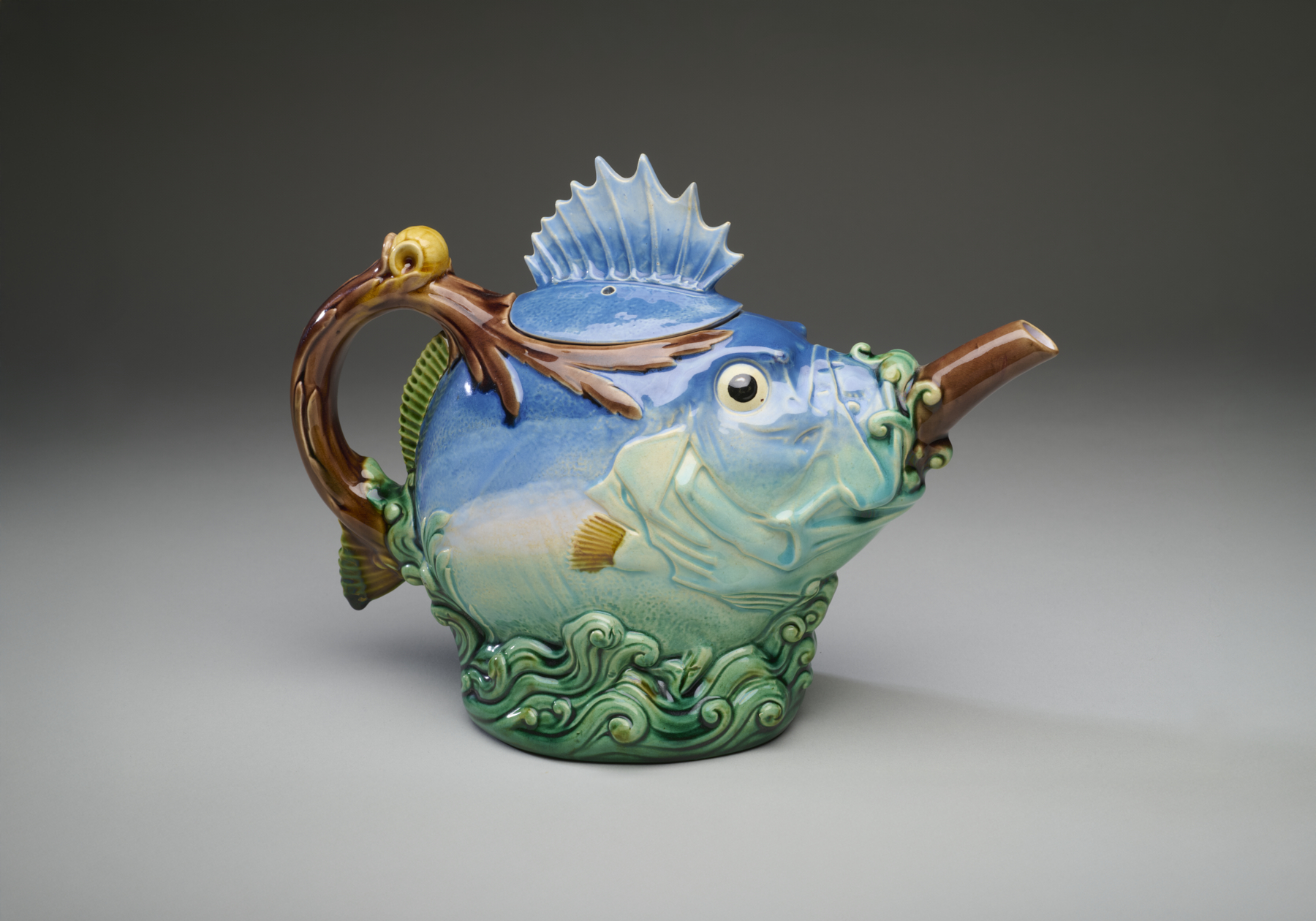
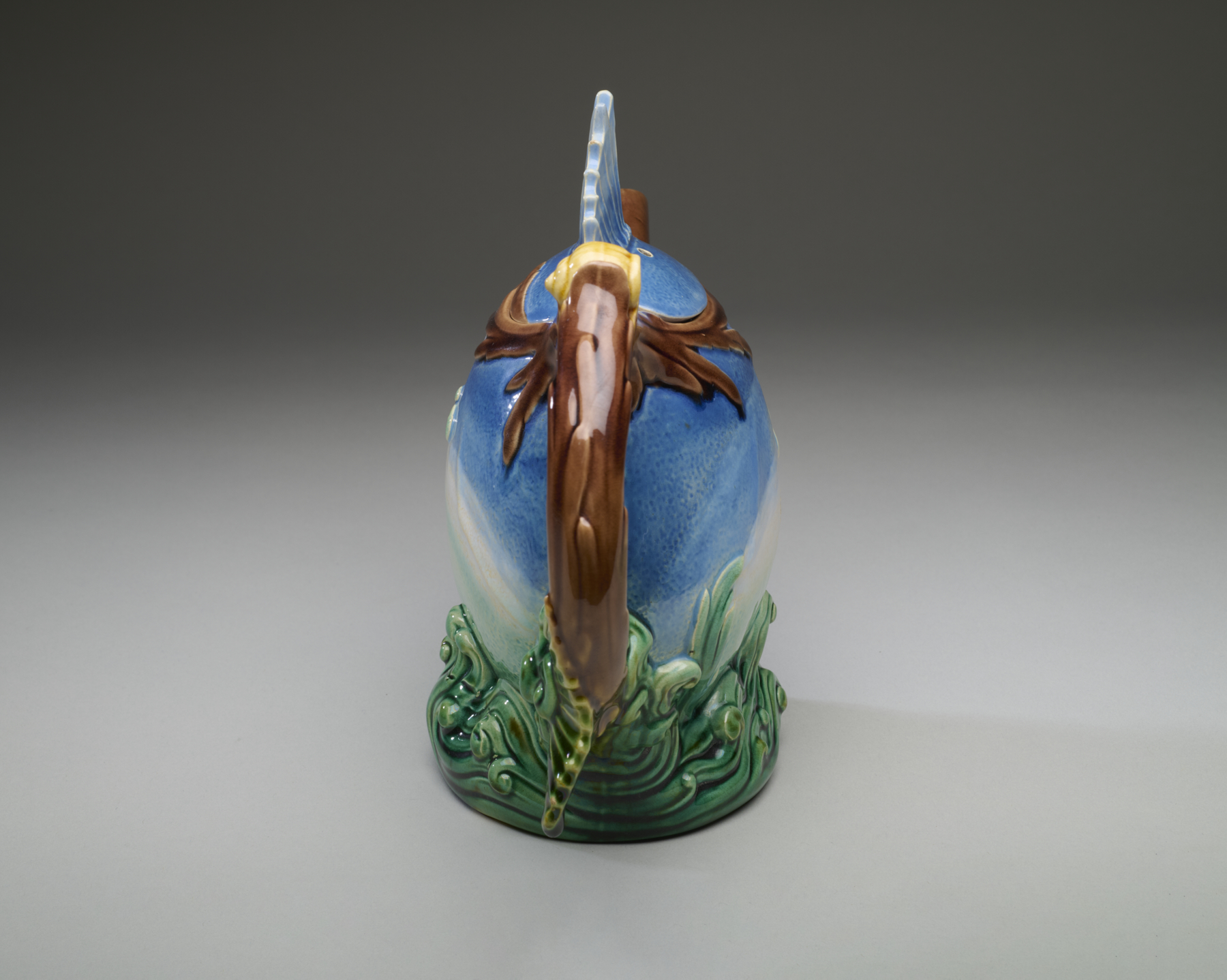
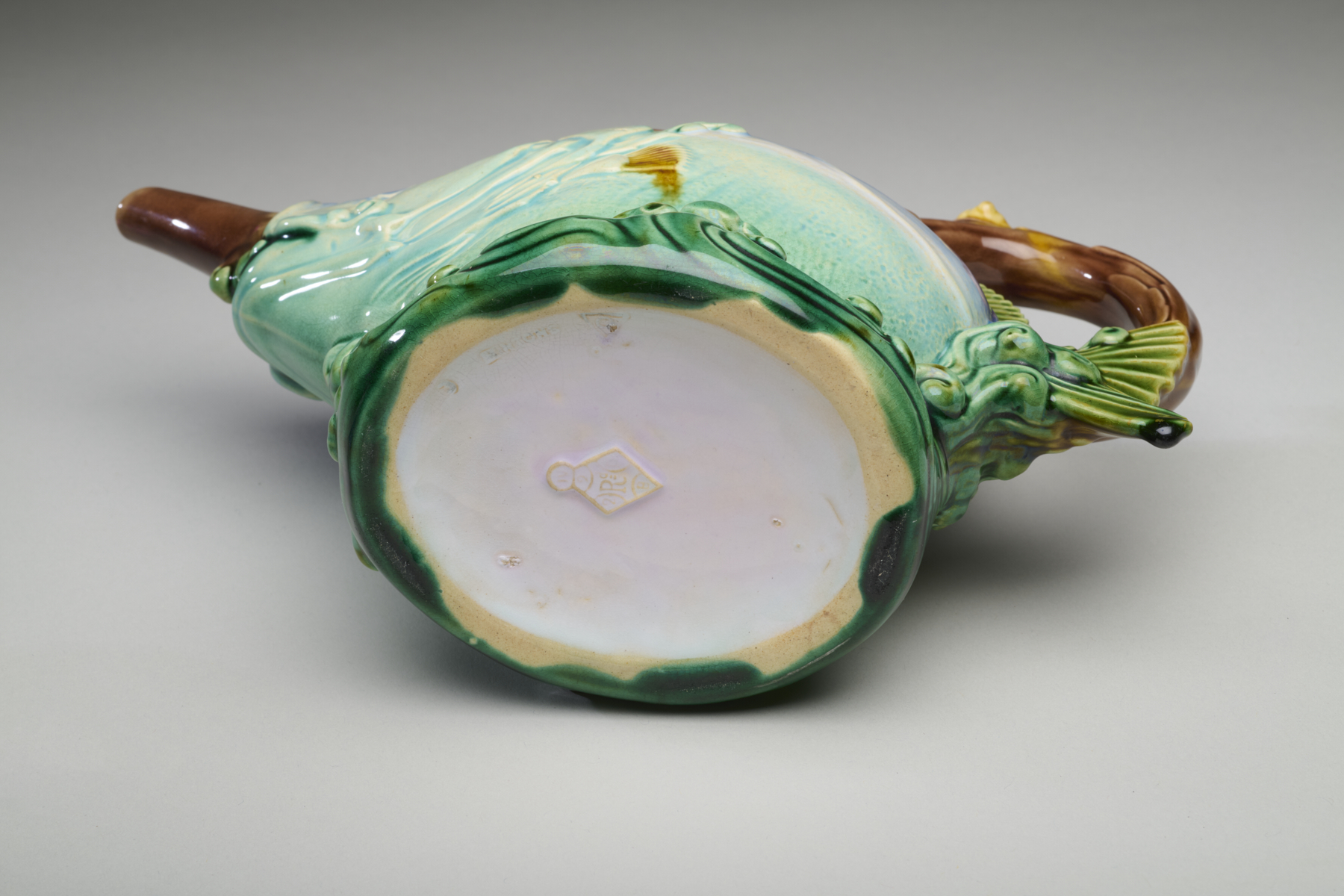
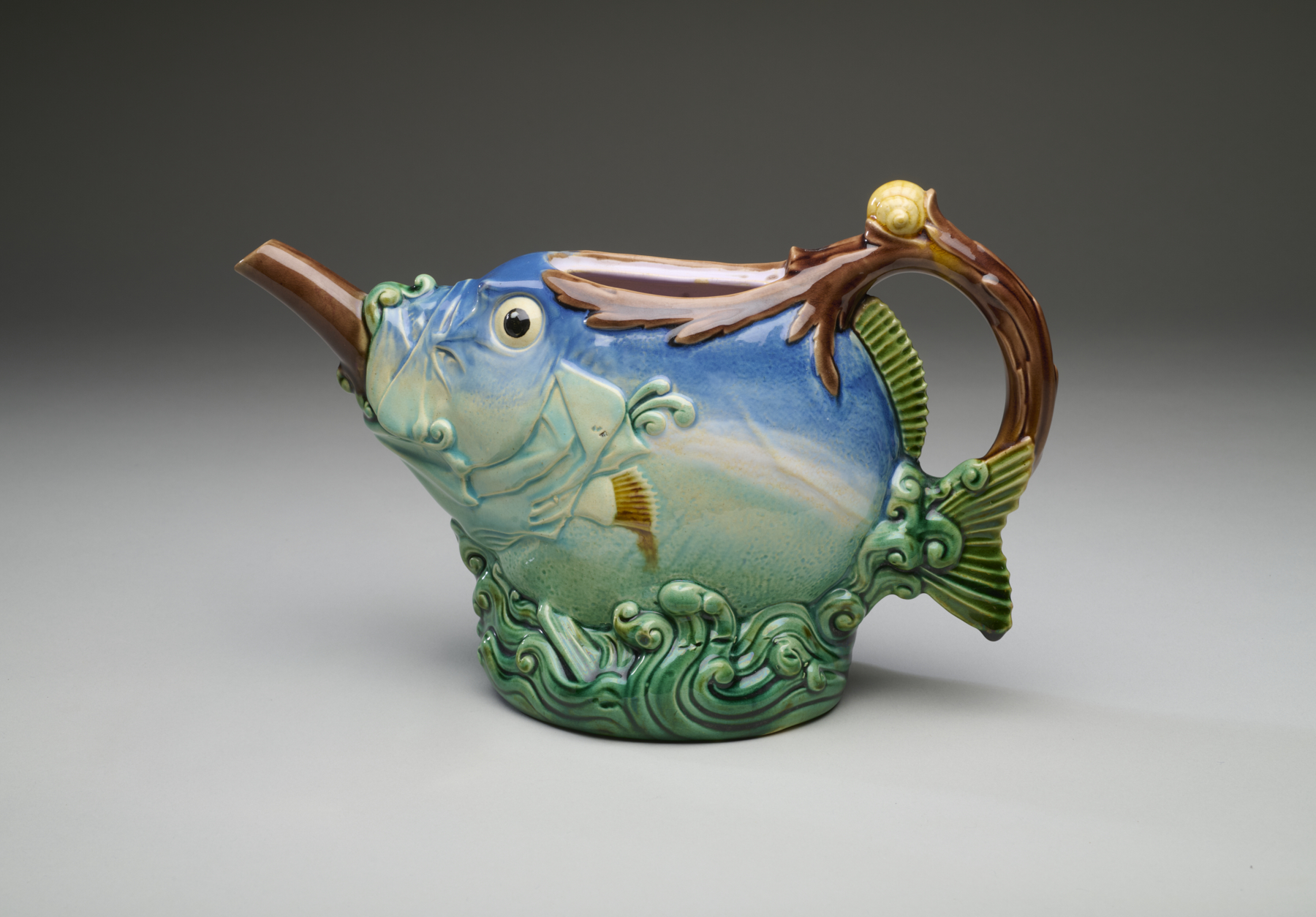
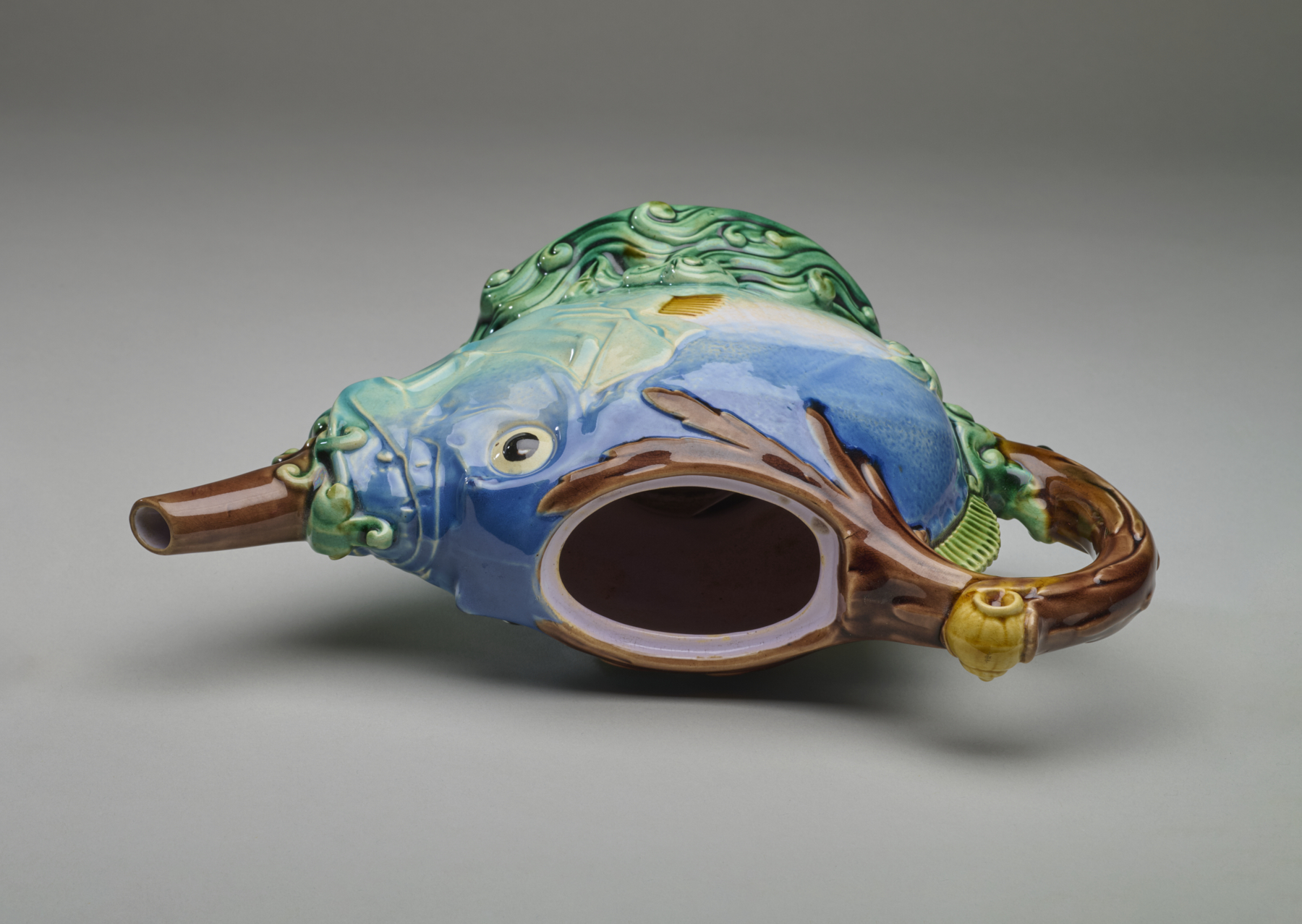
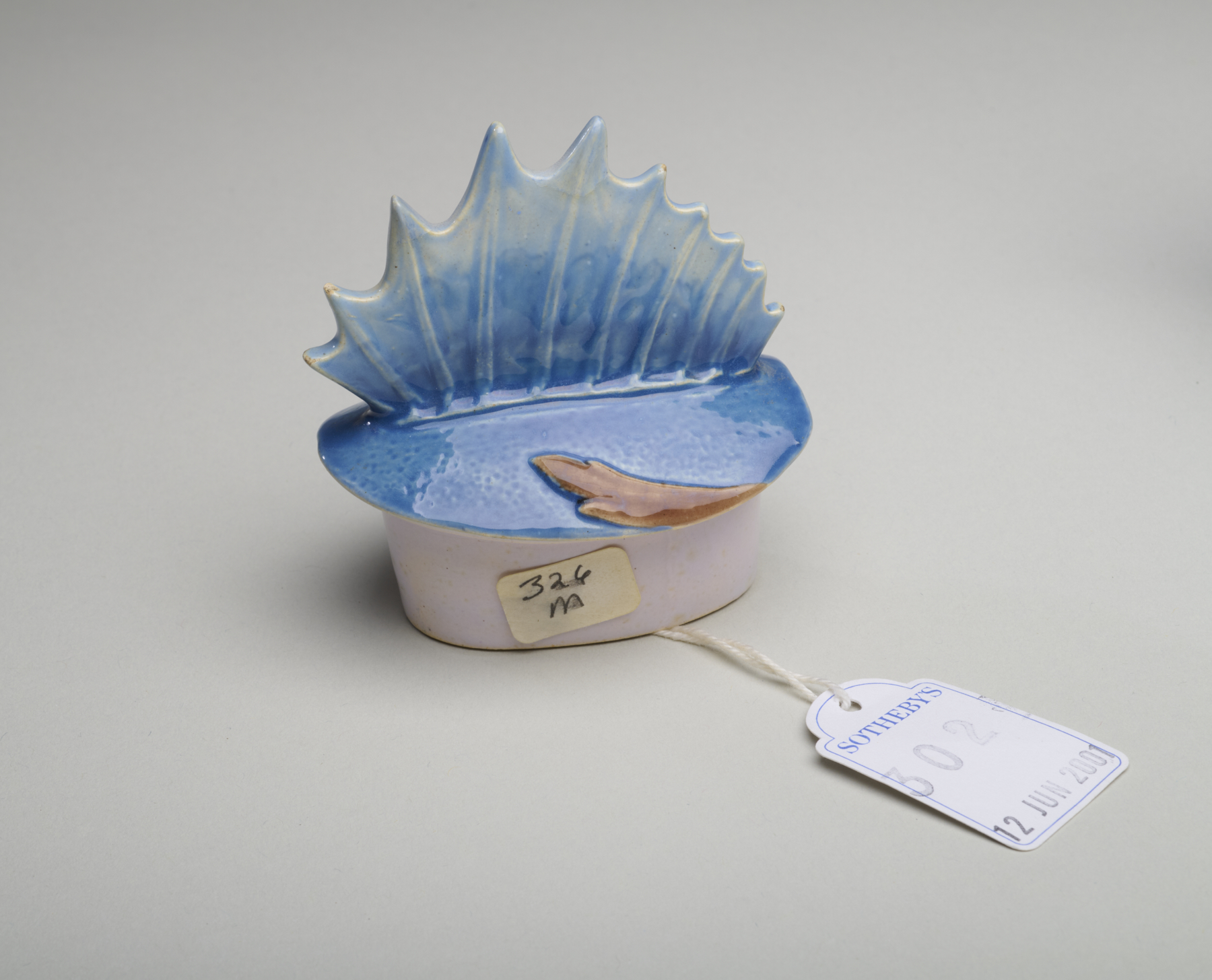
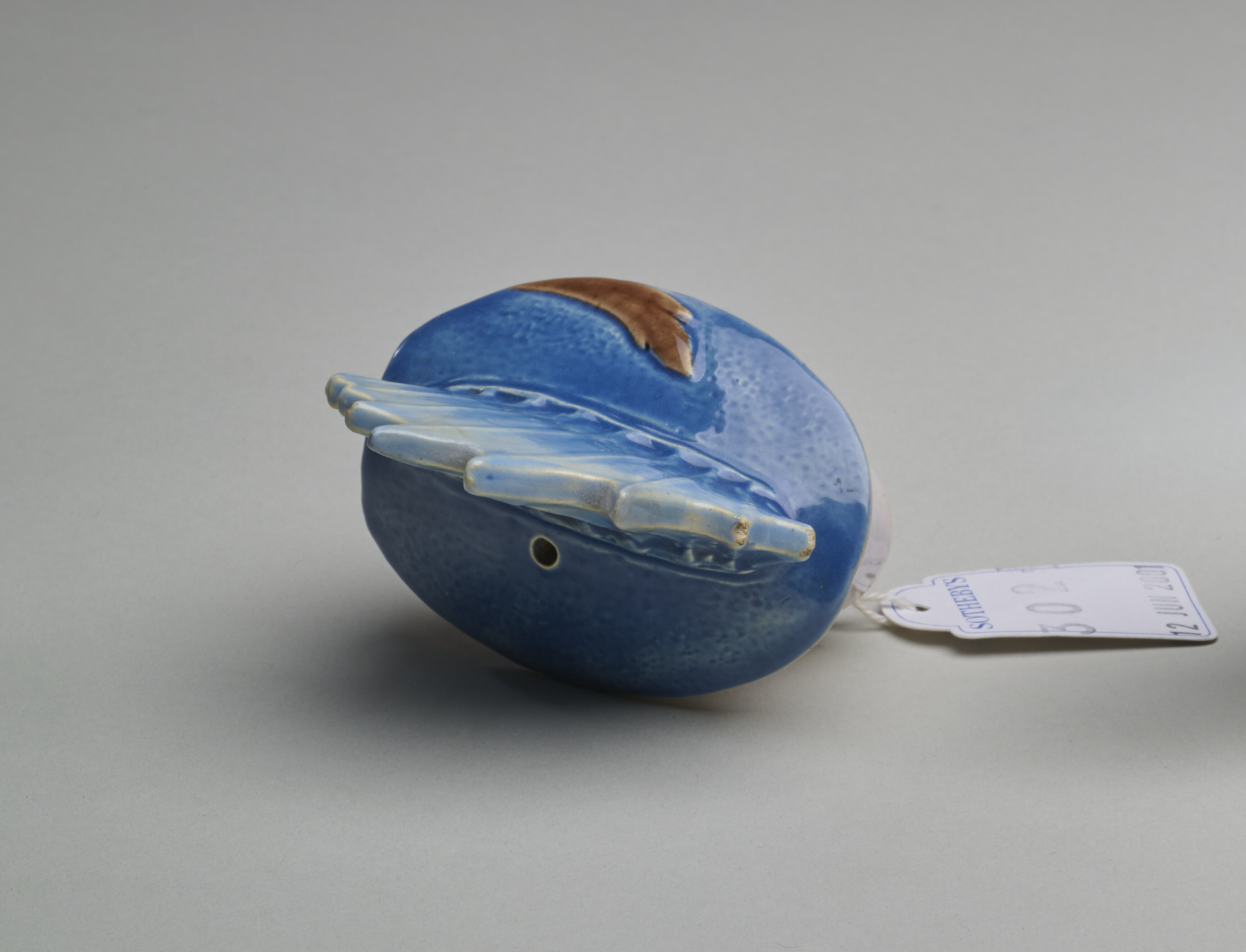
Teapot, shape no. 630
Ceramic manufacturers promoted the fashion for novelty teapots in the 1870s and 1880s by producing them in unconventional shapes and decorations. This model by Minton is one of the most whimsical and playful of a range of novelty majolica teapots produced during this period. A number of teapot models were produced in a fish form–in addition to Minton’s design, they were also manufactured by companies including Adams & Bromley and William Brownfield. The designers of the Minton model’s fish form as well as the stylized seaweed on which it rests likely drew inspiration from Asian art sources and in this way perhaps nodded to the model’s intended function, to serve tea, a beverage long associated with Asia.
Minton also chose to copyright this clever design by registering the model with the British Designs Registry on October 2, 1878. This government entity was created by the United Kingdom’s 1839 Designs Registration Act, which protected manufacturers from unauthorized copying of “ornamental” designs that were registered. As part of submitting a design for registration, a manufacturer had to include a “representation” of the design, often a drawing or, as time went on, a photograph, as was the case with this teapot. These representations are now preserved at the UK’s National Archives and provide an invaluable source of information about Victorian design.
Inscription
Provenance
Provenance (from the French provenir, 'to come from/forth') is the chronology of the ownership, custody, or location of a historical object. Learn more about provenance at the Walters.
Sotheby’s, London, “European Ceramics and Glass,” 12 June 2001, lot 302; purchased by Deborah and Philip English, Baltimore, 2001; given to the Walters Art Museum, 2025.
Measurements
H: 7 1/4 × W: 9 3/4 × D: 3 7/8 in. (18.4 × 24.8 × 9.8 cm)
Credit Line
Gift of Deborah and Philip English, 2025
Location in Museum
Not on view
Accession Number
In libraries, galleries, museums, and archives, an accession number is a unique identifier assigned to each object in the collection.
In libraries, galleries, museums, and archives, an accession number is a unique identifier assigned to each object in the collection.
48.2975