
 Creative Commons License
 Creative Commons License
 Creative Commons License
 Creative Commons License
 Creative Commons License
 Creative Commons License


Vase, shape no. 1014
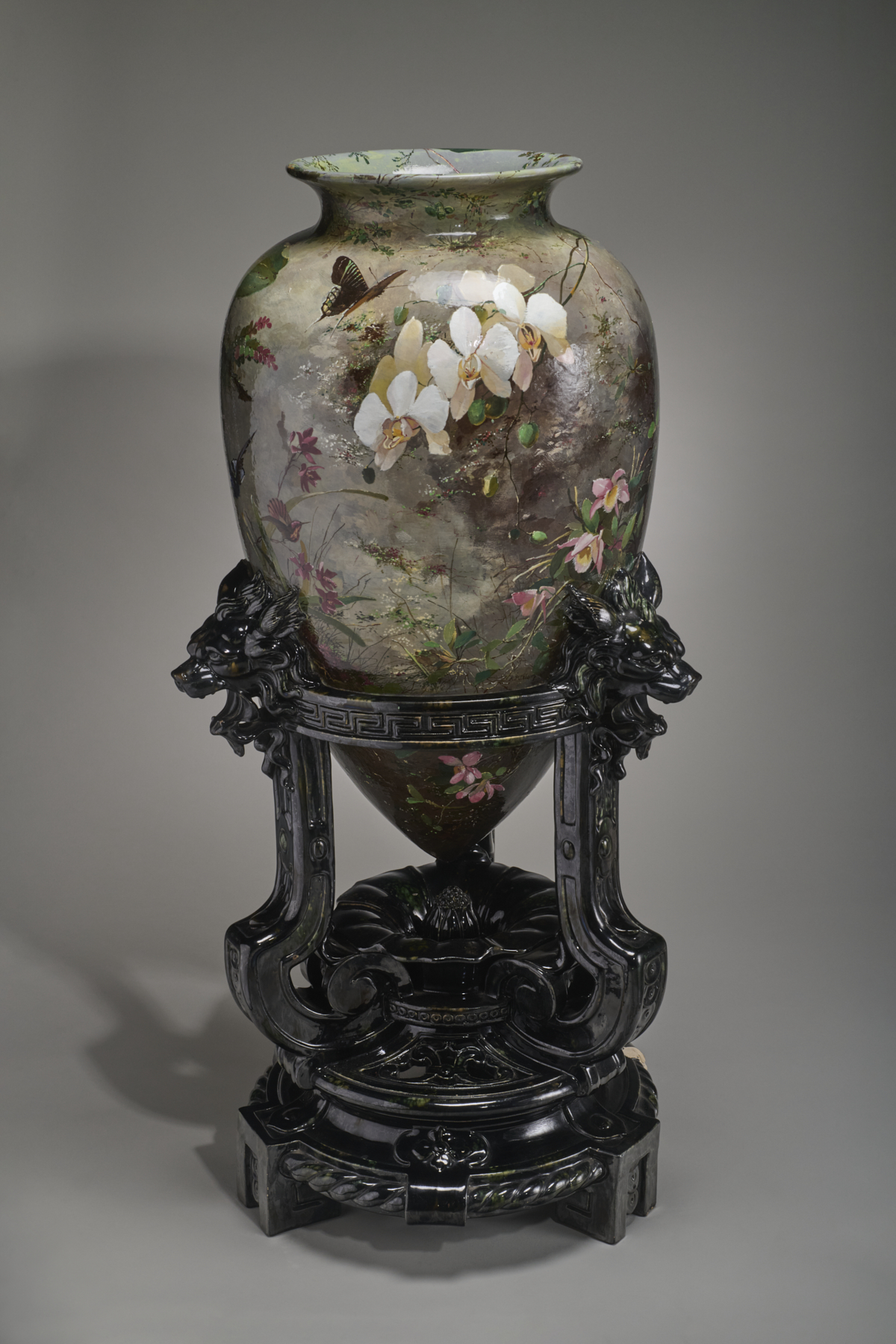
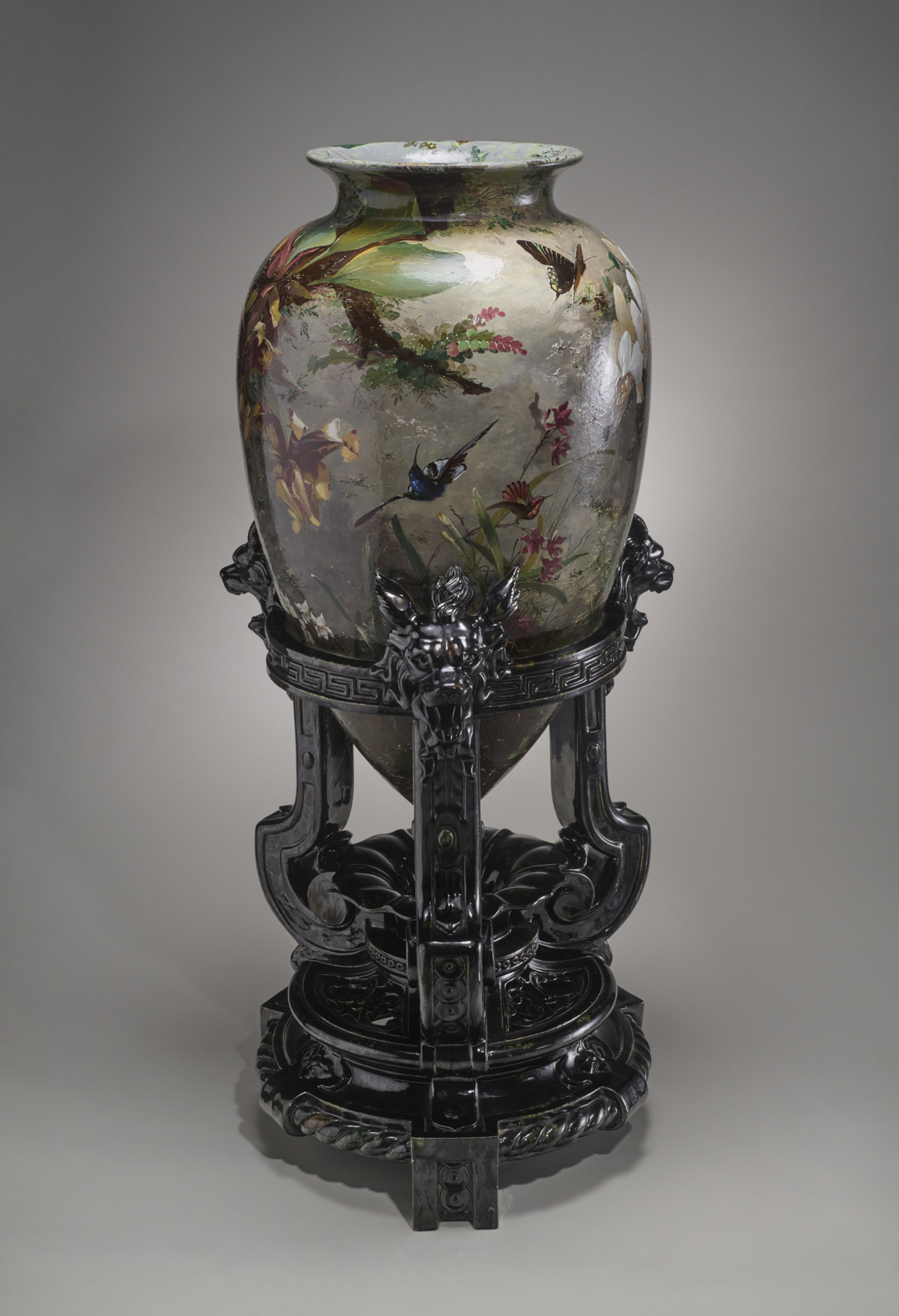
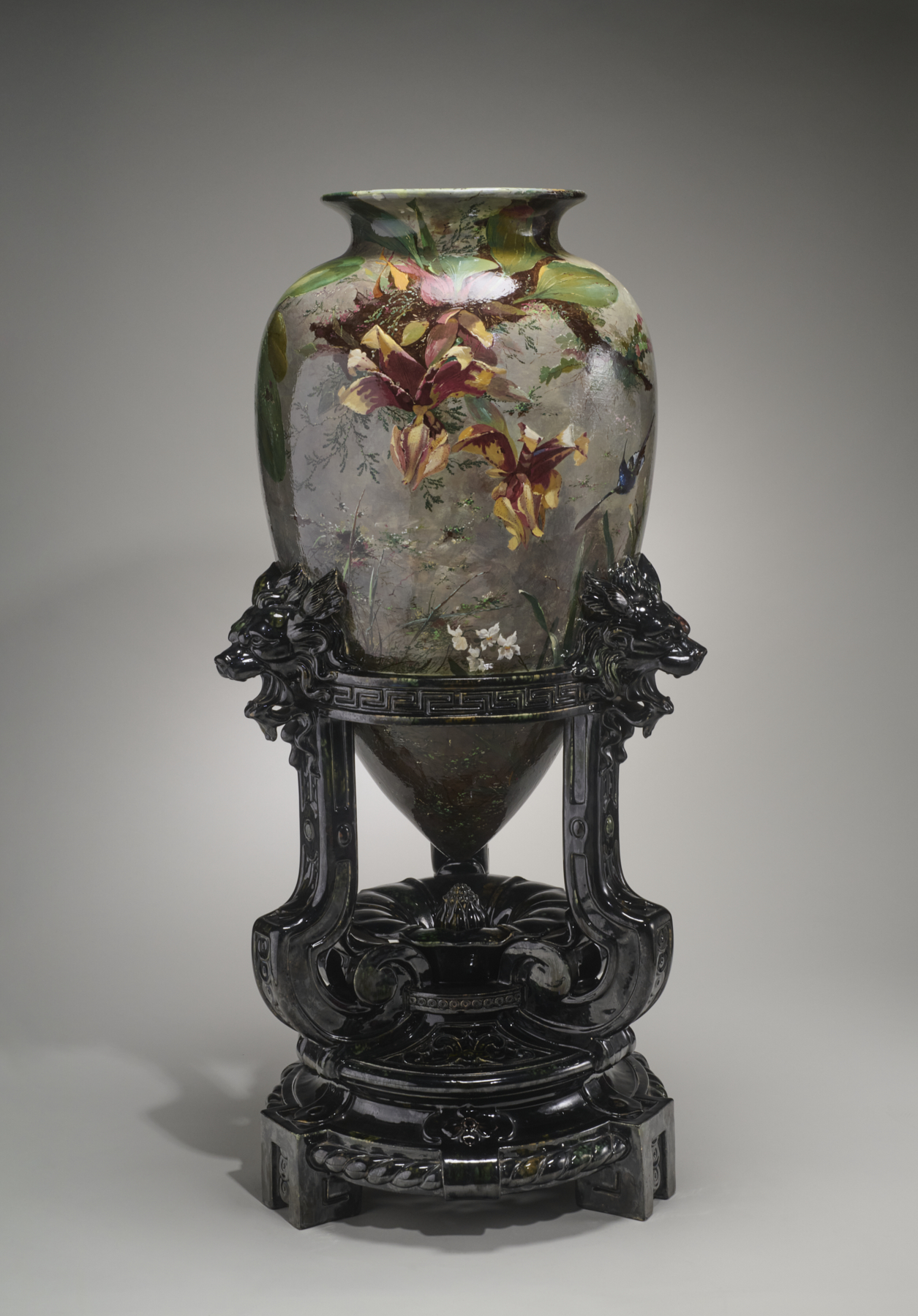
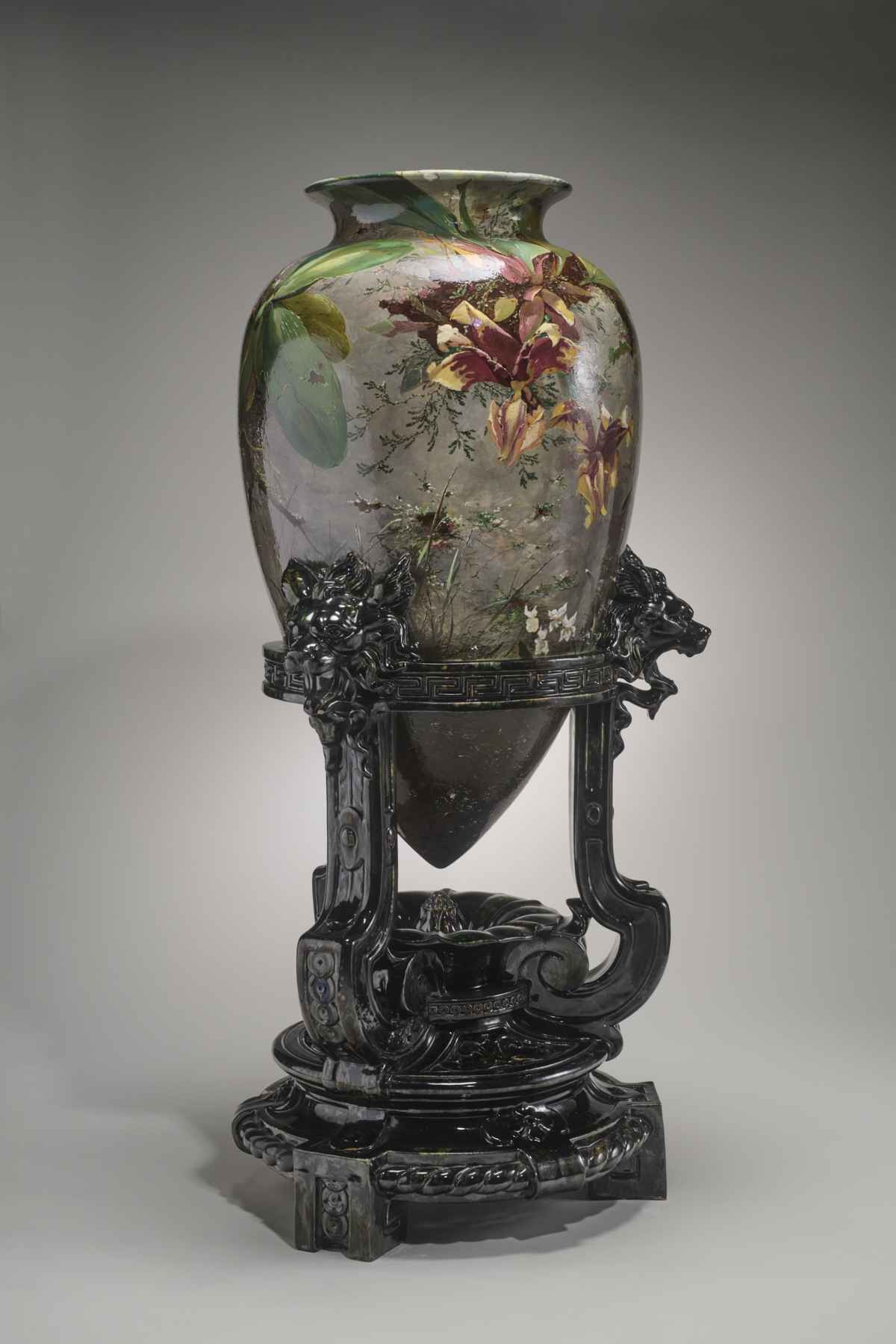
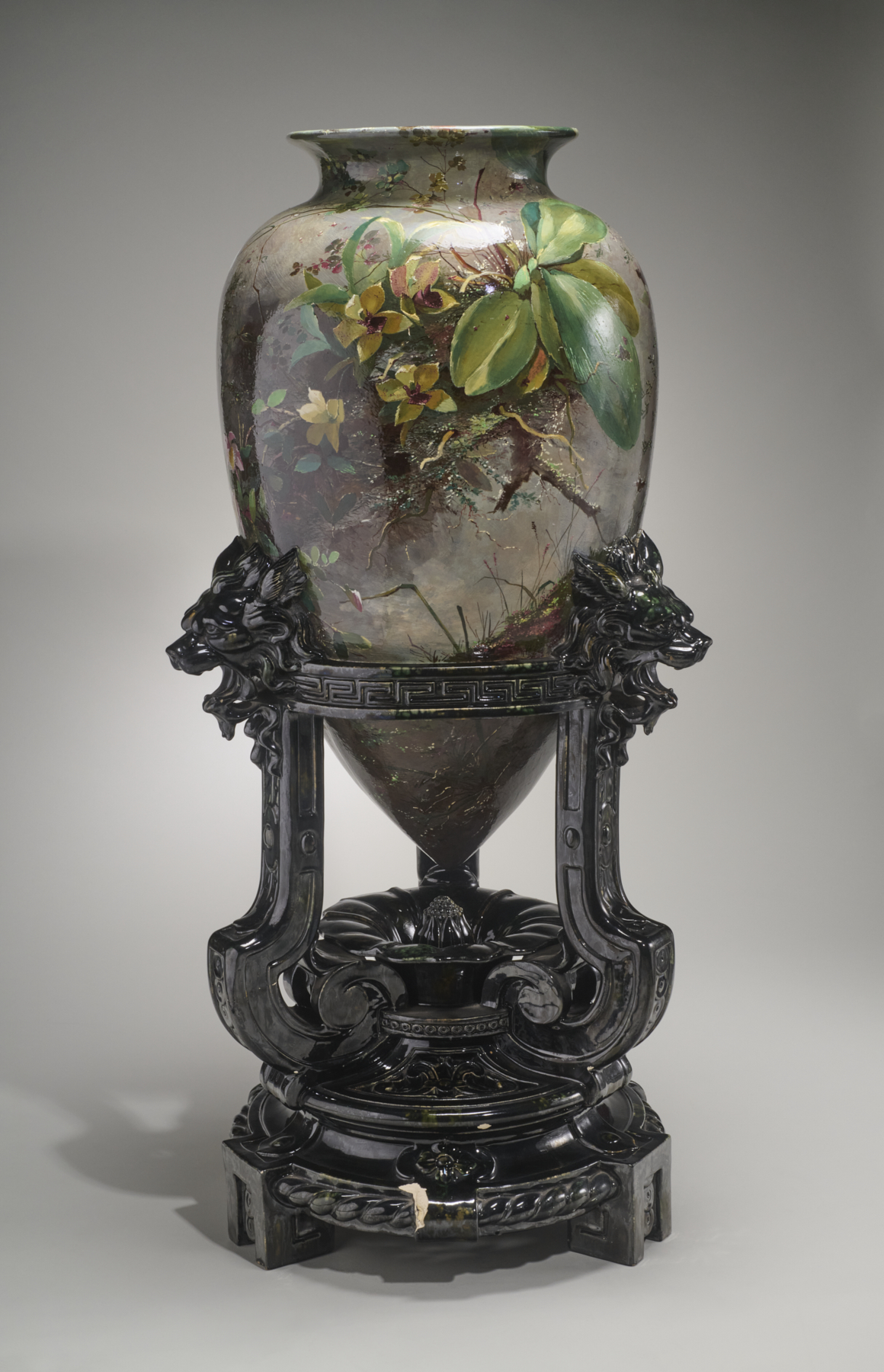
This exuberantly decorated large-scale vase is signed by the artist, “R. Pilsbury.” This is Richard Pilsbury (1830–1897), one of Minton’s chief decorators in the 1870s and 1880s, who was renowned for his flower painting. Pilsbury was born and raised in Burslem, one of the six towns that made up the Staffordshire potteries district, and apprenticed as a porcelain painter in his youth at Samuel Alcock and Co.’s Hill Pottery, Burslem, a leading ceramics manufacturer from the 1830s through the 1850s. Pilsbury was in the first generation to receive training at Britain’s newly-established national art schools, beginning coursework at the Burslem School of Art when it opened in 1853 and continuing his studies in art and design at what is now the Royal College of Art in London for a short time in 1858 before returning to Staffordshire. He resumed work at the Hill Pottery before its closure and then, after a brief period of work at T. C. Brown-Westhead, Moore & Co., Pilsbury began a long tenure at Minton & Co., where he would work for more than twenty years. From 1892 until his death he was the art director for the Moore Brothers pottery of Longton, Staffordshire, which specialized in high quality porcelain tablewares and ornamental objects.
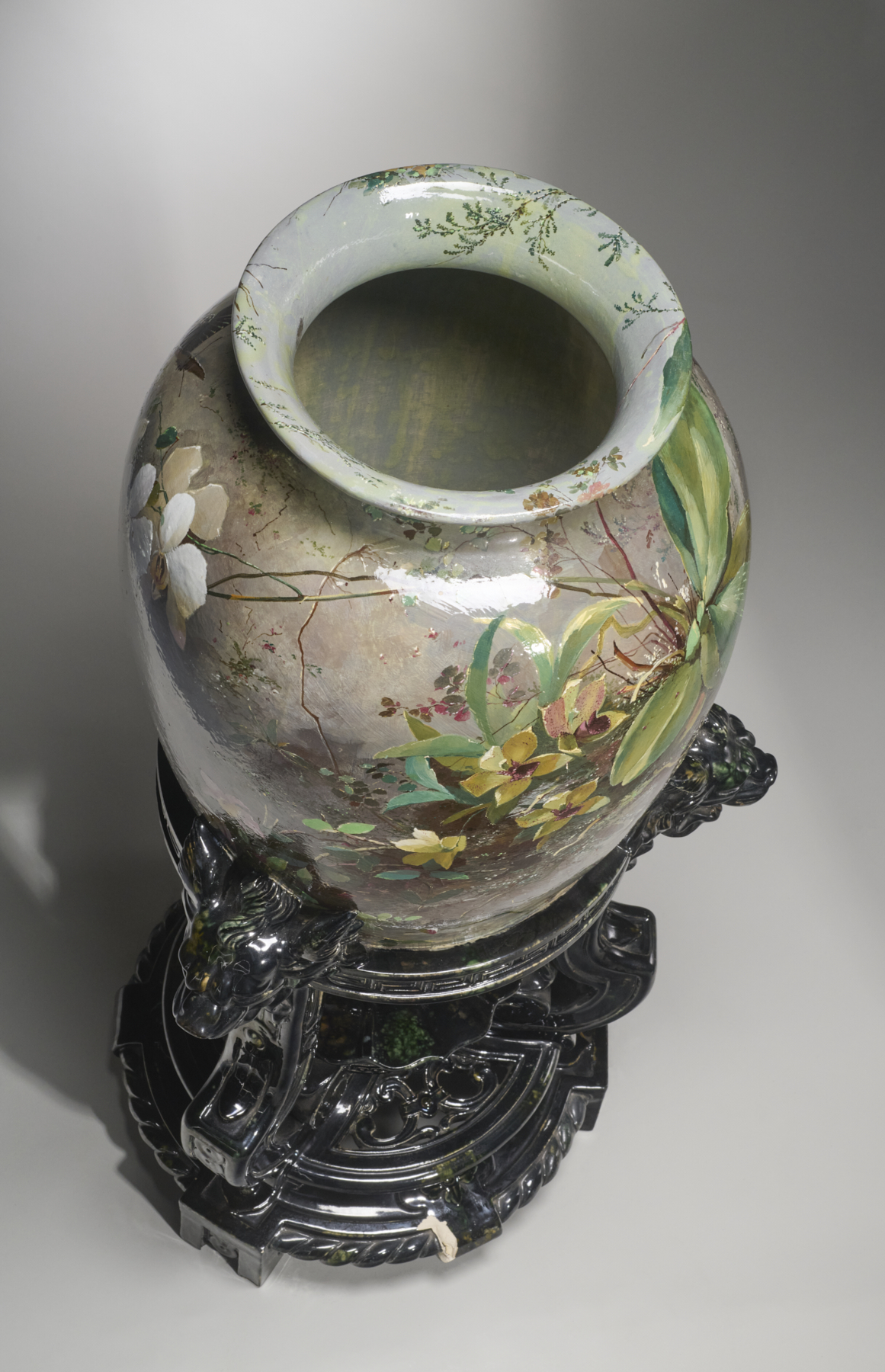
This vase is almost certainly the one listed in an inventory of the items Minton had prepared for its extensive display at the Paris Exposition Universelle of 1878. The entry notes this model, shape number 1014, and describes its decoration: “Pa’[Painted] Orchids Ferns Birds &c. by Pilsbury on maj.[majolica] body. Haviland style. Plynth col. [colored] majolica.” In both its size and its lavish decoration this vase is typical of the sort of objects Minton was exhibiting to great acclaim during this period. The notation “Haviland style” appears in more than one entry of Pilsbury’s work for the 1878 Minton display and indicates that the firm was responding to the great success the French-American firm Haviland & Co. had with a range of art ceramics in the years just prior to the Paris exhibition. These Haviland wares were decorated using the barbotine technique in which colored liquified clays were painted on the surface, dried, and then coated in a clear glaze before firing, resulting in a somewhat three dimensional and almost impressionistic effect, where the color of the decoration comes from the painted clays. Haviland showed its barbotines at the the Centennial Exhibition of 1876 in Philadelphia and continued to be lauded for them into the 1880s. The vase considered here may have been decorated in the barbotine technique. Its somewhat sketchy and impressionistic decoration has been built up in layers bordering on impasto, and certainly approaches the barbotine effect.
This was also not the only exhibit in the group prepared for the 1878 display that was described as being created on a “majolica body” or with “colored majolica” components. To realize its most extravagant and ambitious productions during this period, Minton seemed to have increasingly blurred the boundaries between different types of decoration. The price that was assigned to this vase, 40 Guineas (or 42.00 British pounds), distinguishes it as one of the more expensive pieces on exhibit. For comparison, the lifesize majolica peacocks Minton prepared for the exhibit (like the example now in the Walters collection) were valued at 35 Guineas. While a pair of five-foot tall vases decorated by fellow Minton painter William Mussill overshadowed Pilsbury’s contributions in contemporary reviews of Minton’s display, one critic writing for the Staffordshire Advertiser newspaper in November 1878 noted “Mr. Pilsbury’s work is honourably distinguished not only by artistic feeling but by careful and conscientious execution.”
Pilsbury made a speciality of flower painting—so much so that his longtime colleague, the ceramic artist and historian Marc-Louis-Emmanuel Solon (1835–1913), who penned his obituary in the Staffordshire Sentinel newspaper wrote, “In all his work we recognise his love for nature, a delicate feeling of colour, and a touch always spirited and correct…. In our estimation he stood second to none amongst the English flower painters; in some respects we believe him to be superior to most of his contemporaries.” Solon also noted in the obituary that for inspiration Pilsbury “turned to nature” and specifically spent “untiring work in the greenhouses,” resulting in “his conscientious reproductions of the best models he found there,” which he would apply to his work at Mintons. Perhaps Pilsbury’s access to exotic tropical plants like the orchids depicted on this vase was made possible by the fact that James Bateman (1811–1897), one of Britain’s chief collectors of and scholars on orchids, lived nearby. Bateman created gardens at his estate Biddulph Grange that are still renowned today. Bateman apparently gave local artists like Pilsbury extensive access to his greenhouses and gardens, to the point that historians George Woolliscroft Rhead and Frederick Alfred Rhead noted in their 1906 book "Staffordshire Pots & Potters" that this exposure had “the effect of causing Pilsbury, Mussill, and other ceramic artists to employ the orchid largely as a motive for pottery decoration….”
Inscription
Provenance
Provenance (from the French provenir, 'to come from/forth') is the chronology of the ownership, custody, or location of a historical object. Learn more about provenance at the Walters.
With Martine Boston Antiques, Limerick, Ireland / Nick Boston Antiques, London, by 2017 [mode of acquisition unknown]; purchased by Deborah and Philip English, Baltimore, 2017; given to the Walters Art Museum, 2025.
Measurements
H: 35 5/8 × Diam: 17 in. (90.5 × 43.2 cm)
Credit Line
Gift of Deborah and Philip English, 2025
Location in Museum
Not on view
Accession Number
In libraries, galleries, museums, and archives, an accession number is a unique identifier assigned to each object in the collection.
In libraries, galleries, museums, and archives, an accession number is a unique identifier assigned to each object in the collection.
48.2976