
 Creative Commons License
 Creative Commons License
 Creative Commons License
 Creative Commons License
 Creative Commons License
 Creative Commons License


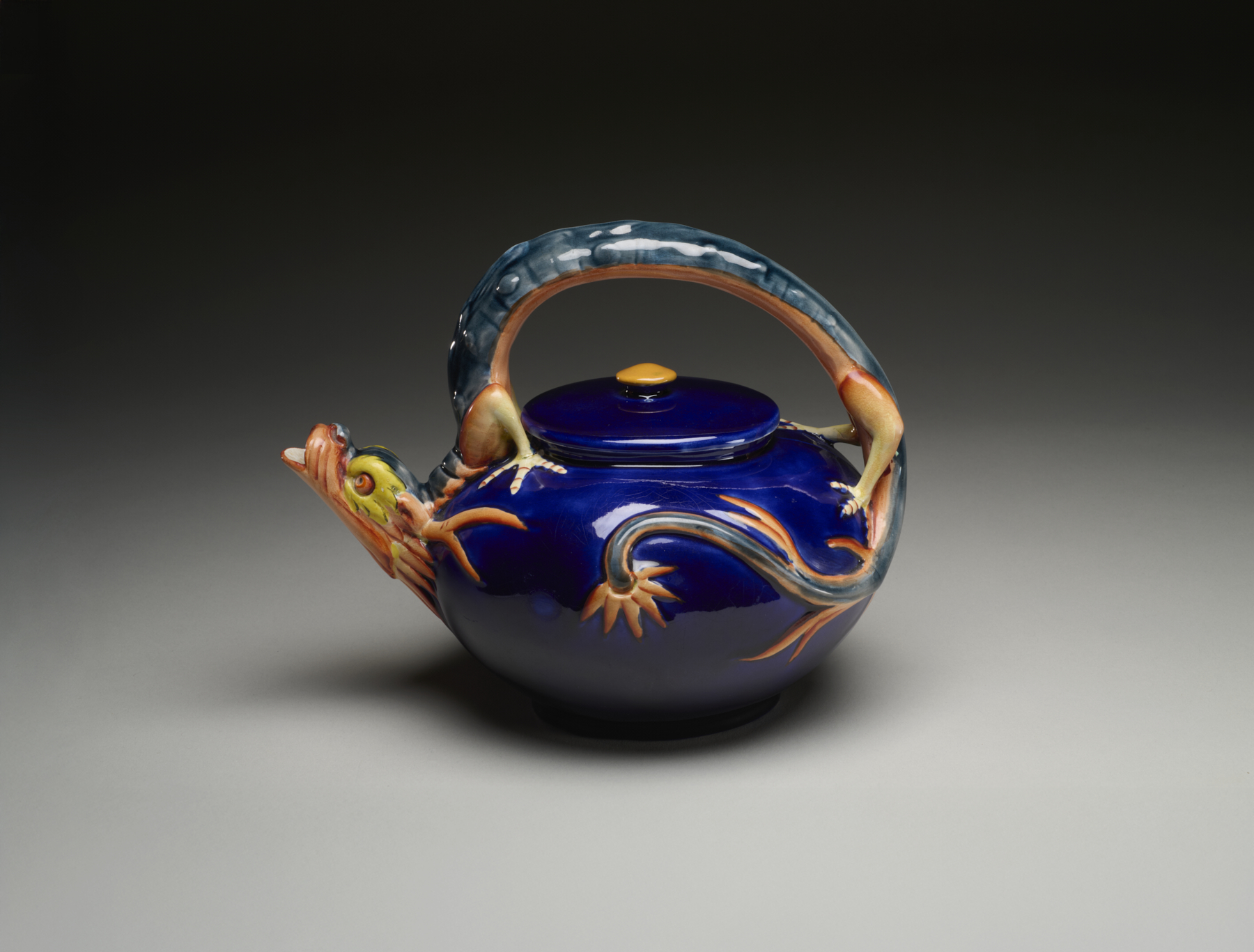
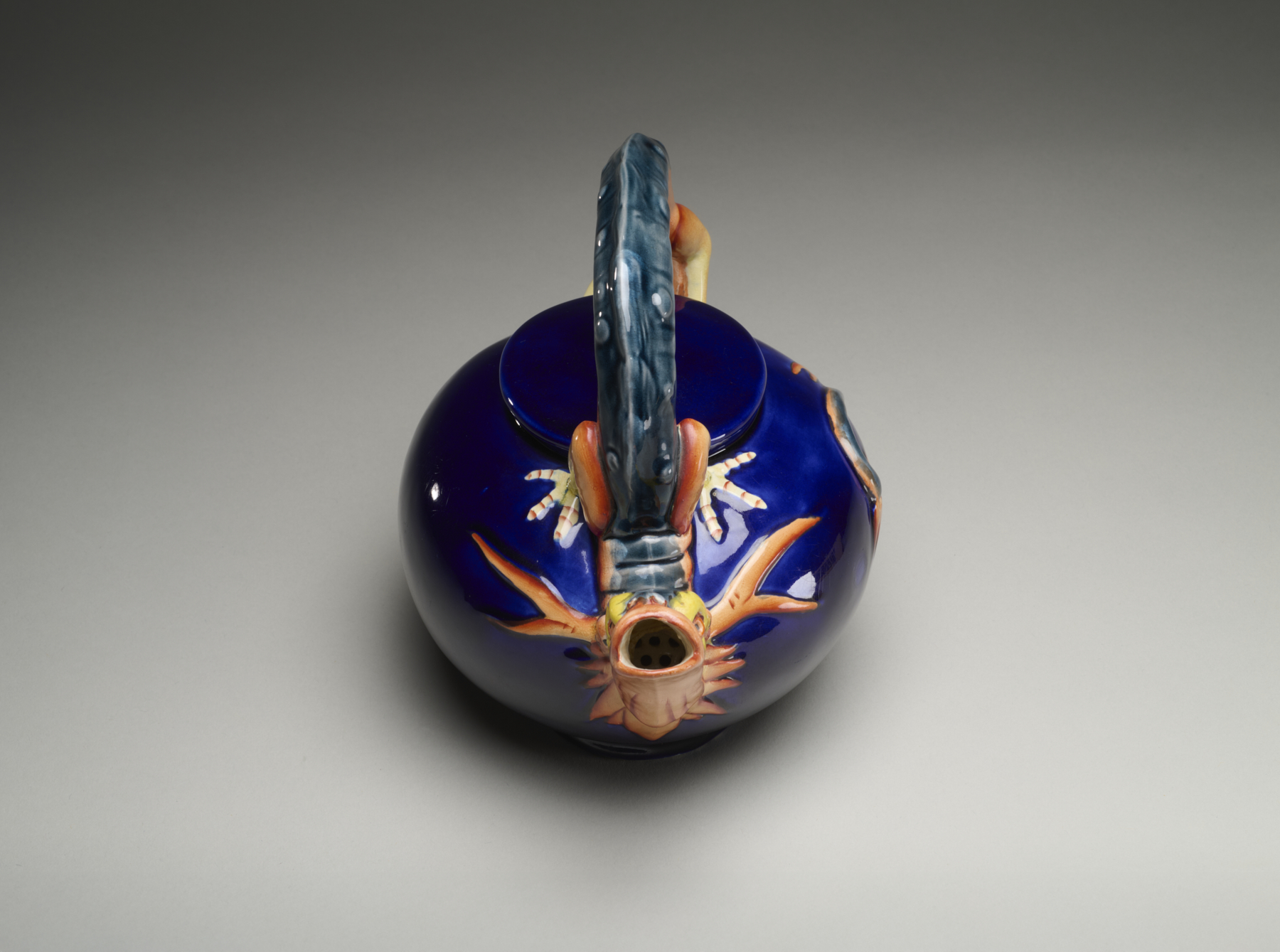
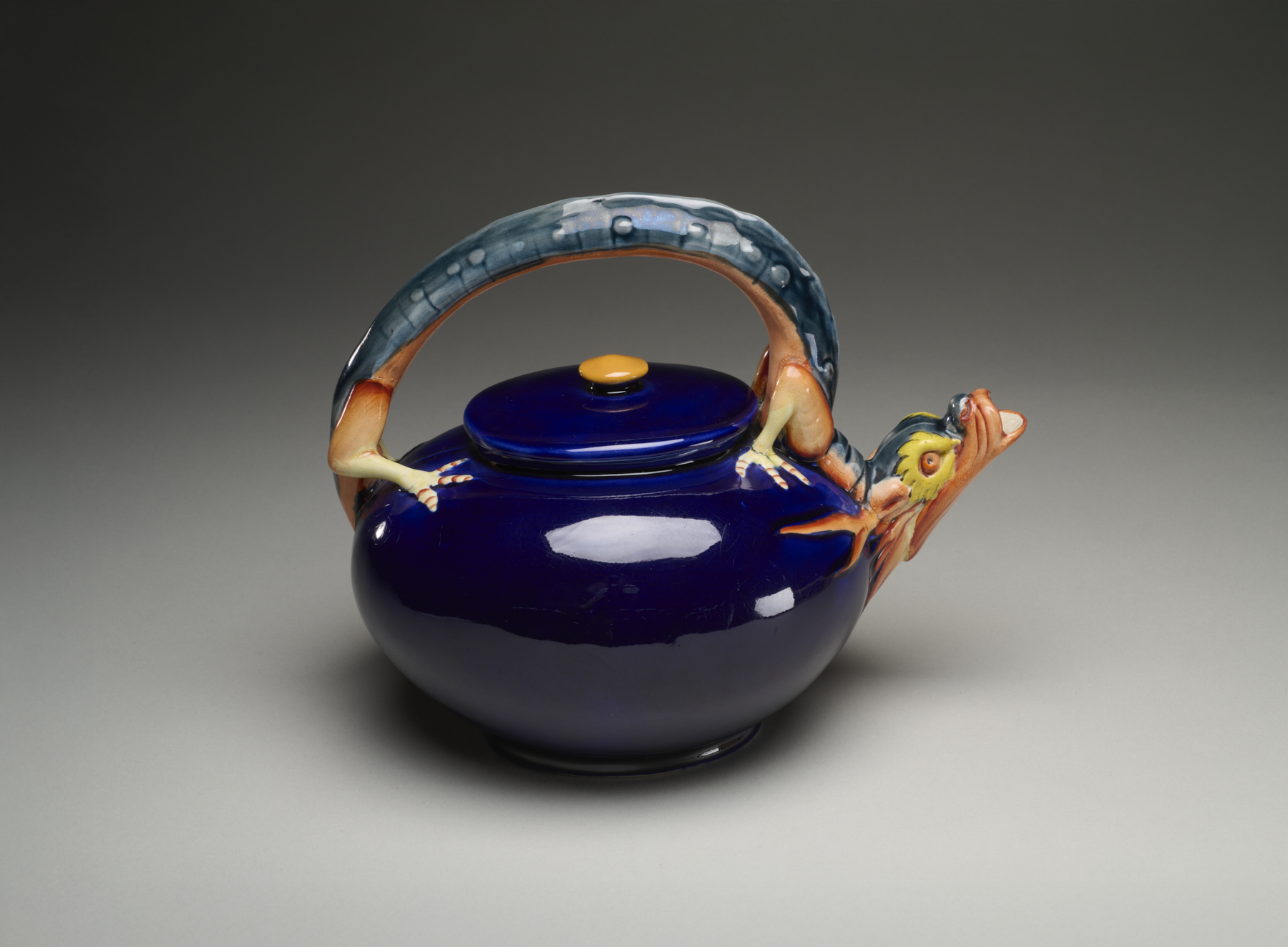
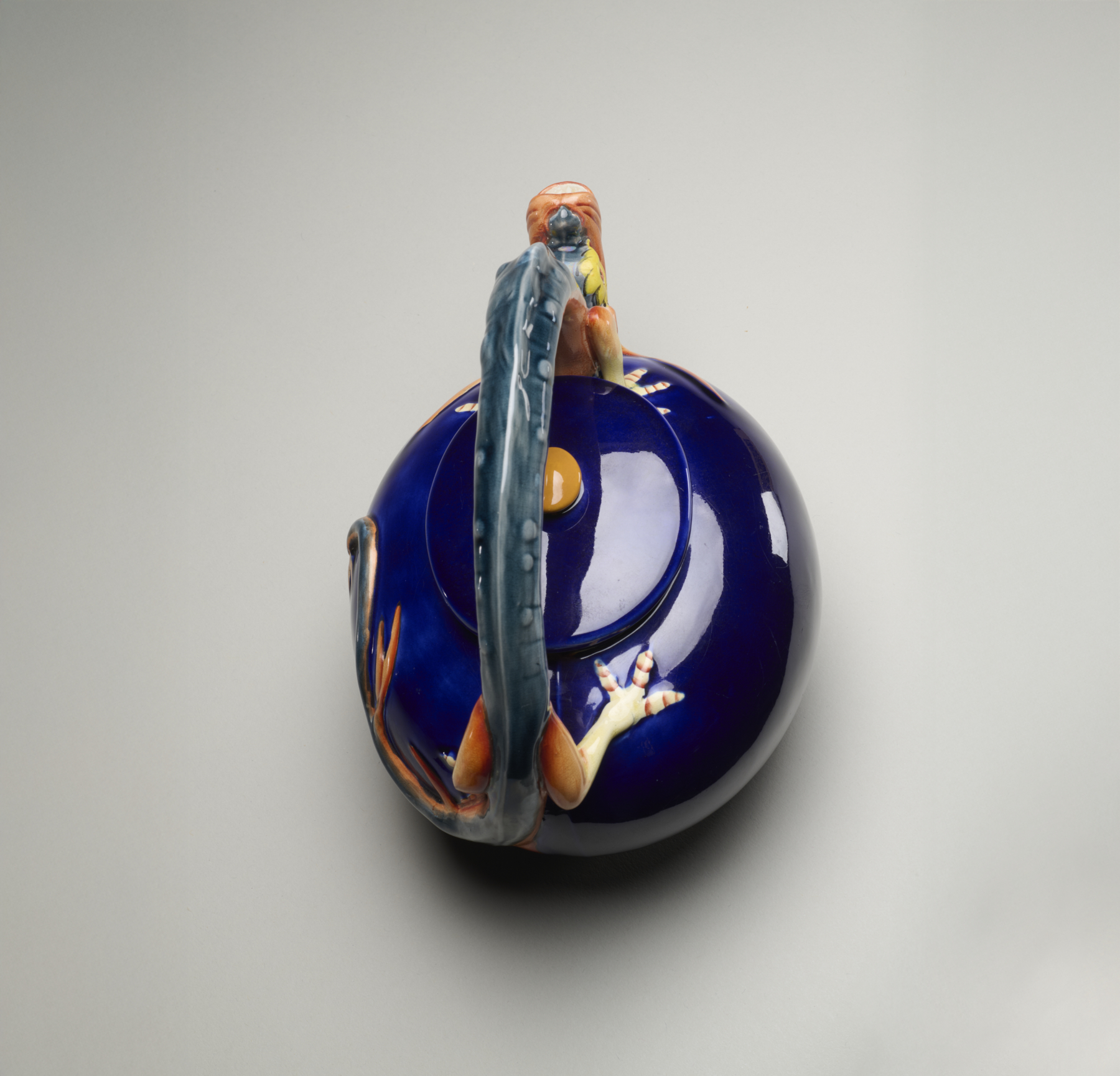
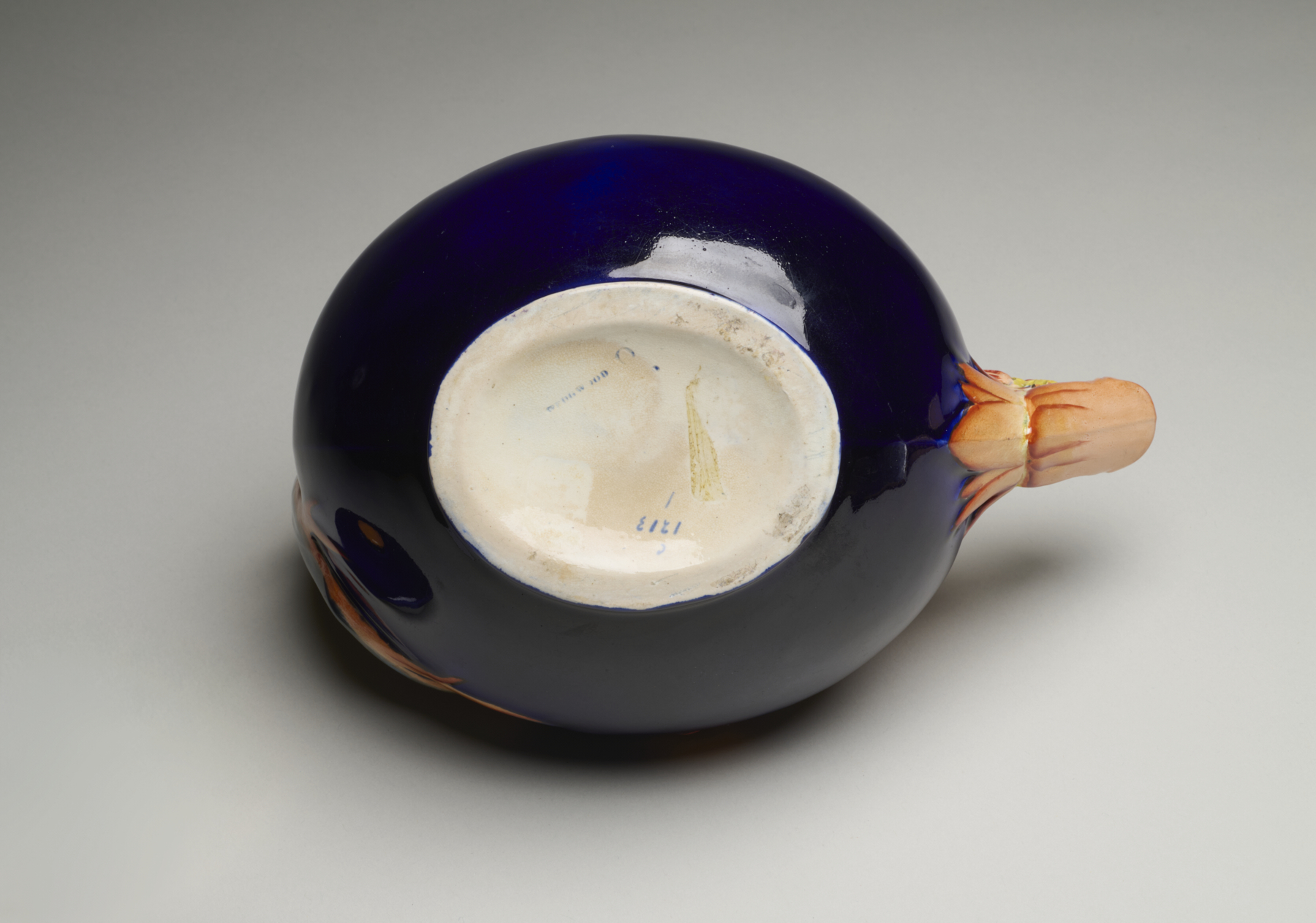
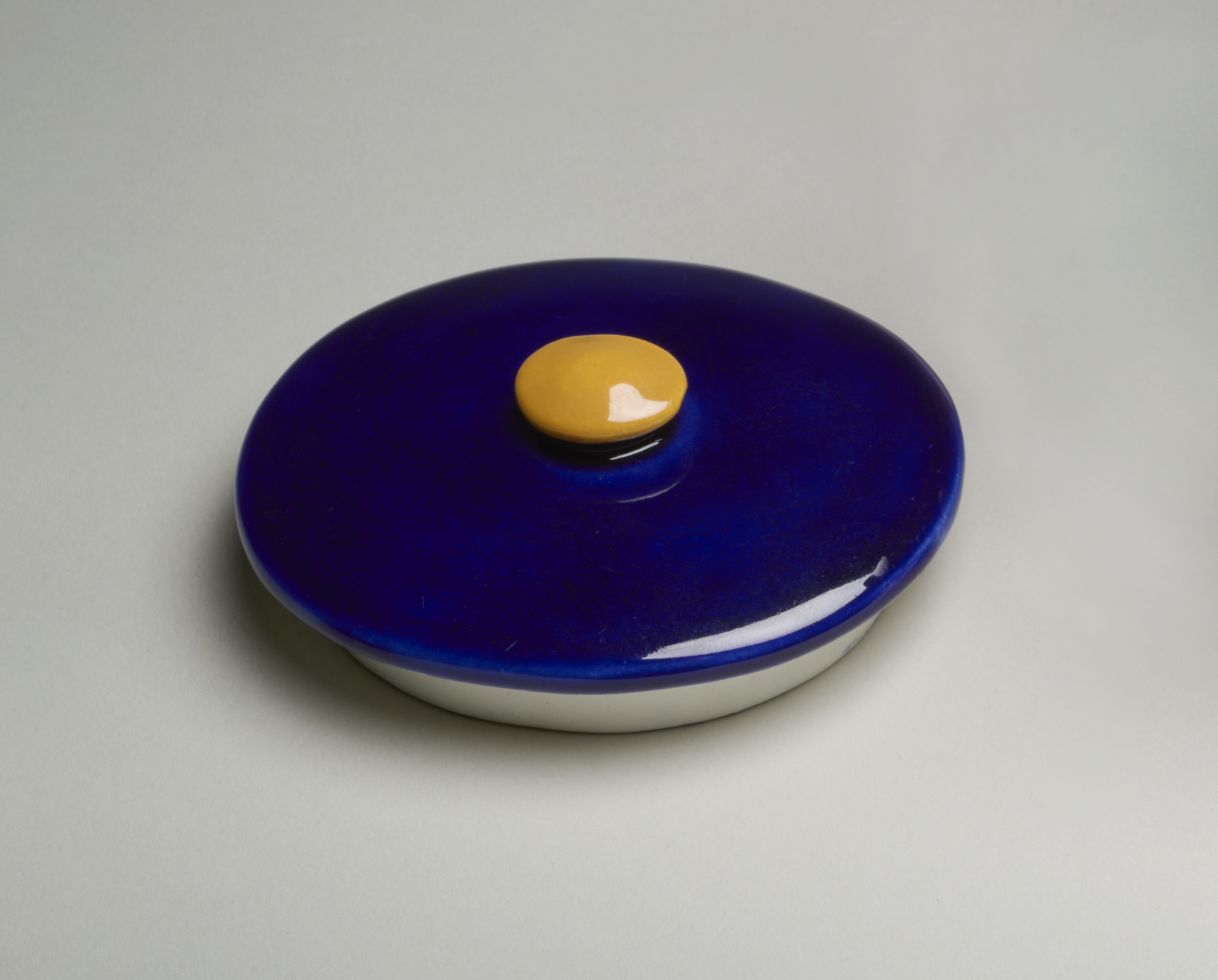
Dragon Kettle, pattern no. C1213
Founded in 1759 by ceramic innovator and businessman Josiah Wedgwood I (1730–1795), the Wedgwood company enjoyed great success under his direction and into the early 19th century, but the venerable British firm was struggling by the 1840s. The leadership of Francis Wedgwood (1800–1888) and his three sons, Godfrey (1833–1905), Clement (1840–1889), and Lawrence (1844–1913), gradually shifted the pottery’s fortunes in the decades that followed. One key advance was the development of a superior line of majolica, which Wedgwood introduced in about 1860 and continued to produce until 1918. During the peak years of its production, from 1865 to 1890, the ware formed a substantial percentage of the firm’s output, and by the 1870s, Wedgwood was manufacturing more majolica than any other kind of ornamental pottery.
Wedgwood engaged leading artists and designers of the day, both as company staff and on a freelance basis, to realize distinctive wares of the highest quality. Hugues Protât, the designer of this teapot, is a good example. Little of Protât’s early life and training is known, but this native of the French capital was exhibiting sculptural works at the Paris Salon exhibitions in 1843, 1849, and 1850, and also created at least one public sculpture, a statue of St. George for the Tour Saint-Jacques in central Paris (this tower is a remnant of a medieval church that was restored during the period). It seems that Protât also began to work with industry during the 1840s, he is known to have designed for the cabinetmaking firm of Alexandre-Georges Fourdinois, most significantly he is credited with design of parts of the massive, highly-carved Renaissance Revival sideboard the firm exhibited to acclaim at London’s Great Exhibition in 1851. Protât migrated to England in the early 1850s, perhaps as early as 1850, and seems to have found ready employment as a designer and modeler for various companies, initially with some of the leading British cabinetmaking firms like Cookes & Sons of Warwick and Jackson & Graham of London. In 1856 he was appointed “modelling master” at both the Potteries School of Design in Stoke-upon-Trent and the Hanley School of Design, divisions of the newly-founded national art schools. Given their location in Staffordshire, England’s ceramic manufacturing center, Protât’s primary task was to train budding artists and designers who would go on to work for that industry. He remained modelling master until 1862. During the first years of his time in Staffordshire he also worked as the primary designer for Minton & Co. After leaving this position he continued to freelance for Minton as well as many other of the leading ceramic manufacturers throughout the 1860s and 1870s, including W. T. Copeland & Sons, William Brownfield & Sons, as well as Wedgwood.
Protât created innovative designs in a range of styles. While he may have been best known during his lifetime for his work in the Renaissance Revival idiom, he also designed a number of models that draw upon Asian sources for inspiration, like this teapot. Likely looking to 17th- and 18th-century Chinese prototypes, Protât modeled a lively and playful dragon handle for this otherwise austere vessel. The designer created a range of models for Wedgwood that utilized an engaging dragon motif, including his “Dragon Toilet Ware” (an ewer and basin) and a “Dragon Flower Vase,” both of which the firm chose to protect from being copied by copyrighting the designs in 1872.
Inscription
Provenance
Provenance (from the French provenir, 'to come from/forth') is the chronology of the ownership, custody, or location of a historical object. Learn more about provenance at the Walters.
William Doyle Galleries, New York, “American Furniture & Decorations at 10 AM, Including Paintings, Historical & Decorative Prints; Majolica at 4 PM,” 20 November 1996, lot 697; purchased by Deborah and Philip English, Baltimore, 1996; given to the Walters Art Museum, 2025.
Exhibitions
| 2021-2022 | Majolica Mania. The Bard Graduate Center, New York; The Walters Art Museum, Baltimore. |
Measurements
H: 7 x W: 8 x D: 5 1/4 in. (16.7 x 20.5 x 13.3 cm)
Credit Line
Gift of Deborah and Philip English, 2025
Location in Museum
Not on view
Accession Number
In libraries, galleries, museums, and archives, an accession number is a unique identifier assigned to each object in the collection.
In libraries, galleries, museums, and archives, an accession number is a unique identifier assigned to each object in the collection.
48.2977