
 Creative Commons License
 Creative Commons License
 Creative Commons License
 Creative Commons License
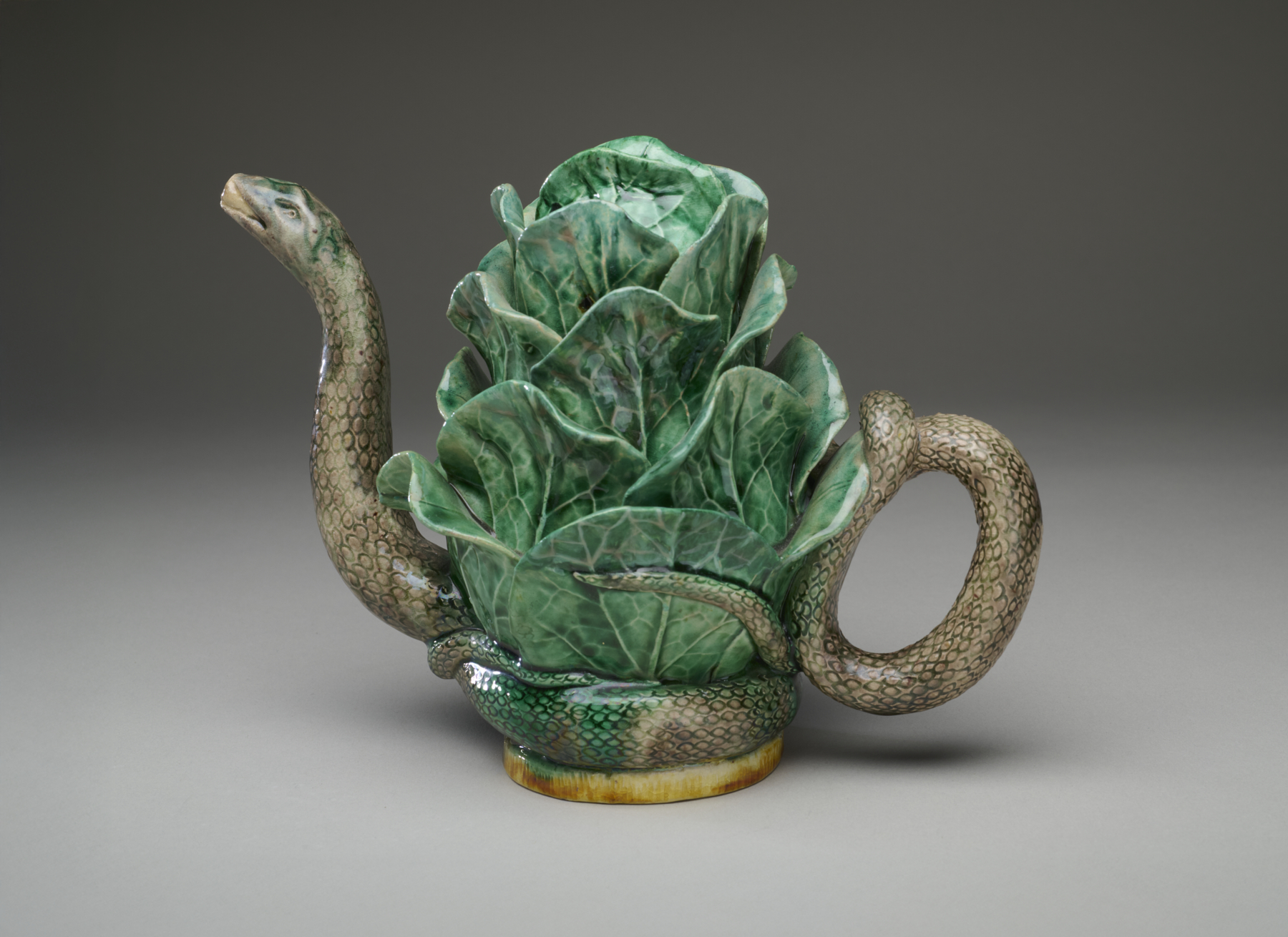 Creative Commons License
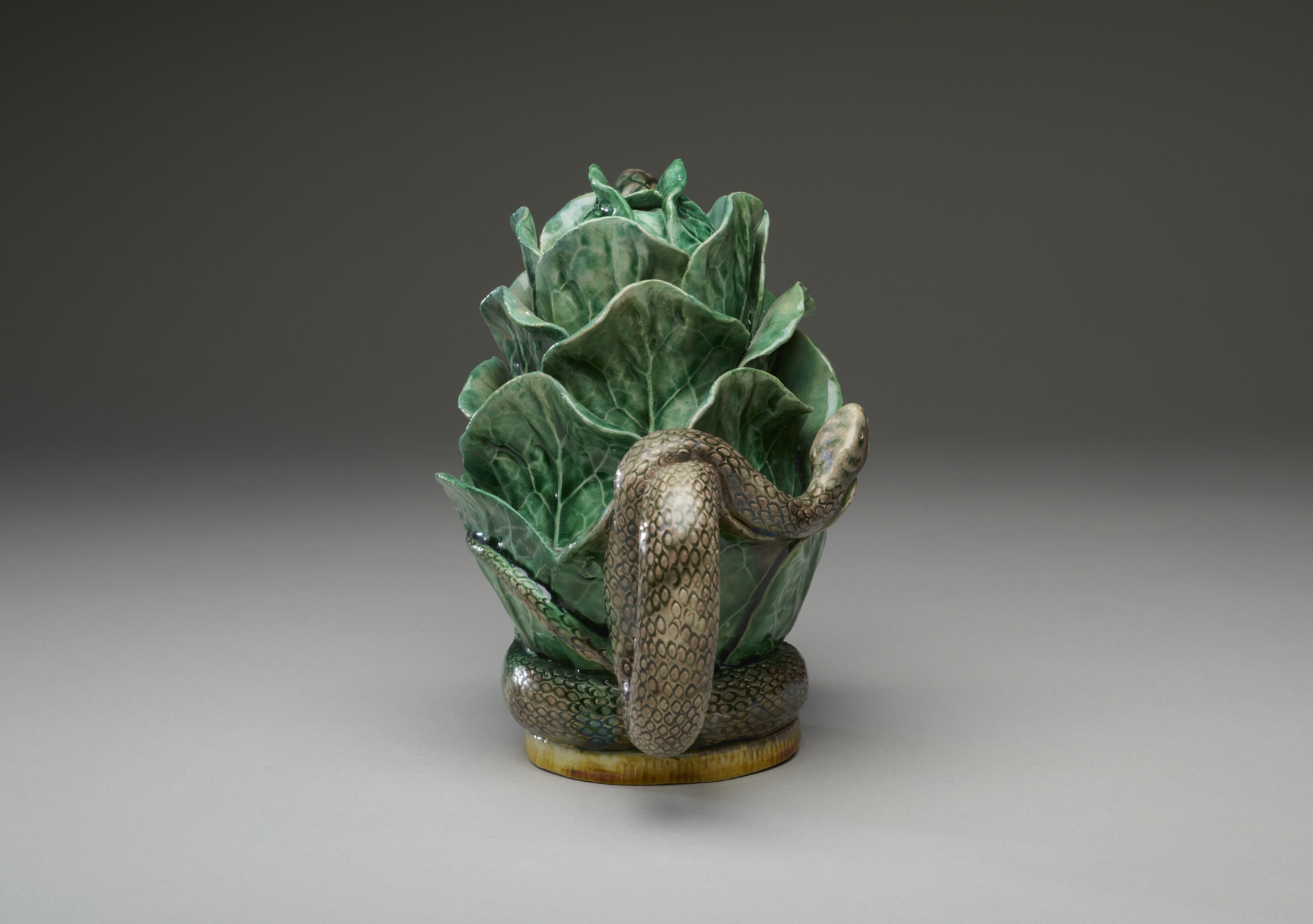 Creative Commons License
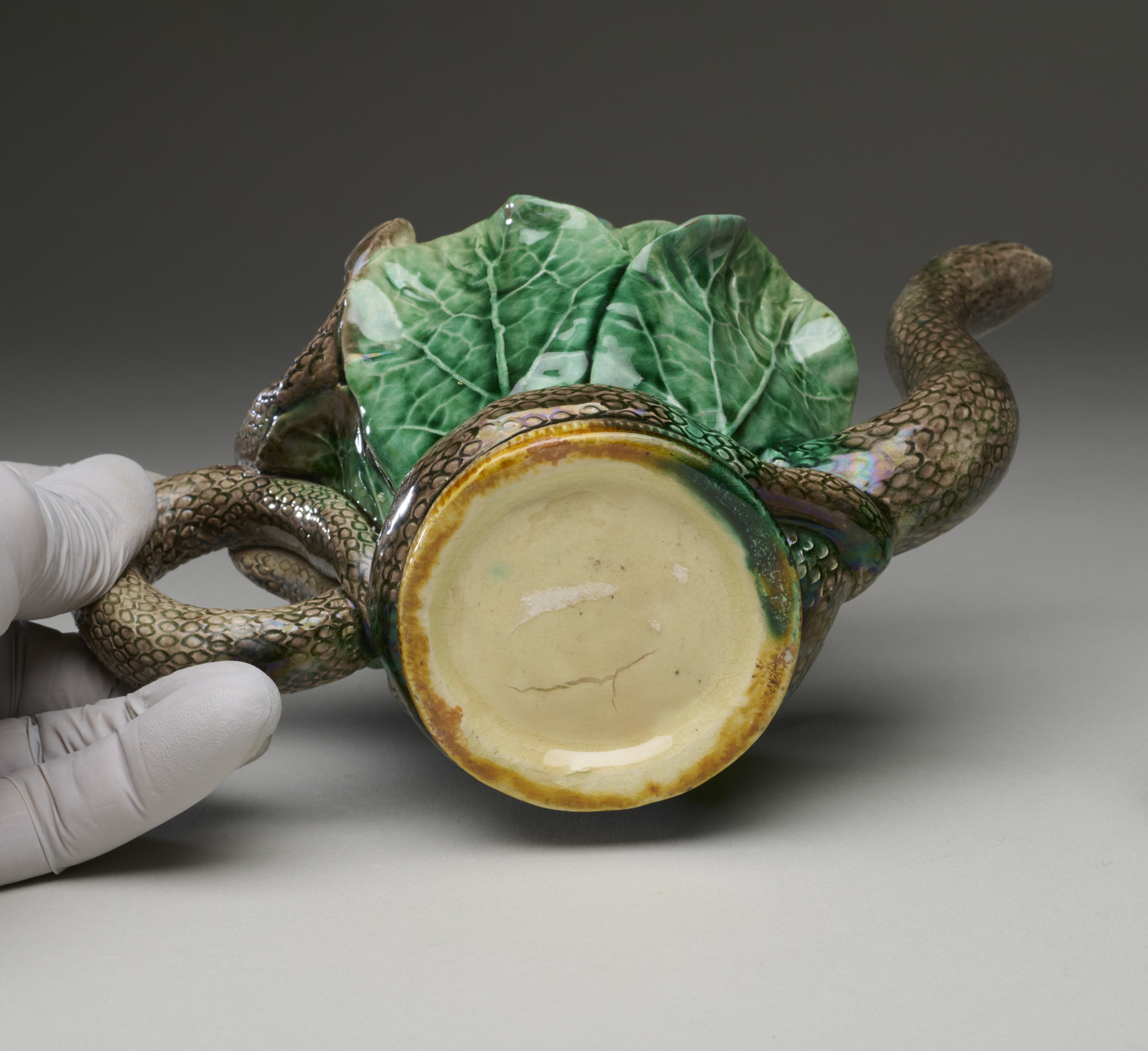 Creative Commons License
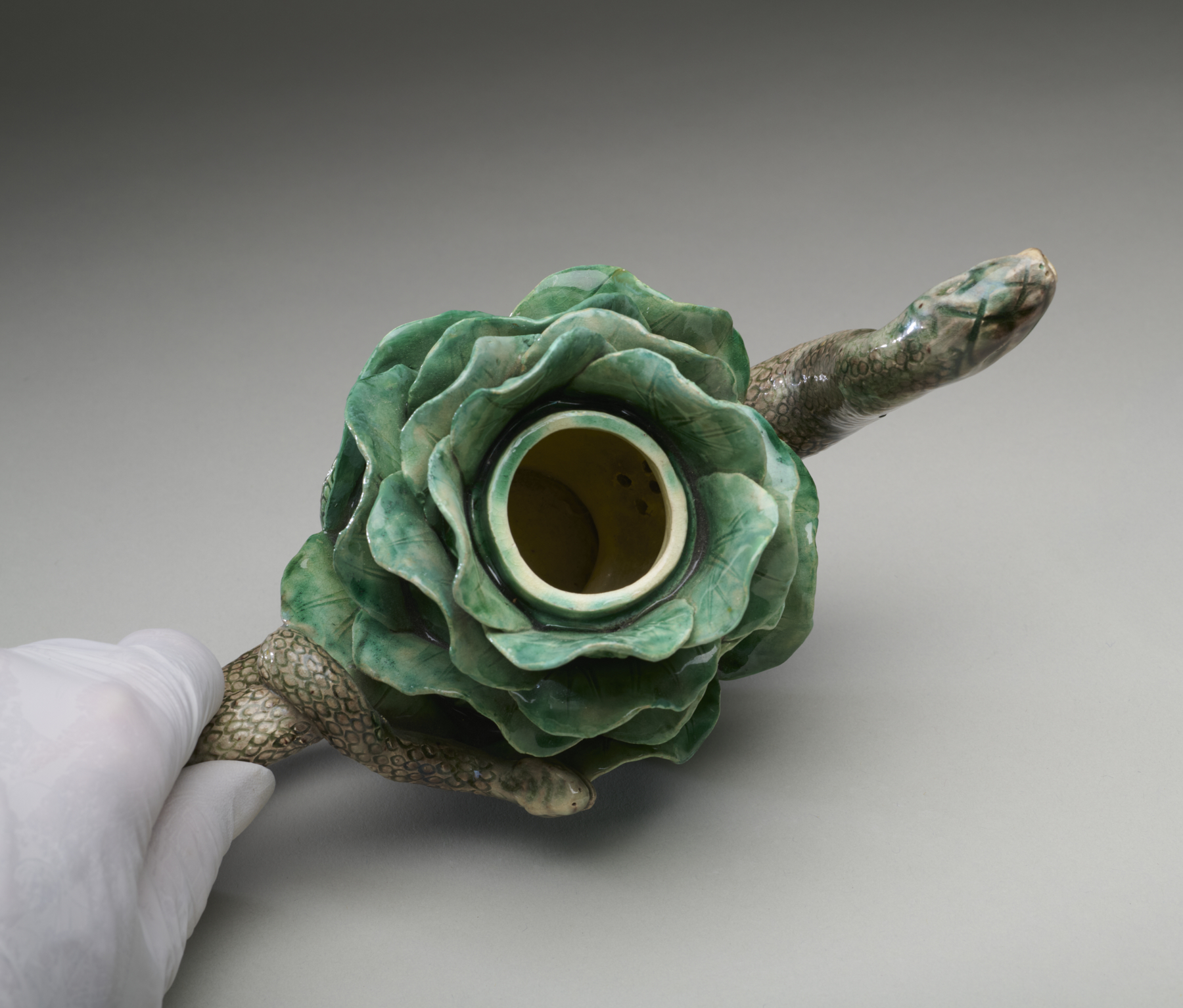 Creative Commons License
 Creative Commons License


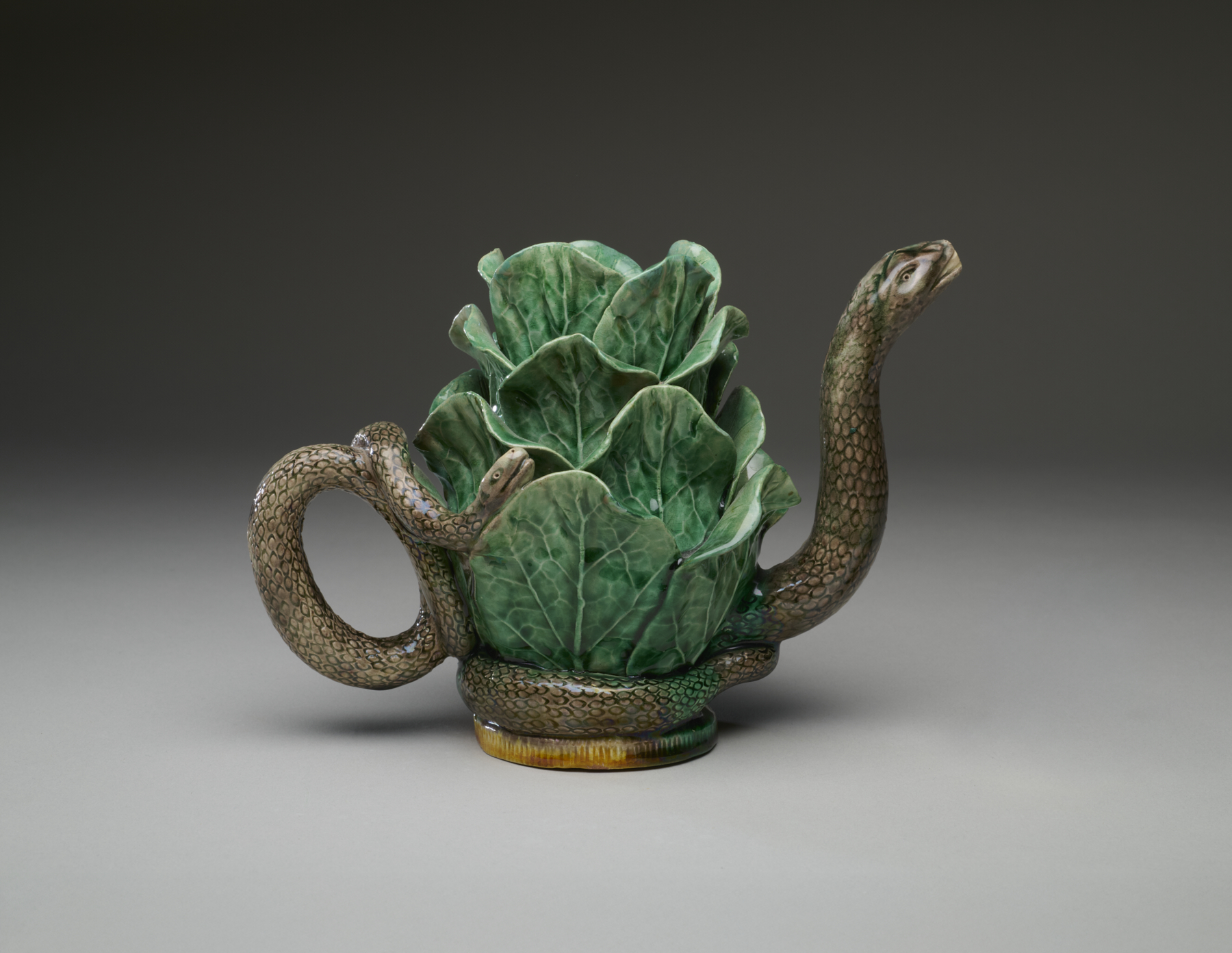
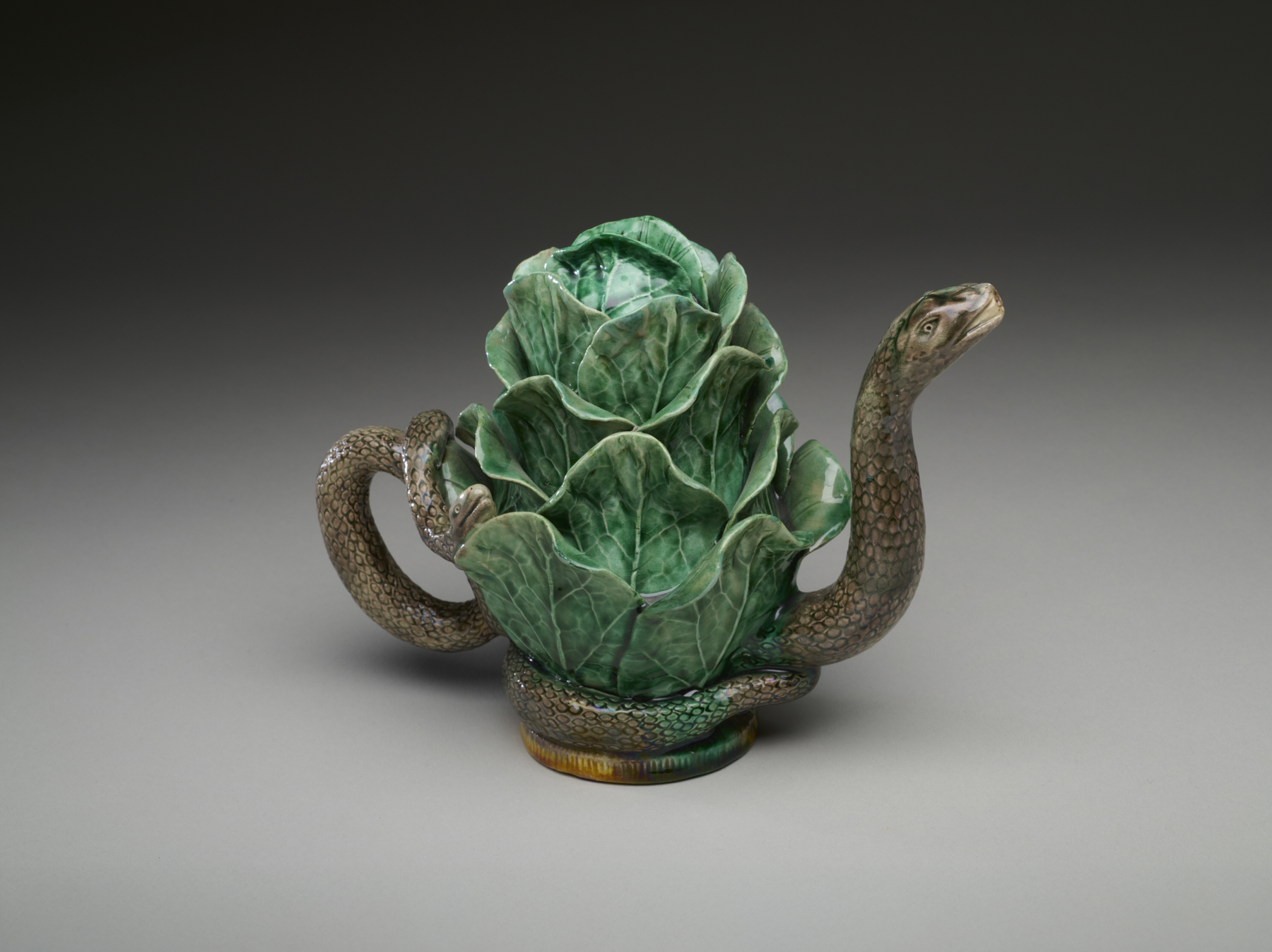
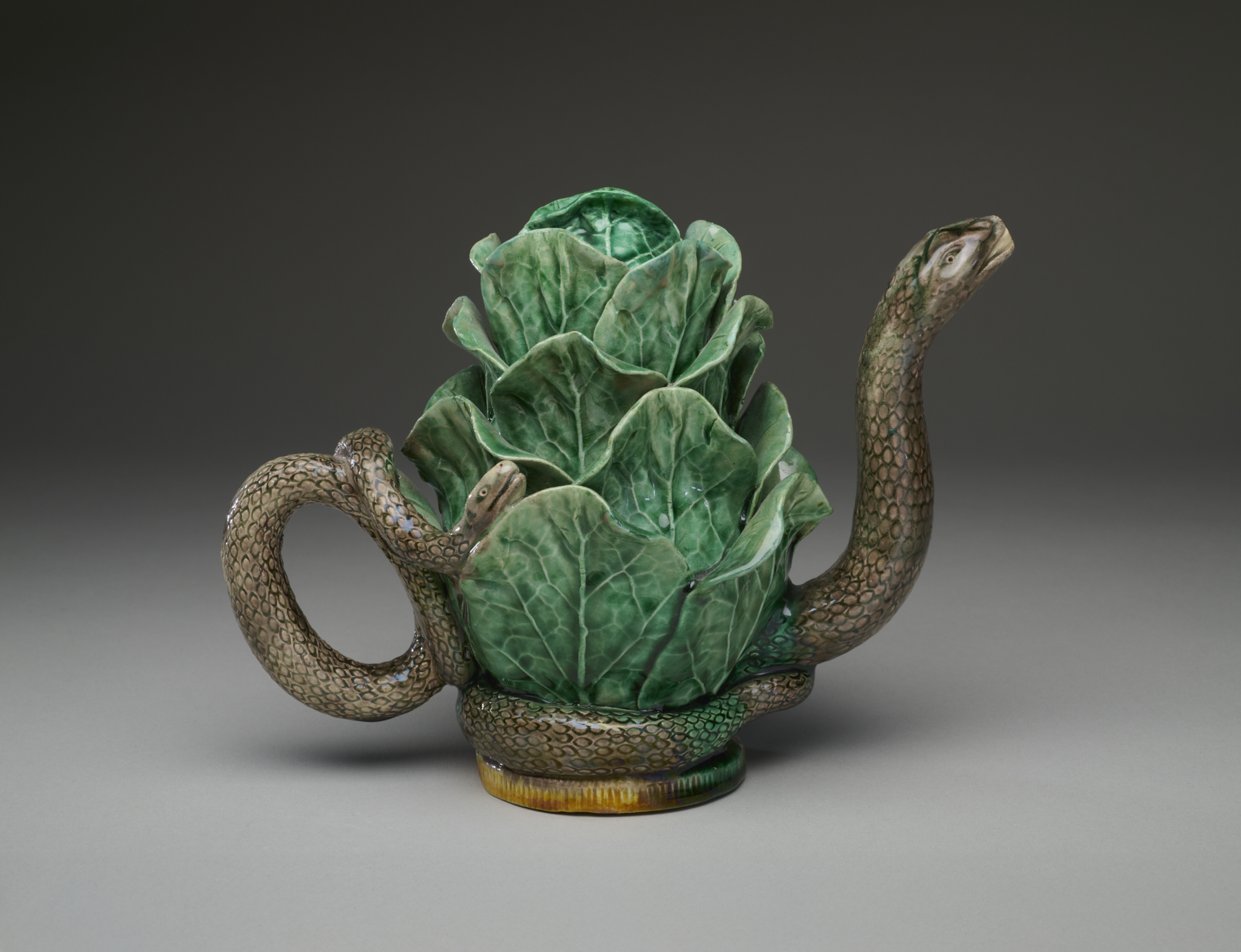
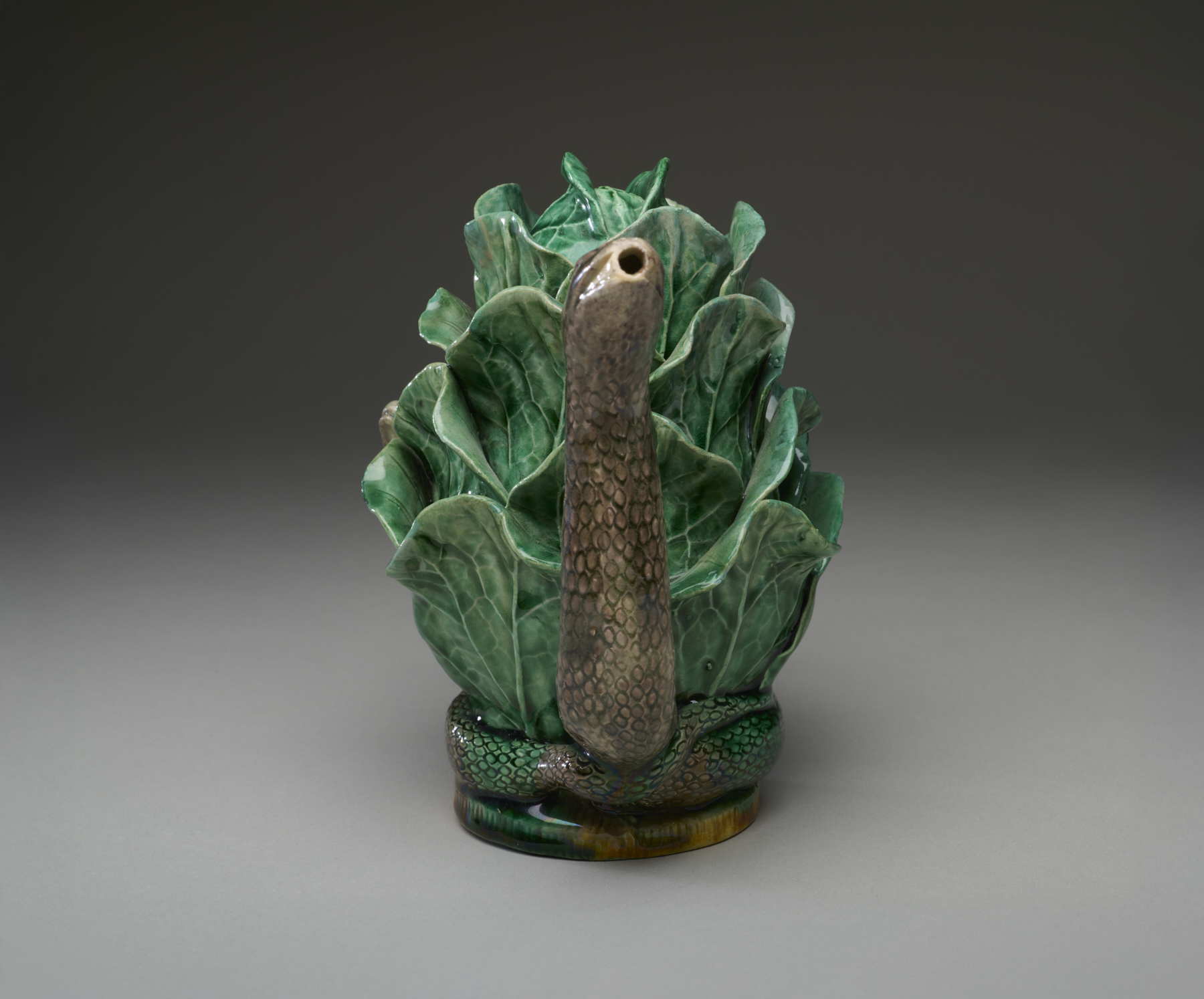
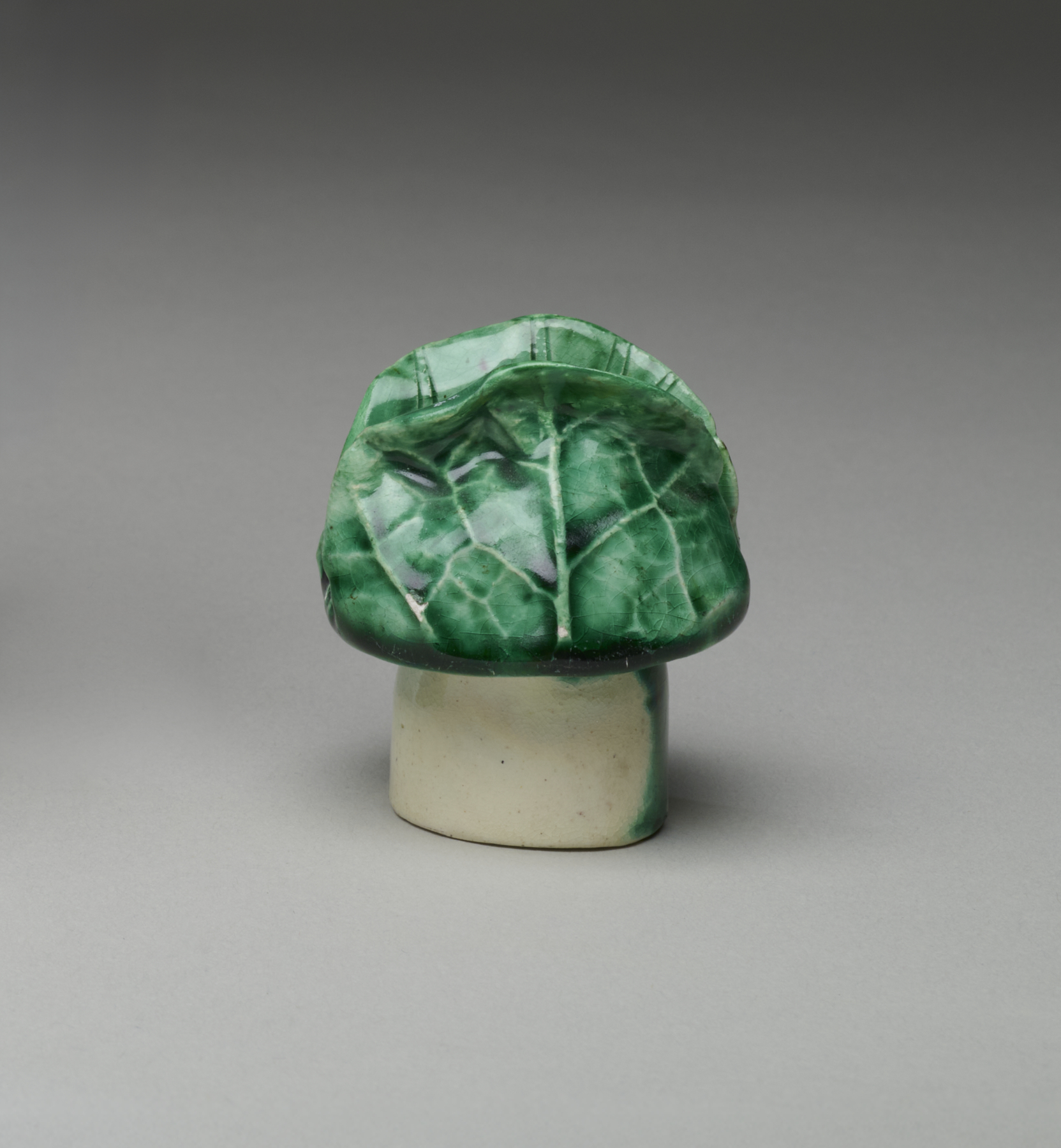
Teapot
In 1854, Manuel Mafra (1831–1905) established a pottery in Caldas da Rainha, a spa town located about midway up the Portugal’s Atlantic coast, which already enjoyed a long history as a site for ceramic production. Born Manuel Cipriano Gomes, he adopted the name Mafra after the village, about fifty miles south of Caldas da Rainha, where he was born. Mafra first gained notice outside of Portugal by exhibiting at the Paris Exposition Universelle of 1867. Over the course of the next decade, Mafra’s company continued to gain international exposure through its exhibits at world’s fairs throughout both Europe and the Americas, including the Centennial Exhibition of 1876 in Philadelphia. Around 1870, Mafra’s work attracted the attention of Ferdinand II (1816–1885), a noted patron of the arts. Ferdinand II had ruled Portugal as the consort of Queen Maria II (1819–1853) until her death, and continued to play a significant role in the royal family after their sons Pedro V (1837–1861) and then Luís I (1838–1889) succeeded to the throne. Through Ferdinand II’s patronage, Manuel Mafra may have gained access to a collection of historical ceramics that introduced him to the work of Renaissance potter Bernard Palissy.
From the 1830s forward there was a widespread revival of interest in Palissy and subsequent French Renaissance ceramicists, and the dishes, ewers, and other wares encrusted with fish, snakes, and shells that they produced. Mafra and other Portuguese potters of the period seem to have been especially drawn to the style. From the 1870s onward, much of Mafra’s work owes a significant debt to Palissy. Mafra’s display at the London International Exhibition of 1871 included a vase with curling snake-shaped handles that was further decorated with lifelike snails, moths, and lizards. This vase, along with three other examples of Mafra’s work, were given to the South Kensington Museum (now the Victoria and Albert Museum) after the 1871 exhibition. Both cabbage and snake forms were recurring features in Mafra’s designs. The company made stand-alone sculptures of snakes both large scale and small. It seems though that tablewares that cleverly incorporate snakes into the design, such as the teapot considered here, were among the firm’s most popular models. Indeed, Mafra produced a whole range of cabbage and snake teawares including cups and saucers, sugar bowls, and cream jugs, as well as various teapot forms. Another variation replaced the cabbage with a monkey, but retained the snake for the teapot’s spout. Variations on the cabbage and snake teapot form were made by other Portuguese potteries but differ in their modeling and glazing.
In 1887, Manuel Mafra retired as director of the pottery, appointing his son, Eduardo Augusto Mafra (1865–1926), as his successor. Opting to pursue a career in local politics rather than manage the family pottery, Eduardo Mafra began to dismantle the company in 1890, arranging the sale of the Mafra molds and tools over a decade before his father’s death in 1905.
Inscription
Provenance
Provenance (from the French provenir, 'to come from/forth') is the chronology of the ownership, custody, or location of a historical object. Learn more about provenance at the Walters.
Collection of Deborah and Philip English, Baltimore, by 2018 [mode of acquisition unknown]; given to the Walters Art Museum, 2025.
Measurements
H: 5 1/2 × W: 7 1/2 × D: 3 15/16 in. (14 × 19.1 × 10 cm)
Credit Line
Gift of Deborah and Philip English, 2025
Location in Museum
Not on view
Accession Number
In libraries, galleries, museums, and archives, an accession number is a unique identifier assigned to each object in the collection.
In libraries, galleries, museums, and archives, an accession number is a unique identifier assigned to each object in the collection.
48.2979