
 Creative Commons License
 Creative Commons License
 Creative Commons License
 Creative Commons License
 Creative Commons License
 Creative Commons License
 Creative Commons License


Vase
The designer and scholar Christopher Dresser (1834–1904) is often hailed as Britain’s first modern industrial designer. In 1862, influenced by the ideas of leading architects and design reformers Owen Jones and A. W. N. Pugin, Dresser published a treatise titled The Art of Decorative Design. Dresser went on to distinguish himself as one of the most innovative designers of the era, creating ceramics and decorative housewares in molded glass and metalwork, as well as carpets, fabrics, wall treatments, stained glass, and furniture. Guided by the ideals he characterized as “Truth, Beauty, and Power” to create morally uplifting art, Dresser was also a keen businessman who capitalized on Britain’s industrialization to create affordable and satisfying designs for the burgeoning middle classes.
In 1879, Christopher Dresser partnered with John Harrison, the owner of a defunct brick works in Middlesbrough, North Yorkshire, to found the Linthorpe Art Pottery. Dresser took on the role of art director, appointing Henry Tooth, an aspiring artist who had worked in the local brickworks in his youth, to the role of manager. During this period, the company employed around 100 workers. Linthorpe products were available to purchase from both Dresser & Holme, the designer’s retail venture that specialized in imported goods from Asia, and his ambitious collective design showroom, the Art Furnishers’ Alliance. They were also sold by the luxury department store Liberty & Co. of London.
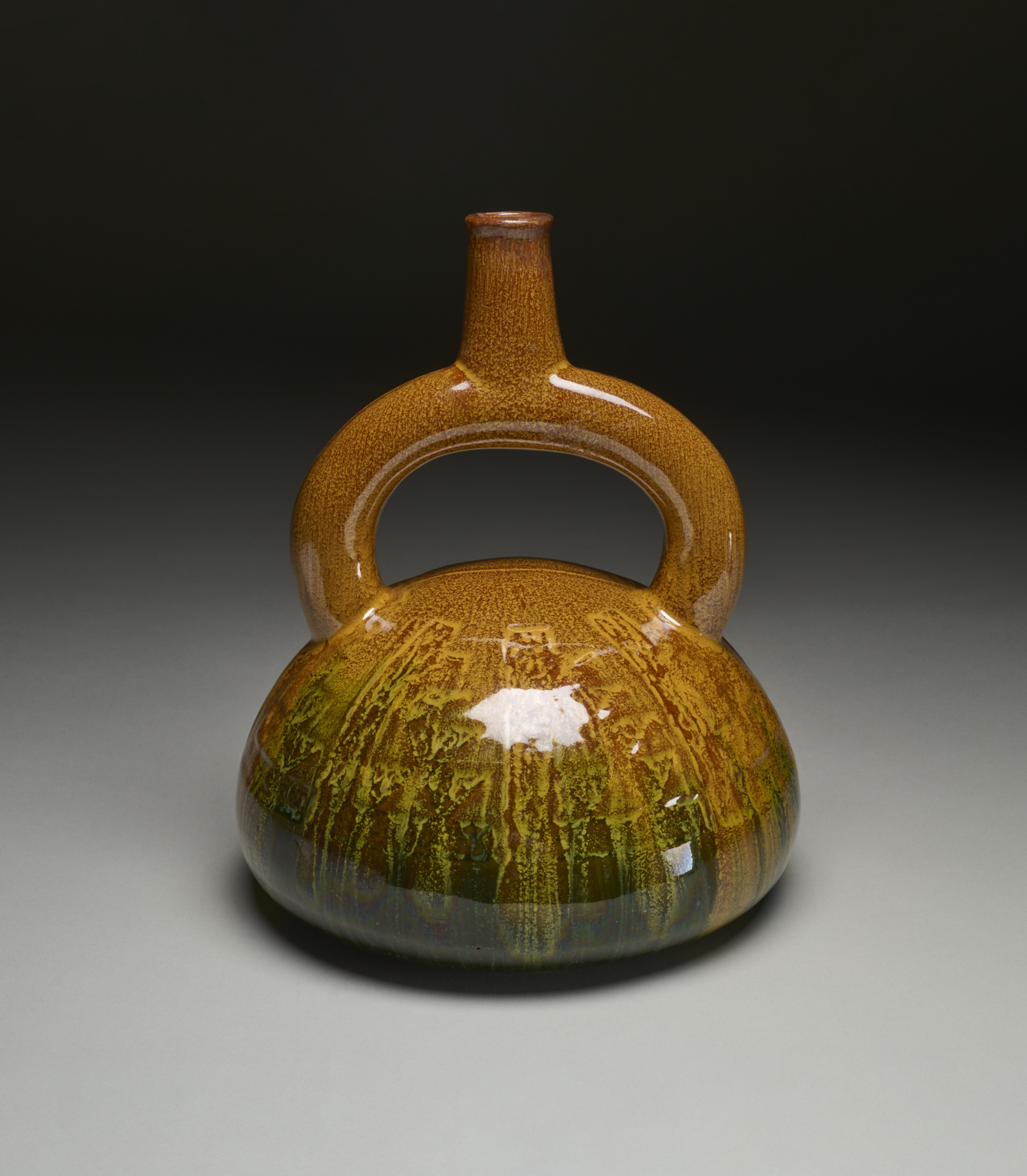
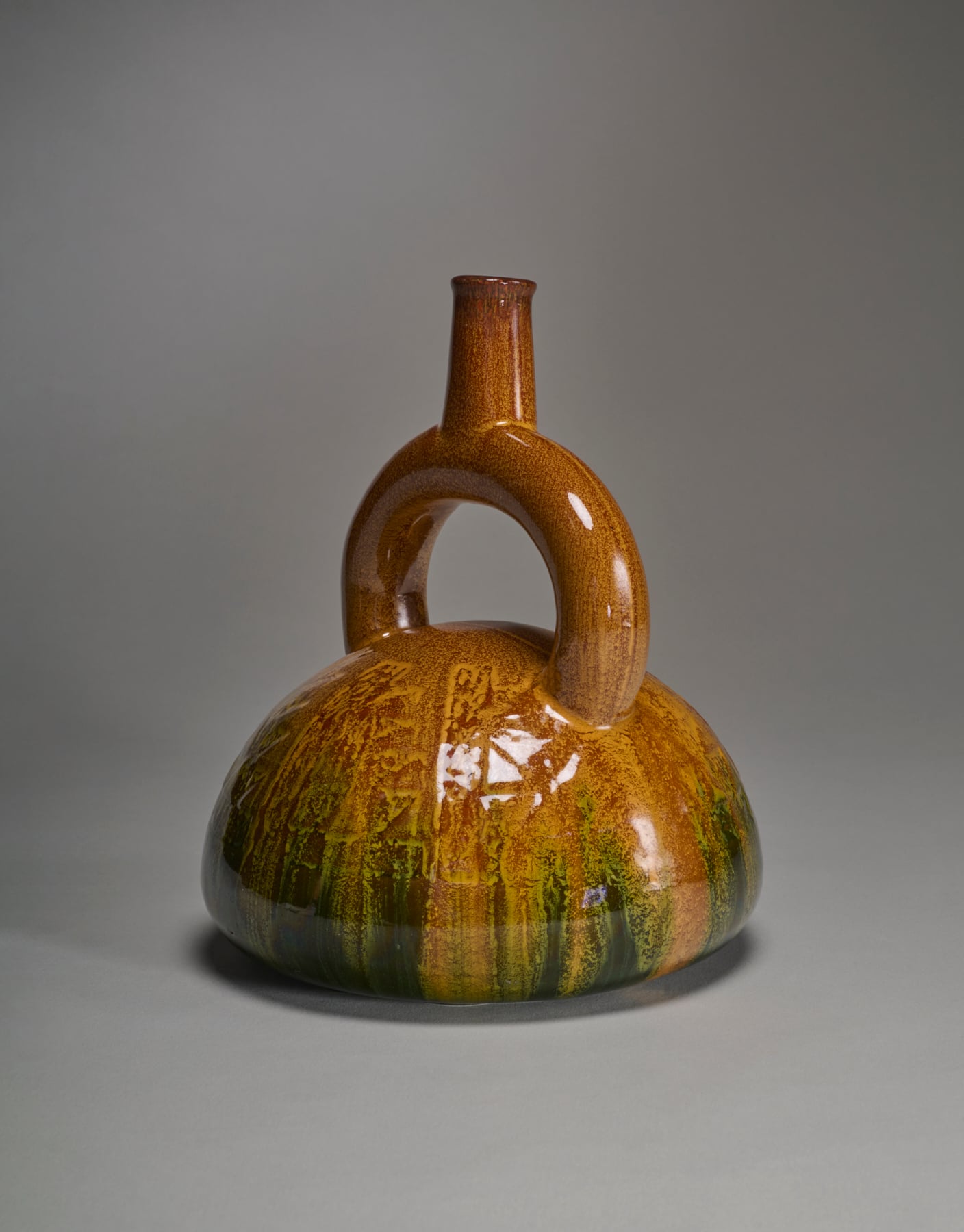
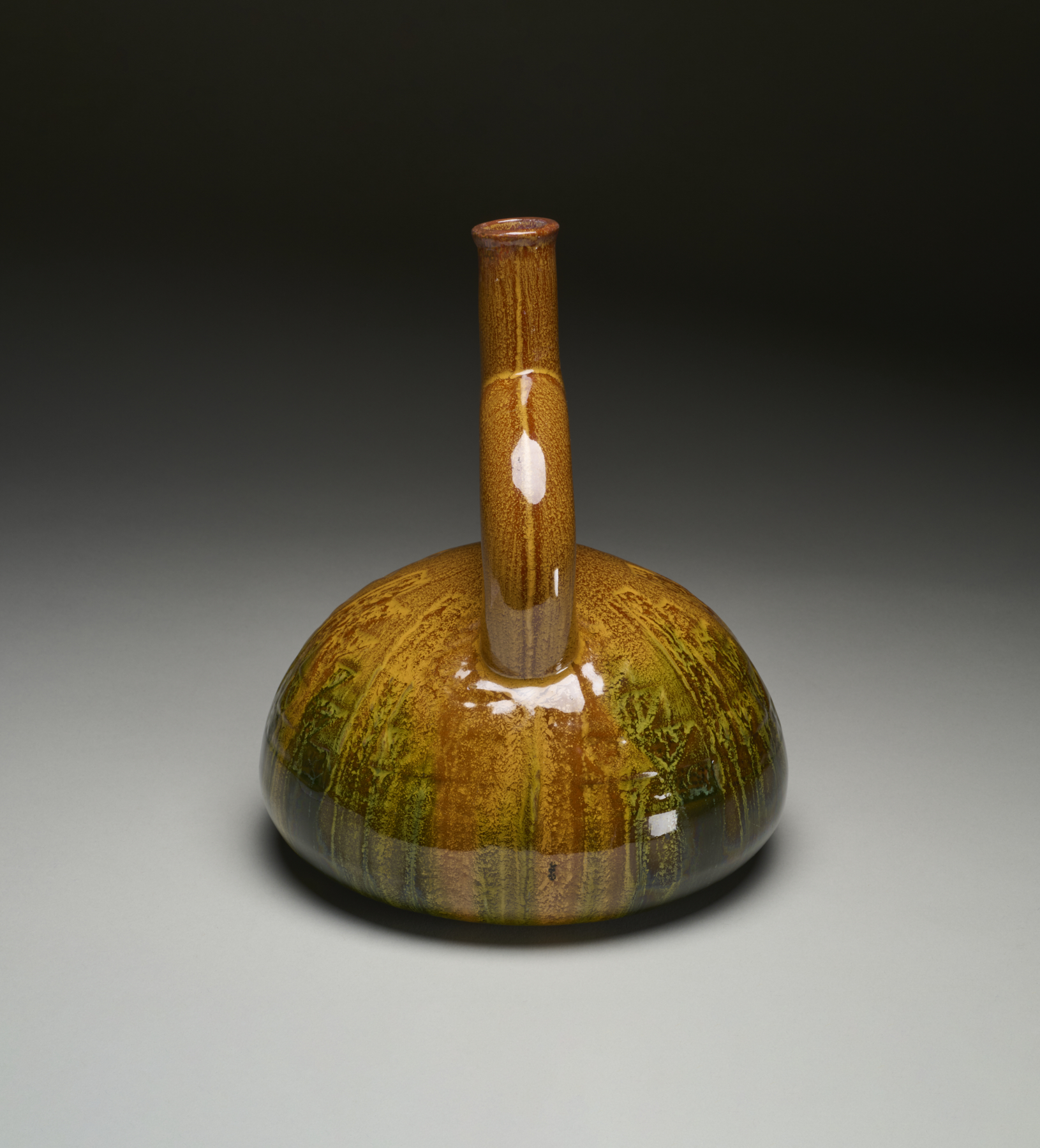
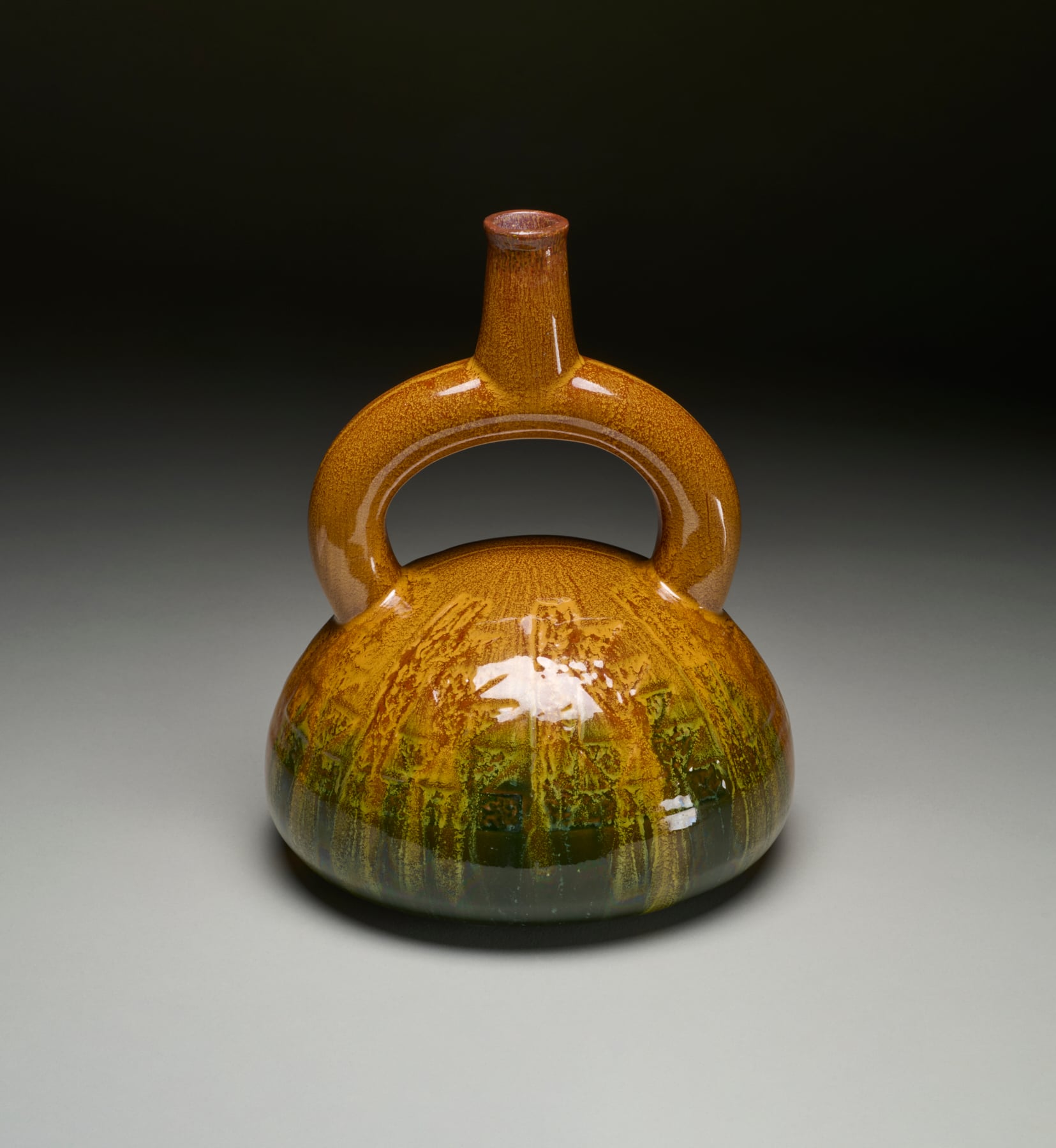
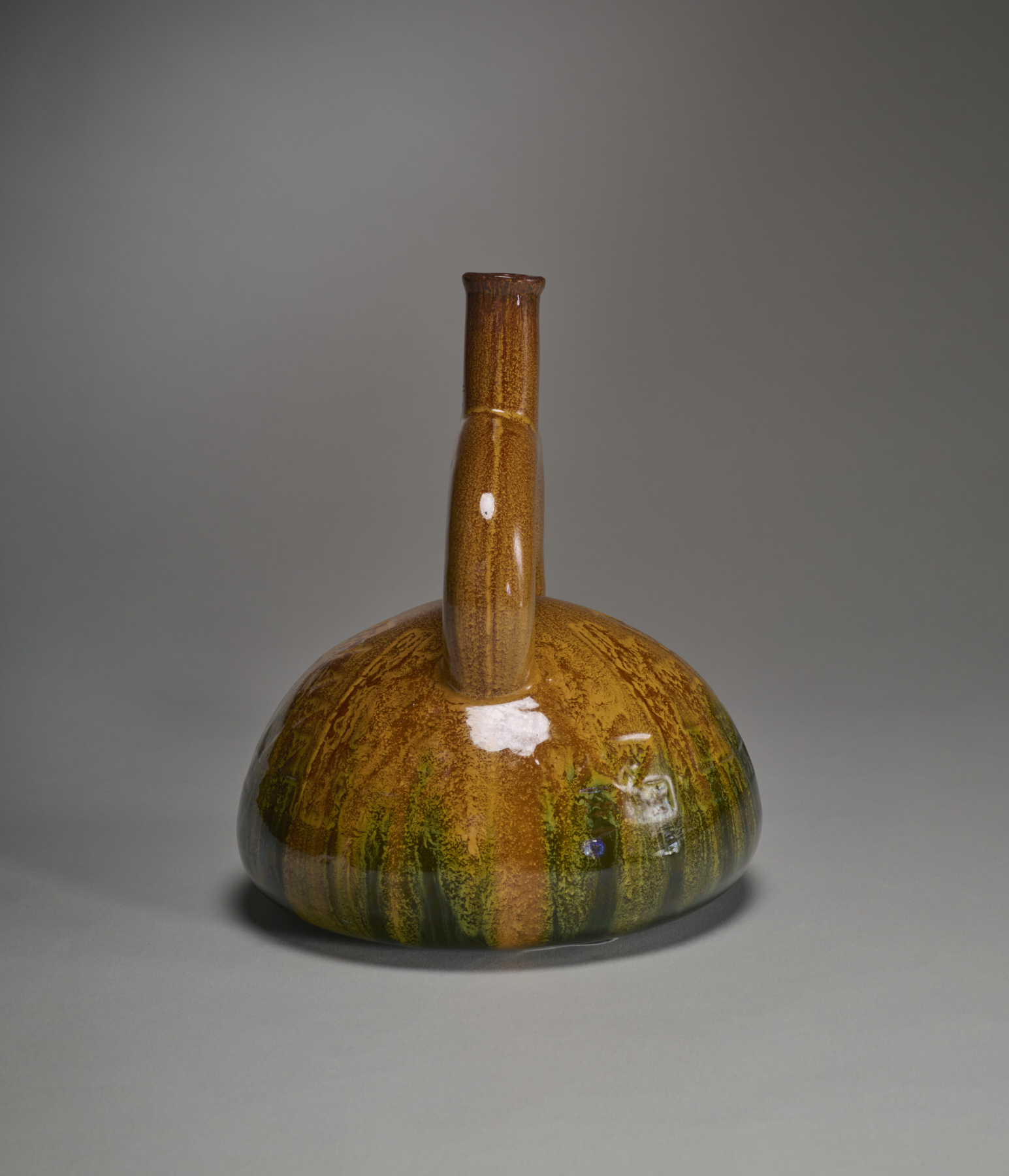
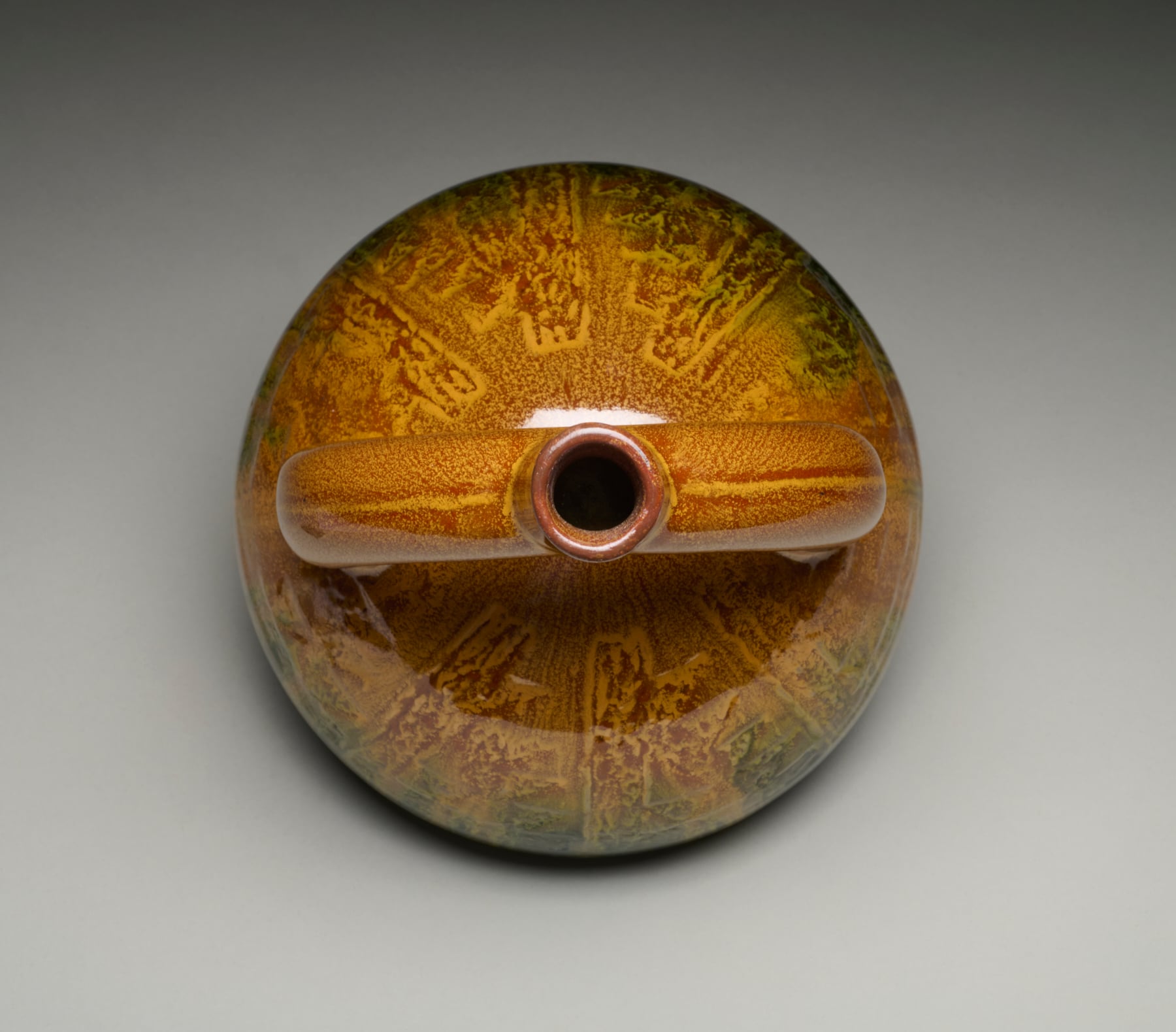
The design for this object draws upon the distinctive “stirrup” spout vessels made by Andean artists, in a tradition that dates back to 1200 BCE. Used as practical containers for liquids like water and beer, these figural vessels were also embedded with spiritual connotations and poised for ritual use. A Peruvian vessel in Sir John Soane’s Museum (accession no. MP154) appears to have inspired both the form and geometric decoration of this model. The repeating geometric pattern that marches around the vessel appears to be a variation of the stepped fret motif, known in Nahuatl as Xicalcoliuhqui, that is common in ancient Mesoamerican and South American art and architecture. Another piece that Dresser designed for Linthorpe, shaped like a masked head, was almost certainly inspired by a Nazca double spout and bridge vessel in the collection of the British Museum (accession no. Am1982,Q.957). Other designs for Linthorpe, including a vessel molded in the shape of a sea urchin with a double spout, further reveal the direct influence of Andean pottery on Dresser’s work. While he never traveled to South America, Dresser may also have been acquainted with Andean art from the illustrations of textiles, ceramics, and architecture that circulated in archaeologist Charles Wiener’s 1880 anthropological work, "Pérou et Bolivie".
As a designer, Dresser was inspired by the artistic traditions not only of the Americas, but also the ancient Mediterranean and Western Asia, prehistoric Britain, Fiji, and especially Japan. Prompted by his exposure to Japanese art, Dresser’s work shifted to favor form over surface decoration, a change that can be readily observed in the striking vessels that he designed for Linthorpe. The pieces made at Linthorpe are notable for their rich, earthy glazes in mottled colors as by their inventive forms. The glazes are reminiscent of the unpredictable and dynamic results achieved through Chinese yao bian or furnace transmutation glazes, and may have been inspired by historical Asian ceramics.
Inscription
Provenance
Provenance (from the French provenir, 'to come from/forth') is the chronology of the ownership, custody, or location of a historical object. Learn more about provenance at the Walters.
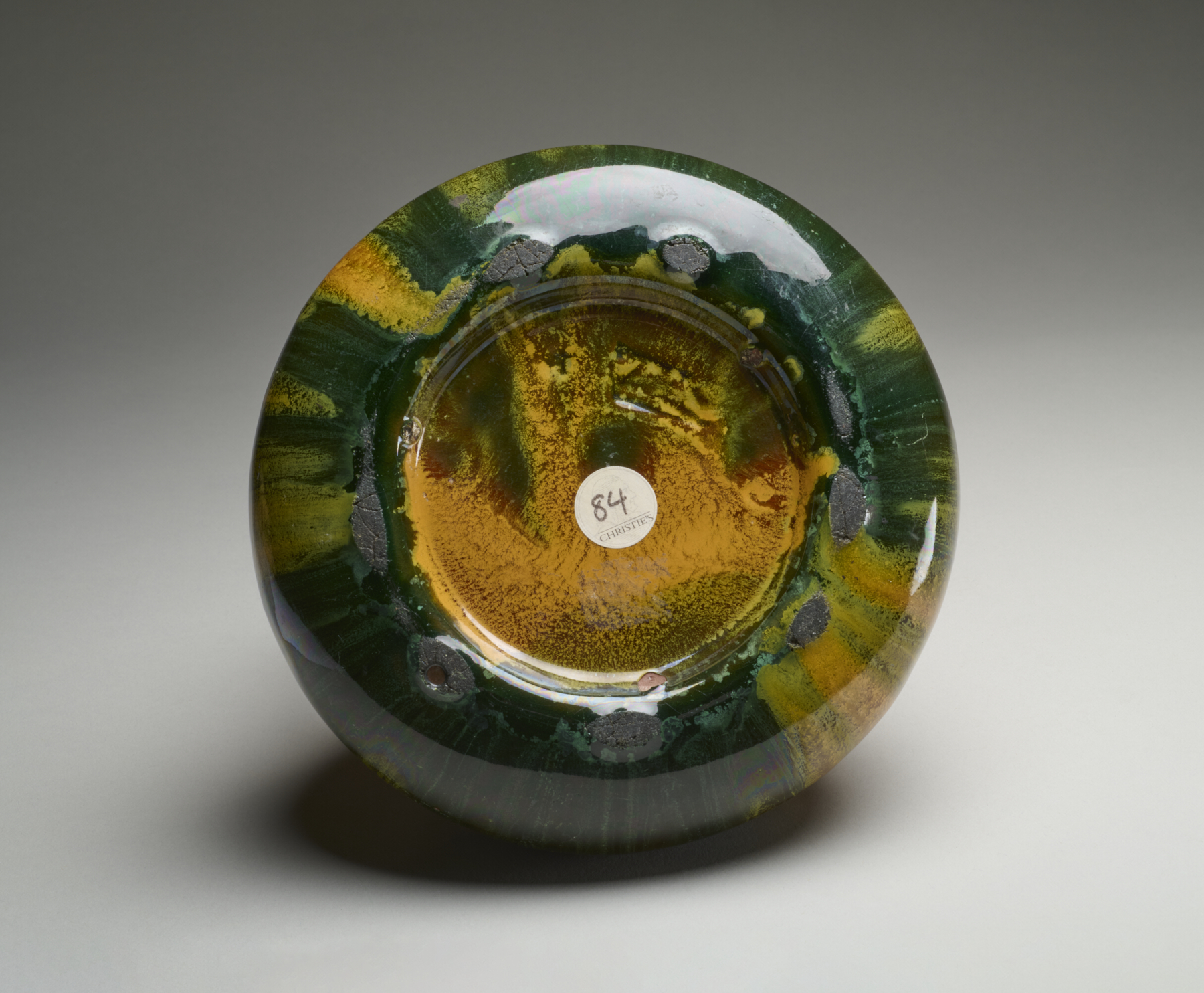
Collection of Peter Rose and Albert Gallichan, Brighton, England, by 2004 [mode of acquisition unknown]; sale, Christie’s, London, “An Aesthetic Odyssey: The Peter Rose and Albert Gallichan Collection,” 30 September 2021, lot 84; purchased by Deborah and Philip English, Baltimore, 2021; given to the Walters Art Museum, 2025.
Measurements
H: 8 × Diam: 6 3/4 in. (20.3 × 17.1 cm)
Credit Line
Gift of Deborah and Philip English, 2025
Location in Museum
Not on view
Accession Number
In libraries, galleries, museums, and archives, an accession number is a unique identifier assigned to each object in the collection.
In libraries, galleries, museums, and archives, an accession number is a unique identifier assigned to each object in the collection.
48.2983