
 Creative Commons License
 Creative Commons License
 Creative Commons License
 Creative Commons License
 Creative Commons License
 Creative Commons License
 Creative Commons License
 Creative Commons License
 Creative Commons License
 Creative Commons License


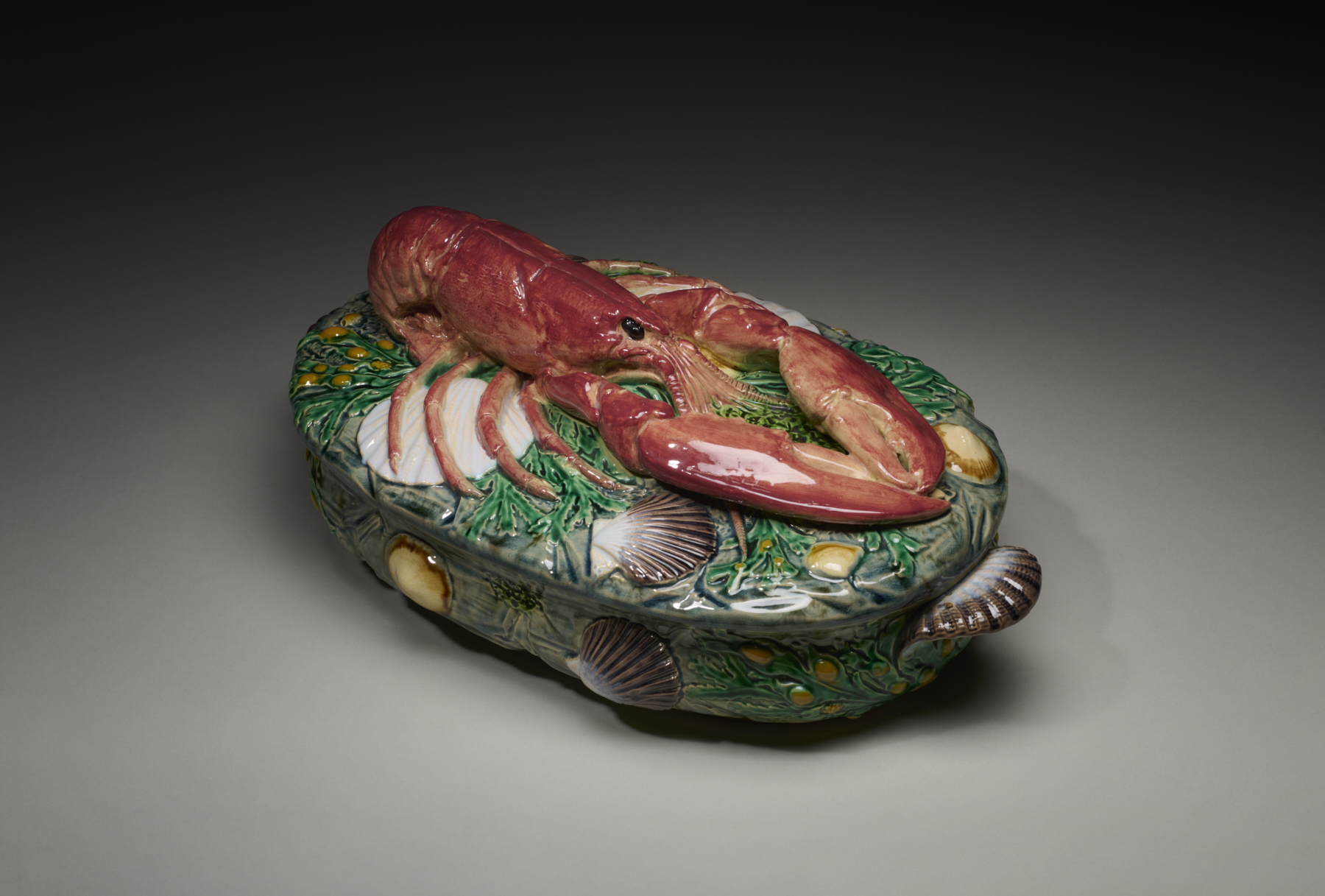
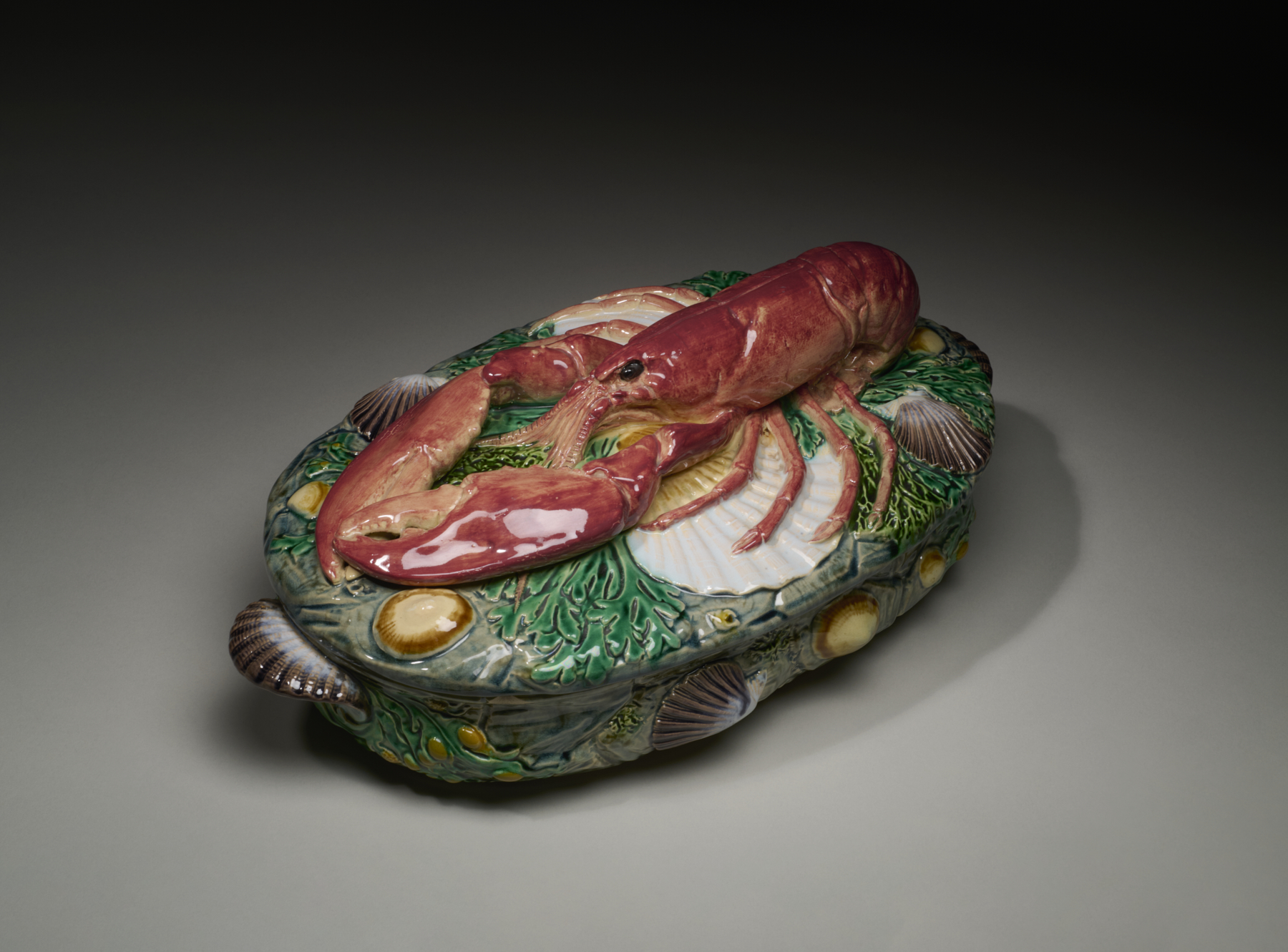
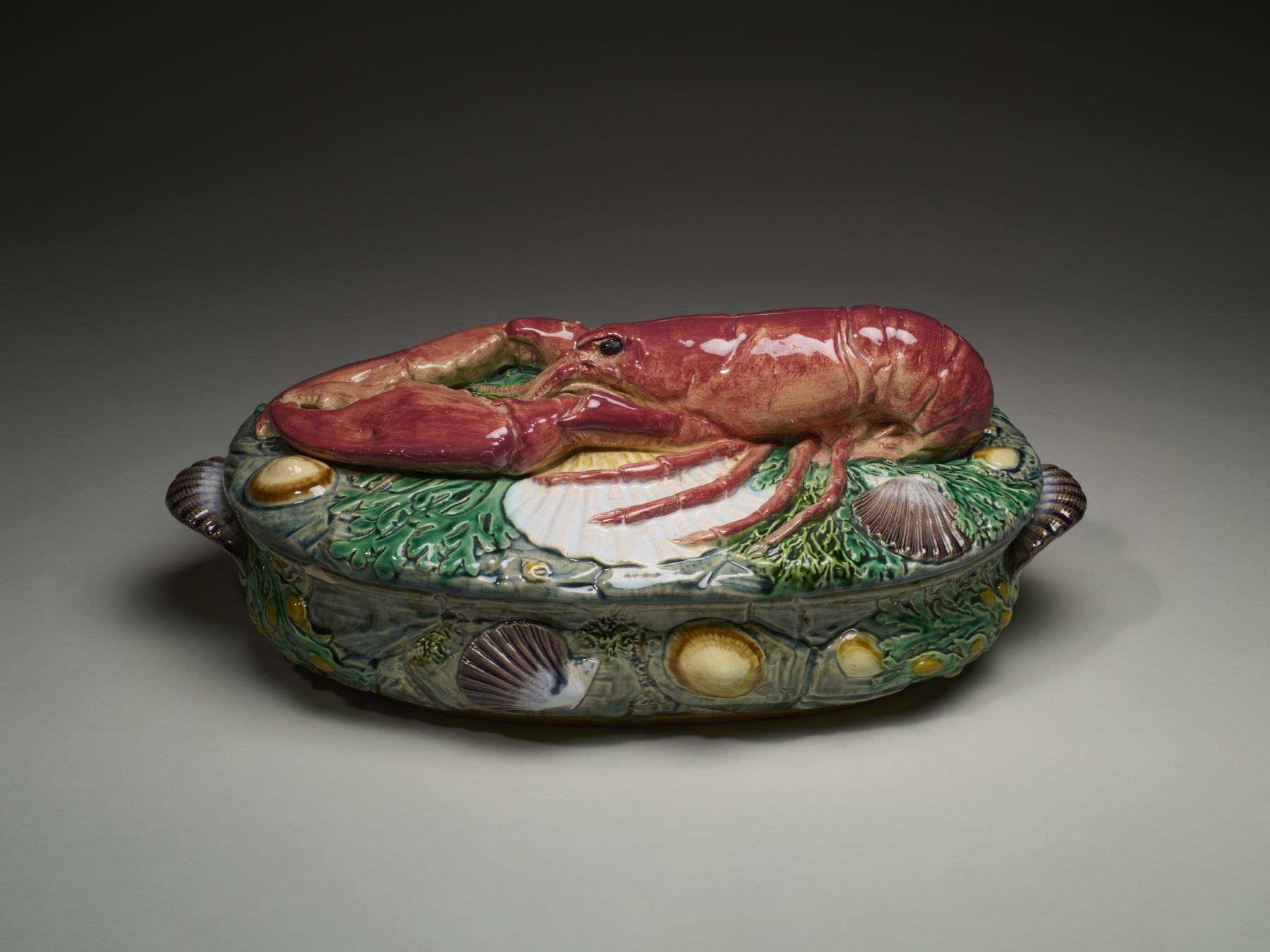
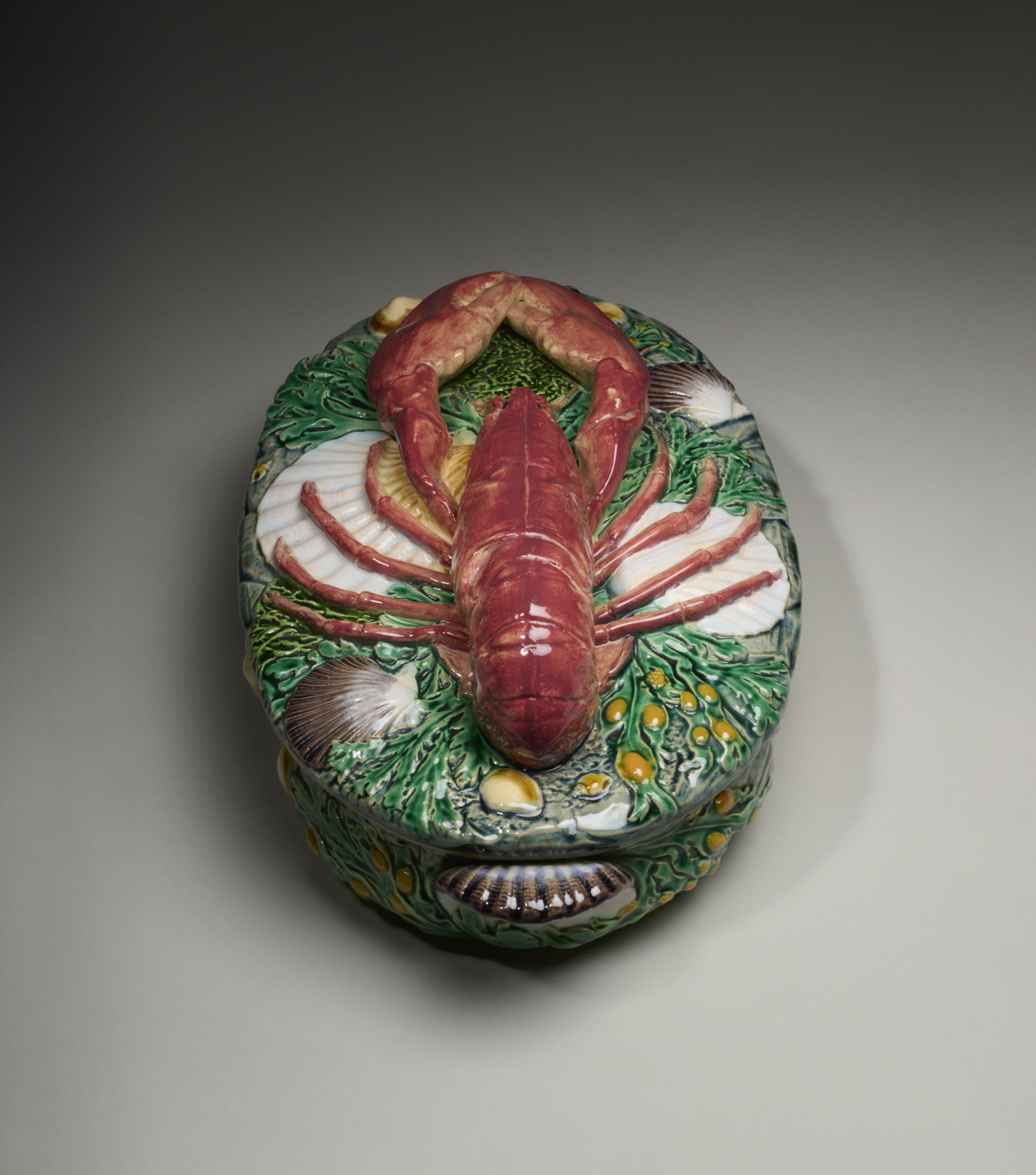
Lobster Dish, shape no. 1543
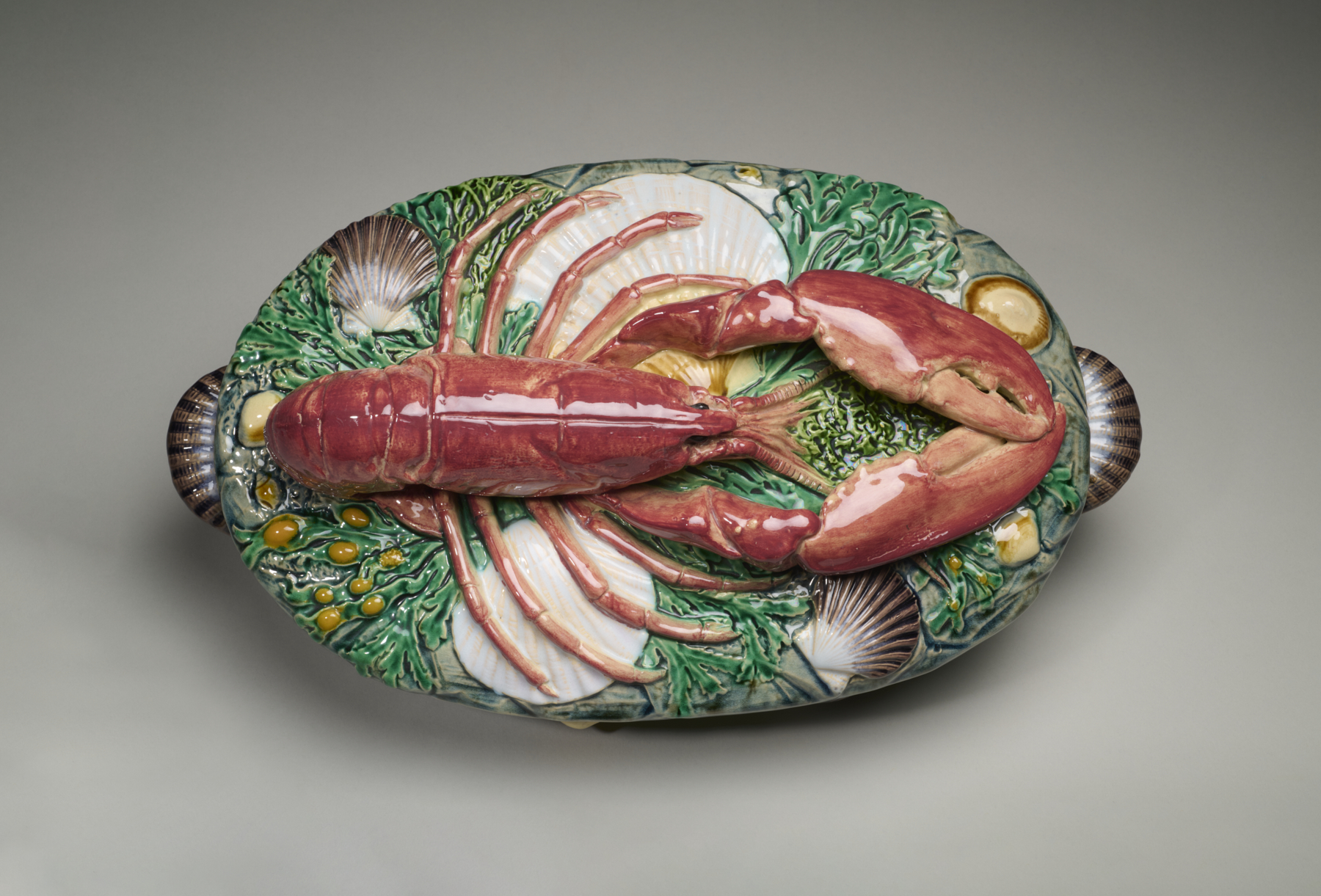
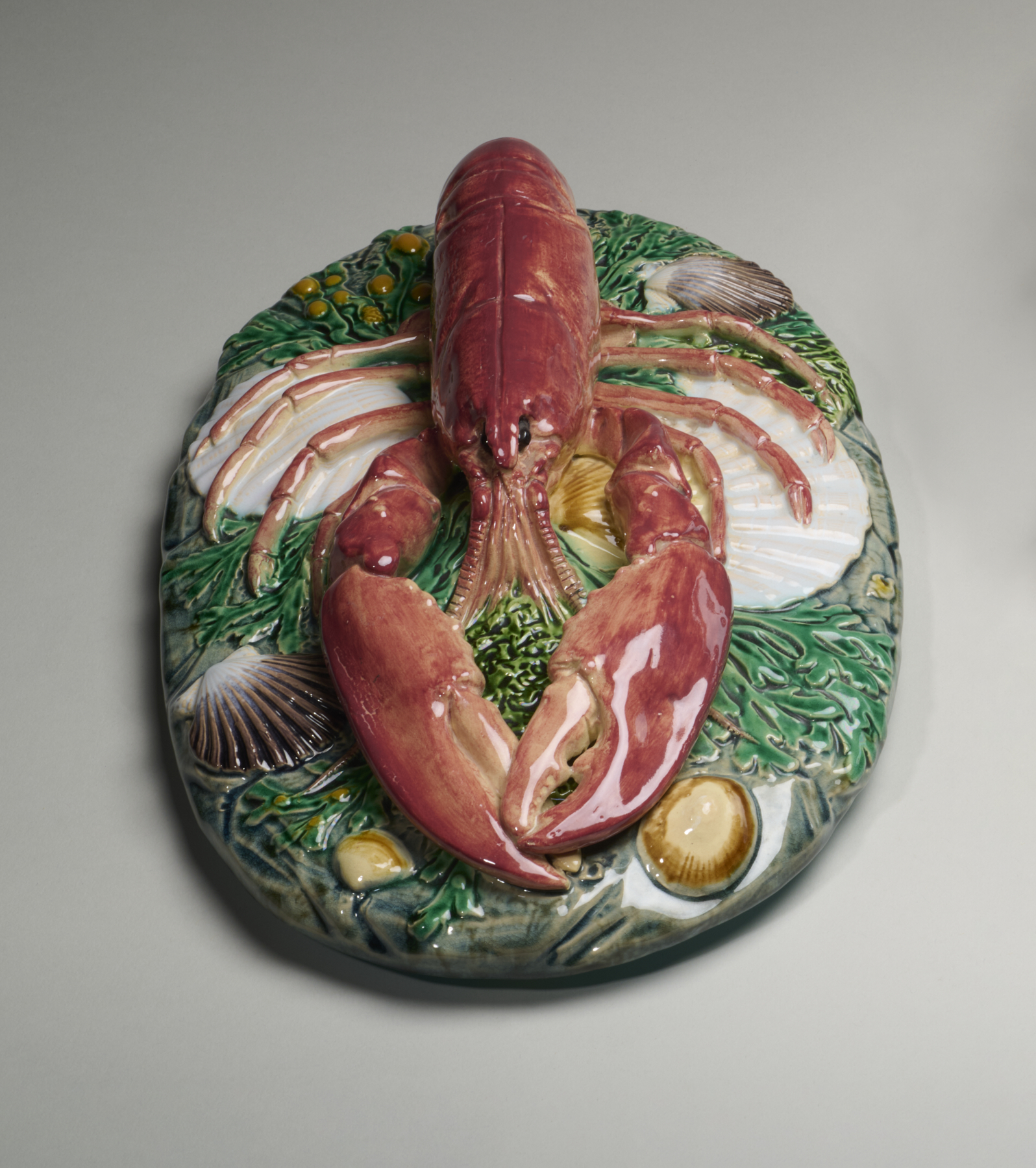
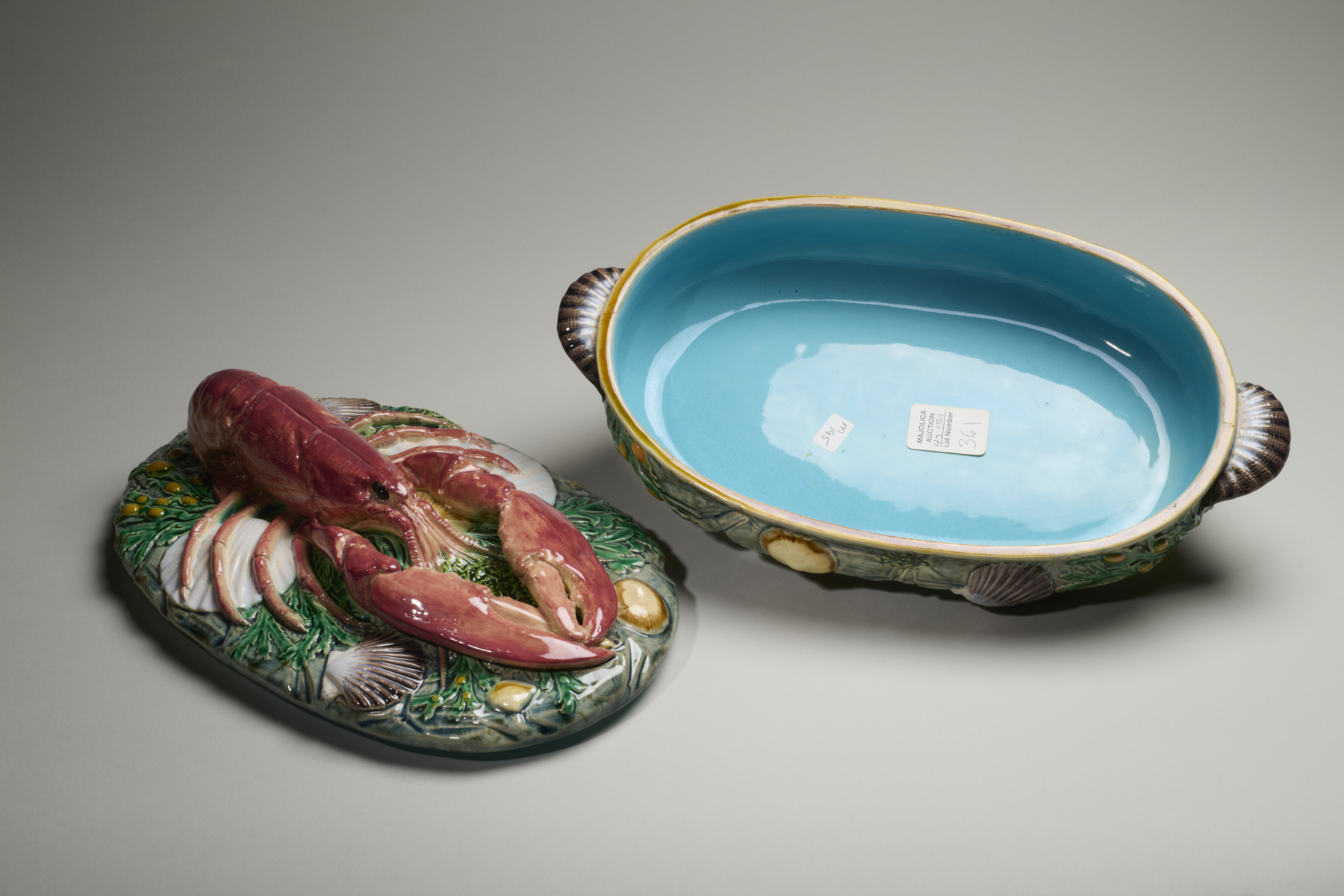
This covered dish is among a range of majolica that signals the type of food it is meant to serve, in this case seafood as is indicated by the life-sized lobster on its cover and shells adorning all sides. In its realistic representations of marine life, it can be seen to hearken back to the work of Bernard Palissy (1510–1590) and subsequent French Renaissance potters, who represented shells, fish, and other natural forms in ornamental dishes, ewers, and other ceramics during the 16th and 17th centuries. These works served as a major source of inspiration for 19th-century ceramic designers and makers, which may have been the case for this model.
The design of this dish is credited to Matilda Charsley (1823–1904), among very few women we know who worked as designers or modelers of ceramics during the 19th century. Charsley’s life and career have left few traces. She was born and spent much of her life in Beaconsfield, Buckinghamshire, located about 24 miles from central London. Her family seems to have been well-to-do, her grandfather, father, and several of her brothers practiced law as solicitors and her father and two of her brothers also served in succession as coroner for the county of Buckinghamshire from the 1821 through the early 20th century, while another brother was an important academic. As a daughter of such a prominent and erudite family Charsley likely received some form of education, but her formal training, if any, has not been discovered.
Charlsley’s obituary published in the "South Bucks Standard" in January 1904 noted “she will be remembered as an artist, doing a lot of work in an unobtrusive way.” The article called out Charsley’s contributions to a pulpit erected in 1869 by her brothers and sisters in the memory of their parents in Beaconsfield’s St. Mary and All Saints Church. Charsley was responsible for the three relief panels on the sides of the Gothic Revival pulpit that represent Jesus’ Parable of the Sower. In addition to these three reliefs, Charlsey’s work as a sculptor is known from her showing works in the 1867 and 1868 editions of Britain’s Royal Academy of Arts exhibitions, which have occurred annually since 1769. During the period in which Charsley exhibited the Academy allowed all to submit work for inclusion and selected around 1200 works to show each year. In 1867, she exhibited two terracotta relief medallions, listed in the exhibition catalogue as a “A Blenheim’s head” and “Ivy, with bird catching a fly” and in 1868 she showed three works: “Hawk and sparrow,” “Scotch terrier’s head,” and “Wagtail and foliage.” These three were possibly also in terracotta, although the medium is not specified. Little can be gleaned from these titles other than Charsley seems to have taken as her subjects plants and animals, both domesticated and wild. Contemporary press accounts offer little more information. Virtually the only mention of her work, although positive, came from a "London Evening Standard" critic who noted “Miss M. Charsley throws great spirit and decision into a ‘Scotch Terrier's Head’" in his review of the 1868 exhibition. Charsley’s “Blenheim’s head” was sold at auction in 2015, allowing us greater insight into her work. It is a sensitive depiction of a Cavalier King Charles Spaniel, the “Blenheim” of the title being the designation for the chestnut and white coloration for this breed.
It is unclear how Charsley came to create the design for the Minton model considered here. Colin Minton Campbell, who headed the company during this period, and Leon Arnoux, the firm’s art director, were certainly very much enmeshed in the art and design world of the time. The firm engaged a range of artists and sculptors to create models during this period, including several female artists. Among them were Mary Thornycroft (1809–1895), who created a number of sculptural models realized in parian porcelain, and Marianne Margaret Egerton, Viscountess Alford (1817–1888), who created a design for a large fountain the firm made in majolica and showed in its display at the 1862 London International Exhibition. It seems possible that Minton’s leadership were in contact with Charsley during or after her showings at the Royal Academy. While it is tempting to think that Charsley may have modeled the design in terracotta given her known works, only a small watercolor sketch survives from the design process (Minton Archive, Stoke-on-Trent City Archives, SD 1705/MS1786). In September 1869, Minton chose to copyright the design for the Lobster Dish model with the British Government. No other designs by Charsley for Minton or other manufacturers are currently known.
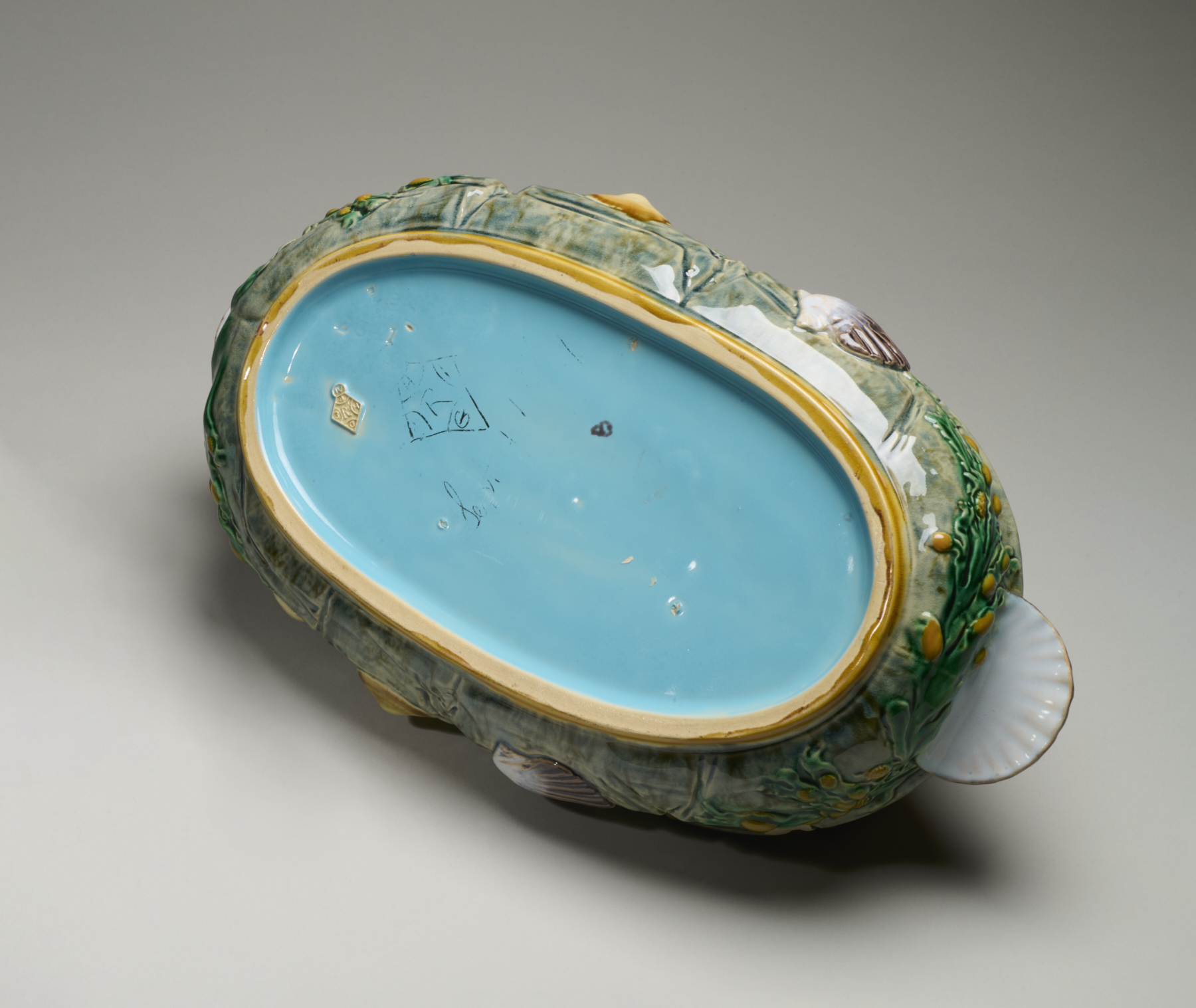
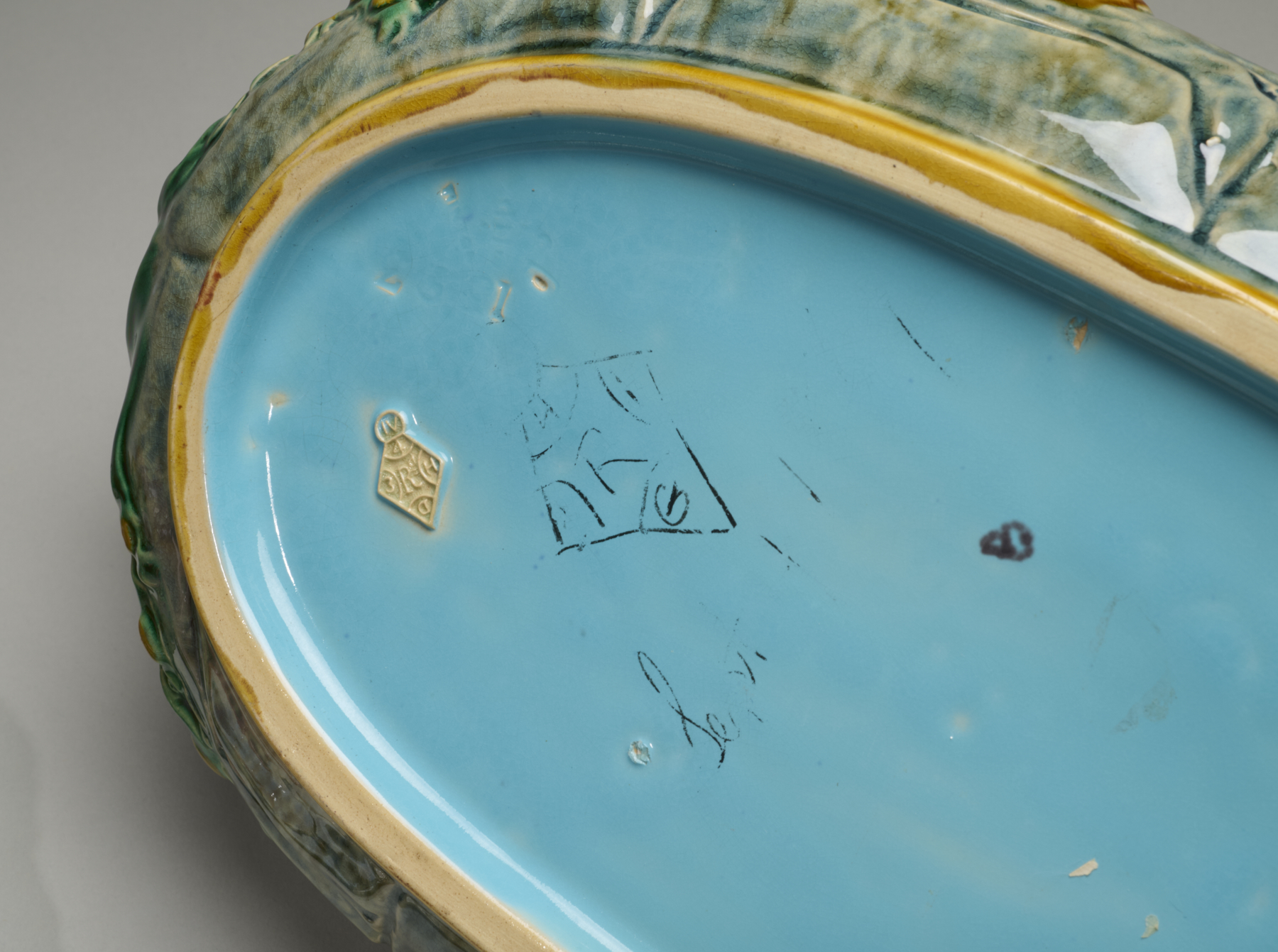
Inscription
Provenance
Provenance (from the French provenir, 'to come from/forth') is the chronology of the ownership, custody, or location of a historical object. Learn more about provenance at the Walters.
Sale, Majolica Auctions by Michael G. Strawser, Hatfield, Pennsylvania, “Two Day Majolica Auction: The Estate of Mrs. Ellis (Anna) E. Stern,” 23-24 October 1998, lot 361; purchased by Deborah and Philip English, Baltimore, 1998; given to the Walters Art Museum, 2025.
Exhibitions
| 2021-2022 | Majolica Mania. The Bard Graduate Center, New York; The Walters Art Museum, Baltimore. |
Measurements
H: 5 1/2 x W: 9 1/2 x D: 8 1/4 in. (14 x 24 x 21 cm)
Credit Line
Gift of Deborah and Philip English, 2025
Location in Museum
Not on view
Accession Number
In libraries, galleries, museums, and archives, an accession number is a unique identifier assigned to each object in the collection.
In libraries, galleries, museums, and archives, an accession number is a unique identifier assigned to each object in the collection.
48.2984