
 Creative Commons License
 Creative Commons License
 Creative Commons License
 Creative Commons License
 Creative Commons License
 Creative Commons License


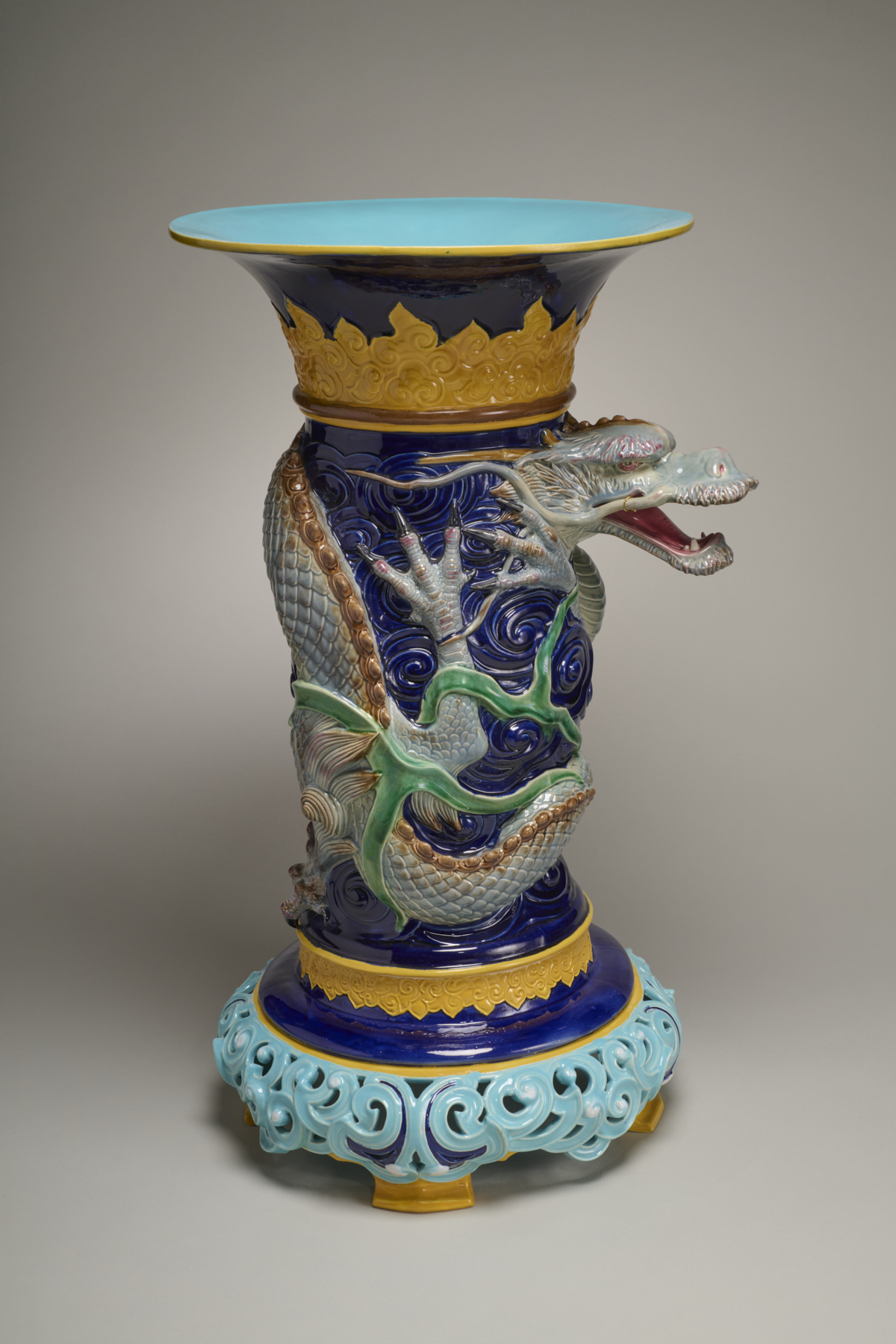
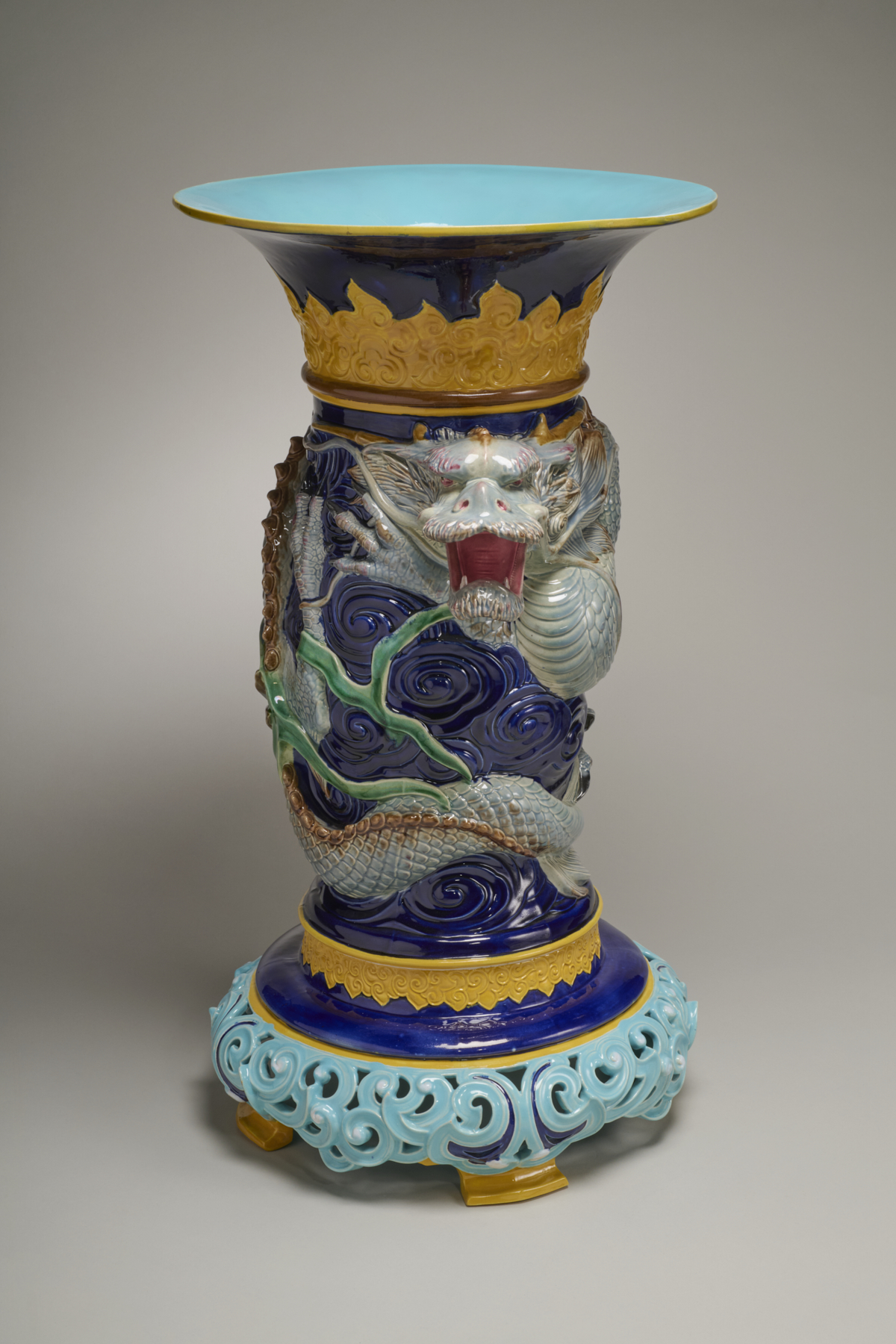
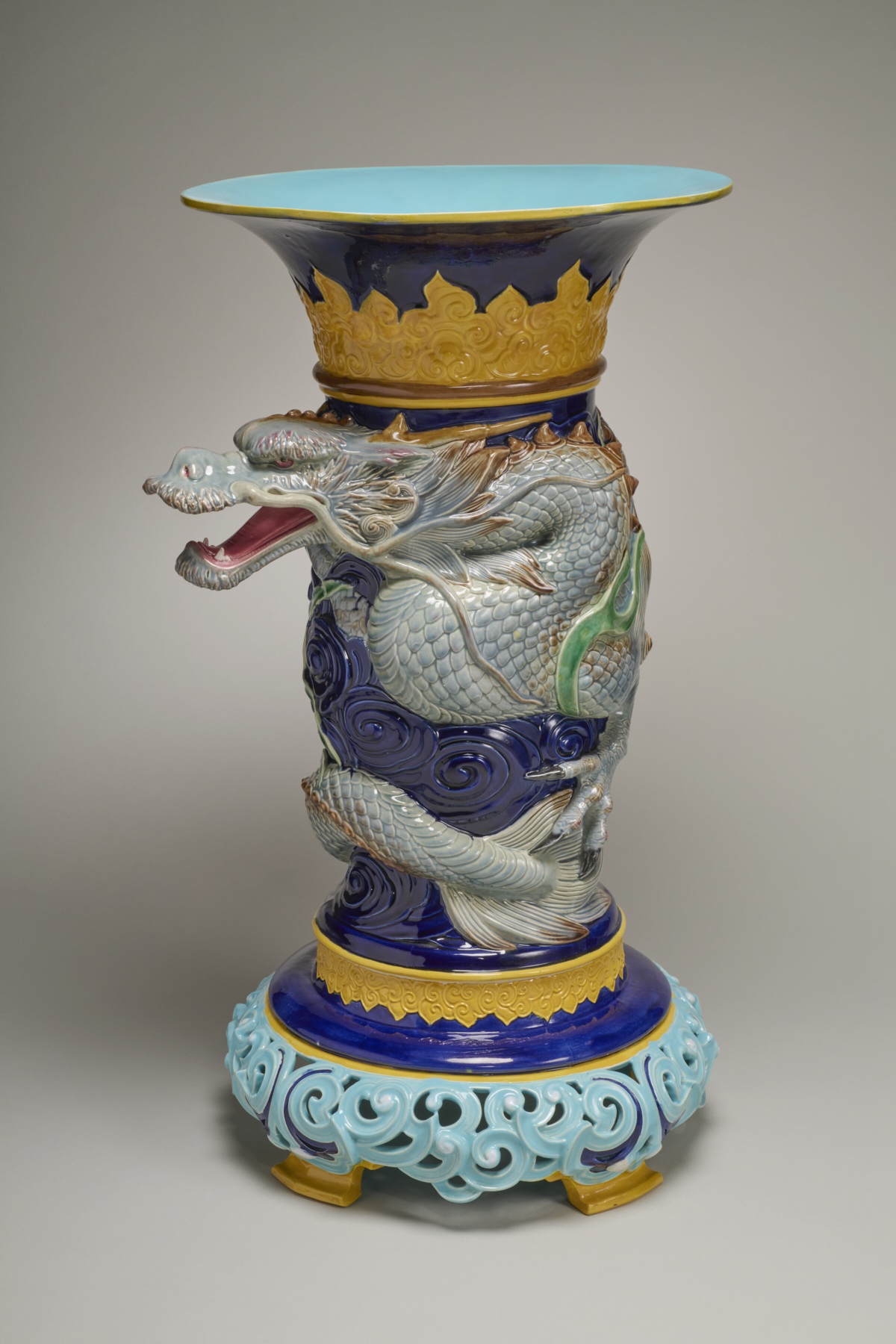
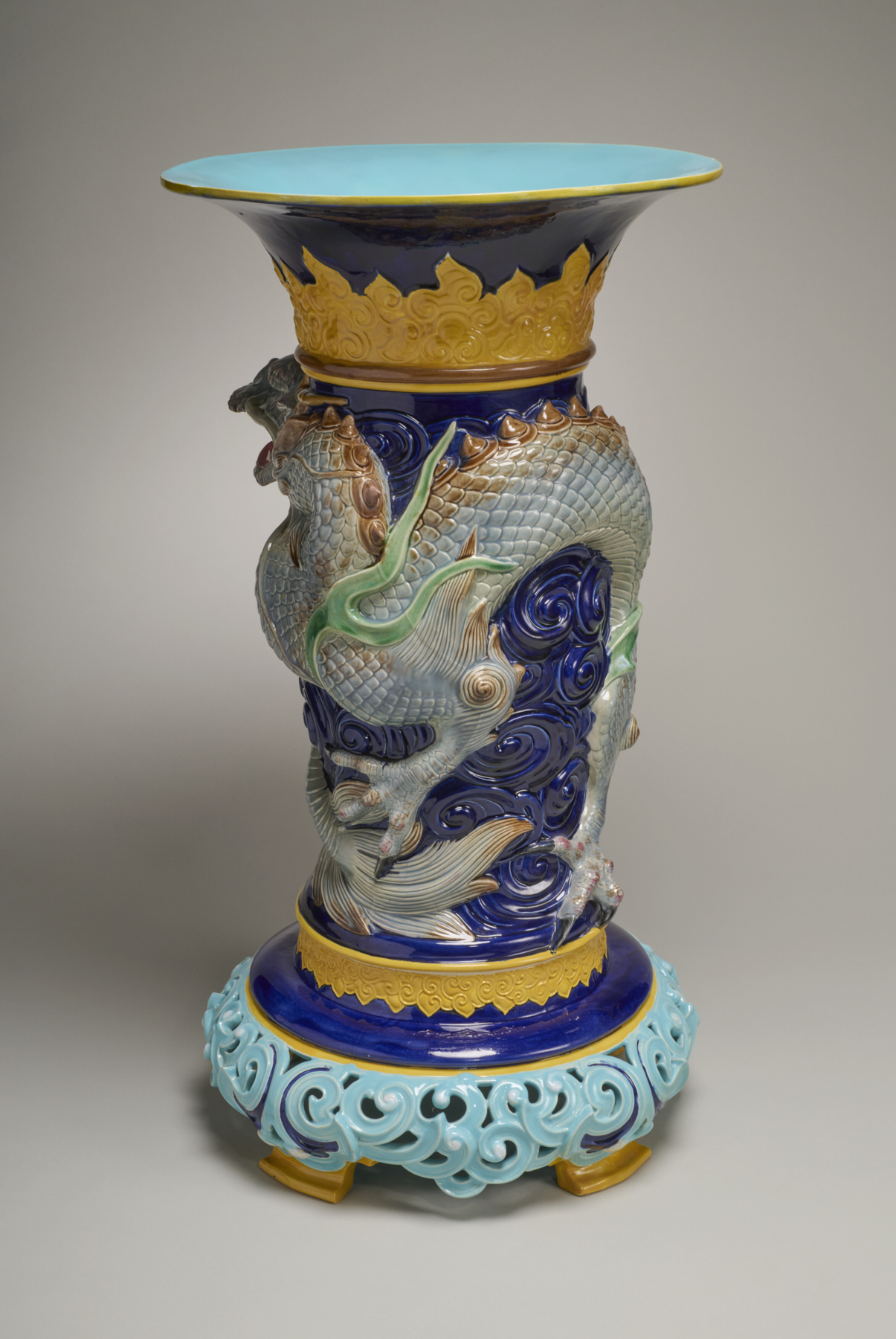
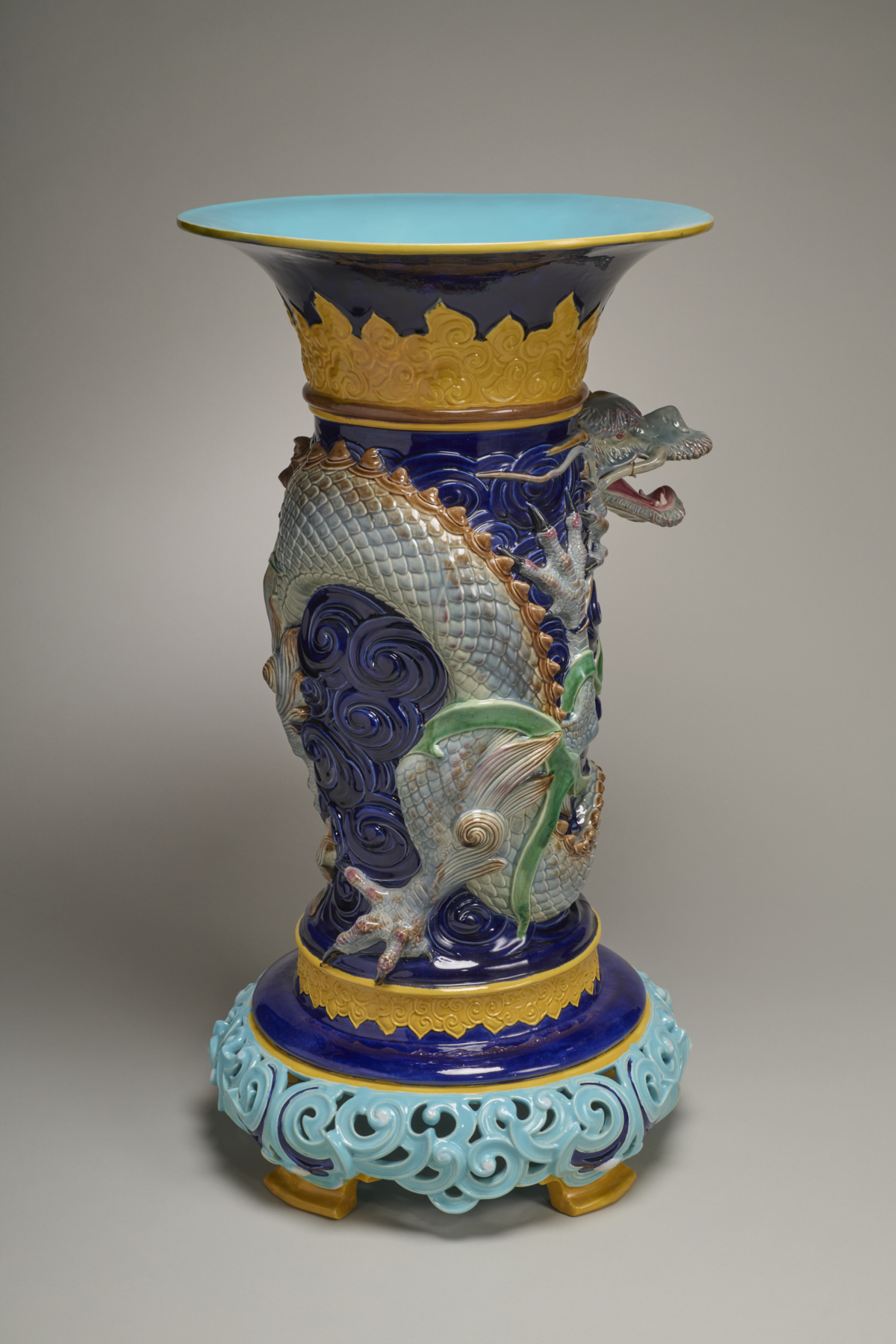
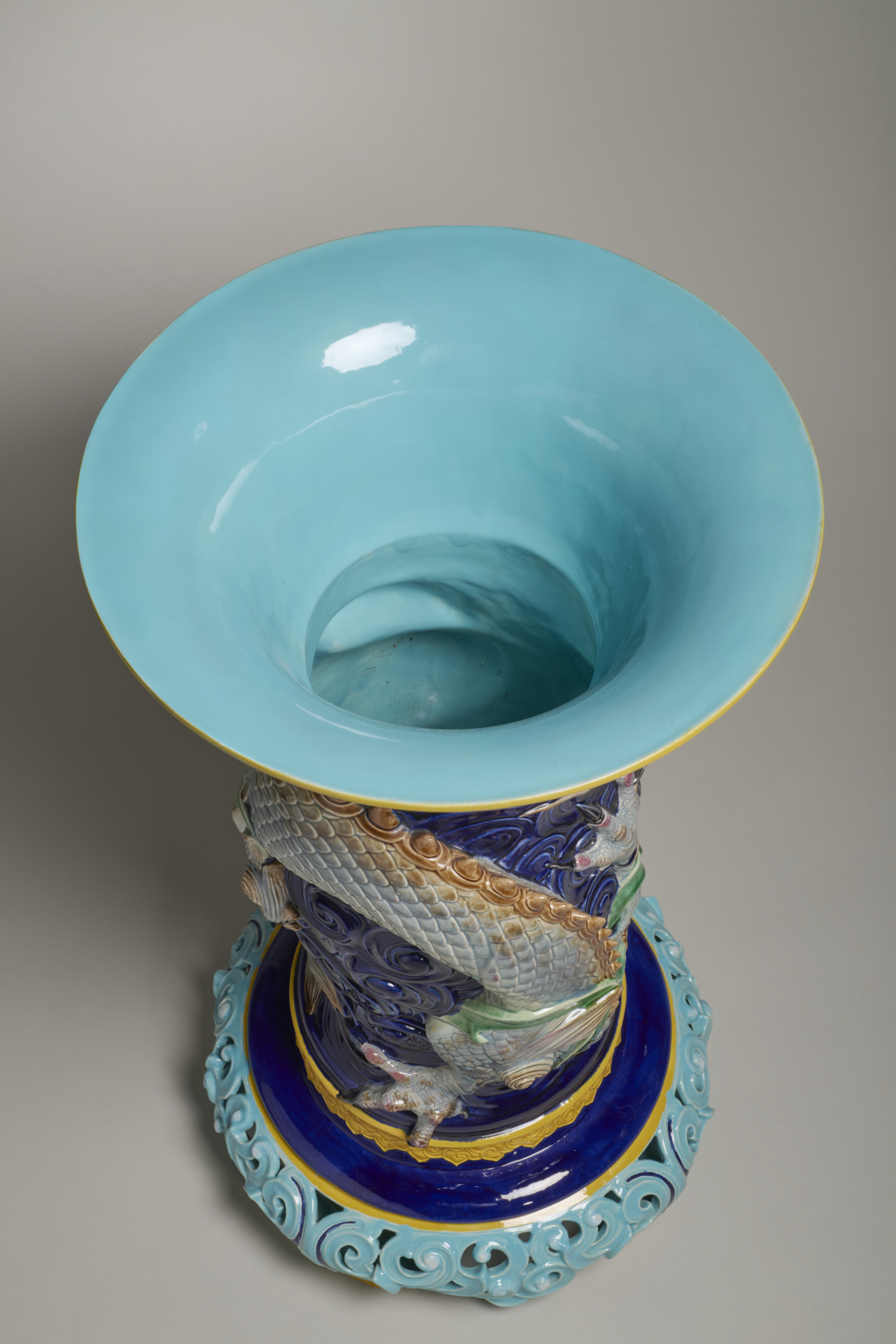
Dragon Vase
In 1861, Thomas Chappell Brown-Westhead (1837–1882) and William Moore (1815–1866) formed a partnership to operate the Cauldon Works. This large porcelain and pottery factory was located in Hanley, one of the six Staffordshire towns and several villages making up the Potteries, England’s principal ceramic manufacturing district. From about 1865, T. C. Brown-Westhead, Moore & Co. produced majolica of excellent quality that met with great acclaim at the many international exhibitions in which the firm participated. Although majolica was not the primary focus of its large and diverse production, Brown-Westhead, Moore & Co. engaged many freelance modelers, sculptors, and other artists to realize original wares, often noteworthy for their inventive design.
The celebrated display of Japanese objects at the London International Exhibition of 1862 and increasing exposure to the decorative and fine arts of Japan in subsequent years offered European artists, designers, and collectors captivating sources of inspiration. Following two centuries of geopolitical isolation, Japan was thought to have been spared the ravages of industrialization, and its culture was thus considered by Europeans as purer and more aligned with nature than that of the developed nations of Europe. This vase model, its shape likely inspired by bronzes of the late Edo period (1603–1868), was one of several majolica designs produced by T. C. Brown-Westhead, Moore & Co. that reference Japanese ornament. It was featured prominently in the firm’s display at the Centennial Exhibition of 1876 in Philadelphia. The "Staffordshire Sentinel" highlighted this piece in its review of the items Brown-Westhead, Moore was to send to the Philadelphia fair. The newspaper’s reporter remarked on its “bold design and successful colouring” with “a dragon twining round the body, coloured as naturally as such an apocryphal reptile can be expected to be,” and noted price of £5 5s., made it the firm’s most expensive piece of majolica going to the exhibition.
Inscription
Provenance
Provenance (from the French provenir, 'to come from/forth') is the chronology of the ownership, custody, or location of a historical object. Learn more about provenance at the Walters.
Collection of Marilyn and Edward Flower, Bay Shore, New York, by 2016 [mode of acquisition unknown]; sale, Strawser Auction Group, Kulpsville, Pennsylvania, “The Flower Majolica Collection,” 23 August 2023, lot 1122; purchased by Deborah and Philip English, Baltimore, 2023; given to the Walters Art Museum, 2025.
Exhibitions
| 2021-2022 | Majolica Mania. The Bard Graduate Center, New York; The Walters Art Museum, Baltimore. |
Measurements
H: 24 7/8 x W: 14 1/2 x D: 13 3/8 in. (63.2 x 37 x 34 cm)
Credit Line
Gift of Deborah and Philip English, 2025
Location in Museum
Not on view
Accession Number
In libraries, galleries, museums, and archives, an accession number is a unique identifier assigned to each object in the collection.
In libraries, galleries, museums, and archives, an accession number is a unique identifier assigned to each object in the collection.
48.2987