
 Creative Commons License
 Creative Commons License
 Creative Commons License
 Creative Commons License
 Creative Commons License
 Creative Commons License
 Creative Commons License


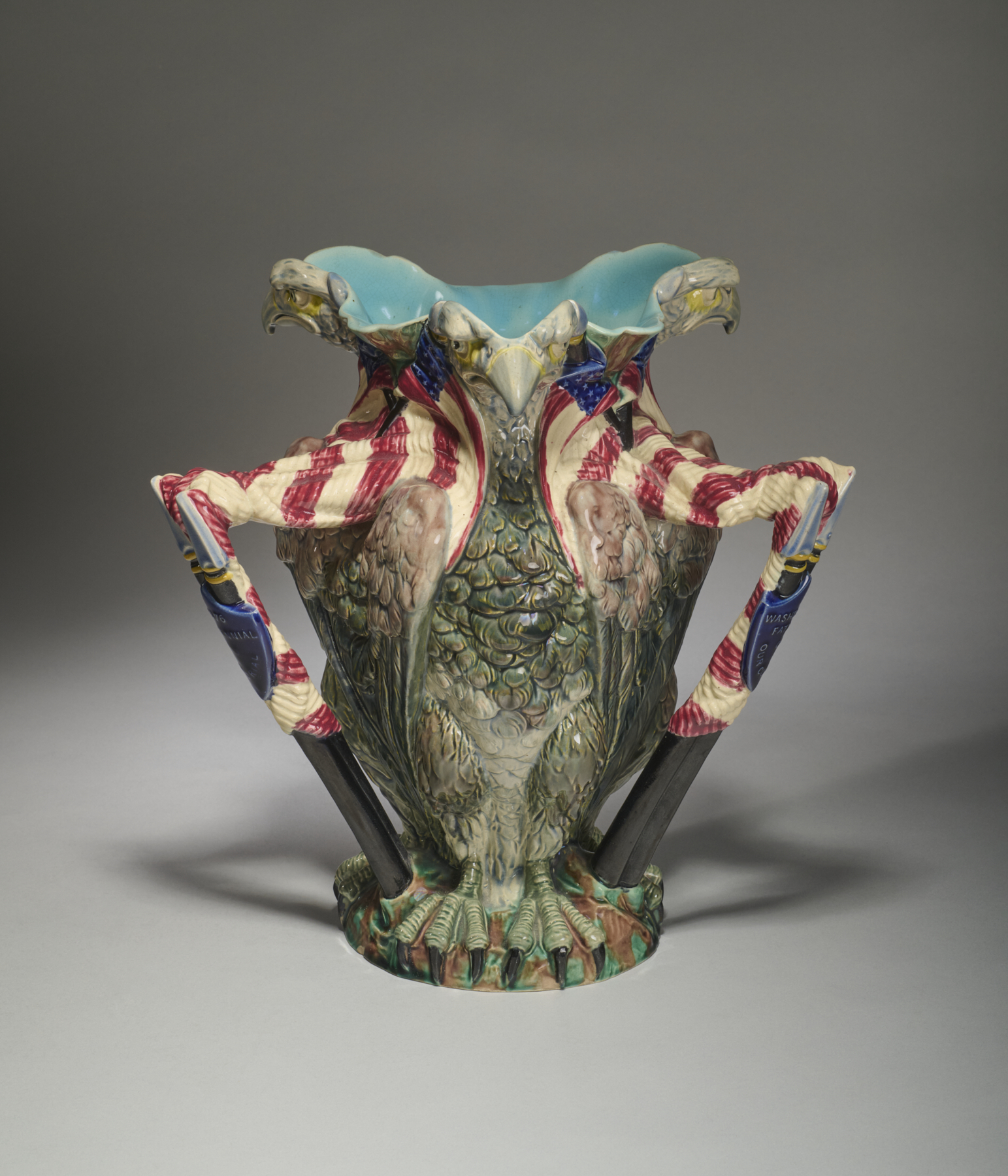
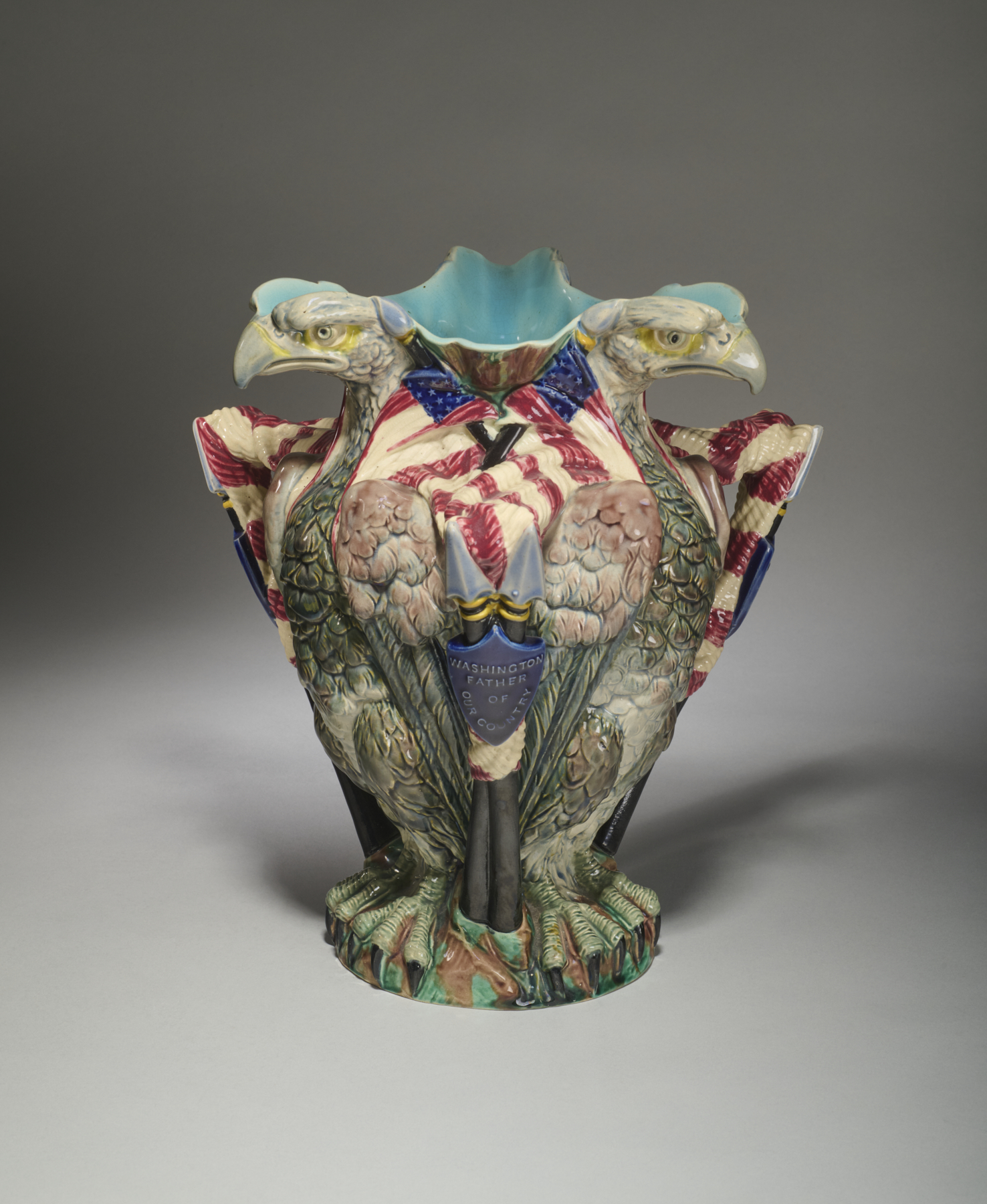
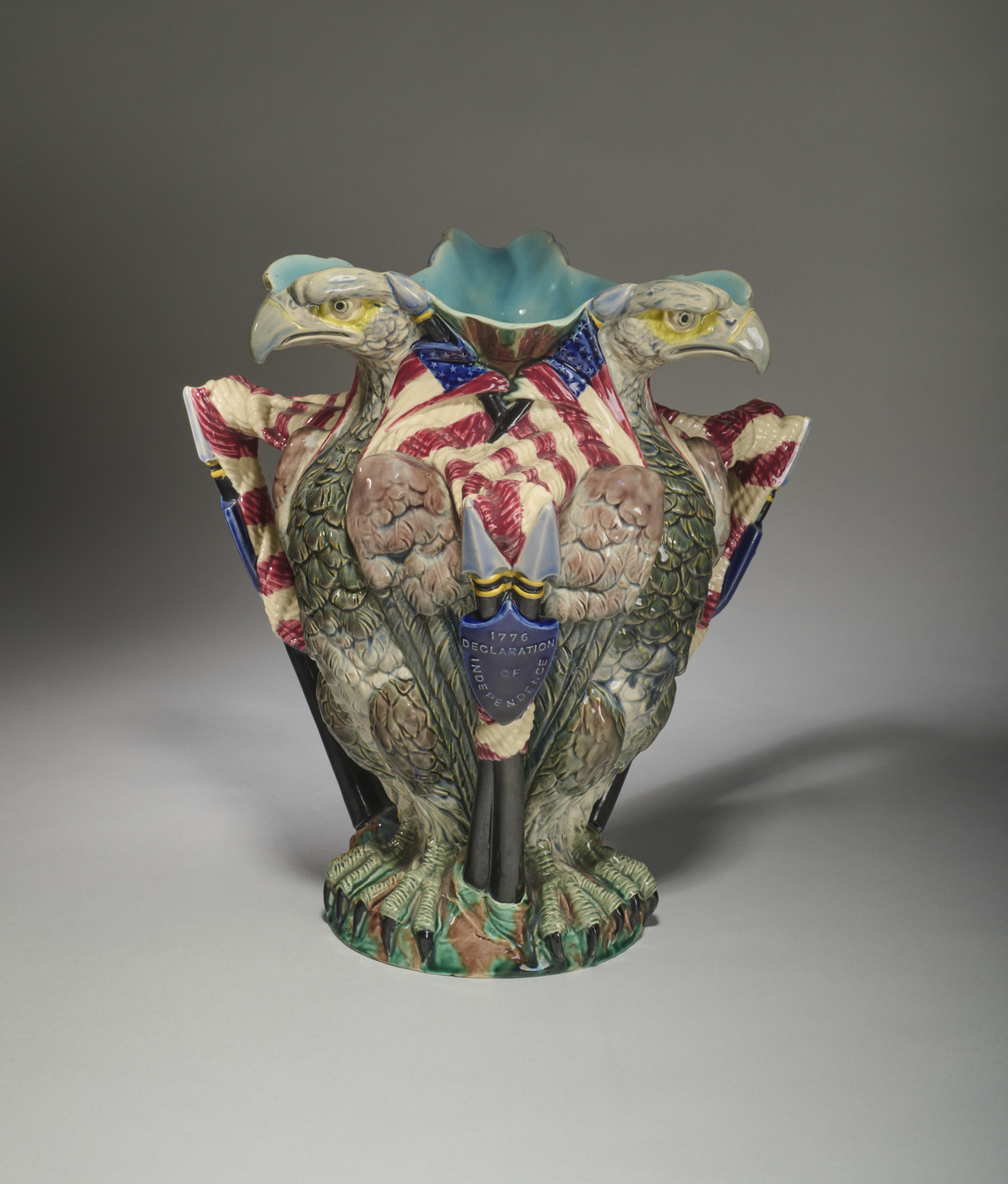
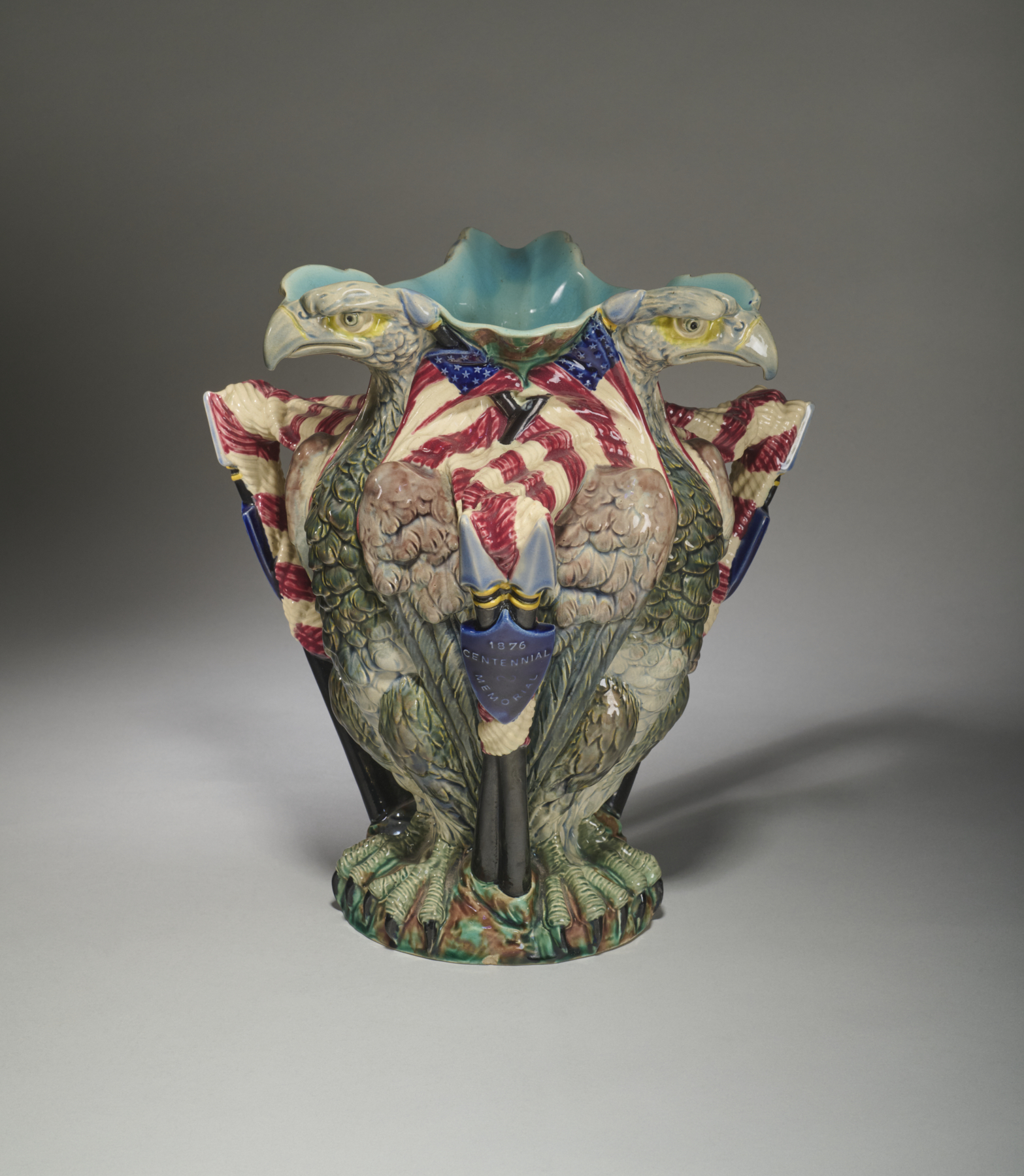
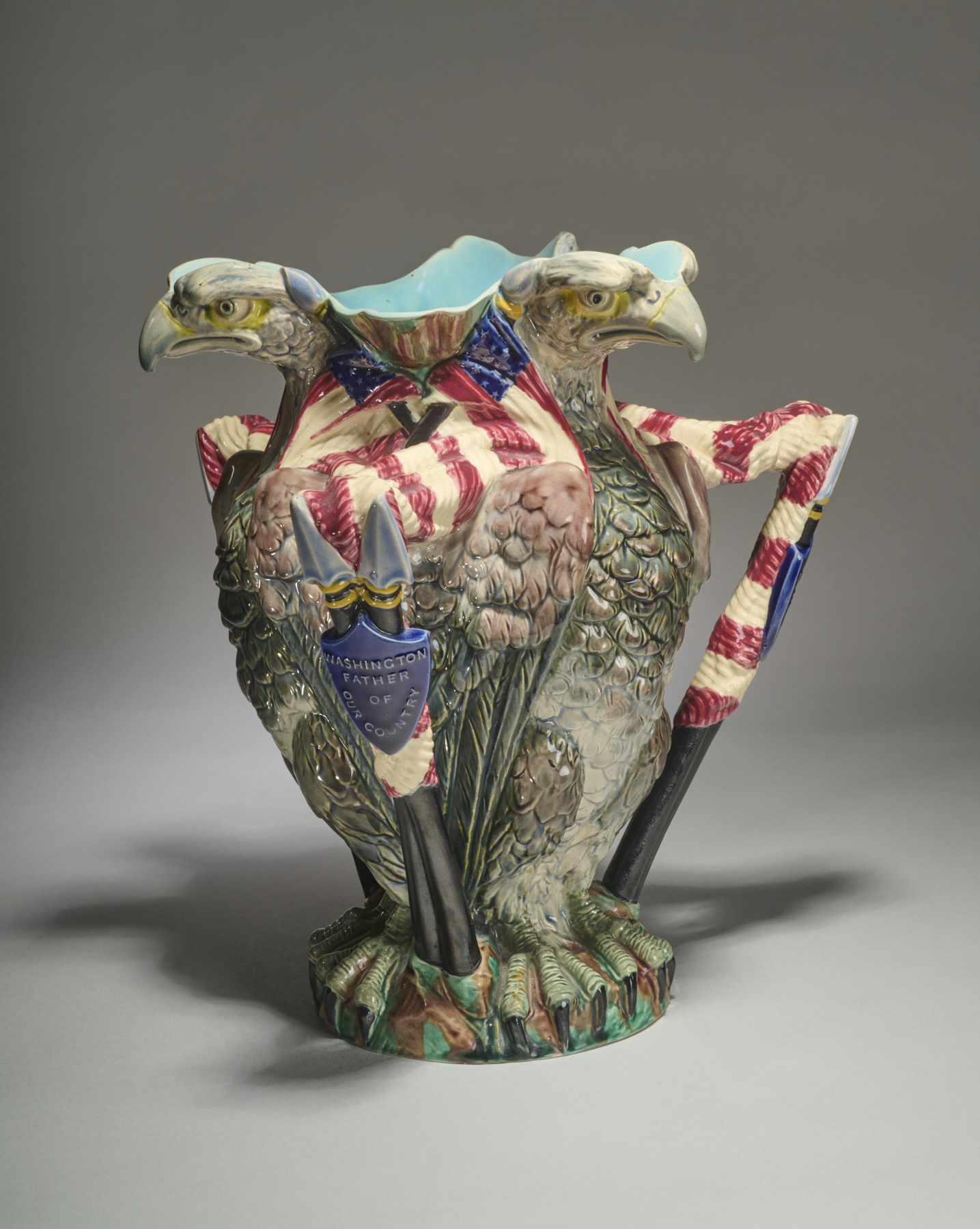
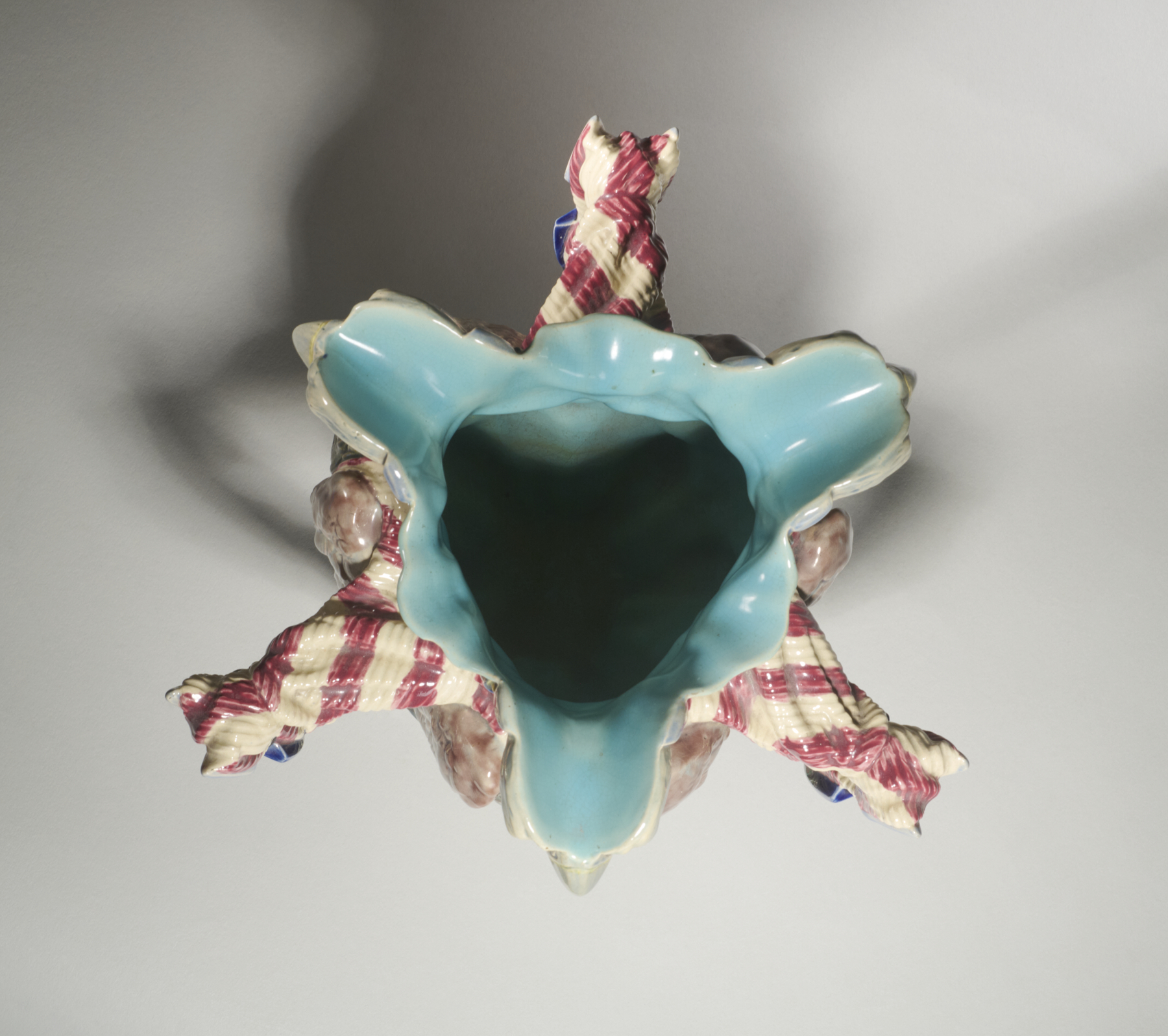
Centennial Eagle Pitcher
W. T. Copeland & Sons (before 1868, W. T. Copeland), a giant of the 19th-century pottery industry, was comparable to fellow British firms Minton & Co. and Josiah Wedgwood & Sons in the exceptional quality and variety of its wares. Its vast output ranged from parian statuary, elegant hand-painted porcelain made for exhibition, and bone-china dinner sets to the humblest earthenware crockery and stoneware. In 1824, William Taylor Copeland (1797–1868) became a partner in the firm founded in 1770 by Josiah Spode I (1733–1797). The Spode firm was one of the largest and most important English ceramic manufacturers of the late 18th and 19th centuries. The company was responsible for perfecting transfer-printing on ceramics as well as developing a porcelain body that incorporated bone ash, the “bone china” that English manufacturers soon became well-known for. In 1833, Copeland bought out the Spode heirs and entered into a partnership with Thomas Garrett (1785–1865). They operated the factory under the name Copeland & Garrett were able to maintain its position as a leading ceramic manufacturer. This partnership continued until 1847, when Copeland became the firm’s sole proprietor.
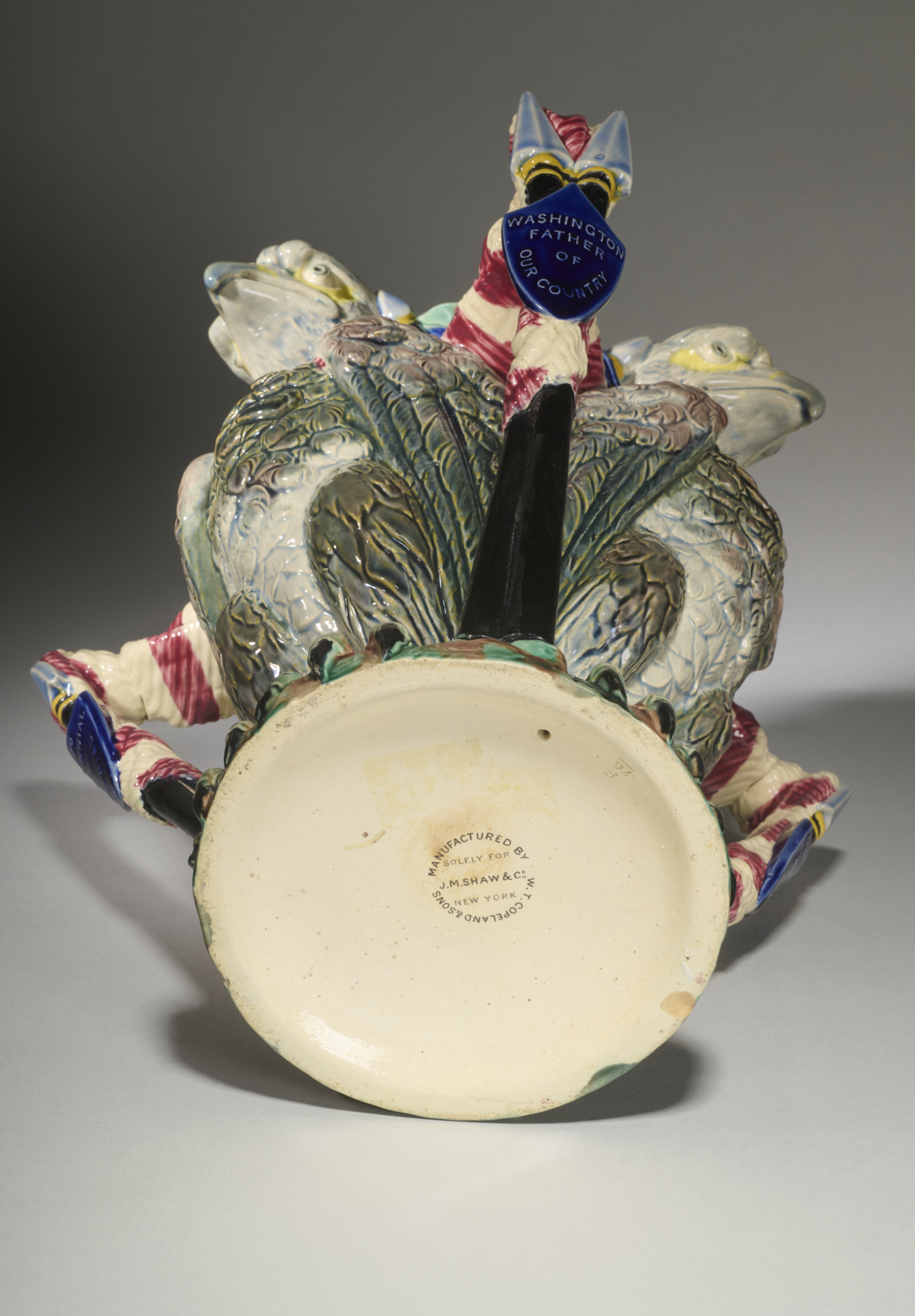
W. T. Copeland & Sons made superb majolica from the late 1860s through the early 1880s. While never its main focus, Copeland’s majolica was realized by a skilled staff and leading freelance designers under the supervision of one of the best art departments in the British ceramics industry. The firm featured this ware at several international exhibitions in the 1870s, but did not participate in the Centennial Exhibition of 1876 in Philadelphia. However, the New York City–based importer, wholesaler, and retailer James M. Shaw & Co. opened a temporary store adjacent to the world's fair grounds where it sold special commemorative items supplied by Copeland, including this pitcher model incorporating imagery symbolic of the United States such as eagles and the flag. Shaw offered the boldly modeled design in several different ceramic types and decorations, including “Majolica, Parian, Stone, and Ivory bodies” as the firm outlined in advertisements.
Inscription
Provenance
Provenance (from the French provenir, 'to come from/forth') is the chronology of the ownership, custody, or location of a historical object. Learn more about provenance at the Walters.
Collection of Anna M. P. Stern (1896–1996), Coatesville, Pennsylvania, by 1996 [date and mode of acquisition unknown]; Majolica Auctions by Michael G. Strawser, Fort Wayne, Indiana, “Two Day Majolica Auction: The Estate of Mrs. Ellis (Anna) E. Stern,” 3-4 April 1998, lot 318; purchased by Deborah and Philip English, Baltimore, 1998; given to the Walters Art Museum, 2025.
Measurements
H: 9 1/2 × Diam: 8 7/8 in. (24.1 × 22.5 cm)
Credit Line
Gift of Deborah and Philip English, 2025
Location in Museum
Not on view
Accession Number
In libraries, galleries, museums, and archives, an accession number is a unique identifier assigned to each object in the collection.
In libraries, galleries, museums, and archives, an accession number is a unique identifier assigned to each object in the collection.
48.2988