
 Creative Commons License
 Creative Commons License
 Creative Commons License
 Creative Commons License
 Creative Commons License
 Creative Commons License


Diana Jug
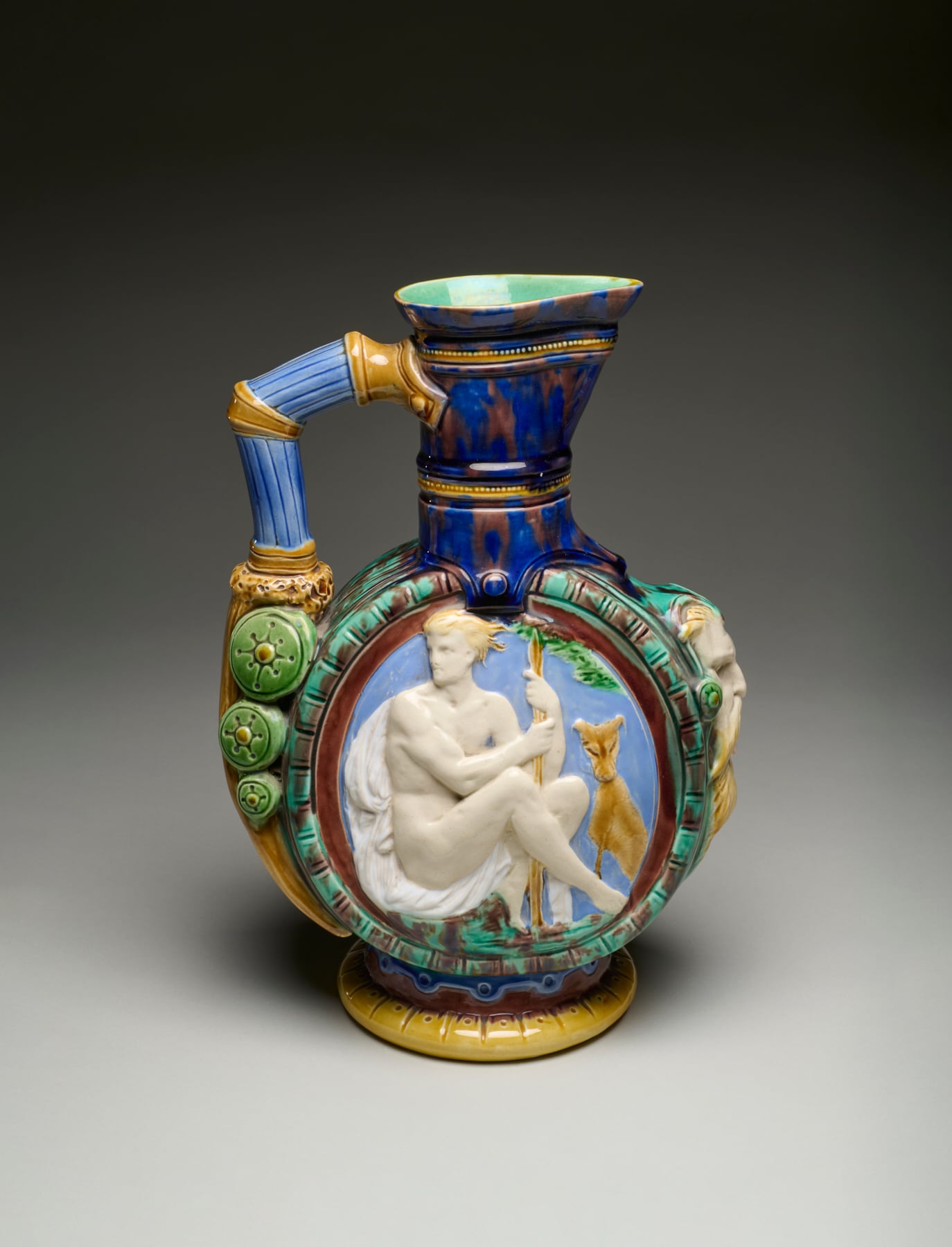
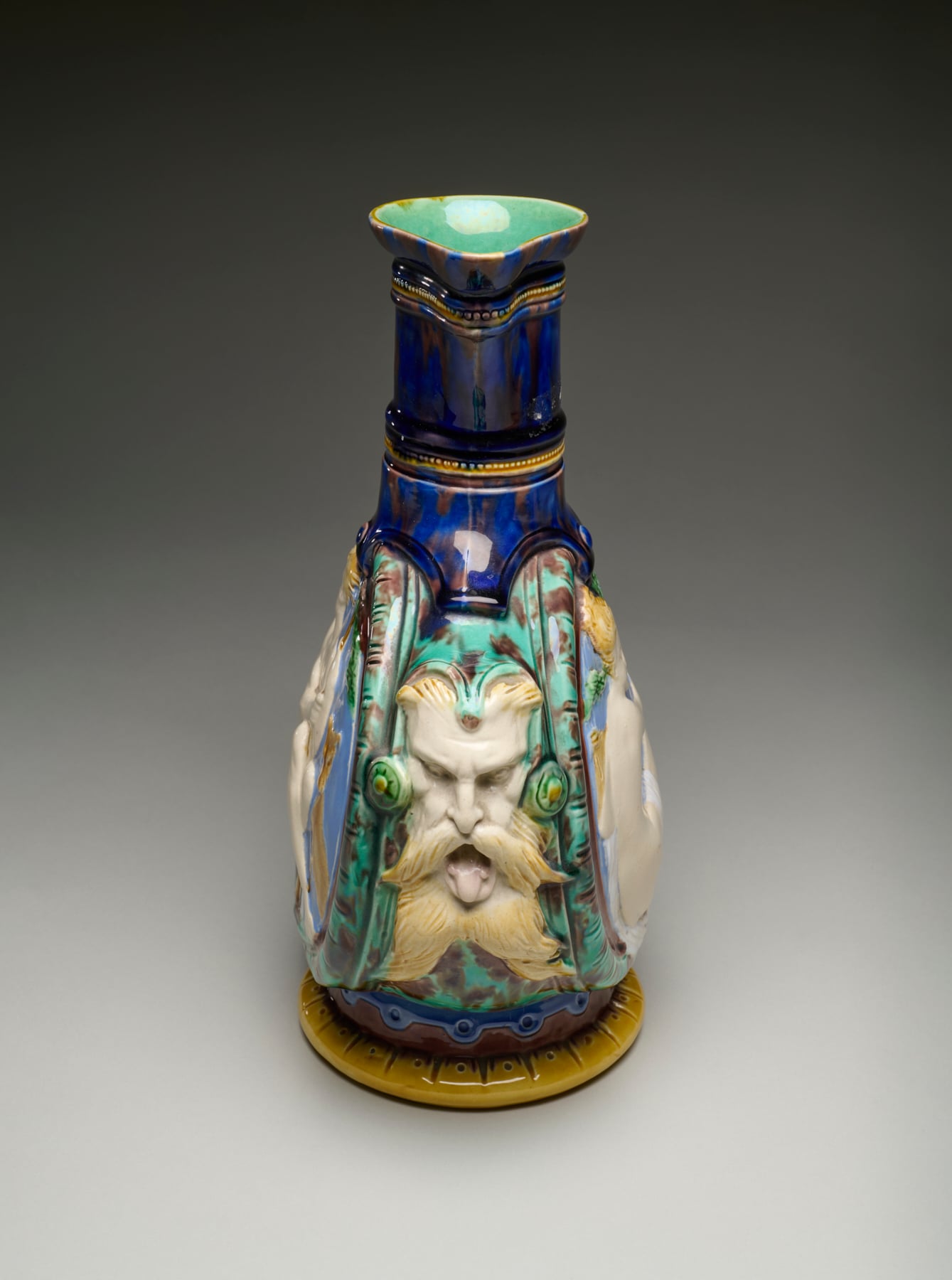
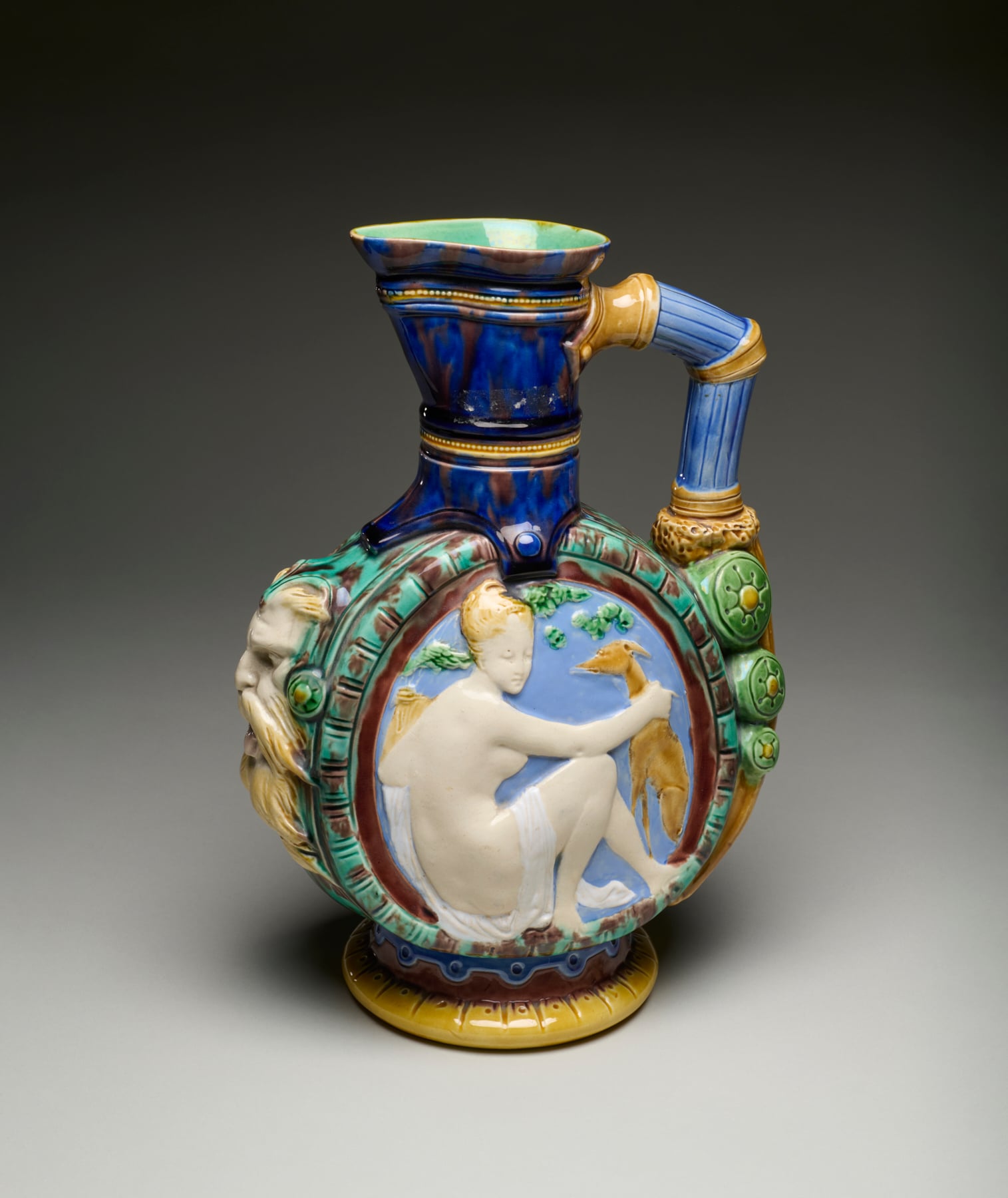
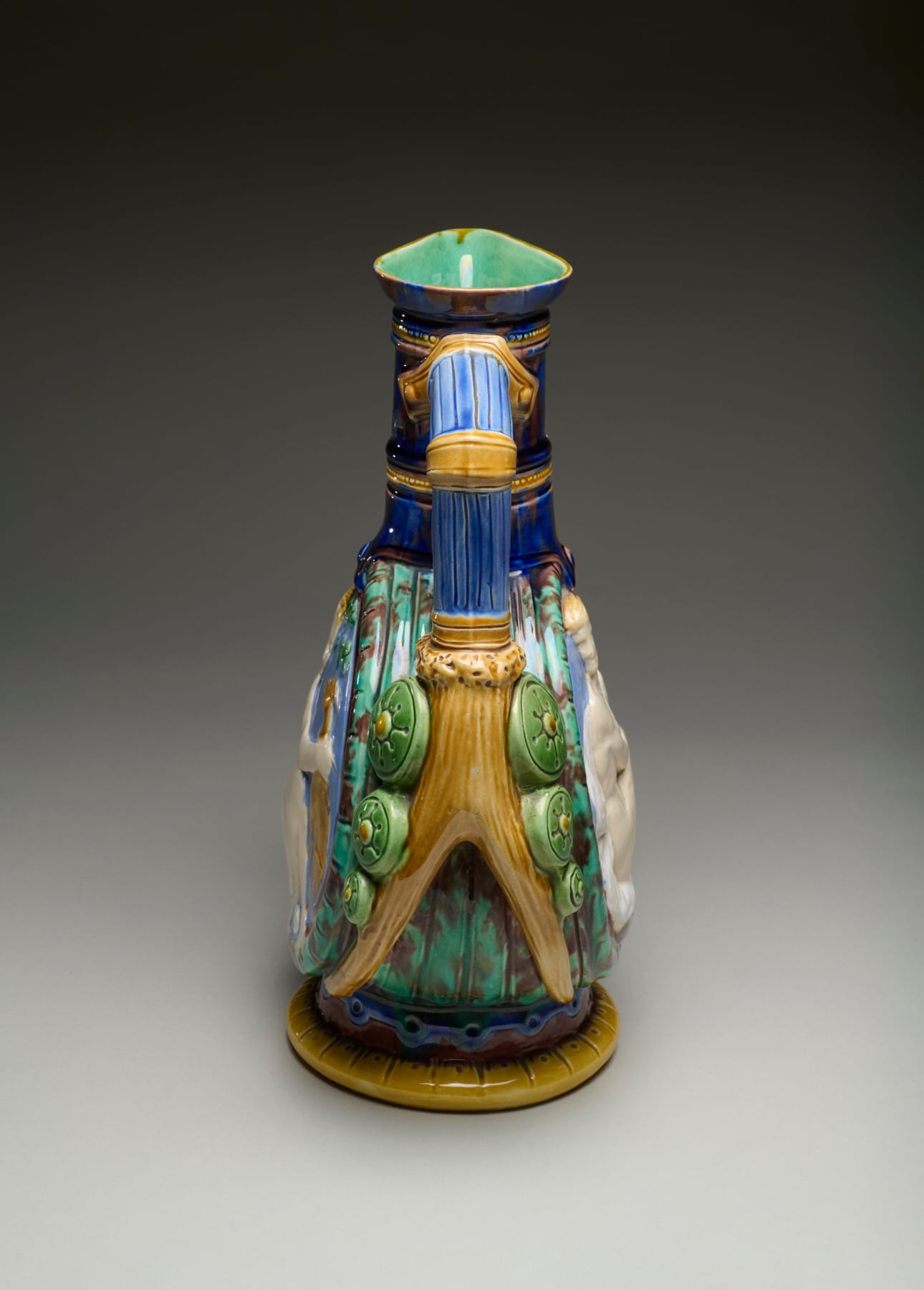
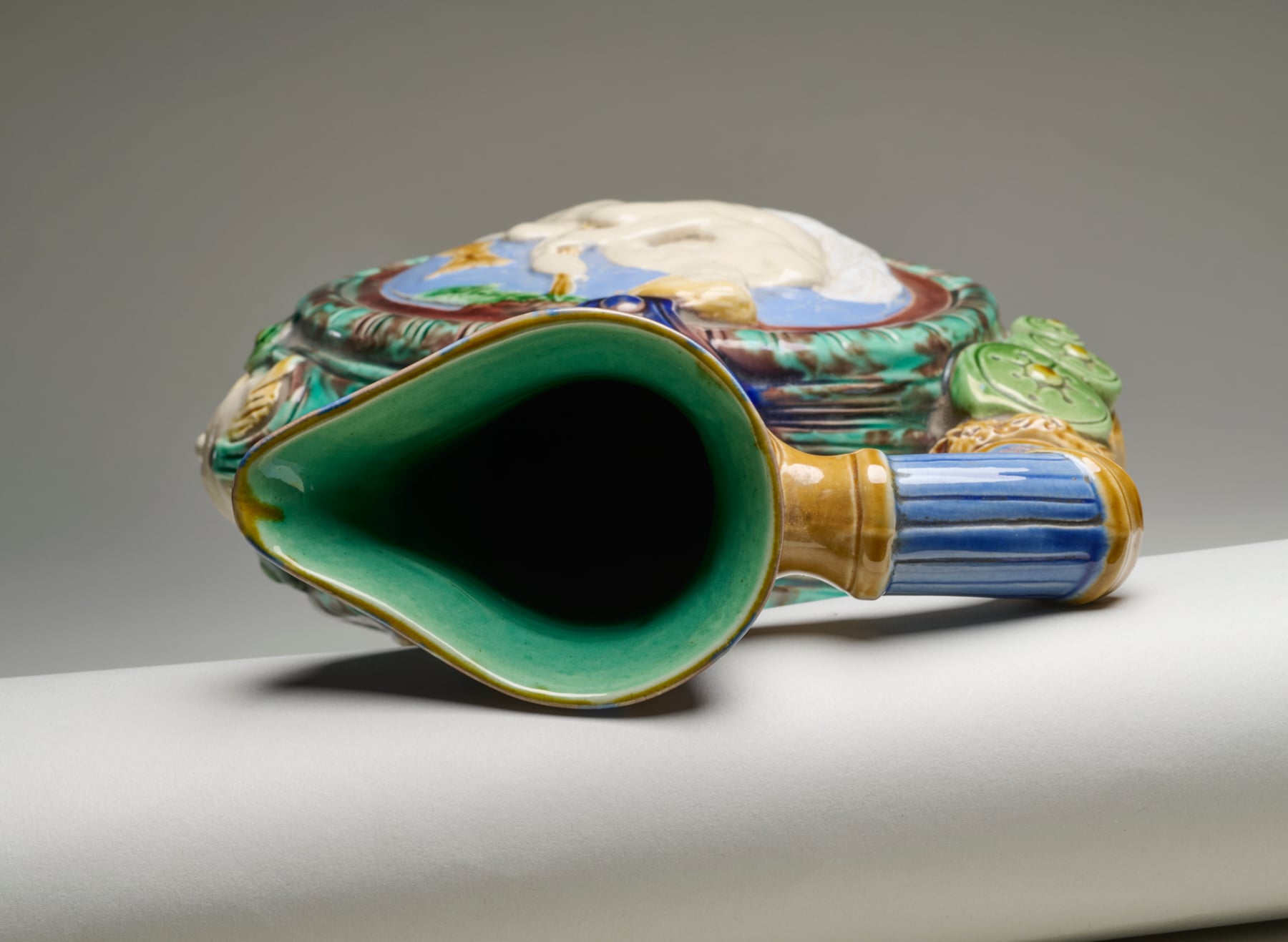
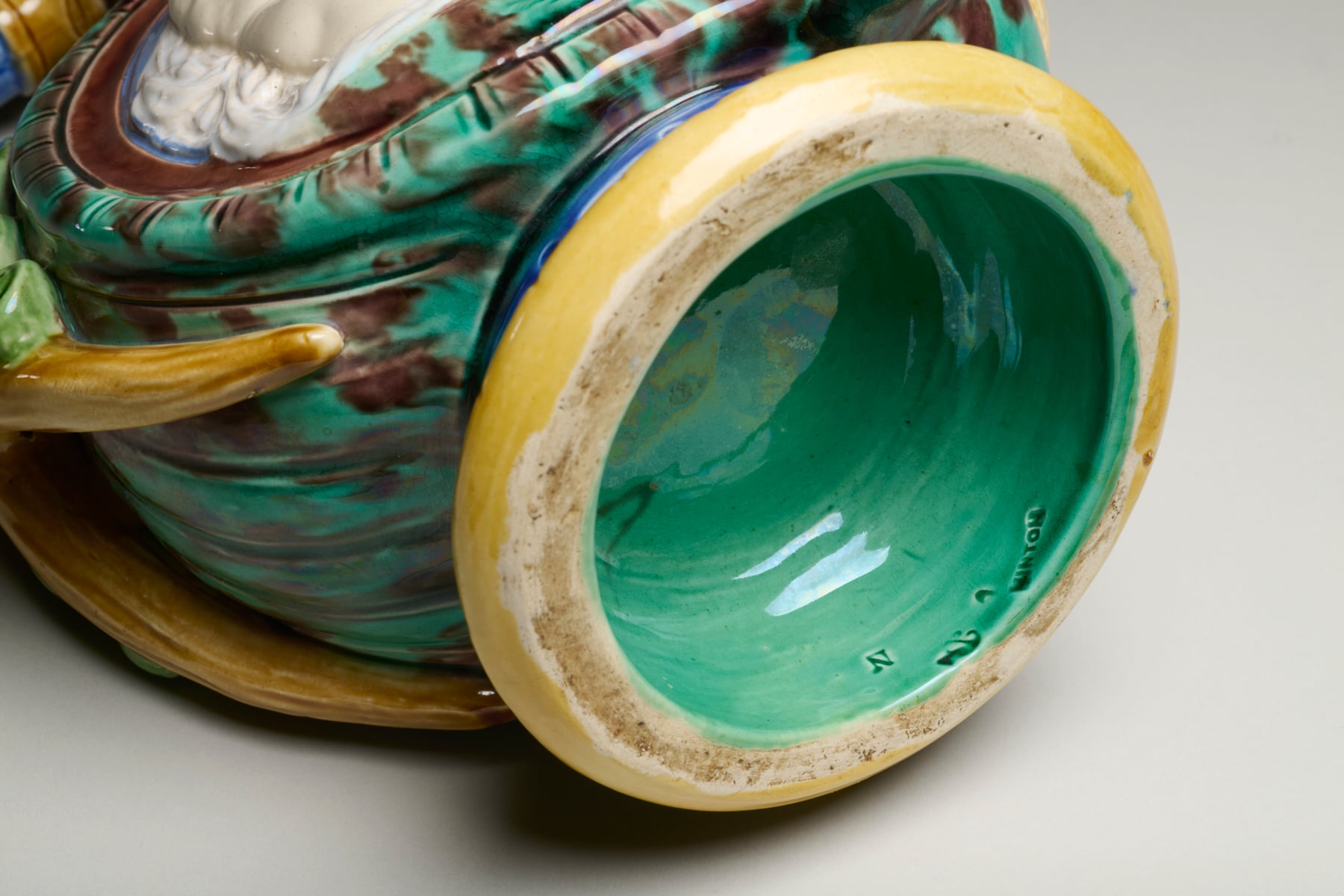
The figures depicted on the two faces of this vessel allude to the Actaeon myth. According to the story, Diana, the Roman goddess of the hunt, was caught bathing in the woods by a hunter named Actaeon. To punish the mortal for this transgression, Diana turned him into a stag. The unfortunate hunter became the hunted, and was pursued and torn to pieces by his own dogs. The scene of Diana bathing was a favorite subject for Renaissance artists, and appears in many different media, including Italian maiolica ceramics. Shaped like a pilgrim flask, the Minton Diana Jug evokes mounted Renaissance and Medieval ceramics, and the horn-shaped handle accentuates the myth’s association with the hunt. The South Kensington Museum (now the Victoria and Albert) acquired a version of this design in 1857 (accession no. 3558-1857), when the museum was actively assembling a collection of the best examples of modern art manufacture, including numerous works of Victorian majolica in the Renaissance Revival style.
One of the 19th century’s most acclaimed sculptors and designers, Albert-Ernest Carrier-Belleuse’s career bridged the divide between traditional sculpture and the decorative arts. Formally educated at the Petite École in Paris, from the 1840s forward Carrier-Belleuse sought out opportunities to work with manufacturers who translated his designs into a variety of different media, including ceramics. In 1850, faced with political and economic uncertainty in the wake of the 1848 Revolution, Carrier-Belleuse left his native France and moved to England. He became a designer for Minton & Co. and a leading figure in the British ceramics industry. After returning to his homeland in 1855, Carrier-Belleuse attracted the attention of the leader of imperial France, Napoleon III, with his ambitious submissions to the annual Paris Salon exhibitions. Though he received many prestigious commissions and accolades for his work as a sculptor, Carrier-Belleuse continued to create designs for small scale, decorative pieces throughout his career. The Diana Jug is evidence of Carrier-Belleuse’s range as a designer, illustrating how he drew inspiration from Renaissance ceramics to create innovative forms destined for household use. Toward the end of his life, Carrier-Belleuse served as art director of Sèvres, France’s national porcelain manufactory. Many of the designs he created for Sèvres reflect the interest in Renaissance revival motifs and themes from classical mythology that are already apparent in this piece.
Inscription
Provenance
Provenance (from the French provenir, 'to come from/forth') is the chronology of the ownership, custody, or location of a historical object. Learn more about provenance at the Walters.
Sale, Sotheby’s Olympia, London, “British Ceramics,” 27 November 2001, lot 57; purchased by Deborah and Philip English, Baltimore, 2001; given to the Walters Art Museum, 2025.
Measurements
H: 11 1/4 × W: 8 × D: 4 3/4 in. (28.6 × 20.3 × 12.1 cm)
Credit Line
Gift of Deborah and Philip English, 2025
Location in Museum
Not on view
Accession Number
In libraries, galleries, museums, and archives, an accession number is a unique identifier assigned to each object in the collection.
In libraries, galleries, museums, and archives, an accession number is a unique identifier assigned to each object in the collection.
48.2990