
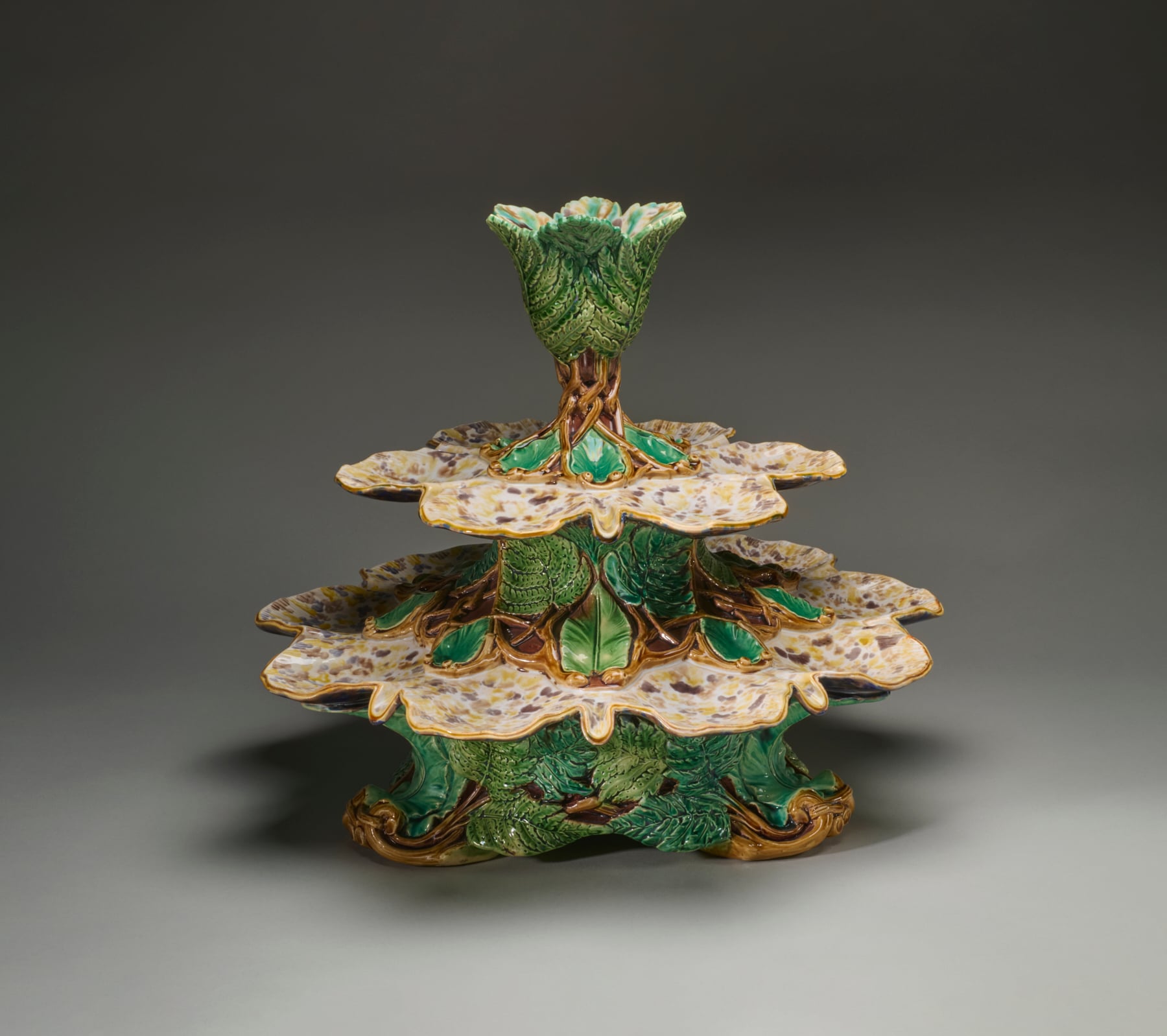
 Creative Commons License
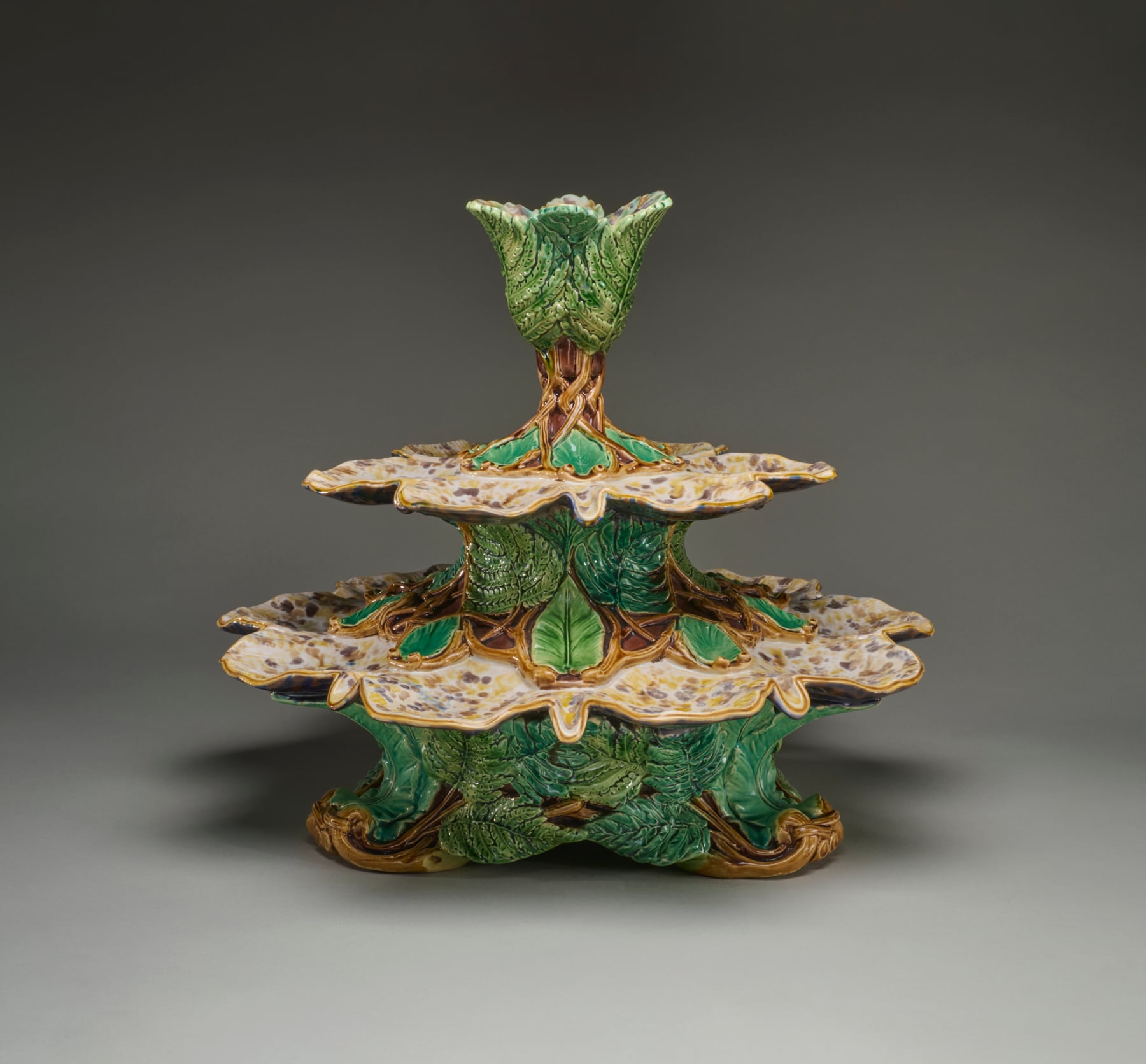 Creative Commons License
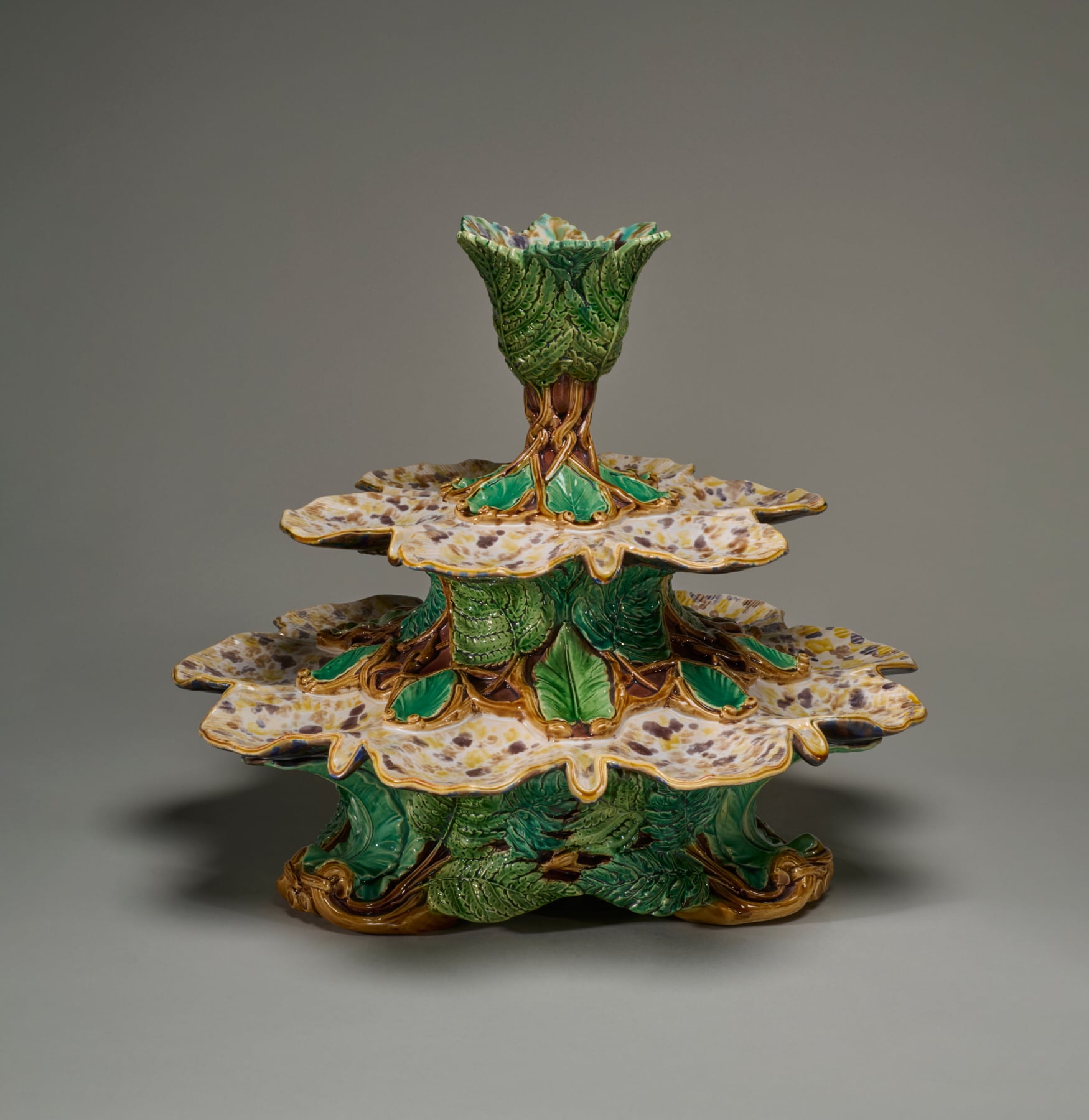 Creative Commons License
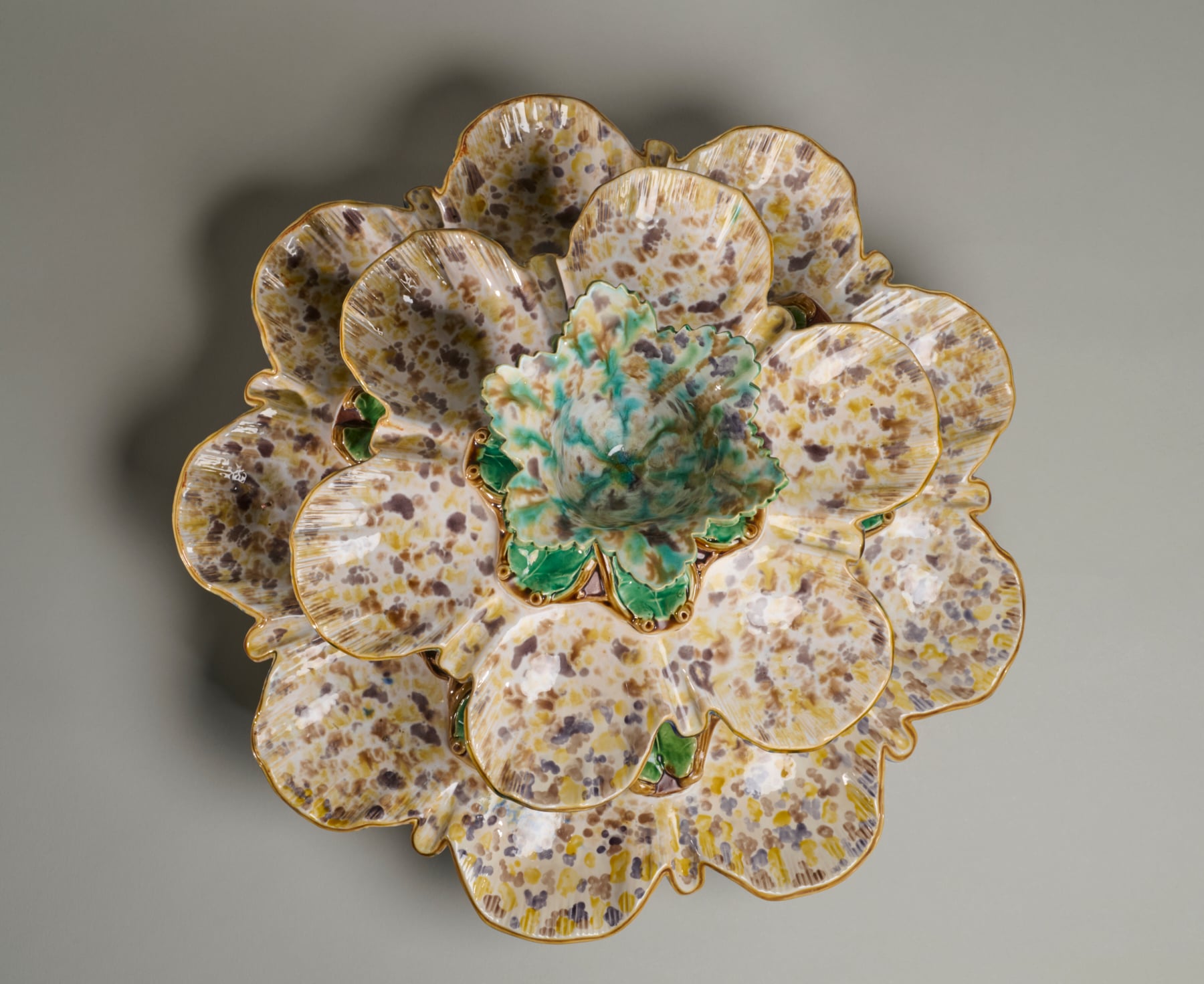 Creative Commons License
 Creative Commons License
 Creative Commons License


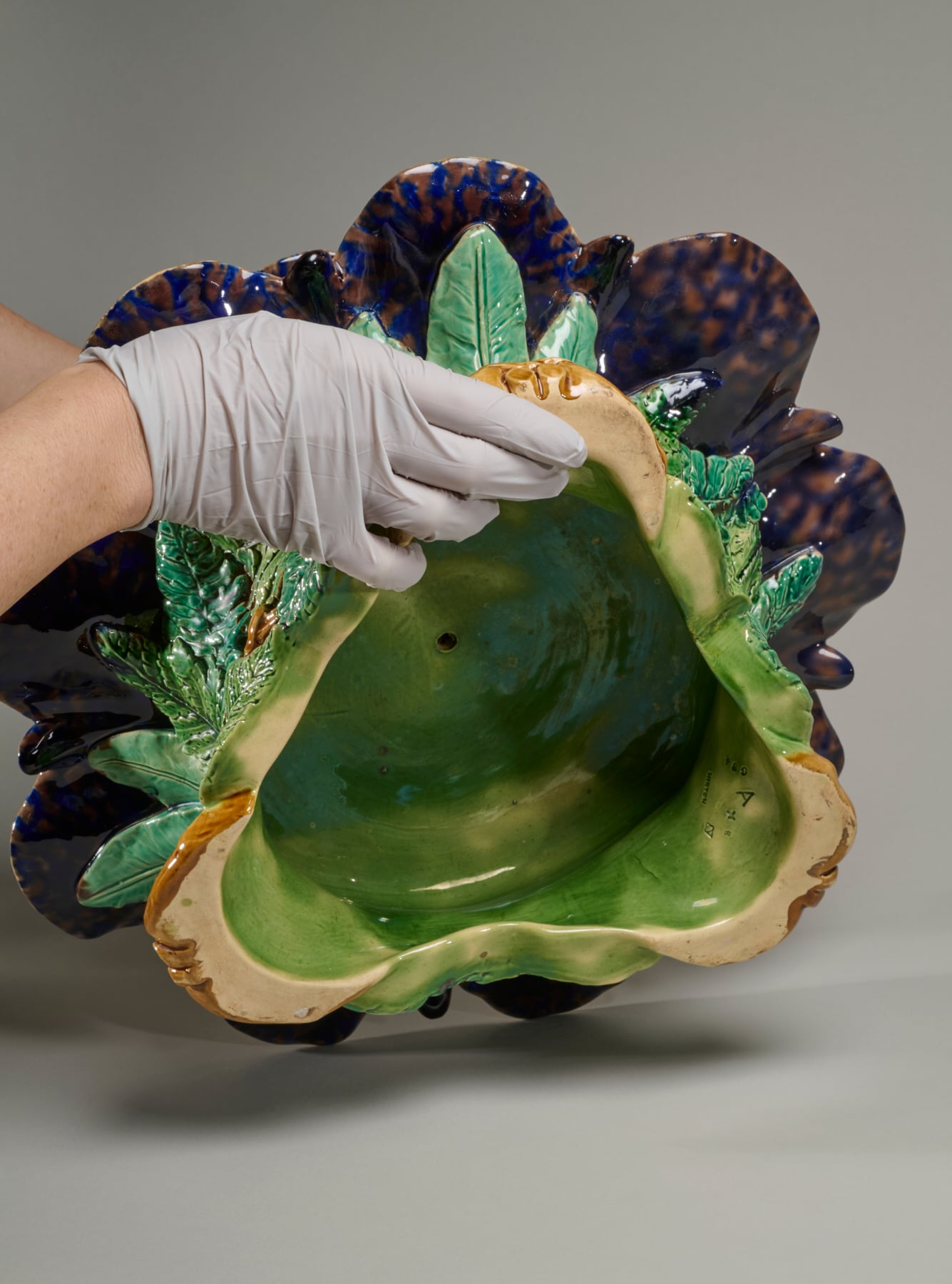
Ice Stand, shape no. 684
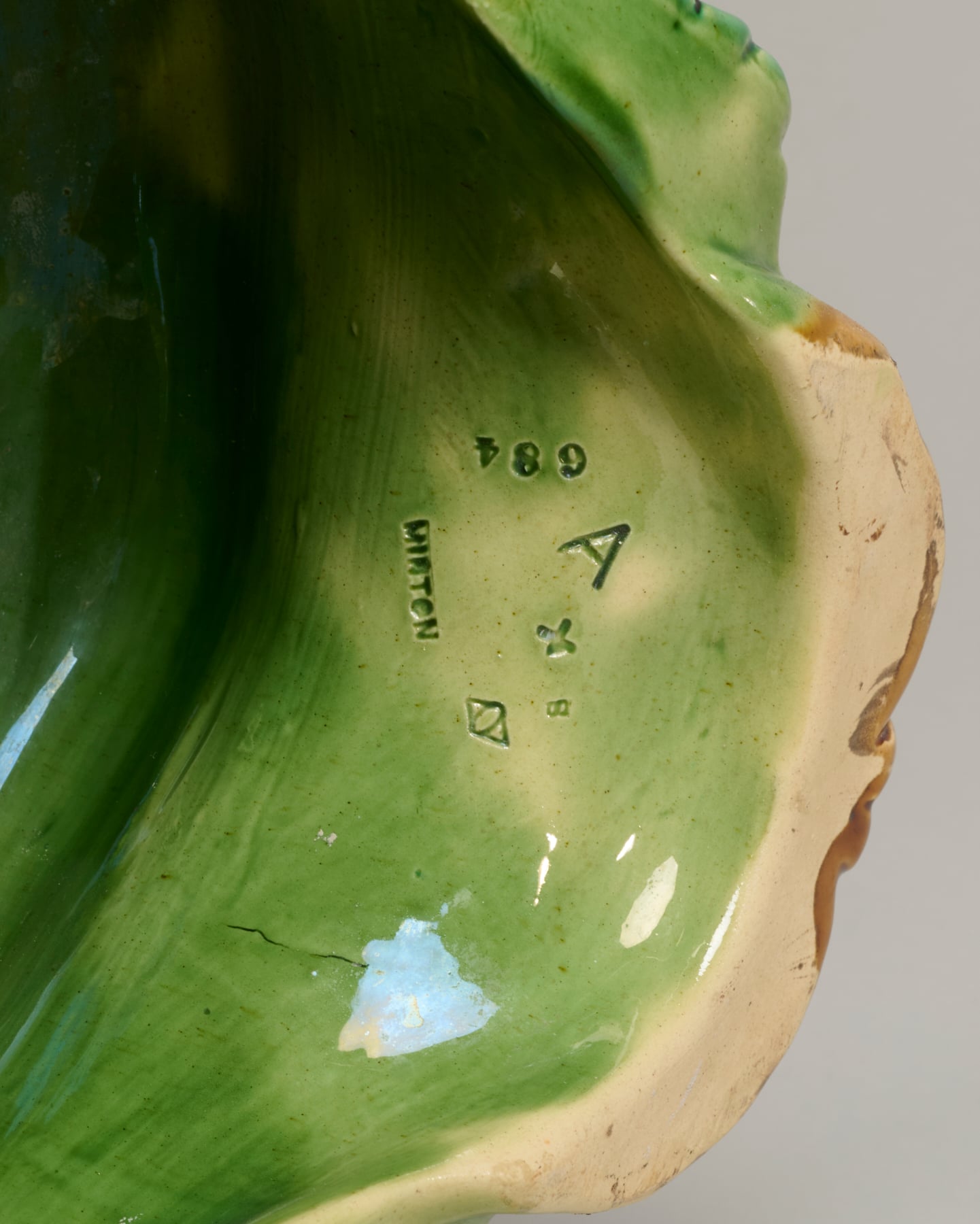
Designed around 1850–51, this piece is testament to Minton & Co.’s mastery over its new medium majolica, and was made around the time of the introduction of the brightly-glazed ware at London’s Great Exhibition of 1851. Indeed, a record in the Minton Archive documenting this model indicates that “the date of the ornament” is “March 18, 1851”. Although clearly intended for serving food, the robustly modeled and colored naturalistic ornament of this piece does not suggest what exactly it was intended to present. Records preserved in the Minton Archive provide us with the name the firm gave this model: “Ice Stand”. Flavored ices and ice cream had long been enjoyed by the wealthy, but with nineteenth-century innovations relating to ice and refrigeration, these treats also became accessible to the growing middle classes. With ices arranged in two tiers and flowers possibly adorning the uppermost receptacle, this stand would have made an impressive addition to the 19th-century dessert table.
Inscription
Provenance
Provenance (from the French provenir, 'to come from/forth') is the chronology of the ownership, custody, or location of a historical object. Learn more about provenance at the Walters.
With Charles L. Washburne Antiques, Chappaqua, New York, by 1999 [date and mode of acquisition unknown]; purchased by Deborah and Philip English, Baltimore, 1999; given to the Walters Art Museum, 2025.
Measurements
H: 13 5/8 × Diam: 15 7/8 in. (34.6 × 40.3 cm)
Credit Line
Gift of Deborah and Philip English, 2025
Location in Museum
Not on view
Accession Number
In libraries, galleries, museums, and archives, an accession number is a unique identifier assigned to each object in the collection.
In libraries, galleries, museums, and archives, an accession number is a unique identifier assigned to each object in the collection.
48.2992