
 Creative Commons License
 Creative Commons License
 Creative Commons License
 Creative Commons License
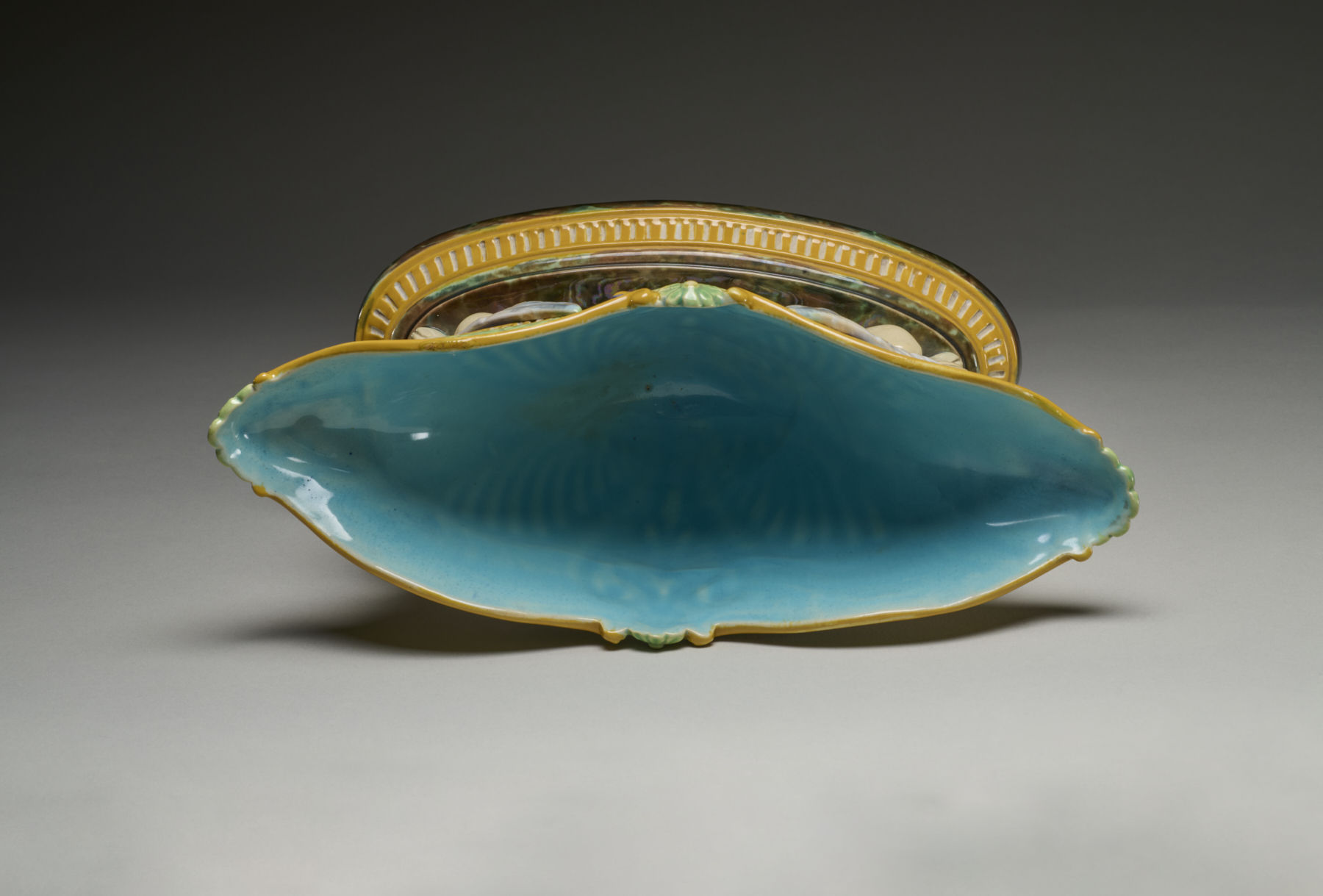 Creative Commons License
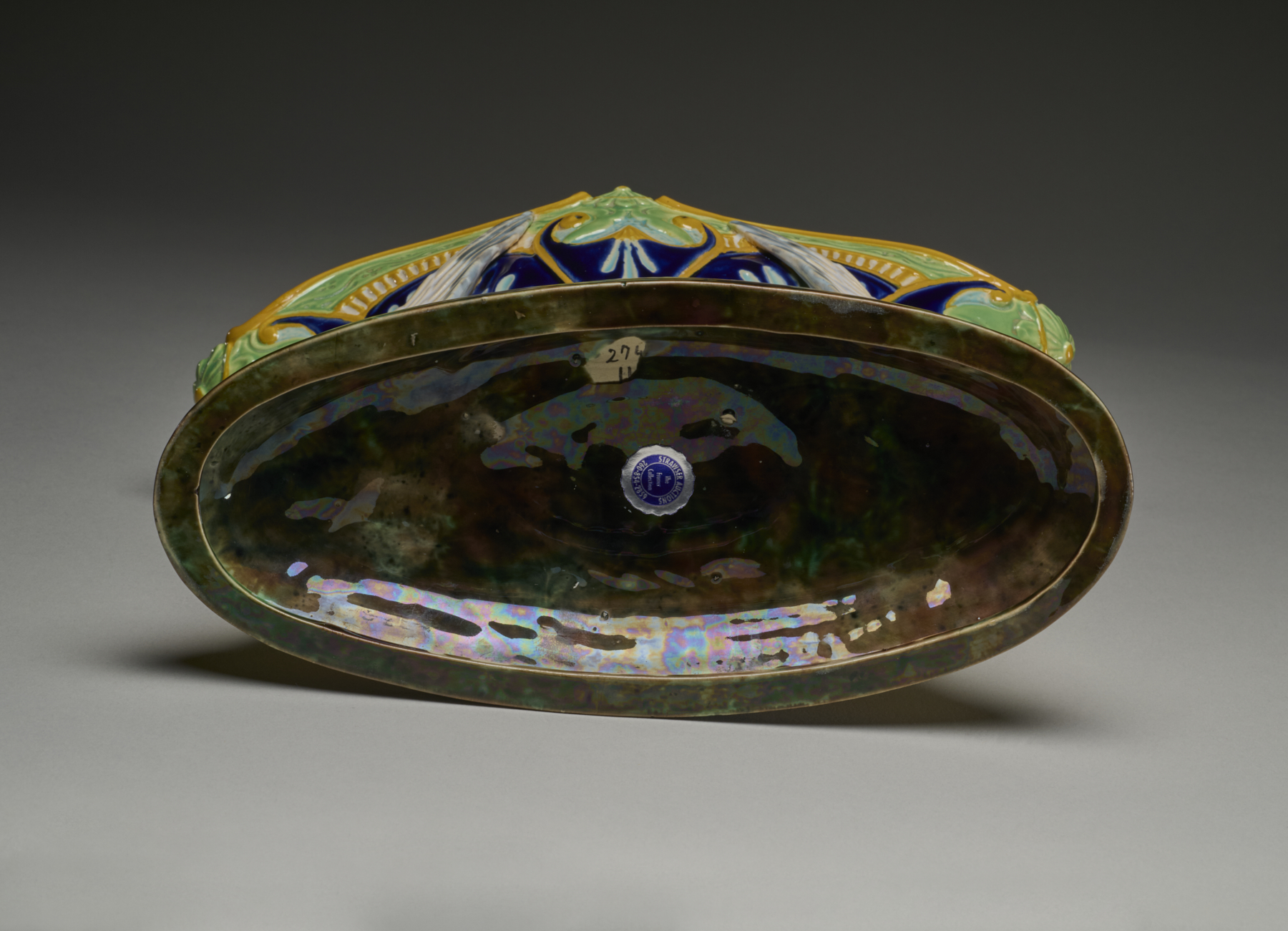 Creative Commons License


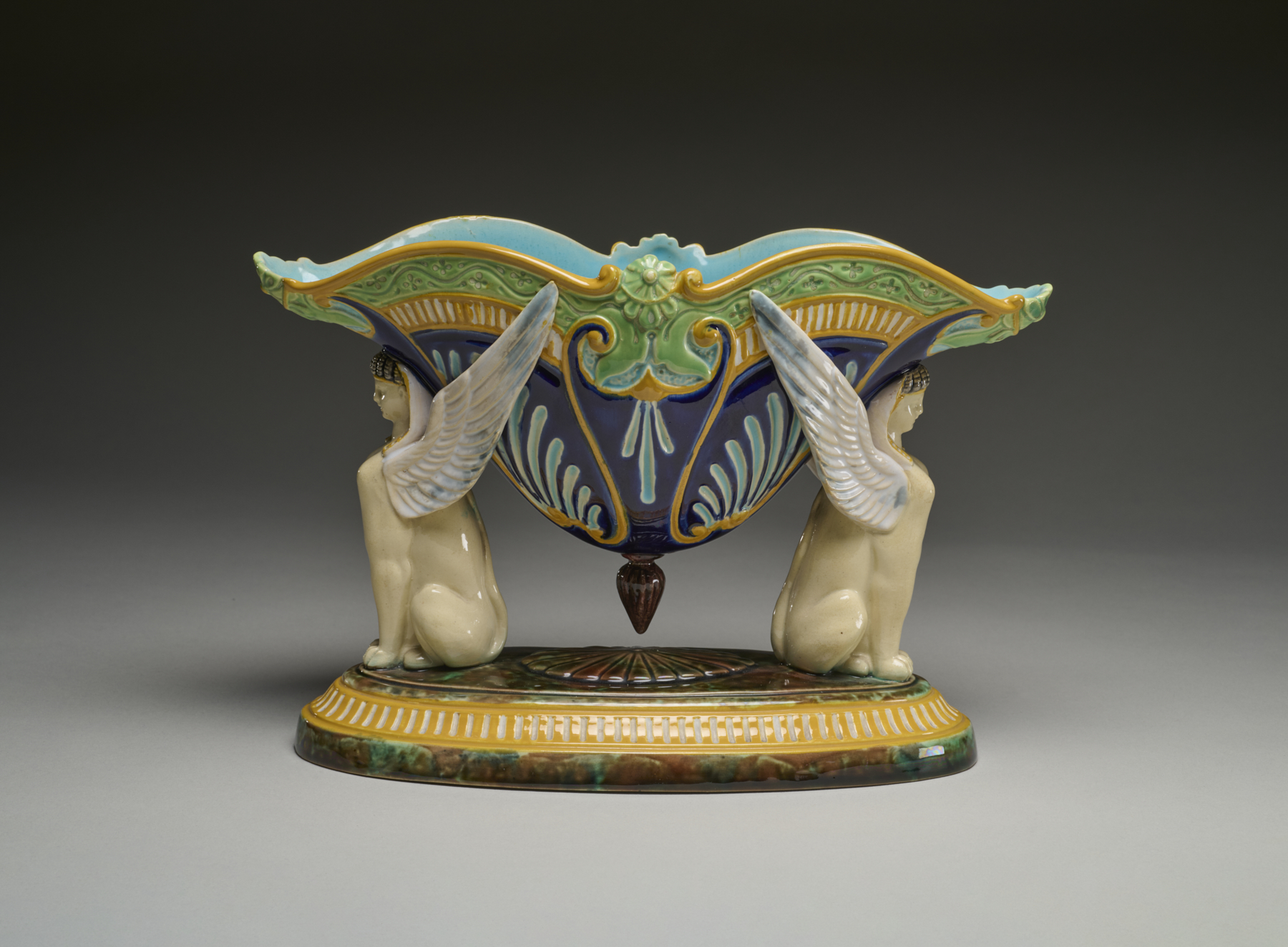
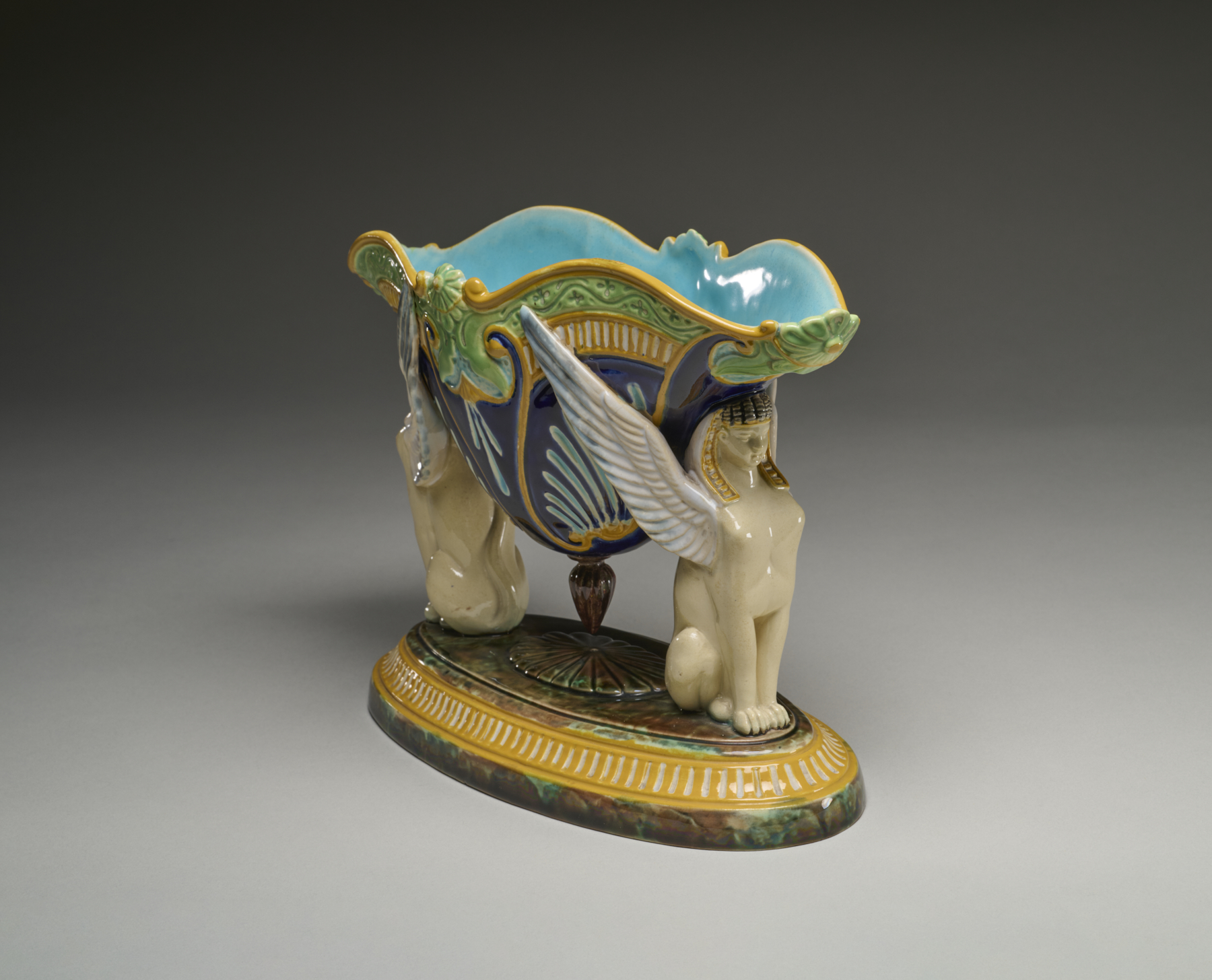
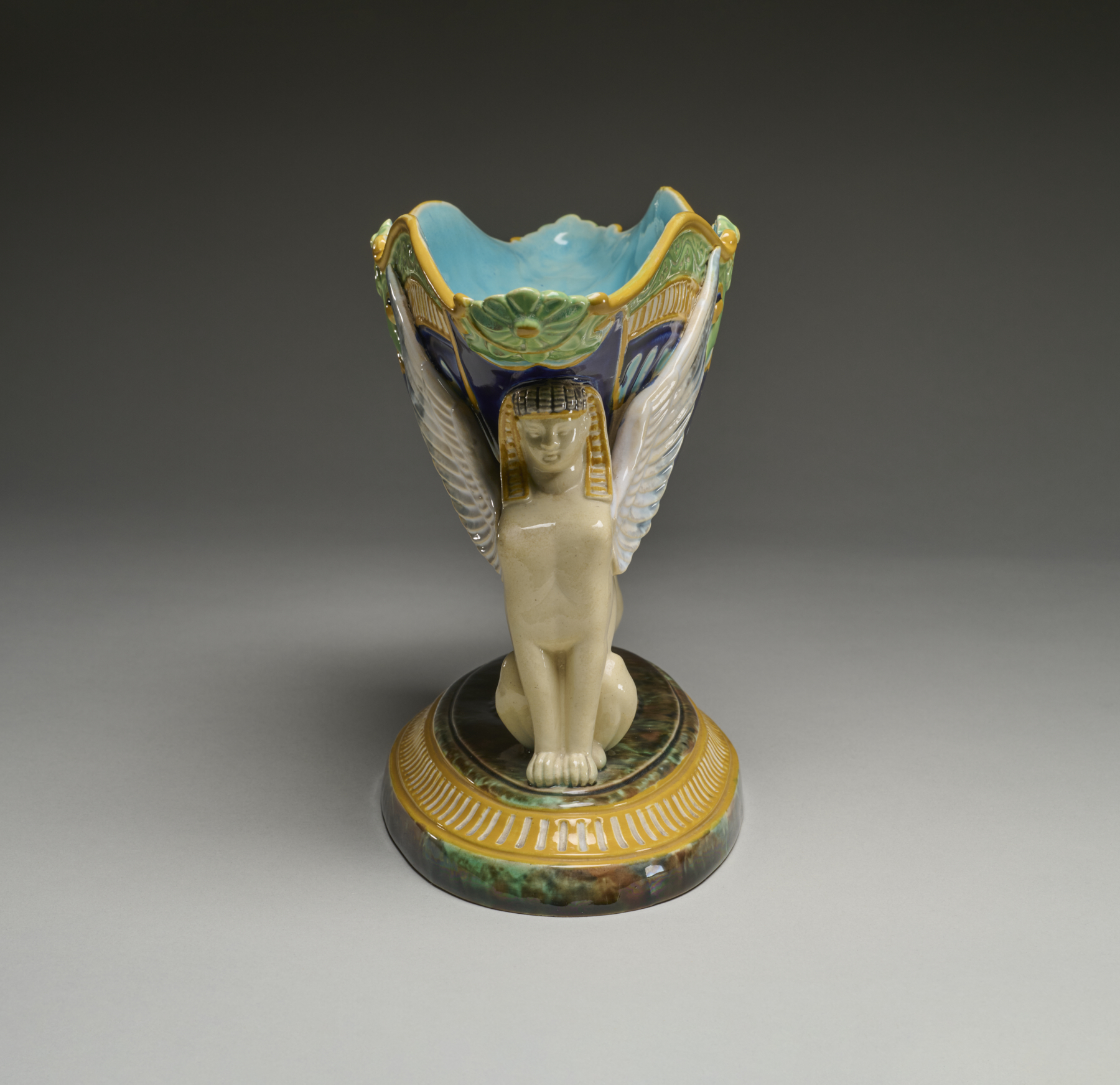
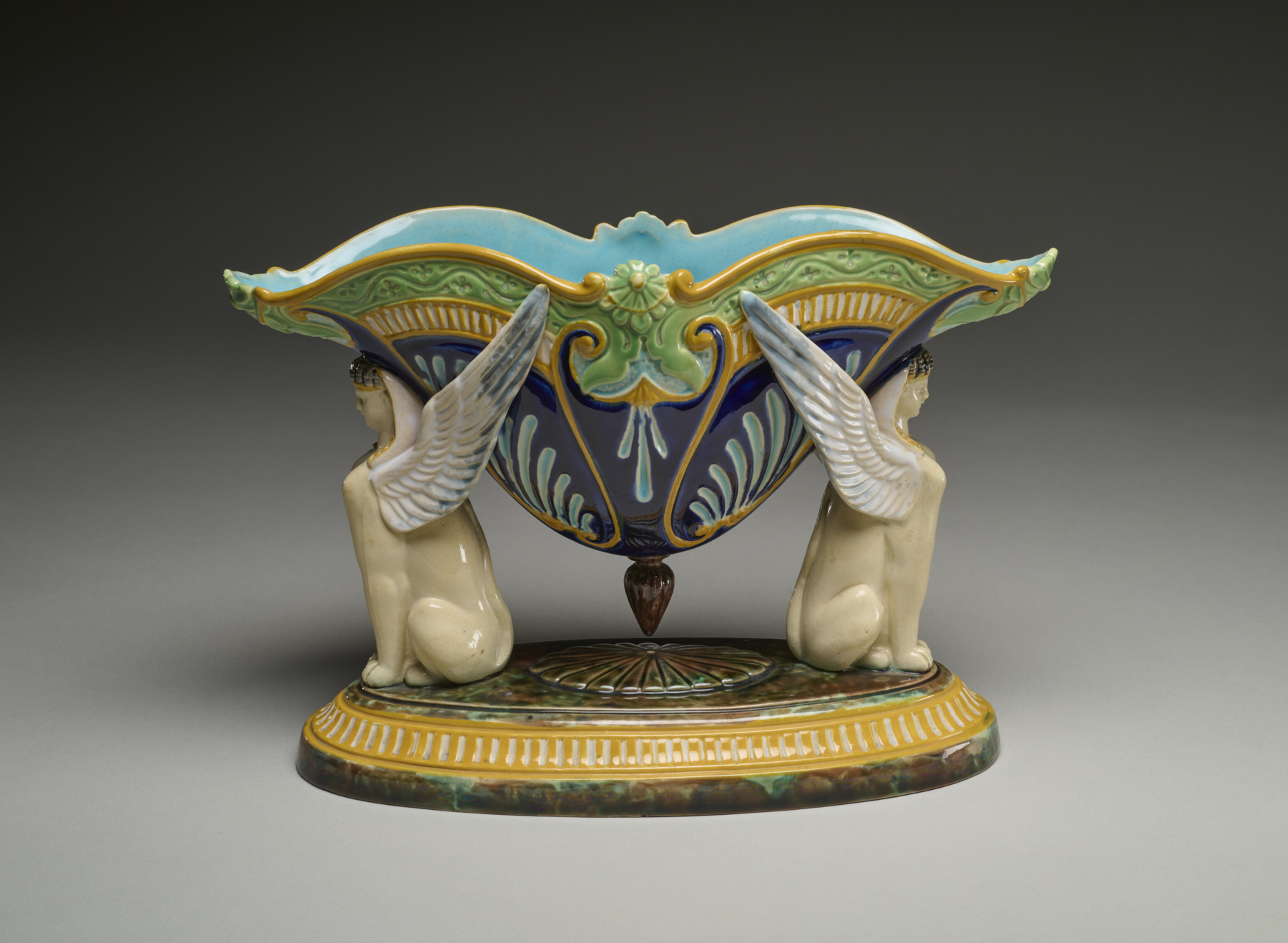
Sphinx Jardiniere, shape no. 2714
George Jones (1823–1893) served a seven-year apprenticeship at Minton & Co. beginning in 1837, and subsequently worked as a traveling salesman for Josiah Wedgwood & Co. and other firms before founding his own highly successful business as a wholesaler of china and earthenware in the early 1850s. The significant capital Jones built up during this time enabled him to embark on pottery manufacture in 1862. His eponymous firm in the Staffordshire town Stoke-upon-Trent began producing majolica in about 1865–66, and the ware soon became its most important product line. Although the identity of the company’s principal designer is unknown, it is likely that George Jones himself or his son Frank Ralph Jones (1846–1911) played a significant role in the development of the pottery’s strong aesthetic identity, which was dominated by naturalistic relief-modeled animals and plants. The manufacturer enjoyed a strong export business, including to the important American and Australian markets, and promoted its wares through displays at international exhibitions in the 1860s, 1870s, and 1880s. At the London International Exhibition of 1871, George Jones showed more majolica than any other exhibitor, including an example of the Sphinx Jardiniere.
Following Napoleon’s campaign in the Middle East (1798–1801), which included excavations of ancient Egyptian cultural sites and subsequent publication of these findings, Egyptian decorative motifs began to be incorporated by many European and American designers. By the mid 19th century, the development of modern Egyptology, increased trade with Europe, and private travel to the region spurred further awareness and appreciation of Egypt’s rich culture. Interest spread through the fine arts and literature as scholars, writers, and artists attempted to record their experiences of the region’s people, landscape, and architecture. English majolica manufacturers began making Egyptian-inspired designs in about 1870, likely stimulated by European colonialist interventions in the Middle East, including the opening of the Suez Canal in 1869. The George Jones “Sphinx” models considered here exemplify how European and American designers might select motifs associated with ancient Egypt and apply them, devoid of context, as a decorative elements in a form intended for the contemporary Victorian home—here, a vase and candlesticks that might be used as a centerpiece on a table or as decoration for a sideboard.
Inscription
Provenance
Provenance (from the French provenir, 'to come from/forth') is the chronology of the ownership, custody, or location of a historical object. Learn more about provenance at the Walters.
Collection of Ann and Robert Fromer, Palm Beach, Florida, by 2021 [date and mode of acquisition unknown]; sale, Strawser Auction Group, Wolcottville, Indiana, “Majolica and Ceramics Auction,” 29 May 2021, lot 2463; purchased by Deborah and Philip English, Baltimore, 2021; given to the Walters Art Museum, 2025.
Measurements
H: 6 1/4 × W: 9 × D: 3 1/2 in. (15.9 × 22.9 × 8.9 cm)
Credit Line
Gift of Deborah and Philip English, 2025
Location in Museum
Not on view
Accession Number
In libraries, galleries, museums, and archives, an accession number is a unique identifier assigned to each object in the collection.
In libraries, galleries, museums, and archives, an accession number is a unique identifier assigned to each object in the collection.
48.2993