
 Creative Commons License
 Creative Commons License


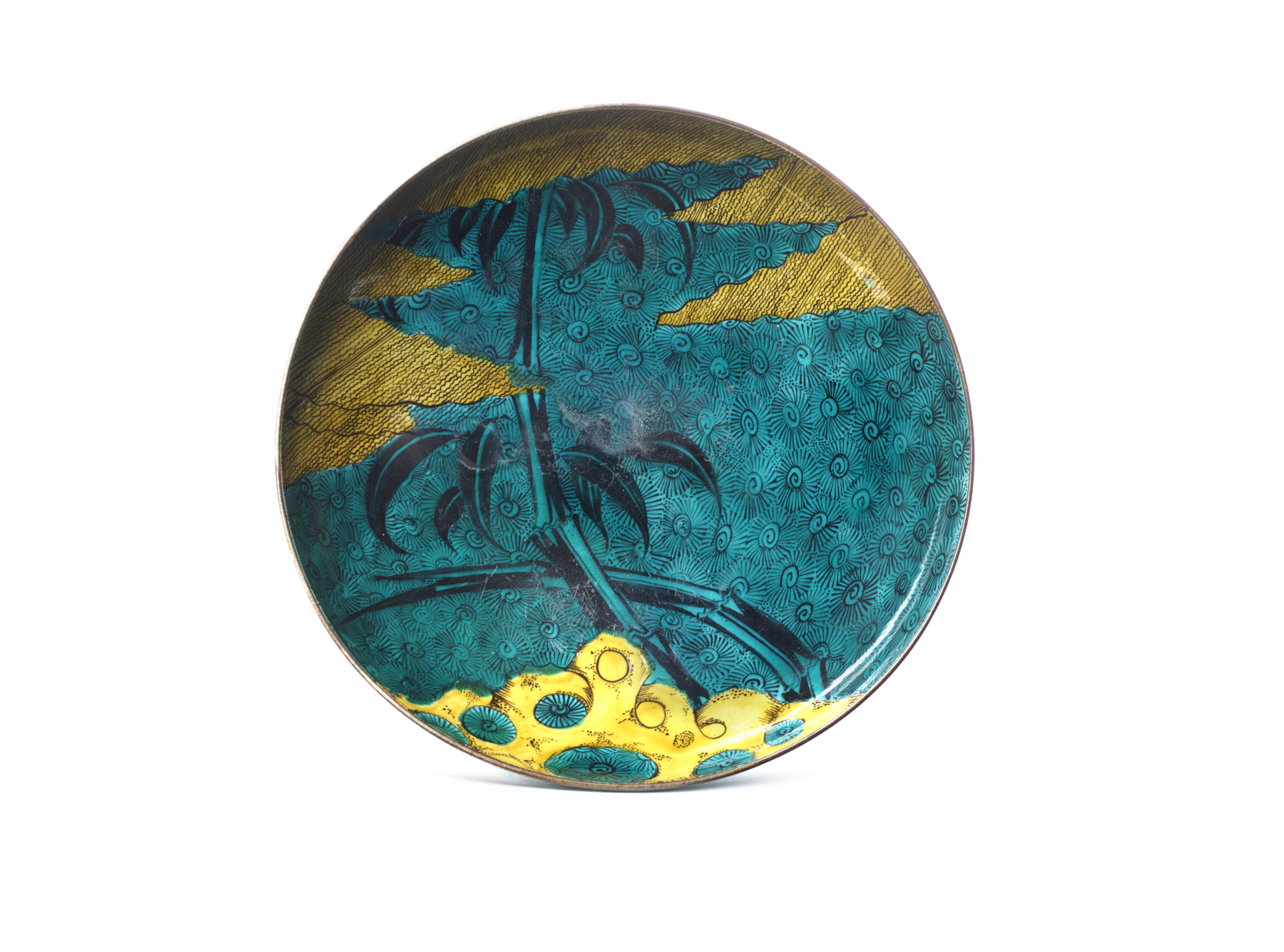
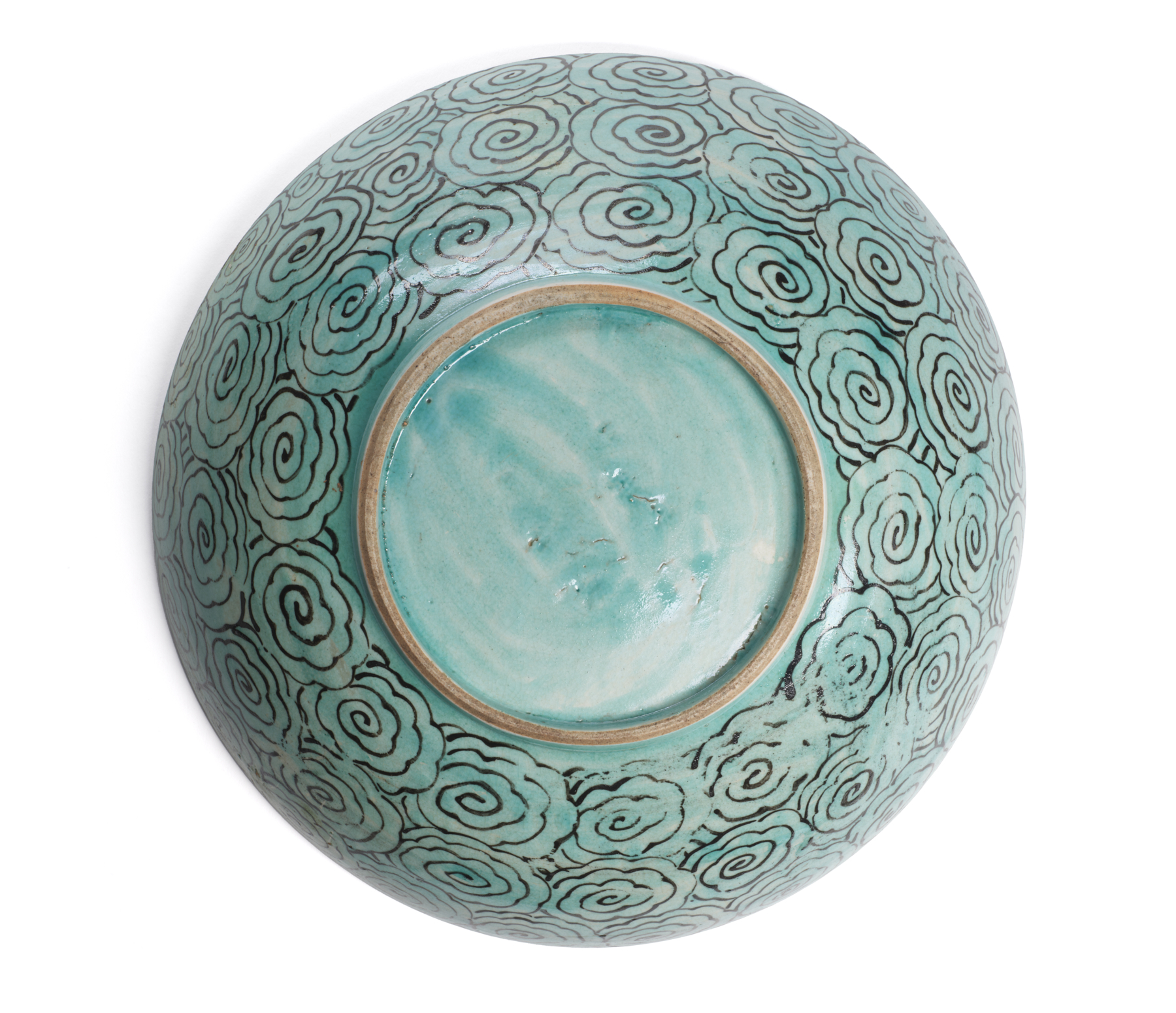
Dish with Design of Rock, Bamboo, and Pine
Early Japanese porcelain makers closely imitated Korean and Chinese models in decorating their wares. In the mid-1600s, ceramists began producing wares with distinctively Japanese ornamental designs; these wares became widely popular in Japan. Kutani ceramics are one of the best representations of these wares tailored for the Japanese domestic market. In particular, Ko-Kutani (古九谷 Old Kutani) was very much in Japanese taste with its bright colors and exuberant motifs that cover most of the surface of each piece. The term Ko-Kutani is used to distinguish 17th century pieces from those made in the 19th century at Kutani kilns–from the mid-19th century onwards, Kutani kilns, like many other kilns, were called upon to produce export ceramics that were aimed for European and American markets. Ko-Kutani wares were prized for their rich, dark enamel colors and bold designs. Their designs demonstrate imaginative and inventive variations, with no two pieces of Ko-Kutani the same. It was hugely popular with the samurai class, and several pieces survive from the collections of the Edo-period feudal lords (daimyo).
The design of rock, bamboo, and pine that decorates this Ko-Kutani dish expresses a Japanese aesthetic, with motifs that hold significance and meaning. Rock or stone (ishi) is essential to Japanese gardens. In Shinto belief, Japan’s earliest religion, gods or spirits (kami) reside in all of nature, including rocks, plants, and animals. In garden design, rocks contribute not only structure and a sense of stability or permanence, they also bring dynamic power and energy to the garden. Pine (matsu) is an evergreen tree; accordingly, pine trees are always present in Japanese traditional gardens. In Japan, pine is considered a symbol of endurance, perseverance, and longevity. Bamboo (take) symbolizes flexibility and strength. Bamboo stalks have long been used in the construction of houses, bridges, and used for making furniture, tatami and other household utensils. Furthermore, in Japan, the traditional decoration for the New Year, called kadomatsu, consists of pine branches and bamboo stalks.
Provenance
Provenance (from the French provenir, 'to come from/forth') is the chronology of the ownership, custody, or location of a historical object. Learn more about provenance at the Walters.
Nagano Antiquities Co. Ltd., Tokyo, by 1909, [mode of acquisition unknown]; Sebastian Izzard, Sebastian Izzard LLC, New York, 2017, by purchase; Walters Art Museum, 2024, by purchase.
Geographies
Japan, Saga prefecture, Arita (Place of Origin)
Measurements
H: 3 3/8 × Diam: 12 7/8 in. (8.6 × 32.8 cm)
Credit Line
Museum purchase, 2024
Location in Museum
Not on view
Accession Number
In libraries, galleries, museums, and archives, an accession number is a unique identifier assigned to each object in the collection.
In libraries, galleries, museums, and archives, an accession number is a unique identifier assigned to each object in the collection.
49.2836