The Walters Art Museum

Online Collection

Explore the Art Collection keyboard_arrow_down close
  • Explore By...
  • Category
  • Date
  • Medium
  • Creator
  • Places
  • Museum Locations
The Walters Art Museum walters-logo-white
  • Calendar
  • Art
  • Shop
  • Give Now
  • Visit
    • Plan Your Visit
    • Hours
    • Directions & Parking
    • Food, Drink, & Shop
    • Free Admission
    • Tours
    • Accessibility
    • Visitor Promise
  • Experience
    • Virtual Museum
    • Exhibitions & Installations
    • Programs & Events
    • Collections
    • Buildings
    • Baltimore
  • Support
    • Support the Walters
    • Corporate Partnerships
    • Institutional Funders
    • Evening at the Walters
    • Volunteers
  • About
    • Mission & Vision
    • Leadership
    • Strategic Plan
    • Land Acknowledgment
    • Research
    • Policies
Image for Tsuba with the Dragon King's Gifts to Hidesato
tooltip-icon Creative Commons License

Creative Commons Zero

Download Image Zoom
Image for Tsuba with the Dragon King's Gifts to Hidesato
tooltip-icon Creative Commons License

Creative Commons Zero

Download Image Zoom
  • arrow_forward_ios
  • arrow_forward_ios
Tsuba with the Dragon King's Gifts to Hidesato Thumbnail

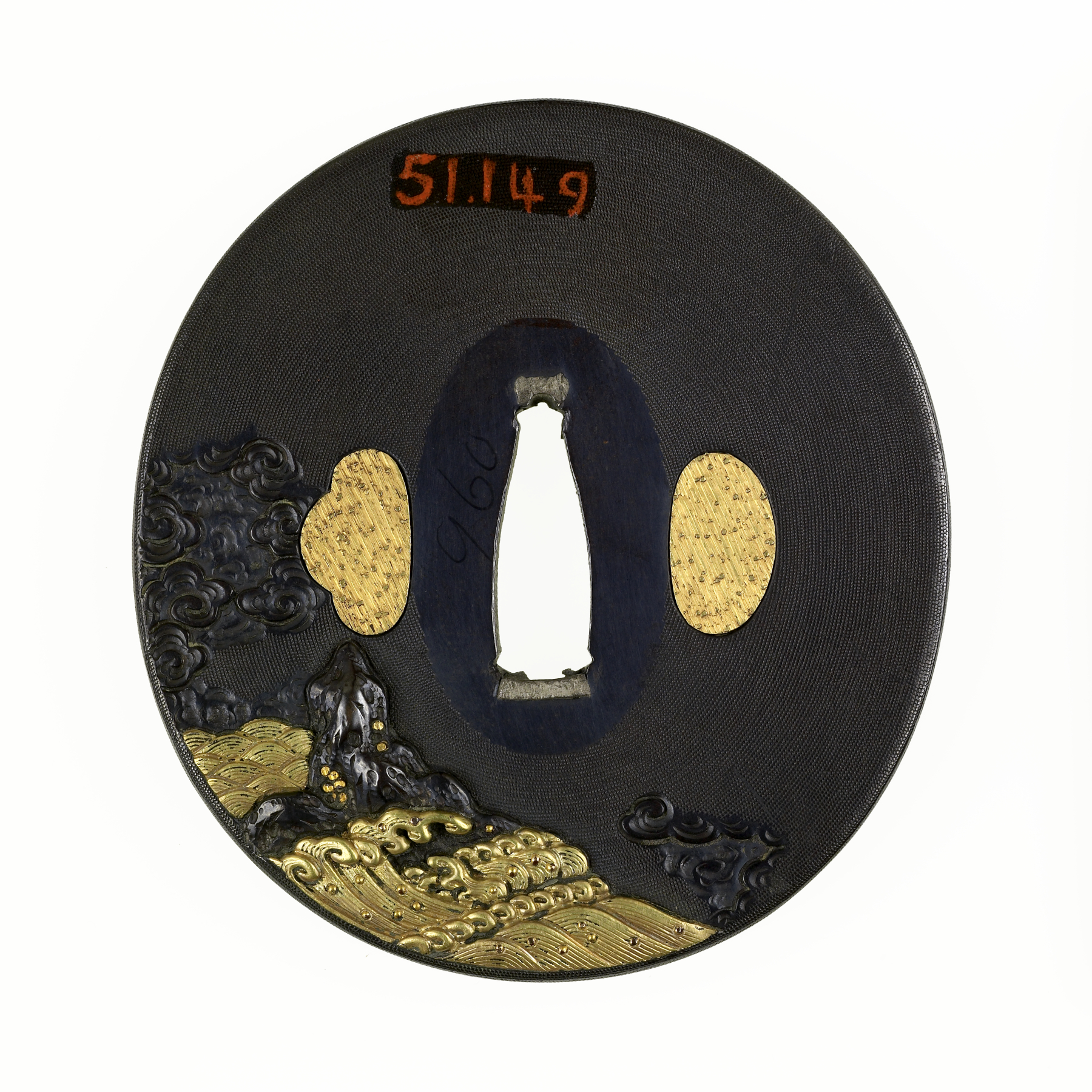
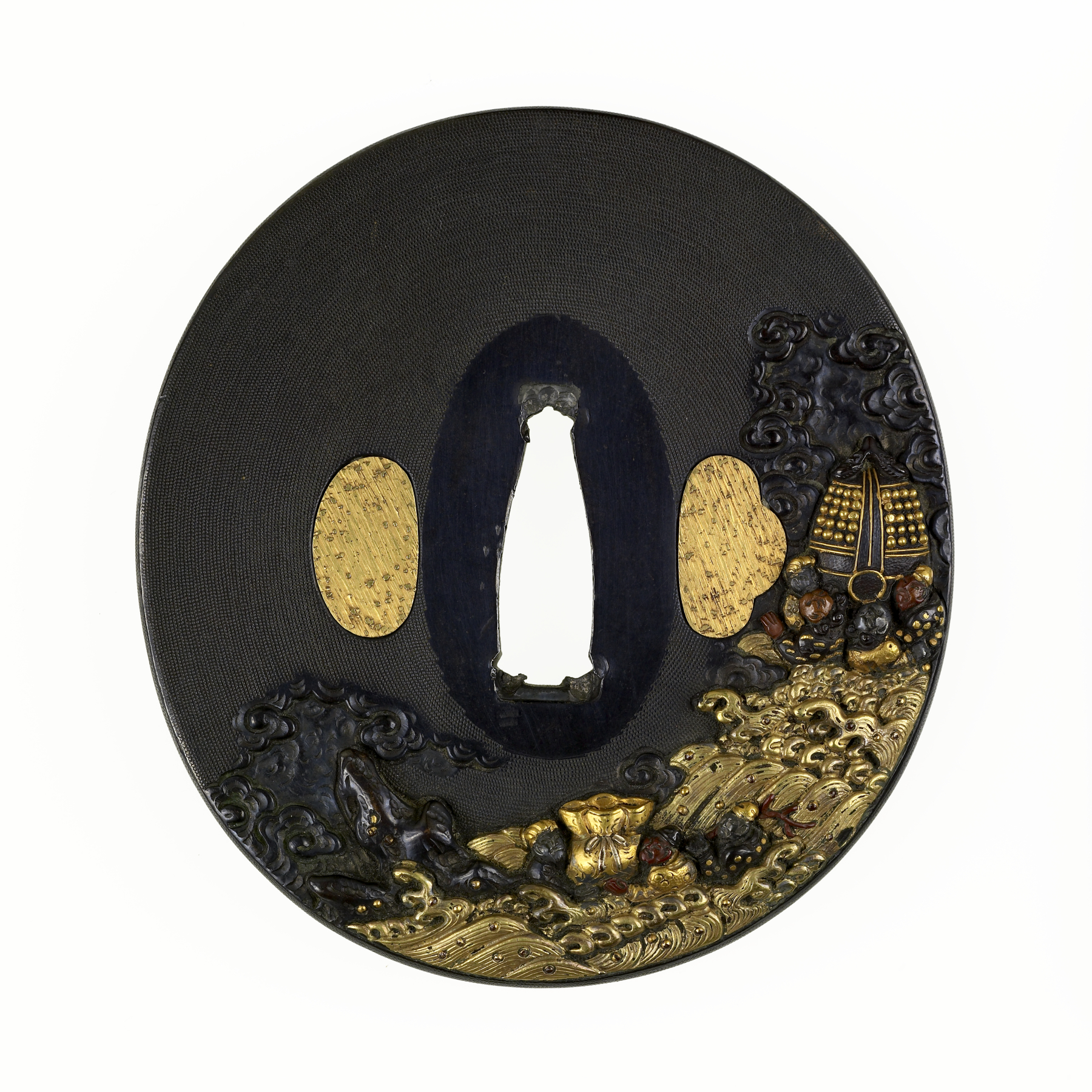
Tsuba with the Dragon King's Gifts to Hidesato

Japanese (Artist)
n.d.
copper alloy, gold, shakudo, silver
(Japanese Military Armor)

This tsuba shows attendants of the Dragon King carrying gifts of gratitude to Fujiwara no Hidesato. The Dragon King asked Hidesato to kill the giant centipede of Mount Mikami, who was poisoning the Dragon King's underwater kingdom. Hidesato shot the centipede with an arrow, killing it. In gratitude, the Dragon King gave him a bronze bell, a never-ending bolt of silk, a pot that cooked food without fire, and a limitless bag of rice. Because of the rice, Hidesato is also known as Tawara Toda (Lord of the Rice Bag). The bell and the bag of rice can be seen in the waves on the front of this tsuba. The back of the tsuba shows waves and rocks.

Inscription

none

Provenance
Provenance (from the French provenir, 'to come from/forth') is the chronology of the ownership, custody, or location of a historical object. Learn more about provenance at the Walters.

Henry Walters, Baltimore [date and mode of acquisition unknown]; Walters Art Museum, 1931, by bequest.

Share
  • social-item
  • social-item
  • social-item

Geographies

Japan (Place of Origin)

Measurements

3 1/8 x 2 7/8 x 1/8 in. (7.9 x 7.3 x 0.35 cm)

Credit Line

Acquired by Henry Walters

Location in Museum

Not on view

Accession Number

In libraries, galleries, museums, and archives, an accession number is a unique identifier assigned to each object in the collection.

51.149

Do you have additional information?

Notify the curator

Hours

  • Wednesday—Sunday: 10 a.m.—5 p.m.
  • Thursday: 1–8 p.m.
  • Monday—Tuesday: Closed

Location

600 N. Charles St.
Baltimore, MD
21201

Phone

410-547-9000

  • Visit
  • Experience
  • What's On
  • About
  • Shop
  • Support The Walters
copyright

The Walters Art Museum

  • Accessibility
  • Privacy Policy/Terms of Use
  • Copyright Info
  • facebook
  • instagram
  • twitter
modal close
Image for
tooltip-icon Creative Commons License

Tooltip description to define this term for visitors to the website.

zoom-btn zoom-btn preview-download
Image for
tooltip-icon Creative Commons License

Tooltip description to define this term for visitors to the website.

zoom-btn zoom-btn preview-download
  • arrow_forward_ios
  • arrow_forward_ios