The Walters Art Museum

Online Collection

Explore the Art Collection keyboard_arrow_down close
  • Explore By...
  • Category
  • Date
  • Medium
  • Creator
  • Places
  • Museum Locations
The Walters Art Museum walters-logo-white
  • Events
  • Art
  • Give Now
  • Visit
    • Plan Your Visit
    • Directions & Parking
    • Tours
    • Guidelines
    • Accessibility
  • Exhibitions
    • Current
    • Upcoming
    • Past
  • What to Do
    • Exhibitions
    • Events
    • Learn
  • Art & Research
    • Our Collection
    • Conservation
    • Journal
    • Manuscripts
    • Publications
    • Provenance
  • Join & Give
    • Support the Walters
    • Partnership
    • Ways to Give
    • Gala & Party
    • Volunteer
Image for Tsuba with Seasonal Flowers
tooltip-icon Creative Commons License

Creative Commons Zero

Download Image Zoom
Image for Tsuba with Seasonal Flowers
tooltip-icon Creative Commons License

Creative Commons Zero

Download Image Zoom
Image for Tsuba with Seasonal Flowers
tooltip-icon Creative Commons License

Creative Commons Zero

Download Image Zoom
  • arrow_forward_ios
  • arrow_forward_ios
Tsuba with Seasonal Flowers Thumbnail

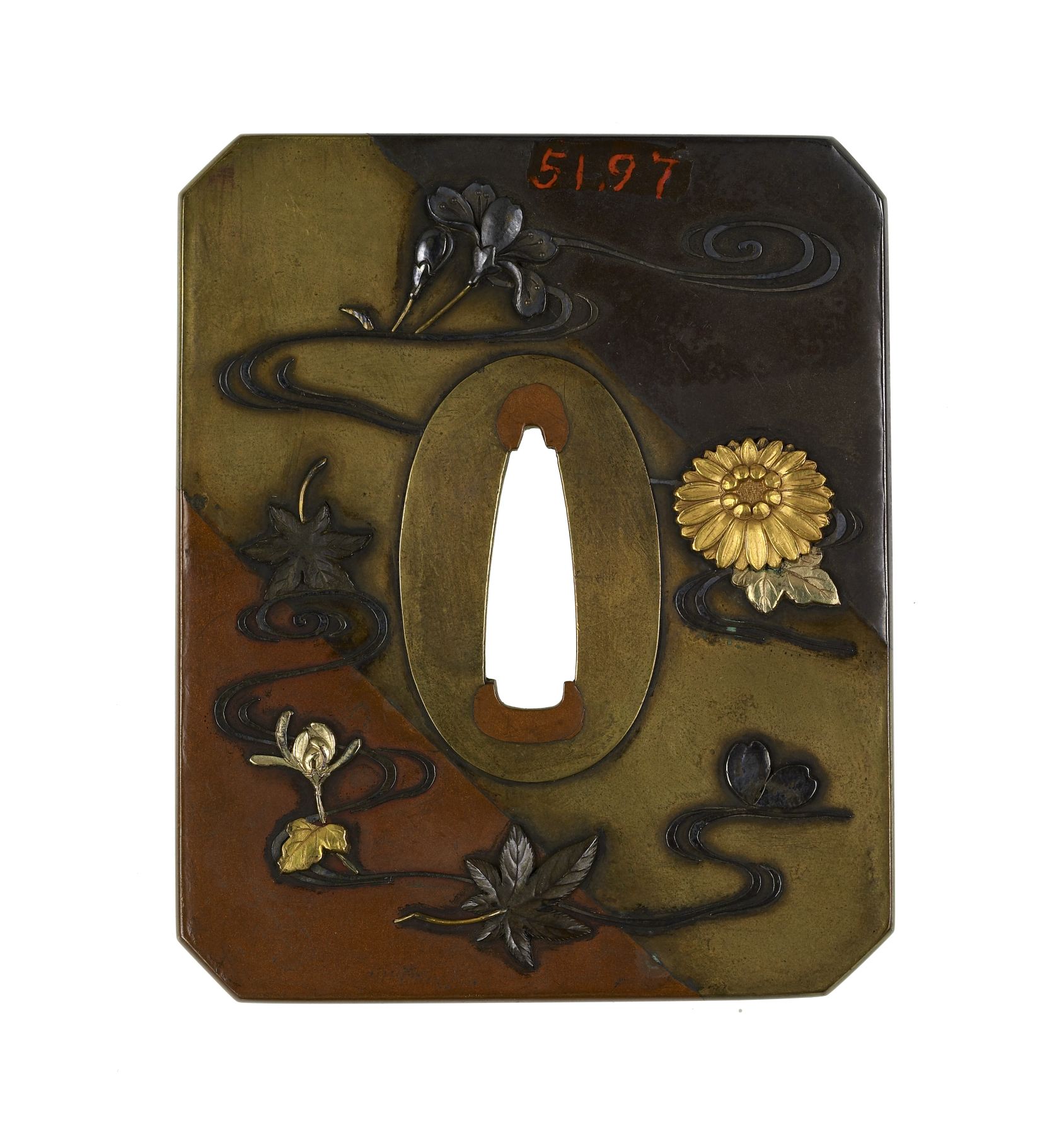
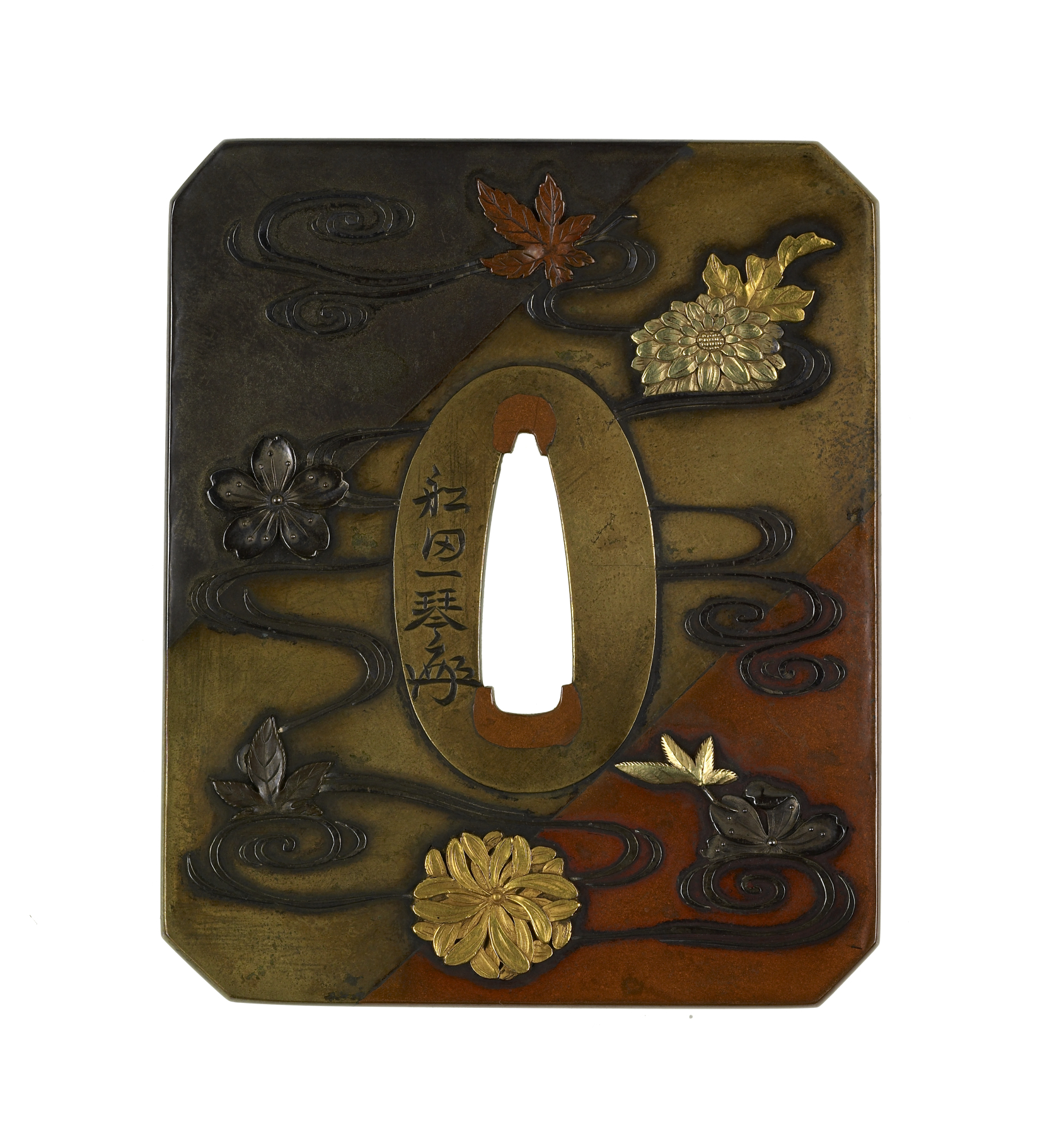
Tsuba with Seasonal Flowers

Funada Ikkin (Japanese, 1812-1863) (Artist)
1838-1863 (late Edo)
sentoku, shibuichi, copper, gold, silver
(Japanese Military Armor)

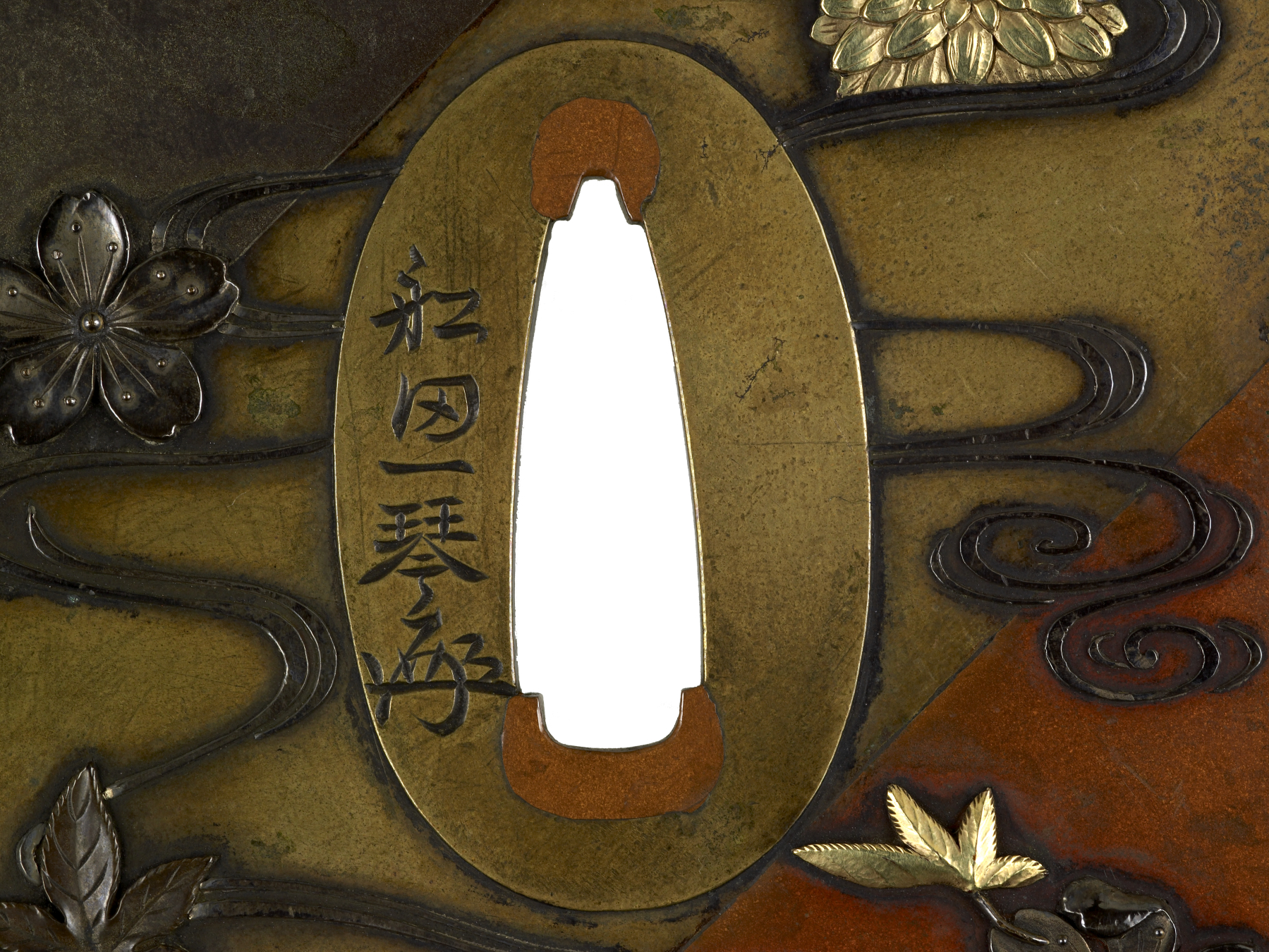
The curved lines on this tsuba represent a stylized stream, upon which float flowers symbolizing the seasons. Cherry blossoms on the left and lower right are associated with spring time. The magnolia on the bottom is a emblem of summer. Maple leaves and the chrysanthemum on the upper right indicate autumn. The unusual three toned body of the tsuba was created by using three different types of metal. The upper section contains an alloy of silver and copper called "shibuichi." The central section contains tin and zinc, known as "sentoku," while the lower section is primarily copper.

Inscription

[Signature] 船田一琴; [Translation] Funada Ikkin

Provenance
Provenance (from the French provenir, 'to come from/forth') is the chronology of the ownership, custody, or location of a historical object. Learn more about provenance at the Walters.

Henry Walters, Baltimore [date and mode of acquisition unknown]; Walters Art Museum, 1931, by bequest.

Share
  • social-item
  • social-item
  • social-item

Geographies

Japan, Shonai (Place of Origin) Japan, Tokyo (Edo) (Place of Origin)

Measurements

3 3/16 x 2 5/8 x 3/16 in. (8.1 x 6.7 x 0.45 cm)

Credit Line

Acquired by Henry Walters

Location in Museum

Not on view

Accession Number

In libraries, galleries, museums, and archives, an accession number is a unique identifier assigned to each object in the collection.

51.97

Do you have additional information?

Notify the curator

The Walters Logo

600 N. Charles St.
Baltimore, MD 21201

+1 410 547 9000

Free. Open Wednesday.
10 a.m.–5 p.m.

  • About
  • Press
  • Donate
  • Newsletter
  • Careers
  • Contact
  • Privacy Policy
  • Copyright Info
Facebook Instagram X YouTube
modal close
Image for
tooltip-icon Creative Commons License

Tooltip description to define this term for visitors to the website.

zoom-btn zoom-btn preview-download
Image for
tooltip-icon Creative Commons License

Tooltip description to define this term for visitors to the website.

zoom-btn zoom-btn preview-download
Image for
tooltip-icon Creative Commons License

Tooltip description to define this term for visitors to the website.

zoom-btn zoom-btn preview-download
  • arrow_forward_ios
  • arrow_forward_ios