
 Creative Commons License
 Creative Commons License
 Creative Commons License


Bell Pendant
(Ancient Americas )
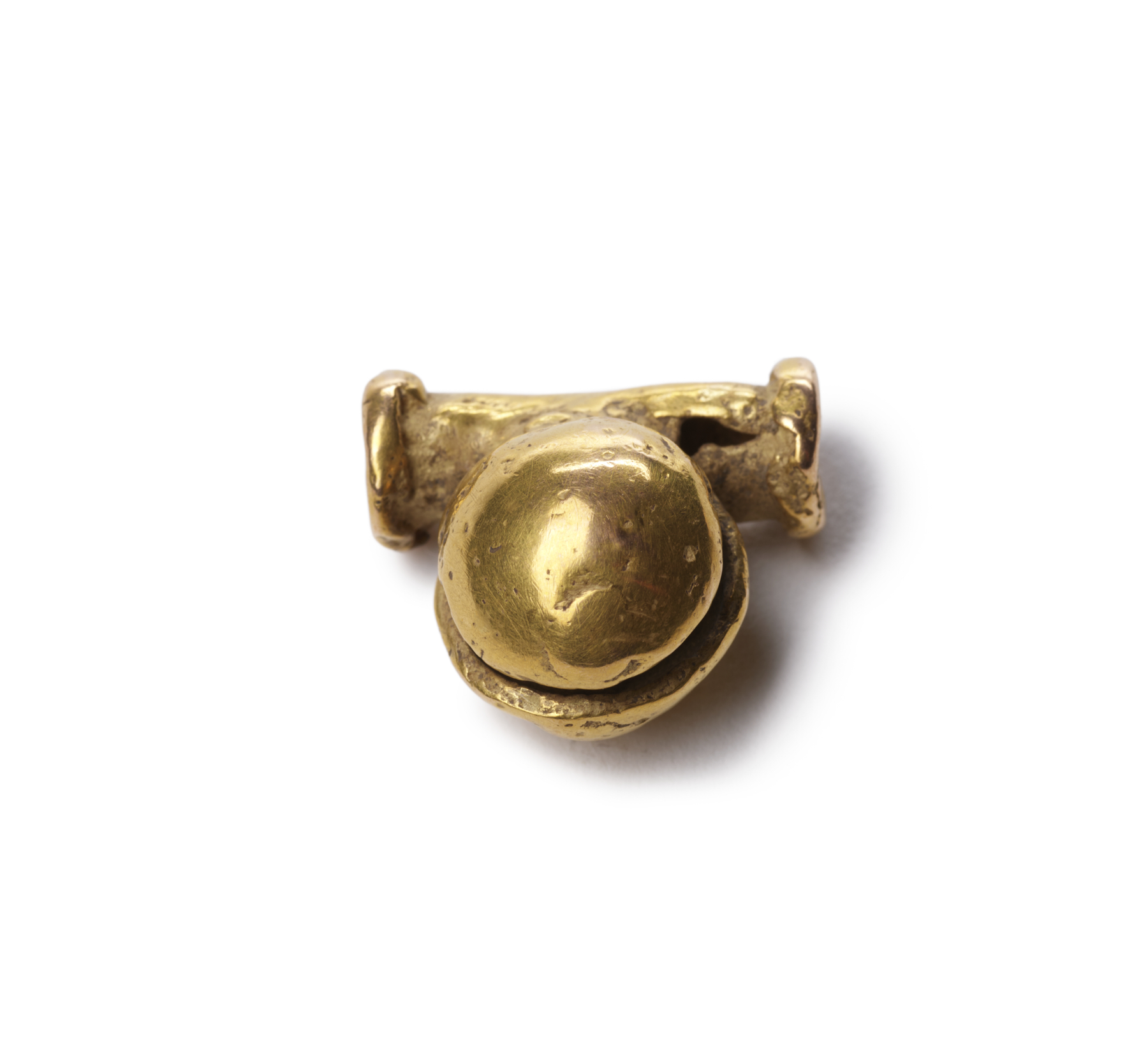
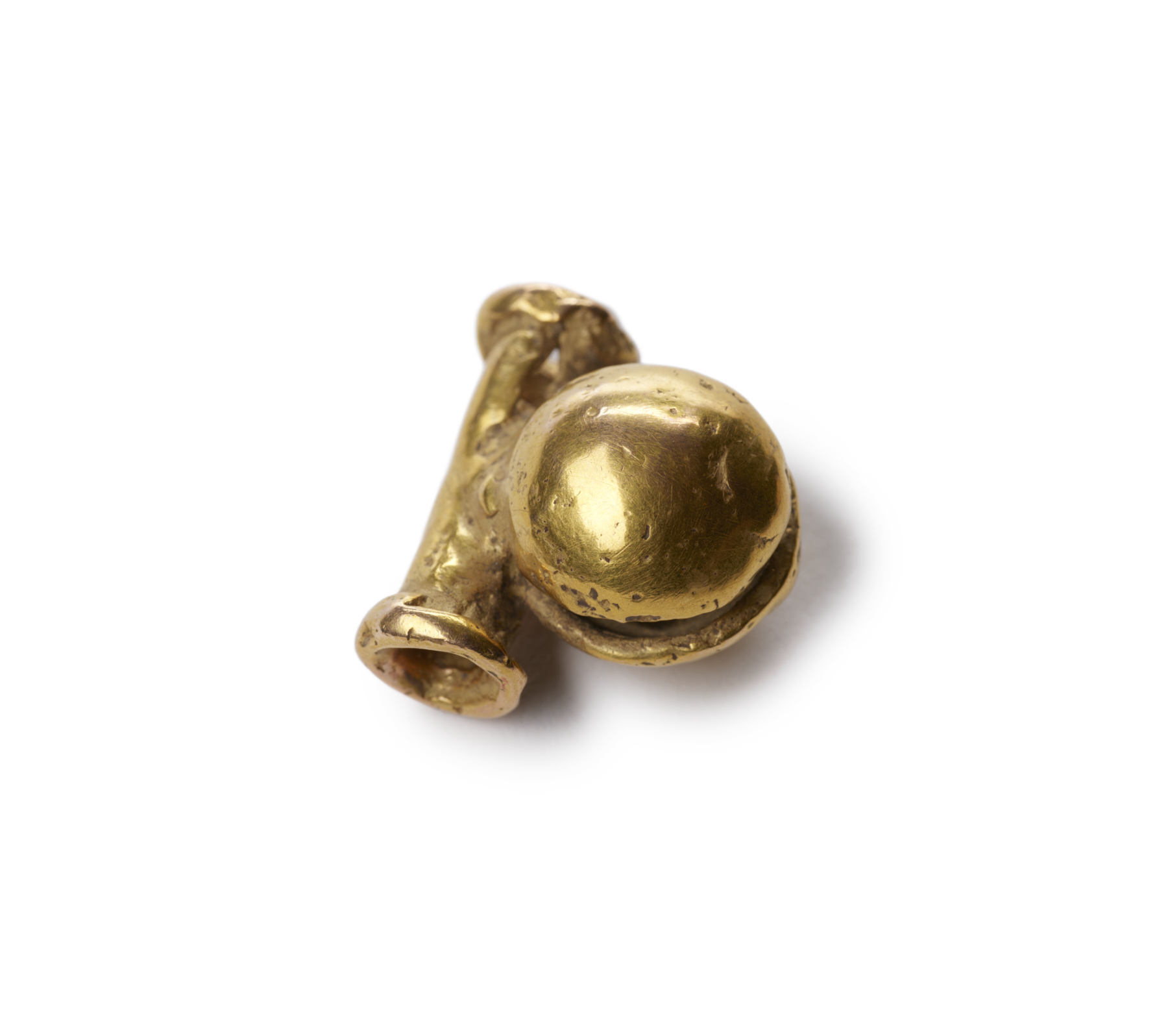
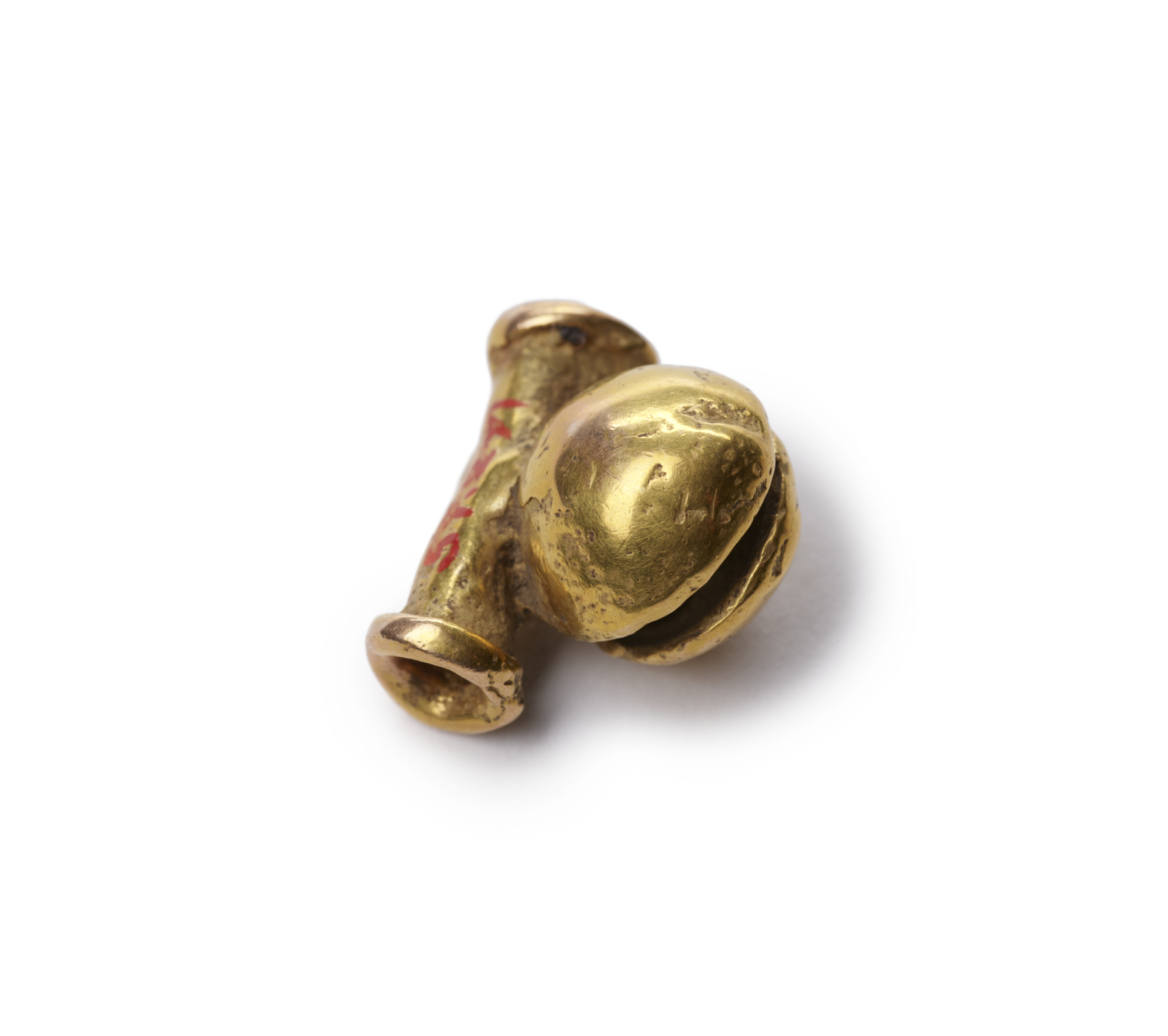
This bell was made of cast metal, and is comprised of two hemispherical circles, with a small ball inside, attached to a horizontal pipe at the top, through which a cord could have been threaded to make a necklace. Likely this bell-pendant was made uysing the lost-wax method of casting, reflecting the sophistication of ancient Panamanian goldworkers.
Bells played an important role in ritual activities, costume decoration, and burial offerings. Many gold pendants are also bells or noisemakers, so wearing them would have been not only about adornment, but about the signalling of presence as the wearer moved about.
Provenance
Provenance (from the French provenir, 'to come from/forth') is the chronology of the ownership, custody, or location of a historical object. Learn more about provenance at the Walters.
[Found at a graveyard between Divalá (a village on the outskirts of settled Panama, thirty miles west of David in the province of Chiriqui) and Costa Rica, Spring 1909]; Tiffany & Co. New York, 1910, by purchase [1]; Henry Walters, Baltimore, 1911, by purchase; Walters Art Museum, 1931, by bequest.
[1] from "Indians," see December 29, 1910 correspondance from Tiffany & Co. to Henry Walters
Exhibitions
| 2015 | Gold of the Ancient Americas. The Walters Art Museum, Baltimore. |
Geographies
Panama (Veraguas-Gran Chiriquí) (Place of Origin)
Measurements
H: 1/2 × W: 3/4 × D: 1/2 in. (1.3 × 1.9 × 1.2 cm)
Credit Line
Acquired by Henry Walters, 1911
Location in Museum
Accession Number
In libraries, galleries, museums, and archives, an accession number is a unique identifier assigned to each object in the collection.
In libraries, galleries, museums, and archives, an accession number is a unique identifier assigned to each object in the collection.
57.291