
 Creative Commons License
 Creative Commons License


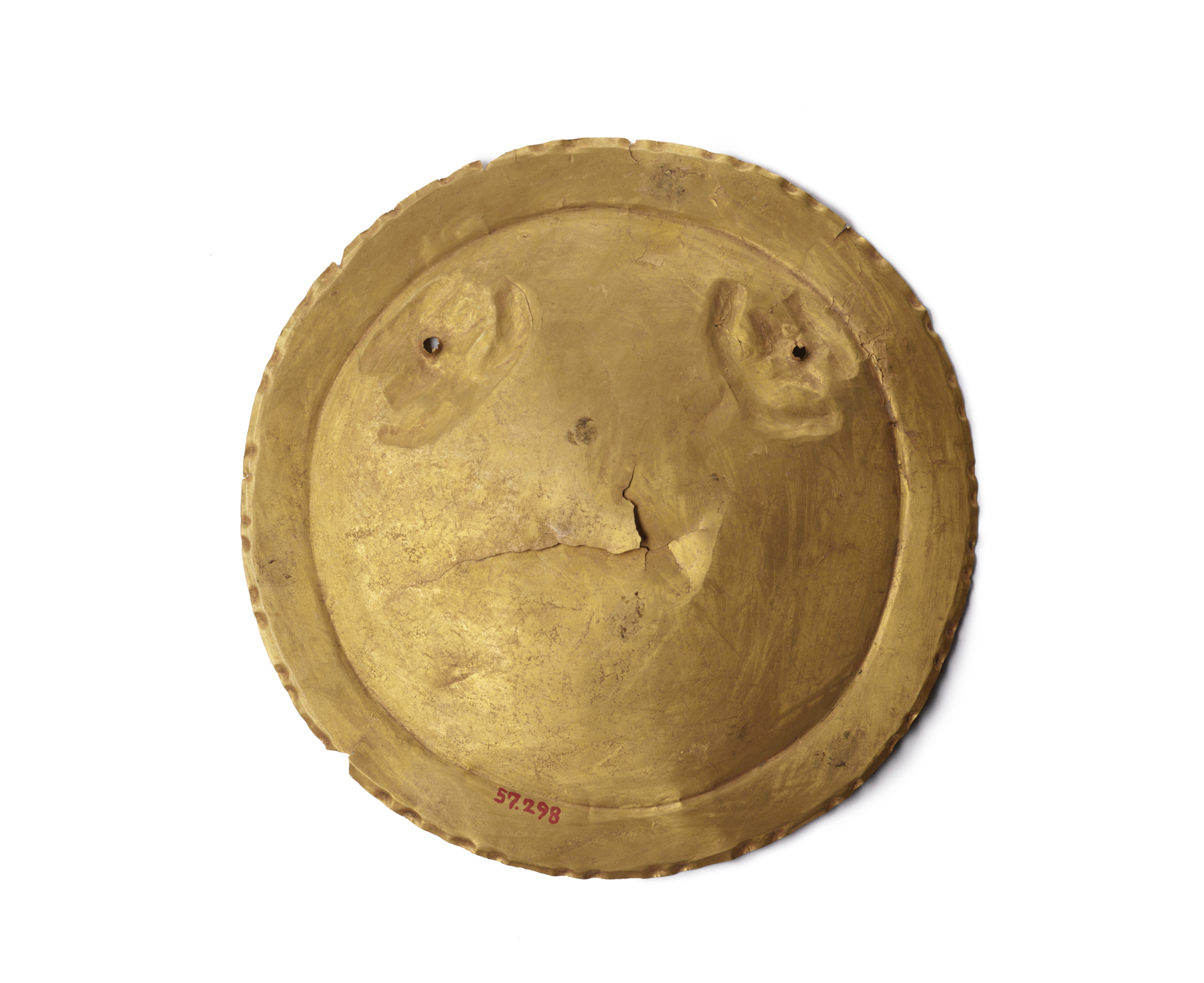
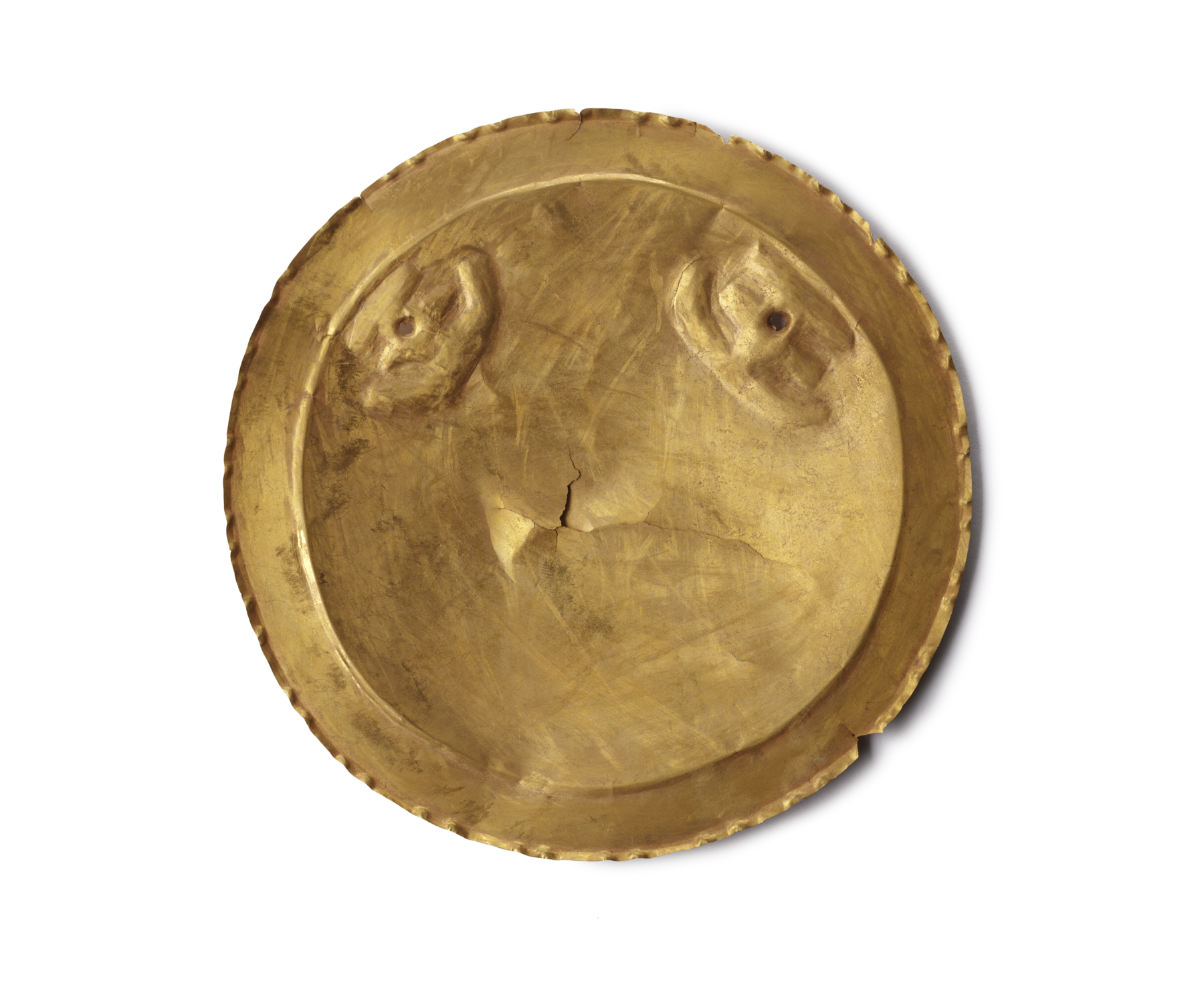
Gold pectoral with decorative border (patena)
Circular plaques of hammered metal are well-known from the region of the Isthmus of Panama. Most are about 5-6 inches in diameter and have two holes, through which they may have been attached to a garment or a cord that went around the neck. The additional depressed area around each perforation in this example suggests that the central disk may have been complemented by smaller circular ornaments, of gold or another material. Plaques like these have been described as medallions, breastplates, pendants, and in Spanish as patenas (a word for liturgical vessels used for communion.) They are found in excavations throughout the Isthmian region. Many such disks are absolutely plain, others have raised dots and other ornamentation. In this case, pairs of small hammered grooves are present around the circumference of the plaque.
During Christopher Columbus' fourth voyage to the Americas, in 1502, he sailed along the coast of Central America as far as Panama. In that region, he and his men traded with the Indigenous people they encountered, to obtain the "mirrors" of gold they wore around their necks. It is likely that plaques like these were the "mirrors" that he referred to.
Provenance
Provenance (from the French provenir, 'to come from/forth') is the chronology of the ownership, custody, or location of a historical object. Learn more about provenance at the Walters.
from Tiffany & Co.
Measurements
H: 1/2 × Diam: 5 11/16 in. (1.2 × 14.4 cm)
Credit Line
Acquired by Henry Walters, 1911 (?)
Location in Museum
Accession Number
In libraries, galleries, museums, and archives, an accession number is a unique identifier assigned to each object in the collection.
In libraries, galleries, museums, and archives, an accession number is a unique identifier assigned to each object in the collection.
57.298